This Moment with AI and How to Win It

tl;dr

Is AI going to replace your job and spike unemployment, or will it supercharge abundance and wealth?

We have a choice about where this goes as a society. The hype around AI is endless and over the top. The hype misses the big opportunity and stokes outlandish fears, too. Almost all the conversation misses what AI brings to the table. In a lot of cases, if the job can be eliminated by AI, much of that job probably shouldn’t be done. The real power of AI is to make people more productive. Cutting the jobs is zero-sum thinking. The key to AI is boost productivity to do more and sell more. This is the essence of abundance. Use infinite thinking to make more and grow the economy. Zero-sum thinking is at the core of these job cuts. It will turn people against AI. If AI fucks the public, the public will fuck AI back. This is how we lose as a society. A better path is to use it to grow society’s wealth and abundance instead of just growing profits.

This topic is long overdue and needed. We need to think clearly about where all this is going. Right now, no one is. We are not seeing the real core issues around AI. Whether it is the AI companies or the government, it is all bullshit and little light. This bullshit is the hallucinations AI produces regularly. This algorithmic BS is a perfect vehicle for amplifying the lack of trust already corroding society today. This lack of trust could be amplified further and trigger a societal doom loop.

“Abundance of knowledge does not teach men to be wise.” ― Heraclitus
AI is a “Magic” Technology

“Any sufficiently advanced technology is indistinguishable from magic.” — Arthur C. Clarke

One of the things to recognize is just how miraculous AI is. In the course of the internet age, there have been a handful of moments that feel almost magical when they hit you. The first time I realized was the first time I used Google search. Before Google search happened, the internet had a set of phone book websites. I happened to use one called Alta Vista. It was the way you got around and found stuff. Then this new Google search came. It had this amazingly simple interface, and you typed in the query, and suddenly you had results. It was like magic! Once I used Google search, it was like walking through a door, and I never walked back out through it again. Alta Vista was gone, and I wasn’t going to ever return to it. Google was like fucking magic!

The next thing that spurred this sort of feeling was a smartphone, the Apple iPhone. I had used a Blackberry and a flip phone. The iPhone was the internet in your pocket plus a built-in iPod. It became even more, and the interface was like a mini-laptop. More magic! The blackberry was cooked, and these devices became everywhere. As we discuss later, these smartphones were turned on society over time. The worst thing about Google and smart phones were the enshitification unleashed by them. My stance is that enshitification is a choice driven by maximizing shareholder value. It is optional. We treat it like it is a natural law. It is not.

The next magic moment was the first time I used ChatGPT. I heard about this new site online with this thing called a Large Language Model (LLM) that you could question like a person. You simply spoke like a human being, and it talked back. I tried it out. My jaw dropped at what it could do. The potential was vast. The problems with the technology are also vast. Nonetheless, this was a magical moment where you could see the World change in a moment. Recently, with Codex, I felt the same thing (Claude Code is similar). I was able to do things with ease and simplicity that were magical. This is the dawn of agentic AI. The potential for LLMs and agentic AI is incredible. The counter to this hopeful trajectory is the societal system that enshitifies all this magical technology as the default setting.


The subtext of maximizing shareholder value is a mindset that it typifies. This mindset focuses on greed instead of generosity. It is short-term focused instead of the long term. This mindset is about zero-sum thinking, where there are winners and losers. The alternative is infinite thinking, where everyone wins. We have choices with AI and agents. We can proceed as we have with greed and short-term thinking. This will lead to societal damage and enshitification. We can also choose a different path of long-term thinking and generosity. This is the path to abundance and societal good. The choices are there. To get the good outcomes for society, we need to step away from our current defaults.

“A man is but the product of his thoughts. What he thinks, he becomes.” ― Mahatma Gandhi

We Need to Figure Out Work and AI

In the last year that I worked at Sandia, I spent a great deal of time trying out LLMs in the setting of work. I did all sorts of tests in trying to understand and map out the capabilities of this technology in the setting of doing scientific work. I examined how LLMs did at writing, how they did at research, and how they did at answering a variety of questions. This was related to genuine curiosity, but also to work that I was doing in verification and validation of scientific machine learning. Scientific machine learning (ML) is a related field that is getting a great deal of attention in the scientific community, although it is being overwhelmed by the tsunami of interest in LLMs. Doing this work required applying well-developed principles of the scientific method. The answer is to then adapt the principles to the specifics of LLMs and ML

“I’m not upset that you lied to me, I’m upset that from now on I can’t believe you.” ― Friedrich Nietzsche

What I came to realize was that my approach to verification validation is essential to getting good results from LLMs. To wit, the level of doubt in taking LLM results needs to be quite high. LLMs are prone to bullshit us all the time and quite often will give us an answer that it wishes to satisfy us with, which has no relation to objective facts. A large part of successfullyusing an LLM is to start off by asking it questions to which you already know the answer, in order toverify that the topical area that LLMs are examining is within their grasp. This by no means says that, as you get deeper and deeper into a topic, the LLM will be successful. One should always take a result from a large language model with a grain of salt, check it, and think about it deeply.

What I discovered with LLMs is that the closer you get to esoteric, expert knowledge, the worse they are at everything. Whenever I got close enough to the core of my own expertise, the LLM failed to give objectively good results. This was true over and over again. This is an important lesson to integrate into using them effectively. The role of the human expert is actually amplified by LLMs. The expert knows the point where LLM competence ends, and human judgment is necessary.

For example, I found that LLMs are terrible for writing. They’re good as an editor, but terrible at creative writing, terrible at doing anything that a human with ability can do. Writing is a deeply human activity and involves clarity of thought. The narrative elements are an essential human pursuit. At least today, AI has no capacity to write with genuine humanity. My writing is part of thinking on a topic. True for fiction or non-fiction writing. A key is to leave marks on the prose that show genuine personality and human experience. Ultimately, my use of AI in any sort of writing has been relegated to editing and research.

The same holds doubly for areas of science, where I find AI is a capable digital assistant, great for improving the scope and breadth of what I do, but not good at creating anything at an expert level. I have tested this over and over with the same result. LLMs have improved over the past three years, but it has only moved the wall it hits a little. I’ve taken various algorithms and work that I’ve done and tried to basically spoon-feed it into the AI. Even with an excessive amount of spoon-feeding, the AI fails to do even the simplest level of creativity. At the same time, I am convinced it can be a useful assistant. I use it every single day for a host of tasks.

The counter is that AI is very good at giving a large volume of work and can be utilized to improve the quality of what work has been done and the speed with which the work is completed. This was particularly true with the Codex example that I tried in the agentic work. It did a number ofbanal tasks with speed and effectiveness that were far greater than my own and basicallyaccomplished one or two days of hard work in less than an hour. What I saw there was the capacity to free up my time to go towards creative and thinking efforts that are appropriate for humanity, and allow me to spend more of my time doing what a human being can only do.

“The problem with the world is that the intelligent people are full of doubts, while the stupid ones are full of confidence.” ― Charles Bukowski

Humans supply thinking and creativity. AI needs to remove the bullshit instead of adding bullshit to humanity.


How Not to Make Progress: No Trust and Maximum Bullshit

One of the big things that will inhibit the ability of AI to improve the workplace is this pervasive lack of trust in society. Every bit of the current trajectory will simply destroy more trust. A lot of the work that we all do at work is complete bullshit. Whether it’s training, paperwork, or various other things that are just check boxes, are all related to that lack of trust. As AI shows, most of this work is meaningless, lacks humanity, and can be automated. Rather than eliminating this useless work, the lack of trust only accelerates and amplifies it. If we do not change course, AI will undermine trust and generate even more inhumane bullshit. Over the course of my career, the bullshit grew without bounds and swallowed most of the humanity in work.

“Whoever is careless with the truth in small matters cannot be trusted with important matters” ― Albert Einstein

One of the biggest things for AI to solve is the issue of trust in itself. The tendency for hallucinations or franklybullshit us is toxic for AI’s future. It might be great for the near-term bottom line, but it destroys the long-term. This, along with the syncopacy of the replies, is a major issue. AI needs to stop this and start being honest, focusing on growing trust. There are probably internal measures and mechanisms by which the AI can return some degree of confidence and reliability in results. There are probably measures by which the AI can report that this answer is low confidence or high confidence. These can guide the users towards exercising doubt and assist in the verification of results under the appropriate circumstances.

The fact that they are a probabilistic engine means that there is a measure of probability associated with the results that it gives. Thus, a grade and score can be provided even if the highest score that it reports is something that is relatively low probability compared to what we would like. If the LLMs would let the user know that the answer is sketchy and unreliable, it would be transformative. It would show a vulnerability that would help build trust. We should never trust AI completely. Nonetheless, a tip that it was uncertain would be a boon. It would show a level of care for the user that today’s models neglect. It would also assist in educating users about what they are really dealing with.

This sort of measure built into AI would be incredibly welcome. At the same time, I think, within the way the current corporate governance works, it would be rejected out of hand because they simply want to have as many users as possible. The AI wants to express itself as being completely reliable and completely subservient to the users. Rather than provide a better service, the AIs will resist any kind of feedback that calls into doubt the results it produces. All of this is to serve the acquisition of maximizing shareholder value instead of maximizing customer service. Today’s corporate governance is squarely opposed to getting this right. This governance is at the heart of society’s deficit of trust.

“The comfort of the rich depends upon an abundant supply of the poor.” ― Voltaire

How to Actually Make Progress

Trained properly, AI could be a vastly powerful agent or assistant that can unleash human creativity. Human creativity, art, and free thinking are in short supply today. AI offers the ability to both boost this through freeing up time, but also assist people in bringing ideas to fruition and seeing whether or not they actually are good ideas worth exploring. AI can allow much more exploration and many more ideas to be brought to life, and perhaps ultimately produce far greater beneficial outcomes for business if only the businesses were to trust the people that they employed to do this kind of work. For myself, this is exactly the model of AI that I plan to exercise. I have a powerful assistant who can help me explore ideas more deeply and bring the right ones to life.

The right way to look at AI is to view it as a very capable digital assistant with broad and general knowledge. At the same time that knowledge is shallow and not at an expert level. AI cannot hold a candle to the expertise that you hold at the heart of what you do. This is the heart of humanity we should bring to our lives and work. It can help provide competent, but flawed, help in almost everything else you do that’s ancillary to your core work. In this way, AI can be a wonderful digital assistant and provide you with ease in achieving greater productivity.

As I noted above, AI couldn’t write for shit. I do believe that I am not the greatest writer, but I’m far, far better than AI. With a little effort, almost everyone probably could be taught to be better. We just need to teach people. AI doesn’t sound authentic, and it produces prose that is simply uninspired. AI is a great editor, though.

One of the biggest issues with AI is that you should doubt everything it creates. What I realized was that the way that I created AI was very much the same as the way I created science. There’s a need for verification and validation. I would approach using AI the same way I would approach a scientific problem, where I look to confirm everything it does and hold everything in doubt. It’s assumed it’s useful, but I also assume it’s flawed and in need of extra work and verification that the results are good. It would be better if AI helped and gave us a tip that its response is (more) questionable. In fact, with AI, the need for verifying and validating everything it does is much higher than with other computational tools. This calls into question the absence of V&V in the plans for AI seen societally. V&V is essential for AI’s success.

The greatest high-leverage thing that we can do is train people to use AI correctly. This was a place where my experience at the National Labs has been absolutely jaw-dropping. The management’s efforts to use AI have been ham-handed and naive. It was justsuperficial encouragement of the worst uses possible. They were encouraging people to use it, but not in an intelligent and well-thought-through way. The fact is that AI’s proper use is subtle and esoteric and requires a great deal of discipline and a change in the overall mindset. We need leadership that pushes us in the right direction. So far, all the leadership is pushing everything in the wrong direction.

“Don’t mistake activity with achievement.” ― John Wooden

Nothing more fully shows us this problem than the scientific programs around AI. DOE has the massive Genesis Project, which is just an exemplar of how not to do AI in science. It’s a whole bunch of stunts. There’s no evidence of any V&V or doubt in how it’s used. The V&V and the doubt are the most important part of science. More true with AI than any other science. Instead, it’s like recent programs. It’s all about big computers and doing things that look splashy but have very little scientific sense. It is almost 180 degrees from the right direction. AI can be a powerful tool for science, but only with a clear-eyed assessment of its results. Instead, we see blind acceptance and marketing bullshit.

The deeper issue is how this productivity will be utilized by corporations and organizations.

* Will they simply demand that the organization and the corporations produce as much as before? In this case, the gains with AI will be used to slash the size of the workforce.

* Or instead will they realize that they can unleash people to do more, and that corporations and organizations can do more and create more good for society?

This is an abundanceagenda and leads to great growth and good things for society. One path leads to destruction, and the other leads to long-term benefits. Current ideas are heading headlong toward destruction.

“Creativity is intelligence having fun.” ― Albert Einstein

To do this, we have to be mindful about how we use AI. Today’s world is full of the mindset of scarcity and the use of short-term thinking. This leads to the use of productivity to simply reduce the number of workers. This is short-sighted and ultimately robs the future of a much better outcome where we use the productivity to unleash greater creativity and more products, more output, and better things for society.


With Today’s Corporations, AI Will Fuck Us

Don’t worry, it will all be enshitified. If recent history is a guide, the magical capability of LLMs will be turned to shit. We have managed to take Google search and fuck it up systematically through greed. This greed is an enshitification plan. Smartphones are the same. Social media was never quite so magical, but it had potential. That potential has been squandered by the engine of enshitification. Now we have this new technology that seems far more powerful than any of these previous ones. It is definitely magical. We are going to turn it loose on the ecosystem that enshitifies things naturally.

What could possibly go wrong?

The capabilities and power of AI is far greater than the algorithms used in social media. With the current mentality, the creativity of humans will be greed-motivated to adapt AI into profit machines. The same mentality has already done an immense amount of damage to society. We should have faith that a more powerful technology will unleash greater damage. We are already seeing chaos and horrors in multiple ways originating from this process. Surely the power of AI will also be integrated with social media. This will supercharge profits and damage. These forces have energized toxic politics and vast income-wealth inequality. An AI supercharged ecosystem may be unimaginably worse. Without change, this is the likely course.

We should have already learned the lesson, but obviously, we haven’t. Money provides too much power to be overcome.

Zero Sum Thinking and Value

The current philosophy of maximizing shareholder value is zero-sum thinking. This is the approach where business (and life) is all about winners and losers. In today’s world, the losers are consumers who are preyed upon. Vulnerable smaller businesses are also preyed upon by massive corporations. The powerful dominate the weak and most of us are weak. Ultimately, the profit and victories are found at the expense to wide swaths of society.

I worked for decades in places where trust was in free fall. That’s not entirely true. The first decade or so at Los Alamos was a high-trust environment where people worked together. There was generosity and a spirit of giving that were essential to developing me as a professional. If you were reasonably smart and competent, you were welcomed into someone’s office and offered the best of their thoughts and advice. It was in this trust that I blossomed. Then modernity came for trust, and the generosity was hollowed out.

It is also an environment that I believe has been snuffed out. The same me plopped into the current version of the National Labs would never grow and accomplish anything like I could with that trusting environment. The lack of trust that infects society as a whole eventually took hold at the labs, as the government did not trust us, and we did not trust the government. We started to move in a headlong direction towards all of the natural outcomes for a lack of trust.

Part of this was:

– the lack of peer review

– the lack of honest assessment of work

– leadership that lied and withheld information from the rank and file

– an inability to look at risk and failure in a healthy way

All of this simply accelerated the loss of trust in the state we are in today. I think it’s safe to say that the trust in our society has never been lower. I saw all the toxic fruits of that mentality at work myself. We can see it across society, looking at politics. No matter what side you take, the other side is evil. With AI, we have a technology that can make it worse.

The problem is that these trust-building AI are not going to maximize shareholder value; however, they are going to build a system that would be suitable for the long run. We need a different fundamental mindset and corporate mentality.

“Acknowledging the good that you already have in your life is the foundation for all abundance.” ― Eckhart Tolle


Infinite Thinking

“To ask, “What’s best for me” is finite thinking. To ask, “What’s best for us” is infinite thinking.” ― Simon Sinek

The alternative to “zero-sum” thinking is infinite thinking. This thought process is couched in game theory. A zero-sum game is the classic contest with a winner and a loser. The opposite is an infinite game where it is all about continuing to play. If you play well, everyone wins. The zero-sum game is the usual football or basketball game. The infinite game is like Legos or a marriage. Success is continued play and creativity where everyone wins.

One of the greatest differences between the finite and the infinite game is an aspect of trust. To succeed at the Infinite Game, one must focus on building and maintaining trust. In the Finite Game, trust is used against you and becomes something that you wield as a weapon. This difference can be seen as our society has become completely untrusting. This is an exemplar of our commitment to these finite win-lose games as the basis for society.

“Leadership is about integrity, honesty and accountability. All components of trust.”― Simon Sinek

We are seeing a supercharging of corporate greed and behavior that drives the worst impulses of business. The other force that could change things would be regulation. We are currently in an orgy of deregulation, and there is very little thought or confidence on the part of the government to regulate an area like AI, much less tech or social media, in any sort of rational way that is based on expertise and knowledge. Instead, the vast amounts of money driven by corporate greed and inequality are tilting the playing fields squarelyagainst any of these outcomes. Thus, current trends show that trust is going to go even lower and become even worse across society as a whole. The recent dust-up between the Department of Defence and Antropic is an exemplar of this. DoD and OpenAI chose the path of no trust and greed.


Switching to a trust-building mentality is something needed by society today. With trust, collaboration and cooperation become the touchstones of how society looks. Without trust, it simplybecomes a dog-eat-dog world. You employ data and power as a weapon against those you’re pitted against. A simple and observant view of today shows you where this gets us: conflict, chaos, anger, and a host of other ills that are dragging society down.

If an alternative view of how AI is used is taken, we can also see how it can build trust. If we view AI as a vehicle for abundance, we see that it can supercharge the quality of work done. We can enhance the volume of work done and how much each worker can do. You then find that the ability to create, produce, and get products to market becomes accelerated and grows in scope. All ofthis brings wealth and prosperity to society. This, in turn, ultimately builds trust for AI and also provides benefits for the humanity that it serves. This is the path we need to take if we want AI to be good for society.

“Abundance is harder for us to handle than scarcity.” ― Nassim Nicholas Taleb

Standing in opposition to this vision is the focus on maximizing shareholder value, which is good for the short-term prosperity of society. Virtually all of us in the United States have investments in the stock market. Our retirements are all dependent on these investments doing well. We can only emphasize the short-term for so long before the bills come due.

The problem is that it’s a house of cards. The same forces are destroying trust across society, and ultimately, that destruction of trust puts the entire structure at risk. The less trust there is, and if it continues to drop, we are at risk of catastrophic destruction of the system. Indeed, we may already be experiencing the start of that catastrophic destruction as large portions of society are being dismantled by the current administration. We may be creating the roots of a crisis that will continue to cause serious damage to our future.

“Growth for the sake of growth is the ideology of the cancer cell.” ― Edward Abbey
What is lack of convergence telling us?

tl;dr

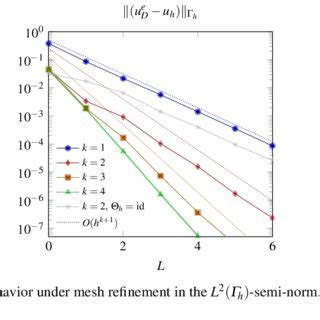
If a simulation does not converge under mesh refinement, it is generally a bad thing. For most practical calculations, this is not even tested, which is even worse. For simulation, the notion of convergence is the basis of faith in investing in faster computers. In brief, you expect to approach the exact solution as you use more computing resources. This comes from a smaller mesh size or time step size, needing more computing. Generally, this is simply assumed and not checked. The reality is that this often does not emerge.

What are the consequences?

We have less reliability in simulations than we should. Problems and challenges with our current technology are not challenged and improved. Progress stagnates without the feedback of reality. The promise of computational science is undermined by our accepting lax practices.

Why This Matters?

“In numerical analysis, the Lax equivalence theorem is a fundamental theorem in the analysis of linear finite difference methods for the numerical solution of linear partial differential equations. It states that for a linear consistent finite difference method for a well-posed linear initial value problem, the method is convergent if and only if it is stable. ” – John Strikwerda

In computational science, the premise that faster computers yield better solutions is axiomatic. It provides unyielding confidence in the utility of computers for better science. As the Lax equivalence theorem states, it is not without conditions. It is not assured. The issue is that the necessary homework to ensure it is in effect is too rarely done. Most computational science today simply makes this assumption and treats convergence as a fait accompli. This is dangerous for the use of computation. It threatens progress and undermines the credibility and utility of the field.

There are many reasons for this, mostly laziness or ignorance. The practice of code verification is firmly grounded in the equivalence theorem. Doing a code verification exercise makes this theorem actionable. The practice of code verification is relatively uncommon. It is definitely done far more in the case where full numerical accuracy can be achieved, i.e., smooth solutions often via the method of manufactured solutions. It is done far less often when calculations lose smoothness. This gets to a couple of large gaps in practice:

1. Code verification allows precise error estimation,

2. Code verification can still be done on solutions not allowing full numerical accuracy, but still demanding convergence,

3. And most importantly, these non-smooth circumstances are what the vast majority of practical applications of computation produce.

Even with the vast availability of computing power today, numerical error persists. The technique of solution verification exists to measure this error. More importantly, the practice checks to see if the application of more computing gives better answers. It makes sure the promise of the equivalence theorem is delivered. This promise requires attention to detail and focus. It is also more technically complex in many cases. The entire premise is still a place for progress to be made. That progress has stagnated over the past couple of decades. The whole thing is also a lot of work and thus expensive. Right now, laziness and cheapness is winning.

Why Is it Avoided?

There is a virtual universal tendency to ignore numerical error in practical calculations. This can be traced back to the same principle in looking at the error in the verification of methods. In the ubiquitous Sod shock tube, the “Hello World” problem for shocks, is rarely subjected to any sort of accuracy or order of convergence testing. This applies to virtually every shock problem used to demonstrate and follow practical calculations. In those practical calculations, this is premised on the underlying characteristic where convergence is actually generally first order (or less). The truth is that the level of error varies a great deal. Often, more expensive high-order methods are less accurate with shocks and quite expensive. All of this is contributing to stagnation in the advancement of practical methods.

The upshot of this is a tendency to ignore numerical error in practical calculations. Thus, we don’t confront the very real problem and avoid the very real opportunity of higher resolution methods having a benefit for methods in general. This contributes to the stagnation in methodology and avoids the uplift in method efficacy and efficiency that will result from improved numerical methods. We see yet another example of systematic avoidance of reality. This then leads to the lack of progress and the failure to improve the state of the world. Even when the answers are lying right in front of us. Of course, if you never do any estimation or convergence testing, you’ll never know whether the calculation will converge at all. Convergence and improvement with more computation are simply assumed as if they were an “iron law”. It is not. All of this allows the systematic avoidance of very real problems in progress that should be happening. The whole issue around the lack of convergence in solution verification is a very ugly and deep topic. For the most part, it is not explored at all in the literature, nor are the consequences appreciated. Yet this lack of convergence is, in a very deep sense, a problem that receives no attention. If it fails, those results are often simply hidden, never discussed, but these results have a much deeper and more insidious problem. The issue most days is that it’s merely inconvenient, but they point towards a notion that the methods and models in the code need to be examined and improved. The lack of improvement renders the supercomputers that are the focus of so much attention, not delivering the benefits they promise.


What are the excuses for this deplorable practice?

  • The most common thing is that the analyst doesn’t even think about it. They just use the same resolution they always have or that their buddy used in doing a similar calculation. The excuses only get worse from there.
  • The next excuse is that they use as much computing as they can possibly afford. They assume that because it’s as much as they can afford, it’s the best calculation they can get.
  • They never check to see whether a coarser resolution would actually provide an adequate solution. Those relatively cheap coarse solutions might produce a sequence of calculations that is well-ordered and convergent.
  • To get a step worse, you have the analysts who absolutely know that the calculation will not converge to anything. They mindfully avoid looking at the question because they know the answer is bad. This is far too common and often related to acknowledged shortcomings in the simulation software that nobody looks at, nobody is willing to fix, and simply persists endlessly.

As you go down this hierarchy of repugnant behavior, you see a constancy of an unwillingness to ask deeper questions or demand higher standards from the software. Ultimately, the analysis of meaningful systems suffers. The credibility of the analysis suffers. Progress towards better results suffers. In the long run, humanity suffers from the lack of progress towards better science and engineering. In today’s world, all ofthese excuses hold because they’re highly cost-effective and don’t cost anyone extra money. Asking questions that are hard or finding problems in simulation software is something that nobody wants to pay for, and as a result, all the bad behaviors are essentially chosen out of expediency.

“We can only see a short distance ahead, but we can see plenty there that needs to be done.” ― Alan Turing

The Deeper Issues Underneath

“Failure is constructive feedback that tells you to try a different approach to accomplish what you want.” ― Idowu Koyenikan

A common way for the equations to be inconsistent is ignorance of the mass equation. Remarkably, the mass equation is violated. It is remarkable as conservation of mass is the most fundamental conservation law. When it is violated, all the conservation laws are trashed. This happens often in a couple of cases where the conservation of mass is implicit in the equations. It is just assumed to hold. As such, the equation is not evident, and this underlies the root of a huge mistake.

For example, in a Lagrangian calculation, the mass is conserved, but it is implicit in the position of the mesh nodes. Thu,s there is a transformation between that motion and the conservation of mass. If those positions get scrambled by shear in a flow, then the transformation can become ill-posed. This can be fatal for a calculation. This causes panic in the code user. The simple answer is to delete the misbehavior. It works, but also destroys the consistency of the calculation. Convergence toward the correct solution is also destroyed. The equivalence theorem is systematically violated.

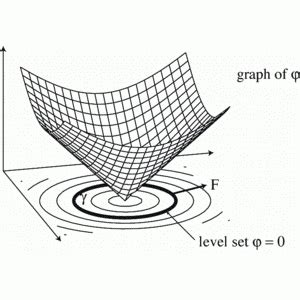
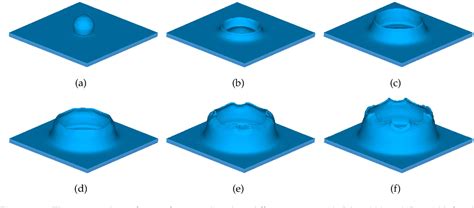
In an incompressible flow, the divergence constraint can be derived either from the mass equation. In other derivations, the pressure equation is used. This is probably the more consistent way to do this. The conservation of mass can be lost if one labels mass for a multi-material flow, such as a method like level sets, where the area is represented. The area or volume then is proportional to the mass, just as in Lagrangian equations. In some cases (like standard level sets), the area-volume is not preserved, and mass is lostor gained (mostly lost). Again, the most fundamental conservation law is not maintained. The equivalence theorem is violated. Convergence is not assured by construction.

A worse and more pernicious way for this to happen is in shock calculations at Sandia, where troublesome material states are deleted. This is done to avoid issues with equations of state as material evolves into extreme conditions. This is done with several codes at Sandia. I had pointed out to management that this leads to an inconsistency in the fundamental governing equations and a violation of the Lax-Equivalence theorem. I had done this nearly 20 years ago and again more recently. The response was “meh, we don’t care”. The technique is really useful for making the code “robust”. This is just like the excuse for deleting elements described next. The calculation runs faster and to completion. Inconsistency physically, isn’t a concern apparently. This means solutions using this approach are likely bullshit.

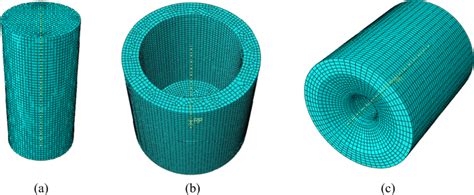
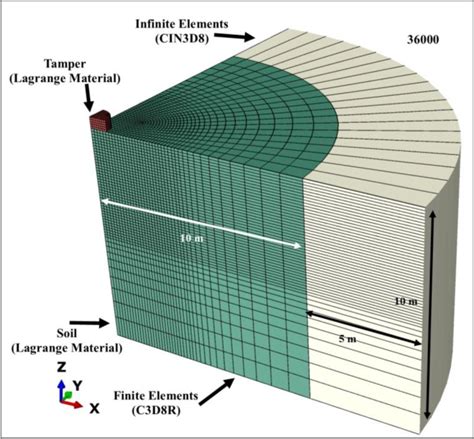
A common approach in Sandia codes and other solid mechanics code, it is to practice element death. This is where mass is deletedwhen the Lagrangian representation becomes troublesome. This is the inversion of elements or cells due to their position. It almost always happens in shear. Shear is ubiqutious physicallybecause turbulence. This destroys the consistency of the equation, and any sense of convergence under mesh refinement is similarly destroyed. Yet this practice persists and is commonly used for extremely high consequence calculations across a number of important settings, industrial or military related. Again, the lack of convergence is seemingly ignored by practitioners. The behavior of the analysts indicates they know this, but the practice persists.

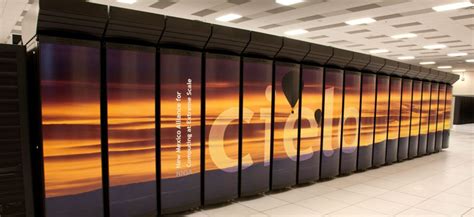
The reliance on this technique is appalling when there are more suitable approaches that would converge. Most notably, remapping, remeshing, and methods used in arbitrary Lagrangian-Eulerian (ALE) calculations. This is a well-developed and mature technology that is being ignored. Convergence is simply unimportant. It would take care of this problem. I would counter: it’s more expensive to buy a very expensive supercomputer that’s rendered incompetent by the code and methods that are puton it, that have no consistency with the fundamental governing equations. Theseconcerns have fallen on deaf ears as we simply persist in using these methods. These practices and their persistence are among the most vexing and unsupportable things I’ve seen in terms of practice. It isn’t as bad as the lack of ethics, but definitely incompetent.

To get concrete on the negative side effects of all this, one thing is the acceptance of either poor, inaccurate, or even non-convergent numerical methods. In the wake of this, you often get a calibration of a calculation to data that includes the effects of mesh resolution as part of this. So the model used is mesh dependent instead of consistent. To some extent, this is inevitable for most challenging physics. In these cases, this is not a case where the physics is too difficult. This is mindful ignorance and downright lazy. We know how to avoid these problems. We just are not doing the work; it is lazy. Thus, you cut off any improvement in the numerical methods or the code at the knees by simply taking the poor results and encoding it into the model. Simulations relying on these techniques are simply not credible.

Now that we’ve gotten the willful ignorance and incompetence out of the way, we can move on. There are other, more banal reasons for the lack of convergence.

Both deep theoretical questions remain unanswered regarding calculations of things that look and feel like turbulence and may indeed be turbulence. There are also gaps in how we practically model a host of important systems that are not being examined. Our modeling is thus more uncertain than it should be. These issues are not being investigated sufficientlyand progress is not being made because they are not being looked at. Granted, there are some huge theoretical challenges too. The mathematics and numerical methods are not up to the challenge yet. The bigger issue is that the standard practices are not forcing the issue. The obvious fundamental questions are not being asked.

In most practical calculations, the quantities of interest are not the full field, and the convergence in various norms makes little sense. Thus, the numerical analysis is not fully applicable. The metrics are integrated measures like energy released. Worse yet specific quantities and given locations that are measured. This is often guided by the application setting. Another clear example is maximum or minimum conditions, such as temperature. This case is adjacent to the L-infinity norm, which tends to be difficult to achieve convergence in. We know that things like mins and maxes are incredibly poorly behaved, but also extremely important in terms of safety and various thresholds that we do not want materials to reach. All of this requires a much sterner and more committed scientific exercise in trying to produce reliable, credible calculations.

If we don’t ask the basic questions of the calculations, progress certainly won’t happen by magic.

In general, if we have turbulent or turbulent-like phenomena, we can assume that parts of the correct solution vary substantially. This variability depends on things like the initial conditions and the degree of homogeneity of those initial conditions. It is a reasonable belief that initial conditions in a calculation are far more quiescent and homogeneous than reality. The impact of that is not accountable in calculations.

Moreover, a single calculation is just one draw from a realisation. Often, the experiment we are comparing to is a similar single draw. We should have no expectation that we are drawing from the same realization as a calculation. Appropriate variability over a set of initial, boundary, and material compositions would lead to a variable outcome and ultimately a PDF of a given solution. One would then look at solution verification as how this PDF changes as a function of the mesh resolution, independent of all other differences in initial and boundary conditions. For the most part, we are not thinking of simulations like this at all.

The upshot of all of this is a general lack of credibility in computational simulations that is unnecessary today. It results in the vast investments in supercomputing going unrealized in terms of their potential impact in science and engineering.

If we had more reliable mesh conversions done as part of the analysis, the results would be immediate. You would expose problems, define opportunities for improvement, and produce a far better science. All ofthis would serve the benefits of computer simulation far better than today’s lazy practices. We have a lot of potential to make this technology far more accurate and capable of producing extremely great outcomes for society. The problem is that the lazy practices are accepted because they’re cheap. High quality and doing things right isn’t cheap, but in the long run, it produces far higher value, a value that we today are missing.

“Your assumptions are your windows on the world. Scrub them off every once in a while, or the light won’t come in.” ― Alan Alda

The Path Forward

“If you’re going to say what you want to say, you’re going to hear what you don’t want to hear.” ― Roberto Bolaño

The way to make things better is at once simple and complex. A first step is to start doing the fucking work! Simply doing the (required) tests and asking questions is the way forward. Practically speaking, there are a number of things that need to change to do this. We need management support for it. We need funding support for this. Leadership needs to be willing to support negative results and appropriate responses. We need a genuine effort to cast failures as opportunities to learn and grow.

There needs to be trust that the negative results are not evidence of malfesence or incompetence. We need project and program management that allows adjustment in the trajectory of work to the results. Work is not a straight line. We are not building a bridge or repaving a road. We need a commitment to progress and advancing knowledge. All of these things are lacking today. We need a different spirit of work. Above all else we need trust in each other.

“The Four Agreements

1. Be impeccable with your word.

2. Don’t take anything personally.

3. Don’t make assumptions.

4. Always do your best. ” ― don Miguel Ruiz

Reality Bites Back

tl;dr

There is a broad tendency to reject reality today. It can be seen across society and our institutions. One of the big reasons is that reality is unrelenting and brutal. Reality bites back. It has become vogue to try to define reality according to the wishes of leadership. It is almost willing their desires into being. Often, the way to wish this reality into being is through virtual systems. The world is online, and the online image can be crafted to meet the desires. In fact, the populace engages so virtually, it encourages it. This is also true in science, where virtual simulations or AI provide a compelling view that does not need to be the actual reality. The problem with this approach is that it avoids innovation and problem-solving needed for progress. The harsh feedback from reality is needed to adjust and push back on wrong approaches. Too often today, we accept the wrong and reject the evidence of reality.

“Reality continues to ruin my life.”― Bill Watterson

The Attraction of Virtual

“The real world is where the monsters are.”― Rick Riordan

The escape from reality is driven by our increasingly online lives. It’s social media, email, and the internet. This seems to have driven a change in how leadership approaches dealing with reality. By dealing with it, I mean ignoring it. They increasingly look to shape the online narrative and worry about the exposure of their lies, issues, and problems there. In the real world, all of this exists, but can be hidden. They fear the capacity of the online to amplify the signal of reality.

I have seen the leadership work to shape the online narrative and avoid any sort of subtlety or nuance of reality. This is a troubling trend that is leading to a de facto ignorance of reality. They are systematically ignoring problems that exist. This is done simply by shaping the messaging to be ignored instead of identifying and confronting it. We as a society need to overcome this, or we will be swallowed by this virtual world. Then the real world will bite us back in a way that could be fatal.

I realize that my own writing online has pushed back against this trend. The reaction of my former workplace to my writing is evidence of how uncomfortable management is with the actual world. The result is an astonishing degree of hidden power and lack of transparency. In a sense, the lack of transparency now is worse in the online world than before. In the current time, it is clear that societal leadership is hiding a lot. The prime example is the behavior and actions of the “Epstein class”. There we see how the rich and powerful act behind closed doors, and it’s appalling. It’s criminal and unethical. The same kind of unethical and damning behavior is present to lesser degrees throughout the rest of society. All of this seems to be somewhat of a consequence of the tie to this online-virtual world dominating.

Science Cannot Be Virtual

The conduct of science has been infected by this. One key symptom of the problem is the prevalence of uncertainty quantification (UQ) over verification and validation (V&V). UQ has become dominant lately. V&V is fading from practice. The reason is simple. UQ only needs a virtual model to give voluminous results. V&V imposes a harsh reality on models. V&V finds problems and shortcomings that require plans to change. UQ just gives results galore. Why invite problems with V&V, when UQ makes you look great?

The answer is that V&V is the scientific method, and UQ is not without V&V.

It is the desire to have a purely virtual world. It doesn’t have any connection to reality. Verification and validation are both connections to reality. Verification is an analytical mathematical reality and validation is through experiment. Both are hard and unyielding. Both find problems and demand progress and improvement. More recently, machine learning, particularly AI, and the use of UQ. Both strongly push towards these virtual worlds that have no connection to reality (other than training data). They give results without the difficulties that come with reality, either real or analytical.

All of this goes together into a flywheel. Without the notions of reality, the flywheel falls apart. Reality provides the feedback to the efficacy of both the theory and our knowledge of the world. It also provides surprises and the necessary push to advance things. It provides the feedback that things either do work or don’t work, and makes sure that the advances in science are earnest and actually correct. What I’ve seen is that these notions are being rejected increasingly.

“If there’s a single lesson that life teaches us, it’s that wishing doesn’t make it so.” ― Lev Grossman

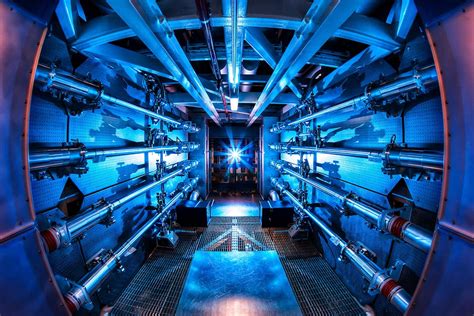
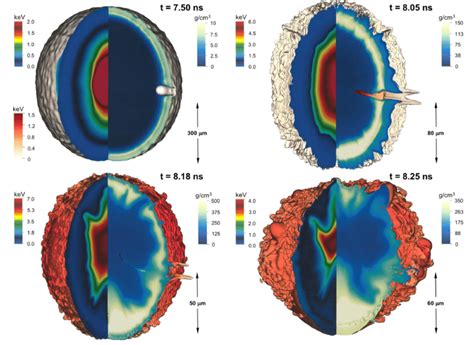
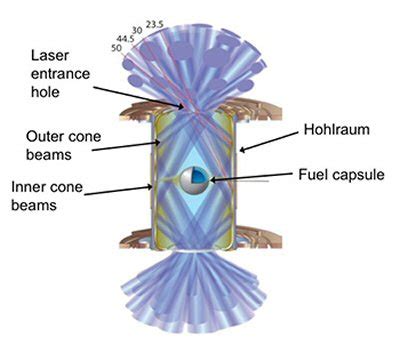
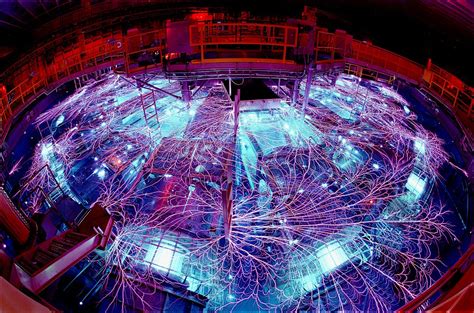
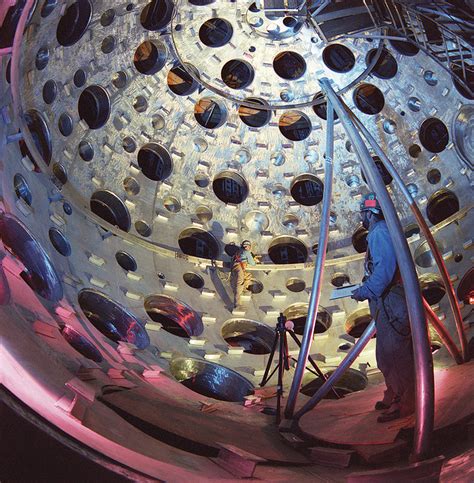
For example, in computational work, there is a seeming ubiquity and embrace of UQ as an activity unto itself. UQ is a key part of the validation of a model. Instead, UQ is often untethered from any sort of reality. Thus, there is no verification or validation applied to it. It simply exists by itself. This is the output from a virtual world, and without the feedback of reality. It will produce results that have absolutely no bearing on anything that we see. There are good examples of this in the literature. Perhaps one of the most august examples comes from the National Ignition Facility. There, they did an extensive UQ with their simulation code before they had even shot the lasers and attempted to do a fusion experiment. In this work, they produced a magnificent body of work that showed the possibilities of what the laser would produce. All of this work produced a PDF of the outcomes, and the target yield would go from 900 kJ to 9 MJ. Then they ran the actual experiment, and the result was a 300 kJ shot. This massive UQ study, with an incredible UQ framework and pipeline, supercomputers, and cutting-edge state-of-the-art simulation code, produced a study where the reality was not even in a PDF that spanned an order of magnitude. It showed how useless UQ is without V&V. Reality crushed the virtual.

It would be years before they ultimately got the targets to actually sit on the original PDF. What this really said was that this initial study was deeply flawed. If you look at the study, there is no hint of verification work either. The code was never attached to the reality of interest. When it was the results were damining! Whether or not it actually produced the theory correctly, and validation work certainly was not available, or applied to keep the work tethered to reality. Only when the experiments were actually conducted did they discover and learned important details. This entire troubling episode exists in the current world where honest and hard-nosed peer review is in free fall. The virtual world much more readily gives people the answers they want instead of the answers they need. Without the hard-nosed peer review that provides feedback to the overall process, the entire enterprise risks going in the wrong direction without the necessary adjustments to keep itself in a position where it can affect the actual reality.

In the case of the NIF study, it’s my belief that the modeling was done in a wholly optimistic way. This avoided a number of realities that should have been evident to the people conducting the study. First and foremost among these are the realities of turbulent mixing that is ubiquitous in nature. Much of the history of design for fusion capsules has worked from the premise that somehow this mix could be controlled and tamed. In this way, it would make the achievement of the conditions for fusion far easier than it is in reality. Without validation data to tie the reality, the modelers simply followed optimism to its usual outcome: results that were far more optimistic than any reality that they would be able to visit. The hope was that the optimistic results would allow money to rain down on the program at critical junctures when funding was threatened.

This is most acutely available in terms of AI and the belief that somehow AI can produce massive returns in the scientific world. This is definitely a perspective that needs to be leavened bya good dose of reality. It isn’t that AI can’t be a tool that we use to advance science, but rather that AI is still embedded within a scientific method and does not change its precepts. The scientific method is ultimately tied to observing and comparing to objective reality in two modes:

  1. The key mode is observation and experiment, where data from the real world is applied and looked at, sometimes to understand theories. Validation is the process for computational modeling.
  2. These theories almost always take the form of mathematics. Comparison with the theory computationallyis verification.

A large part of this dynamic revolves around the focus on supercomputers. As I’ve said many times before, supercomputers are an unabashed good. The concern with them is their priority compared to all other activities. Computational science is always a balance between what computers offer and what the rest of science offers to the entire enterprise of computing results. The current focus on AI only amplifies these concerns, as AI is trained from real-world data, but also is not tethered to a theory. Thus, in simple terms, the possibility of correlation equaling causation becomes an outcome that is invariably achieved. This must be countered by strong theoretical aspects that provide the sort of feedback needed to make sure that we actually understand what we are doing.

The same sort of bullshit optimism is present in programs that promote the extensive use of supercomputing as the ticket to modeling efficacy. We are seeing more of the same bullshit and optimism with AI, where computing is viewed as a one-size-fits-all cure to problems. The actual issues are far deeper scientifically, and requires much more balanced approach to get optimal solutions. In today’s world, it seems that if you want funding, you avoid reality. If you want progress and success, reality is something that needs to be wrestled with, like the brutal opponent that it actually is. Unfortunately, today, bullshit gets better funding for these institutions than real progress and real success. We should be wary, as A.I. is a bullshit factory, the likes of which we have never seen before. We are vulnerable to it. What is notable when you look at the science programs associated with AI is that not one iota of V&V is present in the work that’s proposed. It’s all stunts and showboats and little to no actual Science. The injection of V&V would bring the scientific method to bear on them.

“Reality is that which, when you stop believing in it, doesn’t go away.” ― Philip K. Dick

It Goes Past Science: The Trust Trap

“It’s funny how humans can wrap their mind around things and fit them into their version of reality.” ― Rick Riordan

An issue is the seeming present-day appeal of virtual worlds as compared to reality. Almost anyone you talk to says that reality sucks today, that it’s really terrible, and everything feels like it’s out of control and doomed. The virtual world offers escape from all this. My concern is that, after years and years of this virtual world, we will no longer be able to effectively deal with reality. Eventually, there will be some sort of feedback from reality that is so brutal that it will only serve to undermine and destroy any of the existing trust that exists. This could create even further damage and create a death spiral for the United States. This is true for science and other key institutions. Our government, corporations, and universities are all vulnerable to this.

One of the huge current developments is AI. It is receiving massive levels of investment across society. Science is one avenue of development where issues are evident. AI has incredible potential for business and corporate interests. In all cases, AI is both a huge opportunity and perhaps an even greater danger. We see a relatively uniform approach to improving AI via computing hardware, while the intellectual basis is languishing. We are ignoring the high risk high payoff routes to progress. The historical evidence points to mathematics and algorithms being the way to success. The real World consequences of this approach are endangering the health of the economy. The whole AI stack is well marbled with bullshit. The computing forward approach is questionable as an effective path to improving AI. All the evidence points toward it being grossly inefficient. Thus, the massive investment will not yield an effective payoff. This reality may be catastrophic with shades of the dot.com and 2008 economic meltdowns.

“Thinking something does not make it true. Wanting something does not make it real.” ― Michelle Hodkin

The misguided focus on computing is a reflection of our societal trust deficit. A better path to AI requires a level of trust we cannot muster today. In reaction to the trust deficit, we follow banal paths that are easy to sell to the public. Lots of computing is simple and seems plausible to the naive layperson. Computers are the tangible and concrete objects associated with modeling or AI. This becomes the simple projection of the virtual onto the real world. The actual path to progress is esoteric and far harder to describe. Computing is a part of this, but it cannot succeed without other investments. This is true for the scientific enterprise for modeling or developing AI. Today, our efforts completely lack any balance. This lack of balance will doom them both. We lack the trust necessary to succeed.

One of the key issues with corporate behavior is that trust is getting worse. The brutal focus on maximizing shareholder value has powered social media to annihilate societal trust. AI is far more powerful, and the same forces will take trust even lower. We are risking a downward spiral that could be a catastrophe. It is time to turn away from this “doom loop”. We need to take actions to improve trust and defuse both social media and AI’s damage. Triggering an economic meltdown would be damaging both materially and psychologically. It would be real-world consequences reminding this virtual focus of its power. It would be a worthy and brutal reminder of the need for appropriate focus.

The sort of brutality of reality points to the desire of leaders to live in a virtual world they can shape. The basic character of the virtual world can be steered to strongly confirm their biases. The leaders have a story of success, and the virtual world will confirm it. They work to make sure you aren’t getting new information to question their truth. This creates a situation where the gap between perception and reality grows larger and larger. When reality finally intrudes, you see a rupture of trust. This has happened over and over during the current era. The consequence is the loss of trust in almost every institution our society relies upon. We all see it in our current politics. I saw it from inside the National Labs.

It also has a more pernicious impact. That new information from reality is the source of innovation and progress. It is also the source of inspiration with plans that need to change to adapt. Thus, the denial of reality creates stagnation. The difference between stagnation and decline is subtle. One can easily build up the conditions for decline and decay. The use of earned value to manage science is a clear sign of a lack of trust. In recent years, this concept has been demanded for managing work at the Labs. Earned value is a concept appropriate for construction projects. Well-defined work you’ve done over and over again. It is completely inappropriate for anything like science or even cutting-edge engineering. This management model rejects reality and plays into the trap of virtually defined success.

We are constantly seeing the rejection of reality on the part of our leadership in all settings. I saw it regularly in terms of how lab leadership would talk about what was going on internally. All programs were wildly successful. This works as long as they are talking about something you don’t know about personally. Then they would talk about the same about something you do know about. Suddenly, you are confronted with their bullshit. The correct conclusion is to question everything else they say. If they are bullshitting you about what they know, can they be trusted? The answer increasingly is they can’t be trusted. This is the downward spiral of trust.

You see it with various corporations and how they talk about their own products. They are always looking to craft a message to maximize shareholder comfort. Then you see it with politicians who never take responsibility for anything and often outright lie and bullshit their way through everything. They are trying to spin every single event into a frame that they like. No one is confronting the objective reality. The actual truth becomes this game of “hot potato”. The virtual social media world becomes the vehicle for all of this bullshitting. Reality can be rejected through control, memes, and distraction.

This is perhaps most vividly shown in the spin and narrative around the two shootings of civilians in Minneapolis. In both cases, they were outright murders by paramilitary thugs. Instead, the government characterized them both as terrorists. They were people who actually deserved to be executed and were deserving of their fate. This served the purposes of the administration through a rejection of reality. In all of this rejection of reality, we lose the ability to adjust and change our course, to modifyactions so that bad things stop happening. This is true at every single level. Whether it be the laboratories I worked at, corporations, or the policies of the nation itself, all need adjustment. Without that adjustmentthat reality provides, they are careening towards even bigger disasters.

“Either you deal with what is the reality, or you can be sure that the reality is going to deal with you.” ― Alex Haley

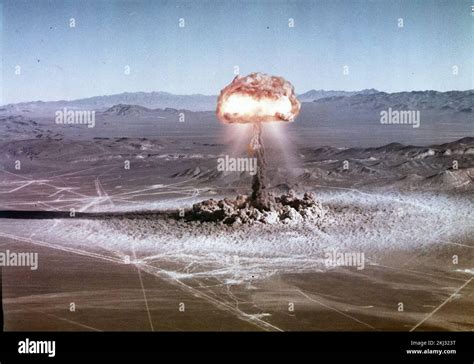
At the NNSA laboratories, there is the prospect of a renewed nuclear arms race as the START Treaty has ended. The President has hinted at starting nuclear testing again. A resumption of nuclear testing, and/or active development of nuclear weapons, means harsh realities are coming. We cannot control or avoid them much longer. Ultimately, we will have to confront the problem that these realities are coming where reality has been rejected for a long time. The danger of the outcomes being bad has escalated to a dangerous level. Today, we have Schrodinger’s nuclear stockpile. By this, I mean it both works and doesn’t work as intended. Until we open that box, we won’t know the answer. We are about to open the box.

Are we ready for this? Not from what I observed. Reality is going to kick our ass. I pray it doesn’t kill us.

“Life is a series of natural and spontaneous changes. Don’t resist them; that only creates sorrow. Let reality be reality. Let things flow naturally forward in whatever way they like.” ― Lao Tzu

References

Oberkampf, William L., and Christopher J. Roy. Verification and validation in scientific computing. Cambridge university press, 2010.

Haan, S. W., J. D. Lindl, D. A. Callahan, D. S. Clark, J. D. Salmonson, B. A. Hammel, L. J. Atherton et al. “Point design targets, specifications, and requirements for the 2010 ignition campaign on the National Ignition Facility.” Physics of Plasmas18, no. 5 (2011).

Resurrecting High-Resolution Methods: Essentially TVD

tl;dr

If one goes back to the 1970s and 1980s, there was an explosion of activity around what became known as high-resolution methods. This was focused on overcoming Godunov’s Theorem, which limited linear monotone methods to being first-order. The key point was to introduce a mechanism, often called a limiter, that was a nonlinear switch between the first-order and the higher-order methods. This allowed both higher-than-first-order accuracy and the (approximate) monotonicity behavior, as desired. This sort of methodology was formalized with TVD methods introduced by Harten. TVD was a mathematical guide to nonlinearity in method composition. After this, high-resolution methods moved in a largely different direction with the idea of essentially non-oscillatory (ENO) methods. These methods discardedTVD. They were still based on monotone first-order methods. The issue is that ENO methods are inherently dissipative compared to the TVD methods for most practical problems. Their advantage on practical problems is only where highlydetailed structure and nonlinear things, such as turbulence or other phenomena, are present.

Here I introduce an idea for using TVD methods as a springboard to a new class of high-order accurate high-resolution methods. This will enable high accuracy of essentially non-oscillatory methods, matching TVD methods in situations where those are superior. This allows the higher accuracy results to meet the potential so often unmet in practice.

This is the first blog post written entirely after my retirement.

“Well, you want greater accuracy, but even more you want greater resolution. I defined a concept of resolution.” – Peter Lax

Prolog and Backstory

I’d like to start with a bit of personal background on this topic. The methods I’ll talk about are something that I thought about 20 years ago in my last months at Los Alamos. I’d even started to implement these methods in my personal research code. At that time, I had taken a management position, and my ability to execute any sort of deep technical work was highly compromised. Nonetheless, I started to look at these methods that I will describe below and implemented them in code. A combination of personal and professional reasons prompted me to move to Sandia. Then, while at Sandia, I completely subverted this interest to focus on the project work that I was hiredto do there. As is the way at Sandia, and I needed to fullycommit to that. Thus, these methods sat in the background for twenty years, not getting any attention. Much to my amazement, the ideas that I will describe here came rushing back to me as soon as I decided to retire. As soon as my mind was freed of all of the programmatic constraints at Sandia, I gave it the attention it deserved.

I think this episode says a lot about the intellectual environment at Sandia. In this specific area, Sandia’s methods and codes are so backwards that the ideas I will present here had no conceivable outlet. Sandia has serious problems with respect toinnovation and creation of new ideas. This is in spite of management declaring victory on this topic right before I left the lab. I can with some assurance state that the victory is hollow and not in evidence.

So, I hope you can enjoy this little aside into High Resolution Methods for hyperbolic PDEs.

Mathematical Foundations

“Well, when I started to work on it I was very much influenced by two papers. One was Eberhard Hopf’s on the viscous limit of Burgers’ equation, and the other was the von Neumann-Richtmyer paper on artificial viscosity. And looking at these examples I was able to see what the general theory might look like.” – Peter Lax

“My contribution to this point of view was that if you do that, then you have to set up a difference equation, which is in conservation form, which is consistent with the original conservation loss. That was a very useful observation.” – Peter Lax

If we go all the way to the beginning of the development of numerical methods, we can trace how we arrived here. The basic proof of concept was the first shock-capturing method using artificial viscosity. This stabilized and made practical an unstable method. Soon after, another type of method was produced, one that gave stable answers without this seemingly arbitrary stabilization. These were monotone methods that had naturally positive coefficients and suppressed oscillations by construction. Upwind methods are an archetype of this. Another introduced the conservation form and a different formulation in the Lax-Friedrichs method.

“Well, von Neumann saw the importance of stability and furthermore, he was able to analyze it. His analysis was rigorous for equation’s response to coefficients, linear analysis usually tells the story.” – Peter Lax

A canonical monotone scheme was Godunov’s method. This is basically extending upwind methods to systems of equations. This method alone would make Godunov legendary. Godunov also produced a seminal mathematical theorem. It is a barrier theorem telling us what cannot be done. It stated that a linear method could not be monotone as higher than first-order accuracy. All the original monotone methods are first order. Any second-order method is oscillatory. The keyword in this theorem is linear. Soon, a set of researchers would discover how to get past Godunov’s barrier theorem.

For approximations to hyperbolic PDEs, this spatial differencing is far and away the most important and influential aspect. This is not to discount or downplay the importance of dissipation mechanisms, Riemann solvers, or time differencing. Nonetheless, all of these are worthy of advancing, but none has the power to transform the field like the spatial approximation that’s used. This will play out over and over in this story.

A Revolution in Methods

“Well, you want greater accuracy, but even more you want greater resolution. I defined a concept of resolution.” – Peter Lax

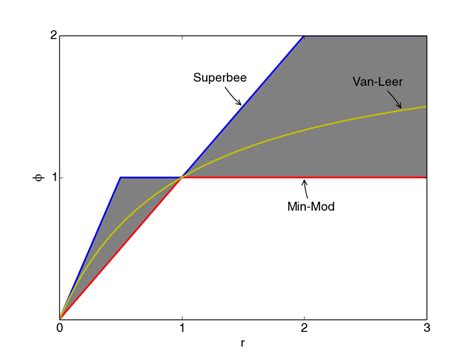
It is clear that the key to overcoming Godunov’s barrier theorem was devised independently by four different researchers across the globe. Arguably, the first was Jay Boris, who devised flux limiters and the minmod function. Minmod returns the argument that is smallest in magnitude if the arguments all have the same sign. In this work, Jay produced a selection function that adapted fluxes to the nature of the solution. The key is that the approximation used depends on the solution. In other words, the approximation is nonlinear. This is the way out of Godunov’s barrier.

Bram Van Leer followed a similar path. Once I asked Bram, “How did you discover this?” Bram’s response was that he could just see that it could be done by examining plots of solutions from monotone methods and second-order schemes (canonically Lax-Wendroff). He could trace out the choices by eye, and he justneeded to come up with an automated mechanism. In the end, Van Leer came up with something quite similar toBoris. Ultimately, Van Leer produced a method that successfully updated Godunov’s method. Two other researchers, Ami Haren and Vladimir Kolgan, came up with their own nonlinear approximations.

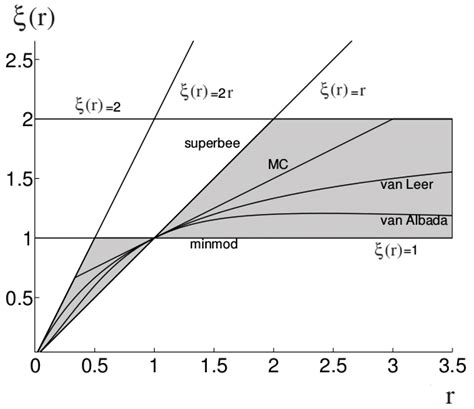
Ami Harten was an extraordinary mathematician and student of Peter Lax. In the 1980’s, he devised a way to formalize the advances in nonlinear approximations. This was the theory of total variation diminishing (TVD) methods. First-order monotone methods are TVD automatically. The TVD methods of second-order accuracy had weights that are nonlinear, and these weights came from limiters. He produced a theory that allowed one to determine if a limiter was suitable. This was formalized and graphically described by Sweby. The Sweby diagram has become canonical and inherently useful for examining methods.

These methods were a revelation for solving PDEs, particularly for fluid flow. Mathematicall,y these are known as hyperbolic equations (conservation laws). Suddenly, one did not have to choose between diffuse first-order solutions and non-physical oscillation rich higher order solutions. The difference in solution quality and efficiency was massiv,e especially in 2- or 3-D. The worst of these methods, using a minmod solution, was easily two to three times better than first-order Godunov on the Sod Shock tube. Sod’s shock tube is sort of a “Hello World” problem for shock waves. The better Van Leer method is over six times better (in 3-D this would be more than 100X.

These methods rapidly became state of the art in a host of communities across the technical World. This is most notable in Aerospace engineering, but also in astrophysics and nuclear weapons. These methods both benefited from the coattails of expanding computing power and the advent of CFD. The advance in accuracy offered by these methods was so great that it could not be ignored. It was a genuine quantum leap in performance. Now, second-order results could be found without oscillatory side-effects that were fatal for many applications. In some cases, calculations that had been impossible became physically attractive. Two great examples are turbulence and accretion discs.

Today, these methods are simply the standard and have not been replaced. There are good reasons for this!

The Development of ENO and Its Limitations

“The deepest sin against the human mind is to believe things without evidence. Science is simply common sense at its best – that is, rigidly accurate in observation, and merciless to fallacy in logic.” ― Thomas Huxley

The issue with TVD and similar methods are some distinct limits on what they can do. Mathematically, these methods are quite limited. The math itself is quite limited. These methods degenerate to first-order accuracy at any extrema in a solution. The theory does not extend cleanly to more than one dimension either. Thus, a gap exists between the desires of higher order accuracy and the observed practical utility of the methods. The practical utility drove rapid and widespread adoption. The lack of mathematical theory has provided a stagnation in progress.

Hyperbolic PDEs (and fluid dynamics) naturally produce singular structures like shocks or material interfaces. These structures inhibit high-order accuracy. For most practical applied uses of simulation, first-order accuracy and convergence are the best that can be expected. The theory for this is clear. Thus, high-order accuracy has limitations. This gets to the concept of high-resolution methods. The use of high-order accuracy increases the resolving power of the methods. The concept was first seen in a paper by Lax. This can most easily be seen in methods like PPM and generally in the work of Woodward and Colella. They use high-order methods as part of their otherwise “TVD” methods to get even better results.

The approach is to use methods higher than second-order as part of their second-order method. Unfortunately, their results are generally not built upon. Their work is simply seen as cornerstones and not foundations. I will try to place these in a more foundational position and show the way forward. We see this benefit in the quantum leap in accuracy and efficiency of these methods introduced to overcome Godunov’s theorem.

After the huge success of TVD methods, there was a distinct interest in continuing the revolution with new methods. Methods not limited in accuracy with more rigor were desired. One would think that the TVD methods would be the springboard to higher order as monotone methods had been. One attempt was made using TVB (total variation bounded methods. In this formulation, a constant is applied to TVD limiters to make the methods amenable to high-order accuracy. The issue is the constant, which becomes arbitrary and untethered to theory. The issue with TVB methods is the parameter, which does not have a good methodology for determining. It smacks of methods that have similar undetermined coefficients, like artificial viscosity. This approach rapidly lost favor and became a dead end. Below, I will suggest a different way to extend TVD to higher orders.

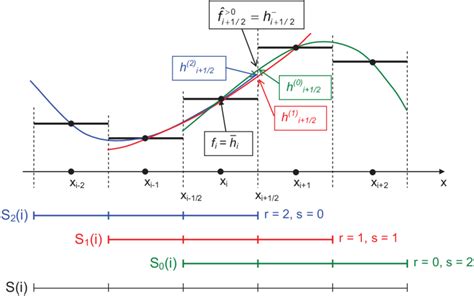
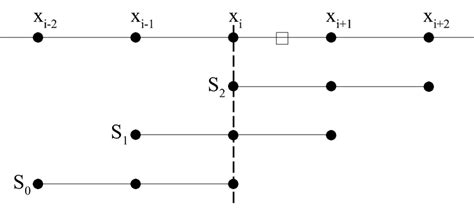
Before I get to that idea, let’s talk about the direction that did proceed. Essentially non-oscillatory methods were the path. The idea was to choose adaptively high-order approximations that were the least risky. Thereforethe approximation would always be high-order, but the safest approximation locally. This is simple in concept and had success, but major weaknesses too. Sometimes the approximations would be too unstable and lead to a breakdown. More often, the safety was overkill. These weaknesses led to the wildly popular weighted ENO (WENO) methods that introduced higher-order methods as the default fallback for approximation. Recently, Targeted ENO (TENO) has been introduced and has great appeal.

Nonetheles,s the penetration of these methods into practical problems has been quite dismal. If one looks at the Labs where I work, they have failed. Only the first generation of high-resolution methods (Van Leer’s) is used. There are very good reasons for this!

The issue with all these ENO methods is their resolving power. They all suck compared to TVD. They are only similar or less resolving than good TVD at a rather extreme cost. The actual practical resolution of ENO is closer to minmod TVD on simple or well-structured problems. So equivalent to the worst TVD method at an enormously higher cost. Getting formal high-order accuracy is not worth it. The only place these methods pay off are problems with a shitload of structure, like turbulence. Even though the payoff is modest. For practical problems, ENO is a dead end.

In the paper by Greenough and me about the accuracy of these methods. This is the impetus for developing different ideas as it showed ENO (WENO’s) limits and achilles heal.. This is the poor efficiency and payoff for complexity in practical results. one can have an answer just as bad as the worst TVD method for six times the cost. The core issue is that higher accuracy is incrediblyseductive. It is measured only on problems that nobody really cares about (the smooth ones). Thus, you have the notion of a third, fourth, fifth order method being available compared to a second-order method. The reality is that for problems you care about, the second-order method is actually more accurate and vastly more efficient. The practical utility is lost.

Other approaches to breaking out of this stagnation have also failed for a host of reasons. This includes discontinuous Galerkin (DG) methods that have great liabilities. Flux reconstruction is another approach that has failed to gain wide use. Some other methods have helped, such as MOOD or extremum-preserving methods (I worked on these too). None of them has caught fire and replaced TVD as the method of choice for real applications.

The Cure? The Median Function to the Rescue (Again!)

“The arc of our evolutionary history is long. But it bends towards goodness” ― Nicholas A. Christakis

For these practical problems with discontinuous solutions, the accuracy of the solution is rarely, if ever, measured. Thus, the entire issue discussed below is simply submerged. The community does not see it as accepted practice, and hence the problem does not get any attention. The starting point in digesting the results that I had in my paper with Jeff Greenough was to realize that the full non-linear WENO approach we studied was utilizedeverywhere on the grid. In actuality, for most places in the problem, it was completely unnecessary. The high-order approximation built into WENO was monotone all by itself. Thus, all of that effort in the WENO algorithm has no beneficial outcome. Actually, it is detrimental to accuracy.

This observation alone would comprise a new method with benefits. The recipe for the new method is quite simple to graft onto an existing ENO/WENO/TENO method. Given an existing or desired non-oscillatory method, the recipe is quite simple:

1. Take the ideal desired high-order method.

2. Test whether it is monotonicity preserving

3, If it is, then simply use the high-order method and exit

4. If it is not monotonicity preserving, use the ENO/WENO/TENO algorithm.

This is quite similar to Suresh and Huynh’s method, simply using a different approach at extrema or discontinuities. For what follows, this is the start of a more extensive modification. I will note that it is modestlymore accurate and efficient than the ENO/WENO?TENO method by virtue of NOT using those approximations everywhere. The monotonicity test is also quite simple and cheap to evaluate.

With this experience under my belt, I started to think about the creative arc that led to ENO. The original (OG as it were) monotone methods were first-order, but foundational for TVD methods. They were not replaced, but rather built on top of. The same methods are foundational for ENO. They are the low-order seed stencils that the high-order stencil is builtupon. Here is the key observation: with ENO, the TVD approximation is notbuilt upon. ENO goes back to the first-order approximation to create its higher-order approximation. What if we build high-order approximations using TVD as the low-order seed? What would this look like?

To me, this seemed a more logical progression for “ENO” type approximations. Rather than a first-order seed, we would begin with a second-order seed. This second-order seed for higher-order would be much more accurate than the first-order seed. The prospect is that the character of the TVD approximation would be transferredto the new high-order selection. This would cure the rather dismal practical accuracy problem that ENO/WENO/TENO methods are shackled by.

As the experienced reader of this blog might expect, I will use the $median\left(a,b,c\right)$ function to implement this. I love this function! This is an extension of the work of H. T. Huynh, who introduced and used this function in his work. Before unveiling my proposed methods, a bit of an aside is necessary. I will describe the median function and its known and potential properties. There are some significant keys to this function that makes its utility high.

1. $median\left(a,b,c\right)$ returns the argument that is bounded by the other two arguments. This argument is the convex combination of the other two. Hence, it is great for enforcing bounds if arguments have properties.

2. Accuracy is a proven property. If two of the three arguments are at least a certain order of accuracy, the function will return that order of accuracy. This comes from the median being a convex combination of those two arguments, or an argument that has that accuracy.

3. The first of my proposed properties is linear stability. This would be an extension of the accuracy property. This works under the premise of linearity, where the convex combination of stability would apply. This is almost certainly true.

4. Finally, the nonlinear stability is proposed as an outcome. This is the hardest to prove simply due to its nonlinearity. Nonlinear stability are things like total variation control or essential non-oscillatory behavior. It is not proven, but a hypothesis that seems quite reasonable and possible

Another key part of median(a,b,c)median\left(a,b,c\right) is its connection to the essential minmod function. The $minmod\left(a,b\right)$ function was essential to TVD methods. It returns the minimum in absolute value between the arguments or zero if they differ in sign. There is an equivalence that is notable, minmod(a,b)=median(a,b,0)minmod\left(a,b\right) = median\left(a,b,0\right).In addition the minmod is usedin the simple implementation of median as median(a,b,c)=a+minmod(ba,ca)median\left(a,b,c\right) = a + minmod\left(b-a,c-a\right). I used the median function to express the PPM monotonicity limiter in what to me seemed an extremely clear manner.

The basic idea is use a standard TVD method as the base function for selecting a high-order approximation. This would include minmod, superbee, or Van Leer. One of the key premises is that the high-order method would inherit the character of the TVD base scheme. I will show how the method would be expressed for a new third-order method and then its natural extension, similar to the classic fifth-order WENO method.

I will outline the algorithm proposed. Here are the basic elements of the method: fTVD,f_{TVD}, the TVD approximation, f1f_1, f2f_2, and f3f_3, the third order methods with upstream bias, and f5 f_5, the classic fifth orderupsteam centered method. The method for choosing a final method is then straightforward (the third-order method):

1. fa=median(fTVD,f1,f2),f_a = median\left(f_{TVD}, f_1, f_2\right), fb=median(fTVD,f2,f3)f_b = median\left(f_{TVD}, f_2, f_3\right).

2. f=median(fTVD,fa,fb).f_* = median\left(f_{TVD}, f_a, f_b\right).

For discussion, we can see the approximation will be third-order accurate. One of the third-order methods is the classic ENO approximation with its weaker nonlinear stability property, thus that stability is inherited. Linear stability is far stronger as only one approximation in linearly unstable, and that property will be screened out.

The fifth-order version is quite similar, with an extra step:

1. fa=median(fTVD,f1,f2)f_a = median\left(f_{TVD}, f_1, f_2\right), fb=median(fTVD,f2,f3)f_b = median\left(f_{TVD}, f_2, f_3\right).

2. fA=median(fTVD,f5,fa),fB=median(fTVD,f5,fb).f_A = median\left(f_{TVD}, f_5, f_a\right), f_B = median\left(f_{TVD}, f_5, f_b\right).

3. f=median(fTVD,fA,fB)f_* = median\left(f_{TVD}, f_A, f_B\right).

I have struggled to name this approach. My first idea was “nearly” TVD and then “almost” TVD. Neither is very technical nor mathematical sounding. Approximately TVD sounds better, but it doesn’t flow well. I have settled on “essentially” TVD or ETVD. The hope is that this approach comes closer to the desired design of ENO methods,TV(un+1)TV(un)+𝒪(𝒽𝓇) TV\left(u^{n+1}\right) \le TV\left(u^n\right) + \cal{O}\left(h^r\right). We note that the level of caution used in ENO has not served it well in terms of practical accuracy. This is thematically consistent with where methods have evolved.

This is a simple version of the proposed algorithm working on edge approximations that then become fluxes. A more proper version of the algorithm would measure the variation in a cell of the different approximations. This would be similar to or identical to the smoothness measures used in WENO. That variation would be usedto compare the results from different approximations. The complication from using this approach would be a post-processing step to find the proper edge value. One would find the variation that is closest to the TVD approximation. There are two obvious choices: one where a series of if-then statements finds the matching approximation. A second version would use the inverse variation measures to construct weights that would choose the approximation. These approaches use more data for the variation and weights. Testing would be required to determine the efficacy of the resulting method.

“In formal logic, a contradiction is the signal of a defeat; but in the evolution of real knowledge it marks the first step in progress towards a victory.” ― Alfred North Whitehead

Prospects Going Forward

In the not too distant futur,e I will show the results for these methods compared to ENO/WENO methods. This involves reanimating code from 20 years ago. The reanimated code will be greatly helped by some of the new AI coding tools. I had a very good experience compiling old code with OpenAI’s Codex. I may also try Claude Code. These tools are amazing. When I tried Codex it felt much like the amazement of using ChatGPT for the first time. Hopefully, I can compare the accuracy and efficiency of the methods using my old research code from my time at Los Alamos. I’m certain it will look appealing as my early tests showed, but I never really finalized or formalized my results before changing Labs.

“Keep in mind that there is in truth no central core theory of nonlinear partial differential equations, nor can there be. The sources of partial differential equations are so many – physical, probabilistic, geometric, etc. – that the subject is a confederation of diverse subareas, each studying different phenomena for different nonlinear partial differential equation by utterly different methods.”

J Lindenstrauss, L C Evans, A Douady, A Shalev, and N Pippenge

References

Godunov, Sergei K., and Ihor Bohachevsky. “Finite difference method for numerical computation of discontinuous solutions of the equations of fluid dynamics.” Matematičeskij sbornik 47, no. 3 (1959): 271-306.

Lax, Peter D. “Hyperbolic systems of conservation laws II.” Communications on pure and applied mathematics 10, no. 4 (1957): 537-566.

Boris, Jay P., and David L. Book. “Flux-corrected transport. I. SHASTA, a fluid transport algorithm that works.” Journal of computational physics 11, no. 1 (1973): 38-69.

Van Leer, Bram. “Towards the ultimate conservative difference scheme. II. Monotonicity and conservation combined in a second-order scheme.” Journal of computational physics 14, no. 4 (1974): 361-370.

Van Leer, Bram. “Towards the ultimate conservative difference scheme. V. A second-order sequel to Godunov’s method.” Journal of computational Physics 32, no. 1 (1979): 101-136.

van Leer, Bram. “A historical oversight: Vladimir P. Kolgan and his high-resolution scheme.” Journal of Computational Physics230, no. 7 (2011): 2378-2383.

Lax, Peter D. “Accuracy and resolution in the computation of solutions of linear and nonlinear equations.” In Recent advances in numerical analysis, pp. 107-117. Academic Press, 1978.

Harten, Ami. “High resolution schemes for hyperbolic conservation laws.” Journal of computational physics 49, no. 3 (1983): 357-393.

Sweby, Peter K. “High resolution schemes using flux limiters for hyperbolic conservation laws.” SIAM journal on numerical analysis 21, no. 5 (1984): 995-1011.

Woodward, Paul, and Phillip Colella. “The numerical simulation of two-dimensional fluid flow with strong shocks.” Journal of computational physics 54, no. 1 (1984): 115-173.

Colella, Phillip, and Paul R. Woodward. “The piecewise parabolic method (PPM) for gas-dynamical simulations.” Journal of computational physics 54, no. 1 (1984): 174-201.

Colella, Phillip. “A direct Eulerian MUSCL scheme for gas dynamics.” SIAM Journal on Scientific and Statistical Computing 6, no. 1 (1985): 104-117.

Margolin, Len G., and William J. Rider. “A rationale for implicit turbulence modelling.” International Journal for Numerical Methods in Fluids 39, no. 9 (2002): 821-841.

Majda, Andrew, and Stanley Osher. “Propagation of error into regions of smoothness for accurate difference approximations to hyperbolic equations.” Communications on Pure and Applied Mathematics 30, no. 6 (1977): 671-705.

Banks, Jeffrey W., T. Aslam, and William J. Rider. “On sub-linear convergence for linearly degenerate waves in capturing schemes.” Journal of Computational Physics 227, no. 14 (2008): 6985-7002.

Shu, Chi-Wang. “TVB uniformly high-order schemes for conservation laws.” Mathematics of Computation 49, no. 179 (1987): 105-121.

Huynh, Hung T. “Accurate monotone cubic interpolation.” SIAM Journal on Numerical Analysis 30, no. 1 (1993): 57-100.

Huynh, Hung T. “Accurate upwind methods for the Euler equations.” SIAM Journal on Numerical Analysis 32, no. 5 (1995): 1565-1619.

Rider, William J., Jeffrey A. Greenough, and James R. Kamm. “Accurate monotonicity-and extrema-preserving methods through adaptive nonlinear hybridizations.” Journal of Computational Physics 225, no. 2 (2007): 1827-1848.

Suresh, Ambady, and Hung T. Huynh. “Accurate monotonicity-preserving schemes with Runge–Kutta time stepping.” Journal of Computational Physics 136, no. 1 (1997): 83-99.

Colella, Phillip, and Michael D. Sekora. “A limiter for PPM that preserves accuracy at smooth extrema.” Journal of Computational Physics 227, no. 15 (2008): 7069-7076.

Loubere, Raphaël, Michael Dumbser, and Steven Diot. “A new family of high order unstructured MOOD and ADER finite volume schemes for multidimensional systems of hyperbolic conservation laws.” Communications in Computational Physics 16, no. 3 (2014): 718-763.

Harten, Ami, and Stanley Osher. “Uniformly high-order accurate nonoscillatory schemes. I.” SIAM Journal on Numerical Analysis 24, no. 2 (1987): 279-309.

Harten, Ami, Bjorn Engquist, Stanley Osher, and Sukumar R. Chakravarthy. “Uniformly high order accurate essentially non-oscillatory schemes, III.” Journal of computational physics131, no. 1 (1997): 3-47.

Jiang, Guang-Shan, and Chi-Wang Shu. “Efficient implementation of weighted ENO schemes.” Journal of computational physics 126, no. 1 (1996): 202-228.

Fu, Lin. “Review of the High-Order TENO Schemes for Compressible Gas Dynamics and Turbulence.” Archives of Computational Methods in Engineering 30, no. 4 (2023).

Greenough, J. A., and W. J. Rider. “A quantitative comparison of numerical methods for the compressible Euler equations: fifth-order WENO and piecewise-linear Godunov.” Journal of Computational Physics 196, no. 1 (2004): 259-281.

V&V: Past, Present and Future

Prolog

The irony of this post is that the circumstances of my departure are a perfect conclusion. It was entirely consistent with the history of V&V and its present state. If peer review is unserious and not taken seriously, V&V is useless. To use AI well and safely, V&V is essential, yet it is absent in plans and programs. One of the things I’ve done since starting the blog is use the writing to help think about a talk I would give. T This is a throwback to that approach. I gave this talk on my last working day at Sandia, but wrote this ahead of that. Enjoy!

tl;dr

V&V has been a central pursuit of my professional career. The origins of V&V came from highly regulated nuclear pursuits such as waste and reactors. These rely upon modeling for understanding. Grafting these ideas onto Stockpile Stewardship is logical, but not immediately recognized. V&V was part of a redirect of the program toward balance and building capability. This balance and focus on capability has faded away. The program is all about supercomputing as it was at the beginning. The same basic recipe is being proposed for the pursuit of AI. In both cases, V&V is virtually absent, and the balance is non-existent. Our national programs are destined to fail through ignorance and hubris.

There is a risk that we will become a cargo culture around things like AI, but also our codes. This is the worship of a technology without any real understanding. The defense against this is doing hard peer review and critical assessments of capability. New expanded capability should be continuously sought. Instead, we see technology delivered for use from outside or the past. Any current evidence is rejected simply because we cannot fix any problem found. Bigger, faster computers give the illusion of progress without solid fundamentals. This renders these expensive computers as meaningless.

“One of the saddest lessons of history is this: If we’ve been bamboozled long enough, we tend to reject any evidence of the bamboozle. We’re no longer interested in finding out the truth. The bamboozle has captured us. It’s simply too painful to acknowledge, even to ourselves, that we’ve been taken. Once you give a charlatan power over you, you almost never get it back.” ― Carl Sagan

The Origins of V&V

I’ve noted many times that V&V is simply the practice of the scientific method. This implies that weak V&V means weak science. Lack of V&V is the lack of science. Science is an engine of innovation and progress. Lack of science is a lack of innovation and progress.

“The most effective way to destroy people is to deny and obliterate their own understanding of their history.” ― George Orwell

V&V has been a major part of my career, and I’ve worked in the V&V program for ASC since its beginning. The way I got into it was through methods work in hydrodynamic methods and physics at Los Alamos. It is another passion in my career. That has ended up being catastrophic for me at the end. Both passions are not possible in the current environment. Thus, I’ve always seen a connection between V&V and the quest for improvement in the codes (methods and models). It is my firm belief that that connection is broken today. There is little or no impetus or willingness to improve codes aside from computing power. The result is a V&V program that’s degenerated into a rubber stamp. If the assessment is good, they’re accepted; if the assessment is negative they are rejected. Honesty has no place in the direction or dialogue.

V&V is an essential form of peer review for modeling and simulation. The problem is that the sort of peer review that V&V embodies has virtually faded from existence. The form of peer review that resulted in the creation of the V&V program is also gone. No longer does the program get subjected to that sort of real feedback. The peer review is manipulatedand cooked before it’s even done. Only a positive peer review is accepted. Any honest critique is just nibbling around the edges, mostly so the praise doesn’t look completely biased.

The origins of V&V are found in various industries that are heavily regulated by the government. These include nuclear storage and nuclear reactors. In both cases, modeling and simulation are essential to work. The basic V&V principles were defined there, and the first applications were found. In both cases, there were high-consequence circumstances that could only be studied via simulation. These are relatedto very big, dangerous, consequential decisions. All of them requiresome measure of faith in those simulations in order for them to be accepted. Sandia National Labs played a key role in defining the foundations of V&V. It was bound to the work of key people: Pat Roache, Bill Oberkampf, Chris Roy, Marty Pilch, Tim Trucano, …

This was a natural fit with stockpile stewardship and working on nuclear weapons once testing ended. Now, simulation is key to that endeavor, too. Being a natural fit didn’t mean it was putto work initially.

Inserting V&V into ASCI

“That which can be asserted without evidence, can be dismissed without evidence.” ― Christopher Hitchens

In 1992, the United States ceased to do full yield nuclear tests. Without the tests, the nation needed to ensure nuclear weapons worked properly using other techniques. This was called Stockpile Stewardship. The original program was simple in construction and concept. They would use the very best and fastest supercomputers to simulate weapons to replace that testing. We would build new experimental platforms. If you wanna know what it looked like, imagine what the Exascale Program recently looked like. Fast computers and codes with little other focus. Superficial comparisons with experiments would provide confidence.

In that time, there were a couple of main challenges.

1. The labs had lost their mainstay of funding and morale. The basic funding recipe also changed.

2. Basic identity was in free fall. The Labs were weak and despairing.

A complicating issue was that supercomputing was changing radically in the early 1990’s. We had entered the period where we needed to move from vector supercomputers defined by Cray to new classes of supercomputers defined by parallel computing. Thus, the basic structure and approach to writing the computer codes had to evolve. The labs had to rewrite codes extensively to use the new generation of computing. This offered an opportunity. The original program was devoid of seizing most of this opportunity. It was grossly superficial. Improving modeling and simulation with faster computers is simple. It is also a grossly insufficient half measure that ignores most of the power of computing. Physical models, better methods, and algorithms are all as powerful as faster computers. We see the same thing with current artificial intelligence approaches, and the conclusions are the same.

The problem with the program was that in order to fully replace testing, one needs far more basic science. This basic science is essential and augments what mere computing can provide. If you look at the value is of a computer, it depends on the mathematics and numerical methods used in the code. The models used in the codes are also essential and need to be developed. One also needs a program where one introduces other experimental data that is legally appropriate to obtain. These experiments provide as much of the basic character of a nuclear test as possible legally. This necessitates both a program where we understand the fidelity of those computer codes, and develop high-fidelity experimental facilities. This data is absolutely essential to the program’s validity. This program was the verification and validation program to synthesize these elements.

I should tell the story of how the ASC V&V program started. It all started with a high-stakes peer review around scientific concerns about ASCI (ASC). This resulted in a “Blue Ribbon Panel” formed to examine the program. The Blue Ribbon Panel Reviewis where I met Tim Trucano. Tim presented V&V to the panel, and I presented hydrodynamic methods research. It was a tense and difficult review in January 1999 in Washington DC. Travel was brutal as it followed on the heels of an East Coast blizzard. Out of this difficult review, the ASC program was reborn with the elements necessary for success listed above.

The V&V program was part of this. That crisis happened because of peer review. Experts from the national academies started to look at stockpile stewardship. It was a very important program for the nation, and they saw huge flaws in how the program was constructed. The program changed as a result and reaction. It made the program far better, too. For a while, the ASC program provided enormous boosts in the capability put into the codes. We had about 6-8 years of real scientific progress. The focus was on this broad-balance program that had supercomputing, but also modeling, numerical methods, and V&V. These all worked together to produce better modeling and simulation.

However, this era changed, and around 2007, this capability enhancement started to fade away. A big part of the death of peer review and the decay of the program was a management change. In 2006, LANL and LLNL both changed to corporate governance. The entire management model changed. The first to go was the methods development, which got folded into the code development. Then you saw a gradual diminishment of emphasis on modeling and V&V. Any and all critique of the codes and modeling became muted and light. The lack of peer review has hollowed out the quality of ASC and stockpile stewardship.

“Do you know what we call opinion in the absence of evidence? We call it prejudice.” ― Michael Crichton

The Death of Real Peer Review

Over the last 20 years, any sort of serious peer review has disappeared at the Labs. This puts national security at serious risk. It is essential to maintain high degrees of technical achievement and quality. The reasons are legion. Peer review is used to grade the labs and determine executive bonuses. Peer review causes plans to change and exposes problems. Peer review is difficult and painful. The combination of pain, grades, and money all works to undermine the willingness to accept critique. Today, this willingness has disappeared. We have allowed peer review to be managed in a way that makes it toothless and hollow.

What do we need?

Actual hard-nosed peer review with bona fide negative feedback. This is dead today. The management that now thinks that they basically walk into any review with either an A or an A+. As a result, we don’t have to bring our A game anymore. Instead, we justneed to work on our messaging and our ability to pull the wool over the eyes of the reviewers. The reviewers themselves know that the hard-nosed review isn’t welcome, so they pull all their punches too. It gets even worse the more you look at it. The reviews go into the executive bonus, so everyone knows executive compensation is at stake. No one wants to take money out of the boss’ pocket.

“The Party told you to reject the evidence of your eyes and ears. It was their final, most essential command.” ― George Orwell

After the blue ribbon panel review and the welcome changes to ASC, they installed a continual review called the Burn Code Review. Just for those uninitiated, a burn code is a code that computes some of the most difficult parts of a nuclear weapons modeling, “The Burn”. This was extremely important and a huge challenge for the program. It was a hard-nosed and technicallyproficient expert review. This soon became too much for the program to take. So they replaced it with a review that was just advice. It became kinda like Tucker Carlson’s “Just Asking Questions” mantra instead of an actual review with grades. It’s very similar to the sort of grade inflation that’s taken place across universities.

You can look at the Ivy League, where everybody gets an A, no matter how good they are. I leave the Labs wondering if we have Schrodinger’s nuclear weapon. It either works or doesn’t work, but we don’t actually know. The difference is that the probabilities of it not working are constantly increasing. Without expertise in the right people working on it with honesty, we don’t know. Anything that could be a flashing warning sign is ignored. Concerns are simply brushed aside.

The end of the burn code review most clearly concedes to the lack of capability development in the program. When that ended, methods and models became fixed and unchanging. V&V simplybecame something that had the ability to rubber-stamp the results. Any negative feedback was unwelcome and could be rejected if it didn’t meet the political aims of the management. The political aims of the management became geared more and more as simply getting funding. They are not interested in what that funding actually did. It did not matter if what they were proposing was actually good or fit for the purpose of the stockpile.

The death of peer review at the labs is driven by the fact that the peer review goes into the grade that the labs get from the Department of Energy. So when a peer review is hard-nosed, the grade is low. When the grade is low, their bonus is actually affected. So everyone, the peer reviewers and the management, knows that a bad review leads to less money in the pocket of lab executives. Everyone knows that taking money out of your boss’s pocket is bad for your career. It also takes money out of everyone below the boss, too.

There’s an absolutely toxic knock-on effect to the lack of hard-nosed external peer review. Pretty soon, internal peer review becomes weak, too. It justrolls into a dirty snowball of mediocrity. With this comes a general sense that the lab is in decline rather than pushing forward. The pursuit of science and progress grinds to a halt. This is where we are today. I will note that the current program is starting to resemble the original program more fully. This is completely true if you look at how the AI program is constructed. The Cargo Cult is fully installed, and the Labs just offer really huge supercomputers.

“I think the educational and psychological studies I mentioned are examples of what I would like to call cargo cult science. In the South Seas there is a cargo cult of people. During the war they saw airplanes land with lots of good materials, and they want the same thing to happen now. So they’ve arranged to make things like runways, to put fires along the sides of the runways, to make a wooden hut for a man to sit in, with two wooden pieces on his head like headphones and bars of bamboo sticking out like antennas—he’s the controller—and they wait for the airplanes to land. They’re doing everything right. The form is perfect. It looks exactly the way it looked before. But it doesn’t work. No airplanes land. So I call these things cargo cult science, because they follow all the apparent precepts and forms of scientific investigation, but they’re missing something essential, because the planes don’t land.” ― Richard Feynman

A Cargo cult was an analogy introduced by Richard Feynman. This is science hollowed out from understanding and true meaning. This danger is very real. The methods, models, and codes are becoming less and less understood over time. The true nature of the simulation results is not critically examined. All of this is doubly true for artificial intelligence. The LLMs used by the Labs are black boxes. There is a very dim and limited understanding of how these models produce their results. We are not doing the science to produce understanding, nor the assessment. Rather than becoming a cargo cult, the AI effort is foundedas one.

This takes us to where we are today.

“No matter what he does, every person on earth plays a central role in the history of the world. And normally he doesn’t know it.” ― Paulo Coelho

The Decay to the Present

If you look at those elements of the program that were added, we can see that each of them has faded in intensity, focus, and importance. Today, method development in ASC is virtuallydead. The codes basically have fixed capability, and we’ve learned to accept our limitations. In fact, the limitations are permanent. Code verification can find simple bugs, but any deeper problem is not welcome. The resources to fix problems are not there. All the effort is going into putting codes on the new computers. This is true almost across the board. We have codes that are using antiquated, decrepit methods and are fading away from the state of the art.

The situation with modeling is marginally better, but really not all that healthy. The models in the codes are generally unsuitable and also antiquated. We move to where the program is largely just tweaking these models, providing calibration. We know many model are physically inappropriate for their use. They need continued exploration of improvements to remove unphysical calibration.

In a sense, the V&V program is the healthiest, but the rot that we see with methods and models is clearly happening there. The key is to look at the process. We’ve lost the ability to have vibrant peer review and accept and react to bad V&V results the way that a scientific organization should. In a healthy dynamic, we would take bad results and react. The right approach is to fix the codes; fix the models, and fix the methods depending on the evidence. Instead, bad results are rejected. There’s a feeling that there’s no money, expertise or willingness to engage in fixing anything. We’ve got into a place where V&V is merely a rubber stamp for mediocre work. Mark my words: The work is getting more and more mediocre with each passing year. Each passing year, there are fewer experts, and they are less heard.

If one wants to look at the future, one can see the Exascale program and the AI program. Both are basically modern carbon copies of the original ASCI program. It’s basically codes, supercomputers, and applications with little else.

What’s missing? The balance.

There needs to be a balance in science, and a balance in what goes on to the computers. We’ve lost the ability to understand that what goes on to the computer is as or more important than the computers themselves. My belief is that computing and supercomputing is an unbiased good. More computing is always better. What we should be asking ourselves is what we have sacrificed in order to get that supercomputing? Do we have the balance right? My sense is that today we don’t. V&V is the harbinger of that. The V&V program is simply a hollow version of what it once was and is no longer providing integrated, intimate, and fact-based feedback to the quality of what’s in the codes.

Take the Exascale program as a prime example. Instead of learning from the lessons of the ASCI program, the Exascale program was a step backwards. All computing and no science, just with the codes on faster computers and the science applications. The truth is that the computers do allow better science, but within the confines of the codes. The models and methods in the codes are equally important, both in terms of quality. Other foci are routes for improvement of results. Those improvements were completely sidelined by the focus on computing. A weak V&V program simply means progress or issues cannot be measured or detected. Both elements of V&V connect to objective reality. Reality is difficult and virtual reality isn’t. Current programs focus on the virtual because it can be easily managed.

“History doesn’t repeat itself, but it does rhyme.” ― Mark Twain

The Future: AI as a Challenge

We see exactly the same mindset in how we’re pursuing AI today. It is all computing, along with various demo projects and hero calculations. No built-in credibility can be seen, nor any sort of sense that the credibility is important. The methods and algorithms built into AI are not a point of discussion. We have this magical belief that somehow scaling and raw computing will create the necessary conditions for artificial general intelligence (AGI). This is a virtual impossibility; the route to AGI is harder. The true result of both the Exascale program and our approach to AI is basicallyceding the future to China. We are making sure that the United States loses its supremacy in science. Each year we fall further behind.

The basic problem is that we’ve learned nothing from our experience. Instead of moving towards creating a more balanced and appropriate program that focuses on how science is actually accomplished, we’ve instead reverted to the original ASCI program. We have a pure focus on computing. The reasons for this are simple. It’s easy to sell to Congress. Big computers are good for business. The sales pitch is simple and Congress can see a computer. They cannot see math, code, or physics (they do like big experimental facilities). Instead of supporting science, the labs are simply subservient to the money.

One of the key metrics that one can look at is what it takes to double the quality of the solution within a computer code. If a computer code is converging at first-order accuracy, you have to double the mesh to double the accuracy. This is a reasonable rate for applied problems. For a 3D time-dependent problem, this means that a factor of 16 more computing will be neededto get twice the accuracy (assuming efficiency doesn’t degrade). This is an important thing to look at. If you have implicit algorithms that are not linearly efficient or poorly parallelized, that amount of computing will grow.

One of the starkly amazing things about artificial intelligence is that to double the capability of artificial intelligence computationally is vastly more expensive than it is for modeling and simulation codes. This also goes to the fact that AI is not based on physical laws that can be written down, but rather on data. One estimate I got from asking ChatGPT. So, take it with a big grain of salt! There, I applied the usual scaling laws for AI and found that to double the capability of an AI, you would need a million times more compute. Increase the parameter set, the number of values tweaked in the neural network, to be simple about it by 20,000 or a thousand times the amount of data.

All of these numbers are vastly less efficient than those you have for modeling simulation. In addition, we do not have 1000 times the data to help. Take that, the breakthrough that caused the current AI boom was purelyan algorithmic invention. Granted, the algorithm was very well grafted onto the modern computing hardware. This was the Transformer algorithm. The big key was the attention mechanisms that produced a leap in capability. This was probably on the order of a factor of ten to a hundred.

The fact that algorithmic advances are not what we are focus is mind-boggling at best. It is plain stupidity. In modeling and simulation, the argument is that algorithms provide a bigger bang for the buck. They provide greater improvements than computers and has even more evidence in support of it. Yet, we do not actually do that there either. We are taking the same path with AI, with an even worse trajectory. This provides a deep condemnation of our ability to invest in progress. We ignore the evidence that is obvious and ubiquitous.

V&V builds trust. A program that avoids V&V, peer review, and evidence cannot be trusted. To trust simulations or AI, we need V&V. If we want simulations and AI to improve, we need V&V. All ofthis essential if these technologies achieve their potential. Today’s trends all point in the opposite direction. The technology is simply used without deep understanding or attention to correctness. This is the path to becoming a “Cargo Cult”.

“Extraordinary claims require extraordinary evidence.” ― Carl Sagan

All of this speaks volumes about the current environment. There we find ourselves in a place where peer review is light and unremittingly positive. Any negative review is rejected out of hand. We create systems that are structured so that the negative review never comes. The current management system cannot withstand a negative review and manages to never see one.

“The absence of evidence is not the evidence of absence.” ― Carl Sagan

The Enshitification of Everything

tl;dr

Enshitification is one of the most important concepts shaping the understanding of the World today. It specifically applies to something online getting worse over time as the provider of that service excessively monetizes that service. Google is the canonical example of this. It search is getting steadily worse as Google sells results to the highest bidder. Eventually, Google starts to screw the advertisers, too. All of this is great for the bottom line, but it also destroys the product. It turns out that these forces are more widespread than the internet. The centrality of money rules society. Maximizing shareholder value has become the organizing principle for all businesses. This principle is an engine of enshitification. Boeing is another prime example. Once great, they are a company in freefall (literally). Everything is enshitifying. The Labs where I used to work have gotten steadily worse. Why? Applying corporate management principles drives inappropriate incentives. This is money being the most important thing. As important is that other principles fade from focus.

Enshitifcation Online

“First, platforms are good to their users. Then they abuse their users to make things better for their business customers. Next, they abuse those business customers to claw back all the value for themselves. Finally, they have become a giant pile of shit.” ― Cory Doctorow

Every successful online company starts great and then gets shittier. Their service enshitifies as the company turns to making as much money as possible. It is counterintuitive and universal today. The same thing is happening to virtually every institution in society.

The idea is what is called Enshitification. It was coined by Cory Doctorow and vividly described in the book of the same name. It describes the process by which the services we all depend on the internet get worse over time, not better. The primary example of Enshitification is Google. We no longer get the best results for our query; instead, we get positions in the search results sold to the highest bidder. The same thing happens in our Facebook feed, where the feed is curated in order to maximize how much shit they sell us. This happens at Amazon, where again the search results for a product you want are curated to the highest bidder. All ofthis is in service of maximizing shareholder value. All of this is dominated by the primacy of money over all other concerns.

“Tragedy of the Commons: while each person can agree that all would benefit from common restraint, the incentives of the individuals are arrayed against that outcome.” ― Clay Shirky

This is just the tip of an iceberg of shit. The companies pursue a host of specific online strategies to make things worse. Among the things done to make things terrible are attacks on the labor used. They create terrible conditions and chip away at fair wages. The companies also seek to capture politics to remove regulation and any legal constraints, such as anti-trust law (rent-seeking behavior). On the other side of the equation, they seek laws that make their products unrepairable, or remove all third-party support. They remove any possibility of interoperability on the platforms. It goes on and on with the whole incentive being money.

“Money is a great servant but a bad master.” — Francis Bacon

My thesis is that the process of inshittification and its reasons apply far more broadly. It is not simplythat internet services are enshittified, but rather corporations in general are enshittified. The institutions of our government are enshittified bysimilar processes. In every case, this is driven by money, where for corporations, maximizing shareholder value is the reason. We also see our government enshitifying driven by the same process, where now political speech is purchased by money. It has become powerful and allows the companies to basically write the laws in order that those laws allow them to maximize their money, maximize their shareholder value, and has been a major driver in accelerating inequality across the United States.

This inequality then enshitifies society as a whole, as the bottom part of society gets poorer and poorer. They become angrier, and we become more divided. This, in turn, makes them easy prey for the political forces driven by fear and anger that we see dominating today. So, our entire society has been enshitified. At the root of all this inshitification is our focus on money as a value over all other principles. It reigns over all other values, and everything else shrinks in importance.

As we embark on the use of AI across society, the process we’re going through across all elements of society should concern us all. The en-shitification process has destroyed social media as a positive force in society and created many ills and problems we have yet to solve. AI is a far more powerful technology. Given the incentives that are en-shitifying everything, we should be very worried about what this will do when applied to a technology as powerful as AI. The basic process we went through for social media will be an absolute disaster with AI!

Enshitification Everywhere

“It is important to realize the Boeing of 2024 is a very different company to that of the past.” ― Steven Magee

The posterchild for corporate enshitification outside the online world is Boeing. Once the bastion of American engineering excellence, Boeing has turned into a cavalcade of embarrassing events. This all started with a corporate merger where Boeing absorbed McDonnell Douglas. Like a proverbial alien face hugger, the failed aircraft company inserted its failed corporate culture into Boeing. Boeing rejected its legacy and identity for engineering excellence. In its place, they focused on financial engineering and stockholder value.

“The stock market control of the FAA, NTSB and Boeing needs to end for the safety of air travelers.” ― Steven Magee

They outsourced manufacturing to lower costs. They got rid of senior engineers and experts. Cost-cutting measures were all over the company. I remember getting a visit from Boeing in 2006, where they had sacked almost every turbulence modeler. They decided the problem was solved. As a note, turbulence modeling is a key thing in modeling aircraft and determining the performance of planes. There were two decades of hollowing out the company and replacing excellence with shit. Boeing became enshittified.

“The Boeing 737 Max is turning into the Ford Pinto of modern commercial aviation.” ― Steven Magee

This had tragic consequences. It started with something minor. The 787 design and production was a shitshow. Next, they had the crashes of foreign 737-MAX planes due to fucked up engineering. In both cases, the engineering cuts I heard about in 2006 hollowed out the company. So, we can conclude that engineering excellence was gone at Boeing. Next, they had manufacturing issues as a door blew off a plane in mid-flight. Lastly, an old McDonnell Douglas UPS plane crashed. It crashed due to an issue identified a decade ago. They are a company that turned its legacy and reputation into shit.

I remember asking my managers at Sandia if they were talking about Boeing. If they were paying attention to Boeing’s problems. Their response was “no, it is not relevant, we aren’t looking there.” Sandia’s brand is similar to Boeing’s in terms of engineering excellence. Sandia is run by an aerospace company, too. Maybe Boeing is the proverbial canary in the coal mine. If Sandia management was competent, they would pay attention to what happened to Boeing. Make sure it doesn’t happen at Sandia. To not look at the issues and check for parallels is management malpractice. What that malpractice reallysays is that Sandia does not want to look in the mirror at its own enshittification.

“The reason for enshittification’s popularity is that it embodies a theory that explains the accelerating decay of the things that matter to us, explaining why this is happening and what we should do about it.” ― Cory Doctorow

How Make Government Shitty Too

In many respects, one of the places that’s become most entrenched recently is our politics. It’s hard to say what the chicken and egg are. We know that the Supreme Court has basicallyinstilled the principle of money as speech, thus unleashing vast sums of money into our campaign system. This was a system that was already awash with money. It’s become clear that our Congress, for sure, is bought and paid for. It seems pretty clear that much of the Supreme Court is also bought and paid for by billionaires. So, the idea of free speech is now equated with money. The ultimate resolution of this now is an executive branch corrupt to the core and showing graft for very vast enrichment, all based around the idea that money is always the best thing and always worth any action, even actions that completely lack any moral compass. Money is replacing moral and ethical ideals as an organizing principle for our politics.

A big part of the whole enshutification process is the emphasis on the superficial over the consequential. Everywhere you look today, superficiality governs. Instagram and Facebook are both engines of superficiality. We see the Department of Defense organize around superficiality in the form of the edicts of Pete Hegseth, who himself is an enshutification of the Secretary of Defense. What matters more to him is how things look: how soldiers look, how fit they look, how they’re groomed, how they’re dressed. He cares nothing about the laws, the tactics, or the strategy. It is all just about things looking like he thinks they should.

One must be really focused on understanding how the change towards a focus on money at the labs and universities has contributed to the lack of trust in science. This crisis in trust reached a fever pitch in the wake of COVID. The roots of this mistrust fall into the persistent focus on money at scientific institutions preceding it for the 15-20 years of this millennium. Money and managers rule science, whether it is a government lab or a university. The root of trust failure is this focus on money. Just as this has undermined the trust in social media and Internet companies, it will soon undermine the trust in AI.

The focus on money means that one always looks at the underlying motives for those who lead. Perhaps no place is more susceptible to this focus on money than medicine. This truly shows the power of COVID and its ability to annihilate the trust in science. The basic fundamental idea is that money is the root of a loss of trust in institutions and elites in the United States. This is an engine of enshitification across society as a whole.

One of the things that I look for is parallels. I see strong parallels between my situation at work and the national situation. For example, nationally, we see this theory of the unitary executive promoted by the right wing to give executive power without bounds. I see the same thing at work, where the managerial or executive class does whatever they want. Technically correct decisions are immaterial. The most effective way to solve problems is immaterial. All of that power, all that authority is grantedto the manager, to the executive. Everyone below them is merely there to implement whatever the executive wants.

This is the beating heart of the process of inshittification. Management and its focus on money displaces all other responsibilities, all other means of assessment, and all other means of success. In its wake is left something that is completely at the will and the competence of whoever is in that executive role.

“It is our misfortune, as a historical generation, to live through the largest expansion in expressive capability in human history, a misfortune because abundance breaks more things than scarcity.” ― Clay Shirky

The Root Cause

“Ethical decision-making considers the impact on all stakeholders, not just shareholders.” ― Hendrith Vanlon Smith Jr.

I am not suggesting that money is of no importance. I am suggesting that money should not be of primary importance. It is important to manage and steward money with great responsibility. The problem is that we’ve allowed money to overwhelm all other responsibilities. It’s overwhelmed ethics. It has overwhelmed quality. It has overwhelmed basic societal good. Almost all manner of bad, evil intentions can be justified in the name of money, and this primary focus is being a corrosive element across our entire society, and it is killing the institutions we all depend on for our life, our liberty, and our happiness.

The money is the driver for the corruption. When other things don’t matter, and money is all that matters, it causes unethical and corrupt behavior to become normalized and even acceptable to management. This focus on money is exactly the thing that is driving the enshitification of the internet, and by virtue of that, it is the enshitification of institutions. My wife has seen this in colleges and universities. I see it in the research labs. I suspect it also happens across the corporate landscape.

Surely, the process of enshitification is coming for AI too. Pretty soon, the AI companies will have to actively work on making money, and that making of money will drive them to become worse. This is the system we have installed everywhere. This process will unfold like a natural law. It will play out just like social media. It will likely become another shitty way to sell people shit they don’t need. Just as everything online has taken social media to just making money, even though what they’re doing is socially irresponsible, the same thing happens at the labs. The loss of any social or ethical responsibility results in accelerating the enshitifcation process. The core principle is that it’s all about making as much money as possible.

“Running the company for the shareholders often reduces its long-term growth potential.” ― Ha-Joon Chang

Enshitification happens when a value other than the quality of the product or the service is replaced by a value in money. When money becomes the chief way of measuring the quality, and shitification is a natural outcome. Goodhart’s Law describes how this happens. The standard, clean version is:

“When a measure becomes a target, it ceases to be a good measure.”

Money has become the target. It no longer measures organizational success. All the things that matter for actual success fall away from active management. At the simplest level, this is all about incentive structures. The incentive structures in the United States, in virtually every system we have, have become solely and completely dominated by money. Financial interests are dominating every decision and every benefit in society. There is almost a religious belief that financial interests will manage everything well, and it’s a complete facade. Empirical evidence shows the opposite. The enshitification process makes that very clear – money and financial interests do not assure quality. This is certainly something that I’ve seen in my time at the national laboratories. There has been more financial focus, which has done nothing to improve and actually contributed to the decline in the quality of science.

Let’s All Blame Milton Friedman

“There is one and only one social responsibility of business–to use it resources and engage in activities designed to increase its profits so long as it stays within the rules of the game, which is to say, engages in open and free competition without deception or fraud” ― Milton Friedman

At the core of the problem with money is Milton Friedman’s maximizing shareholder value principle. This principle has become the organizing principle of our entire society. First with corporations, but then due to political pressures, corporate governance has been applied to our government work. In every case, money becomes the thing that’s managed, and almost everything else becomes subservient to money. I’ve seen it at the labs and seen it in corporations where product quality, technical quality all suffer. This is the beating heart and soul of the process of enshitification.

The real core observation is that applying the corporate governance model to the governance of government functions has not made anything any better. It has done the opposite; it’s made almost everything worse. I’ve seen it, plain and simple, in the work that I do in the places that I work. Where we had a steady march towards worse and worse results, worse and worse quality, and demands of financial management overwhelming all other considerations, hand-in-hand with this focus on money is a drive towards managerial behavior that is just outright corrupt and undermines the basic mission of the very institutions they are managing.

“This era, the Enshittocene, is the result of specific policy decisions, made by named individuals. Once we identify those decisions and those individuals, we can act. We can reverse the decisions. We can name the individuals. We can even estimate what size pitchfork they wear. Or at the very least, we can make sure that they are never again trusted with the power to make policy decisions for the rest of us.” ― Cory Doctorow

The issues with trust caused by the focus on money are real. The loss of trust is a rational and correct interpretation of what people are experiencing. Those in positions of authority, when focused on money, are not focused on the actual institution’s reasons for being. Thus, the loss of trust is a true reaction to a loss of the basic integrity of these institutions, driven by this over-focus on money and the loss of a focus on anything else that is important. This is something society needs to grapple with, or the trust and the general institutional shitification will continue unabated.

The summary statement is that it isn’t the scientists that can’t be trusted. It is the managers for those scientists who can’t be trusted. The management’s distorted view of the work that’s being done is the root of what can’t be trusted. This is true at the labs, this is true in industry, and this is true at universities. It is our science management that has created the problem of a lack of trust in science.

A great exemplar of these trust-destroying exercises is the management’s tendency to bullshit about all their success. The bullshit just spews out without any real success, with any problems or failures being deep-sixed. The end result is the lack of trust. The reason they bullshit is that it’s all about the money. The loss of trust is science can be tied to the financial benefits associated with lying. The actual science is good; it is its management that we hold in contempt.

One of the things I’ve noted is that increasingly, the people who are lauded for professional success are the managers. You see managers in high positions in professional societies becoming professional fellows and a variety of other accolades. No longer are we reallyfocusing on the scientists who create, but rather the scientists who manage. The problem is, those who manage are the ones who are annihilating our trust. These managers are also the source of the failure of American science. More amazingly, they are lauded for it!

Unless we change the rules of society away from a focus on money, disaster awaits. We either let that make us change, or get ahead of us. Based on history, the disaster will be the route. Hopefully not a fatal one.

“Where large sums of money are concerned, it is advisable to trust nobody.” — Agatha Christie

What Really Happened?

tl;dr

This story has been 13 years in the making. Key facts and aspects remain untold.. Now it can be with important details. I wrote this blog from 2013-2018, consistently. I was stopped by the threat of punishment by the Lab (management). I started up again in 2024. In 2025, I was forced to stop in a similar, but worse manner. The reasons come down to control and fear on the part of my management. This sort of control by management and power seems widespread and common in society. It is almost expected today. It is a characteristic of our leadership across the nation. They use their power to threaten and punish the voice of the rank and file. It is the beating heart of inequality in society today. In my case, science and national security suffer. More broadly, this power undermines trust and protects corruption and incompetence.

“There must be no barriers to freedom of inquiry… There is no place for dogma in science. The scientist is free, and must be free to ask any question, to doubt any assertion, to seek for any evidence, to correct any errors.”

– Dr. J. Robert Oppenheimer.

Prolog

I retired because Sandia became intolerable for me. It was clear that I was simplywasting my time there. As you get older, you realize that time is the most precious thing you have. It was a privilege to work there. I have always believed deeplyin the responsibility of the Lab’s work. The work needed to be donewith quality and care. That isn’t what is happening. Management wants control. Quality work and experts are a threat to that control. Their actions became incompatible with my values. I had to leave.

A key part of this discussion is going to explain my complaints about declaring Sandia’s Shock Physics work to be “world-class.” This is an utterlydelusional statement. At least the current state of it, there, and the nature of the leadership. The impediments to being world-class will become obvious in the discussion to follow. Instead, I will show how opposed the leadership is to anything that would be considered technical excellence.

I note with work, guided efforts, and development of young staff, the Sandia Shock Physics effort could become world-class. This would require senior staff to guide and mentor the work. Unfortunately, current leadership is utterly and completely overmatched in achieving that. What I hope will be clear by the end of this essay is that current leadership is actually orthogonal to the goal of being world-class. They actually are managing towards a state of mediocrity. Mediocre is a fair assessment of the current capability. Yet, management bullshits everyone about how great they are. What you learn by the end of this piece is why that declaration of being world-class so completely disgusted me.

I’m fairly sure the managers think that declaring the group to be world-class is some sort of pep talk or stroking of ego needed for the individuals. Instead, they need leadership that tells the people that we need to be better. We need to work harder. We need to do the things that raise our game so that we can be world-class. We have leadership existing with incentives that allows to encouraging bad behavior. It also allows a variety of inept, incompetent, and unethical behaviors to exist. Worse still, it is seemingly encouraged or, at a minimum, generally tolerated. What you do not see is management that is oriented towards cultivating excellence or competent execution of the mission. You recognize that excellence is difficult and hard to manage. Working on marketing and bullshit is cheap and easy. Increasingly, it is the easy route that management has taken.

The declaration of being world-class before anyone has done anything to deserve that is merely the sort of grade inflation common today. It is a common complaint lodged against elite institutions such as Harvard. Everybody gets an A. Everyone is world-class. This is the same kind of weak-willed leadership that we’ve come to expect as a nation. The USA sits behind its chief rival, China, in the accomplishment of science and technology. This sort of pathetic leadership is completely unpatriotic. It only serves to deepen our deficits and give comfort to our enemies.

Being the age that I am, I don’t have the luxury or the time to wait for things to improve. I need to move on, live, and express myself while I still have the energy and power to do so. I have many interests where I believe continued innovation and progress is necessary. I see the current expansion of AI into our lives as an enormous promise as well as a threat. I have an immense amount of interest in working on contributing to its proper use. That said, I have very little hope in the current system actually finding the best use for it. The current system will not produce a technology that meets its potential for good.

I’ve seen far too many irresponsible, incompetent, and unethical actions by managers at Sandia. They are engaged in abuse of power routinely. To believe that they will actually produce good, viable, positive solutions to any of these huge challenges is folly. The toxic positivity that inhabits their narratives is the opposite of genuine positivity. It is actually an active and mindful approach to avoiding problems. This avoidance means avoiding solutions, innovations, and progress of all sorts. AI is one of the biggest challenges we’ve had, perhaps since the advent of nuclear weapons! Our leadership is arrayed against meeting these challenges well. The cost to society could be huge. Done properly, AI could be a boon for the future. Done wrong, AI could be a catastrophe. Current leadership tilts the balance toward disaster.

I retired because I had nothing left to contribute at Sandia. It is not that I have nothing I could contribute. I was unable to contribute to the environment present. In a more functional place, I would have a great deal more to contribute. A great deal of it, I believe, to be essential to success., Those contributions would not be accepted and had no outlet. So, to put it differently, the meaningful contributions that I could provide are not acceptable to those in charge. This is because those in charge are irresponsible and have other values and principles that they are adhering to. The impediments at Sandia also reflect society more broadly.

The Events That Prompted My Retirement

I will get to the original blog stoppage back in 2018 later in this essay. It is an echo of the recent events. As noted, my retirement was a direct consequence of losing my voice. Not simplythe voice the blog gives me; I lost any voice in the workplace. There is a lot to this, and all of it reflects poorly on my management, Sandia’s culture, and the Lab itself. To make matters worse, the silence was associated with topics where I was the Lab’s foremost expert. It reflected the complete rejection of expertise by the Lab. As a result, they are not stewarding essential responsibilities. All of this happens with the impunity of secrecy, and no sense of responsibility to citizens through the execution of the Lab’s mission.

“Shame corrodes the very part of us that believes we are capable of change.” ― Brene Brown,

To get to the bottom of this, we need to look at where this all started two years ago. I was assisting a coworker who was engaged in some mission work involving “shock physics”. The key computer code used for this sort of work by Sandia is the shock physics code, CTH. The results were mysteriously poor on an exceptionallyimportant problem. It is often characterized as the single most consequential thing we do, at least where shock physics is concerned. So you would think managers would take quality seriously. CTH is used for a host of other important applications at Sandia and other institutions. This isn’t a minor or idiosyncratic problem; it is fundamental to the code’s credibility.

My coworker engaged me as an expert in both shock physics, combined with verification and validation.. I am also an expert in the mission relevant applications. In brief, I was the correct subject matter expert to be involved. No one at Sandia knew more about these topics than me.

As part of the study he engaged in a verification exercise to determine whether the code was correct for strong shocks. There are two basic problems that are canonical for verification, Sedov and Noh. Both are analytical and involve infinitely strong shocks. The infinite shock fundamentally allows analytical solution. These problems are used by all three NNSA labs to verify their codes (as well as broadly in the international shock physics commuity). My coworker is relentless and competent. This work was executed in his usual sterling manner. The results were distressing. The code did not solve these problems correctly.

I will note that this wasn’t remotely unexpected by me. Knowing how CTH was writtenand implemented made the results exceedinglypredictable and theoreticallywell grounded. Knowing this isn’t enough; one needs to demonstrate it holds in reality. This is essential verification work, done correctly. Additionally, CTH also produced results consistent with the infamous carbuncle instability as well. This is another common affliction of CFD codes. It can produce serious errors in many applied problems. They can be remedied as well. One just needs a modicum of competence and effort. My colleague wrote a detailed report, made a presentation and approached me to review them. Basically, this is an exercise of best practices at this point.

I reviewed it and provided detailed feedback. I had a large amount of feedback, but little need for corrections, just suggested expanded discussion. All of the work was top-notch save for a deeper analysis of its implications, and prospective cures. These measures are not really in his wheelhouse. Nonetheless, the work was solid and unassailable. The nature of the problems could indeed contribute to the poor results. The issues identified were serious and undermined the credibility of CTH. Lots of other things could produce bad results, too, but this was a “smoking gun.”

Then the shit hit the fan.

“People who try hard to do the right thing always seem mad.”

Stephen King

The manager for the department that is responsible for CTH took actions to hide these results. He made my coworker pull his presentation from a conference, and demanded the report be pulled as well. In other words, he censored the work. He censored it because he didn’t like the results. These actions were indefensible technically and ethically. The work was excellent verification work. They were also completely unclassified, open research, not sensitive in any way. The only thing that was “sensitive” was the bad results. In other words, it was a cover-up.

To justify these actions, the manager made a bunch of naive, incompetent, and biased critiques that only showed how little he knew about shock physics. His comments should never been taken seriously. I will counter that the responsible reaction on his part would have been “this is bad, how do we fix the code?” I could have suggested several curative approaches. Instead, his response was completely unethical and irresponsible. A key thing was that my group leader decided to support this manager and not my coworker (who is in his group). They both ignored my review or position as an SME entirely, nor did they approach me for my comments. Expert knowledge of the topic had no bearing on their actions. The managers have clearly demonstrated their unethical, irresponsible, and incompetent nature.

At this juncture, it is useful to step back to define Sandia’s core mission and the principles surrounding it. Since the end of the Cold War and cessation of nuclear testing, it has engaged in stockpile stewardship. While nuclear testing is always the best answer, it comes with unacceptable consequences in foreign policy. This stewardship requires an unassailable technical foundation for all we continue to do. This means competent, responsible, and ethical work requiring attention to detail and commitment to quality. With testing taken off the table, every other element of the work needs to be of higher quality. Vibrant and focused V&V is a vehicle for high-quality work.

Part of this is hard-nosed peer review of the highest standard. The part I worked on is the modeling and simulation of our stockpile. I take it seriously as a sacred responsibility. Sadly, too many of the people leading the labs have abandoned the quality and standards needed for success. Worse yet, the Lab itself seems to have developed a tolerance for these appalling standards. I saw this clearly in this episode. Rather than steward the stockpile, my management was burying it in mediocrity.

My first response was annoyance, and to let the process play out. It did not play out, and the censorship threatened to become permanent. It became clear that the CTH manager intended for the report to be buried forever. I didn’t point out how incompetent his review was either. I tried to engage respectfully, but it became clear that his actions were not taken in good faith. Moreover, my position as a senior staff member and SME was meaningless to the proceedings. After 18 months of censorship had passed, I called it out.I asked why the report remained unpublished despite being technicallyhigh quality?

This action ended my career. Rather, the management’s reaction to this was the end. There was half-assed action on their part, but no mea culpa. We see managers who demand control and allow it to nullify all technical concerns. They show no responsibility to ably and ethically execute the Lab’s mission. The nation has trusted the Labs to do this. This trust is misplaced in our current system.

“It is impossible for someone to lie unless he thinks he knows the truth. Producing bullshit requires no such conviction.” ― Harry G. Frankfurt

I harbor a different, more dire analysis. My managers are bullshitters. As Frankfurt points out in “On Bullshit,” bullshit is worse than a lie. The bullshitter does not care about the truth. Their narrative is posedas a means to an end. This shifts the dial from incompetence to unethical. In other words, there is the likelihood that the attack on this work was completely cynical. Mediocrity and malice look very similar. It is simply some bullshit created to censor it; hide it, and keep it from view. The management cares nothing about the truth or the quality of work. They simply want the fastest, cheapest path to success. Like so many examples today, bullshit is merely a means to an end. The enemy of bullshit is the expert. In this case, that was me, and I needed to be silenced. Managers have lots of power to do this, and they exercised it.

After calling it out, I learned two things. First, their critiques remained the same (incompetent and naive). The management would publish the report, but under duress. It still sits unpublished. If it does get published, it will be semi-classified. What this means is it will be CUI (controlled unclassified information under the guise of export control. This is an absurd and unjustified category for the report. In other words, this is more bullshit. The document is purely unclassified. It is the results of unclassified analytical problems solved with an unclassified computer code. Nothing about the results is remotely sensitive. The only sensitivity is the bad results. It is corrupt on the face of it. I will note that CTH results that are closer to sensitive are regularly published. For example, this would be application work involving high-explosive modeling (a quick Google search can confirm this).

The only reason to make it CUI is to hide it. Make it as invisible as possible. This purpose is completely corrupt and underlies their unethical behavior. This sort ofcorruption is so commonplace today that no one notices it any longer. It is all part of the export control law (a completely stupid piece of shit law). All it really does is harm our national security in the name of protecting it. It is a way of hiding things from view that should be dealt with. Instead, they have an excuse for doing nothing. We make far too many decisions for purely superficial and/or corrupt reasons.

“Anti-intellectualism has been a constant thread winding its way through our political and cultural life, nurtured by the false notion that democracy means that ‘my ignorance is just as good as your knowledge.’

Isaac Asimov

The program that paid for the work and report was unhappy as well. They also decided that the issues exposed by the work needed no attention either. This is incredibly irresponsible. The problem for me is that the management decided that I was the problem, not the censorship or the lack of credibility. An important code with a fatal flaw could just be ignored. In the end, it mostly looks like reasons to doubt Sandia’s fitness for work like this. Not because they can’t do the right thing, but because they won’t.

Unfortunately, the other Lab working on the applied problem didn’t cover themselves with glory either. They withheld information from Sandia essential for proper modeling. Again, they have bullshit reasons for withholding the information. They can justify it in terms of bias and a self-serving reading of rules. It is also an internal conflict that only harms our National security. Sandia does the same thing to the other Labs too. Both Labs are acting in a manner our Nation’s enemies would approve of.

Why would I want to continue wasting my time with these useless people?

Time for Me to Go

At this point, I thought things were over and done. I went on vacation to Spain, easing my mind from this debacle. Then I found out what action management would take. They decided to come after me. Fortunately, I was warned. I took action to protect myself, but if management wants to hurt you, they will. Nothing stands in their way, and they have carte blanche. Worse yet, they know they have impunity. It was the moment of the warning that I decided to retire. I also took the blog down to lessen Sandia’s ability to hurt me. This didn’t stop them; it just lessened the degree of damage. I already had a sense of their malice toward me. If managers are incompetent, unethical, and irresponsible, nothing will stop them.

Soon I learned their first action. I had a written reprimand over a nothing post from Facebook (they made a nonsense claim about a policy). The comment was about a particularly incompetent and harmful cybersecurity measure. The policy announcement was an e-mail nowhere marked as sensitive in any way (catching on to a theme?). Given Sandia’s tendency to overclassify everything, this is notable. They mark things as CUI at the drop of a hat (see above). It was another bit of form over substance. They decided to make things “look” more secure all the while making it less secure in reality. There is a toxic symmetry in these events too.

To make matters worse, they gave me a really shitty performance review. I had already decided to be silent in all things at work for my remaining time. So these actions were just insult to injury. There was a lot to push back on as the review was complete bullshit. I had been restrained and respectful professionally with the issues around CTH. They instead had shown little or now respect for me. I was ignored as an SME. In a sense my review accused me of everything they were guilty of. The way they go after you is dripping with hypocrisy. Their accusations are actually admissions.

“I cannot and will not cut my conscience to fit this year’s fashions.” ― Lillian Hellman

A note of perspective about Sandia. In the context of the current USA, Sandia is a good place to work. Yes, I am damning with faint praise. If you’re the right kind of person, it is a super place. It was not a place I would ever fit into. I’ve known this for years and years, but thought I could overcome it. This was a fool’s errand. That said, these issues are not isolated at all. The USA is in serious trouble from this sort of governance. Sandia is just on local exemplar. Like Sandia, the USA are setting ourselves up for complete failure.

These events had a certain inevitability. As long as I held to my standards and values, a clash was certain. Unless I completely capitulated to their will, it would end up with me on the short end of it. Anyone like me is destined to lose.

“Life is rarely about what happened; it’s mostly about what we think happened.” ― Chuck Klosterman

The First Time I Stopped

“Threats are the last resort of a man with no vocabulary.” ― Tamora Pierce

I should have known better. Somehow, I still had faith in Sandia. That was so goddamn naive. In the recent episode, I realized that the problems with ethics and irresponsibility were far broader and more common. In a way, it moves from a condemnation of one person to a red flag about the entire organization. Other friends have lent me their stories of corruption, too. The Lab has a huge problem, and there is no sign they recognize it or are doing anything about it.I felt the first blog stoppage was localizedto the actions of one executive, instead of a pattern. The only solace in seeing this pattern is a modicum of redemption for one deceased manager, Scott. He was just part of a system that brought out the worst in him. It is probably the same with the managers I just tangled with.

I wrote the blog from 2013 to 2018 with regularity and passion. It still stands as the best thing I did at Sandia. Ultimately, my critique of the Exascale program became too much for management to take. I was softly encouraged to stop and didn’t get the message, so they stopped me by force. Management could have ordered me to stop, as in recent events. In that case, they chose the path of anonymity of an ethics investigation. An important thing to recognize is that corporate ethics is not ethical. Corporate policy defines what is ethical. Corporate ethics is there to protect the corporate interests. Fuck the employee, and actual ethics be damned.

When Ethics contacted me, I initially thought that it was related to my encounter with an appalling episode of terrible peer review. Again, I was naive. Sandia Corporate Ethics doesn’t give a fuck about peer review. It was about going after me. Their biggest concern revolved around whether I was making money off ads that WordPress added to posts. No, I wasn’t; the ads are the price of a free service. Take note of their interest in whether I was making money from this. It shows the mindset clearly. The fact that the blog was above board mattered not one iota. It had been done with permission and advertised in my official performance documents. I put links to the blog in my public presentations. The entire problem was the opinions I had that departed from my manager’s. They wanted to shut me up and punish me.

At the end, I got a written reprimand. I stopped the blog. I am convinced that an executive from Sandia reported me to ethics. I suspected my Director Scott was that person. Someone who could have just told me to stop. He chose to do this in a way that didn’t implicate himself. Other managers were the “bag men” giving me the reprimand. In the process, all the trust and confidence in those people were lost. The management showed absolutelyno loyalty to staff. They now believe that loyalty and trust is agreement on all things, or absolute silence about disagreements. Ironically, it is an environment that is completely antithetical to peer review. It is utterly damning.

“The greatest threat to freedom is the absence of criticism.” ― Wole Soyinka

Why Did I Start the Blog in the First Place

“Be yourself; everyone else is already taken.”

Oscar Wilde

Back in 2013, I was engaged in my usual performance review with my manager, Randy. One of the things that had become frustrating at Sandia was defining my professional development path. To be blunt, almost nothing made sense. I rapidlyfound that Sandia already had little or no interest, or use for the expertise I already possessed. This theme is actually central and consistent for the entire period.

“Why fit in when you were born to stand out?”

Dr. Seuss

This should strike everyone as being a bit insane. Sandia is a nuclear weapons Lab. The National Nuclear Weapons Stockpile is its prime mission. This was a key part of my expertise. I am an expert in computer codes used for the stewardship of the stockpile. My particular expertise is in shock physics for this mission. I am also an expert in how modeling and simulation are used for this mission broadly. I know a lot about the stockpile itself, too. Another part of this is expertise in verification and validation. How fitting is itis that the assemblage of all this expertise was the trigger for the end of my career! Sandia showed little or no interest or use for this expertise at any point in my employment.

The reason expertise is not valued is complex. Chief among the reasons is the complexity and technical depth of the knowledge. Solving problems is deeply technical and expensive. It is far faster and cheaper to shoot the messenger (you are far too critical!). Worse yet, solving problems takes time and money. Why solve a problem when you can bury it, or simplymessage your way around it? For the management today, the answer is bury the problem and simply lie about it. Rely upon the technical authority of your institution to paper over all problems. Trade the institution’s trust and reputation for the easy way out of things.

What was the point of learning anything new? What could I do to become a better professional or better scientist? Write! To become a better writer, one needs to write. It is a craft that is refined by practice. Moreover, writing is a way to think. I am a firm believer that I was on staff at the Lab to be a deep thinker about science and its application to National Security. I labored under the false belief that good quality thinking was valued. It is not!

What I decided was a process where I would write regularly. Writing is a skill. Writing well is also thinking clearly. The act of writing is a way of thinking deeply and then communicating that thought. I have found that a key part of writing is the habit of it. Another key is that you write to be read by others. The blog was a mechanism to do exactly that. Write to be read and understood by others.

“Living with integrity means: Not settling for less than what you know you deserve in your relationships. Asking for what you want and need from others. Speaking your truth, even though it might create conflict or tension. Behaving in ways that are in harmony with your personal values. Making choices based on what you believe, and not what others believe.”

Barbara De Angelis

My blog posts were all work-related. Some of them were technical and “nerdy.” Some of them talked about our programs and science in general. This is part of the work. Nuclear weapons are and have always been political. In many respects, they are the most political technology. Talking about politics and our programs is a bit dangerous. It is also essential to do. My ideas are not always correct, but worth thinking about. In this dynamic are the seeds of the conflict that ended my working career.

A Perspective On Sandia

When I moved to Sandia 19 years ago, it was to a premier National institution that served the Nation. To some extent, this is exactly what I found. It was also in decline. All the Labs are. Los Alamos was in decline, too, and it has continued to be. That decline has been accelerating with each passing year. I have met and worked with many outstanding scientists and been able to contribute to the National security. Some of the best managers I’ve ever worked with were (are) at Sandia. Most of these people are wonderful. Many people’s friendships I treasure and have gained my respect. These people are exactly who I expected to meet and work with.

“Imaginary evil is romantic and varied; real evil is gloomy, monotonous, barren, boring. Imaginary good is boring; real good is always new, marvelous, intoxicating.”

Simone Weil

I have also encountered some of the worst managers I’ve ever known. As I discussed, these managers are irresponsible and unethical. As managers and leaders, this renders them utterly incompetent. Given the responsibility that Sandia is given to the nation, this should horrify all of us. These managers also seem to act with impunity, and their irresponsible acts even lead to success at Sandia, instead of rejection. They are unfit to lead an institution this important or with these responsibilities.

Under these conditions, it is easy to see why American superiority in science and technology has faded and fallen. All ofthis is part of a broad enshitification of American institutions. I believethis enshitification is driven byfocus on money over all other concerns. That focus on money revolves around information control and the use of that information for profit and power. Unless we change our incentives, the declines will continue, if not accelerate.

When I took the blog down, it coincided with my decision to retire. A realization had set in about the dissonance of my values from Sandia leadership. I have believed that competent, responsible, and ethical technical-scientific effort support National security. My leadership believes and demonstrates none of these values. They have discovered that it is far more efficient, fast, and cost-effective to redefine the truth. Admitting and then solving problems is expensive and time-consuming. It also involves competence and responsible action that they cannot execute. In short, I did not want to be associated with Sandia any longer. I am happy to be gone. I am quite sad about how I left. I am sad for the capable and decent people left behind in this broken system.

A core concept in the current state of American life is transactional relationships. Everything is about quid pro quo. This is what gives Trump power. This is what my managers do. Money as the object makes all things transactional and crushes every other principle in its wake. Principles of correctness, equality, and actual patriotism are all swept aside. The transactional principle has become damning to the future of my institutions and my country itself. We live in an extraordinary time. It is a time of extraordinary promise and extraordinary danger. If we navigate this time with transactional principles instead of deeper, more positive principles distaster awaits us. It is time for us to recognize how damning these transactional principles are and turn away.

Postscript

I’ve asked myself over and over, “Did I do the right thing? Was it right to speak out? Or did I violate some norm?” The answer is, I did the right thing, and I did violate a norm. I paid the price for violating that norm. I could have just kept quiet and left without saying anything. Just voted with my feet. That would have allowed the norm violation that my managers were committing to go unopposed. I wouldn’t take a stand. So, I walk out with my head held high. I have a standard, and I adhered to it.

The truth is that management today works in a system that encourages them to do the wrong thing. Encourages them to simply paper over problems, ignore peer review, and go on as if this were success. They have no interest in solving problems. They do not have the resources to solve problems and don’t do what’s necessary to get the resources to solve problems. As such, the problems persist. Worse yet, the problems get worse and become problems you know about but do nothing about.

I think a great deal about the incentive system in place. The current system is full of terrible incentives that bring the worst out in people. They also bring out the worst in institutions. All of this is, in turn, bringing out the worst in the United States. I see it normalizing and encouraging the awful behavior I have witnessed. It is easy to see that the incentives have created something that I don’t want to be part of, but have no choice.

The decline in the scientific prowess of the United States can be tied to these same incentives. My career has seen a precipitous decline in American science and its key institutions. We have lost our superiority to the Chinese in science. The incentives are to blame and have undermined and destroyed all the advantages of our system. The sad thing is that it’s not the Chinese competence that has beaten us, but it is ourselves that have beaten us. This has been a series of “own goals,” as it were. These own goals started well before the current year and the damage done by the Trump administration. They have only accelerated a process that began decades ago.

This gets to what the norms of today are: that our leaders and managers are in control, and the best way to succeed as a worker is to become one of them. Instead of that, you follow directions, you follow the orders, no matter whether the orders and directions are good, ethical, or appropriate. Basically, you’re a drone. You have no free will, and success comes by simply following the will of your superiors. This is the norm of today, and this norm is corrosive. It destroys trust, it destroys competence, and ultimatelyrewards an appalling form of mediocrity that is now sprawling across our entire society.

“I have always felt that violence was the last refuge of the incompetent, and empty threats the last sanctuary of the terminally inept.” ― Neil Gaiman

Expertise is a Relic; They want Drones

Prolog

I wrote this in September while on an almost two-week vacation in Spain. It was a phenomenal vacation. It was very likely the best vacation ever for my wife and I. We went to five cities: Barcelona, Madrid, Granada, Ronda, and Sevilla. The grandest highlights were the Sagrada Familia in Barcelona and a La Liga match in Sevilla. It was a tour that was organized byRick Steves, which made for a spectacular and memorable trip.

As fate would have it, when I returned to work, the shit hit the fan. So, I never posted it. In short order, the blog was taken down. I decided to retire from Sandia. Before I get to explaining what went down, I wanted to give this post some air. I’ll post the details of what happened tomorrow or the day after. I’m sure many of you can imagine what happened, but I promise to provide a few surprises too.

I do remember starting this vacation a few days early. At the last meeting I attended, the management provided another jaw-dropping and repulsive remark. They declared the shock physics at Sandia to be world-class and state-of-the-art work. Neither is remotelytrue or supportable. That said, that could be true in the future with proper support and decent leadership. Neither the necessary support nor the leadership is in evidence. More on what they do have tomorrow. The prospects for world-class work are thus dim to negligible. The state of the art will continue to elude them, too. It can be foundelsewhere and seen by those with a modicum of respect for knowledge.

More on the reality of all ofthis later. For now, enjoy the time capsule that follows. I do see the shadows of the events that drove me out of Sandia here. In a deep sense, one can simply see the outcome as an inevitable outcome of what was already present. I justneeded to accept the truth and reality.

tl;dr

I have lived most of my life believing expertise is a good thing; being an expert is a very good thing. Recently, this belief has felt under assault. Today, expertise is a source of suspicion and seems almost despised. Once trusted, now experts are suspects. True, even where I work. Experts are now treated as pariahs. In the workplace, an expert is surplus to requirements and a pain in the ass. Our present workplace wants drones. People who do what they are told to do faithfully without question. Management knows best. The ideal employee is a competent and compliant servant to the management. The mantra is don’t think, don’t question, and simply do your assigned work. If you do well, you might become a manager too.

Travel is magic

“The real voyage of discovery consists not in seeking new landscapes, but in having new eyes.”

Marcel Proust

I spent the last 12 days traveling outside the USA, across Spain. We went through a set of glorious cities and towns. We sank into a different culture and its deep history. Travel is such a magnifying glass on home, and good god the USA is a mess. Spain is a former empire, and it spent decades under fascism. It perhaps portends America’s future. For ill. The march of authoritarian rule parallels that of Franco in horrible ways. Now seeing it recovering, there can be hope too. It is civilized in ways the USA is not today. It was great to see a nation that isn’t descending into madness. By all accounts, Spain isn’t perfect with its regional nature and healing from decades of fascism, but compared to the USA, it is lovely.

“The world is a book and those who do not travel read only one page.”

St. Augustine

Spending a few days in Barcelona, which is clean and has only a few homeless compared with the teeming masses in the USA, is the first impression. As an American, the homeless seem to be a screaming siren of societal collapse. They are the weakest and most vulnerable people, and America is failing them. It is something that should be far more troubling, but America has a cruel streak. Our societal cruelty becomes evident in comparison to what we see in Spain. The treatment of the weakest and most vulnerable says volumes about us, and we are not good people. America is a rich, spoiled nation unable to protect its most needy citizens. When viewed through the lens of another country, we should be ashamed.

In spite of this horror, Americans seem proud and believe they are exceptional. At least this is the mantra of our current leaders. We believe we are free. In Spain, people seem much freer and happier than Americans. Decades of oppression under Franco seem to have sharpened their sense of freedom. Under Franco LBGTQ people were oppressed. Now the community is out, open, and proud. They had decades of oppression, and I see the USA headed for the same. So, perspective is found in difference.

“Wherever you go becomes a part of you somehow.”

Anita Desai

One of the greatest contrasts between the USA and Spain is the emphasis on the individual versus the community. In Spain, community is key; in the USA, it is all about the individual. This mentality has been amplifying for the last 40 years. It is the product of the neoliberal era and the power of the “cowboy” imagery. Both of these themes were key to the “Reagan revolution” and have amplified over these decades. The result has been an increasingly selfish and greedy culture. As noted, American culture is full of cruelty and arrogance. For me, the USA is increasingly embarrassing. It has become a source of horror as the truth of contrasts is evident.

These have also created a hierarchy in society where the managerial class has power and sets direction. This power is being harnessed towards acquiring more wealth and power. It is naturally self-amplifying. The level of inequality in the USA is approaching the highest in history. Ultimately, the decisions that create this dynamic are bad for society as a whole. Our current status is unhealthy. This will create failures and instability. Reality will eventually assert itself and probably be brutal.

America is headed for disaster. The national leadership is driving us off a cliff. Lots of “experts” are playing along because it is good for their short-term success. It is good for their bank accounts, too. Greed is good. Since we don’t prize community, fuck everyone else!

“I never travel without my diary. One should always have something sensational to read in the train.”

Oscar Wilde

Expertise is Supposed to be Good, but Experts are a Pain in the Ass

“An expert is someone who knows some of the worst mistakes that can be made in his subject, and how to avoid them.”

Werner Heisenberg

So, as it becomes obvious that America turns its back on experts, their value becomes obvious in Europe. Experts can save your ass. You want your tour guide or bus driver to be an expert. If you are working on nuclear weapons, you want experts. I am an expert on important aspects of the science of nuclear weapons. The observation of late is that my employer could not give a single fuck about my expertise. Any expression of expertise is treated as a nuisance and irritant. The details an expert sees are simply a difficulty that would rather be ignored. This observation seems like utter madness. The important thing to understand is why we ended up here.

My startling revelation is that the USA is turning its back on expertise everywhere. Even in a place where the institution is responsible for our nuclear weapons expertise is a liability. It almost boggles the mind that knowledge is not prized by such a place. That said, this explains what is happening society-wide. Experts are full of difficult and complicated details, and why bother? The fundamental problem with experts is that they get in the way of what managers want to do. They provide details and facts that tend to change what the managers want to do politically, or spend resources (money) in a desired manner.

What the experts often bring to the table is enormous amounts of nuance, subtlety, and detail. These aspects of any given topic are a bane to decision makers. These represent every bit of difficulty our managerial class seeks to avoid. Our managers bask in simplicity and ignorance. Thus, the nuance offered by experts is a toxin and is met as an unwelcome intrusion. The sort of complexity and subtlety is equally revolting to managers. Most often, they seek to solve problems by brute force and raw power. The deft skill offered by expertise annoys their aims and offers challenges they want to ignore.

What I’ve learned is that the managerial class wants a few things. One is power, and usually, money is power. Under any given manager’s reign, they want unbridled success; all is always well. Most problems or issues can simplybe messaged away. Their unspoken hope is that any problem’s effects will come due after they’ve moved on. If this can”t be done, the goal is to find scapegoats. Problems are never the manager’s problem. The buck never stops with them. All we see with the Trump Administration is this attitude taken to its logical extreme. The same behavior is commonplace with our ruling class. Those of us under their rule have come to accept and even expect this shit.

“The key to greatness is to look for people’s potential and spend time developing it.” – Peter Drucker

How the Ruling Class Uses Experts?

There are those who use modest expertise to gain power. The other route is one of luck, where the expertise simply assists and aligns with the whims of power. We see two breeds of successful experts these days:

1. The lucky expert who just happens to be aligned with managers, and the managerial directions,

2. The useful expert who trades their credibility as a shield of legitimacy to the managers.

In one case, you are simply fortunate that reality is with you and success is virtuous. In the second case, the expert becomes the tool of the ruling class. Our modern archetype is almost the entire Trump Administration. Worse yet, the expert is totally optional, and a simple loyal hack is substituted.

Any expert who does not fit this mold is cast aside. If you want success and to share in power, either luck out or shred your integrity. Often, the lucky are clueless about their bounty. They simply happened to align with the stars. They found or stumbled into the path to professional success in a way that resonates with the direction of society. To be blunt, there is nothing wrong with this. For me, personally, I see any computer hardware and software experts fit this mold. They were needed to fuel the push to exascale computing. They are also needed to fuel the push for general artificial intelligence. Their work is useful even if both of those endeavors have serious issues with the balance of efforts. The best version of these initiatives would use other expertise better. A balance of expertise would fuel a far greater program of achievement.

This is the perfect segue to the other type of expert. These are the sellouts. These are those who apply their expertise to support the managerial class. They sell their credibility as a way to underpin the desires of the leaders. It is a way to success. They promote the whims and desires of the leaders with an air of legitimacy. As these whims and desires become worse, their crimes become greater. Their expertise gets warped into excuses for terrible management. The Trump Administration is simply a perfect and hyperbolic example. The problem is all over, and it is eroding the Nation’s future. In other words, lots of these turncoats occupy positions of respect across our most important institutions. They make the excuse of being realistic while actually annihilating credibility.

What Happens When the Experts Disappear?

“Often a sign of expertise is noticing what doesn’t happen.”

Malcolm Gladwell

The past 40 years have been a slow and continuous extinction-level disaster for experts and expertise. Rather than the experts being a fact-based limit on the management class, the experts are being removed. The only experts seen are the sellouts or the useful resonant ones. Their role is to provide a dash of their reputation to support the idiocy of the management decisions. I’ve seen it in the science programs supporting our national security. The end result is less security and the decline of a great Nation. Our current crisis as a nation is simply this process drawn to its natural conclusion.

A secondary effect is the reduction in expertise. There is simply less expertise because it isn’t a useful thing for those in power. Factual foundations for policy have become antiquated. A large part of enabling this process is a former largess of expertise and achievement. We have had enough achievement in the bank to make massive withdrawals. We can experience a massive decline before we drift into incompetence. My fear is that the incompetence has arrived, or will soon. Look at our National leadership, which is teeming with incompetence. The real qualification is being servile and obedient to the boss, no matter how stupid an idea is. This spirit is passed down to every level below. Those seeds have already been sewn and are blooming all over with a stench.

“Enthusiasm is more important than innate ability, it turns out, because the single more important element in developing an expertise is your willingness to practice.”

Gretchen Rubin

Expertise and the process of achieving it work against giving in to this. Being a true expert is an immense amount of work. It is an investment of time and passion. Invariably, it also involves joy and the pursuit of truth. All ofthese characteristics work against sacrificing this to serve the idiot leaders. Nonetheless, many do trade their expertise for success and power. I often see people who spend their early years professionally gaining expertise. Then they trade their expertise for success (money) or join the management class. Today’s leaders have lost the taste for expertise, as it often works to oppose the politically determined direction. The core issue is that reality often opposes the desired political outcome.

Of course, a great deal of the idiot leader’s motivation is based on a philosophy that opposes fact. In the USA, this shows up in attitudes toward sex. American sex education is structuredto oppose reality. The emphasis on abstinence only denies every reality of sex. Young people are biologically driven to have sex. Sex can provide great pleasure if done with intention and knowledge. Sex builds the connection and intimacy necessary for relationships. American sex Ed avoids all of this in favor of demanding abstinence outside of marriage. The result is an education program that leads to worse outcomes. For sex, this means more unwanted pregnancies and sexual disease. The entire program is motivated by religion rather than any objective fact. Simultaneously, experts in sex are attacked. They are denied sources of income and support. Society as a whole is harmed, and people are denied one of life’s great joys.

It is Too Late For Me

“Be yourself; everyone else is already taken.”

Oscar Wilde

I am not suited to be a drone. I never have been. My ability to express an independence of action and thought has grown over time. It has always been present. That said, I have always had a sense of duty and responsibility to the good of society. I am a team player, although always focused on excellence and success. Thus, the leadership today is focused on their success, not the team’s. It is the same at work and especially nationally. Take the recent assassination of Charlie Kirk, where only violence against the right was condemned. It is not about all our success; it is only the success of the boss.

I have come to the conclusion that my expertise has become a liability. If I were to trade my expertise in service to the management class, it would benefit me. On the other handmy personal integrity would be sacrificed. This is the decision offered me by our society. Deny reality and facts when they oppose the direction chosen by leaders. Do not criticize stupid decisions and directions. Do not point out when the managerial messaging is bullshit. This is the way to succeed. I’ve chosen the way of truth and the ability to like myself. It is too late for me to change.

“They’re certainly entitled to think that, and they’re entitled to full respect for their opinions… but before I can live with other folks I’ve got to live with myself. The one thing that doesn’t abide by majority rule is a person’s conscience”.

–Harper Lee,

The other way to succeed today is to simply avoid the knowledge that would oppose management. Simplybecome a drone who does what is asked. Do not question the direction; simply serve the direction. Even when the directions are idiotic, you simply submit and do your job. This goes with the lack of committed careers and the job that you have for life. You are simply a commodity. The only way to avoid this is become a manager. In such a system, experts don’t naturally grow. Worse yet, being an expert is a horrible moral burden. At work, you are serving ends that are at odds with what you know is correct.

As my wife would quip, “Sell your soul.” The route to success these days is to sacrifice your integrity. There should be little doubt that this is evidence of how trust is under assault societally. We know innately that our leaders lack integrity and are untrustworthy people. It was a choice I did not make. I could not. I had to look at myself in the mirror.

“Waste no more time arguing about what a good man should be. Be one.”

Marcus Aurelius

“It is easy to live for others, everybody does. I call on you to live for yourself”.

Ralph Waldo Emerson

A Preview of Coming Posts

“Tell me, what is it you plan to do with your one wild and precious life?” ― Mary Oliver

I was thinking that it’s been about four months since I posted something on the blog. That means approximately 12-16 blog posts have been denied to my readers. I’ve been denied writing. Writing is thinking, and that hurts. The upshot is that there are lots on my plate that I want to share with all of you. Hopefully, I can remove that logjam and throw out some provocative and interesting ideas. I know a few of them are very timely, particularly with the expanding AI bubble and the impending enshitification of the AI itself. The current management incentives are leading to the enshitification of the National Labs. American science is enshitifying too. The whole fucking country is enshitifying.

The basic issue around AI and our national strategy is that it inherits some of the stupid ways of structuring programs that I’ve seen in my career. It is also doomed to failure. It is doomed to recreate the same loss of preeminence to China that has infested our research community. Over the last few years, China has clearly beaten us. In science, the Chinese have surpassed the USA in most areas. The reality is, we are beating ourselves. It is an own goal.  Enshitification is one of the topics foremost in my mind. I have come to realize it applies to institutions, including those that I spent my career working for. It’s an important concept that I think has a wider scope than is appreciated. It goes well beyond the internet, although nothing is really separated from that force.

“If you want to double your success rate, triple your failure rate.”– Cory Doctrow

I have five or six blog posts queued up right away. They just need the final markup and to be posted. I’ve continued to write since September, but my belief is always that writing is to be reador it justbecomes lazy. I write for myself in a journal, but it’s simply not the same. In the last four months or so, since I stopped publishing, so much has happened. The symmetry between what I saw at the lab where I worked, and our national shit show has become so clear. It is hard to keep up with events. The magnitude and gravity of events make writing seem transient and out of date.

Here is a rundown of what is on tap for the next few weeks:

1. Experts or Drones, written in September while I was on vacation in Spain.

2. The two episodes that forced me to stop writing the blog

3. The Enshitification of Everything

4. V&V: Past, Present and Future

5. Almost TVD schemes, a path forward to high order and high resolution?

As always comment and let me know what’s on your mind too!

“Imagination is everything. It is the preview of life’s coming attractions.” ― Albert Einstein

The Regularized Singularity Is Back!

tl;dr

I stopped because of threats. “They are coming after you,” I was told. It also showed me who I worked for clearly and the necessity of distance from them. I don’t have enough life left to tolerate people like this. They have little or no integrity. That said, today our leadership is full of low integrity and untrustworthy conduct. Behind this lack of integrity are incentive and permission structures that encourage bad behavior. I could not tolerate being silencedany longer. I have already lost too many days to this.

“There is nothing to writing. All you do is sit down at a typewriter and bleed.”― Ernest Hemingway

Why did it disappear?

In brief, I needed to find a safe space to speak. I could not speak safely while working. Sad, but true. My useful work is about thinking and speaking clearly. Writing is a means to do this, and I was being denied it. I was threatened bymy employer. It is a fairly pathetic stance of a weak and fragile controlling management. It is also a broad and common situation in corporate America. Workers are weak and powerless. Management is tightening its grip on institutions. Management is too often characterized by low-integrity behavior. They have a permission structure for this from the corporations, and they act on it. This itself is damning. This fact forced me to choose retirement. The censorship, explicit or implicit, feels like a very modern American tale. You would think it is un-American.

We see the same phenomenon nationally on both the left and the right. It takes different forms, all of which are toxic. Both sides practice “cancel culture” that weaponizes shame. The government is increasingly censoring via power and punishment. Corporate governance is the same.  They fear the voice of the voters or the workers. Social media and the Internet should give everyone a voice. Corporate interests, the government, and power all fear this. Instead, social media is a way to make money. It is a way to sell us shit. It is a way to create outrage that divides us. All because anger and outrage drive engagement and profit. All of this damages us. Under this sort of leadership, our collective future is grim.

“There is no greater agony than bearing an untold story inside you.” ― Maya Angelou

Where does the blog go from here? We need to discuss current events!

“The purpose of an organization is to enable ordinary humans beings to do extraordinary things.”– Peter Drucker

First things first, I am retired as of now. So the blog is back. Rather than forcing you to read between the lines, the reasons for each of these developments will be explained in detail in the coming days. Stay tuned! The details of what happened will be explained. I will get to exactly what happened.

That said, there are themes that thread my personal reality with the national shit show. Part of this is the desire of those in power to kill the voice of the common man. True, whether it’s the public or the employee. You see people being executed by federal officials for the offense of filming their public conduct. This alone shows the raw power of video evidence. That power is something that those in control want to take away because it threatens them. This is far more brutal than my personal experience, but entirely consistent with my manager’s behavior.

One of the things I hated the most about my colleagues at Sandia was their giving in to the basic assumptions of their lack of power. That, of course, employees don’t have a voice. Of course, managers will lie to us about the state of work. It seems to me that the rank and file in society have turned away from any active part in their own lives. They are simply surviving. They simplyaccept their lack of power and actually become accomplices to the authoritarian impulses. These impulses emanate from corporate America and the government itself. The message is like the Borg’s “resistance is futile.” If it is, we are fucked.

I’ve been spending a lot of time since the middle of September, when I took the blog down, trying to figure out what happened. There’s a lot to analyze there. I made mistakes for sure, but I also acted with integrity. That integrity was not matched by the management. I grossly misread the situation. My management was committed fully to mediocrity. I am happy stop resisting the pull of their incompetence. I am glad to be away from where I was and no longer under their heels. Worse yet, is the realization that the terrible management has implicit permission to act with little or no integrity.

“I’m not upset that you lied to me, I’m upset that from now on I can’t believe you.” ― Friedrich Nietzsche

There is a profound symmetry between those expressions of societal power. This provides the basic permission structure that gives the management the right to act with low integrity. Our national leaders seem to embrace the same permissions provided by the electorate. In both cases, their behavior only corrodes any institutional trust. All this means is that everyone in a position of leadership is fundamentally untrustworthy. It leads to a society that is devoid of trust, which is where we are today. It is only getting worse. We are at the point where most of us expect to be lied to or bullshitted.

The thing that sticks with me the most is that underlying all of this damage is a lack of trust. This lack of trust pervades society and has been replaced by a focus on money. Thus, the trust in the labs as high-integrity arbiters of technical and scientific quality is gone. The same can be said of each branch of government. Whether it is the court, the congress or the President, money is ruling and swamping trust. In its place is a simple subservience to money and no earned trust from the nation.

The way we are treated by those in leadership is frankly insulting. As adults in our regular lives, we have to confront real problems directly. We can’t paper them over or bullshit our way through them. We have to act on reality and deal with it. Then you go to work, and you’re treated like a child. The same is the treatment of us as citizens. You see crimes on the news and are told that what you can see is false. You’re told total bullshit and obvious fictions about what’s happening. You are never offered the truth. In the process, these leaders escape all accountability. I saw it for years at work, and now every day on the news.

These “leaders” treat us like children. As an example, it is similar to parents who try to give some euphemism around a pet’s death. Sort of the ‘Buster went away to live on the farm’ instead of making the child face the realities of life and death. In that example, the child is denied learning and growing opportunities needed later in life. The leaders do the same to society or institutions. Progress and innovation needed to overcome the reality are sacrificed along with the truth. This dynamic is driving our society and its institutions backwards.

The irony in this is that the subservience to the dollar will yield a continued decline in trust. This will lead to something that breaks the system completely. In the final analysis, we’ve created a system that undermines the best in people and draws out the worst in them. Taken together, the lab violates its (sacred) responsibilities to the nation in the name of money. This mantra is thrust upon the labs by the nation. Therefore, the outcome is simply preordained. The work will have technical or scientific integrity that is sacrificed at the altar of the dollar.

It comes down to the proposition of who and what is in control. Is it the managers? Is it the executives? Or is it our principles and values? Today, it’s the managers, and it’s the executives. They are violating our principles and violating our values to achieve their aims. This gets to one key conclusion that I have about how our management behaves today: The reason is that the incentives are all wrong. The incentives are all about money. It demands the regular and complete violation of principles and values. Today, successful management opposes the proper execution of the Lab’s mission if it gets in the way of money.

“An incentive is a bullet, a key: an often tiny object with astonishing power to change a situation”― Steven D. Levitt

One of those things that I value deeply is the prospect of exposing our work to peer review. In fact, the episode that catalyzed the end of my career was all about peer review. The problem is that the incentives our management has today do not align with peer review. The management can only deal with a peer review that is unremittingly positive and only nibbles around the edges of problems. If the management gets a peer review that exposes problems and is negative, their reaction is deep, emotional, and often retributive. That retribution fell on me, and it was the thing that caused me to decide to retire. I can no longer work with people whose principles and values are so completely divorced from my own.

I want to be clear. Not everyone who is a manager or executive is the problem. The problem is that far too many managers and executives are encouraged by the incentive structures to do the wrong thing.  They are rewarded for doing the wrong thing. As a result, more and more managers and executives now behave in ways that are counterproductive to our basic principles and values. In that direction lies the seeds of disaster. One final bit I want to be perfectly clear about: this is not a condemnation of Sandia National Laboratory. This is a condemnation of the system that the laboratory exists in and the system we have created in this country. What happened to me and what is going on at Sandia National Labs is a reflection of what is wrong with this country.

“Sometimes I wonder whether the world is being run by smart people who are putting us on or by imbeciles who really mean it.”― Laurence J. Peter,

Part of writing in the era of AI is to make sure that what I write is seen as authentic. So part of that authenticity is to say a fair number of not safe for work things. Things that are anti-establishment, anti-institution, and just generally shit that an AI wouldn’t say. As you probably know, AIs are tuned to provide words and text that feel like it’s appropriate for our corporate overlords. As a result, the humanity and authenticity is drained out of its output.

The issue is that the non-technical topics are addressing things in the way of progress. Good technical and scientific focus is inhbited bythe actions of those managing us. In retrospect, I can see how it did for me. Now, I can explore some of the bigger ideas. In my time at Sandia, I did not pursue ideas because it was not work-related. The lack of innovation at Sandia is a direct result of how the Lab is run. The culture of Sandia is antithetical to progress. Judging by the state of American science this may be everywhere, not just Sandia. The frightening thing is that other places are much worse. Few places are better. With the advent of AI the lack of progress and focus is potentially catastrophic for society. In the process of our collective incompetence, we have been surpassed by China across the scientific enterprise. Togethe,r these are the recipe for disaster.

Closure and Path Ahead

“You’d think solving mysteries would bring you closure, that closing the loop would comfort and quiet your mind. But it never does. The truth always disappoints.” ― John Green

This post is going to seem very angry because I am very angry. Frankly you, dear reader, should be angry too! The reasons for my anger actually affect the entire citizenry of the United States . We all depend on these institutions I’ve worked at for a safe, reliable, and effective nuclear deterrence. At a time when our nation needs more expertise and better execution of scientific and technical work, we are getting systematically worse. The mediocrity of our premier research institutions is about to have a huge real-world impact. The importance of AI for our economy and national security is growing. We are not at a state that is capable of meeting the moment we are in. Today, it’s merely a footnote in a tidal wave of societal decline and dysfunction.

The institutions that I’ve spent my entire professional career at are in free fall. They are in free fall because of mismanagement that focuses on the wrong things. They are not delivering to the nation the responsibilities to which they’ve been charged. Unfortunately, the nation itself is at fault. Our national culture is extremely broken and the culture at the labs reflects this. We have a lack of trust for all our institutions, and from what I’ve seen, where I’ve worked, that lack of trust has been earned. It has been earned because they don’t do the hard things they need to do to fulfill their responsibilities. In fact, what I see is a management system that marches us steadfastly towards mediocrity. Excellence should be demanded by the citizens.

To be clear, the assault on these institutions is bipartisan. There is an attack on excellence and efficiency from all quarters of society. On the Left you have over-regulation and an assault on risk-taking that has destroyed innovation. From the Right you have an attack on knowledge and a governance that focuses on money. This is a society-wide problem, not something that falls into the simple narrative of Left versus Right. Much of the lack of focus on continued excellence is due to arrogance, a belief in the supremacy of American science. That supremacy has evaporated in the face of this incompetent governance. My contributions can actually get better now that I’m retired!

  I don’t think the tenor or content will change. I do expect the amount of technical content is likely to increase. Perhaps this is logical. Perhaps it’s paradoxical. I still have great interests and ideas. I want to keep myself busy with passion projects involving physics and math.  Over the long term, this is sure to change, albeit slowly. I won’t have the day in and day out “inspiration” from work. A lot of the reason for retiring is that work was thoroughly uninspiring technically.  The rest of the world and the American carnage will provide plenty of great themes to work on. I am sure that I’ll rapidly have over 400 posts total.  It’ll be at 385 total as of today since 2013.

“Write even when the world is chaotic”– Cory Doctrow

In the coming week, I will be far more expansive on the reasoning and the backstory around my decisions. I have a short post on my plan for the near future. I also have a relevant post I wrote back in September while on vacation in Spain. For now, I hope some of you welcome my return to the public square.

Writing is essential to me, and I won’t stop again.