 One of the things that Winter holiday means to me is movies, and good ones at that. It is something my wife and I love to do, enjoy and argue about. My son noted that we
are different than other families in that we see good movies and his friends see crap all the time. To sort of normalize things I’ll say that I really enjoy movies with an edge generally favoring movies with a bit of noir in their soul. A recent example of such would be “Drive” from 2011, going a bit further back some of my favorite films are “Pulp Fiction” “Fight Club” “American History X” and ”Full Metal Jacket”. I also love some of the more majestic movies of days gone by such as “Lawrence of Arabia” and “2001: A Space Odyssey” in particular.
 Here are my holiday movie observations for the current season. I’ll assign each a letter grade with an Academy award winning film usually getting an “A”. I’d give all of the above-mentioned movies this grade and a few “A+”.
I’ll note that some of the quotes below contain some very bad language, which you would hear in the theatre. Be forewarned.
Whiplash, A
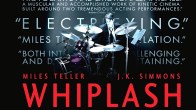 An absolute stunner of a movie with one of the best acting performances I can remember seeing in a long time by JK Simmons as Terence Fletcher. It is a student-teacher story set in a conservatory. The kid is a young talented jazz drummer (played with skill by Miles Teller) looking to catch the eye of the famous teacher. He does and then the fireworks start. The filming and acting produces the sort of tension that usually come from action flicks. This is literally edge-of-your-seat stuff,
the tension arising from the interplay between the teacher and student is incredible.
Terence Fletcher: There are no two words in the English language more harmful than good job.
Selma, B+
 I really wanted to like this better. It was a finely acted and crafted historical drama based on a key moment in the civil rights movement. It is stunning to see the kind of things that used to happen in the United States. We’ve made progress as a country, but shockingly little as the events of the last year show. There is action in the deeply racist Alabama of 1964 and 1965, and tension between MLK and LBJ. Other figures like J. Edgar Hoover and George Wallace come across like the villainous humans they were. Overall an important movie that was competently executed, but not the brilliant movie I had hoped it would be.
“People out there actually say they’re gonna kill our children, they’re trying to get into your head.” – Coretta Scott King
Imitation Game, A-
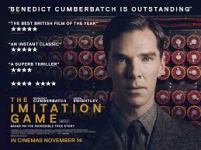 This is a good movie, the worst of the ones I gave an “A-“ to. It is a very Hollywood version of Alan Turing’s life. Benedict Cumberbatch takes the material and produces a wonderful performance. The storytelling is unique running three timelines in parallel from Turing’s life with great lessons relevant to today’s problems. The upshot is that Turing’s life was immensely tragic, and his service to England and the World was never paid what it was due.
Joan Clarke: Sometimes it is the people who no one imagines anything of who do the things that no one can imagine.
Hobbit, C
 I would sum this movie up as being thoroughly disappointing. I am guessing that the problem is that no one can tell Peter Jackson “no” any more and he is reverting to his roots. Some of the film making decisions are simply ludicrious and remind me strong of Jackson’s earlier films like “Dead Alive”. The choices almost always comical and some one should have told him, “this is a bad idea”.
Bilbo Baggins: One day I’ll remember. Remember everything that happened: the good, the bad, those who survived… and those that did not.
Wild, A-
I didn’t actually see it, my wife and daughter did while my son and I saw the Hobbit. She said it was great (she got the good end the deal to be sure).
Cheryl: What if I forgave myself? I thought. What if I forgave myself even though I’d done something I shouldn’t have?
Boyhood, A
 Along with Whiplash this is my choice for the best picture of the year. The movie has a massive gimmick being filmed a bit over time a week or two a year for 12 years. It chronicles the childhood of a boy whose parent divorce and how he develops from a small boy entering school to an adult entering college. The gimmick the film uses is remarkable using the same actors to show the passage of time. The film is wonderful beyond the gimmick and delivers a wonderful tale of personal growth for all the characters. It is both simple and immensely rich.
Nicole: You know how everyone’s always saying seize the moment? I don’t know, I’m kind of thinking it’s the other way around, you know, like the moment seizes us.
Snowpiercer, A-
 This movie is a wonderful bit of pay-for-view surprise and quite enjoyable on the whole. Some aspects of the movie are odd, but it is filled with great performances including surprising depth from Chris Evans. He is a much better actor than people realize. The movie has action, tension and deep commentary on our modern world and its problems. The film requires a degree of suspecnsion of disbelief regarding the basic premise, but if you can manage that it is a real gem.
Curtis: You know what I hate about myself? I know what people taste like. I know babies taste the best.
Nightcrawler, A-
 This was a marvelously dark movie and portrait of a true sociopath. Jack Gylennhaal is wonderfully creapy in the roll and manages to make himself genuinely unlikable. He is driven and relentless in achieving fame and success without a hint of morality. At the same time the film succeeds in providing a tremendously insightful commentary on our modern society and our appetite for news that titillates much more than informs.
Lou Bloom: That’s my job, that’s what I do, I’d like to think if you’re seeing me you’re having the worst day of your life.
Intersteller, B
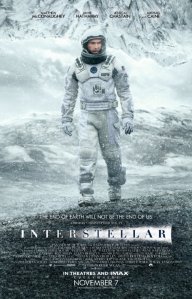 This is a film that divides opinions for good reasons. It is a wonderfully majestic movie that is horribly flawed. Good, but not great performances can be found working on a script that was uninspired. The concept and arc of time with an innovative narrative concept make the story watchable. In the end it produces a watchable film that won’t be remembered 10 years from now.
I never ask for the science parts of movies to be too realistic simply not too cartoonish. It succeeds in being realistic enough not to offend. I tend to believe that we don’t understand the universe well enough to know what isn’t possible. It offers a Hollywood friendly version of relatively forward looking science. Having Habitable planets in the vicinity of a black hole is not the most realistic thing. I would have been much happier with a wormhole alone leaving the black hole out.
Cooper: We used to look up at the sky and wonder at our place in the stars, now we just look down and worry about our place in the dirt.
Cooper: We’ve always defined ourselves by the ability to overcome the impossible. And we count these moments. These moments when we dare to aim higher, to break barriers, to reach for the stars, to make the unknown known.
The Interview, C-
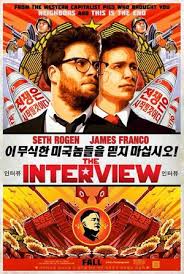 This film is the controversy of the season with the hacking of Sony and the capitalization to terrorism initially declining to release the movie then coming to their senses. We saw it on pay for view. The hackers did a better job sponsoring the movie than it deserved. This was easily the worst movie we saw all season. It was amusing and thoughtlessly entertaining, but a cinematic turd. It was a couple hours of my life I can’t get back.
Dave Skylark: [admires a war tank] Holy fuckamole. Is that real?
Kim Jong-un: It was a gift to my grandfather from Stalin
Dave Skylark: In my country it’s pronounced Stallone.
Kim Jong-un: You’re so funny, Dave.
 Gone Girl, A-
This was an absolute gem of a movie. We loved it. It was thrilling, dark and relentless. It was a wonderfully grim look into a romance and marriage with an edge. So much is happening out of view and hidden from the viewer adding to the tension in theatre. Rosamund Pike is simply wonderful and creates a character of great depth who ultimately generates a deep emotional response. It is never clear who is the biggest villain. It is one movie where no one is a hero.
Nick Dunne: You fucking cunt!
Amy Dunne: I’m the cunt you married. The only time you liked yourself was when you were trying to be someone this cunt might like. I’m not a quitter, I’m that cunt. I killed for you; who else can say that? You think you’d be happy with a nice Midwestern girl? No way, baby! I’m it.
Nick Dunne: Fuck. You’re delusional. I mean, you’re insane, why would you even want this? Yes, I loved you and then all we did was resent each other, try to control each other. We caused each other pain.
Amy Dunne: That’s marriage.
Here are the movies that I haven’t seen yet, but want to see (A Most Violent Year, Birdman, Theory of everything, American Sniper, CitizenFour, Foxcatcher).

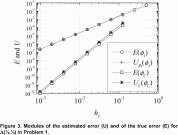
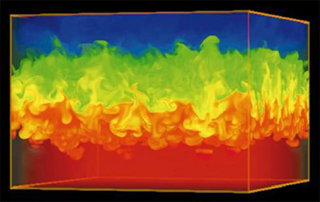
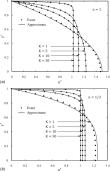 For solution verification the problem is much worse. Even when solution verification is done we are missing important details. The biggest problem is the lack of solution verification for the application of scientific computing to problems. Usually the problem is simply computed and graphs are overlaid, and success is declared. The comparison looks good enough. No sense of whether the solution is accurate is given at least quantitatively. An error estimate for the solution shown, or better yet a convergence study would provide much enhanced faith in the results. In addition to the numerical error, the rate of convergence would also provide information on the tangible expectations for the solution for practical problems. Today such expectations are largely left to be guessed by the reader.

 he
he  relative value and priority of each is different. A lot depends on what the pacing requirements for progress are, but the focus of the value proposition should be an imperitive.
 The secondary fuel for this revolution is the model of interaction and the algorithms to efficiently deliver the value. The actual code and compute needs of this delivery needs to be competently executed, but beyond that offer nothing distinguishing to it. This is a massive lesson right in front of the scientific community, which seems to be not understood these observations as measured by its actions. Today’s computing for
  science emphasis has completely inverted the value stream revolutionizing computing in the rest of the World.
 Modeling must always be improving. If we are doing our computing correctly the models we use should continually be coming up short. Instead, the models seem to be completely frozen in time. They aren’t advancing. For example, I believe we should be undoing the chains of determinism in simulation, but even today deterministic simulations are virtually all of the workload.
 foundation of value in scientific computing that is found foremost in models and their solution via algorithms and methods. The other aspect that has been systematically shortchanged is the value of the people who provide the ideas that form model, methods and algorithms. Ultimately, the innovation in scientific computing is the intellectual labor of talented individuals.
 This truth is valid whether the human activity is the search on your phone or laptop, purchasing through Amazon, predicting tomorrow’s weather, solving the airflow over an aircraft wing, or the flow neutrinos in a supernova using the Boltzmann transport equation. The real revolution in computing is the ability of computing to matter to how we live our daily lives whatever the activity. Given that the value in all of this is the added capacity to achieve our goals, it might be worth considering whether our priorities actually reflect this. Where these values are present in computing the
  importance and value of computing has swelled. Given my personal focus on the scientific use of computing my assessment would be that we have lost our way. The values in computing programs are horribly distorted and out of balance. A key to this is the loss of perspective on what really matters.
 In scientific computing the key connection to reality are models. The most basic models are the governing equations such as the Euler, or Navier-Stokes or Boltzmann equations. These models are augmented by other models of subprocesses (often called subgrid models), and constitutive data that are typically experimentally measured and define the mean behavior of materials (accumulating the effects that would otherwise be statistical). These descriptions are the essential element in the value of computing to human activity. Their value transcends any of the other aspects: the algorithm, the code, and the computer itself. If the basic models are inadequate or faulty everything else is basically for naught. If the model is good, the rest of the components need to get it right, the algorithm or method needs to correctly or accurately solve the model, the implementation in code needs to be correct, and the computer needs to be capable of solving the problem. It is an exercise in balance and perspective. Our key issue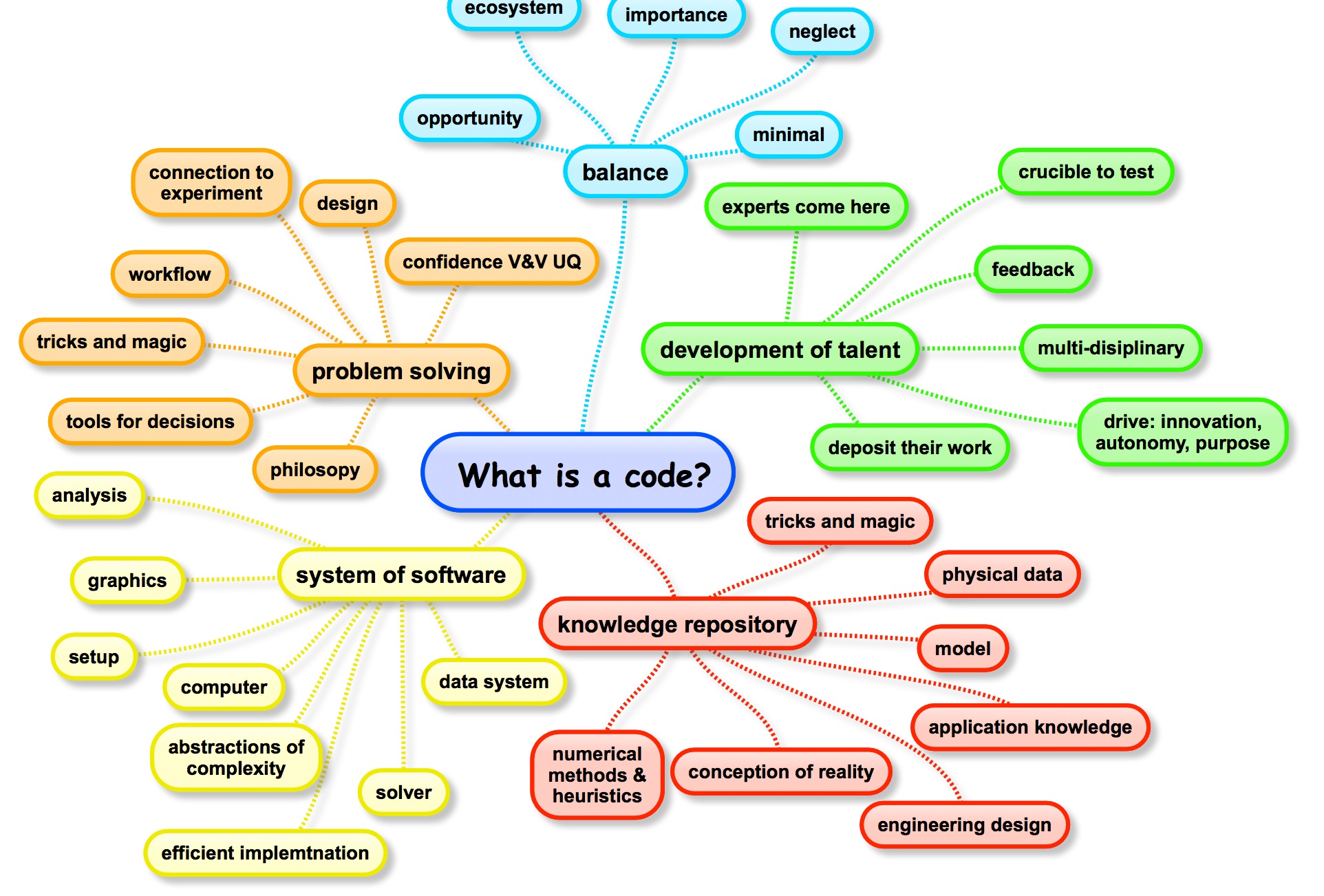
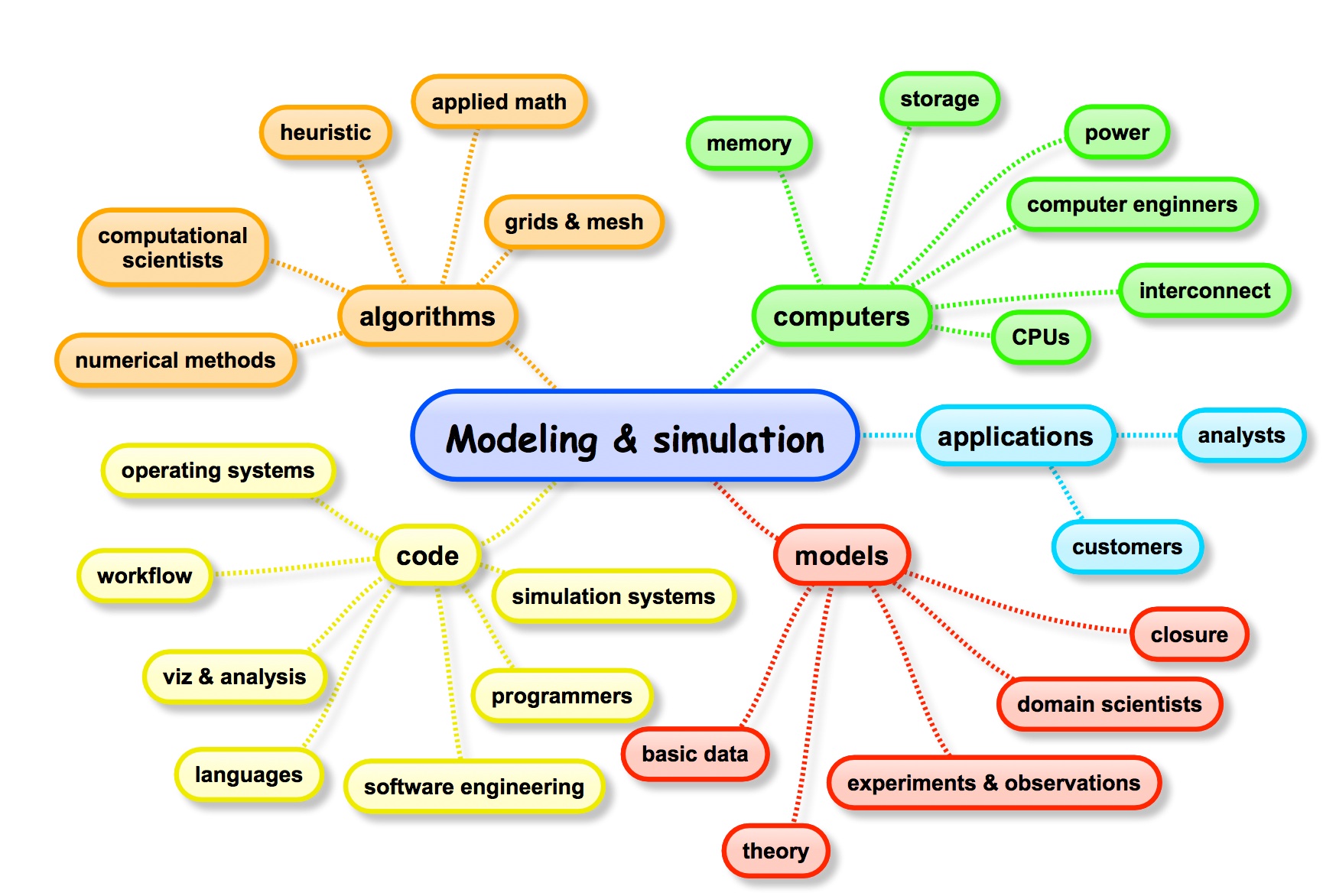
 One of the things that seem intriguing is the appearance of the algorithm in the broader cultural milieu. Despite its inherently esoteric and abstract character, the algorithm is becoming a bit of a celebrity these days. Popular press articles have started to examine the impact of the algorithm on our daily lives and explore the power and dangers of relying upon them.
 As the massive gains from computer power wound down, and simultaneously the Internet transitioned into a huge web of human connectivity, the value proposition for computing changed. Suddenly the greatest value in all of this power switched to connection, access and sorting information. There were some fitful starts at attacking this key problem, but one solution rose above the rest, Google. Based on the work of a couple of Stanford graduate students and some really cool mathematics, Google took the world by storm. In a decade it had transformed itself into the World’s most powerful company. An algorithm that solved the data and connectivity access problem better than anything before it fundamentally powered Google.
 Google replaced a computer software company as the World’s most powerful company, Microsoft. In both cases computer programming was the engineering vehicle for these companies. Programming is a technique where intellectual labor is committed to a form where a computer can automatically execute a method, or algorithm to solve a problem. Usually the computer program is actually a large collection of methods,
 he ability to give people access to information and connectivity to eclipse Microsoft. The algorithm had moved from being a topic of nerdish academic interest to one of the most powerful things in the World. The world’s economy spun on an axis determined by a handful of algorithms.
 Meanwhile scientific computing has lost its mind and decided that the path that led IBM down the path towards disaster is its chosen path. The end of Moore’s law has resulted in a collective insanity of spending vast sums of money supporting the hardware path in the face of looming disaster. At the same time they have turned their backs on algorithms. Effort and focus flows into obtaining and building massive computers that are increasingly useless for real science while ignoring the value that algorithms bring. The infatuation with the biggest and fastest computer measured by
  an increasingly meaningless benchmark only grows with time. This continues while the key to progress stares them in the eye every time they do an Internet search, the power of the algorithm.
 luck and specialization. Over time this causes a lack of perspective for the importance of your profession in the broader world. It is often difficult to understand why others can’t see the intrinsic value in what you’re doing. There is a good reason for this, you have probably lost the reason why what you do is valuable.
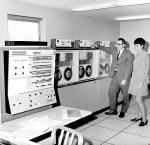 It’s always important to keep the most important things in mind, and along with quality, the value of the work is always a top priority. In thinking about computing, the place where the computers change how reality is engaged is where value resides. Computer’s original uses were confined to business, science and engineering. Historically, computers were mostly the purview of the business operations such as accounting, payroll and personnel management. They were important, but not very important. People could easily go through life without ever encountering a computer and their impact was indirect.
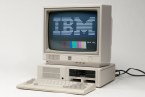 access to computer power allowed it to grow to an unprecedented scale, but an even greater transformation laid ahead. Even this change made an enormous impact because people almost invariably had direct contact with computers. The functions that were once centralized were at the fingertips of the masses. At the same time the scope of computer’s impact on people’s lives began to grow. More and more of people’s daily activities were being modified by what computing did. This coincided with the reign of Moore’s law and its massive growth in the power and/or the decrease in the cost of computing capability. Now computing has become the most dominant force in the World’s economy.
 computers allowed computing to obtain massive value in people’s lives. The combination of ubiquity and applicability to the day-to-day life made computing’s valuable. The value came from defining a set of applications that impact people’s lives directly and always within arm’s reach. Once these computers became the principle vehicle of communication and the way to get directions, find a place to eat, catch up with old friends, and answer almost any question at will, the money started flow. The key to the explosion of value wasn’t the way the applications were written, or coded or run on computers, it was their impact on our lives. The way the applications work, their implementation in computer code, or the computers themselves just needed to be adequate. Their characteristics had very little to do with the success.
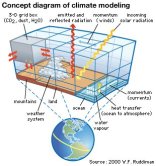
 Scientific computing is no different; the true value lies in its impact on reality. How can it impact our lives, the products we have or the decisions we make. The impact of climate modeling is found in its influence on policy, politics and various economic factors. Computational fluid dynamics can impact a wide range of products through better engineering. Other computer simulation and modeling disciplines can impact the military choices, or provide decision makers with ideas about consequences for actions. In every case the ability of these things to influence reality is predicated on a model of reality. If the model is flawed, the advice is flawed. If the model is good, the advice is good. No amount of algorithmic efficiency, software professionalism or raw computer power can save a bad model from itself. When a model is good the solution algorithms and methods found in computer code, and running on computers enable its outcomes. Each of these activities needs to be competently and professionally executed. Each of these activities adds value, but without the path to reality and utility its value is at risk.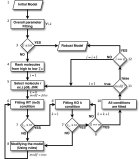
 So we have a national program that is focused on the least valuable thing in the process, and ignores the most valuable piece. What is the likely outcome? Failure, or worse than that abject failure. The most stunning thing about the entire program is the focus is absolutely orthogonal to the value of the activities. Software is the next largest focus after hardware. Methods and algorithms are the next highest focus. If one breaks out this area of work into its two pieces, the new-breakthroughs or the computational implementation work, the trend continues. The less valuable implementation work has the lion’s share of the focus, while the groundbreaking type of algorithmic work is virtually absent. Finally, modeling is nearly a complete absentee. No wonder the application case for exascale computing is so pathetically lacking!
 Alas, we are going down this road whether it is a good idea or not. Ultimately this is a complete failure of the scientific leadership of our nation. No one has taken the time or effort to think this shit through. As a result the program will not be worth a shit. You’ve been warned.
 It has been one of the worst weeks I can remember. Every day I go home from work frustrated, angry, demotivated and despondent. While I recognized that going back to work after vacation would be bad, it has been so much worse than I could have imagined.
 I have worked very hard in the last year to instill some really good habits into my daily life. It has worked, and I really believe that this has been an immense success. My year at work was great, and I was looking forward to refining these habits. As part of the good habits, I’ve started keeping better track of my thoughts, ideas and reading. There are some absolutely incredible tools out there to enhance your productivity. You can really see how technology can improve productivity in ways that are hard to articulate.
 landline! Seriously. The change is that profound. You wouldn’t stand for the rotary phone. It would be catastrophic.
 This is one of the key reasons we are losing greatness as a nation. Any danger regardless of how remote or obviously obscure will trigger a massive effort to thwart its possibility. Any potential positive outcomes, no matter how large, cannot overcome the reaction to the minimal danger. Our response to terrorism is a perfect societal example. We have instituted the TSA and its idiotic security measures, which offer no actual safety, but only the perception of it. We are literally wasting lifetimes of time instituting this useless measure. Then there is over-reach of the NSA, which is threatening to undermine our economy by destroying trust in American companies. All to guard against risks that are actually far less than a host of common threats to our health.
 As a result it is we who make terrorism work through our fear. It is a force that is killing any greatness we have as a nation. It is destroying our ability to do great things. It is the biggest threat to our future.
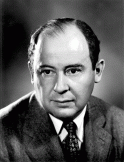 To start our discussion it is worth taking a look at the origins of computing when mathematics and physics combined to create the field. This combination is embodied in John von Neumann whose vision largely produced the initial instantiation of scientific computing. Scientific computing began in earnest under the aegis of the development of the atomic bomb. The application of computing was engineering analysis done by some of the greatest physicists in the world most notably Hans Bethe and Richard Feynman using methods devised by John von Neumann and Rudolf Peierls. Engineering was limited to the computer itself.
  Mathematicians played key roles in more properly using computers notably through the efforts of Robert Richtmyer, Nicholas Metropolis and Richard Hamming. As a rule, the overall effort was conducted by a host of geniuses for an application of monumental international impact and importance. Practically speaking, they were exquisitely talented scientists who were also immensely motivated and had every resource available to them.
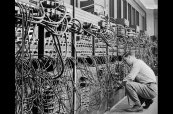 leadership. This time from the Institute for Advanced Study in Princeton focused on weather and development of better computers. Again, the application was largely in the realm of physics with the engineering being applied to the computers. Meanwhile computing was broadening in its appeal and attention from the success in Los Alamos and Princeton along with colleagues at universities. Other Labs in the United States and the Soviet Union also began exploring the topic. It still remained immature and speculative especially in a world that scarcely comprehended what a computer was or could do.
 All of this was a positive outgrowth of the combination of physics and mathematics. During the same period the mathematical contributions to scientific computing went several directions, with pure mathematics birthing computer science, and applied mathematics. Computer science has become increasingly divorced from scientific computing over time and failed to provide the sort of inspirational impetus mathematics had previously provided. For several decades applied mathematics filled this vacuum with great contributions to progress. In more recent times applied mathematics has withdrawn from this vital role. The consequence of these twin developments has taken a terrible toll of depriving scientific computing of a strong pipeline of mathematical innovation. I will admit that statistics has made recent strides in connecting to scientific computing. While this is a positive development, it hardly makes up for the broader diminishing role of other mathematics from computing.
 We see that computation was born from physics and mathematics with engineering joining after the field had been shaped by those fields. Over the past thirty or forty years engineering has come to play an ever larger part in scientific computing, the physical sciences have continued their part, but mathematics has withdrawn from centrality. Computer science has taken the mantle of pure mathematics’ lack of utility. Applied mathematics leapt to fill this void, but has withdrawn from providing the full measure of much needed intellectual vitality.
 While scientists and big business owned computing until about 1995, all of sudden it became public property. Soon it grew to be something that dominated the global economy. Powered by Moore’s law computing became ubiquitous and ironically ceased being about computing; computers became about communication. Now everything valuable about computers is communication, not computation. Computation is an essential, but minor element in the value proposition. A big part of the reason is the power of computers is so great that the computational load has become trivial. The Internet gives access to information, data and connects people in ways never imaginable. As such the business possibilities are staggering. Computing is now longer so much about computers as it is about people and their money.
 So it’s a new year with all the requisite reflective looks forward and backwards. I’ll do both here and posit that perhaps an era is drawing to a close and its time for a big change in scientific computing. Even more, I’ll argue that a big change is being thrust upon us, and its time to get ahead of it. I’ve taken the history of scientific computing and laid it out in a series of eras each 15-20 years long. These eras are defined by a combination of ideas, algorithms, methods, hardware and software. Changes in the composition of all of these define each era and trigger the changes.
 The politics of the time have an enormous impact on focus and resource availability. Scientific computing was born in the crucible of a World War and matured in the urgency of the Cold War. Nothing like this exists to focus the mind and open the pocketbook like that today. On the other hand computing has never been as important as it is today. Never have more of society’s resources gone in its direction. How can we harness this massive creative force for our benefit?
 Pre-1945 (prehistory): There was no scientific computing because computers were in their infancy, and the combination of their use for science was not yet seen. In this time the foundations of mathematics and physics were made by a host of greats along with numerical methods crafted for hand computations. The combination of computers
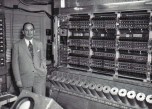 1945-1960 (creation): In this time scientific computing was largely taking place in the most important Labs on the most important topic with access to high priority and huge resources. Great innovations were taking place in computers and the practice of computing. Along with refinements in the engineering of computers, the practice of programming began to take shape. The invention of Fortran and its capacity to express methods and algorithms in code was one of the developments to bring this era to a close. In this time, the development of mathematical theory and numerical analysis was key. The invention of stability, and convergence of numerical methods was one of the great achievements. These provided a platform for systematic development in the 1960’s.
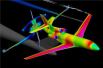 computational science. For the first time the computers and software was balanced with the methods and models. In many ways Seymour Cray defined the era first with the CDC 6600 and 7600 computers then with the machines bearing his name. The vision set forth by von Neumann came into force. Academic scientific computing became completely respectable with mathematics, physics and engineering all taking part. The first hints of extreme hubris were witnessed; the “numerical wind tunnel” debacle unfolded in aerospace. The ability for CFD to displace physical wind tunnel testing in design and qualification was a mas
 sive over-reach in capability. Great damage was done in the process, and no one seems to have learned from the experience. It foreshadows the developments of the current time with ASC when the creation of “virtual underground testing” was proposed to make up for a ban on actual underground testing.
 1995-2015 (mid-life): Then the glory days ended with a bang through a combination of events. The Cold War ended and soon nuclear testing ceased. The Labs would have their own “numerical wind tunnel” moment, but no actual wind tunnel would be available to test it. At the same time the capacity of the supercomputers of the golden era to maintain Moore’s law came to an end. The entire ASC program hinged upon the premise that advances in computational performance would pave the way for predictive simulation. We had the attack of the killer micros and the birth of massively parallel computation to keep hardware performance on the increase.
  Getting the methods and models of old to work on these computers became an imperative; the access to more computing power via Moore’s law became an imperative as well. At the same time the complexity of the codes was growing by leads and bounds. New programming paradigms were being ushered into use with C++ leading the way. Its object-oriented principles were thought to be a way to handle the seemingly overwhelming complexity. With more resources flowing into hardware and software the amount of energy going into methods and models waned. Where efforts in these endeavors had previously yielded gains larger than Moore’s law such gains have simply evaporated during this era.
 The most evident crisis is the demise of Moore’s law. Given the devotion to computing power as the route to predictive computational science, the loss of growth in computing power would be fatal. There are two worrying signs: the growth in computing power at the processor level has slipped to a crawl, and the ability to use all the power of the massively parallel computers for real problems is missing. At the low end of computing nothing will save Moore’s law especially as the computing industry has moved on to other priorities. It is just accepted. At the high end we grasp on to terrible metrics like weak scaling, or LINPAC to hide the problems, but the immensity of the issues become clearer every day. In the middle of this Moore’s law is clinging to life, but the two sides are converging on the middle and when they do Moore’s law will be dead. There are a host of hopes for life, but the laws of physics are arrayed against the continuation of this trend. With all the effort going into using Moore’s law what will be left to pick up the pieces?
 The third and most shadowy crisis is lack of impact from methods, models and algorithms in the most modern era of scientific computing. As I said earlier, part of the problem are the twin crises of decline in hardware gains and software-bloat sapping the energy from the system? Before our infatuation with Moore’s law as the heartbeat of progress innovation in algorithms, numerical methods and modeling produced more progress than hardware gains. These gains are harder to measure and far subtler than raw computational performance, but just as real. As hardware fades away as a source of progress they are the natural place to turn to for advances. The problem is that we have starved this side of scientific computing for nearly 20 years. Major changes are needed to reinvigorate this approach. As I’ve come to realize the software languages are themselves a massive algorithmic achievement (Fortran is listed among the 10 greatest algorithms of the 20th century!). This is to say that intellectual labor toward figuring out how to program computers in the future is part of this issue and a necessary element in fixing two of the crises.
 The Regularized Singularity