• About The Regularized Singularity

The Regularized Singularity

~ The Eyes of a citizen; the voice of the silent

The Regularized Singularity

Monthly Archives: March 2015

The Dark Side of Publishing

27 Friday Mar 2015

Posted by Bill Rider in Uncategorized

≈ 1 Comment

Reviews are for readers, not writers. If I get a bad one, I shrug it off. If I get a good one, I don’t believe it
― William Meikle

UnknownA week ago I received bad news, the review for a paper were back. One might think that getting a review back would be good, but it rarely is. These reviews are too often a horrible soul-crushing experience. In this case I had reports from two reviewers, and one of them delivered the ego thrashing I’ve come to fear.

 I’ve found the best way to revise your own work is to pretend that somebody else wrote it and then to rip the living shit out of it.

― Don Roff
imagesIn total the two reviews were generally consistent on the details of the paper, and the sorts of suggestions for bringing the paper into the condition needed to allow publication. The difference was the tone of the reviews. One of the reviews was completely constructive and detailed in its critique. Each and every critique was offered in a positive light even when the error was pure carelessness.

The other review couldn’t be more different in tone. From the outset it felt like an attack on me. It took me until several days until I could read it in a manner that allowed me to take constructive action. For example including a comment that says “the writing is terrible” is basically an attack on the authors (yes it feels personal). This could be stated much more effectively, “I believe that you have something important to say here, but the ideas do not come across clearly.” Both things say the same thing, but one of them invites a positive and constructive response. I invite the readers to endeavor to write your own reviews in a manner to invite authors to improve. One of my co-authors who has a somewhat more unbiased eye noted that the referee’s report seemed a bit defensive.

So now I’m taking the path of revising the paper. A visceral report makes this much more difficult to accomplish. The constructive review is relatively easy to accommodate, and makes for a good blueprint for progress. The nasty review is much harder to employ in the same fashion. I feel that I’m finally on the path to do this, but Unknown-1it could have been much easier. There is nothing wrong with being critical, but the way its done matters a lot.

That’s the magic of revisions – every cut is necessary, and every cut hurts, but something new always grows.

― Kelly Barnhill

Just for the record the paper is titled “Robust Verification Analysis” by myself, Jim Kamm (Los Alamos), Walt Witkowski and Tim Wildey (Sandia), it was submitted to the Journal of Computational Physics. As part of the revision I’ve taken the liberty of rewriting the abstract:

We introduce a new methodology for inferring the accuracy of computational simulations through the practice of solution verification. Our methodology is well suited to both well- and ill-behaved sequences of simulations. Our approach to the analysis of these sequences of simulations incorporates expert judgment into the process directly via a powerful optimization framework, and the application of robust statistics. The expert judgment is systematically applied as constraints to the analysis, and together with the robust statistics guards against over-emphasis on anomalous analysis results. We have named our methodology Robust Verification Analysis.

The practice of verification is a key aspect for determining the correctness of computer codes and their respective computational simulations. In practice verification is conducted through repeating simulations with varying discrete resolution and conducting a systematic analysis of the results. The accuracy of the calculation is computed directly against an exact solution, or inferred by the behavior of the sequence of calculations.

Nonlinear regression is a standard approach to producing the analysis necessary for verification results. We note that nonlinear regression is equivalent to solving a nonlinear optimization problem. Our methodology is based on utilizing multiple constrained optimization problems to solve the verification model in a manner that varies the solutions underlying assumptions. Constraints applied in the solution can include expert judgment regarding convergence rates (bounds and expectations) as well as bounding values for physical quantities (e.g., positivity of energy or density). This approach then produces a number of error models, which are then analyzed through robust statistical techniques (median instead of mean statistics).

This provides self-contained, data driven error estimation including uncertainties for both the solution and order of convergence. Our method will produce high quality results for the well-behaved cases consistent with existing practice. The methodology will also produce reliable results for ill-behaved circumstance. We demonstrate the method and compare the results with standard approaches used for both code and solution verification on well-behaved and more challenging simulations. We pay particular attention to the case where few calculations are available and these calculations are conducted on coarse meshes. These are compared to analytical solutions, or calculations on highly refined meshes.

Here is abstract from the the original submission:

Code and solution verification are key aspects for determining the quality of computer codes and their respective computational simulations. We introduce a verification method that can produce quality results more generally with less well-behaved calculations. We have named this methodology Robust Verification Analysis. Nonlinear regression is a standard approach to producing the analysis necessary for verification results. Nonlinear regression is equivalent to solving a nonlinear optimization problem. We base our methodology on utilizing multiple constrained optimizations to solve the verification model. Constraints can include expert judgment regarding convergence rates and bounding values for physical quantities. This approach then produces a number of error models, which are then analyzed through robust statistical techniques (e.g., median instead of mean statistics). This provides self-contained, data driven error estimation including uncertainties for both the solution and order of convergence. Our method will produce high quality results for the well-behaved cases consistent with existing practice as well. We demonstrate the method and compare the results with standard approaches used for both code and solution verification on well-behaved and challenging data sets.

 There is a saying: Genius is perseverance. While genius does not consist entirely of editing, without editing it’s pretty useless.

― Susan Bell

When you print out your manuscript and read it, marking up with a pen, it sometimes feels like a criminal returning to the scene of a crime.
― Don Roff
Innovation is a big deal because we are so bad at it!

20 Friday Mar 2015

Posted by Bill Rider in Uncategorized

≈ Leave a comment

Innovation is the specific instrument of entrepreneurship…the act that endows resources with a new capacity to create wealth.

― Peter F. Drucker

Innovation as a focus is everywhere – because we can’t do it. It is essential to our economic and national future, yet we are terrible at it!

Plans are of little importance, but planning is essential.

― Winston Churchill

We have created a society that routinely crushes innovative thinking. We understand technicaldebtthe importance of innovation, but refuse to create the conditions that nurture it. Most of the time we do the opposite. One sterling example of innovation crushing behavior is the misapplication of project management to scientific research. We apply the same approach to building a bridge or repaving a road as supposedly “cutting-edge” research project. In the process the project is on time and under-budget, but stripped of innovative research. The whole notion of “scheduled breakthroughs” is an anathema to successful research, yet pervasive in current management practice. The only objective that is achieved in the process is control, but the soul of the work is destroyed.

To succeed, planning alone is insufficient. One must improvise as well.

― Isaac Asimov

is-the-orwellian-trapwire-surveillance-system-illegal-e1345088900843-640x360The problem isn’t the planning per se, but rather trying to stick to the plans. Planning is useful, even essential, but generally not fully actionable with adaptation necessary to actually succeed. Too often in today’s climate, the plans are adhered to despite evidence of their inadequacy. The conditions that allow innovation are a threat to so much in the ordinary day-in, day-out conduct of business and social constructs. By producing a culture of conformity and safety, the conditions that spur new thinking (i.e., innovation) are not allowed to grow and bloom.

Innovation is about practical creativity – it’s about making new ideas useful…

Before innovation – or practical creativity – there is insight. You must see the world differently.

― Max McKeown

september-9-11-attacks-anniversary-ground-zero-world-trade-center-pentagon-flight-93-second-airplane-wtc_39997_600x450While innovation is one of the most effective engines of growth and progress, the conditions allowing it to happen threaten every other aspect of society. This is especially true with today’s hyper-safety, low-risk culture, which has been driven into over-drive by the threat of terrorism. In the long run the greatest damage to our long-term growth is the adoption of the risk-adverse policies and approaches so broadly. Terrorism is only a threat if we allow it to change us, and we have. These constructs provide safety and lower the risk of bad things, but also strangle progress and innovation.

The best way to predict your future is to create it

― Abraham Lincoln

capitol-building-from-gala-300x200A huge part of this problem is the lack of tolerance for risk. Innovation often fails, and lots of failure yields the opportunity for innovative success. As our society has squashed risk, it has also squeezed out the potential for breakthroughs. The consequence is a safer, more predictable, but much poorer future. Risk and reward are tied closely together. Nothing ventured, nothing gained is the old maxim that applies today. Today no venture that entails even the slightest tinge of risk can be tolerated. The result is no ventures whose outcomes aren’t virtually pre-ordained. Success is broadly achieved only through the systematic diminishment of our objectives.

If you are deliberately trying to create a future that feels safe, you will willfully ignore the future that is likely.

― Seth Godin

These things we do to control outcomes, control people and manage our work all chip away at the conditions necessary for innovation. Innovation requires things to be imagesslightly out of control, slightly unpredictable to succeed. This success is the product of the mixing of ideas that aren’t “supposed” to be in contact. Hotbeds of innovation come from putting disparate people together and allowing interactions to occur in a natural way. Good examples are the old AT&T labs where a generally poor building design caused the interaction of people of greatly differing backgrounds to interact closely. Common areas, dining areas, bathrooms, stairwells, etc. all provide some of the necessary lubrication for innovation. By allowing people to collide in an almost random way, serendipity erupts and innovation blooms.

Dreamers are mocked as impractical. The truth is they are the most practical, as their innovations lead to progress and a better way of life for all of us.

― Robin S. Sharma

UnknownAnother key is a certain amount of freedom. The freedom to pursue the best outcome even if that outcome is not what was planned. Today the plan has become the arbiter of effort, and we penalize deviations from the plan. The results are disastrous for innovation, which is inevitably a departure from the original plan.

Throughout history, people with new ideas—who think differently and try to change things—have always been called troublemakers.

― Richelle Mead


Are we computing the right things?

13 Friday Mar 2015

Posted by Bill Rider in Uncategorized

≈ Leave a comment

If you want a new tomorrow, then make new choices today.

― Tim Fargo

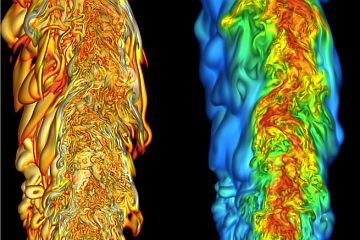
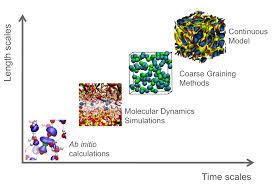
Ultimately the importance of what we compute is determined by how useful the results are. Are the results good at explaining something we see in nature, confirming an idea, providing concrete evidence of how a scenario might unfold, or helping create a better widget? The classical uses of scientific computing are solving initial value problems and large-scale data analysis each of which can play a role in the answering the above questions. How much have we moved bey article4ond this classical view in the 70 or so years the field has existed?

I think the answer is “not nearly enough,” and computing is failing to deliver on its full potential as a result.

Never attribute to malice that which can be adequately explained by stupidity.

― Robert Hanlon


the-data-delugeScientific computing is still dominated by the same two big uses that existed at the beginning. Recently data analysis has reasserted itself as the big “new” thing. This is mostly the consequence of the deluge of data coming from the Internet, and the impending Internet of things. For mainstream science, the initial value problem still holds sway for a broader set of activities although data is big in astronomy, geophysics and social sciences.

 

To change ourselves effectively, we first had to change our perceptions.

― Stephen R. Covey


sankaran_fig1_360The problem is that bigger, better things are possible if we simply marshal our efforts properly. Computing has the potential to reshape our ability to design through combining our forward simulations with optimization. The same could be done with data analysis to power calibration of models. Another powerful would be a pervasive analysis of uncertainties in our modeling. Almost all of these cases have direct analogs in the World of data analysis. Together this array of untapped potential would contribute greatly to our understanding and mastery of nature.


Engineers like to solve problems. If there are no problems handily available, they will create their own problems.

― Scott Adams


What is holding us back?


Probably the greatest issue holding us back is our absolute intolerance of risk. It is always less risky to incrementally improve what you are already doing. This has become the singular focus of science today. Making small improvements to something that is already deemed a success is a path to avoiding failure, “building on success”. Most progress looks like this, and today almost all progress looks like this. To get more out of computing, we need to risk doing something really new, and with that risk comes the possibility of failure. Without that risk the level of success that may be achieved is also much lower. I believe that this is the main driver behind not taking advantage of computing.ContentImage-RiskManagement


Evolution is more about adaptivity than adaptability.

― Raheel Farooq


images-1This modern pathology also creates a myriad of side effects. One of the engines of innovation is applied mathematics where the act of playing it safe is sapping the vitality from the field. Increasingly the applied math work is focused on ideal model problems, and eschews the difficult work of attacking real problems, or problems where the math is messy. Without a more applied and more daring approach to developing capabilities, the innovative energy will not be unleashed. Part of the innovation means simply trying new things whether or not it is amenable to analysis. Work is guided by importance and utility rather than tractability.


Life’s journey is built of crests and troughs, the movement is always going to be fast only towards the trough and the progress is bound to be slow towards the crest.

― Anuj Somany


imagesA good place to look at where analysis should be applied is to methods that work. The topic of compressed sensing is a great example. By the time compressed sensing was “invented” it had been in use for 30 years as a practical approach in several fields, but lacked theoretical support. When the theoretical support arrived from some of the best mathematicians alive today, the field exploded. New uses for this old methodology are discovered almost every day. It is an example of what a coherent theory can do for a field. Without the theory, the topic was stranded as a “trick” and its applicability was limited. With the theory the applications that could be attempted grew immensely (and continues to grow).


Our culture works hard to prevent change.

― Seth Godin


sifter-noaaAnother place where we have systematically failed to advance appropriately is the simulation of stochastic or random phenomena. We are still devoted to solving almost everything in terms of a mean field theory. While the mean field view of the World has served us well, today many of our most important applications are driven by statistics. How often will something really good, or really bad happen? How much of a population of devices will fail in a certain may? How likely is a certain event? Today most of our simulation capability is ill suited to answering these questions. In many cases we try to answer these incorrectly by merely examining the uncertainty in the mean field solution (i.e., sampling uncertainty parametrically, which is not the same thing). Almost none of the simulation techniques are suitable for examining the variability of the systems being simulated.


If failure is not an option, then neither is success.

― Seth Godin


UnknownThe foundation of our limitations is not our intellectual abilities, but rather our taste for risk and change. With change and risk comes the potential for failure or unexpected outcomes. Lately, these sorts of things can’t be tolerated by our society. Without tolerance for bad things, our capacity to experience good things is undermined. Instead we are left to swim in an era of unmitigated mediocrity. It is sad that we’ve come to accept this as our mantra.


Fear does that. We have become afraid of everything, and fearful of things we used to simply overcome.imgres


I must not fear. Fear is the mind-killer. Fear is the little-death that brings total obliteration.

― Frank Herbert, Dune


Science Requires that Modeling be Challenged

06 Friday Mar 2015

Posted by Bill Rider in Uncategorized

≈ 6 Comments

I suppose it is tempting, if the only tool you have is a hammer, to treat everything as if it were a nail.

― Abraham Maslow

One of the most insidious and nefarious properties of scientific models is their tendency to take over, and sometimes supplant, reality.

— Erwin Chargaff

Mainframe_fullwidthIn scientific computing the quality of the simulations is slaved to the quality of the models being solved. The simulations cannot be more useful than the models allow. This absolute fact is too often left from the considerations of the utility of computing for science. Models are immensely important for the conduct of science and their testing essential to progress. When a model survives a test it is a confirmation of existing understanding. When a model fails and is overturned, science has the opportunity to leap forward. Both of these events should be cherished as cornerstones of the scientific method. Scientific computing as articulated today does not fully honor this point-of-view.

…all models are approximations. Essentially, all models are wrong, but some are useful. However, the approximate nature of the model must always be borne in mind…

— George E.P. Box

The purpose of models is not to fit the data but to sharpen the questions.

— Samuel Karlin

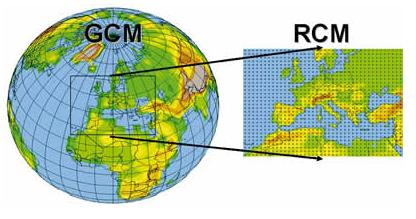
ClimateModelnestingThe centrality of the utility of models is defined by the role of models in connecting simulations to reality. When a scientist steps back from the narrow point-of-view associated with computing and looks at science more holistically, the role of models becomes much clearer. Models are approximate, but tractable, visions of reality that have utility in their necessary simplicity. Our models also define in loose terms what we envision about reality. In science our models define well how we understand the World. In engineering our models define how and what we build. If we expand our models, we expand our grasp of reality and our capacity for creation. Models connect the World’s reality to our intellectual grasp of that reality.

Science is not about making predictions or performing experiments. Science is about explaining.

― Bill Gaede

Computing has allowed more complex models to be used because it is freed of the confines of analytical techniques. Despite this freedom, the nature of models has been relatively stagnant with the approach to modeling still tethered to the (monumeSir_Isaac_Newton_(1643-1727)ntal) ideas introduced in 17th, 18th and 19th centuries. Despite the ability to solve much more complicated models of reality that should come closer to “truth,” we are still trapped in this older point-of-view. In total too little progress is being made in removing these restrictions in how we think about modeling the World. Ultimately these restrictions are holding us back from a more pervasive understanding and control over the natural World. The costs of this seeming devotion to an antiquated perspective are immense, essentially incalculable. Succinctly put, the potential that computing represents is far, far from being realized today.

It’s not an experiment if you know it’s going to work.

― Jeff Bezos

If science is to be healthy the models of reality should constantly be challenged by experiment. Experiments should be designed to critically challenge or confirm our models. Too often this essential role is missing from computational experiments, and to some extent can only come from reality itself, that is classical experiments. This hasn’t stopped the hubris of some that define computations as replacements for experiments when they conduct direct numerical experiments and declare them to be ab initio.

The world as we have created it is a process of our thinking. It cannot be changed without changing our thinking.

― Albert Einstein

This is very common in turbulence, for example, and this approach should be blamed for helping to stagnate progress in this field. The truly dangerous trend is for real World experiments being replaced by computations, which is happening with frightening regularity. This creates an intellectual disconn2-29s03ect of science’s lifeblood and its modeling by allowing modeling to replace experiments. With models then taking the role of experiment a vicious cycle ensues where faulty models are not displaced by experimental challenges. Instead an incorrect or incomplete model can increase its stranglehold on thought.

The real world is where the monsters are.

― Rick Riordan

Nothing is more damaging to a new truth than an old error.

— Johann Wolfgang von Goethe

dag006Indeed lack of progress in understanding turbulence can largely be traced to the slavish devotion to classical ideas, and the belief that the incompressible Navier-Stokes equations somehow contain the truth. I feel that they do not, and it would be foolish to adopt this belief. That has not stopped the community from fully and completely adopting this belief. Incompressibility is itself an unphysical approximation (albeit a useful one), but woefully unphysical in its implied infinite speed of propagation for sound waves. It is also strains any connections of the flow to the second law of thermodynamics, which almost certainly plays a key role in turbulence. Incompressibility removes thermodynamics from the equations in the most brutish way possible. Computing has only worked to strengthen these old and stale idea’s hold on the field, and perhaps set progress backwards by decades. This need not be the case, but outright intellectual laziness has set in.

It doesn’t matter how beautiful your theory is, it doesn’t matter how smart you are. If it doesn’t agree with experiment, it’s wrong.

― Richard P. Feynman

Experimental observations are only experience carefully planned in advance, and designed to form a secure basis of new knowledge.

― Sir Ronald Fisher

Classically experiments are conducted to either confirm our understanding, or images-1challenge it. A convincing experiment that challenges our understanding is invaluable to the conduct of science. Experimental work that provides this sort of data is essential to progress. When the data is confirmatory, it provides the basis of validation or calibration of models. Too often the question of whether the models are right or wrong is not considered. As a result the models tend to drift over time out of applicability. The derivation and definition of different models based on the feedback from real data is too infrequent. Explaining data should be a far more important task in the day-in-day-out conduct of science.

Theories might inspire you, but experiments will advance you.

― Amit Kalantri

Experiment is the sole source of truth. It alone can teach us something new; it alone can give us certainty.

― Henri Poincaré

In computational modeling and simulation this is happening even less. Part of the reason is the lack of active questioning of the models by scientists. Models have been applied for decades without significant challenge to assertion that all we need is a faster, bigger computer for reality to yield to the model’s predictive power. The incapacity of the model to be predictive is rarely even considered as an outcome. images-2Another way of expressing this problem is the lingering and persistent weakness of validation (and it brother in arms, verification). Too often the validation received by models is actually validation disguised as calibration without the correctness of the model even considered. The ultimate correctness of a model should always be front and center in validation, yet this question is rarely asked. Properly done validation would expose models as being wrong, or similarly hamstrung in their ability to model aspects of reality. The consequence is the failure to develop new models and too much faith placed in heavily calibrated old models.

Humans see what they want to see.

― Rick Riordan

 Remember, you see in any situation what you expect to see.

― David J. Schwartz

The current situation is not healthy. Science is based on failures, and failure is not allowed today. The validation outcome that a model is wrong is viewed as a failure. Instead it is an outstanding success that provides the engine for scientific progress so vitally needed. In most computational simulations this outcome is ruled out from the outset. Rather than place the burden of evidence on the model being correct, we tend to do the opposite and place the burden on proving models wrong. This is backwards to the demands of progress. We might consider a different tact. Thitechnicaldebts comes as an affront to the viewpoint that scientific computing is an all-conquering capability that only needs a big enough computer to enslave reality to its power. Nothing can be further from the truth. In the process we are wasting the massive investment in computing rather than harnessing it.

The formulation of the problem is often more essential than its solution, which may be merely a matter of mathematical or experimental skill.

― Albert Einstein

To succeed scientific computing needs to embrace the scientific method again insteaantifragile1d of distancing itself from the engine of progress so distinctly. We need leadership in science that demands a different path be taken. This path needs to embrace risks and allow for failure while defining a well-defined structure that puts experiment and modeling in proper roles and appropriate contexts.

Never in mankind’s history have we so fundamentally changed our means of existence with so little thought.

― James Rozoff

Subscribe

  • Entries (RSS)
  • Comments (RSS)

Archives

  • February 2026
  • August 2025
  • July 2025
  • June 2025
  • May 2025
  • April 2025
  • March 2025
  • February 2025
  • January 2025
  • December 2024
  • November 2024
  • October 2024
  • September 2024
  • August 2024
  • July 2024
  • June 2024
  • May 2018
  • April 2018
  • March 2018
  • February 2018
  • January 2018
  • December 2017
  • November 2017
  • October 2017
  • September 2017
  • August 2017
  • July 2017
  • June 2017
  • May 2017
  • April 2017
  • March 2017
  • February 2017
  • January 2017
  • December 2016
  • November 2016
  • October 2016
  • September 2016
  • August 2016
  • July 2016
  • June 2016
  • May 2016
  • April 2016
  • March 2016
  • February 2016
  • January 2016
  • December 2015
  • November 2015
  • October 2015
  • September 2015
  • August 2015
  • July 2015
  • June 2015
  • May 2015
  • April 2015
  • March 2015
  • February 2015
  • January 2015
  • December 2014
  • November 2014
  • October 2014
  • September 2014
  • August 2014
  • July 2014
  • June 2014
  • May 2014
  • April 2014
  • March 2014
  • February 2014
  • January 2014
  • December 2013
  • November 2013
  • October 2013
  • September 2013

Categories

  • Uncategorized

Meta

  • Create account
  • Log in

Blog at WordPress.com.

  • Subscribe Subscribed
    • The Regularized Singularity
    • Join 55 other subscribers
    • Already have a WordPress.com account? Log in now.
    • The Regularized Singularity
    • Subscribe Subscribed
    • Sign up
    • Log in
    • Report this content
    • View site in Reader
    • Manage subscriptions
    • Collapse this bar
 

Loading Comments...