
There is only one valid definition of business purpose: to create a customer.
― Peter F. Drucker
In today’s world money is the prime mover in almost every decision made. Money is the raison d’etre in how we are managed, and what we perceive as correct. It has become a surrogate for what is morally correct, and technically proper. Fundamentally money is just a tool. Instead of balance and some sort of holistic attitude toward what we do, money ends up being the core of meaning. The signaling from society is clear and unambiguous; money is what matters. In the process of making this tool the center of focus, we lose the focus on reality. In terms of business and those who make  decisions for business, money is all that matters. If it puts more money in the pockets of those in power (i.e., the stockholder), it is by current definition a good decision. The flow and availability of money is maximized by a short business cycle, and an utter lack of long-term perspective. In the work that I do, we define the correctness of our work by whether money is allocated for it. This attitude has led us toward some really disturbing outcomes.
What gets measured gets improved.
—Peter Drucker
Stepping away from the big picture of science for a moment is instructive in seeing how money distorts things. Medicine and medical care is a good example of the sort of abominable things that money does for decision making. The United States spends an immense amount of its aggregate wealth on health care, yet the outcomes for Americans are poor. For people with lots of resources (i.e., money) the health care is better than anywhere in the World. For the common person the health care approache s second World standards, and for the poor third World standards. The outcomes for our citizens follow these outcomes in terms of life expectancy. The reasons for our terrible health care system are clear, as the day is long, money. More specifically, the medical system is tied to profit motive rather than responsibility and ethics resulting in outcomes being directly linked to people’s ability to pay. The moral and ethical dimension of health care in the United States is indefensible and appalling. It is because money is the prime mover for decisions. Worse yet, the substandard medical care for most of our citizens is a drain on society, produces awful results, but provides a vast well of money for the rich and wealthy to leech off of.
 Money is a tool. Period. Computers are tools too. When tools become reasons and central organizing principles we are bound to create problems. I’ve written volumes on the issues created by the lack of perspective on computers as tools as opposed to ends unto themselves. Money is similar in character. In my world these two issues are intimately linked, but the problems with money are broader. Money’s role as a tool is a surrogate for value and worth, and can be exchanged for other things of value. Money’s meaning is connected to the real world things it can be exchanged for. We have increasingly lost this sense and put ourselves in a position where value and money have become independent of each other. This independence is truly a crisis and leads to severe misallocation of resources. At work, the attitude is increasingly “do what you are paid to do” “the customer is always right” “we are doing what we get funded to do”. The law, training and all manner of organizational tools, enforces all of this. This shadowed by business where the ability to make money justifies anything. We trade, destroy and carve up businesses so that stockholders can make money. All sense of morality, justice, and long-term consequence is scarified if money can be extracted from the system. Today’s stock market is built to create wealth in this manner, and legally enforced. The true meaning of the stock market is a way of creating resources for businesses to invest and grow. This purpose has been completely lost today, and the entire apparatus is in place to generate wealth. This wealth generation is done without regard for the health of the business. Increasingly we have used business as the model for managing everything. To its disservice, science has followed suit and lost the sense of long-term investment by putting business practice into use to manage research. In many respects the core religion in the United States is money and profit with its unquestioned supremacy as an organizing and managing principle.
So much of what we call management consists of making it difficult for people to work.
—Peter Drucker
For example I noted how horribly we are managing a certain program at work, how poorly the work is suited toward the espoused outcomes. The response to this is always, “this is the program we could get funded.” Instead of doing what has value or what is  needed, we construct programs to get money. Increasingly, the way we are managed pushes a deep level of accountability to the money instead of value and purpose. The workplace messaging is “only work on what you are paid to do.” Everything we do is based on the customer who is writing the checks. The vacuous and shallow end results of this management philosophy are clear. Instead of doing the best thing possible for real world outcomes, we propose what people want to hear and what is easily funded. Purpose, value and principles are all sacrificed for money. The biggest loss is the inability to deal with difficult issues or get to the heart of anything subtle. The money is increasingly uncoordinated and nothing is tied to large objectives. In the trenches people simply work on the thing they are being paid by and learn to not ask difficult questions or think in the long term. The customer cares nothing about the career development or expertise of those they fund. In the process of money first our career development and National scientific research is plummeting and in free fall whether we look at National Labs or Universities.
There is nothing quite so useless as doing with great efficiency something that should not be done at all.
—Peter Drucker
At the heart of the matter is difficulty with long-term value. The impact of short-term thinking is clear in business. Short term drives are great for making money for stockholders, the more activity in the stock market, the better. The long term health of business is always lost to the possibility of making more money in the now. By the same token, the short-term thinking is terrible for value to society and leads to many businesses simply being chewed up and spit out. Unfortunately our society has adopted the short term thinking for everything including science. All activities are measured quarterly (or even monthly) against the funded plans. Organizations are driving everyone to abide by this short-term thinking. No one can use their judgment or knowledge gained to change this for values that transcend money. The result is a complete loss of long-term perspective in decision-making. We have lost the ability to care for the health and growth of careers. The defined financial path has become the only arbiter of right and wrong. All of our judgment is based on money, if its funded, it is right, if it isn’t funded its wrong. More and more all the long-term interests aren’t funded, so our future whither right in front of us. The only ones benefiting from the short-term thinking are a small number of the wealthiest people in society. Most people and society itself are left behind, but forced to serve their own demise.
Long-range planning does not deal with the future decisions, but with the future of present decisions.
—Peter Drucker
Doing something better is relatively easy to devise, but seemingly impossible to implement in the near term. Large parts of the problem are laws that favor short-term interests and profit taking over long-term investment. These laws are entirely created to maximize the personal wealth creation. Instead laws are needed to maximize the societal creation of wealth, which is invariably long-term in perspective. We could bias the system in favor of long-term investment. Part of the answer is the tax system. Currently the system of taxation is completely oriented toward short-term and wealth creation for individuals. The attitude today is that if you can make lots of money; it is correct. This perspective needs to change to something more nuanced. We need to push a balance of this idea with value, impact and the long-term perspective. Ultimately this will require people in power to sacrifice wealth now, for more wealth in the future. People  need to receive a significant benefit for putting off short-term profit to take the long-term perspective. We need to overhaul how science is done. The notably long-term investment is research must be recovered and freed from the business ideas that are destroying the ability of science to create value. The idea that business practices today are correct is utterly perverse and damaging.
Rank does not confer privilege or give power. It imposes responsibility.
― Peter F. Drucker
The problem with making these changes is primarily those who benefit from the current system. A small number of the most powerful and wealthy in society are significantly advantaged. They will work steadfastly to keep the current system in place because it benefits them. Everyone else can be damned and in many cases the powerful care little about society at large (some wealthy people seem to have adopted a more generous attitude, Bill Gates, Warren Buffet come to mind). Money having value over real world things is to their advantage. Creating a system that benefits all of society hurts them. This is true in the short term, but in the longer term it creates less overall wealth . We need a realization of the long-term effects of current attitudes and policies as a loss to everyone. A piece of this puzzle is a greater degree of responsibility for the future on the part of the rich and powerful. Our leaders need to work for the benefit of everyone, not for their accumulation of more wealth and power. Until this fact becomes more evident to the population as a whole we can expect the wealthy and powerful to continue to favor a system that benefits himself or herself to exclusion of everyone else.
Doing the right thing is more important than doing the thing right.
—Peter Drucker
Part of the overall puzzle is overcoming the infatuation with using business models to manage everything including science. It isn’t necessarily incompatible with the best interests of science, but today’s business practices are utterly orthogonal to good science.
Management is doing things right. Leadership is doing the right things.
—Peter Drucker
 unsatisfactorily understood thing. For general nonlinear problems dominating the use and utility of high performance computing, the state of affairs is quite incomplete. It has a central role in modeling and simulation making our gaps in theory, knowledge and practice rather unsettling. Theory is strong for linear problems where solutions are well behaved and smooth (i.e., continuously differentiable, or a least many derivatives exist). Almost every problem of substance driving National investments in computing is nonlinear and rough. Thus, we have theory that largely guides practice by faith rather than rigor. We would be well served by a concerted effort to develop theoretical tools better suited to our reality.
 n that the solution approaches the exact solution is the manner of approximation grows closer to a continuum, which is associated with small discrete steps/mesh and more computational resource. This theorem provides the basis and ultimate drive for faster, more capable computing. We apply it most of the time where it is invalid. We would be greatly served by having a theory that is freed of these limits. Today we just cobble together a set of theories, heuristics and lessons into best practices and we stumble forward.
 polynomials and finite elements. All of these methods depend to some degree on solutions being well behaved and nice. Most of our simulations are neither well behaved nor nice. We assume an idealized nice solution then approximate using some neighborhood of discrete values. Sometimes this is done using finite differences, or cutting the world into little control volumes (equivalent in simple cases), or creating finite elements and using variational calculus to make approximations. In all cases the underlying presumption is smooth, nice solutions while most of the utility of approximations violates these assumptions. Reality is rarely well behaved or nice, so we have a problem. Our practice has done reasonably well and taken us far, but a better more targeted and useful theory might truly unleash innovation and far greater utility.
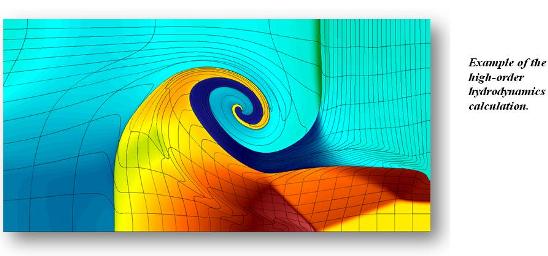 We don’t really know what happens when the theory falls apart, and simply rely upon bootstrapping ourselves forward. We have gotten very far with very limited theory, and simply moving forward largely on faith. We do have some limited theoretical tools, like conservation principles (Lax-Wendroff’s theorem), and entropy solutions (converging toward solutions associated with viscous regularization consistent with the second law of thermodynamics). The thing we miss is general understanding of what is guiding accuracy and defining error in these cases. We cannot design methods specifically to produce accurate solution in these circumstances and we are guided by heuristics and experience rather than rigorous theory. A more rigorous theoretical construct would provide a springboard for productive innovation. Let’s look at a few of the tools available today to put things in focus.
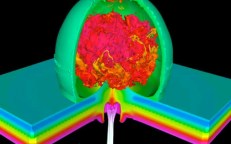 he approximation. In essence the shock wave (or whatever wave is tracked) becomes an internal boundary condition allowing regular methods to be used everywhere else. This typically involves the direct solution of the Rankine-Hugoniot relations (i.e. the shock jump conditions, algebraic relations holding at a discontinuous wave). The problems with this approach are extreme, including unbounded complexity if all waves are tracked, or with solution geometry in multiple dimensions. This choice has been with us since the dawn of computation including the very first calculations at Los Alamos that used this technique, but it rapidly becomes untenable.
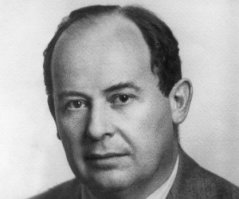 To address the practical aspects of computation shock capturing methods were developed. Shock capturing implicitly computes the shock wave on a background grid through detecting its presence and adding a physically motivated dissipation to stabilize its evolution. This concept has made virtually all of computational science possible. Even when tracking methods are utilized the explosion of complexity is tamed by resorting to shock capturing away from the
  dominant features being tracked. The origin of the concept came from Von Neumann in 1944, but lacked a critical element for success, dissipation or stabilization. Richtmyer added this critical element with artificial viscosity in 1948 while working at Los Alamos on problems whose complexity was advancing beyond the capacity of shock tracking to deal with. Together Von Neumann’s finite differencing scheme and Richtmyer’s viscosity enabled shock capturing. It was a proof of principle and its functionality was an essential springboard for others to have faith in computational science.
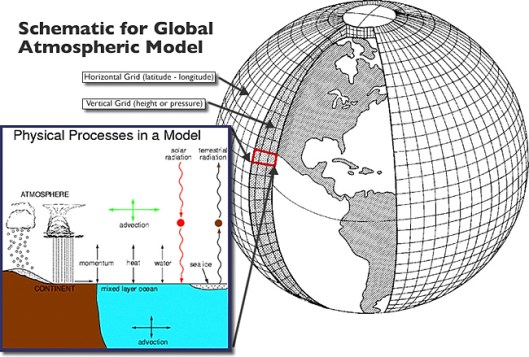 well served by aggressively exploring these connections in an open-minded and innovative fashion.
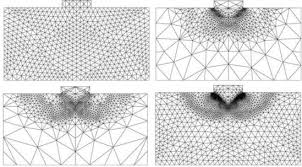 results from the flashy graphics AMR produces to justifiable credible results. A big part of moving forward is putting verification and validation into practice. Both activities are highly dependent on theory that is generally weak or non-existent. Our ability to rigorously apply modeling and simulation to important societal problems is being held back by our theoretical failings.
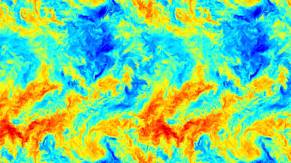
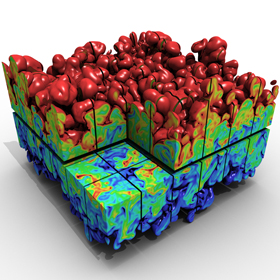 A big issue is a swath of computational science where theory is utterly inadequate much of it involving chaotic solutions where there is extreme dependence on initial conditions. Turbulence is the classical problem most closely related to this issue. Our current theory and rigorous understand is vastly inadequate to spur progress. In most cases we are let down by both the physics modeling, mathematical and numerical theory. In every case we have weak to non-existent rigor leading to heuristic filled models and numerical solvers. Extensions of any of this work are severely hampered by the lack of theory (think higher order accuracy, uncertainty quantification, optimization,…). We don’t know how any of this converges, we just act like it does and use it to justify most of our high performance computing investments. All of our efforts would be massively assisted by almost any progress theoretically. Most of the science we care about is chaotic at a very basic level and lots of interesting things are utterly dependent on understanding this better. The amount of focus on this matter is frightfully low.
 of preparation and qualification for the office of President. Since he has taken office, none of Trump’s actions have provided any relief from these concerns. Whether I’ve looked at his executive orders, appointments, policy directions, public statements, conduct or behavior, the conclusion is the same, Trump is unfit to be President. He is corrupt, crude, uneducated, prone to fits of anger, engages in widespread nepotism, and acts utterly un-Presidential. He has nothing to mitigate any of the concerns I felt that fateful Wednesday when it was clear that he had been elected President. At the same time virtually all of his supporters have been unwavering in support for him. The Republican Party seems impervious to the evidence before them about vast array of problems Trump represents, supporting him, if not enabling his manifest dysfunctions.
 at every turn. The Party and its leader in turn driving a strong support among the common man are defending the core traditional National identity. This gives both Putin and Trump their political base from which they can deliver benefits to the wealthy ruling class while giving the common man red meat in oppression of minorities and non-traditional people. All of this is packaged up with a strongly authoritarian leadership with lots of extra law enforcement and military focus. Both Putin and Trump will promote defending the Homeland from the enemies external and internal. Terrorism provides a handy and evil external threat to further drive the Nationalist tendencies.
 form of the second law of thermodynamics. What I do is complex and highly technical full of incredible subtlety. Even when talking with someone from a nearby technical background the subtlety of approximating physical laws numerically in a manner suitable for computing can be daunting. For someone without a technical background it is positively alien. This character comes to play rather acutely in the design and construction of research programs where complex, technical and subtle does not sell. This is especially true in today’s world where expertise and knowledge is regarded as suspicious, dangerous and threatening to so many. In today’s world one of the biggest insults to hurl at some one is to accuse them of being one of the “elite”. Increasingly it is clear that this isn’t just an American issue, but Worldwide in its scope. It is a clear and present threat to a better future.
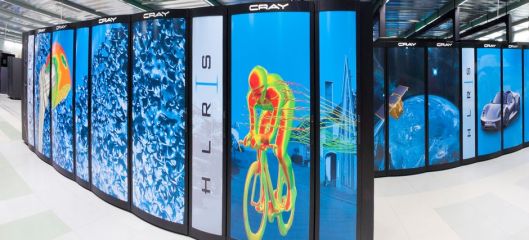
 I’ve written often about the sorry state of high performance computing. Our computing programs are blunt and naïve constructed to squeeze money out of funding agencies and legislatures rather then get the job done. The brutal simplicity of the arguments used to support funding is breathtaking. Rather than construct programs to be effective and efficient getting the best from every dollar spent, we construct programs to be marketed at the lowest common denominator. For this reason something subtle, complex and technical like numerical approximation gets no play. In today’s world subtlety is utterly objectionable and a complete buzz kill. We don’t care that it’s the right thing to do, or that it is massively greater in return than simply building giant monstrosities of computing. It would take an expert from the numerical elite to explain it, and those people are untrustworthy nerds, so we will simply get the money to waste on the monstrosities instead. So here I am, an expert and one of the elite using my knowledge and experience to make recommendations on how to be more effective and efficient. You’ve been warned.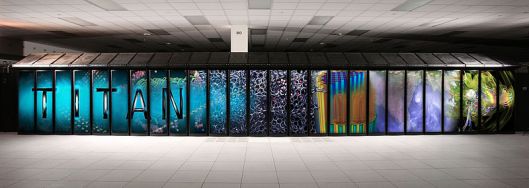
 What also needs to be in place is a sense of the value of each activity, and priority placed toward those that have the greatest impact, or the greatest opportunity. Instead of doing this today, we are focused on the thing with least impact, farthest from reality and starving the most valuable parts of the ecosystem. One might argue that the hardware is a subject of opportunity, but the truth is the opposite. The environment for improving the performance of hardware is at a historical nadir; Moore’s law is dead, dead, dead. Our focus on hardware is throwing money at an opportunity that has passed into history.
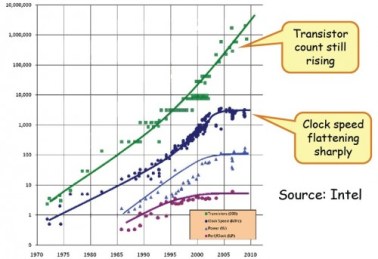 At the core of the argument is a strategy that favors brute force over subtleties understood mainly by experts (or the elite!). Today the brute force argument always takes the lead over anything that might require some level of explanation. In modeling and simulation the esoteric activities such as the actual modeling and its numerical solution are quite subtle and technical in detail compared to the raw computing power that can be understood with ease by the layperson. This is the reason the computing power gets the lead in the program, not because of its efficacy in improving the bottom line. As a result our high performance-computing world is dominated by meaningless discussions of computing power defined by a meaningless benchmark. The political dynamics is basically a modern day “missile gap” like we had during the Cold War. It has exactly as much virtue as the original “missile gap”; it is a pure marketing and political tool with absolutely no technical or strategic validity aside from its ability to free up funding.
 model. Together the two activities should help energize high quality work. In reality most programs consider them to be nuisances and box checking exercises to be finished and ignored as soon as possible. Programs like to say they are doing V&V, but don’t want to emphasize or pay for doing it well. V&V is a mark of quality, but the programs want its approval rather than attend to its result. Even worse, if the results are poor or indicate problems, they are likely to be ignored or dismissed as being inconvenient. Programs get away with this because the practice of V&V is technical and subtle and in the modern world highly susceptible to bullshit.
 simulation for decades now. Let us be clear, when we receive an ever-smaller proportion of the maximum computing power as each year passes. Thirty years ago we would commonly get 10, 20 or even 50 percent of the peak performance of the cutting edge supercomputers. Today even one percent of the peak performance is exceptional, and most codes doing real application work are significantly less than that. Worse yet, this dismal performance is getting worse with every passing year. This is one element of the autopsy of Moore’s law that we have been avoiding while its corpse rots before us.
 poorly understood by non-experts even if they are scientists. The relative merits of one method or algorithm compared to another is difficult to articulate. The merits and comparison is highly technical and subtle. Since creating new methods and algorithms makes progress, this means improvements are hard to explain and articulate to non-experts. In some cases both methods and algorithms can produce breakthrough results and produce huge speed-ups. These cases are easy to explain. More generally a new method or algorithm produces subtle improvements like more robustness or flexibility or accuracy than the older options. Most of these changes are not obvious, but making this progress over time leads to enormous improvements that swamp the progress made by faster computers.
 failure just as basic learning is. Without the trust to allow people to gloriously make professional mistakes and fail in the pursuit of knowledge, we cannot develop expertise or progress. All of this lands heavily on the most effective and difficult aspects of scientific computing, the modeling and solution of the models numerically. Progress on these aspects is both highly rewarding in terms of improvement, and very risky being prone to failure. To compound matters progress is often highly subjective itself needing great expertise to explain and be understood. In an environment where the elite are suspect and expertise is not trusted such work is unsupported. This is exactly what we see, the most important and effective aspects of high performance computing are being starved in favor of brutish and naïve aspects, which sell well. The price we pay for our lack of trust is an enormous waste of time, money and effort.
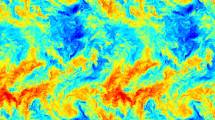 he solution of models via numerical approximations. The fact that numerical approximation is the key to unlocking its potential seems largely lost in the modern perspective, and engaged in any increasingly naïve manner. For example much of the dialog around high performance computing is predicated on the notion of convergence. In principle, the more computing power one applies to solving a problem, the better the solution. This is applied axiomatically and relies upon a deep mathematical result in numerical approximation. This heritage and emphasis is not considered in the conversation to the detriment of its intellectual depth.
 systematically ignored by the dialog. The impact of this willful ignorance is felt across the modeling and simulation world, a general lack of progress and emphasis on numerical approximation is evident. We have produced a situation where the most valuable aspect of numerical modeling is not getting focused attention. People are behaving as if the major problems are all solved and not worthy of attention or resources. The nature of the numerical approximation is the second most important and impactful aspect of modeling and simulation work. Virtually all the emphasis today is on the computers themselves based on the assumption of their utility in producing better answers. The most important aspect is the modeling itself; the nature and fidelity of the models define the power of the whole process. Once a model has been defined, the numerical solution of the model is the second most important aspect. The nature of this numerical solution is most dependent on the approximation methodology rather than the power of the computer.
 So why are we so hell bent on investing in a more inefficient manner of progressing? Our mindless addiction to Moore’s law providing improvements in computing power over the last fifty years for what in effect has been free for the modeling and simulation community.
 Our modeling and simulation programs are addicted to Moore’s law as surely as a crackhead is addicted to crack. Moore’s law has provided a means to progress without planning or intervention for decades, time passes and capability grows almost if by magic. The problem we have is that Moore’s law is dead, and rather than moving on, the modeling and simulation community is attempting to raise the dead. By this analogy, the exascale program is basically designed to create zombie computers that completely suck to use. They are not built to get results or do science, they are built to get exascale performance on some sort of bullshit benchmark.
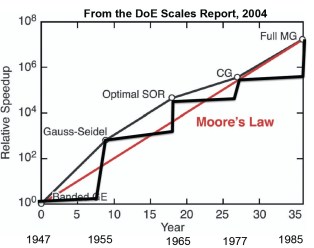 approximations is risky and highly prone to failure. You can invest in improving numerical approximations for a very long time without any seeming progress until one gets a quantum leap in performance. The issue in the modern world is the lack of predictability to such improvements. Breakthroughs cannot be predicted and cannot be relied upon to happen on a regular schedule. The breakthrough requires innovative thinking and a lot of trial and error. The ultimate quantum leap in performance is founded on many failures and false starts. If these failures are engaged in a mode where we continually learn and adapt our approach, we eventually solve problems. The problem is that it must be approached as an article of faith, and cannot be planned. Today’s management environment is completely intolerant of such things, and demands continual results. The result is squalid incrementalism and an utter lack of innovative leaps forward.
 ayoff is far more extreme than these simple arguments. The archetype of this extreme payoff is the difference between first and second order monotone schemes. For general fluid flows, second-order monotone schemes produce results that are almost infinitely more accurate than first-order. The reason for this stunning claim are acute differences in the results comes from the impact of the form of the truncation error expressed via the modified equations (the equations solved more accurately by the numerical methods). For first-order methods there is a large viscous effect that makes all flows laminar. Second-order methods are necessary for simulating high Reynolds number turbulent flows because their dissipation doesn’t interfere directly with the fundamental physics.
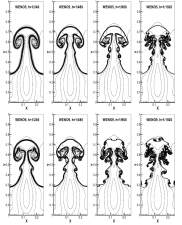 We don’t generally have good tools for numerical error approximation in non-standard (or unresolved) cases. One digestion of one of the key problems is found in Banks, Aslam, Rider where sub-first-order convergence is described and analyzed for solutions of a discontinuous problem for the one-way wave equation. The key result in this paper is the nature of mesh convergence for discontinuous or non-differentiable solutions. In this case we see sub-linear fractional order convergence. The key result is a general relationship between the convergence rate and the formal order of accuracy for the method,
  , which is
  . This comes from the analysis of the solution to the modified equation including the leading order truncation error. For nonlinear discontinuous solutions, the observed result is first-order where one establishes a balance between the regularization and the self-steepening in shock waves. At present there is no theory of what this looks like theoretically. Seemingly this system of equations could be analyzed as we did for the linear equations. Perhaps this might provide guidance for numerical method development. It would seemingly be worthy progress if we could analyze such systems more theoretically providing a way to understand actual accuracy.
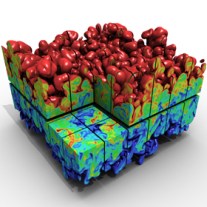 The much less well-appreciated aspect comes with the practice of direct numerical simulation of turbulence (DNS really of anything). One might think that having a DNS would mean that the solution is completely resolved and highly accurate. They are not! Indeed they are not highly convergent even for integral measures. Generally speaking, one gets first-order accuracy or less under mesh refinement. The problem is the highly sensitive nature of the solutions and the scaling of the mesh with the Kolmogorov scale, which is a mean squared measure of the turbulence scale. Clearly there are effects that come from scales that are much smaller than the Kolmogorov scale associated with highly intermittent behavior. To fully resolve such flows would require the scale of turbulence to be described by the maximum norm of the velocity gradient instead of the RMS.
 When we get to the real foundational aspects of numerical error and limitations, we come to the fundamental theorem of numerical analysis. For PDEs it only applies to linear equations and basically states that consistency and stability is equivalent to convergence. Everything is tied to this. Consistency means you are solving the equations in a valid and correct approximation, stability is getting a result that doesn’t blow up. What is missing is the theoretical application to more general nonlinear equations along with deeper relationships to accuracy, consistency and stability. This theorem was derived back in the early 1950’s and we probably need something more, but there is no effort or emphasis on this today. We need great effort and immensely talented people to progress. While I’m convinced that we have no limit on talent today, we lack effort and perhaps don’t develop or encourage the talent to develop appropriately.
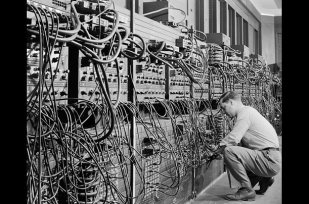 Beyond the issues with hardware emphasis, today’s focus on software is almost equally harmful to progress. Our programs are working steadfastly on maintaining large volumes of source code full of the ideas of the past. Instead of building on the theory, methods, algorithms and idea of the past, we are simply worshiping them. This is the construction of a false ideology. We would do far greater homage to the work of the past if we were building on that work. The theory is not done by a long shot. Our current attitudes toward high performance computing are a travesty, and embodied in a national program that makes the situation worse only to serve the interests of the willfully naive. We are undermining the very foundation upon which the utility of computing is built. We are going to end up wasting a lot of money and getting very little value for it.
 The Regularized Singularity