Suddenly summoned to witness something great and horrendous, we keep fighting not to reduce it to our own smallness.
― John Updike
M uch of my thinking goes into figuring out what the hell is going on these days. I’m distinctly unhappy with how work has evolved over the course of my career. On the one hand I feel like I’ve become that guy who pines for the “good ole days”. At the same time, I crave progress and a better world. I don’t want tomorrow to be like yesterday at all. The progress and World I desire didn’t exist in the past, but we were moving far faster toward it then. The good times of the past were defined by progress and purpose of work. It is the sense of progress, the meaning of work and sense of purpose that has been drained from my day. I realize that my expectations of work resolve around the spirit of progress toward something with importance and meaning. Work should have a clear purpose beyond simply delivering a paycheck. Work should be life affirming beyond its mere conduct.
I feel I’m living in parentheses
― Steven Wilson
 I sat down recently with one of my managers to make an admission that felt rather profound. My expectations of work are rather far beyond anything my employer can deliver on. This conclusion is rather intensely sad. Rather than lift me up and encourage me to greater heights, the demands of my job are smaller than me. I will have to lower myself to meet them. I don’t think this is uncommon, but rather a sad testament to today. I think this sentiment is broadly applicable and the strain between survival and a life of meaning has grown acute society-wide. More and more we aren’t dreaming or grasping for something bigger than ourselves. Day in and day out life is merely about survival and a host of petty concerns. The lack of meaning and purpose is a reflection of society as a whole. Most people are struggling even if the economy is humming. Our Nation is about reacting to fear, distrust and hatreds than aspiring to progress, hope and betterment. Work sadly reflects this time with cruel parallels. \
Smallness is subversive, because smallness can creep into smaller places and wreak transformation at the most vulnerable, cellular level. In a time when largeness is threatening to topple us, I wish to remember and praise the beauty of smallness, in order to banish the Goliath of loneliness.
― Sarah Ruhl
I told my manager, “I think you’re all basically good people, you can’t meet my needs in the current system.” I continued, “the system isn’t going to change to meet my expectations, so my expectations need to change.” It was an earnest and deep realization about the nature of work today. It is easier said than done. To make this happen, I need to let go of my deepest principles, hopes and dreams about work. I never wanted to be that guy who just went to work for a paycheck and spent time daydreaming about living a different life. I never wanted to be that guy who couldn’t  wait to leave each day to really live, and found the weekends were never long enough to make up for the time lost. Yet here I am, being all those things because work has become so entirely empty of importance, meaning and value. It does not have to be like this, and ultimately this state serves no one, not even those who seemingly benefit.
In order to escape accountability for his crimes, the perpetrator does everything in his power to promote forgetting. If secrecy fails, the perpetrator attacks the credibility of his victim. If he cannot silence her absolutely, he tries to make sure no one listens.
― Judith Lewis Herman
 It is instructional to examine some of the concrete aspects of work that could step into this abyss and form some purpose and meaning. For example, we have a national program to reclaim the supercomputing throne again. It is an exemplar of what is wrong with today’s World in many ways. It is what masquerades as a big idea today. Instead, it is a very small idea. Supercomputing has ridden the coattails of Moore’s law for fifty years and that time is coming to an end. For a while we could advance in computing without any strategy or effort, just an expenditure of money. Those days are over, but the tiny thoughts surrounding it are still present. Rather than react to this reality we are simply repackaging the same old stale ideas we have used for the past 25 years. The use of modeling and simulation is an essential modern scientific tool. Among the things that need to be done to enable effective modeling and simulation the supercomputing hardware is the least important thing. It is the furthest away from reality and its impact is diluted by a host of steps that all must be done correctly for the hardware to have meaning. This current program is shorn of effort in all of the most important things in modeling and simulation. The greatest gap is the sense of meaning that this program has in the real world is simply a marketing ploy. It has no reality or substance at all.

Beyond scientific progress, we need social and societal progress in many fronts. Science has often been at the vanguard of change either providing new truths to confront or energizing change through technology. We should all be trying to make a better World for all our citizens. Today’s world is trying to resist the truth and changes at every turn. We have huge swaths of society resisting the clearly defined risk of climate change through desperate ignorance. Technological change with information technology has become incredibly destabilizing both socially and politically. It is driving subtle social changes with how we form community, how we communicate and inform each other. It is having also been harnessed by the forces against progress to energize fear, and anger. This has emboldened hatred, bigotry and conflict that acts to solidify the hold of the powerful over society. We are headed for a massive conflict that will shape our future. The current situation is not sustainable in any way.
At the core of the conflict is the clash between the old and the new, the forces of progress against stagnation. In the United States this looks like a poorly educated shrinking white majority joined with a hyper-wealthy ruling class pitted against an array of minorities along with the highly educated. The status quo forces on the right want two things: putting these minorities back in their ghettos and closets, and a continuation of the pillaging of the Nation and stockpiling of wealth. They are using fear and authoritarian tendencies along with anti-democratic means to fight against progress. Right now, they are winning. Many of the people most harmed by the hyper-wealthy ruling class are supporting their political agenda. This support comes directly from the agenda of hate, violence and bigotry arising from their misplaced blame for their woes.
Part of the problem is that the forces of progress are not unified about anything, and this lack of solidarity as a movement is exploited by the right. If the forces on the left cannot find common ground all of them will be ground up under the jack boot of the right. Progress is preyed upon by fear and mistrust at every corner. The forces on the right behave with utter contempt of history, science and decency at every turn. They are hypocrites in every act, yet they still win. Their actions produce an increasingly desperate economic situation for their poorly educated, but hateful supporters without consequence. Without this critical feedback loop, we are in a dangerous spiral toward fascism, which the authoritarian rabble would welcome.
Perhaps one of the greatest issues we have is a deep and pervasive lack of trust. We don’t trust anyone with anything today. The cost of this lack of trust is massive and paralyzing. It is very clear that my employer doesn’t trust me at all. It is clear that the government doesn’t trust my employer either. People don’t trust the government, and everything is getting worse. We now have a President who pours gasoline on the lack trust by attacking our most trusted institutions. He is in the midst of turning the conservative movement against our most hallowed law enforcement agencies. The very rule of law is being challenged. All of this will drive wedges into our social order  that will end up killing people. Long before people die the social chaos and damage will unfold. We will see problems already present due to low trust to magnify. The challenges already existed, and the current situation is only amplifying an already dangerous situation. A host of difficult economic concerns that already limit any benefit that normal people receive from economic growth will only get more strained.
Micromanagement is the destroyer of momentum.
― Miles Anthony Smith
I can see the lack of trust daily at work. We are micromanaged in everything we do and watched like hawks. Everything we do is treated with suspicion. The micromanagement at attitude toward the work we do is a leading cause of smallness of thinking. With little trust in evidence in the work place we cut our work into tiny increments that are devoid of risk taking. The overwhelming lack of trust leads to the definition of work that takes minuscule risks since failure is unacceptable. Increasingly, our expertise is unwelcome either in informing the government, or even internally. There used to be a time where the experts, the institutions and the government worked together to solve big problems and craft solutions to vexing issues. Now everything is so small that nothing big can even be attempted.
Authority—when abused through micromanagement, intimidation, or verbal or nonverbal threats—makes people shut down & productivity ceases.
― John Stoker
 Vexing problems require risky solutions as well, and with risk off the table we simply avoid hard problems. Today that chain is broken at every level with our leadership being increasingly devoid of intellectual depth. Our experts are ignored, the institutions just want money and the government controls the money. Expertise is unwelcome because it only complicates the process and gets in the way of the money. This problem is one of the core issues with any strive for excellence and utility of peer review. Our institutions increasingly don’t care what they do as long as its paid for. The government has no interest in the work or its quality. All of this is a horrible downward spiral. In its wake value, meaning and quality are sacrificed. At the core of this maelstrom is an awful lack of trust and honesty that sprawls across society. If we can’t trust each other, we can’t work together and doing anything great is completely out of reach.
We are incredibly fear driven as a society. This fear makes us small, timid and undermines any chance for greatness. The lack of progress, fear driven beliefs and trust deficit only benefits the powerful and rich at the top of society. It only benefits these people in the short term. in the long term their power and wealth are diminished  by the lack of growth overall. They only gain a relative degree of power, wealth and standing in comparison to the common man. We are living in a period where overwhelming fear is being used as a tool of the powerful. In the wake of 9/11 we saw irrational fears used to justify vast authoritarian overreach that continues to this day. We see huge defense budgets to be pillaged by the wealthy. The post 9/11 World has taken the United States directly toward a being a police state. People don’t even bat an eyelash at our massive level of imprisonment. It is a deeply unhealthy characteristic of our Nation, and most people are oblivious. At the same time the fear produces a compliant populace hungering for the safety of strong man rule. We see this playing out across the West as Democracy recedes in response. As Democracy recedes war will surely follow.
People care much more for how things look than how things are.
― Donna Lynn Hope
Today, work just seems small, a tidal wave of the small and insignificant drowns purpose and meaning. The tide of micromanagement underlies a lack of trust combined with a broad core of structural dishonesty. Almost everyone is drowning in this sea of minutia that cripples our ability to focus on anything big. All of us are simply buried in mountains of useless bullshit too deep to allow us to concentrate on anything important. Meanwhile we are being taken over by authoritarian forces pushing us headlong into a police state. Many Americans are welcoming the imposition of rule by a strong man ruler. The loss of fundamental principles of our democracy are accepted and even welcomed. We are headed headlong toward some sort of modern version of civil war. Conflict is almost inevitable, it is just a matter of time until society fractures. Maybe work is small because more important things are happening. It is time to pay attention.
Distrust is like a vicious fire that keeps going and going, even put out, it will reignite itself, devouring the good with the bad, and still feeding on empty.
― Anthony Liccione

 being forced to. In addition, I do not feel that I am at liberty to go into the nature of the pressure being placed on me to stop. Nonetheless, I am being clearly pressured, if not threatened. When you call your wife to talk to her about an event and her response is fear bordering on terror, it gets your attention. I don’t want to hear that ever again. That is enough to get you to say, “fuck this shit”.
 sons are varied and largely personal. First and foremost, the blog was a way to practice writing as a habit. Writing is a core professional and personal activity. A focus on writing is key area of personal and professional development. It is difficult and often exposes one to intense and personal criticism. A blog meant that the work would be published and read by others. That has a way of focusing the mind, and you take things more seriously. When you write only for yourself, the level of care and attention is not nearly so acute. Occasionally a blog post would resonate and get a lot of viewers, which is a nice feeling. More often I would get a handful of viewers, but the post had already achieved its intended purpose.
 at a National level. The level of intellectual discourse around our programs is dismal, I’m lending my thoughts to the vacuum of ideas. Other blog pasts were pointed at dealing with the management of science. To say that science is managed poorly today is an understatement of some magnitude. It is getting worse. Finally, a handful of posts were completely out of character, and simply existed to maintain the writing habit and speak to something I really believe in. This won’t be the end of my writing, but it will happen in a different forum probably anonymously. I may experiment with different forms of writing too, fiction, poetry, …
 Today I’ll stick my nose into some of the appallingly destructive laws we have to live under. We are about to see a new one enacted to all of our detriments. We are a Nation that depends on laws for order and the common good. When the laws are simply veiled attempts to push other agendas that harm innocents, all law is undermined. In other cases, the law is simply incompetent and ill-suited to provide the intended good. The worst case are laws that are both veiled agendas and incompetent. These laws threaten the future, order and the tolerance of people. They do genuine harm to all of us. Unfortunately, we have far too much legislation that follows these characteristics. Many of these laws are marketed as something they are not so that they can serve the agendas of the powerful, often oppressing the weak and vulnerable as a side-effect.
 Most people are not aware of what is happening to the Internet right now. The congress is in the process of passing a censorship of free speech associated with sexuality. These laws are packaged as efforts to stop sex trafficking, a horrendous crime and genuine problem. The bills are quite frankly Trojan horses for a whole bunch of other stuff and will actually harm the people it is marketed to help (
 harms the people it is purported to help and amplifies existing problems in society rather than alleviate them. We already live in an obsessively shame driven culture with a sex negativity that harms many especially women. The way to combat human trafficking is to make sex work legal and allow it to proceed in the full light of day. It will happen and when it is underground it will attract criminals.
 Let’s look at some concrete examples of current laws. At my work we have to abide by export control laws. Calling this law idiotic is an insult to idiots. It combines terrifying penalties for violations with sketchy and piecemeal guidance. It rules by fear and incompetence blended into a toxic stew. For what I do the technical guidance needed for export control is intricate, and the law provides none. At the same time the legal jeopardy is extreme and exceeding that for classified data associated with nuclear weapons. The result is chaos and non-uniformity. The parallels to FOSTA/SESTA are stunning and terrifying. The new legislation is defined by the threat of massive legal jeopardy. These legal hammers are bludgeoning people like Craigslist to take steps to insulate themselves as a result.

 Marijuana is illegal without regard for its level of risk. It has genuine medical benefits that the law does not acknowledge, and its hard is far less than alcohol by virtually every reasonable standard. Rather than be a gateway to harder drugs, it is an alternative that reduces abuse of opioids. It is only illegal because it was the drug of choice by minority groups and an invitation for systematic targeting by police. Again, the parallels with FOSTA/SESTA are uncanny. We see legislation that sounds like it is a public good and instead is a targeting a vulnerable population. It make sex more illegal and drive it underground where it will help provide money to organized crime. Superficially the legislation sounds good, enacted and in practice it will hurt people and our society.
 A few weeks ago, I wrote about the variety of partial differential equations with their hyperbolic, parabolic and elliptic character. The point of the essay was noting that parabolic and elliptic equations have some intrinsically unphysical aspects. While this is true to an extent, I failed to note the linearity of these concepts. Some of my wise readers called me on this oversight in particular with respect to nonlinear parabolic equations that exhibit clear wave like behavior. Where linear parabolic equations produce infinite speeds that are clearly unphysical, the nonlinearity of the diffusion produces finite wave speeds and fronts usually associated with compressible flows. The nonlinear diffusion equations are used to model porous media and radiative transfer. The higher the degree of nonlinearity, the sharper and more shock-like the fronts behave. Furthermore, this sort of diffusion can be extremely useful for numerically stabilizing the solution of hyperbolic PDEs. My failure to note this texture was a significant oversight on my part.
 Other aspects of modeling with PDEs are problematic. One issue that comes up frequently with hyperbolic heat conduction is relativity. Generally, models are not Lorenz invariant. Almost every equation can be recast in a relativistic form to fix this issue. For many cases this has no significant influence on the solutions to the model. In hyperbolic heat conduction the changes return the equations to satisfying the second law of thermodynamics. The speeds in the equations are generally not relativistic, which makes this an extremely curious result. In greater depth, the entire notion that grounds the second law is equilibrium thermodynamics, and the processes in hyperbolic heat conduction are out of equilibrium. We need to carefully apply principles and assumptions when their foundations are being shaken.
 seems to indicate this. At the same time the vast majority of people are not benefiting. Life is genuinely hard for most people and getting harder. People have generally had jobs, but the jobs don’t lead to a good life with people stretched paycheck to paycheck, and health care ravaging any chance of having extra money. Simultaneously the rich are just getting richer. At the core of this disparity in outcomes from a seemingly robust business climate is the fundamental philosophy of our businesses, the maximization of stockholder value as the preeminent goal of business. This philosophy does not benefit business, customers, employees or society, it benefits shareholders who are the very rich. We now have moved to the point where the idea and the wealth it created at the top of the food chain has bred graft and corruption. The laws of the Nation have been altered to serve their wealth and away from serving the people. We are moving headlong toward catastrophe ushered in by the resulting imbalance.
 he situation gets worse when one looks at government. Increasingly the government looks to business practices to effectively deliver results from their programs. The business practices that the government looks to are drawn from the prevailing philosophy, maximized shareholder value. Government programs don’t have shareholders, but the influence is strong. We see money as driving everything in our work. Technical excellence, service, employee engagement, social impacts and long-term health of programs are all scarified to this philosophy. In business the maximize shareholder value leads to short-term thinking (driven by quarterly statements, profits), and these breeds short-term thinking in government programs. As a result, we have produced terrible government, and terrible results. Increasingly, the result of government being ineffective and awful is a self-fulfilling prophesy. Government can be effective, but only if we manage using principles that focus on effectiveness. In a sense the right philosophy for government needs to be different because the profit motive is not present. In the place of profit we simply see an acute focus on money and cheapness replacing service and excellence.

 e to use. This choice was largely an article of faith. The leaders of business on like maximizing shareholder value because they are shareholders. It benefits them financially. In every other resect his philosophy is terrible for the businesses themselves, hurts employees, harms customers and allows abdication of social responsibility. We see businesses that are absolutely eager to harm the Nation, its citizens, the environment, and break the law all in the name of short-term profit.
 United States at large. The bosses are doing great. The higher the boss is in the company or government function, the better they doing. Executive compensation is soaring while everyone else falls behind. The nation has become utterly short-term focused in its thinking. We can barely focus on anything for more than a day these days. The employees are struggling mightily. People are hurting, and these people are the employees. We can’t expect people to be good employees, parents, citizens if their lives are hanging by a thread. Almost no one exercises any social responsibility with both government and businesses showing total disregard for the citizens of their nation and community. All of these ills are the direct result of embracing greed as the core principle for business and government. The outcomes should surprise no one. Fixing this would mean a wholesale change in the emphasis of the ruling class away from self-enrichment to broader leadership with responsibility for others.
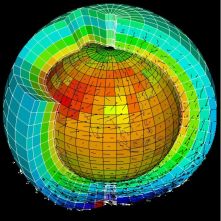 with measurements to yield comfort to those who use them. In particular when we have a calibrated result, the bias in uncertainty is utterly essential to represent if we hope to predict with any justifiable confidence. For most cases where calibration is utilized, the bias is inherent in that process, and should be reflected in the uncertainty. If we are engaged in genuine prediction with the uncertainty, these biases can have rather profound impacts away from where we have data and where we are actually predicting results.
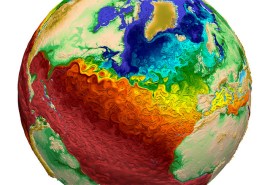 climate are epitomes of this principle. In these systems the answer is determined by small deviations away from the equilibrium state. Another wonderful example of this principle is a Type II Supernova where it teeters on the edge of this equilibrium and complex processes determine whether the star explodes or collapses into a black hole. A well represented equilibrium is more important to modeling than numerical or physical accuracy of the individual terms. In these cases the numerical error can be sufficient to upset the equilibrium rendering the simulation functionally useless. A calibration of a poorly understood model is used to compensate for the numerical error and place the system back into equilibrium. This common circumstance presents a distinct challenge for uncertainty estimation.

 Looking out into the wide world one can easily conclude that people are really weird. There are lots of odd ones who engage in all sorts of irrational and odd behavior. I’m certain that I’m weird too. At the base of all this weirdness is a general lack of honesty and openness. No matter how much I might want to be honest and open, it is generically impossible. Generally speaking, if people could be more honest their behavior would make much more sense. Such honesty is breathtakingly hard to accomplish. In many cases honesty is punished brutally. To be honest is to risk judgement, confrontation, and ridicule from many quarters. Many of those engaging in these reactions themselves hide major portions of themselves for the same reasons. As a result of all this, people are weird, and their actions are not rationally explicable.
 The differences in people add to the weirdness because I react to things far differently than others. I’m sure that many others are put off by my wiliness to directly confront issues is weird. In other ways I might dress or act weirdly. This could be a direct result of different tastes, lack of attention or reasoning that is completely hidden by secrecy. For other people who I’m judging as weird, the reasons could be exactly the same. Sometimes the secrecy is driven by shame, or a desire for privacy, or difficulty in managing any meaningful communication. For example, people are highly motivated by sex, but society is extremely sex negative. The combination is shame. People want things with passion yet are pushed to disavow these wants from any public face. We live in an increasingly hostile and judgmental world and many things that might engender these reactions are kept private. Some people simply can’t be bothered to communicate effectively. They simply don’t try. In other cases, if I communicated to you exactly what motivated me, the actions would be entirely sensible. The result is the appearance of unbridled weirdness.
 Pushing all of these things out of society and organizations would be worthy progress toward a better World. Shame does nothing for anyone but drive natural behaviors and desires underground. Everyone would be better without its negative force on society. It only works as an engine for projecting someone else’s moral code onto an unwilling person. It creates a host of horrible side-effects that harm people. Desires for privacy are similar. We want things to be private because they are shameful. Some things are worthy of privacy like financial information because of potential for criminal conduct. Some things like a personal pain simply are not the subject of broad interest. In other cases, one wishes to only have certain things shared with a person whom they are intimate. All of this ultimately revolves back to communication. Our communication is the most important and essential aspect of our humanity. Without communication we are just animals. With it we are a society. A focus on doing it well is worth the effort.
 The Regularized Singularity