
tl;dr
I’m getting close to the decision to retire. I’m looking back at my career, trying to put things in perspective. By most accounts, it has been a great career, but it is also short of what it could have been. I have some genuine disappointments. I’ve seen a lot and accomplished some great things. In this Requiem, I’ve talked about my young life. I expanded and looked back at the heart of my professional career in Los Alamos, the apex of my career. Those years made me who I am as a scientist.
Now I am at the closing chapter of my career, the time I have spent at Sandia National Labs. It is too close to have a full perspective, and I cannot offer full disclosure either. I can offer a deep sense of disappointment and sadness about how it has worked out. It has not been a place to fulfill my potential, and, in retrospect, never could have. I made my choices and the results are a wonderful full life, but a loss of professional success in trade.
A Change is Needed
“Things change. And friends leave. Life doesn’t stop for anybody.”― Stephen Chbosky, The Perks of Being a Wallflower
It was October 2006, and I was convinced that things were not going to get better at Los Alamos. The new management team was awful. The new corporate partners were corrupting the essence of the Lab. My oldest child was in middle school, and I was concerned he wouldn’t do well as a teen in Los Alamos. The small-town nature of Los Alamos was starting to get under our skin too. You often would know people three or four or five ways. Work lives and personal lives were not separate, they were completely intertwined. Los Alamos was closing in on us and we needed space.
During that October, I went to a biannual conference put on by the nuclear weapons community focused on computational modeling. This time it was held in Los Alamos. The nuclear weapons world of the USA and the UK joined to talk about computers, modeling, and computational physics. It is totally my jam. Sandia National Labs sent a contingent, including my friend Tim Trucano. I approached him and a Sandia manager there (Randy Summers) with the potential of moving. They were very excited, and before long, I had an interview and shortly thereafter a job offer.
I left Los Alamos Lab on February 16, 2007, and began at Sandia the following Monday. It was MLK day, which Sandia unwisely doesn’t take as a holiday, but Los Alamos does. Maybe this little detail was a sign, and in retrospect, one I should have heeded. I was going to work in Computer Research Institute (“1400” in Sandia’s annoying schema for organizational names… no names, just numbers). My job was to work on a code development team for the MHD code “Alegra”. Alegra is a magneto-hydrodynamic code developed originally under the ASCI program. Another harbinger of issues was its lack of support from ASCI (not ASC, because a permanent program can be an initiative for so long). Alegra was then mostly supported by the US Army for analyzing things like advanced armor concepts. The reality was that I was wildly overqualified for the job. The funding and the code were horrendously constrained, and the code base was around 15 years old and all in C++.
It was a good team with good people. I let myself focus on that and approached the job with optimism and an open mind. Again, with the benefit of time, this was a naive approach. I should have been far more guarded. A big piece of this statement is that the forces that fucked up Los Alamos were present at Sandia. Sandia had always been a little corporate-managed originally by Bell Labs. In 1994 the management changed to Lockheed-Martin. The low-trust corporate management approach was firmly entrenched at Sandia.
The decline in the quality of work, science, and culture at Los Alamos was actually a national problem. Sandia was also in decline. Los Alamos took the blow of being corporately managed; Sandia was already a corporation. The management was terrible for science, but great at giving the government what it asked for. The National Labs were being pulled down by the same forces making the United States awful. The same forces we’ve seen unleashed over the past 10 years with toxic political effects. There is no escaping the decline we found ourselves in. Professionally, I should have been more pragmatic and less hopeful with my new circumstances.
A few things stand out about that time. My move got swallowed by the housing crisis of 2007 and we lost our shirt in real estate selling in Los Alamos. If we’d been three months earlier, we would have escaped, and been about $100,000 better off.
The director of our Center at Sandia also moved from Los Alamos almost at the same time as me. James Peery had started at Sandia then moved to Los Alamos for a time to run the ASC program. He was also on a corporate bid team to manage Los Alamos that did not get the job. He moved to a job managing the Center where he had started at Sandia. Unlike me, Sandia was perfectly suited for him. James is now the Laboratory Director at Sandia, retiring soon.
A few things were evident upon my arrival. A lot of administrative details were immensely better at Sandia. For example, one of the worst things about Los Alamos was travel reimbursement. At Sandia, this process was fast and seamless. The timecard application was great, too. It would have been great, except Sandia is a complete asshole to employees about some auxiliary regulations around the travel credit card. Sandians are obsessive followers of rules and regulations. It is an engineering lab and small “c” conservative organization from top to bottom.
Another difficult thing is Sandia’s devotion to information control and the practice of “need-to-know”. This is baked into their culture. Stepping back from this, one can see that Sandia was corporate in every way, and did mundane bullshit far better than Los Alamos. Thus, in every way that does not matter to National Security Science, it was an improvement. The engineering at Sandia is repressively backward and grounded in the past. Science at Sandia is peripheral and always counterculture. I have learned that culture is almost immutable, and Sandia’s culture does not fit me at all.
My take on Sandia is going to be quite harsh, so I’ll disarm this assessment a bit. On a broader scale, Sandia is a great employer. Most people would be lucky to work there. The reasons for this are twofold: First, most employers in the USA are terrible to employees, and I had been gifted an incredible experience at Los Alamos to start my career. The current Los Alamos and Sandia never stood a chance at living up to that start of my career. Secondly, the Labs have declined greatly largely due to the forces that are sieging America at large. These forces are bipartisan. Distrust and bullshit are coming from both the left and the right. Therefore, a significant drop in workplace satisfaction occurred when I left Los Alamos. Another drop would await me at Sandia. The thing that meant the most about Los Alamos was the culture. I fit into Los Alamos culture, and Sandia’s culture is unnatural for me.
Another red flag with my hire at Sandia was my ranking as a staff member. There were limits in the level I could be hired. These limits existed because they’d been abused in the past with a political hire. I would have to wait a few years to be promoted. Still, there are shades of lack of recognition professionally by Sandia. This theme is still rife today. Back in 2007, I was approaching the job with possibility and generosity. That spirit was not returned by Sandia. Sandia’s ethos was far different from Los Alamos. This was a foreign culture and not one that I was suited for.
A couple years ago, I had an epiphany about this contrast. I was at a conference. There was a contingent of Los Alamos staff there along with my coworkers at Sandia. During the meeting, I noticed that my behavior around the Los Alamos people was completely different than the Sandia ones. The people from Los Alamos were not old friends or people I knew well. In reality, I knew the Sandians better. I realized that I was “code-switching.” It made me realize that the culture and environment at Sandia were oppressive to me. The self I was with Los Alamos staff was far closer to the real me. With Sandia’s staff, I buried and censored myself. This was an absolutely jarring realization. The conclusion was that at Sandia, I could not be myself, either personally or professionally.
So as 2007 sped along, I worked to fit in and do my work. I wanted to make this succeed and I gave Sandia a lot of space. I gave it a lot more space and the benefit of the doubt than it deserved.
On the Alegra team, we did some good work despite all of this. We did run into a crisis early in my Sandia career. The ASC funding was being dropped even further, and the Army sponsorship was at risk. We needed to produce a code that was more robust and handled difficult situations better. The gauntlet was thrown down: either we improve, or Army funding would shrink until it was gone. The project would die. I immediately set about to devise a strategy to solve the problem. It was all hands on deck. No solution was off the table. In the end, we fixed the code with success that exceeded our wildest expectations. This effort remains today as the highlight of my time at Sandia. This was as good as Sandia would ever get for me. It was some really great work.
When I compare this with what I did at Los Alamos, this makes that highlight almost seem tragic. It barely held a candle to what I achieved in Los Alamos.
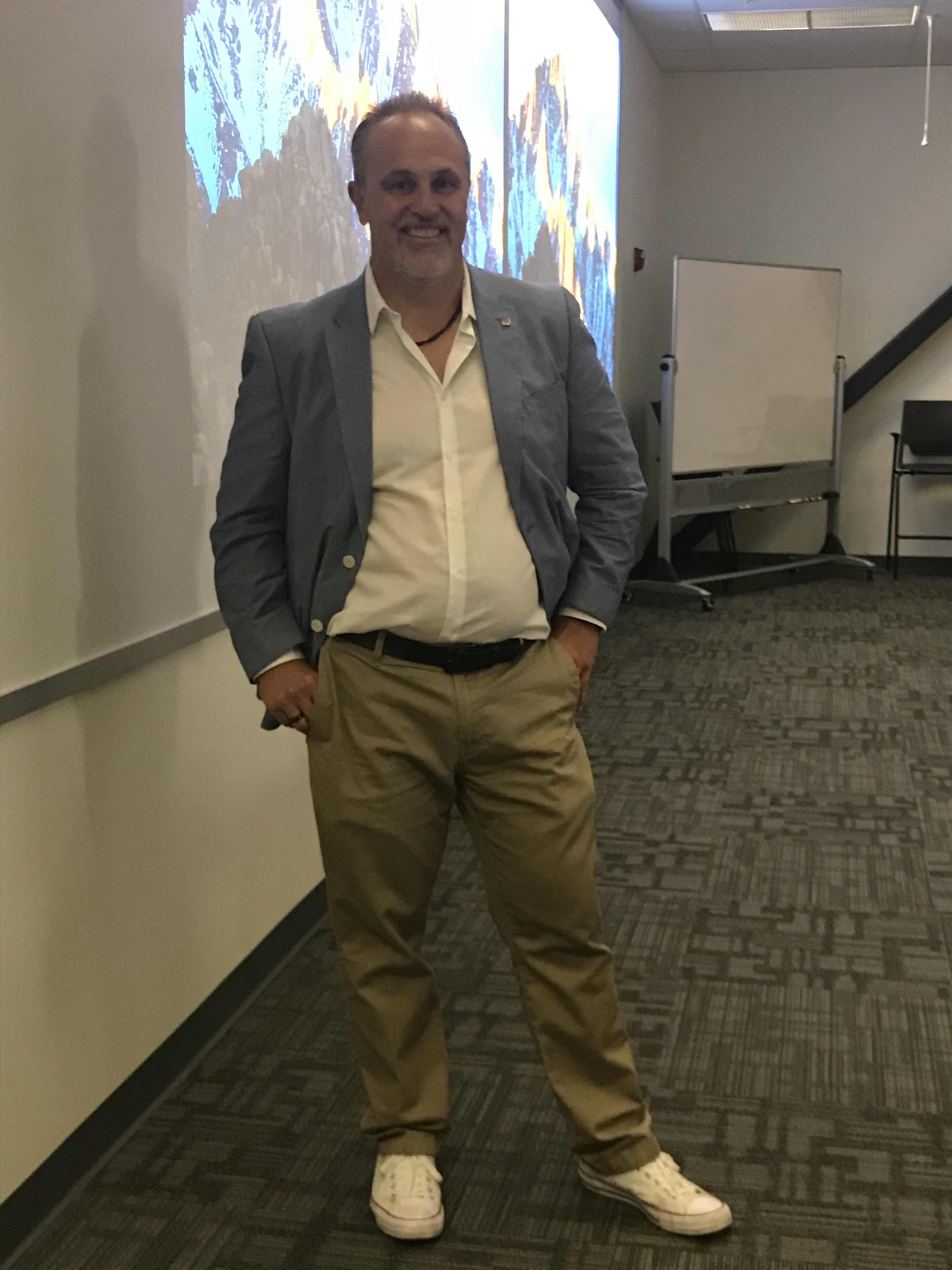
“Here’s to the crazy ones. The misfits. The rebels. The troublemakers. The round pegs in the square holes. The ones who see things differently. They’re not fond of rules. And they have no respect for the status quo. You can quote them, disagree with them, glorify or vilify them. About the only thing you can’t do is ignore them. Because they change things. They push the human race forward. And while some may see them as the crazy ones, we see genius. Because the people who are crazy enough to think they can change the world, are the ones who do.” ― Steve Jobs
This quote is from an Apple marketing pitch. It describes the best of Los Alamos and captures the ideals of that Lab. If I took the quote and wrote the exact opposite, it would capture the worst of Sandia (albeit slightly unfairly).
This is Not the Right Place for Me
“An eye for an eye, and the whole world would be blind.” ― Kahlil Gibran
Recently, the focus of how much tragedy has become evident. In many respects, what stands out at Sandia is a lack of respect and use of expertise. Throughout my career, I have developed extensive expertise and Sandia simply ignores it. That expertise is one of the most important parts of Stockpile Stewardship. I have a unique knowledge of modeling and simulation—specifically the codes, methods and models used to do it. Part of this can easily be seen in how retirees are treated by the Labs. At Sandia, the prevailing attitude is “Don’t let the door hit you on the way out.” This contrasts with Los Alamos, where retirees and their knowledge are welcome and ever-present. Right now, it is these aspects that exemplify how I see Sandia. The core of my professional identity and accomplishments are not valuable to the institution. I do not feel welcome or even useful when it is obvious I should be.
There is so much more that feels bad. I put a great deal of goodwill into my first few years at Sandia. My inability to bring my real self to work began to get under my skin. (Actually, it influenced what I got on my skin too; more on that later.) The underlying Sandia culture is buttoned up and uptight as hell. It is not a place where free thought and debate happen. Even worse, it is a place that does not feel accepting of differences. While I am a middle-aged cis-gendered white man, I am not typical in many ways. None of those differences feel accepted openly. The workplace feels confined and truly limited in acceptance. I can’t bring either my personal or professional self to work. I am careful to see this feeling as a balance of intrinsic cultural differences from the shitshow of today’s America. I am sure it is a mix of innate culture and current trends.
One of the hardest aspects of working at Sandia was determining a professional development path. Why work hard at developing myself when Sandia already could not use my skills? When I walked in the door in 2007, my skills already exceeded what Sandia could use. In retrospect, I could have worked harder and hid myself at work. It would have been valuable at the office, but harmful to my being. Thus, a plan was hatched to work on my writing with focus.
This was the genesis of my blog. I would write regularly and publish the writing to be seen by others. Writing to be read by others is essential. In retrospect, the blog was one of the best things I did while at Sandia. It also made me a better scientist. Writing is thinking deeply. I would write about presentations I would give, and I approached those talks having thought deeply about the topics. In the end, thinking deeply was viewed as counter-productive unless those thoughts aligned with Sandia’s views.
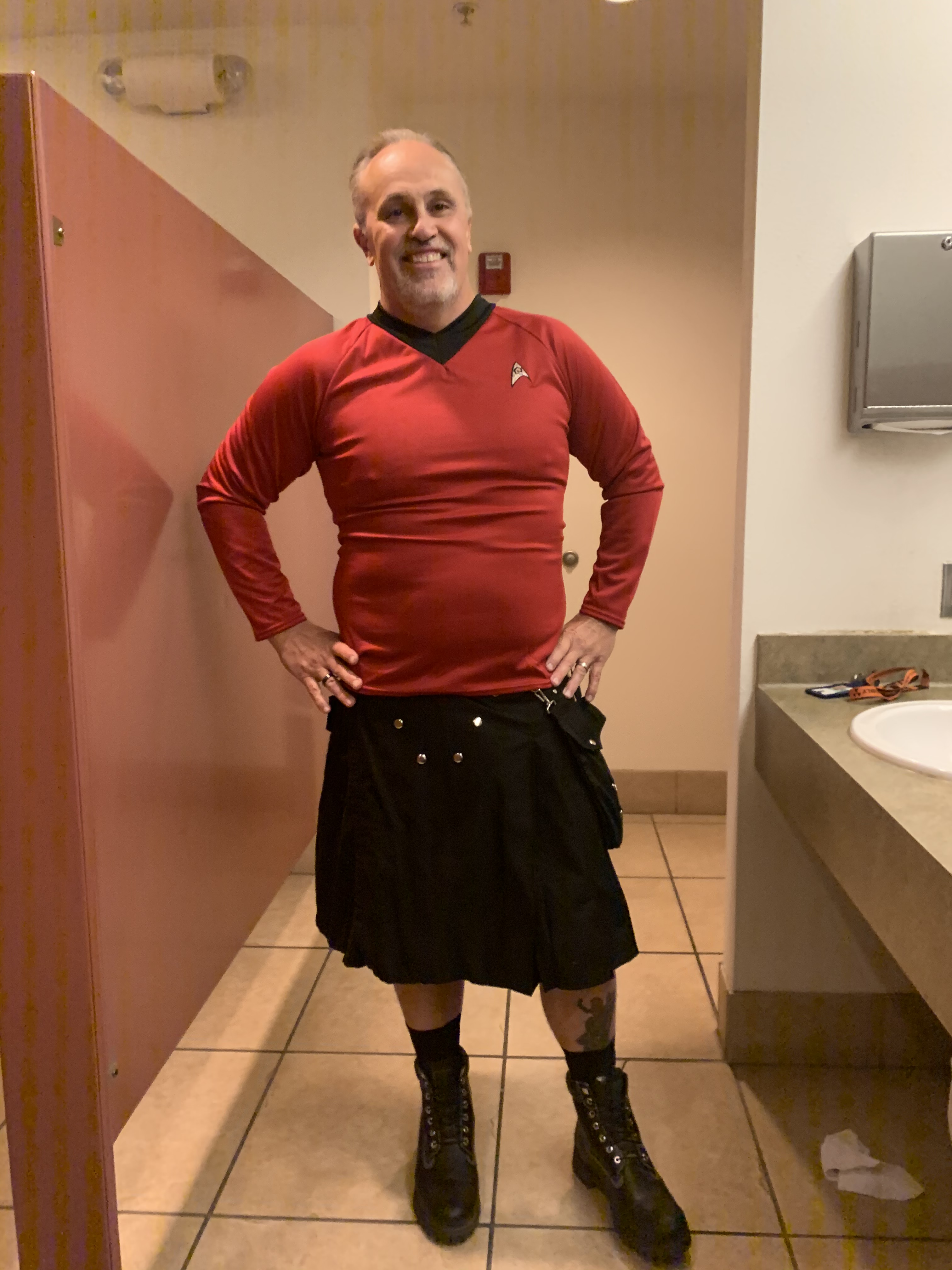
Unfortunately, the blog ended up being the worst thing that happened to me at Sandia, too. The way I stopped writing exemplified the worst of the Lab but aligned perfectly with its culture. In a way, I should have seen this outcome coming at me clearly. Instead, I was optimistic and trusting. That trust was never returned. I hate saying this, but events clearly point to the worst possible reading of how the blog ended.
This Will Not End Well
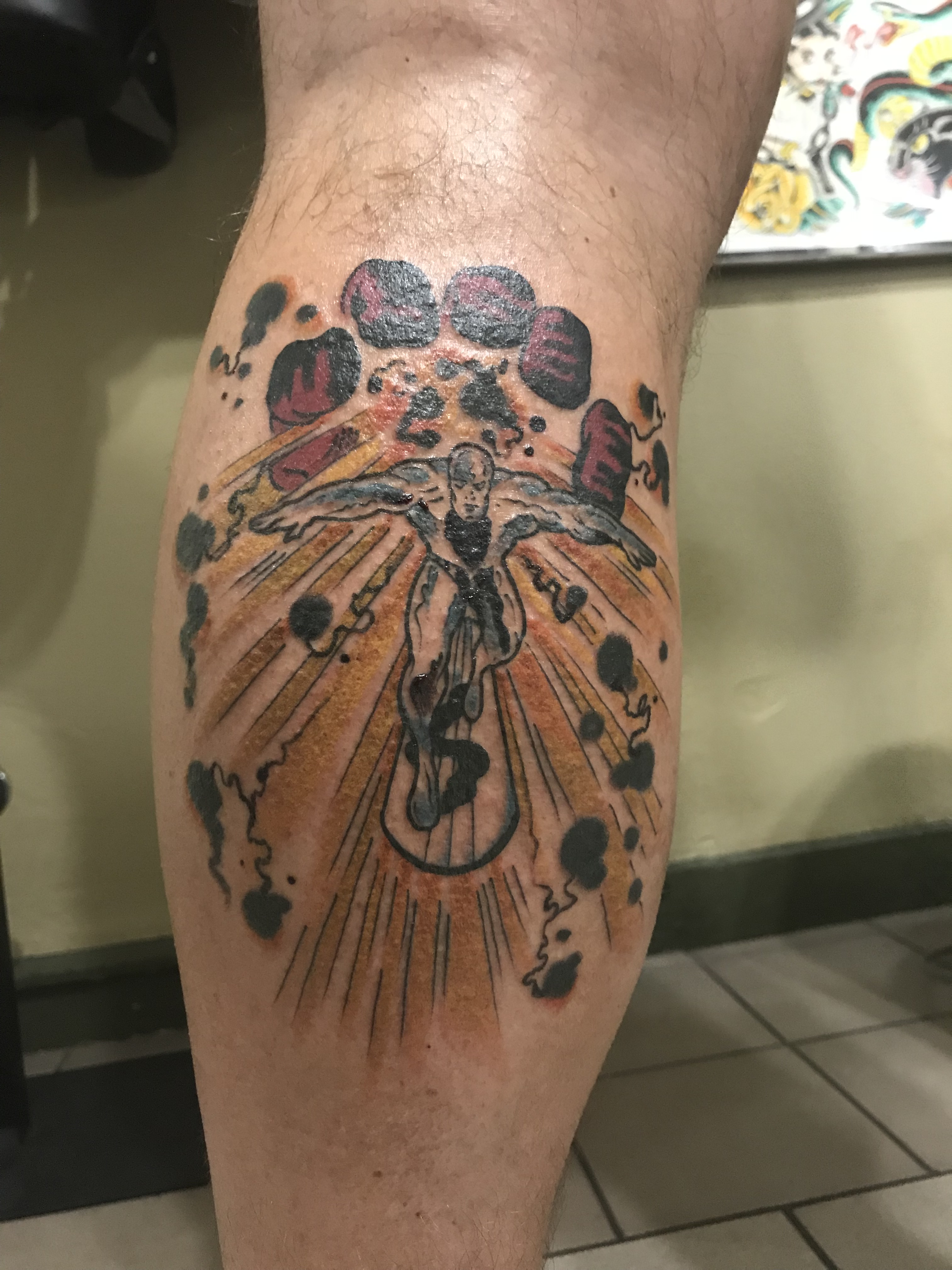
In 2013, I turned 50 and started to exhibit many signs of the canonical midlife crisis. Today I see it differently, but one of the signs of the crisis was getting my first tattoo in October. Since then, I’ve gotten 25 more. They fall into some general themes: my science, primal imagery, and philosophical expressions of love and freedom. I’ve come to realize that the tattoos were a personal expression in the environment that limited it. The tattoos were also very essentially modern and fit to Albuquerque culture. The irony is that Sandia culture is orthogonal to Albuquerque culture. I was not going to be stuck into the Sandia straightjacket. I wanted to express myself freely and fully. By putting the expression on my body, I would not be silenced. I don’t think it was a conscious thought, but rather a reaction to the day job with my real self. As the past decade has unfolded, my true self and my work self have diverged rather precipitously. The subtle differences I expressed moved toward a primal scream.
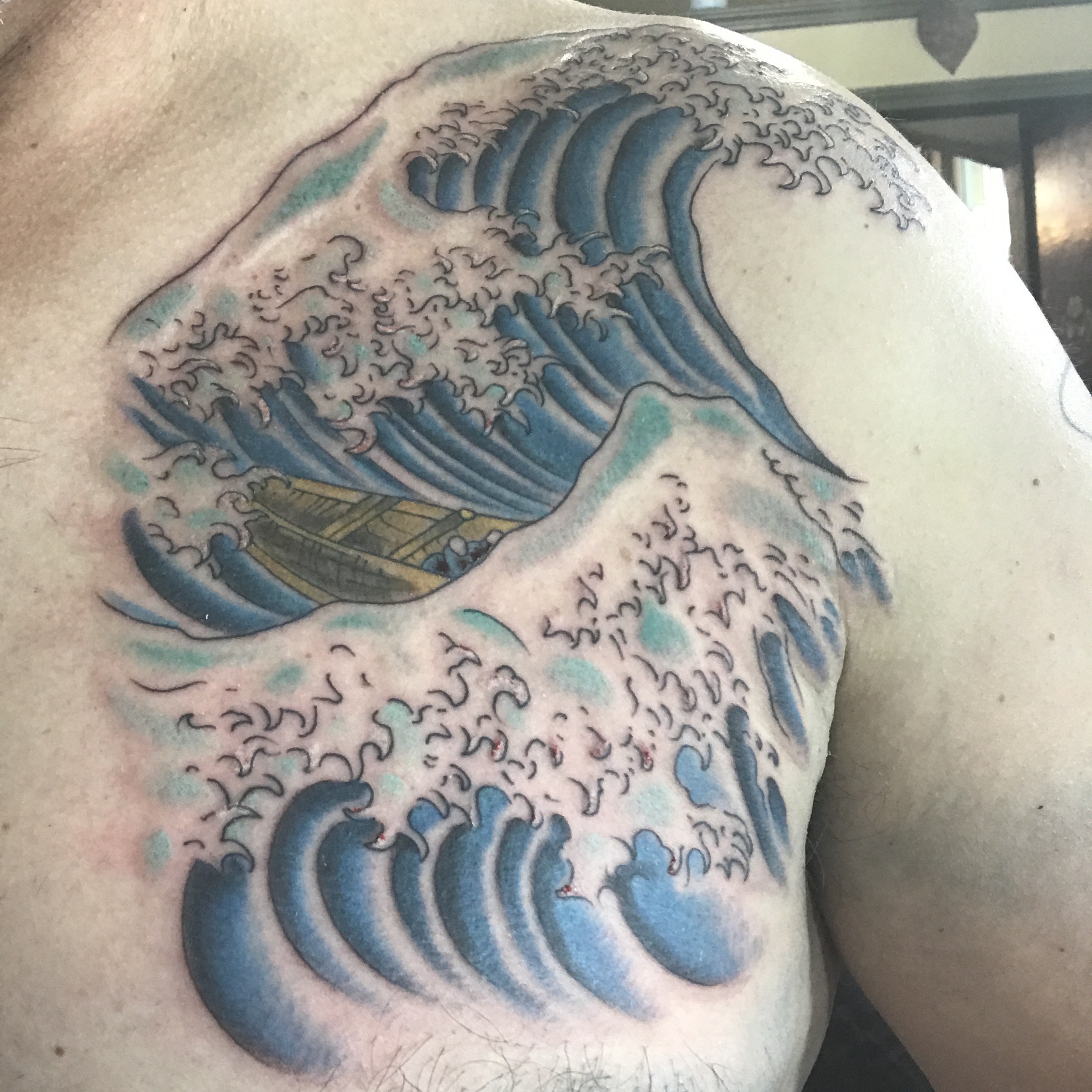
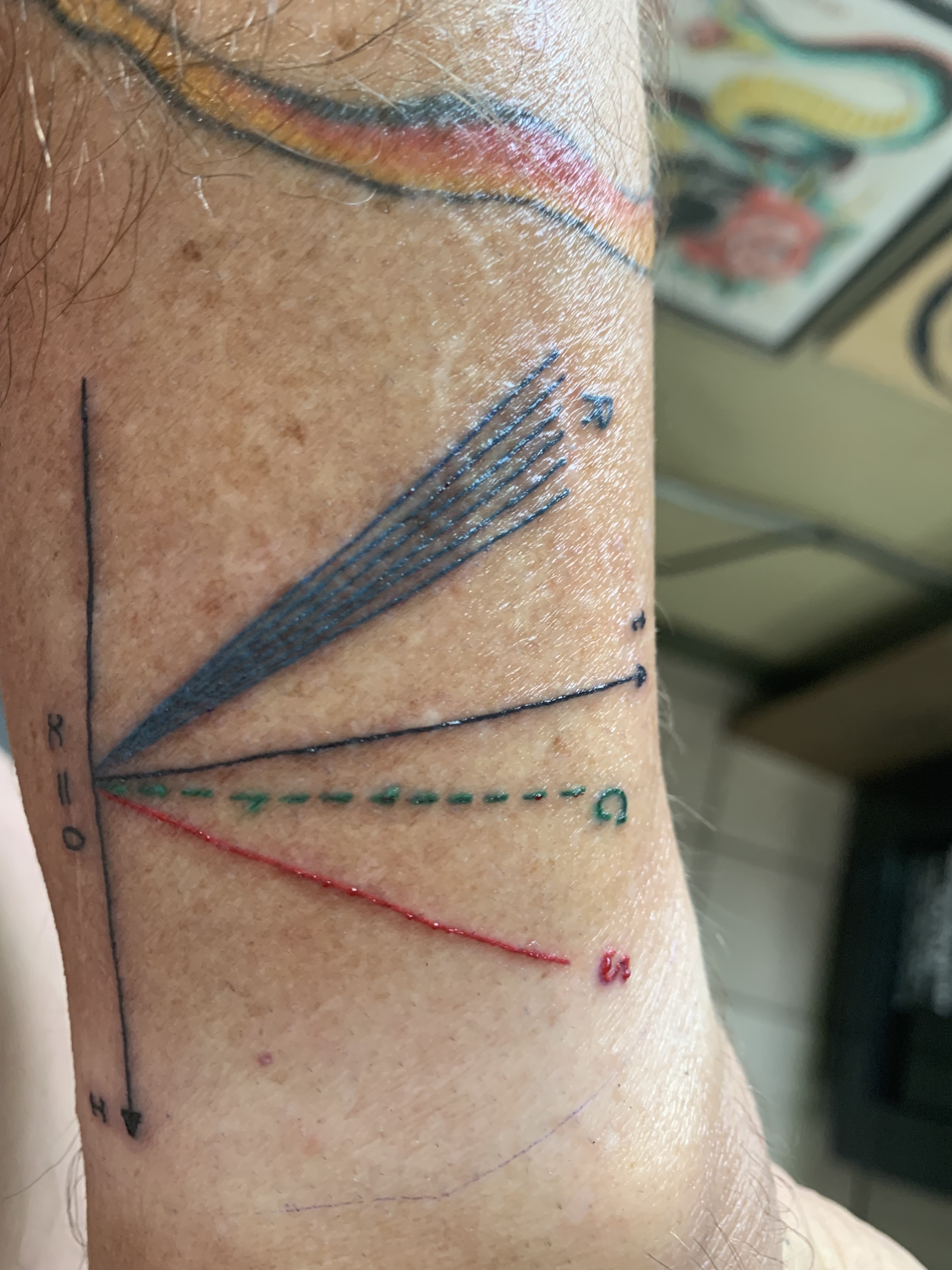
I wrote this blog consistently from 2014-2018. I stopped writing it because I was given no choice in 2018. In a culturally consistent passive-aggressive manner, I was forced to stop. The form of this force was a Sandia ethics investigation. It came from an anonymous source (although I am relatively certain of the identity of the source). The investigation and charges were absurd. The entire blog was done in plain view and as a part of my professional development plan. It was done with permission. I would give the link to my blog at the end of my professional talks. The blog was good for my professional skills and performance. It was only bad for professional success where blind obedience to power is demanded. In a healthy culture, it would have been celebrated. In an unhealthy culture, the blog was a threat.
The problem was that I expressed views that were not the same as my management. I was part of a rather ill-conceived national program that was contributing to the decline in American scientific supremacy. I said as much in the blog. Worse yet, I had an audience of peers, thus I was dangerous. I could be shut up through force—and I was. This program was big money, and in today’s world is all about money. Money is power and truth is determined by power. Opposing the monied interests is dangerous.
I stood down so I could continue to support my family and my life. Intellectual honesty and debate about what are best are not on the menu today. The people in charge of the Labs and our science funding are not open to questioning their priorities. This lack of debate is part of what is fueling the decline of American supremacy in science.
I licked my wounds. The ethics investigation is the worst blight in my entire professional life. It may be the worst thing of my entire adult life, but I’ll admit this means I have a charmed life.
As I attempted to recover, the pandemic arose. The country and the world shut down. We all worked from home for months as most of my work went online. I discovered a massive relief in this arrangement. Even in this lockdown, I felt freedom. I did not have to go to work and put on a disingenuous mask every day. It made me realize how incredibly unhappy Sandia had made me. In the past couple of years, the depth of my dismay professionally has deepened. It has transitioned to a mourning of opportunity lost and disappointment.
“The wound is the place where the Light enters you.”— Jalal ad-Din Muhammad ar-Rumi
Prospectus and Path Ahead
Hindsight is usually a biased way to look at things. The reasons for my move to Sandia and Albuquerque were varied. The professional reasons were naive and quixotic. I approached the new Lab with optimism and hope that was not grounded in actual possibility. I pushed away many obvious signs of disaster for years. I should have been more guarded and far less trusting. That said, I moved for reasons in my personal life. I moved for my family. It was better professionally for my wife and offered better opportunities for my children. We had aging parents to care for.
Each of these concerns played out differently, but all were valid. For my own part, I have changed over these years in many interesting and exciting ways. In sum, I would not trade the benefits and advances in myself and my personal life for professional success. Nonetheless, professional success was sacrificed in the move.
Professionally, Sandia has been just okay. By my own standards, my professional accomplishments have been a severe disappointment. The way my blog was treated figures heavily into my assessment. It was a huge insult and attack on me personally. The lack of professional respect is palpable. The lack of use for my vast professional knowledge and skills is appalling.
This is not to say one cannot be successful at Sandia. It is to say that *I* would never succeed at Sandia. It is not the right place for me to succeed. In the same breath, I can succeed as a person, where I am now. It could also be true that Los Alamos might have been a worse place for that personal success. You really can’t have it all.
Today, I feel like my work has mostly been a waste of my time. It is easy to see how I could have used my skills and knowledge better than they were at Sandia. Perhaps in closing, this is my challenge for the future: to find a valuable path for contribution suitable for my precious time left. I did give Sandia a chance, and that effort was not met nor rewarded in kind.
I have not decided when to retire, or what I will do after retirement. What will happen is taking shape. Felicia is retired and I’m learning from her experience. It is just clear to me that it is around the corner. While my professional life at Sandia was substandard, my life is good. I would not trade the success in my personal life for the sort of professional success I would aspire toward. Perhaps the lesson is a sort of balance to life. Maybe you simply can’t have it all and choices are made. I made mine. I stand by the outcomes.
Finally, I want to give endless love and gratitude to those who have enriched my life and been my friends. I have known many wonderful people who have made my time at work vastly better. Each of them has helped me be a better person and taught me so much. Nothing would have been as good without them. I greatly appreciate Meera Collier for graciously editing my writing, and helping to make it better than I could manage myself.
“Yesterday I was clever, so I wanted to change the world. Today I am wise, so I am changing myself.”— Jalal ad-Din Muhammad ar-Rumi
Important Papers Written While At Sandia
Banks, Jeffrey W., T. Aslam, and William J. Rider. “On sub-linear convergence for linearly degenerate waves in capturing schemes.” Journal of Computational Physics 227, no. 14 (2008): 6985-7002.
Mattsson, Ann E., and William J. Rider. “Artificial viscosity: back to the basics.” International Journal for Numerical Methods in Fluids 77, no. 7 (2015): 400-417.
Rider, W. J., E. Love, M. K. Wong, O. E. Strack, S. V. Petney, and D. A. Labreche. “Adaptive methods for multi‐material ALE hydrodynamics.” International Journal for Numerical Methods in Fluids 65, no. 11‐12 (2011): 1325-1337.
Robinson, Allen, Thomas Brunner, Susan Carroll, Richard Drake, Christopher Garasi, Thomas Gardiner, Thomas Haill et al. “ALEGRA: An arbitrary Lagrangian-Eulerian multimaterial, multiphysics code.” In 46th aiaa aerospace sciences meeting and exhibit, p. 1235. 2008.
Rider, William, Walt Witkowski, James R. Kamm, and Tim Wildey. “Robust verification analysis.” Journal of Computational Physics 307 (2016): 146-163.
Rider, William J. “Reconsidering remap methods.” International Journal for Numerical Methods in Fluids 76, no. 9 (2014): 587-610.
Love, E., William J. Rider, and Guglielmo Scovazzi. “Stability analysis of a predictor/multi-corrector method for staggered-grid Lagrangian shock hydrodynamics.” Journal of Computational Physics 228, no. 20 (2009): 7543-7564.
Hills, Richard Guy, Walter R. Witkowski, Angel Urbina, William J. Rider, and Timothy Guy Trucano. Development of a fourth generation predictive capability maturity model. No. SAND2013-8051. Sandia National Lab.(SNL-NM), Albuquerque, NM (United States), 2013.
Barlow, Andrew J., Pierre-Henri Maire, William J. Rider, Robert N. Rieben, and Mikhail J. Shashkov. “Arbitrary Lagrangian–Eulerian methods for modeling high-speed compressible multimaterial flows.” Journal of Computational Physics 322 (2016): 603-665.
Alexander, Francis, Ann Almgren, John Bell, Amitava Bhattacharjee, Jacqueline Chen, Phil Colella, David Daniel et al. “Exascale applications: skin in the game.” Philosophical Transactions of the Royal Society A 378, no. 2166 (2020): 20190056.
Kamm, James R., Jerry S. Brock, Scott T. Brandon, David L. Cotrell, Bryan Johnson, Patrick Knupp, William J. Rider, Timothy G. Trucano, and V. Gregory Weirs. Enhanced verification test suite for physics simulation codes. No. LA-14379. Los Alamos National Laboratory (LANL), Los Alamos, NM (United States), 2008.
Yanilkin, Yury V., Evgeny A. Goncharov, Vadim Yu Kolobyanin, Vitaly V. Sadchikov, James R. Kamm, Mikhail J. Shashkov, and William J. Rider. “Multi-material pressure relaxation methods for Lagrangian hydrodynamics.” Computers & Fluids83 (2013): 137-143.
Weirs, V. Gregory, James R. Kamm, Laura P. Swiler, Stefano Tarantola, Marco Ratto, Brian M. Adams, William J. Rider, and Michael S. Eldred. “Sensitivity analysis techniques applied to a system of hyperbolic conservation laws.”
 The Regularized Singularity