
tl;dr
My early adult life was marked by a vigorous pursuit of excellence. My time in Los Alamos provided the example, path, and environment for it. There I started to achieve it. At the same time, everything around me was decaying. Excellence is under siege in the USA. Eventually, the loss of excellence was too great and overtook the positive. The societal undertow has grown into a vortex of sprawling disappointment. Mediocrity lurks around every corner, and it’s swallowing excellence everywhere. Make no mistake, expanding mediocrity is the hallmark of our time. Excellence is in the past and receding. How deep into incompetence will we go?
“Some men are born mediocre, some men achieve mediocrity, and some men have mediocrity thrust upon them.” ― Joseph Heller
A Rant About Mediocrity
I’m going to start with a rant including a lot of cursing. So if you’re not down for that, stop reading now!. Frankly, if you can’t take some cursing, you’re not my people anyway. The situation we are in should make all of us very fucking angry.

I am really pissed off by this topic. I’m pissed off by the state of my country and the places I work. I’m following the mantra of writing what disturbs you, and this topic fills me with incandescent rage. In summary, we had greatness and excellence once upon a time. We have collectively managed to completely and totally fuck this up. While I will get to the reasons for the descent into incompetence, first and foremost I’m angry. Really deeply fucking angry at how we lost our edge. I’ll just note that I’ve spent a career developing expertise and accumulating knowledge professionally. What does this mean today? Fuck all the fuckwits they’ve put in charge.
I say this knowing many of the leaders at the Labs. Somehow we have a system that takes competent talented people and turns them into idiots. Great people are brought low instead of lifted up. Sometimes the result is pure incompetence or decisional paralysis. In other cases, they become unethical assholes, or the asshole becomes a monster. Societal forces seem to generate incoherence and destroy rationality. Our collective competence is far less than the sum of the parts. This is why I wrote the rest of this. Something about our system and society today is destroying everything good. It does seem to be the pathos of the current age that social stupidity is scheming to demolish any sense of excellence. Just look at our National leaders. Otherwise, talented smart, and successful people suck up ignorance and stupidity. They completely reject their own competence because the system can’t deal with it.
I see this directly at the labs every single day. You would think the importance of nuclear weapons might matter enough. It doesn’t.
What could possibly go wrong? Oh yeah, we aren’t testing these weapons and asserting they work via scientific prowess. Excellence at the Labs matters a lot, or it should. That fact is that it doesn’t really matter today. The approach is that Nuclear Weapons excellence can just be messaged. Except it can’t and I’m sure our adversaries in Beijing or Moscow can see through the bullshit. They know the truth. Our prowess has been in freefall for decades under the yoke of the same elements seen broadly in Washington today. These elements are the hegemonic power of money, lack of trust, and soul-crushing process. The entirety of politics and society bears responsibility. Politics on the left and the right have eroded excellence. One shouldn’t make the mistake of blaming Trump or Obama, Biden or Bush. The problem is all of us.

The path out of this is similarly society-wide. All of us need to find the way out.
“Mediocrity is contextual.” ― David Foster Wallace

The Pursuit of Excellence
When I step back and look at my personal history, I am so fucking lucky to be where I am. I had a solid middle-class upbringing and had a reasonable academic record prior to college. Frankly, I was skating by on my brains and putting little effort into academics. I did just enough so that my parents wouldn’t get wise to my habit of fucking off. I went to college and had an unremarkable record as an undergrad at a third-tier university (New Mexico). Granted, I got married early and worked full-time for most of that time, but my grades we just barely okay. I got my bachelor of science at a shit time to get a job in Nuclear Engineering. So I applied for jobs and didn’t even get a single interview.


“A life of mediocrity is a waste of a life.” ― Colleen Hoover
So, I defaulted into grad school at New Mexico. By the end of my first year, I managed to even disappoint myself. I saw my professional dreams dying due to my own self-imposed mediocrity. I made a pact with myself to get my shit together and start living up to my potential. I spent an entire summer relearning all my undergrad knowledge and skills. I entered the next year as a totally different student. From then on, I kicked ass as a student. I was the stud I could have always been. In short order, I realized my major professor was a complete asshole and I needed to escape from him. Note that I had a fully funded PhD project from NASA at that point that I was rejecting.
I broke from the professor in an epic meltdown. I thought of going to another school and found that between money and my grades; it was impossible. It was time to get a job. This was the best and luckiest decision of my professional life. I was looking for a job at the perfect time. I had everything needed to get a job: the right degree, an MS in Nuclear Engineering, USA citizenship, and a pulse. I had six interviews and six job offers. A couple of the jobs were horrible and non-starters (the interviews are entertaining and great stories though). Two were from local Beltway bandits (or Mesa bandits in New Mexico). They were okay. The last two were from National Labs including Los Alamos. The Los Alamos job was the best by a huge margin. After an urgent call to LANL, I got an offer and I took it.

Los Alamos was perfect; well close to perfect compared to elsewhere. For a student who had gotten their shit together, gaining huge ambition, it was a great environment. It was well beyond what a mediocre student from a third-rate university could hope to expect. I jumped in and immediately felt well out of my depth. I loved it and I was bathed in the excellence that defined Los Alamos. Better yet, the culture of Los Alamos was generous to a fault. I could tap into many people who were smarter than anyone I’d ever known. They would share their knowledge willingly and I grew. My work and colleagues were challenging and brilliant. I got better each and every day.

Los Alamos supported me in getting my PhD. The environment made me grow in ways I’d never anticipated. I finished my degree and continued to grow. Los Alamos was like the greatest grad school imaginable. Gradually, I started to feel that I was in my depth. I began to fit in. I began to meet my actual potential. Suddenly, the imposter syndrome that overcame me at Los Alamos disappeared. I was capable and I was an expert now. The excellence of Los Alamos had rubbed off on me. I had imbibed the culture of this magical place, and it transformed me. I had become a Los Alamos scientist and I belonged.
Little did I know that all of this was going to be destroyed by a tidal wave of idiocy and ignorance. The same idiocy and ignorance laying siege to all of us today. What I’ve come to realize the forces were already destroying Los Alamos and places like it for years before. The difference is that the storm was about to turn itself up to gale force. The terrifying fact is that the storm may be about to crank up to catastrophic hurricane force as you read this. Landfall is imminent if not already upon us.If we aren’t careful it will sweep everything good away. The danger is real. Mediocrity will be our legacy.
“The only sin is mediocrity.” ― Martha Graham
Money over Principles; Regulated to Death
“Ignore the critics… Only mediocrity is safe from ridicule. Dare to be different!” ― Dita Von Teese

How did we get to this point? We need to look back in history to the presidency of Ronald Reagan. The generally acknowledged wisdom at Los Alamos is that the Lab peaked in 1980. That was the year that Harold Agnew stepped down as Lab Director. Harold was a key person in the Manhattan Project and witness to major events in that age. Los Alamos went through forgettable leadership while government stewardship passed from the Atomic Energy Commission to the Department of Energy. This was a pure downgrade. The real corrosive influence was the attitudes of the government toward governance. Reagan represented a lack of trust and opposition to all things government. These forces unleashed by Reagan have grown and metastasized into a vile destructive force.
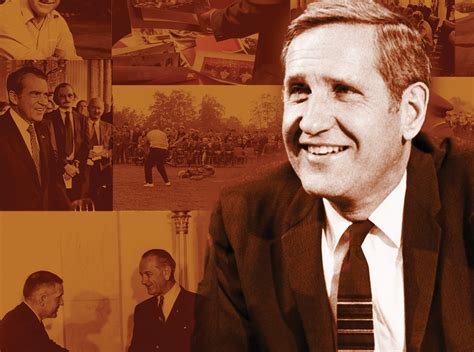
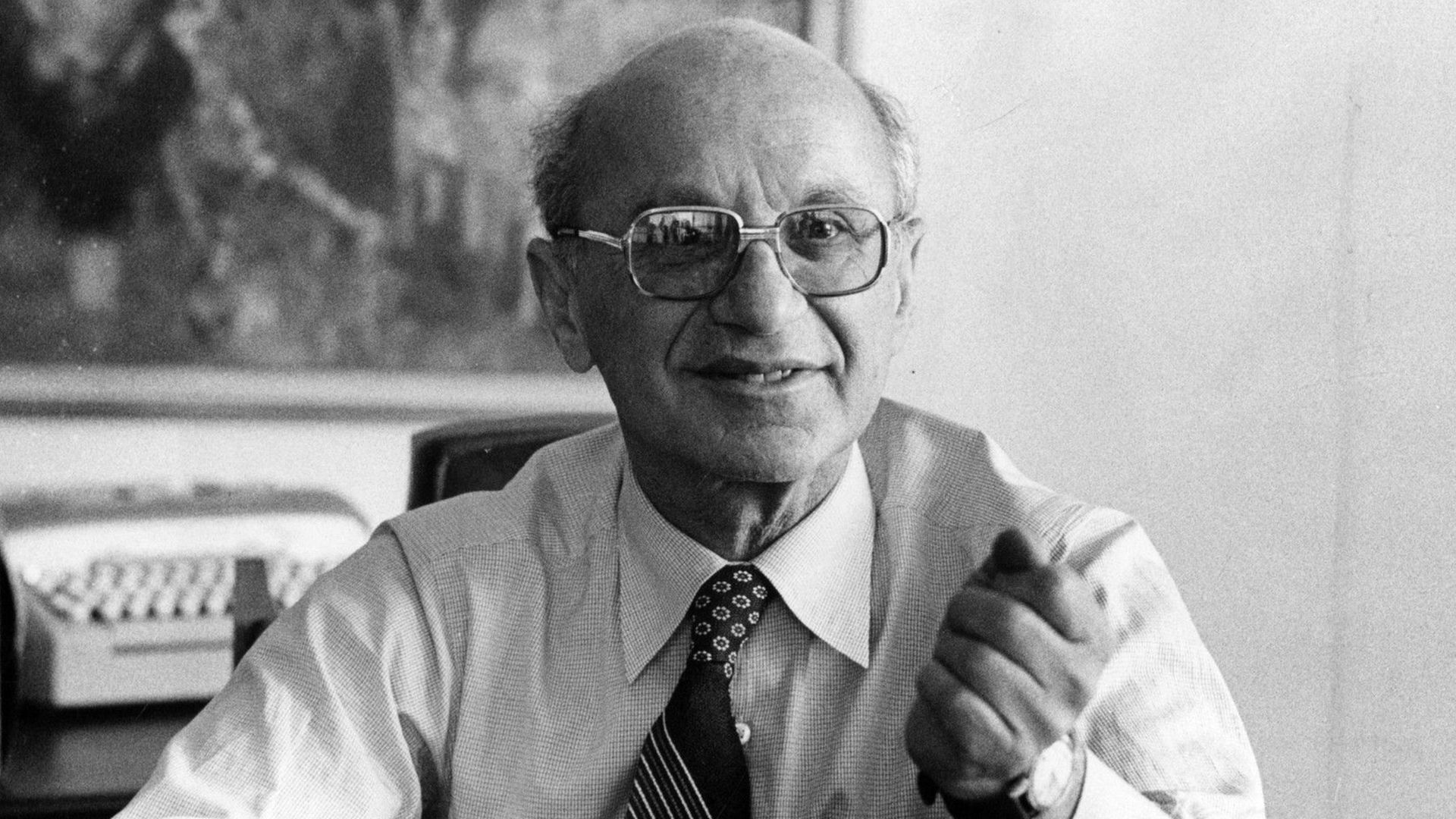
One of the major things coming from this period is a business principle. Milton Friedman’s approach to the business of maximizing shareholder value has become ever-present. It has become an engine of capitalism run amok. Businesses must always grow akin to a cancerous tumor. Sustainable business has gone out of fashion. The thing that matters to science and the Labs is the view that business principles became a one-size-fits-all all-cure to all things. By the mid-2000s this attitude would fully infect the Labs and reap destructive results for these paragons of science. We changed the social contract with the Labs from stewardship for the public good to corporate management. Somehow we thought a guiding principle to serve the Nation was bad. It needed to be replaced by a for-profit business. This change has only brought destruction.
The other force at work and in tandem is the regulation of every risk in sight. This regulation is dual in approach. On the one hand, it is an attempt to manage every single risk possible. It seeks to ensure that bsd things don’t happen. The other purpose is a general lack of trust for each other and institutions. Both of these desires are extremely expensive. Additionally, they are a bizarre way to provide accountability. Rather than leadership being accountable, the blame is projected onto everyone. Ultimately, the regulation ends up standing in the way of accomplishing things while driving up costs. It is inefficient and disempowering. It also speaks to a desire to control outcomes irrationally. The micromanagement of finances is driven by a lack of trust too. It amplifies all our leadership issues. Accomplishment becomes impossible.
The Nation only suffers and the benefits are illusions. The most corrosive influences of shareholder value are two-fold: money as a measure and short-term focus. The end of the Cold War brought the end of generous and necessary funding to the Labs. Congress now deemed it necessary to micromanage the Lab’s work and research. Over the preceding decades the micromanagement has grown to infect every detail of the Lab’s work Congress defines priorities rather than trust the experts. The overhead and intrusion have only powered a continuous lowering of standards and sapping of intellectual vigor. We now have little flexibility and massive oversight of all activities. The result has been continually lowering standards of work along with risk aversion. All of this is in service of controlling work and deflecting blame.
This influence has been modest in comparison to business-inspired management. The shareholder value-driven management philosophy is completely inappropriate for the Lab’s work. The real core of the problem is the lack of trust associated with how the Labs are managed. We have seen an explosion of oversight driven by suspicion and scandal avoidance. Technical work is graded by people who effectively have no independence. The management’s bonuses are dependent on good grades, and the reviewers know it. If you don’t give good grades you aren’t asked to review again. That paycheck is gone for the reviewer. In this way, duty fades away, and money corrupts the process. The Labs continue to be excellent, but it’s all smoke and mirrors. The truth on the ground is decline. Continuous, profound, and sclerotic decline over decades spreads like a cancer choking the Labs.
The problems with the shareholder value philosophy are becoming obvious at a societal level. In business, the approach can be applied to some significant benefit. With limits, this is where the approach has some virtue. It also has limits, such as supercharging inequality as an acute example. Its problems show up in producing sustainable businesses where growth isn’t an objective. This portends a conclusion that for managing science for National Security at the Labs, the idea is absolute lunacy. There is no profit to be had. The short-term focus that the stock market thrives on makes no sense. The result of the management is the destruction of any long-term health. Science at the Labs is withering under the yoke.
“The key to pursuing excellence is to embrace an organic, long-term learning process, and not to live in a shell of static, safe mediocrity. Usually, growth comes at the expense of previous comfort or safety.” ― Josh Waitzkin
Excellence is Hard; Mediocrity is Easy
“Caution is the path to mediocrity. Gliding, passionless mediocrity is all that most people think they can achieve.” ― Frank Herbert
There is little doubt that the Labs used to be great. The apex of this fulcrum is 1980. Los Alamos has faded; Livermore has faded; Sandia has faded too. The USA and the World are poorer for it. The excellence was supported and needed during the Cold War. The stakes of the work happening at the Lab demanded excellence and the Nation allowed it. Just as the USA grabbed victory in the Cold War, the support went. Part of the end of the Cold War was the hubris of “Star Wars”. The whole SDI idea was bullshit, but the excellence of the Labs sold the idea. The lie was huge and the Soviets believed it. The cost was destroying the trust of the Nation in the process. Relying on a bullshit idea like SDI played into the growing anti-government lack of trust.
Part of the issue is the use of financial incentives in management. For example, money can easily corrupt peer review. If it becomes clear that the reviewers are dependent on giving good grades to get a paycheck, the good grades come without the work. This is where the Labs are at. External reviews help determine the executive pay. The end result is that the reviews are always good. A bad review will lead to the reviewers not getting invited. It also projects onto the regulatory impulses where contracts falsely try to control management via regulated peer review. Leaders aren’t empowered and then held accountable simply. The cumulative result is a neutering of feedback. The reviews turn into admiration societies and increasingly have no value at all. For the Lab organizations, the alarm bell never rings, and quality simply degrades year after year.

The root of the issue then becomes the path of least resistance. Excellence is a hard thing to manage and requires focused attention. Mediocrity on the other hand is simple. Especially when all that really matters is the marketing of the work. It is easier to focus on perceptions of the work. Even this becomes simple as it is clear that standards are actually non-existent. You end up focusing on the work that is politically hot and leads to funding. You also focus on work that is flashy or presents well. More toxically, you simply know that the work is “world-class by definition” and the review has baked in results. All of this snowballs into a steady march toward mediocrity. There ends up being very little incentive for excellence to counteract these forces.
“It is difficult to get a man to understand something, when his salary depends on his not understanding it.” ― Upton Sinclair,
The Path Out
How do we get out of this?
While I can retire, I care about these topics deeply. The devolution of the Labs has been painful to watch and makes me seethe with anger. I am saddened for the Nation. These institutions are (or were) National treasures that have been squandered. The combination of mismanagement and lack of trust has wreaked havoc with the quality of the work. In many ways, the things that have hurt the Labs simply parallel the broader ills of society. The way out is similar to how the Country must heal from its downward spiral.
“Bullshit is truly the American soundtrack.” ― George Carlin
Appropriate and excellence-focused management is needed. We need to reorient the incentive structure and objectives for the Labs. The big issues are societal. There needs to be principles and values that transcend money. Excellence needs to have value for its own sake. There should be explicit empowerment to pursue excellence. Excellence needs to be recognized and bullshit needs to be called out. This will be painful. There is a lot of bullshit out there that managers think is great. We also need to take risks and allow failures. Without big risks and failures, excellence cannot grow. Risk and failure need to come from trying to achieve big things. This needs to be recognized for what it is and not punished or mislabeled as incompetence. This is a difficult thing to do. It is especially difficult in a time when bullshit is so regularly accepted.
The Labs need trust. We all need more trust. Trust is empowering. One of the key aspects of the environment that chokes excellence is an obsession with process. Most of this process is the result of mistrust. When there is mistrust there cannot be true excellence. The temptation or suspicion of bullshit is always present. Failure isn’t tolerated and punished. Rather than fail and learn, we fail and lie. Risks aren’t taken either because the downside is too extreme. We exist in an environment where every mistake is punished. The process is there to keep mistakes from happening. The result is no risk. Without risk, there is no progress or innovation. When it is all summed up, we can see that trust is a superpower.
At a deeper level, the difficulty of excellence can be seen to be one of lack of vulnerability. This is reflected in the humility needed for learning and the proper lessons from failures. Failures require trust and fuel the accumulation of expertise. Accepting all of these mishaps requires courage of vulnerability. We all of course see how today’s World chafes against this. Hubris, falsehoods as truths, and outright shameless bullshit are all expected. Vulnerability and failures are met with attacks, punishments, and reprisals. In these vile habits, excellence is snuffed out, and the tumble to mediocrity is catalyzed and becomes inevitable. When bullshit is as respected as truth, knowledge becomes negotiable. Then mediocrity cannot be separated from excellence. This is the state of things today.

“When an honest man speaks, he says only what he believes to be true; and for the liar, it is correspondingly indispensable that he considers his statements to be false. For the bullshitter, however, all these bets are off: he is neither on the side of the truth nor on the side of the false. His eye is not on the facts at all, as the eyes of the honest man and of the liar are, except insofar as they may be pertinent to his interest in getting away with what he says. He does not care whether the things he says describe reality correctly. He just picks them out, or makes them up, to suit his purpose.” ― Harry G. Frankfurt
 The Regularized Singularity
I am wondering about the rise of rubriks to prevent qualitative grading being perceived as unfair and how that also plays into this. I work with young professionals regularly who are used to being asked to get the right answer and follow the rubrik rather than to communicate thinking and have an instructor pick it apart and help them learn to think better or communicate thoughts better. This was done for a variety of reasons. I remember earning the highest grade in some classes undergraduate by 20% and being told that I would be awarded a B because the instructor didn’t want to encourage me in physics as he didn’t think I had potential there. In the statistics of those days it could have been he was right, or it could have been in response to the presence of not a single Y chromosome in my body…and the two were indistinguishable. So rubriks arose from that type of instructor behavior. That said, it really rewards people who read and do and check things off the list and take no risks.
Thanks for the very interesting comment. It’s an experience that connects to what I see in the professional environment. Broadly speaking, we have control issues and a confined sense of what success can be. A rubric is much like a process where the path is defined, Any deviation is to be heavily penalized. This will hurt the “deviant” and confine success to those following the pre-defined path. The current changes in federal governance does nothing to change the problem. It is mostly a redefinition of what makes a “deviant” . The real key is to streamline the attitude toward process and broaden the definition of what constitutes success.