
TL;DR
There is this trend I’ve noticed over my career, an increasing desire to see research as finished. The results are good enough, and the effort is moved to new endeavors. Success is then divested of. Research is never done, never good enough, and is simply the foundation for the next discovery. The results of this are tragic. Unless we are continually striving for better, knowledge and capability stagnate and then decay. Competence fades and disappears with a lack of attention. In many important areas, this decay is already fully in effect.. The engine of mediocrity is project management with milestones and regular progress reports. Underlying this trend is a lack of trust and short-term focus. The result is a looming stench of mediocrity where excellence should be demanded. The cost to society is boundless.
Capabilities versus Projects
“The worst enemy to creativity is self-doubt.” ― Sylvia Plath
Throughout my career, I have seen a troubling trend in funding for science. This trend has transformed into sprawling mismanagement. Once upon a time, we funded capabilities and competence in specific areas. I’ve worked at multi-program labs that apply a multitude of disciplines to execute complex programs. Nuclear weapons are the archetype of these programs. These programs require executing and weaving together a vast array of technical areas into a cohesive whole. Amongst these capabilities are a handful of overarching necessities. Even the necessities of competence for nuclear weapons are being ignored. This is a fundamental failure of our national leadership. It is getting much worse, too.
The thing that has changed is the projectization of science. We have moved toward applying project management principles to everything. The dumbest part of this is the application of project management for construction into science. We get to plan breakthroughs (planning that makes sure they don’t happen), and apply concepts like “earned value”. The result is the destruction of science, not its execution. Make-believe success is messaged by managers, but is empty in reality. Instead of useful work, we have constant progress reports, updates, and milestones. We have lost the ability to move forward and replaced it with the appearance of progress. Project management has simply annihilated science and destroyed productivity. Competence is a thing of the past.
“The problem with the world is that the intelligent people are full of doubts, while the stupid ones are full of confidence.” ― Charles Bukowski

The milestones themselves are the topic of great management malpractice. These are supposed to serve as the high-level measure of success. We operate under rules where success is highly scrutinized. The milestones cannot fail, and they don’t. The reason is simple: they are engineered to be foolproof. Thus, any and all risk is avoided. Upper management has its compensation attached to it, too. No one wants to take “food” out of their boss’ mouths either (that’s the quiet part, said out loud). The end result is not excellence, but rather a headlong leap into mediocrity. Milestones are the capstone on project management’s corrosive impact on science.
Rather than great work and maintaining capability, we have the opposite, mediocrity and decay.
The Desire to Finish
“Highly organized research is guaranteed to produce nothing new.” ― Frank Herbert
One of the most insidious aspects of the project mindset is the move to terminate work at the end of the project. There is a lot of work that they want to put a bow on and say, “It is finished.” Then we move to focus on something else. The management is always interested in saying, “This work is done,” and “move to something new.” The something new is something that will be big funding and contribute to managerial empire building (another pox). Once upon a time, the Labs were a national treasure (crown jewels). Now we are just a bunch of cheap whores looking for our next trick. This is part of the legacy of project management and our executive compensation philosophy. Much less progress and competence, much more graft and spin.
A few years ago, we focused on computing and exascale machines. Now we see artificial intelligence as the next big thing (to bring in the big bucks). Nothing is wrong with a temporary emphasis and shift of focus as opportunity knocks. Interestingly, exascale was not an opportunity, but rather a struggle against the inevitable death of Moore’s law. Moore’s law was the gift that kept on giving for project management, reliable progress like clockwork.
The project management desires explain exascale more than any technical reasons. Faster computers are worthwhile for sure; however, the current moment does not favor this as a strategy. In fact, it is time to move away from it. AI is different. It is a once in a generation technology to be harnessed, but we are fucking that up too. We seek computing power to make AI work and step away from algorithms and innovation. Brute force has its limits, and progress will soon languish. We suffer from a horrendous lack of intellectual leadership, basic common sense, and courage. We cannot see the most obvious directions to power scientific progress. The project management obsession can be tagged as a reason. If the work doesn’t fit into that approach, it can’t be funded.
Continual progress and competence are out the window. The skills to do the math, engineering, and physics are deep and difficult. The same holds for the skills to work in high-performance computing. The same again for artificial intelligence. Application knowledge is yet another deep, expansive expertise. None of this expertise easily transfers to the next hot thing. Worse yet, expertise fades and ossifies as those mental patterns lapse into hibernation. Now the projects need to finish, and the program should move to something shiny and new. The cost of this attitude is rather profound, as I explore next.
The Problems with Finishing: Loss of Competence
“The purpose of bureaucracy is to compensate for incompetence and lack of discipline.” ― Jim Collins
This all stems from the need for simplicity in a sales pitch. Simple gets the money today. Much of the explanation for this is our broken politics. Congress and the people have lost confidence and trust in science. We live in a time of extremes and an inability to live in the gray. No one can manage a scintilla of subtlety. Thus, we finish things, followed by a divestment of emphasis. That divestment ultimately ends up hollowing out the built expertise needed for achievement. Eventually, the tools developed in the success of one project and emphasis decayed too. Essential capabilities cannot be maintained successfully without continual focus and support.
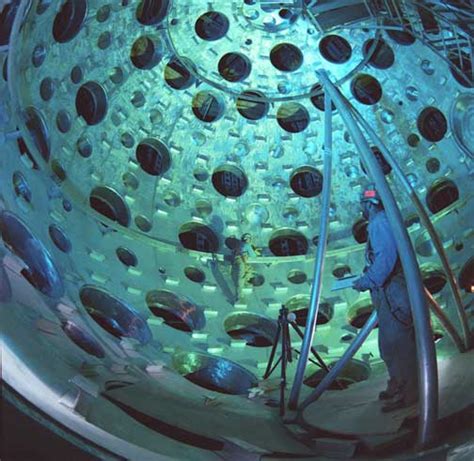
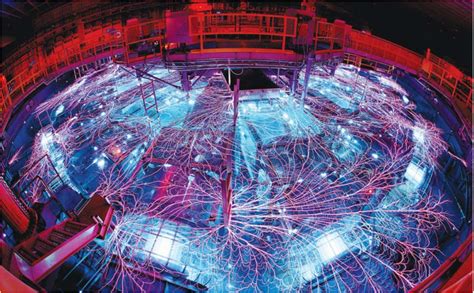
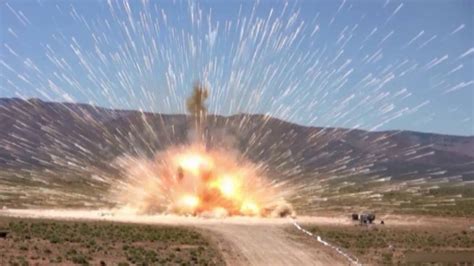
A story is helpful here. As part of the programs that were part of the nuclear weapons program at the end of the Cold War, simulation tools were developed. These tools were an alternative to full-scale nuclear tests. To me, one of the more horrifying aspects of today’s world is how many of these tools from that era are still essential today. Even tools built as part of the start of stockpile stewardship after the Cold War are long in the tooth today. In virtually every case, these tools were state of the art when conceived originally. Once they were “finished” and accepted for use in applications, the tools went into stasis. In a world of state-of-the-art science, stasis is decline. The only exception is the move of these codes to new computing platforms. This is an ever-present challenge. The stasis is the intellectual content of the tools, which matters far more than the computing platforms.

What usually does not change are the numerical methods, physics, and models in the codes. These become frozen in time. While all of these can be argued to be state of the art when the code was created, they cease to be with time. We are talking decades. This is the trap of finishing these projects and moving on; the state of the art is transitory. If you rest on success and declare victory, time will take that from you. This is the state that too much of our program is in. We have declared victory and failed to see how time eats away at our edge. Today, we have tools operated by people who don’t understand what they are using. The punch line is that research is never done, and never completed. Today’s research is the foundation of tomorrow’s discoveries and an advancing state of the art.

Some of this is the ravages of age for everything. People age and retire. Skills dull and wither from lack of use. Codes age and become dusty, no longer embodying the state of the art. The state of the art moves forward and leaves the former success as history. All of this is now influencing our programs. Over enough time, this evolves into outright incompetence. Without a change in direction and philosophy that incompetence is inevitable. In some particular corners of our capability, the incompetence is already here.
“Here’s my theory about meetings and life: the three things you can’t fake are erections, competence and creativity.” ― Douglas Coupland
A Mercy Killing of an Ill Patient
“Let’s have a toast. To the incompetence of our enemies.” ― Holly Black
The core issues at work in destroying competence are a combination of short-term thinking and lack of trust. The whole project attitude is emblematic of it. The USA has already ceded the crown of scientific and engineering supremacy to China. American leaders won’t admit this, but it’s already true. Recent actions by the Administration and DOGE will simply unilaterally surrender the lead completely and irreversibly. The corollary to all this negativity is that maintaining the edge of competence requires trust and long-term thinking. Neither is available today in the USA.

There is a sharp critique of our scientific establishment available in the recent book Abundance. There, Klein and Thomson provide commentary on what ails science in the USA. It rings true to me, having worked actively for the last 35 years at two National Labs. Risk avoidance, paralyzing bureaucracy, and misaligned priorities have sapped vitality. Too much overhead wastes money. All these ills stem from those problems of short-termism combined with a lack of trust. A good amount of largess and overconfidence conspires as well. Rather than encourage honesty, the lack of trust empowers bullshit. Our key approach to declaring success is to bullshit our masters.
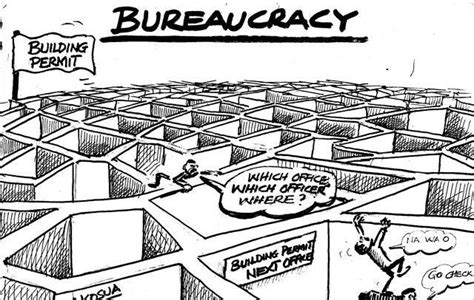
Today is not the time to fix any of this. It is time to think about what a fix will look like. Recent events are the wanton destructive dismantling of the federal scientific establishment. Nothing is getting fixed or improved. It is simply being thrown into the shredder. If we get to rebuild science, we need to think about what it should look like. If we continue with short-term thinking, success won’t be found. The project management approach needs to be rejected. Trust is absolutely necessary, too. Today, trust is also in freefall. Much of the wanton destruction stems from a lack of trust. This issue is shared by both sides of the partisan divide. Their reasons are different, and the truth is in the middle. Unless the foundation for success is available, scientific success won’t return.
“The problem with doing nothing is not knowing when you are finished.” ― Nelson De Mille
What Americans don’t seem to realize is that so much success is science-based. During the Cold War, the connection between national security was obvious. Nuclear weapons made the case with overwhelming clarity. Economic security and success are no less bound to science. The effect is more subtle and longer-term. The loss of scientific power won’t be obvious for a long time. Eventually, we will suffer from the loss of scientific and engineering success. Our children and grandchildren will be poorer, less safe, and live shorter lives due to our actions today. The past four months simply drove nails into that coffin that had already been fashioned by decades of mismanagement.
“Never put off till tomorrow what may be done day after tomorrow just as well.” ― Mark Twain
 The Regularized Singularity