
tl;dr
Reading a book at the right time and place is a special gift to one’s life. I took a long weekend with a drive and listened to Simon Sinek’s “The Infinite Game.” It crystallized so much about my workplace, my country, and what is going wrong with both. Sinek writes about two mindsets: one that embraces scarcity and another that embraces abundance. He relates these to game theory. Scarcity is connected to the finite game with winners and losers. Abundance is related to the infinite game. An infinite game never ends, and everyone can win. It should come as no surprise that today’s world is dominated by the finite game’s scarcity. This mindset is the foundation of so much of what ails society. It explains a lot of terrible behavior by our “leaders.”
“To ask, “What’s best for me” is finite thinking. To ask, “What’s best for us” is infinite thinking.” ― Simon Sinek
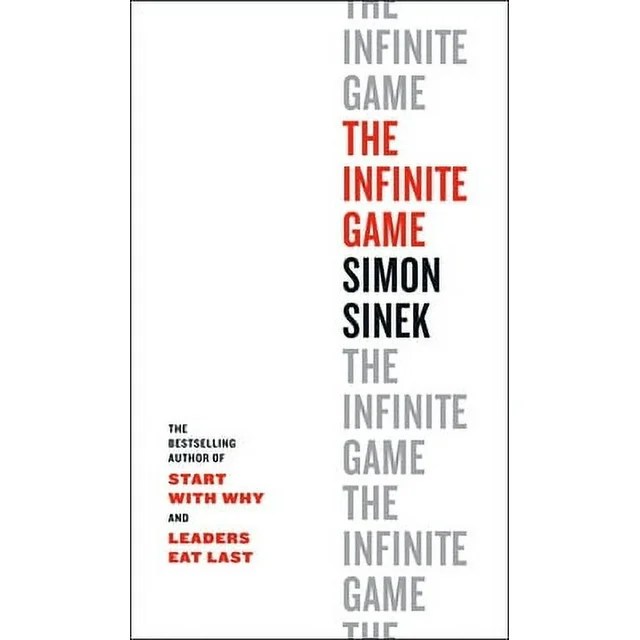
Listening to a Great Book
On a recent long weekend, my wife and I took a road trip to Moab, Utah. It is about a six-hour drive. We decided to listen to a book on Audible, and she let me pick. I chose a book by Simon Sinek. The Infinite Game. To my surprise, my wife thought the choice was inspired. Both of us were transfixed by the narrative as the ideas poured from the “pages” of the book. We found the concepts to have immense relevance and explanatory power for today’s World. I began to see the ideas living in our politics and my work. Much of this is grounded in how powerfully the finite thinking defines everything in sight.
I was familiar with Simon Sinek from multiple sources. He has a weekly podcast, which often provides compelling content. His TED talks are great. He is a phenomenal public speaker. His messages are positive and compelling. I feel like they’re what I need to hear. I’d been introduced to the topic of this book from his podcast, which spurred me to buy the book. The trip felt like a great opportunity to finally read the whole thing. Its a good way to make the driving fly by, and hear new ideas while doing it.
As expected, Simon’s ideas in the book are inspiring. He weaves the narrative and viewpoint in both compelling and attractive ways. They crystallize a perspective that has profound explanatory power. Some themes reign over the modern World we all live in. Our time is immensely troubling, and much of what is bothersome has commonality. In listening and understanding the concepts of finite or infinite thinking, we started to see some explanations. The point in the book that hit us hardest is the description of finite thinking’s impact on ethics. He notes that finite thinking breeds ethical lapses. It destroys trust. These ethical lapses and loss of trust seem to be a common unifying thread in society.
“To ask, “What’s best for me” is finite thinking. To ask, “What’s best for us” is infinite thinking.” ― Simon Sinek
He thoughtfully points a finger at the origin of this mindset. The ideas of Milton Friedman about business have taken over. This is the idea that the only job of a business is to maximize shareholder value. It becomes greed that drives decisions. A core philosophy that has taken control of society. We live in a selfish, self-centered time. This idea has reshaped business and government, becoming a central organizing theme. The government has chosen business ideas to improve its performance (incorrectly, I believe). Sinek points out that this idea is all about finite thinking and is relentlessly short-term focused. Friedman’s ideas have also driven a host of related problems. To make everything worse, finite thinking is central in relationships, government and politics, science and technology. It is absolutely toxic. Focusing on the short term has created many long-term problems.
Before digging into some details, I should explain the meaning of finite or infinite thinking or games. Both of these ideas come from game theory, a powerful mental model useful for analyzing the World. The usual game people think of is a finite game. These are games with winners and losers. There is a limit on the stakes of a game, and typically, you have a single winner. A stalemate is possible, too (although Americans don’t deal well with ties).

“I am favor of cutting taxes under any circumstances and for any excuse, for any reason, whenever it’s possible.” ― Milton Friedman
By contrast, infinite games do not have winners or a defined end. The simplest way to think about infinite thinking is to play. Play is something that goes on for an indeterminate time, and you don’t keep score. Infinite thinking is open-ended and encourages creativity. It is also an underemphasized organizing principle for business. It is definitely a more appropriate principle for government and politics. It is also far better for most of our personal relationships. Operating a relationship as a finite game is transactional and superficial. It leads to abuse and consent violations.
“Culture = Values + Behavior” ― Simon Sinek
Infinite Games
“Working hard for something we don’t care about is called stress: Working hard for something we love is called passion.” ― Simon Sinek
The first thing to take note of with an infinite game is that is much more pleasant and inspiring. Infinite games are something that inspires passion and boundless ambition. I’ve noted that various infinite games are child’s play. Marriage is an infinite game. If you are trying to win your marriage (or relationship), it is the road to failure. Instead, a good relationship is built by playing off each other, and losing the sense of bounds on success. Sex should be an infinite game. When it’s finite (like orgasm focus), the sex is usually bad (or much worse for one of the people).
In business, the infinite game takes the role of a business with a core purpose. The business is about producing something of immense value. More importantly, that thing of value is always a little out of reach, but the process of striving for it is powerful. This pursuit naturally produces profit and success. For government functions producing good for society, this should be a natural fit. In the United States, it is the sense of pursuing a “more perfect union” that is never reached. This idea had powered the expansion of personal rights that characterized the Century after the Civil War. For institutions like those I’ve worked for, the infinite mindset is far more beneficial. It is the pursuit of principles and aims that transcend measurement. I’ve worked in National security all my life. It is work that is never done or never good enough, but can be done very well.
The benefits of infinite thinking are immense. The key is the morale and passion of the workforce. There is a clear “true North” for the entire company (organization). The workforce is energized and believes in the vision, working tirelessly toward it. The long-term approach is never sacrificed. The tactical short-term view never overwhelms and kills the company’s direction. There are clear and seamless priorities that guide decisions. Another less well-known benefit is better ethics as a result, too. Given the dearth of ethics today, that would help a lot. Bad ethics simply erode trust and produce a downward spiral. A spiral we are in the midst of.
“two ways to influence human behavior: you can manipulate it or you can inspire it.” ― Simon Sinek
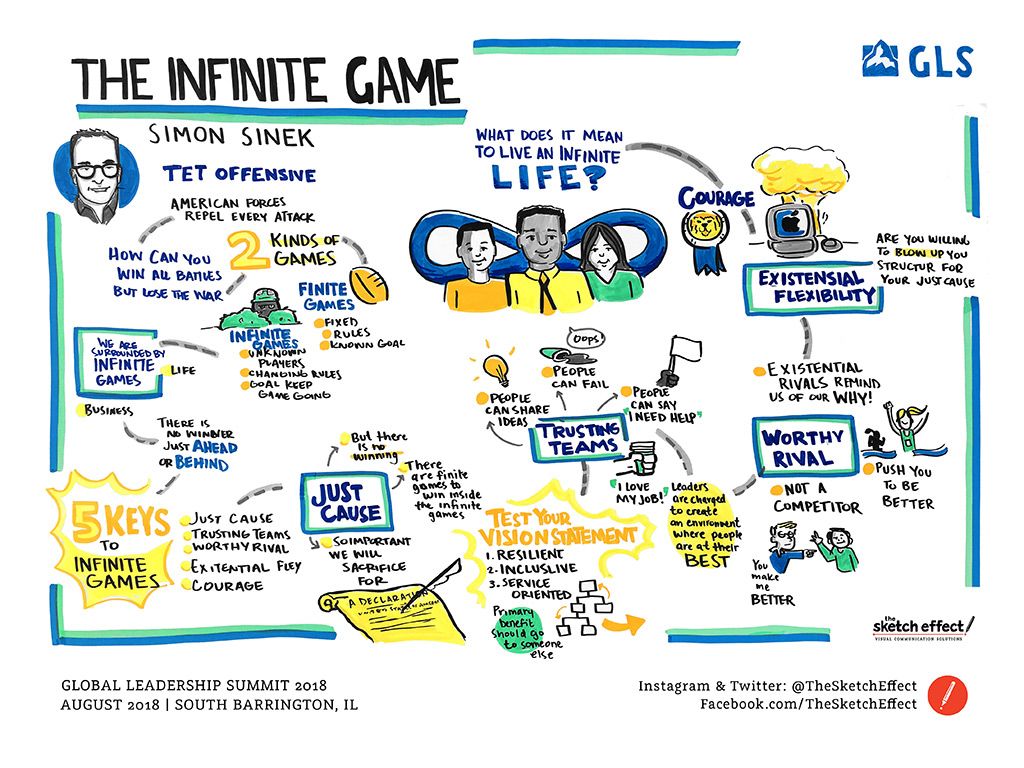
Apple Computer is an archetype of this sort of thinking. At the same time, this has led to incredible products and vast profits. There were other examples, such as Eastman-Kodak, which did well while they had an infinite mindset. Then this mindset is dropped, and the company implodes. The infinite thinking guides a business through success and failure and keeps attention to the long term. Sinek calls this vision the “just cause” that centers company culture. This long-term vision can be lost at leadership changes. When finite thinking takes over, the vision is lost. The short term takes over, and the company often begins to die.
Infinite games are about pursuit of abundance with few limits on the benefits. The only limits are imposed by creativity and the laws of physics. Rather than cut of the pie, the focus is to grow the pie. The pursuit happens with defined bounds and a narrow focus, but with no ceiling.
“A Just Cause must be: For something—affirmative and optimistic Inclusive—open to all those who would like to contribute Service oriented—for the primary benefit of others Resilient—able to endure political, technological and cultural change Idealistic—big, bold and ultimately unachievable” ― Simon Sinek
Finite Games
“There is one and only one social responsibility of business–to use it resources and engage in activities designed to increase its profits so long as it stays within the rules of the game, which is to say, engages in open and free competition without deception or fraud” ― Milton Friedman
Finite games are all about winners and losers. The core concept is one of scarcity. As noted above, the prevalence of finite thinking is all driven by the philosophy of Milton Friedman. Sinek goes on to explain all the ills that this mindset breeds. The vast inequality in society today is a direct result of it. The relentless short-term focus that defines everything today, from the stock market to government spending. It defines politics, too. We are run by the winners and losers mindset. It also powers the lack of trust in society and the questionable ethics. If the mindset were simply applied to business, this would be bad enough; it is everywhere. It runs society, and does so badly.

Classical sports competitions are the exemplar of finite games. Americans tend to have problems with games that allow draws. Basketball, football, and baseball all almost invariably have winners and losers in every game. Football has almost eliminated ties as a possibility. This means the outcome is binary. It also encourages cheating (not that soccer/futbal doesn’t have some too, FIFA is corrupt to the core). We’ve had scandals in recent years from pro and college football (the Patriots, anyone?), and the Astros from Major League Baseball. In many ways, this concept is innate in the character of the nation. We fail to recognize the limits and downsides to this organizing philosophy.
When I look at the research institutions I work at or am aware of, finite thinking is everywhere. Our programs have adopted the same short-term focus as business. Everything is revolving around the stupid idea of the quarterly report. We need to apply the business concept of earned value to research. It isn’t even a reasonable idea; it is a moronic one. This short-term focus has simply brought the research in the USA down. Worse yet, the finite thinking corrupts leaders into hollow shells.
“Infinite-minded leaders understand that ‘best’ is not a permanent state. Instead, they strive to be “better.” “Better” suggests a journey of constant improvement and makes us feel like we are being invited to contribute our talents and energies to make progress in that journey.” ― Simon Sinek


As noted above, one of the key aspects of finite games is cheating. Taken more broadly, these are encouragements of ethical lapses. In business, this looks like price controls, stock buybacks, and monopolistic practices. You see the excuse of maximizing shareholder value as the one-size-fits-all explanation. It works if the lens for observation is the stock market. Meanwhile, the company is destroying its customer base, trust, and employee morale. Sometimes, the drive to maximize the output of employees drives them to do unethical things. A stark example is Wells Fargo with fake customer accounts. This includes the management and executives of the company looking the other way multiple times. The way I see it manifest at non-profits is different, but related.
“In weak cultures, people find safety in the rules. This is why we get bureaucrats. They believe a strict adherence to the rules provides them with job security. And in the process, they do damage to the trust inside and outside the organization. In strong cultures, people find safety in relationships. Strong relationships are the foundation of high-performing teams. And all high-performing teams start with trust.” ― Simon Sinek
How Finite Thinking Creates Terrible Leaders
“When leaders are willing to prioritize trust over performance, performance almost always follows.” ― Simon Sinek
One of the key things that the differences in thinking impact is leadership. Finite thinking creates awful leaders. It can even distort people with good capacity for leadership and ruin them (I’ve seen it a lot). Infinite thinking is necessary for great leadership. By no means does it assure it, but it is necessary for greatness. With everything adhering to finite thinking these days, leadership is in crisis. This comes from multiple aspects of finite thinking: the belief of scarcity, win-lose philosophy, short-term focus, and ethics. Conversely, infinite thinking draws on abundance, win-win, long-term strategic perspective, and ethics, bringing trust. The differences should be obvious to all.
“Leadership is about integrity, honesty and accountability. All components of trust.” ― Simon Sinek


When I look at leadership today I see little integrity or honesty. There is absolute rejection of accountability. Anyone who points out a problem is treated as the enemy (i.e., shoot the messenger). I would offer the stark example of the Governor of Texas and the President when asked about a warning system after the recent floods. In both cases, they attacked the questioners as “losers” or “evil” rather than answer the obvious question. This is a rejection of accountability. The leader reflects back an almost pathological lack of trust for those they lead. It might be most accurate to say the leaders actually treat those below them with outright contempt.

This is obvious in the National political leadership, whether you look at the White House, Congress or the Courts. It isn’t everyone there, but it is the dominant behavior. The same trend appears in local politics. At my work it is typical behavior. It creates an awful environment. It creates the outcome of failing American science. I know many of the Lab leaders personally and many great people. The finite thinking crushes their potential to be great leaders (the great ones they should be).
“The best way to drive performance in an organization is to create an environment in which information can flow freely, mistakes can be highlighted and help can be offered and received.” ― Simon Sinek
It is useful to explain how this can happen. One of the major engines of dysfunction is fighting over money. This leads to backstabbing, unethical behavior, and decision-making that murders the long term. It leads to micromanagement and control. Information is hidden or withheld. If you bring them bad news, they shoot the messenger. In the wake of this is the destruction of trust. Managers act with little or no ethics but justify it by “the rules”. In this world, information is power, and it is parceled out. Doing the right thing is never the focus of decision-making. The right thing is always associated with the best money outcome.
All of this leads to an ineffective, short-term focus. It creates a toxic and ineffective organization. The one core element is a complete lack of trust. Ethics is messaged and in name only. Horrible behavior is allowed because the managers write the rules to allow their ethical lapses to be organizationally accepted. All of this stems from the application of finite thinking to managing everything. It is ruining our competence in science. It is ruining the Nation.
“Some in management positions operate as if they are in a tree of monkeys. They make sure that everyone at the top of the tree looking down sees only smiles. But all too often, those at the bottom looking up see only asses.” ― Simon Sinek
Next time, I will discuss how this short-term thinking has destroyed the advantage the USA once had in science and technology. It is clear now that China is in the lead. We gave it up through our own incompetence. Recent actions by the government are making sure the American decline is permanent and irreversible.
 The Regularized Singularity