
tl;dr
We now live in a World with both nuclear weapons and AI. Watching our country abdicate its responsibilities to nuclear weapons gives me pause. Our national infrastructure is in decay, and our leadership is inept. This is promoted by an awful incentive structure. Lack of nuclear testing means raising our game; we lowered it. The great responsibility of this technology is not met with seriousness. It fills me with fear to think of how irresponsibly we are approaching AI. We also do not realize how much these technologies empower our Nation to act as it wishes. Often, they provide the power to dominate others and get away with murder (literally at times). We seem to be unwitting in how we sell the possession of nukes to everyone else. This is yet another form of irresponsibility in action. Our lack of maturity is a threat to mankind.
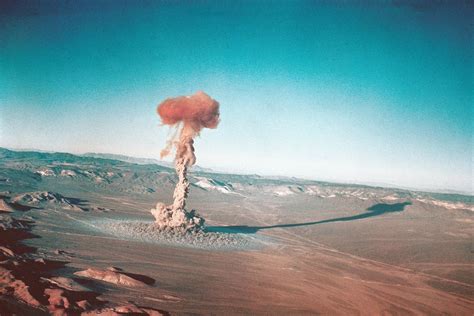
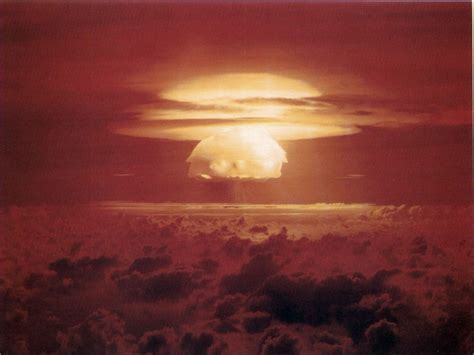
Nukes are Still Central; We are Not Taking Care of Ours
“The Manhattan District bore no relation to the industrial or social life of our country; it was a separate state, with its own airplanes and its own factories and its thousands of secrets. It had a peculiar sovereignty, one that could bring about the end, peacefully or violently, of all other sovereignties.” — Richard Rhodes
For nearly 40 years, I worked at nuclear weapons Labs, Los Alamos and then Sandia. My time at the national laboratories taught me many things. I tapped into a vast reservoir of knowledge at Los Alamos. I also embraced the mission of the Lab and accepted the responsibility that came with it. I wish those values were embraced by the Labs today. I fear they are not. Furthermore, the nation seems to have lost its responsibility associated with nuclear weapons. This loss of responsibility is transferring to science, technology, and engineering as a whole. The advent of AI as a key technology merely amplifies and raises the stakes of these developments. My nation is endangered by these developments.
One of them is the incredible responsibility of caring for nuclear weapons. This requires extreme competence in a vast array of science and engineering disciplines. In my time, I have witnessed a decline in virtually every area of competence. Only computing has grown in knowledge, and only in hardware. Computing is far more than hardware. What goes on with that hardware and how it is used matters greatly. The use of these weapons is primarily to maintain the peace and, ultimately, to ensure that the world never sees their use. This is not my area of expertise, but it is a matter of deep moral and ethical concern. Nuclear weapons are holistic because of their power, ultimately being a relentlessly political technology.
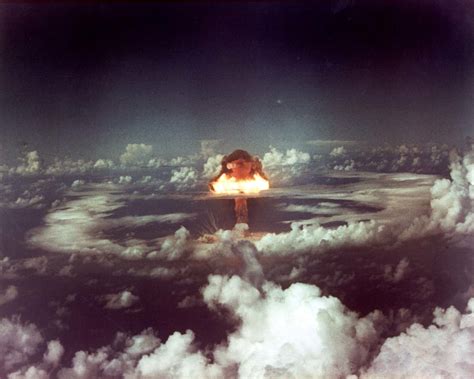
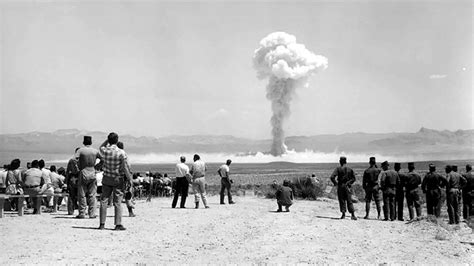
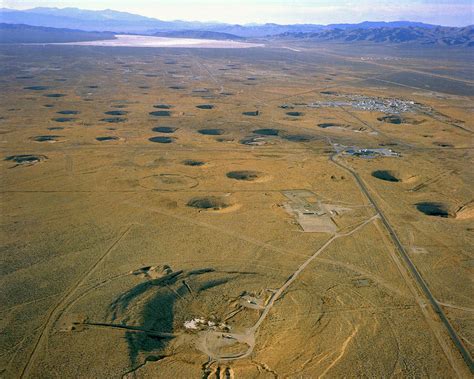
A key episode that demonstrates the danger in our current philosophy is plutonium aging. There was a concerted study to look at this, where both Los Alamos and Livermore weighed in. I personally don’t know the answer to any of this and wouldn’t say anything if I did. The most notable aspect that undermines this study is the positions taken by each lab. Los Alamos took the position that the aging was bad. Livermore took the position that the aging was not. Again, I don’t know what the right answer is. The positions that each lab took were completely correlated with what was in the best financial interest of each laboratory. Los Alamos had a distinct benefit in terms of money for there to be a problem. Livermore, conversely, had the opposite view. I can only imagine what sort of pressures were exerted behind the scenes. Maybe there was none, but given my experience, I sincerely doubt it. The financial benefits of the technical work cast doubt on the overall outcome. The reality is that the only way to be completely sure would be to begin testing these weapons again. Instead of that, we should have unbiased and technical work of the highest quality rather than financially conflicted studies.
During my time at Los Alamos, I learned all about the full scope and breadth of nuclear weapons. The science that is needed to support them is breathtaking in scope. At the same time, I saw a country take steps that ultimately are verging on complete abdication of responsibility. I fear their care is diminishing below the standards needed. First and foremost among these was a change in the management philosophy. At the start of my career, it was intelligent care and concern for proper stewardship. Now, there is a flawed belief that money is the only thing that managers should focus on. Now, a belief that the proper care of programs financially leads to the best outcomes. This was an invocation of a business philosophy for managing the work of the government. This philosophy was adopted without thought or proper modification for science. This reflects a general trend across society.
The same period of time as I watched this philosophy usher in the end of American dominance in science. It has declined to be replaced by dominance by China, an adversary. While China has moved forward their dominance is more our failure than its success. We had a lead and squandered it. I watched this happen from the inside. Both Los Alamos and Sandia were premier institutions. Were. They are both shadows of their former glory. We did this to ourselves. We did this without any eye toward the responsibilities for our nukes or the impact on the future. Much of our power and wealth is founded on science and technology. It will not hold up in the future.
It is my belief that nuclear weapons are the most fearsome and horrible weapons developed by man. They should never ever be used in armed conflict. Our irresponsibility threatens that outcome. I also believe they are a technology that cannot be put back in the bottle. The genie is out and must be tamed. For this to be true, moral and ethical leadership is needed. It needs to be provided by the nation. We should have nuclear weapons that all others are absolutely certain will work as designed and intended. This confidence is necessary for proper stewardship. That said, the United States has moved far too long along the path where we can no longer be entirely certain that this is reality. We have allowed our experts and expertise to degrade and become a mere shadow of what they once were.
“The practice of science was not itself a science; it was an art, to be passed from master to apprentice as the art of painting is passed or as the skills and traditions of the law or of medicine are passed.” — Richard Rhodes
Being More Responsible
“The nuclear arms race is like two sworn enemies standing waist deep in gasoline, one with three matches, the other with five.” ― Carl Sagan
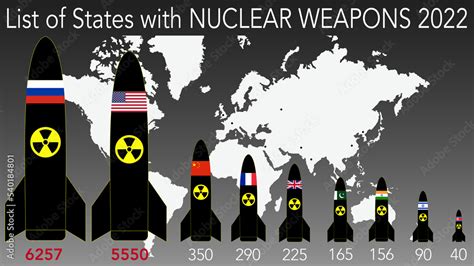
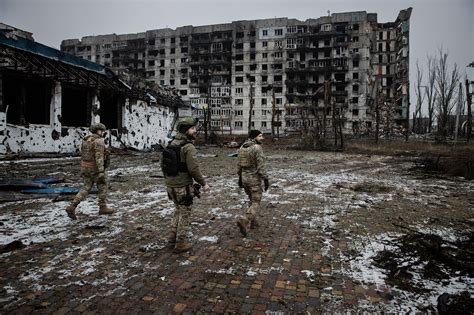
With every passing day, the steps to fix this and the consequences of our decline become more dire. I believe that I am also correct to be worried about the moral and ethical standing of those who lead us. The United States does not acknowledge how well they market nuclear weapons to other Nations. Nuclear weapons, to be blunt, allow your nation to be complete assholes and get away with it. Does anyone really believe that Russia would have invaded Ukraine if it did not have nuclear weapons? That Ukraine would have been invaded if it had nuclear weapons? Nuclear weapons undergird the actions of Israel and the USA against Iran, even as they work to deny Iran its own acquisition. Israel and the USA provide evidence to the Iranians that possessing nuclear weapons would be enabling. They would unlock their power in the region and give them a source of invincibility and immunity from consequences. Both Russia and the USA (Israel too) demonstrate this over and over.
Once a nation becomes nuclear-armed, nobody really fucks with them any longer. They join the top of international leadership (see India). The basic technology is old, going back to 1945. Even eighty years on, nuclear weapons have a huge impact on human affairs. Internationally, they are always in the room. Superpowers refuse to acknowledge that they are walking advertisements for possessing nuclear weapons. Lesser states are always given a litany of reasons why possessing nuclear weapons would improve their national standing. Nuclear weapons are also still the biggest physical stick in the world.
We have a President who has alluded to testing again. Is this necessary? Is this wise? This is all worth discussing. At the same time, we have a new technology that’s often compared to nuclear weapons: AI. How will AI and nuclear weapons interact, and what’s the path of wisdom for both AI and a world where both exist? Highly enriched uranium and plutonium are very expensive to obtain. It requires a vast investment by a society to achieve. It is also very hard to hide. It takes time to get there, too. The leading countries have a great deal of desire to keep countries from getting them. It is dangerous, but it also reduces their power to bully “lesser” nations. This is the truth.
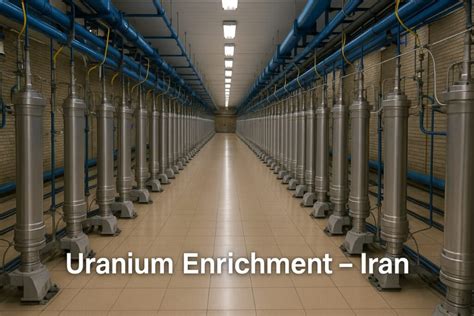

Even eighty years on, nuclear weapons have a huge impact on human affairs. Internationally, they are always in the room. Superpowers refuse to acknowledge that they are walking advertisements for possessing nuclear weapons. Lesser states are always given a litany of reasons why possessing nuclear weapons would improve their national standing. Nuclear weapons are also still the biggest physical stick in the world. We have a President who has alluded to testing again. Is this necessary? Is this wise? This is all worth discussing. I do not know the answer to this either; I am deeply conflicted. At the same time, we have a new technology that’s often compared to nuclear weapons: AI. How will AI and nuclear weapons interact, and what’s the path of wisdom for both AI and a world where both exist?
“You can’t be a real country unless you have a beer and an airline – it helps if you have some kind of football team, or some nuclear weapons, but in the very least you need a beer.” ― Frank Zappa

Nukes and AI
“Bohr proposed once that the goal of science is not universal truth. Rather, he argued, the modest but relentless goal of science is “the gradual removal of prejudices.” — Richard Rhodes
The parallels between AI and nuclear weapons are stronger than people feel. In both cases, being an AI superpower is similar in terms of resource allocation to nuclear weapons. The investment in facilities and electricity for creating nuclear material necessary for a weapon is similar to what’s required to lead in AI. In both cases, to succeed as a nation, one needs a vast industrial base and a multitude of scientists and experts who serve that industrial base’s products. It is also similar in terms of its technical depth and sophistication. Additionally, both have good and bad sides. With nuclear weapons, you have nuclear power. With AI, you can use it to benefit society, but it is a powerful tool for warfare and surveillance. We live in a world now where both of these technologies are lurching to the fore of world events and have an outside influence on the future of mankind.
Nuclear power is underutilized and over-feared by the public. It is not trusted. It has inherited the peril of nuclear weapons. It could be a green technology to combat climate change. By the same token, AI has similar light and dark polarities. It can be used to propagandize, kill, and surveil people. By the same token, it can be an incredible assistant to all of us and produce massive productivity gains. It could be a means of great wealth and abundance for society. Right now, it will just bring wealth to a few people and impoverish the masses. In both cases, we are failing to recognize the truly dire harm that these technologies could produce. We are also failing to recognize the truly beneficial good for society that each can do. Our leadership in both is completely failing.
The Bottom Line
“Are you ready for nuclear Armageddon?” ― Michael Parker
Every year, the directors of the three labs sign a letter stating the status of the stockpile. This letter goes to the President with advice on what to do. Every year, they have asserted that the stockpile is in good shape. Testing weapons again is not required. The question that I ask myself is: what would happen if one of the directors declined to state that the stockpile was in good shape? My assertion is that this director would be immediately replaced without explanation. If the director of the lab does not have the liberty to not sign the letter in the affirmative, do they really have the liberty to sign it at all? Ultimately, is the assessment of the stockpile not a technical or scientific question but rather a political one? For example, if the president had decided to test again, would they all sign in the negative? Would they join in? Again, these are questions I think need to be asked, and the answers are not ones that I know. They are questions we should be asking.
“Now, I am become Death, the destroyer of worlds.” ― J. Robert Oppenheimer

 The Regularized Singularity