
tl;dr
How did this person get created? Why am I so opinionated and vocal? Where did this come from?
I aim to get to the answers to these questions. For my earlier years, the path was uneven and definitely non-standard. The key formative moments were a couple of very personal crises that were hard resets. I emerged from them different from how I entered. Before I got to Los Alamos, I was molded by a childhood as a military brat. It gave me many good and bad things. My young adulthood offered hard work and an early marriage. I learned to work very hard, but also suffered crushing disappointments. All of this led up to my first crisis and set the stage for later success. I was able to shrug off bad habits and begin a career with a positive trajectory. Luck also played a huge role in landing my job at Los Alamos. My newfound approach to life and work provided me with the tools to make the most of it.
This is the first of three parts.
This will be an orgy of self-reflection. Needed for me, but rather self-indulgent. I hope someone finds it useful or interesting. Doing it in the open is far different than writing a personal journal; I do that every morning. It is also focused on one part of my life. The boundaries of my career with the rest of my life are varied in form. As I move into retirement, the boundaries are naturally more porous
“We write to taste life twice, in the moment and in retrospect.”
—Anais Nin
A life measured in big events that shaped me
Most of this essay will be chronological, but not this opening section. I’m going to discuss a couple of big events that really changed me professionally as well as personally. These were crises about 9 years apart that caused me to change. One happened at the end of my first year of Grad School, and the second about 7 years into my time at Los Alamos. Both of them were extremely painful psychologically and that pain demanded action. My response made these transformative.
Often, we frame our lives in big events. I am no different. There are graduations, marriages, births, deaths, moves, illnesses, vacations, … I’ve experienced all of these. Most of you have, too. These are important, but commonplace. We share these events with each other. We talk about them too. They are memorialized on Facebook and Instagram. They are not personal and private. The two things I am about to describe are those. Maybe some of you have had something similar happen. I’d love to hear about it. It would probably be healthy to discuss these more openly.
“A career is wonderful, but you can’t curl up with it on a cold night” ― Marilyn Monroe
Grad school failures
“We cannot change what we are not aware of, and once we are aware, we cannot help but change.” ― Sheryl Sandberg
The second semester of grad school was a big one for me. I had a couple of classes that were important to me: incompressible fluid mechanics and computational physics. All semester, I joked about one class as “incomprehensible flow”. Randy Truman was the professor (we ended up being friendly years later). The other class was taught by a Los Alamos fellow, Jerry Brackbill. Jerry was a colleague of a hero of mine, Frank Harlow. Deeper down. These classes were what I wanted to do: computational fluid dynamics (CFD). I struggled with incompressible flow, but I stumbled along. Jerry’s computational physics class crushed me. I floundered. Eventually, I dropped the class mid-semester rather than fail.
With this defeat squarely in mind, I doubled down on the rest of my classes. This included the incompressible flow course. With some effort, I passed with a “B”. I remember getting the final back. I sat there, and my heart sank as I thought about it. I remember getting up to leave, and a thought came to me. I was letting myself down; my dreams were collapsing before my eyes. That is a huge weight to bear. I also knew I was smarter and more capable than my classmates. I simply was not able to apply myself. I had to change, or these failures would become permanent.
I spent the summer after retooling myself. I went back and really learned all the things I had just memorized. It was a mission to really learn all the important things from my undergraduate years. I changed how I took classes rather radically. I revamped how I took lecture notes and did homework. When the Fall came, I hit the ground running with all this in hand. During that semester, I took the PhD qualifying exam. This was a large part of my summer work. I aced it. I was different in all my classes. Professors noticed and had rebooted my academic self. Years later, I became acquainted with Jerry Brackbill and collaborated with Harlow’s group, where he was a member. By then, I was a completely different man from the person Jerry had met years before. It became a tale of personal redemption.
“Becoming fearless isn’t the point. That’s impossible. It’s learning how to control your fear, and how to be free from it.” — Veronica Roth
The imposter dies
The next crisis was far more jarring. It happened 7 years into my time at Los Alamos after the birth of my second child, Jack. I was confronted with a growing list of responsibilities on the home front. During my time at Los Alamos, I had worked with two groups. First, with nuclear reactor safety (N-12), while I simultaneously worked on my PhD. Due to other parts of my past, I worked monstrously hard, holding a staff position at LANL and being a full-time PhD student. The previous crisis had created a monster. I worked constantly. Reading and research filled all my time.
After the PhD, I moved to research at the Lab. I got a job in the computational science group (C-3). It was a National project led by Phil Colella and John Bell. It was the opportunity of a lifetime. Between working with these guys and Los Alamos in general, I had some serious “Imposter Syndrome.” I could work really fucking hard. That was my silver bullet. I would just work harder than others and overcome my talent gap.
My life was on a collision course. The impact was a series of panic attacks. I had never had one before. They scared the shit out of me. It all hit one weekend as I had work to do and a major household project. I needed to take off work. All of a sudden, time was closing in on me. I coped with the immediate panic and calmed myself. I received a bit of SRI meds my wife had and started to introspect. I needed to rebalance my life. Part of this was rejecting the imposter syndrome. I belonged at the Lab and had proven myself. I was more than good enough to stand toe-to-toe with the best. I didn’t need to compensate anymore.
“It’s so hard to forget pain, but it’s even harder to remember sweetness. We have no scar to show for happiness. We learn so little from peace.” — Chuck Palanuik
What happened to me before Los Alamos?
Like all of us, I arrived at my first real job with a history and a largely unfinished article. That background matters to all that happened to me later. I have freely admitted that getting the job at Los Alamos National Lab was mostly great luck and fortuitous timing. I’ve wondered what less luck would have meant for my life. I can state without a doubt that my path is unavailable to the modern version of me. Every single element in my life’s foundation has been destroyed by the modern USA. It is just part of the erosion of social mobility that defines our lives today. The USA has truly fucked the next generation(s) over.
“Don’t confuse having a career with having a life.” ― Hillary Rodham Clinton.
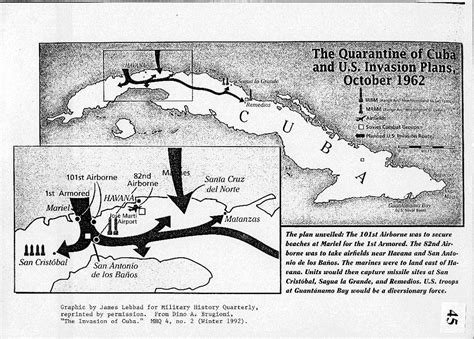
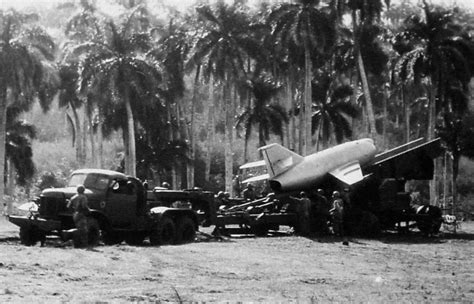
I grew up as a military brat. We moved a lot, although not as much as most. My father had a career in the US Army as an officer. He practiced field artillery and nuclear weapons. My life was largely created by nuclear weapons to a degree that boggles the mind. I was a literal Cuban Missile Crisis baby being conceived in the wake of that. My grandfather planned the never-executed invasion of Japan for 1945-1946. My dad retired to New Mexico to serve these weapons for DoD and DoE. My wife’s father served in the Army at Los Alamos after WW2. She is the product of his transferring to Albuquerque and Sandia base in 1947. Perhaps it was fate that my career ended up with nukes.
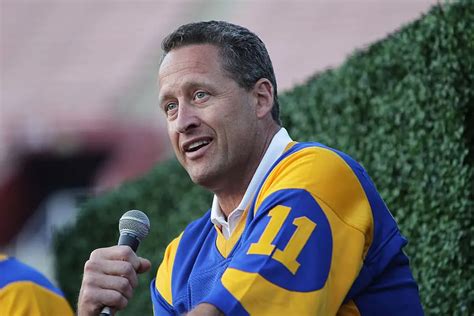
All of this led to my arriving in New Mexico in 1979 at the age of 15. There, I finished high school for my last three years. I played football and wrestled, plus grew toward adulthood. Football reached its apex in my Junior year when we won the state championship. This was mostly due to two (to five) future NFL players, including quarterback Jim Everett (if you know, you know). I was an otherwise unremarkable student. I was smart, and I knew it. I didn’t really have to apply myself to do well. I did just enough so my parents didn’t wise up to how much I was fucking off
“You can be a natural athlete with terrible work habits, and that ends up wasting your gifts.” ― Vernon Davis
Here, I should step back. All of this came from my earlier life. My father’s career and life shaped me for good and ill. He is nearing the end of his life being in hospice. His story was the backdrop for much of what was good, and bad about teenage Bill. I did leave high school with scholarships in hand. I was a National Merit scholar, and had a full ride from the Air Force. I would join ROTC at the University of New Mexico. On the flip side, I was headed for state school. In retrospect it was where I belonged. To go to a more competitive school I would have needed that first crisis to happen to 18 year old Bill, not my 24 year old self. One of my key lessons in life was that my dad’s life was ruled by fear. That was something I would not allow to govern my life, or my decisions. I’ve largely been successful on that, but it always looms over everything as a shadow.
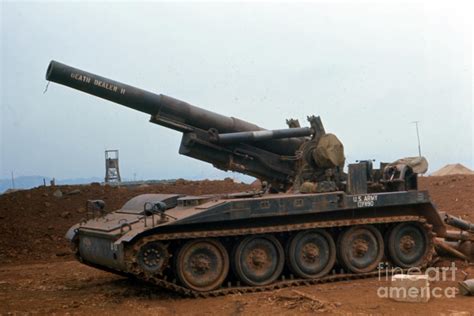
My father graduated from high school in 1955, and with his cousin joined the Marine Corps. It was a terrible experience, but his fear of being drafted and having to serve as an enlisted man pushed him to join ROTC at college. There at college he met my mom, and afterwards embarked on being a commissioned officer. There he was part of that potential Cuban invasion force, as a forward Artillery observer. A mission with an extremely short life span. After that he was assigned to oversee a battery of 8-inch howitzers in Northern Greece. These howitzers could deliver a nuclear package. This is where he was when I was born.
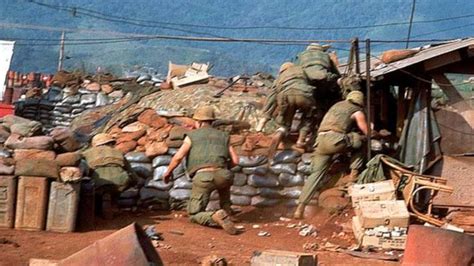
Shortly thereafter while I was a toddler, my father applied for and was admitted to law school. This,opportunity was not taken, as my mother urged him to decline the offer. She did not want to be the wife of a graduate student with a small toddler, me. As a result my father was sent to Vietnam for a tour of duty that proved to be absolutely disastrous for his military career. This was probably the most pivotal event of his life. It changed everything. He and his boss hated each other and my dad’s fitness reports reflected that hatred.
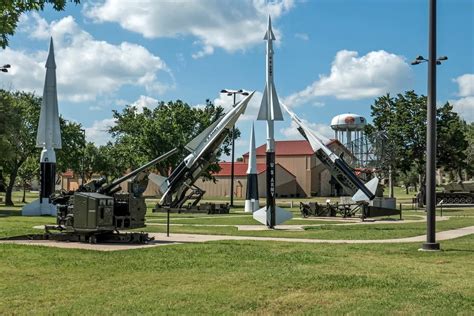
When he returned after his tour of duty, he was depressed and now fearful of the path that his chosen career would take. My father’s crisis, and state of mind would cast a pall over my childhood. It shaped the rest of my existence as a child. He spent xix years in Lawton, Oklahoma, at Fort Sill. He was an instructor at the Field Artillery School, he worked hard to distinguish himself. When I say he worked hard it was 100-hour weeks, just working his butt off, and rebuilding his career. He was just trying to achieve at least one more promotion. That next promotion, if he received it, would allow him to work in the military all the way to retirement. Do I see a parallel with my own life here? Of fuck yes, I do.
This became the focus point and the obsession of his life at that time. It also condemned all of us in the family to be passengers on this trip. It ultimately corrupted him in a sense as the sacrifice he made would be something that he would take in the form of a crown of thorns later on in life. It is a bitter and harsh lesson that I truly hope I can learn from. I want to avoid being like that as I move towards old age.
“I must not fear. Fear is the mind-killer. Fear is the little-death that brings total obliteration. I will face my fear. I will permit it to pass over me and through me. And when it has gone past I will turn the inner eye to see its path. Where the fear has gone there will be nothing. Only I will remain.” — Frank Herbert
Bill Goes to University
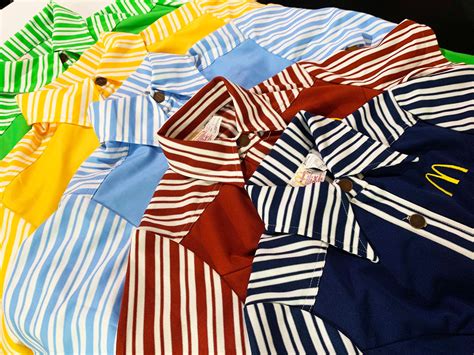
I graduated from Eldorado High School in Albuquerque in May 1982. Right after I got a job at a local McDonalds as a burger flipper. Two weeks into that job I took a lunch break with a cute blonde gal who hired on at the same time. After a bit of retrospectively funny awkwardness we became good friends. She was my future wife, Felicia. She liked my sense of humor, fun sense, and intelligence. We were both military brats. We were both going to the University of New Mexico too. We would be taking a class together, ROTC. I gave up my Air Force scholarship because I realized that I didn’t fit in and I would not be happy there. That’s an understatement, I would have been miserable and a terrible choice. It would likely be a failure. Stunningly, later in my life I had so much confidence that I refused to see that same lesson at Sandia. In many ways my failure to learn this and embody this decision later in life wasted so much of my potential.

There were two very important things that happened in my undergraduate years:
1. Meeting my wife, getting married. It was us together forming new families to make up for the shortcomings and disappointments in our families of birth. We both wanted to escape from unhappy home lives, and found happiness together. This union has been key and drove my progress through life. It has been the greatest meaning I have found in anything.
2. The extent to which I put myself through school mostly on my own. Actually it was as a team with Felicia. I worked a job for the entirety of my undergraduate career. During that time I worked harder than I would ever work in my life, taking a full load of classes and holding down a full-time job. It led to legendary, 100+ hour weeks, exhaustion, and effort only a 20 year old could muster. After this, everything else I ever did was easy. I worked at McDonalds and became a manager. It was a huge life lesson. I also worked for the best boss of my life there, Brenda Adcock. I’ve had other great bosses, but Brenda was in a league of her own. She was hard on me, taught me a lot and gave me opportunity to grow. She’s had no equal.
I broke from the pattern my father set, and did not allow fear to drive me. As I have discovered fear is pernicious and enters into any nook or cranny. It is always lurking in the shadows waiting to overwhelm you. Still I remained conscious of it and pushed back against that tendency.
“What would you do if you weren’t afraid?” ― Sheryl Sandberg,
My undergraduate career was marked with some degree of mediocrity. This was based on some of the laziness that I got away with in my younger years, along with my very hard job. I had a need to support myself and Felicia (she pulled more than her own weight). She would drop out of school after two years and work full time. She got a job with good benefits and medical insurance. After I got my PhD, she went back to school and got her degree. Later on she got her Masters once she starting working at the University. The result of my mediocrity, in the end, was a stunning lack of prospects when I got my bachelor’s degree. I applied for a number of jobs, none of them even remotely prestigious, and received not one single interview, not one single bite. I was left with almost nothing. I felt like a real fuck-up.
The back-up plan was grad school and grad school at the same place that I was an undergraduate. Again the least prestigious way to go, but I went and entered into that first year and I did not change. I kept on being the person I was as an undergrad. This was setting myself up for the crisis a year later. My inaction and lack of response to the clear feedback from life was pretty contemptible. All of us was leading to the moment of that first crisis I described and my change as a person. I simply hadn’t let myself fuck up quite sufficiently yet.
Graduate school was a huge learning experience and laid out the platform for me to ultimately excel at Los Alamos. I started off following the lead of others, doing a master’s degree project that was simply a mindless extension of others’ work. It was in modeling space nuclear reactors. By the end of graduate school I had started to eagerly and ravenously eat up new topics. I learned the basics of computational fluid dynamics. One of my office mates in graduate school, DV, was a huge influence. DV was a graduate of IIT in India. He turned me on to the works of Suhas Patankar, who shapes much of mechanical engineering CFD, following along the work of Brian Spalding. This led me naturally to the work of Frank Harlow, who inspired Spalding and laid much of the groundwork for CFD. I devoured and starting implementing their work. I was eager to understand all of it.
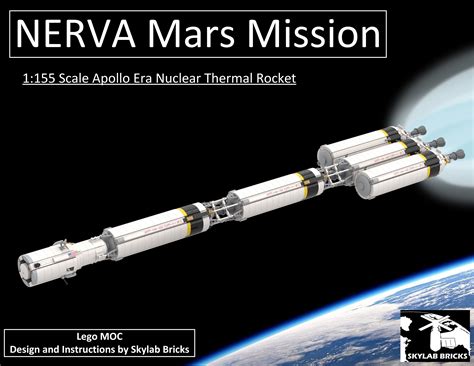
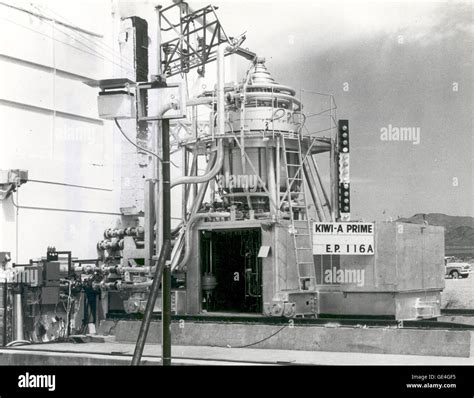
Over time, I became increasingly dissatisfied with this approach to things and started to look for other ideas. In that time, I learned about the work of Jay Boris and flux corrected transport (FCT). Ultimately, I found that approach to be lacking. I was attracted to the work of Ami Harten and Bram Van Leer by the time I left school for Los Alamos. These interests shaped my PhD work at Los Alamos, and created much of what I have focused on for the remainder of my career. At the beginning of my time in Los Alamos and periodically throughout my time as a professional, I returned to nuclear engineering and space power. My original inspiration was the manned Mars mission originally scheduled for 1981. This manned Mars mission would have been rocketed by nuclear rockets developed at Los Alamos. These were something that I was able to see in person and learn about when I arrived at LANL in my first few years there. There was a short-lived interest in Mars again as the Cold War ended and the Soviet Union fell apart.
My growing self-confidence had a huge impact on me and ultimately propelled me to leave the university. In the end, Los Alamos would give me far more than any graduate school could have. In those years Los Alamos would be better than the best school imaginable. It was beyond Ivy League in quality and scope. We should truly mourn what we have lost in destroying these institutions. They used to be great and I felt myself living in their wake pulling me along.
The consequences of that change were borne out during my second year of graduate school when I received my master’s degree. Once I had become a different person, I gained a confidence and a strength. That strength made the person who could not longer tolerate my advisor’s behavior. I could no longer tolerate his behavior, or his way of managing people. I started to see him as a bully and I refused to be bullied. To some extent this was cultural on his part. Nonetheless, I witnessed things that I found unacceptable in how others were treated. I had rapidly learned a great deal. The last straw was my advisor’s inability to learn from me. He always had to dominate me. Even though I had a fully funded Ph.D. research project through NASA, I decided that I could not stay at school there.
It was time to leave and find a new path.
“Fear doesn’t shut you down; it wakes you up” — Veronica Roth
Bill gets a real job
I looked at other graduate schools but my poor grades, and unremarkable academic record made that impossible so I was looking for a job. It would have also meant a lot of debt. In those days that felt dangerous. This job hunt would completely change my life. It also was something of immense fortune that I looked for a job when I did. It was a peculiar time. There were visions of a new space race, and also the end of the Cold War, with views of changes in our nuclear weapons program. Somebody with my background was almost assured a job. There weren’t nearly enough of me’s to go around.
I’ve often joked that I had three things that were absolutely essential for getting a job:
1. I had a Master’s degree in nuclear engineering.
2. I was an American citizen.
3. I had a pulse.
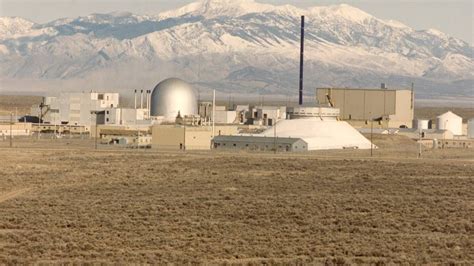
The result was I applied for six jobs. I had six interviews, and six job offers. It was just a matter of taking the best of them and the best of those jobs was at Los Alamos National Lab. It was working with a nuclear reactor safety analysis group. It took some doing because the bureaucracy at Los Alamos is atrocious. They absolutely suck at it. They still do today. I also had a job offer from another National Lab in Idaho, but the prospect of living in Idaho Falls in those days seemed dismal, horrible. I’ve visited and its not quite as bad as I had thought. At that time Idaho Falls failed what I called the radio test. I would sit in my hotel room with the radio alarm. I would try to tune in the best radio station I could find. In Idaho Falls that station was playing the Osmonds!
I pushed Los Alamos and they delivered a job offer in time. The other jobs were all with the so-called Beltway Bandits. In some cases they had produced interview trips that were comical in their outcome. They were also professionally horrifying in what I learned about those companies. Thank God I didn’t end up there. I’d be a totally different person now.
I took the job at Los Alamos. I already knew that my good fortune was almost beyond reckoning. I entered with some degree of confidence and knowledge of how to work extremely hard and apply myself. I had started become enthusiastic about CFD. Los Alamos seemed like a veritable cathedral of science. It was one of the most famous places for science and especially for all things nuclear. I was offered something miraculous on a silver platter. It was an almost mythical opportunity. I was going to grasp it and work my ass off. In my time at Los Alamos, it also grew my belief in the patriotic service of working there. This is one of the things that I most firmly embraced and still believe in today. I could pursue my science passions with a sense of meaning and purpose.
“I’ve learned that making a ‘living’ is not the same thing as ‘making a life’.” ― Maya Angelou
 The Regularized Singularity