

“It is our misfortune, as a historical generation, to live through the largest expansion in expressive capability in human history, a misfortune because abundance breaks more things than scarcity.” — Clay Shirky
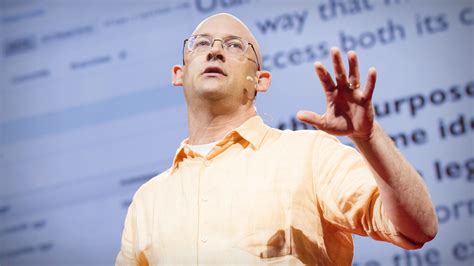
I’ve had great appreciation for the thoughts of Clay Shirky about the internet’s impact on society. He had some quite profound thoughts about what it means more broadly. Apparently, he moved into college administration more than a decade ago. His views have faded even as the internet writ large has even larger impacts. AI is a by-product of the internet, along with algorithmic innovation and a shitload of computing power. If anything, the changes in society have accelerated. Things are evolving so quickly that we can’t adapt. Everything is breaking. This includes a host of institutions on which the stability of society depends. This includes the National Labs where I worked. The result is that everything feels broken; everything is completely fucked up.
“A revolution doesn’t happen when society adopts new tools. It happens when society adopts new behaviors.”— Clay Shirk
“Institutions will try to preserve the problem to which they are the solution.”— Clay Shirky
I am having a great deal of difficulty with part 3 of my career retrospective. I’ll muse here a bit about the core of my difficulty. My difficulty is that the years at Sandia were bad for me. Sandia isn’t necessarily bad. Primarily, Sandia wasn’t a good fit for me. By most objective standards its a good place to work and a net benefit for society. This is also complicated by the details of the time we live in. We live in a transformational time for the USA and the World. American institutions of all types are straining under the pressure of today. Huge changes are afoot. We are living in the wake of huge changes of historical proportions. This time will be marked as especially turbulent when history is written. I don’t want to be unfair to Sandia. It has issues, but much is outside their control.
“The future is already here – it’s just not evenly distributed.”— William Gibson
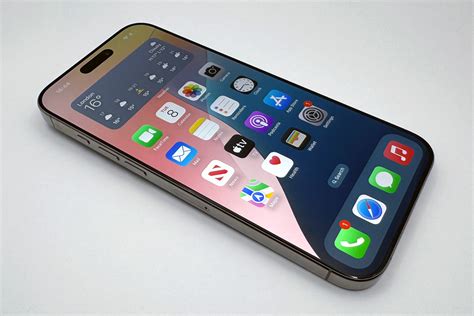
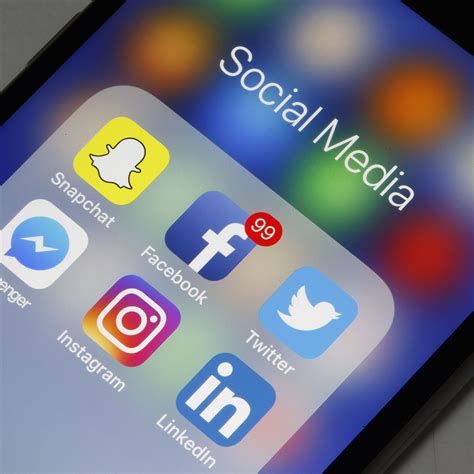
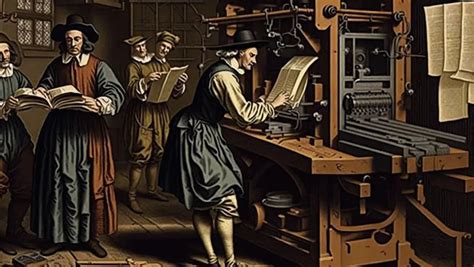
My thesis is that the central element breaking society is the internet and all its related technology. I have heard it quipped that the internet rivaled the printing press in terms of disruption. The printing press created changes in society that drove decades if not centuries of war. It broke the stranglehold of the Catholic church in Europe and created the conditions for the Reformation. The democratization of information changed the dynamic of society then, and it has now. The internet created the opportunity for instant communication and destroyed the preceding mass media. That destruction is accelerating today. The smartphone was a huge lever arm for this. Suddenly, the internet was ubiquitous and penetrated every aspect of life. On the heels of this, we had social media. Now we have AI, which might dwarf all the rest. All of this was enabled by the internet. These changes have disrupted society. Every institution is reacting to this. Every institution is changing. Change like this, at this rate, really, really sucks!
“When we change the way we communicate, we change society.”— Clay Shirky
The thing to consider is what institutions have done in response to the internet. How have they responded to the ease of communication and information? I’ve seen a general increase in the transmission of information, and thus scandals like those I’ve encountered. Employees also have a potential voice via blogs, video, and social media. The institutions want to cut that out because that’s a source of power. This blog is a good example. At the same time, the executives and the power of the “top” of society have unparalleled power. Billionaires (and soon Trillionaires) abound. They wield vast power and influence due to their wealth. They engage in “rent seeking” behavior to amplify their power. The legal system gives them carte blanche to rule over their minions. So they crack down on the transparency that the internet could provide. It is both the source of their wealth and a threat to their power simultaneously.

Sandia squashed my voice. They want to control their image online. They want to control the narrative. I’ve seen a relative increase in the inappropriate classification of information. It’s about asserting control, ethics and truth be damned. Again, I am a personal example. The report that ushered in the end of my career was inappropriately restricted to hide it. We’ve seen an orgy of classification across the government in the Internet age. The reason for this? To hide information that might be embarrassing. The internet makes it possible to see much more, but the institutions shut that down. We have this information war in society. Into the vacuum of information, we see the proliferation of conspiracy theories.
There’s another force at work to amplify this. In the USA, there is close to unparalleled societal inequality. It rivals the “Gilded Age” and societal upheaval is the usual consequence. Two things have come together to drive this inequality. The past 40 years of neoliberal order has driven massive wealth into a small number of hands. The USA is very rich. Even the relatively poor people have a lot. What people see is their comparative wealth, and the bulkk of society has very little to those at the top. The rich are leveraging their wealth into power via “rent seeking” (Citizens United!). The law is simply a suggestion to them, not remotely a constraint.
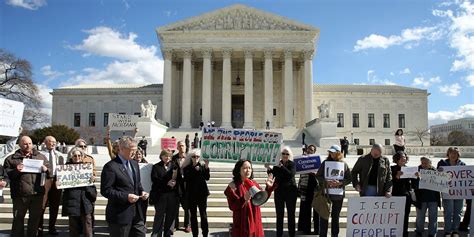
“Tragedy of the Commons: while each person can agree that all would benefit from common restraint, the incentives of the individuals are arrayed against that outcome.”— Clay Shirky

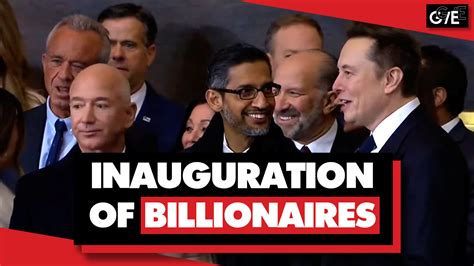
All of this has come together in political strife and conflict. Trump is without a doubt, a consequence of these trends. This is true whether one believes he is good or bad. I would submit that he is the result of both inequality and information technology. Trump is a transformational leader. The USA will be a different country by the end of his reign. Institutions like NATO will not be the same. Meanwhile warfare is changing due to drones, missiles and AI. American institutions are being changed. Labs and science are under assault with science funding reduced. The USA is more isolated and separate from the rest of the World. The nature of the International order will be different and more conflict ridden.
“You realize that our mistrust of the future makes it hard to give up the past.”
― Chuck Palahniuk
No one really knows where this is going. Chances for disaster and catastrophe are definitely high. The economy could explode due to AI. Or it could implode. AI could drive massive unemployment or grow massive abundance. With all this uncertainty the institutional response is caution. They are protective instead of bold. The dangers are too high. Sandia is among these places exercising caution. I need to factor this into my career assessment. It still sucked for me, and nothing can change that.
“We’re collectively living through 1500, when it’s easier to see what’s broken than what will replace it.”
— Clay Shirky
 The Regularized Singularity