
tl;dr
When I consider Sandia separated from the tsunami of change sweeping over society, clarity is found. Moving to Sandia was a huge mistake professionally. I did not fit in there, and my career was much less than what it could have been because of that. I’m an extroverted rebel, and Sandia is introverted conformity. Hierarchy is rigid and matters most of all. Information and organization is tightly controlled and fragmented. At Los Alamos, my career moved in a coherent direction. My knowledge and expertise were valued. At Sandia, the same career was an incoherent mess. My knowledge and expertise are greatest in an area that expresses the culture of Sandia most pathologically. It was hopeless from the outset unless I was willing to change; I was not. Some people have incredible careers at Sandia. It is right for them. It was not for me. It was a good job with a good salary and benefits. Moving was right for my family. For my family, living in Albuquerque was better; Sandia was just the route there.
“Healey’s First Law Of Holes: When in one, stop digging.” ― Denis Healey

The Perspective I needed
My last post did wonders for my ability to write about my time at Sandia. In a way, it works sort of like the math technique called separation of variables. I managed to pull my time at Sandia out of the stream of modernity, our current societal crisis. There I could look at it alone. I cannot write this in the same way either. The core of the narrative arc does not match what happened in school or Los Alamos. The coherence of direction and growth disappeared at Sandia. This essay will be organized by theme rather than chronology. It is the only way to make sense of this.
The other major realization was that Sandia would always be compared with Los Alamos. Sandia does it to itself. Sandia has a huge chip on its shoulder. Los Alamos birthed Sandia from itself. Los Alamos had this important gestational role in my career. It birthed me; it was where I had my technical childhood and adolescence; it’s where I came to adulthood. The changes due to the passage of time make this comparison unfair to Sandia. The 1980’s and 1990’s still had the momentum of the post-WW2-Cold War support of science. Los Alamos and Sandia of that time were much better than today. Virtually every institution in the country was better. Today, the institutions are under assault. and most in free fall. I lived this precipitous decline at Sandia. This warps my perspective considerably.
The thing is that when I walked in the door, I was full of optimism and hope. This comparison could have been a good one; it could have actually ended up with Sandia being better. In pure hindsight, that’s an impossibility. This impossibility is mostly the result of who I am. I realize that my innate personality and talents, my motivation, are all ill-suited for Sandia. All of these are more well-suited and better taken advantage of at Los Alamos. I should say the Los Alamos when I was there before the scandals that distorted it.
One of my issues with Sandia is that I tried to make it work and express optimism about it at the start. I was not willing to ingest the message that it was the wrong place for me after I made this big change. I moved the family; I bought a home; I settled into life. All of these things skewed me towards trying to make it work. I really wasn’t honest with myself about what was going on.
This also enticed my friend Jim Kamm to come to Sandia as well. This was a direct consequence of the optimistic hope that Sandia could be better than Los Alamos. I had expressed this optimism to him. Jim had a different calculus around life at Sandia, and he tried to make it work. Increasingly, Sandia made it harder and harder for him to continue working. Part of it was his life. He insisted on staying at his home in Santa Fe, which made the commute precarious. Changes at Sandia made it impossible for him to reasonably get to work. He eventually returned to Los Alamos and was there for a short time. Finally, being fed up, retiring, and moving to France. My sense was that his departure had as much to do with changes in America that he found unacceptable and troubling.
I should focus on those things about Sandia, good and bad, that didn’t work for me.
“I’ve always believed there are moments in our lives which can be defined as a transition between the before and after, between the cause and the effect.” ― Benjamin X. Wretlind
What Went Wrong?
“Follow the urge to transition from one phase of your life to the next. Whether this is inside or outside work, it’s time for intentional transformation to take place.” ― Robin S. Baker
Sandia is a very collaborative place, but only on a small scale. At first, I felt a deep sense of commitment and collaboration within the department I was working in. I was working on overhauling the numerical solution of hydrodynamics in the code ALEGRA. It was work I was perfect for. I also accepted the rather extreme limitations of the code. It was deeply imperfect. This was challenging, and it forged a tight team. In that time, I felt deep accomplishments that are a source of pride.
Shortly after I arrived at Sandia, we had a crisis. Our funding was under threat because the code was unreliable for our primary customer. This was the Army, not DOE or ASC. In short, we needed to improve or else. The code was too fragile and slow for its users. We were handed a death sentence by them unless we made progress. I was a key part of the plan. With focus and joint effort, we succeeded in a massive improvement. We improved the code and its robustness massively. The Army was overjoyed with our work. It stands as one of the greatest achievements of my career. The team was essential to success, and it should have bonded us. Inside my department, it was celebrated. Outside the department, it was totally meh. My Center and Sandia as a whole didn’t even know it happened, much less care. This is the origin of all that went wrong.
The problem with Sandia is that collaboration at a large scale is utterly and completely discouraged. There is no broader institutional identity aside from “we’re engineers, damn it”. Sandia is more of a federation of centers and projects under a common banner. Our great work with ALEGRA meant nothing to the Lab. Cynically, I would say because the money was so little. There’s truth in that. In a sense, Sandia works like the United States before the Civil War. This is where each state has great power, and the federal government is weak. It is completely different than Los Alamos with its “federal” model, and the lack of recognition disappointed me.
If you move or change jobs at Sandia, it is virtually like changing employers. Not in the sense that your benefits or basic rules of employment change. Rather, your interactions and your friends completely change. You no longer interact with the same people. Over a short time, it eventually turns into a completely different community. Any achievements in your former organization are pretty meaningless. People who succeed are those who stay put. You are primarily recognized by your organizational achievements (for a technical person). Cross-organizational achievements are mostly recognized by managers. Money and program building are the most prized. Technical achievements are rarely viewed as important.
Sandia is very fractured, and this is paralleled by its attitude towards information sharing. Information is not shared by default. Once you get outside your organization or project, the information becomes attenuated and hard to get a hold of. One of the key cultural notions of Sandia is “need to know”. It is applied very strictly, far more strictly than the way it was applied at Los Alamos. At Los Alamos, the sharing and collaboration happened on a large scale. Your identity was the whole lab, and achievements in other organizations meant something if you moved. This led to substantial coherence of my career there, even while changing organizations. At Sandia, changing organizations was professional suicide. Working on a small project with little funding growth was also bad for you, too. Politics and money are the lifeblood of success.

This distinction, the innately tribal nature of identity at Sandia, is my second greatest issue at the laboratory. This follows the diminished role of technical achievement and mastery. I found that my professional life there was far poorer. Rarely enriched by the breadth of scientists, disciplines, and expertise that I encountered at Los Alamos. This is part of a lack of generosity. The information rules and time-keeping norms hurt generosity. The lack of a common identity was even more toxic in this regard. I had more intense interactions locally, but once you got past your local organization, things narrowed and became incredibly superficial. This drove a deep sense of dissatisfaction that grew with each passing year. By the time I had been at Sandia for five years, it felt like this was the wrong place for me. This would coincide with other forces in my life.

One of the key things that I came to realize immediately is that Sandia is extremely conscious of hierarchy. If you are at a certain level, you’re expected to remain silent unless you’re spoken to. If you’re the lowest-ranking person in a room, your silence is presumed to be complete unless you’re called on. There’s always a deference to the people of rank. I saw this clearly immediately. It was a fairly complete departure from the free-wheeling culture of Los Alamos. Politics was much more important than Sandia. The issue is that the political nature of Sandia was very introverted and subtle. Conversely, Los Alamos was an extroverted politics, where it was a free-for-all and very open. Rank mattered little at Los Alamos, especially as a scientist. Managers were treated with modest disdain. Their rank did matter somewhat. Sandia inverted this completely.
Let me be clear: in the grand scheme of things, both Los Alamos and Sandia are exceptional technical organizations. Los Alamos is more scientific. Sandia is an engineering organization first and foremost. Both places do exceptionally high-quality work and hold themselves to very high standards. This is compared with the vast majority of other government labs and universities. The number of places in the USA better than Sandia or Los Alamos is a small number of exceptional ones. Sandia is far better administratively, too. They have bureaucratic competence that Los Alamos can only dream of.
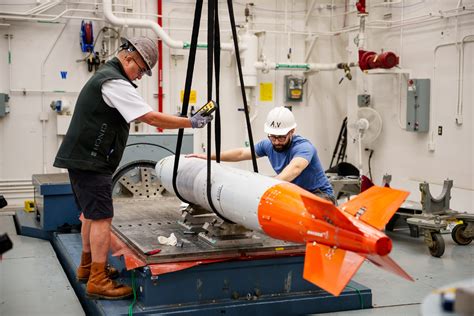
The problem is that those standards are slipping with time. The decline is profound. The sort of professional excellence I aspire to work towards is no longer supported. I would say, in broad terms, no longer supported by either organization today. It is certainly not encouraged by current organizational behavior or societal norms. Both places are in deep decline. This reflects the science and engineering in the United States dropping in quality. Both Los Alamos and Sandia reflect that decline strongly.
“Self-awareness is the foundation of meaningful change. Know thyself.” ― Binod Shankar
Politics and Conflict
In relative terms, both places are quite good, even exceptional by the standards of the day. In terms of what the country needs and the sort of standard we should expect from them, both places leave very much to be desired. The decline in science in the United States is across the board. Perhaps the only exception right now is in terms of AI. Our lead there is precarious in the extreme and threatened by a national strategy that is foolish at best. Massive cuts in fundamental foundational research will produce a diminished status in AI as well. The combination of declining institutions and lower funding is the recipe for long-term failure. We can argue that the USA is still the leader. Even if true, that lead will evaporate soon.
At Sandia. technical achievements, while important, mattered little compared to your political stance. There was a reward for political or programmatic success. Often, the people who succeeded the best were either quietly supportive of their management’s decisions or actively acted as a mouthpiece for what the managers wanted to do. Being a tactical leader or doing work of high technical quality was unimportant and would lead to no substantial success. This, along with my area of work, limited my professional achievement in terms of institutional recognition.
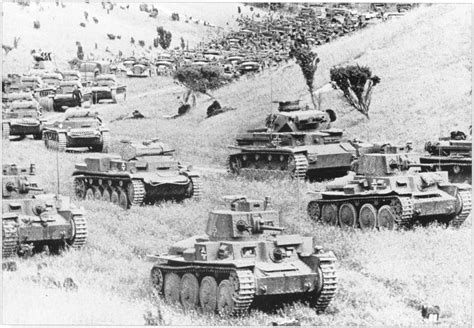
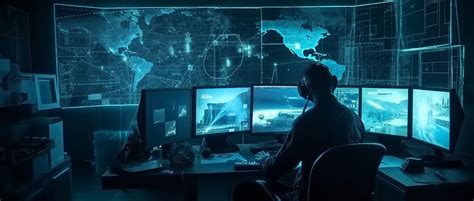
Where Los Alamos has (had) an open and aggressive politics. At Los Alamos, beliefs are shared and debated in a vigorous and public way. Sandia is far more behind the scenes, with Machiavellian actors doing things that are unseen. Often manifesting in extremely manipulative ways. In a brutal sense, in Los Alamos, you get stabbed, but they stab you from the front. You know who’s killing you. At Sandia, you get stabbed in the back. The result’s the same; you’re stabbed, but at least at Los Alamos, you knew where the perpetrator was. If you are me, the Los Alamos model of open and identified conflict was far better than being undercut without knowing who was your undoing. Los Alamos is rude and in your face. Sandia is polite and tends to keep their opinions to themselves, or rather, talk behind your back and spread rumors. Sandia is a passive-aggressive culture to a fault.
To make another analogy, this time using warfare, Los Alamos had open battles. These would be like the sort of pitched battles between the Spartans and the Persians, or trench warfare in World War One, or the grand sweeping blitzkriegs and armored combats of World War Two. Sandia was more like cyber and drone warfare: everything hidden. No less dangerous, but subtle, unseen, and rarely admitted openly by those engaged in it. Conflicts are unavoidable. Warfare is never good, but the kind that you wish to engage in is a matter of personal taste. In retrospect, my personal taste was slanted towards the open conflict, which felt honest and true and less like lying. I’m not a good poker player. Sandia is much more like poker than a boxing match.

My Personal Response
All of this wasn’t fully realized or even articulated, perhaps until now. By the time I’d been at Sandia a little over ten years, these factors started to weigh on me. I knew I didn’t fit in, and if I was going to be true to myself, I would never fit in. In retrospect, I began truly realizing this around my 50th birthday. This became a time of a bit of a midlife crisis. It had some distinct manifestations.
“One of the most dangerous things that you can do is to change yourself before you know yourself.” ― Craig D. Lounsbrough
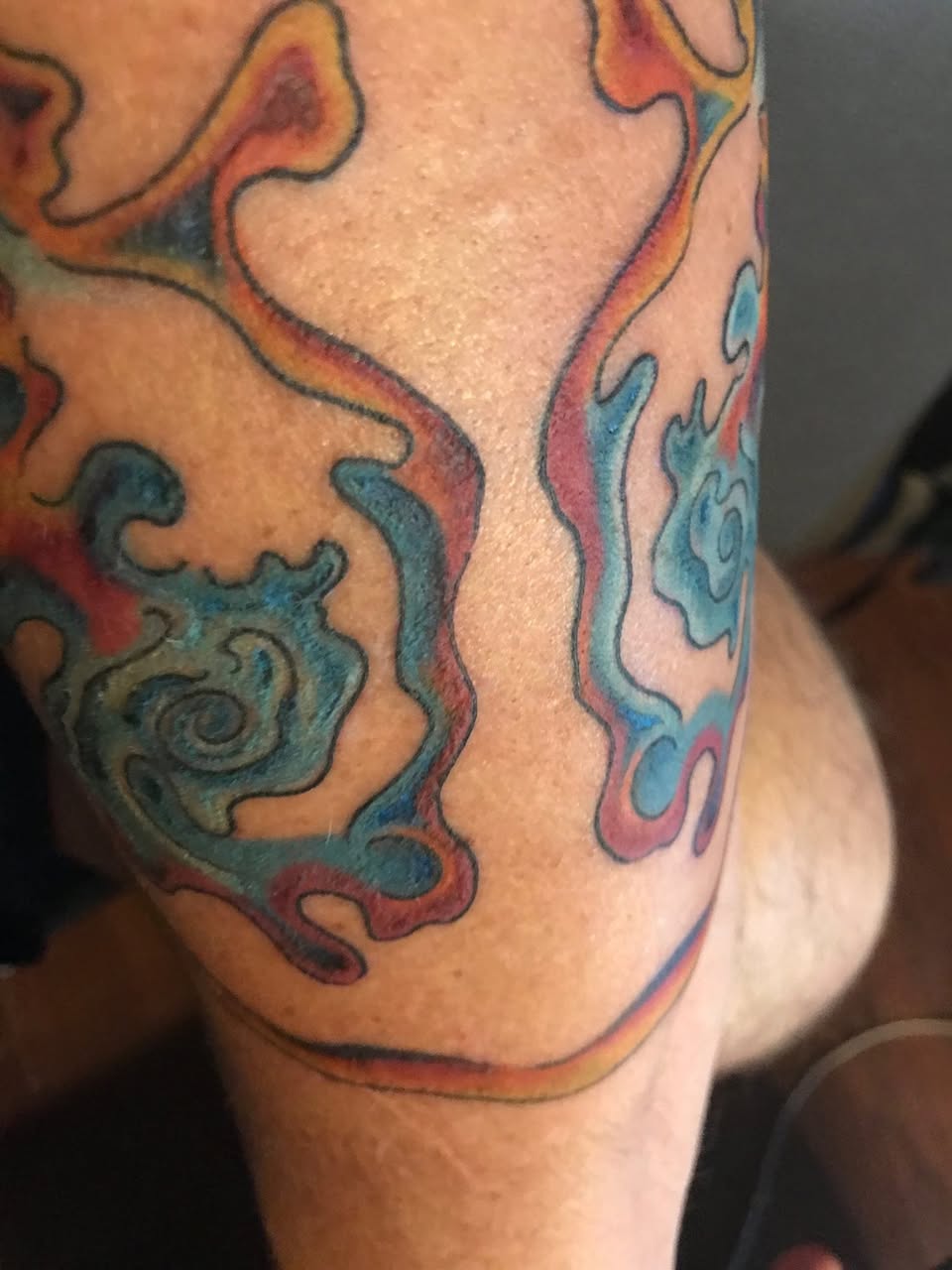
It was perhaps most acutely marked by getting my very first tattoo shortly after I turned 50. Having one tattoo, I didn’t stop there, and more than twenty-five tattoos later, I’m still at it. My pace has slowed, but I did design a pretty massive one to commemorate my retirement. I could argue that getting tattoos is a distinctly Albuquerque thing. Albuquerque is one of the more heavily tattooed places in the United States. I think in a deeper way, this was simply an outward sign of rebellion against who I was forced to be at Sandia. I needed to express myself. I needed an outlet. Part of the outlet was the tattoos. The other part is the blog, but that story is deeper. If you look at them, these tattoos tell a story of what I care about, what is important in my life.
The blog and other writing outlets are a huge outlet. The idea was hatched in my 2013 performance review (the year of my 50th birthday). The blog was a response to a frustrating professional development plan. It had become clear that I already knew more professionally than was useful at Sandia. If I wasn’t going to be a manager (and I wasn’t), professional development was moot. I did want to write more, and the blog was the way to do it regularly. Writing is also tantamount to thinking clearly. Both better writing and thinking are invaluable professionally. Their benefits are clear more broadly in life. It seemed like a great idea. In a different world, or ten years earlier, it was.
I started writing. I experimented with different themes and approaches. After a bit, I found my voice and stride. The blog could take on a more personal, informal, and unprofessional tone. I expanded my topics to include how science is managed. Given that American science is being managed abysmally, the writing struck a nerve. The loss of the edge over the rest of the World is something our managers don’t want to admit. Rather than take the critique, they took it out on the critic. So I wrote. Some of my essays were terrible, some were good, and a few were great. It was a good thing to do personally. Unfortunately, the critique and failures are not something Sandia could tolerate.
As I noted, Sandia is passive-aggressive culturally. When you get stabbed, it’s in the back. I know that now. Someone reported my blog to ethics. I’m pretty sure it was one of my managers. He could have simply told me to stop. That would have left fingerprints. The ethics people investigated. They focused on the idea that the blog was all about money. Was I making money from it? I wasn’t! The fact that I was doing it pro bono was foreign to them. It was a tell. I was cooked from the jump. Eventually, I was given a reprimand. I needed to stop the blog. My conclusion is that it was my critique of the national exascale program that did me in. What I said struck a nerve, and it was time to shut me up.
Perhaps, or definitely foolishly, I started it up again in 2024. I had already determined that retirement was an option. Sandia came for me again. It was more passive-aggressive behavior from managers. Fortunately, I was warned, and I ducked. They were still coming for me. I would not escape. So, I retired. In the end, the blog was the single best thing I did at Sandia. I could be accused of not learning my lesson back in 2018. I didn’t take the hint to shut the fuck up. In another view, I refused to be intimidated. I did not surrender. Nonetheless, it was my ultimate failure professionally. I was unfit for today’s Sandia. This was the wrong place for me to work, much less flourish.
The tattoos are the most obvious manifestation of my change in focus. The blog was the most obvious work-facing focus. Since I’m still writing the blog, clearly it has a value for me. I also shifted to more emphasis on my marriage, family, and friends. All of this was aided by Sandia’s excellent commitment to work-life balance. The shift in my foci was an implicit admission of the futility of professional success at Sandia. I knew it, but I also resisted. I still wanted it all. I would not fully accept my fate. The safety and security of my job and pension were the trade.
“To change yourself is not to cultivate yourself. Rather, it is to rob yourself of what you could have been as a means of becoming what you cannot.” ― Craig D. Lounsbrough
A huge change; A huge chance
In 2006, the Nuclear Explosives Code Development Conference was held in Los Alamos. One of my staff was the organizer. He was the same person who got fucked over by his ethics and calling out homophobia. I attended, as did some Sandians. The gateway was my friend Tim Trucano, whom I had met back in Washington DC in 1999. Tim and I interacted as part of the V&V program, where he was the voice of the pioneer. Along with Tim was Randy Summers, who was managing the ALEGRA code. I approached them in friendship, but also with curiosity about working at Sandia. They were interested. We hatched a plan for me to apply for a position.
“Man makes plans . . . and God laughs.” ― Michael Chabon
The plan unfolded. Los Alamos was under new management. This was an ensemble of different entities led by the University of California (UC) and Bectel. UC had managed Los Alamos since World War 2. Bectel was a disgusting corporation, and they dumped their toxic waste on Los Alamos. I was extremely unhappy with the new management due to them. The UC management was from Livermore: Mike Anastasio and Charlie McMillian. Mike and Charlie were quite good and competent. Charlie died in a tragic accident a few years ago. He was also close friends with a number of my friends and was a truly impressive man. The Bectel contingent was poisonous and gross. They were nothing but awful. I didn’t think the change was positive at all.
I interviewed at Sandia. They put me up in a terrible hotel near the Big I. My advice for Sandia was to never-ever put anyone in that hotel again. It was in a really shitty area near a truck stop next to the Big I. Lots of hookers and drugs with a sprinkling of homeless. What the fuck were they thinking? Aside from that, the interviews went great. The highlight was Bill Oberkampf. Bill and I had never met professionally. As I told Bill, we had met under some odd circumstances. Back when I was 23 years old, I was Bill’s son’s boss at McDonald’s. Bill was concerned about his son’s schedule, and we met on the topic. Bill’s son was an amazing worker, and I loved working with him. He also had a super hot girlfriend. She was also a really great employee, but Bill wasn’t fond of her. This was a great source of laughter. One of my best memories of a job interview ever.
I got the job and transferred to Sandia on February 19, 2007. It was Martin Luther King’s Day and a holiday in Los Alamos, but not at Sandia. A subtle sign of things to come.
“Every ending writes the first chapter of something new.” ― Shivanshu K. Srivastava

Trying to fit in: the foundation of the failure
This gets to a real vexing challenge in life. Do you work to fit in and change yourself to smoothly connect to a place? Or do you continue to hold on to your unique self? Unfortunately for myself, the nearly 18 years at Los Alamos had transformed me. I was brimming with confidence and knowledge, with ideas brought to life. As I would learn, these were all detriments to Sandia’s success. It would have been far better to enter into my time there with a subservient heart. Better to have ideas that are only small excursions from what Sandia does. So I lowered myself to their level, and the novelty of my work shrank. When you look at my publications in the Sandia years, this is obvious. Nothing in the environment encouraged excellence for me. It lowered my goals.
This is not a place for big things, but rather incremental progress on the things Sandia likes. Sandia is an engineering lab, and it wears this like a weight. Engineering is an applied science. There is much less science at Sandia. In many parts of the lab, they are creating miraculous things and engineering the fuck out of them. In computational science, Sandia plays third fiddle to Los Alamos and especially Livermore. In every part of computational physics they are less. The only place they compete is in the engineering of computers and software. Sandia does the best software engineering of the three labs. They engineer the computers themselves better, too (but that’s what the companies do). What they do on these computers with this software is less. Since this is where my career was all about, I was in the wrong place.
I’ll share with you one of the deepest ironies about my time at Sandia. The person I was before either of my crises that I spelled out in part one would have been far better suited to work at Sandia. He was far less confident and energized by science. He would have just been happy with the work there and put his nose to the grindstone and grind things out. Neither the person who revamped himself so that he could excel at school and get a Ph.D. nor the person who had balance in his life would have succeeded. The untransformed version of me was better suited for Sandia.
Unfortunately ,that was also the person who had the 3.16 grade point average, which, given Sandia’s s hiring practices, made me undesirable. Sandia always hired people who were very, very good students with high GPAs. These are those who were also conformist and rule followers. They would take their assignments and complete them dutifully. These are people who were excellent homework doers and test takers. They were a very different kind of people from those who did the research at Los Alamos and Livermore. Sandia carried this self-image to the extreme. They always felt second fiddle to those other labs and had a distinct lack of self-confidence. Sandia has a huge chip on its shoulder when it comes to Los Alamos and Livermore. This chip was always looming just out of sight, just under the surface, but reared up whenever the other labs were mentioned. I carried the Los Alamos identity too clearly.
One of the things that I had a misperception about going to Sandia was the role of the contractor. At the time, Sandia was run by Lockheed Martin and had been since 1994. This was over a decade before the takeover of Los Alamos and Livermore by the amalgam of corporate interests. I have been told by friends that the Sandia that was run by Bell Labs was a different and far better place. I believe it. The upshot is that the destruction of the institution had been going on for over a decade at Sandia. This preceded the destruction that happened at Los Alamos and Livermore under the new corporate governance. Rather than fix problems, this governance has powered the decline of these institutions.
“The best lack all conviction, while the worst are full of passionate intensity.” ― William Butler Yeats
Shock Physics at Sandia: A Model of Dysfunction
The worst thing that I stepped into when I hired on was the absolute shit show. This is Sandia’s shock physics efforts. There were two shock physics codes, CTH and ALEGRA. These two codes were basically at war with each other; it was a virtual Hatfields and McCoys. Unbeknownst to me, I was hired into the Hatfields under ALEGRA, and the CTH McCoys hated me immediately. One of the key aspects is that Sandia had treated CTH with enormous levels of unethical behavior. The response of CTH over time was to become unethical themselves. It was the epitome of horrible passive-aggressive conduct so evident at Sandia. As usual, it revolved around money and power, but also the self-critical public image.
“My biggest problem with modernity may lie in the growing separation of the ethical and the legal” ― Nassim Nicholas Taleb
Thus, the unethical behavior of the CTH manager that helped prompt my retirement was encoded into the culture years before. It had it roots in dumb management decisions. CTH was cast aside at the beginning of the ASCI program. The reason is superficial because it was a Fortran code, and Sandia was going to be a C++ shop. The wheels of dysfunction were put in place. The main unethical behavior that Sandia engaged in was to continually use CTH as marketing for ASC(I). Because CTH did stuff that was on par with what the other labs could do. At least, it looked like it. So CTH was used to defend funding that felt threatened. CTH didn’t receive anything in return. No wonder they were so pissed off.
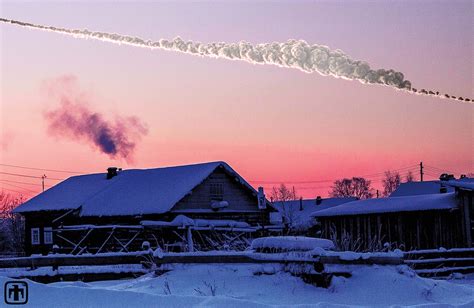
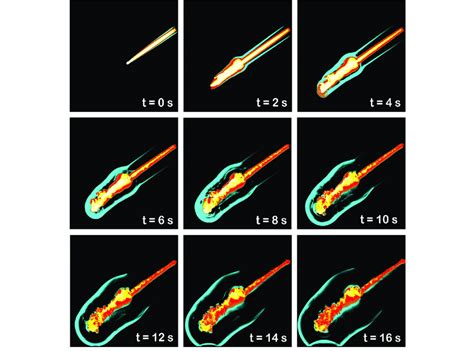
Especially true when the CTH effort was existing in a hand-to-mouth manner. The code and its use survived for decades, building a loyal customer base in National security. Nonetheless, this was a difficult existence. The Sandia management had laid the foundation of generational dysfunction. The reasons were stupid and petty. This was simply another manifestation of the massive chip on the shoulder that Sandia had. Whenever they were compared to Livermore and Los Alamos, they felt inferior. CTH was blunting that edge. Meanwhile, with a deficit in funding, CTH began to reflect this inferiority objectively. The code was not refreshed technologically while shock physics modernized in the 1990’s and this Century. It was work I could have assisted immensely. Given the culture and dysfunction that was impossible.
I walked into this feud between the two codes like a lamb to the slaughter. I am guilty of not realizing that anything technical was completely and totally immaterial for how the interaction would go. For CTH, I was the enemy. They would treat me as such. This was mere foreshadowing for what happened recently. I was still the enemy. CTH was defensive, and any critique was treated as an assault. I can say that my greatest sin is not learning and recognizing this and modifying my behavior accordingly. The unethical behavior behind my departure was simply the latest incarnation.
When I step back and think about CTH, it completely speaks to the nature of Sandia as an organization. CTH is a brilliant, streamlined code that its users love. It is simple and runs fast. The user interface is elegantly simple. The shortcomings of CTH are primarily that it’s been around too long. A perfectly reasonable bit of code work for the early to mid-1980s. In 2026, it is antiquated and out of date. Yet it persists. The current version lacks innovation and adaptation to how technology has marched over the last few decades. The other aspect is a general lack of appreciation for the deep science and mathematics underpinning this type of code. This lack of content leads to all the problems. Combine this with dysfunction and ethical lapses one gets baked in mediocrity. The effort simply cannot escape it.
What happened to me was a political intervention to rescue technical shortcomings. The will and motive to fix the code’s shortcomings, to produce something that was actually worthy of a national laboratory, is absent. Also absent is the notion of responsibility to the Nation. Our national security needs the best science, but that is a vacant belief at Sandia. In CTH, you see both the strengths of Sandia and its greatest weaknesses manifested in one place. CTH has lots of loyal customers from second and third-rate organizations. These organizations cannot produce anything better. In place of nothing, CTH looks amazing. Their standards of acceptance, with a lack of scientific rigor, are even lower. Thus, CTH stands in an important position for a host of national security applications. God help us. It is the epitome of the USA’s broad decline in science and technology.
“Look on every exit as being an entrance somewhere else.” ― Tom Stoppard
Closure
My time at Los Alamos felt like I was in a continual evolution towards coherence and contribution. My time at Sandia felt like an incoherent, jumbled mass of disjointed work. Shock physics was a common theme spanning my time and a place for huge potential contributions. The nature of that community doomed it from the beginning. This dysfunctionality was ultimately my undoing. Everything else was just projects that were a way a way of filling my time card out. Nothing ever felt like it was actually going anywhere. There were no deeper accomplishments. There was nothing that created a lasting imprint. It was just passing time and something to do.

I worked on nuclear power (CASL), exascale computing, and continually on V&V. CASL was pointless. Exascale was deeply flawed and simply big money to blunt an unpleasant reality. V&V was an area in decline and has become a shell of its virtuous origin. I had seen work on machine learning and AI following this path. It was a retread of the exascale program. A waste of taxpayer money. V&V had become utterly toothless. Shock physics was the only place where I could make an impact. As I’ve noted above, that is totally fucked at Sandia. In the end, all of these were very unsatisfying. and left me feeling rather empty. This emptiness was in a place where fulfillment and achievement should be a natural outgrowth of one’s work.

This outcome for me was somewhat pre-ordained the moment I walk in the door. The things that I do and am very good at are not valued at Sandia. I was never going to stand out there. It was never going to be a success, and this incoherent, jumbled mess of 19 years simply was the outcome of that. Sandia doesn’t really value what I bring to the table. There is little value in the knowledge I have at this Lab. There’s little use for the expertise I possess. I came to accept this and finally just submitted to working for a pension. It saddens me to write that, but it’s the truth. Without a pension from Sandia, I probably would have given up and left.
I truly hope that Sandia can overcome this dysfunction. The Nation needs it to be better. It needs some better leadership that can jettison the past. The people who work in shock physics are genuinely quite talented. All of them are better than this. I am sure I was, too. It is an important area of achievement, but the management and the system at Sandia do not support it in the way that’s necessary. Shock physics is necessary in engineering the nuclear stockpile. It also has deep scientific and mathematical pieces that are necessary. Sandia needs to value these more. They don’t because this knowledge is damning of their efforts. Without valuing and empowering the work needed to be first-rate, it will continue to be mediocre.
“Never try to teach a pig to sing; it wastes your time and it annoys the pig.” ― Robert Heinlein
Postscript
I ran into a good friend while writing this. He commented on my writing.
He told me, “You know people read what you write.”
I said, “I know and hope they do.”
He went on, “Some of the stuff you say isn’t very nice.”
“It’s the truth,” I replied.
He then amplified, “I wouldn’t say these things; most of them are not going to listen.”
I concluded, “If they didn’t want me to say it, they should have acted decently and ethically.”
“Power does not corrupt. Fear corrupts… perhaps the fear of a loss of power.” ― John Steinbeck
It is clear to me that Sandia wants to launder its image. There doesn’t seem to be any effort or willingness to fix the problems. I articulated this reason as the nature of our modern super-connected World. It traces back to the internet. The desire to manage organizational images turns into toxic positivity. There is a complete loss of institutional transparency and honesty. The institutions are worried that any honesty will be used against them. Thus, problems are submerged. Managers only message positive things and endless accomplishments. More bluntly, they are bullshitting everyone, including themselves. Worse yet, they have bought their own bullshit. Problems just fester and grow rather than get solved. Shock Physics is a great example of this in practice.
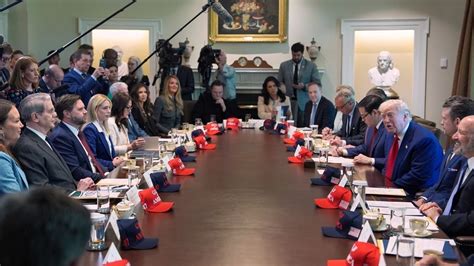
While I was there, the internal message was “we are so awesome” and “our culture is excellence and nearly perfect.” There’s nothing that needs any fixing. They don’t want the truth out there for all to see. They won’t admit their problems even in private. It felt like madness to me; the problems were legion. I can point at the similarities to the subserviant and self congradulating Cabinet meetings in the White House. It is the same spirit. There are no problems, and the awesomeness is unbounded. When the delusional assessment is internal, there is an express train to catastrophe. This is where Sandia is. This is where the nation is.
My friend noted that the writing is probably cathartic. Indeed, it is. I’m trying to sort out and understand my own part in this. I made some conclusions about this. I gave up on Sandia when I got the reprimand for the blog in 2018. It was my professional demise. I kept on making foolish forays into doing the right thing. Near the end, I had a couple of good managers that me some hope. When they were replaced, that hope was dashed. They were replaced by inept and unethical ones.
Walt entreated me to get involved with Sandia shock physics again. He took my expertise seriously. In retrospect, this was a huge mistake and foolhardy. In the face of how fucked up this discipline is at Sandia, it was futile. Any thought that expertise and knowledge were useful for shock physics was madness. It is too broken, and my mastery of the topic was not respected at all. It was my end at Sandia. I was a fool to go down that road. I should have known better. I was guilty of looking past the problems and optimistically throwing myself back into the maw of the dysfunction I knew so well.
I had some really good managers there; they are genuinely good people. I’m thinking of Bruce, Walt, and Lauren in particular, who all stand out as some of the best of my life. Sandia needs more of them and fewer of those who stabbed me in the back. There seems to be a system in place that distorts and perverts good people into shitty managers. Andy, Erik, and Scott come to mind. Sandia made them worse people, too, with appalling ethics. Worse yet, a system that seems to support the bad far more than the good. There are other terrible managers I won’t name. I don’t know them well enough to know if they were ever decent people.
Yet in the final analysis, I am the one with the lion’s share of the blame. It was the wrong place for me, and I knew it very soon after I arrived. I stayed anyway.
“I am somewhat exhausted; I wonder how a battery feels when it pours electricity into a non-conductor?” ― Arthur Conan Doyle
References
Barlow, Andrew J., Pierre-Henri Maire, William J. Rider, Robert N. Rieben, and Mikhail J. Shashkov. “Arbitrary Lagrangian–Eulerian methods for modeling high-speed compressible multimaterial flows.” Journal of Computational Physics 322 (2016): 603-665. (218 Citations)
Alexander, Francis, Ann Almgren, John Bell, Amitava Bhattacharjee, Jacqueline Chen, Phil Colella, David Daniel et al. “Exascale applications: skin in the game.” Philosophical Transactions of the Royal Society A 378, no. 2166 (2020): 20190056. (127 Citations)
Robinson, Allen, Thomas Brunner, Susan Carroll, Richard Drake, Christopher Garasi, Thomas Gardiner, Thomas Haill et al. “ALEGRA: An arbitrary Lagrangian-Eulerian multimaterial, multiphysics code.” In 46th aiaa aerospace sciences meeting and exhibit, p. 1235. 2008. (196 citations)
Banks, Jeffrey W., T. Aslam, and William J. Rider. “On sub-linear convergence for linearly degenerate waves in capturing schemes.” Journal of Computational Physics 227, no. 14 (2008): 6985-7002. (140 Citations)
Rider, William, Walt Witkowski, James R. Kamm, and Tim Wildey. “Robust verification analysis.” Journal of Computational Physics 307 (2016): 146-163. (42 Citations)
Mattsson, Ann E., and William J. Rider. “Artificial viscosity: back to the basics.” International Journal for Numerical Methods in Fluids 77, no. 7 (2015): 400-417. (62 Citations)
Yanilkin, Yury V., Evgeny A. Goncharov, Vadim Yu Kolobyanin, Vitaly V. Sadchikov, James R. Kamm, Mikhail J. Shashkov, and William J. Rider. “Multi-material pressure relaxation methods for Lagrangian hydrodynamics.” Computers & fluids83 (2013): 137-143. (55 Citations)
Scovazzi, Guglielmo, John N. Shadid, Edward Love, and William J. Rider. “A conservative nodal variational multiscale method for Lagrangian shock hydrodynamics.” Computer Methods in Applied Mechanics and Engineering 199, no. 49-52 (2010): 3059-3100. (59 Citations)
Rider, W. J., E. Love, M. K. Wong, O. E. Strack, S. V. Petney, and D. A. Labreche. “Adaptive methods for multi‐material ALE hydrodynamics.” International Journal for Numerical Methods in Fluids 65, no. 11‐12 (2011): 1325-1337. (26 Citations)
Kieweg, Sarah L., Jaideep Ray, V. Gregory Weirs, Brian Carnes, Derek Dinzl, Brian Freno, Micah Howard, Eric Phipps, William Rider, and Thomas Smith. “Validation assessment of hypersonic double-cone flow simulations using uncertainty quantification, sensitivity analysis, and validation metrics.” In AIAA SciTech 2019 Forum, p. 2278. 2019. (24 Citations)
Love, E., and William J. Rider. “On the convergence of finite difference methods for PDE under temporal refinement.” Computers & Mathematics with Applications 66, no. 1 (2013): 33-40. (21 Citations)
 The Regularized Singularity