Action expresses priorities.
― Mahatma Gandhi
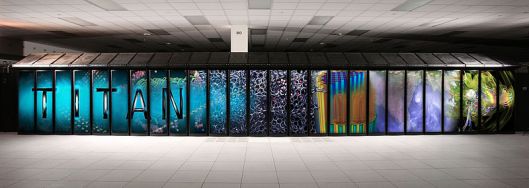
 Being the successful and competent at high performance computing (HPC) is an essential enabling technology for supporting many scientific, military and industrial activities. It plays an important role in national defense, economics, cyber-everything and a measure of National competence. So it is important. Being the top nation in high performance computers is an important benchmark in defining national power. It does not measure overall success or competence, but rather a component of those things. Success and competence in high performance computing depends on a number of things including physics modeling and experimentation, applied mathematics, many types of engineering including software engineering, and computer hardware. In the list of these things computing hardware is among the least important aspects of competence. It is generally enabling for everything else, but hardly defines competence. In other words, hardware is necessary and far from sufficient.
Claiming that you are what you are not will obscure the strengths you do have while destroying your credibility.
― Tom Hayes

Being a necessity for competence, hardware must receive some support for national success. Being insufficient, it cannot be the only thing supported, and it is not the determining factor for HPC supremacy. In other words, we could have the very best hardware and still be inferior to the competition. Indeed the key to success in HPC has always been a multidisciplinary endeavor and predicated on a high degree of balance across the spectrum of activities needed for competence. If one examines the state of affairs in HPC, we can easily see that all this experience and previous success has been ignored and forgotten. Instead of following a path blazed by previous funding success (i.e., ASCI), we have chosen a road to success solely focused on computing hardware and its direct implications. Worse, the lessons of the past are plain and ignored by the current management. Excellence in other areas has been eschewed in favor of the hardware’s wake. The danger in the current approach is dampening progress in a host of essential disciplines in favor of a success completely dependent on hardware.
The fundamental cause of the trouble is that in the modern world the stupid are cocksure while the intelligent are full of doubt.
― Bertrand Russell
Unfortunately, the situation is far worse than this. If computer hardware was in an era where huge advances in performance were primed to take place, the focus might be forgivable. Instead we are in an era where advances in hardware are incredibly strained. It is easy to see that huge advances in hardware are grinding to a halt, or at least relative to the past half century. The focus of the current programs, the “exascale” initiatives, is actually the opposite. We are attempting to continue growth in computing power at tremendous cost where the very physics of computers is working against us. The focus on hardware is actually completely illogical; if opportunity were the guide hardware would be a side-show instead of the main event. The core of the problem is the complete addiction of the field on Moore’s law for approximately 50 years, and like all addicts,  kicking the habit is hard. In a sense under Moore’s law computer performance skyrocketed for free, and people are not ready to see it go.
Most of us spend too much time on what is urgent and not enough time on what is important.
― Stephen R. Covey
Moore’s law is dead and HPC is suffering from the effects of withdrawal. Instead of accepting the death of Moore’s law and shifting the focus to other areas for advancements, we are holding onto it like a junkie’s last fix. In other words, the current programs in HPC are putting an immense amount of focus and resources into keeping Moore’s law alive. It is not unlike the sort of heroic measures taken to extend the life of a terminal patient. Much like the terminal patient whose death is only delayed by the heroic measures, the quality of life is usually terrible. In the same way the performance of HPC is more zombie-like than robust. Achieving the performance comes at the cost of utility and general ease of use for the computers. Moreover the nature of the hardware inhibits advances in other areas due its difficulty of use. This goes above and beyond the vast resource sink the hardware is.
The core truth of HPC is that we’ve been losing this war for twenty years, and the current effort is simply the final apocalyptic battle in war that is about to end. The bottom line is that we are in a terrible place where all progress is threatened by supporting a dying trend that has benefitted HPC for decades.
 I work on this program and quietly make all these points. They fall of deaf ears because the people committed to hardware dominate the national and international conversations. Hardware is an easier sell to the political class who are not sophisticated enough to smell the bullshit they are being fed. Hardware has worked to get funding before, so we go back to the well. Hardware advances are easy to understand and sell politically. The more naïve and superficial the argument, the better fit it is for our increasingly elite-unfriendly body politic. All the other things needed for HPC competence and advances are supported largely by pro bono work. They are simply added effort that comes down to doing the right thing. There is a rub that puts all this good faith effort at risk. The balance and all the other work is not a priority or emphasis of the program. Generally it is not important or measured in the success of the program, or defined in the tasking from the funding agencies.
 We live in an era where we are driven to be unwaveringly compliant to rules and regulations. In other words you work on what you’re paid to work on, and you’re paid to complete the tasks spelled out in the work orders. As a result all of the things you do out of good faith and responsibility can be viewed as violating these rules. Success might depend doing all of these unfunded and unstated things, but the defined success from the work contracts are missing these elements. As a result the things that need to be done; do not get done. More often than not, you receive little credit or personal success from pursing doing the right thing. You do not get management or institutional support either. Expecting these unprioritized, unintentional things to happen is simply magical thinking.
 We have the situation where the priorities of the program are arrayed toward success in a single area that puts other areas needed for success at risk. Management then asks people to do good faith pro bono work to make up the difference. This good faith work violates the letter of the law in compliance toward contracted work. There appears to be no intention of supporting all of the other disciplines needed for success. We rely upon people’s sense of responsibility for closing this gap even when we drive a sense of duty that pushes against doing any extra work. In addition, the hardware focus levies an immense tax on all other work because the hardware is so incredibly user-unfriendly. The bottom line is a systematic abdication of responsibility by those charged with leading our efforts. Moreover we exist within a time and system where grass roots dissent and negative feedback is squashed. Our tepid and incompetent leadership can rest assured that their decisions will not be questioned.
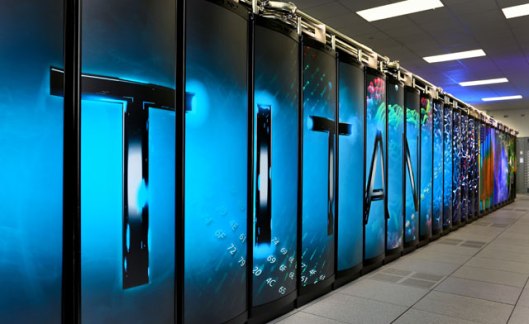 Before getting to my conclusion, one might reasonably ask, “what should we be doing instead?” First we need an HPC program with balance between the impact on reality and the stream of enabling technology. The single most contemptible aspect of current programs is the nature of the hardware focus. The computers we are building are monstrosities, largely unfit for scientific use and vomitously inefficient. They are chasing a meaningless summit of performance measured through an antiquated and empty benchmark. We would be better served through building computers tailored to scientific computation that solve real important problems with efficiency. We should be building computers and software that spur our productivity and are easy to
 use. Instead we levy an enormous penalty toward any useful application of these machines because of their monstrous nature. A refocus away from the meaningless summit defined by an outdated benchmark could have vast benefits for science.
We could then free up resources to provide a holistic value stream from computing we know by experience. Real applied focusing on modeling and solution methods produces the greatest possible benefit. These immensely valuable activities are completely and utterly unsupported by the current HPC program and paid little more than lip service. Hand-in-hand with the lack of focus on applications and answers is no focus on verification or validation. Verification deals with the overall quality of the calculations, which is just assumed by the magnitude of the calculations (it used so much computer power, it has to be awesome, right?). The lack of validation underpins a generic lack of interest in the quality of the work in terms of real world congruence and impact.
Next down the line of unsupported activities is algorithmic research. The sort of algorithmic research that yields game-changing breakthroughs is unsupported. Algorithmic breakthroughs make the impossible, possible and create capabilities undreamed of. They create a better future we couldn’t even dream of. We are putting no effort into this. Instead we have the new buzzword of “co-design” where we focus on figuring out how to put existing algorithms on the monstrous hardware we are pursuing. The benefits are hardly game changing, but rather simply fighting the tidal wave of entropy of the horrific hardware. Finally we get to the place where funding exists, code development that ports existing models, methods and algorithms onto the hardware. Because little or no effort is put into making this hardware scientifically productive (in fact it’s the opposite), the code can barely be developed and its quality suffers mightily.
A huge tell in the actions of those constructing current HPC programs is their inability to learn from the past (or care about the underlying issues). If one looks at the program for pursuing exascale, it is structured almost identically to the original ASCI program, except being even more relentlessly hardware obsessed. The original ASCI program needed to add significant efforts in support of physical modeling, algorithm research and V&V on top of the hardware focus. This reflected a desire and necessity to produce high quality results with high confidence. All of these elements are conspicuously absent from the current HPC efforts. This sends two clear and unambiguous messages to anyone paying attention. The first message is a steadfast belief that the only quality needed is the knowledge that a really big expensive computer did the calculation at great cost. Somehow the mere utilization of such exotic and expensive hardware will endow the calculations with legitimacy. The second message is that no other advances other than computer power are needed.
The true message is that connection to credibility and physical reality has no importance whatsoever to those running these programs. The actions and focus of the work spelled out plainly in the activities funded makes their plans. The current HPC efforts make no serious attempt to make sure calculations are high quality or impactful in the real world. If the calculations are high quality there will be scant evidence to prove this, and any demonstration will be done via authority. We are at the point where proof is granted by immensely expensive calculations rather then convincing evidence. There will be no focused or funded activity to demonstrate quality. There will be no focused activity to improve the physical, mathematical or algorithmic basis of the codes either. In other words all the application code related work in the program is little more than a giant porting exercise. The priority and intents regarding quality are clear to those of us working on the project, namely quality is not important and not valued.
I’ve been told to assume that the leadership supports the important things to do that are ignored by our current programs. Seeing how our current programs operate, this is hardly plausible. Every single act by the leadership constructs an ever-tightening noose of planning, reporting and constraint about our collective necks. Quality, knowledge and expertise are all seriously devalued in the current era, and we can expect the results to reflect our priorities. We see a system put in place that will punish any attempt to do the right thing. The “right thing” is to do exactly what you’re told to do. Of course, one might argue that the chickens will eventually come home to roost, and the failures of the leadership will be laid bare. I’d like to think this is inevitable, but recent events seem to indicate that all facts are negotiable, and any problems can be spun through innovative marketing and propaganda into success. I have a great deal of faith that the Chinese will mop the floor with us in HPC, and our current leadership should shoulder the blame. I also believe the blame will not fall to the guilty. It never does, today; the innocent will be scapegoated for their mistakes.
Nothing in this World is Static…Everything is Kinetic..
If there is no ‘progression’…there is bound to be ‘regression’…
― Abha Maryada Banerjee
I am left with the feeling that an important opportunity for reshaping the future is being missed. Rather than admit the technological limitations we are laboring under and transform HPC towards a new focus, we continue along a path that appears to be completely nostalgic. The acceptance of the limitations in the growth of computer power in the commercial computing industry led to a wonderful result. Computer hardware shifted to mobile computing and unleashed a level of impact and power far beyond what existing at the turn of the Century. Mobile computing is vastly more important and pervasive than the computing that preceded it. The same sort of innovation could unleash HPC to produce real value far beyond anything conceivable today. Instead we have built a program devoted to nostalgia and largely divorced from objective reality.
Doing better would be simple, at least at a conceptual level. One would need to commit to a balanced program where driving modeling and simulation to impact the real world is a priority. The funded and prioritized activities would need to reflect this focus. Those leading and managing the program would need to ask the right questions and demand progress in the right areas. Success would need to be predicated on the same holistic balanced philosophy. The people working on these programs are smart enough to infer the intent of the programs. This is patently obvious by examining the funding profiles.
Programs are funded around their priorities. The results that matter are connected to money. If something is not being paid for it is not important. If one couples steadfast compliance with only working on what you’re funded to do, any call to do the right thing despite funding is simply comical. The right thing becomes complying, and the important thing in this environment is funding the right things. As we work to account for every dime of spending in ever finer increments, the importance of sensible and visionary leadership becomes greater. The very nature of this accounting tsunami is to blunt and deny visionary leadership’s ability to exist. The end result is spending every dime as intended and wasting the vast majority of it on shitty, useless results. Any other outcome in the modern world is implausible.
You never change things by fighting the existing reality.
To change something, build a new model that makes the existing model obsolete.
― R. Buckminster Fuller

 Sometimes you read something that hits you hard. Yesterday was one of those moments while reading Seth Godin’s daily blog post (http://sethgodin.typepad.com/seths_blog/2017/03/the-best-of-us-the-worst-of-us.html). I’ve enjoyed Seth’s books and ideas finding them easy to grasp and connect to. Like a lot of things. The point of the post was simple. Our associations impact us. They can bring out the best or worst in us. When I reflected on this point, the quote above came into sharp focus. Looking at my current work the quote seemed almost cruel. It was completely opposite of everything driving me today. Such a circumstance is ultimately untenable.
 I rewrote Godin’s quote to reflect how work is changing me (at the bottom of the post). It really says something needs to give. I worry about how many of us feel the same thing. Right now the workplace is making me a shittier version of myself. I feel that self-improvement is a constant struggle against my baser instincts. I’m thankful for a writer like Seth Godin who can push me to into a vital and much needed self-reflective “what the fuck” !
 are seeing cultural, economic, and political changes of epic proportions across the human world. With the Internet forming a backbone of immense interconnection, and globalization, the transformations to our society are stressing people resulting in fearful reactions. These are combining with genuine threats to humanity in the form of weapons of mass destruction, environmental damage, mass extinctions and climate change to form the basis of existential danger. We are not living on the cusp of history; we are living through the tidal wave of change. There are massive opportunities available, but the path is never clear or safe. As the news every day testifies, the present mostly kind of sucks. While I’d like to focus on the possibilities of making things better, the scales are tipped toward the negative backlash to all this change. The forces trying to stop the change in its tracks are strong and appear to be growing stronger.
 Many of our institutions are under continual assault by the realities of today. The changes we are experiencing are incompatible with many of our institutional structures such as the places I work. Increasingly this assault is met with fear. The evidence of the overwhelming fear is all around us. It finds its clearest articulation within the political world where fear-based policies abound with the rise of Nationalist anti-Globalization candidates everywhere. We see the rise of racism, religious tensions and protectionist attitudes all over the World. The religious tensions arise from an increased tendency to embrace traditional values as a hedge against change and the avalanche of social change accompanying technology, globalization and openness. Many embrace restrictions and prejudice as a solution to changes that make them fundamentally uncomfortable. This produces a backlash of racist, sexist, homophobic hatred that counters everything about modernity. In the workplace this mostly translates to a genuinely awful situation of virtual paralysis and creeping bureaucratic over-reach resulting in a workplace that is basically going no where fast. For someone like me who prizes true progress above all else, the workplace has become a continually disappointing experience.
 ance. As we embrace online life and social media, we have gotten supremely fixated on superficial appearances and lost the ability to focus on substance. The way things look has become far more important than the actuality of anything. Having a reality show celebrity as the President seems like a rather emphatic exemplar of this trend. Someone who looks like a leader, but lacks most of the basic qualifications is acceptable to many people. People with actual qualifications are viewed as suspicious. The elite are rejected because they don’t relate to the common man. While this is obvious on a global scale through political upheaval, the same trends are impacting work. The superficial has become a dominant element in managing because the system demands lots of superficial input while losing any taste for anything of enduring depth. Basically, the system as a whole is mirroring society at large.
 The prime institutional directive is survival and survival means no fuck ups, ever. We don’t have to do anything as long as no fuck ups happen. We are ruled completely by fear. There is no balance at all between fear-based motivations and the needs for innovation and progress. As a result our core operational principle for is compliance above all else. Productivity, innovation, progress and quality all fall by the wayside to empower compliance. Time and time again decisions are made to prize compliance over productivity, innovation, progress, quality, or efficiency. Basically the fear of fuck ups will engender a management action to remove that possibility. No risk is ever allowed. Without risk there can be no reward. Today no reward is sufficient to blunt the destructive power of fear.
 rection. It is the twin force for professional drift and institutional destruction. Working at an under-led institution is like sleepwalking. Every day you go to work basically making great progress at accomplishing absolutely nothing of substance. Everything is make-work and nothing is really substantive you have lots to do because of management oversight and the no fuck up rules. You make up results and produce lots of spin to market the illusion of success, but there is damn little actual success or progress. The utter and complete lack of leadership and vision is understandable if you recognize the prime motivation of fear. To show leadership and vision requires risk, and risk cannot take place without failure and failure courts scandal. Risk requires trust and trust is one of the things in shortest supply today. Without the trust that allows a fuck up without dire consequences, risks are not taken. Management is now set up to completely control and remove the possibility of failure from the system.
 rewards and achievement without risk is incompatible with experience. Everyday I go to work with the very explicit mandate to do what I’m told. The clear message every day is never ever fuck up. Any fuck ups are punished. The real key is don’t fuck up, don’t point out fuckups and help produce lots of “alternative results” or “fake breakthroughs” to help sell our success. We all have lots of training to do so that we make sure that everyone thinks we are serious about all this shit. The one thing that is absolutely crystal clear is that getting our management stuff correct is far more important than every doing any real work. As long as this climate of fear and oversight is in place, the achievements and breakthroughs that made our institutions famous (or great) will be a thing of the past. Our institutions are all about survival and not about achievement. This trend is replicated across society as a whole; progress is something to be feared because it unleashes unknown forces potentially scaring everyone. The fear resulting in being scared undermines trust and without trust the whole cycle re-enforces itself.
 A big piece of the puzzle is the role of money in perceived success. Instead of other measures of success, quality and achievement, money has become the one-size fits all measure of the goodness of everything. Money serves to provide the driving tool for management to execute its control and achieve broad-based compliance. You only work on exactly what you are supposed to be working on. There is no time to think or act on ideas, learn, or produce anything outside the contract you’ve made with you customers. Money acts like a straightjacket for everyone and serves to constrict any freedom of action. The money serves to control and constrain all efforts. A core truth of the modern environment is that all other principles are ruled by money. Duty to money subjugates all other responsibilities. No amount of commitment to professional duties, excellence, learning, and your fellow man can withstand the pull of money. If push comes to shove, money wins. The peer review issues I’ve written about are testimony to this problem; excellence is always trumped by money.
 called leaders who utilize fear as a prime motivation. Every time a leader uses fear to further their agenda, we take a step backward. One the biggest elements in this backwards march is thinking that fear and danger can be managed. Danger can only be pushed back, but never defeated. By controlling it in the explicit manner we attempt today, we only create a darker more fearsome danger in the future that will eventually overwhelm us. Instead we should face our normal fears as a requirement of the risk progress brings. If we want the benefits of modern life, we must accept risk and reject fear. We need actual leaders who encourage us to be bold and brave instead of using fear to control the masses. We need to quit falling for fear-based pitches and hold to our principles. Ultimately our principles need to act as a barrier to fear becoming the prevalent force in our decision-making.
 Everyone wants his or her work or work they pay for to be high quality. The rub comes when you start to pay for the quality you want. Everyone seems to want high quality for free, and too often believes that low cost quality is a real thing. Time and time again it becomes crystal clear that high quality is extremely expensive to obtain. Quality is full of tedious detail oriented work that is very expensive to conduct. More importantly when quality is aggressively pursued, it will expose problems that need to be solved to reach quality. For quality to be achieved these problems must be addressed and rectified. This ends up being the rub, as people often need to stop adding capability or producing results, and focus on fixing the problems. People, customer and those paying for things tend to not want to pay for fixing problems, which is necessary for quality. As a result, it’s quite tempting to not look so hard at quality and simply do more superficial work where quality is largely asserted by fiat or authority.
 The entirety of this issue is manifested in the conduct of verification and validation in modeling and simulation. Doing verification and validation is a means of high quality work for modeling and simulation. Like other forms of quality work, it can be done well engaging in details and running problems to ground. Thus V&V is expensive and time consuming. These quality measures take time and effort away from results, and worse yet produce doubt in the results. As a consequence the quality mindset and efforts need to have significant focus and commitment, or they will fall by the wayside. For many customers the results are all that matters, they aren’t willing to pay for more. This becomes particularly true if those doing the work are willing to assert quality without doing the work to actually assure it. In other words the customer will take work that is asserted to be high quality based on the word of those doing the work. If those doing the work are trying to do this on the cheap, we produce low or indeterminate quality work, sold as high quality work masking the actual costs.
 The largest part of the issue is the confluence of two terrible trends: increasingly naïve customers for modeling and simulation and decreasing commitment for paying for modeling and simulation quality. Part of this comes from customers who believe in modeling and simulation, which is a good thing. The “quality on the cheap” simulations create a false sense of security because it provides them financial resources. Basically we have customers who increasingly have no ability to tell the difference between low and high quality work. The work’s quality is completely dependent upon those doing the work. This is dangerous in the extreme. This is especially dangerous when the modeling and simulation work is not emphasizing quality or paying for its expensive acquisition. We have become too comfortable with the tempting quick and dirty quality. The (color) viewgraph norm that used to be the quality standard for computational work that had faded in use is making a come back. A viewgraph norm version of quality is orders of magnitude cheaper than detailed quantitative work needed to accumulate evidence. Many customers are perfectly happy with the viewgraph norm and naïvely accept results that simply look good and asserted as high quality.
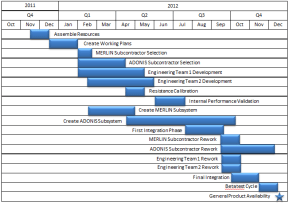 Perhaps an even bigger issue is the misguided notion that the pursuit of high quality won’t derail plans. We have gotten into the habit of accepting highly delusional plans for developing capability that do not factor in the cost of quality. We have allowed ourselves to bullshit the customer to believing that quality is simple to achieve. Instead the pursuit of quality will uncover issues that must be dealt with and ultimately change schedules. We can take the practice of verification as an object lesson in how this works out. If done properly verification will uncover numerous and subtle errors in codes such as bugs, incorrect implementations, boundary conditions, or error accumulation mechanisms. Sometimes the issues uncovered are deeply mysterious and solving them requires great effort. Sometimes the problems exposed require research with uncertain or indeterminate outcomes. Other times the issues overthrow basic presumptions about your capability that require significant corrections in large-scale objectives. We increasingly live in a world that cannot tolerate these realities. The current belief is that we can apply project management to the work, and produce high quality results that ignore all of this.
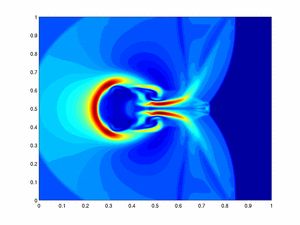 The way that the trip down to “quality hell” starts is the impact of digging into quality. Most customers are paying for capability rather than quality. When we allow quick and dirty means of assuring quality to be used, the door is open for the illusion of quality. For the most part the verification and validation done by most scientists and engineers is the quick, dirty and incomplete variety. We see the use of eyeball or viewgraph norm pervasively in comparing results in both verification and validation. We see no real attempt to grapple with the uncertainties in calculations or measurements to put comparisons in quantitative context. Usually we see people create graphics that have the illusion of good results, and use authority to dictate that these results indicate mastery and quality. For the most part the scientific and engineering community simply gives in to the authoritative claims despite a lack of evidence. The deeper issue with the quick and dirty verification is the mindset of those conducting it; they are working from the presumption that the code is correct instead of assuming there are problems, and collecting evidence to disprove this.
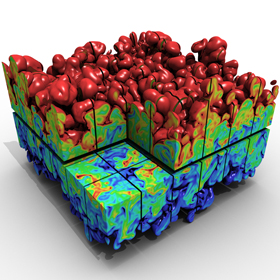 quantitative work is the remedy for the qualitative, eyeball, viewgraph, and color video metric so often used today. Deep quantitative studies show the sort of evidence that cannot be ignored. If the results are good, the evidence of quality is strong. If a problem is found, the need for remedy is equally strong. In validation or verification the creation of an error bar goes a long way to putting any quality discussion in context. The lack of an error bar casts any result adrift and lacking in context. A secondary issue would be the incomplete work where full error bars are not pursued, or results that are not favorable are not pursued or worse yet, suppressed.
 alternative facts” are driven by this lack of willingness to deal with reality. Why deal with truth and the reality of real problems when we can just define them away with more convenient facts. In today’s world we are seeing a rise of lies, bullshit and delusion all around us. As a result, we are systematically over-promising and under-delivering on our work. We over-promise to get the money, and then under-deliver because of the realities of doing work one cannot get maximum capability with maximum quality for discount prices. Increasingly bullshit (propaganda) fills in the space between what we promise and what we deliver. Pairing with this deep dysfunction is a systematic failure of peer review within programs. Peer review has been installed as backs stop again the tendencies outlined above. The problem is that too often peer review does not have a free reign. Too often with have conflicts of interest, or control that provide an explicit message that the peer review had better be positive, or else.
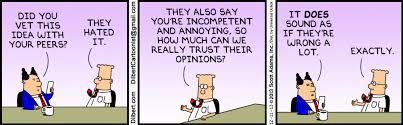 We bring in external peer reviews filled with experts who have the mantle of legitimacy. The problem is that these experts are hired or drafted by the organizations being reviewed. Being too honest or frank in a peer review is the quickest route to losing that gig and the professional kudos that goes along with it. One bad or negative review will assure that the reviewer is never invited back. I’ve seen it over and over again. Anyone who provides an honest critique is never seen again. A big part of the issue is that the reviews are viewed as pass-fail tests and problems uncovered are dealt with punitively. Internal peer reviews are even worse. Again any negative review is met with distain. The person having the audacity and stupidity to be critical is punished. This punishment is meted out with the clear message, “only positive reviews are tolerated.” Positive reviews are thus mandated by threat and retribution. We have created the recipe for systemic failure.
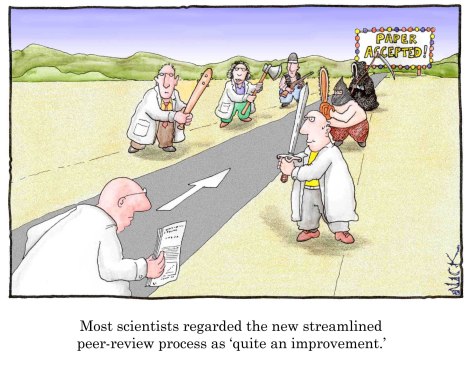 Putting the blame on systematic wishful thinking is far too kind. High quality for a discount price is wishful thinking at best. If the drivers for this weren’t naïve customers and dishonest programs, it might be forgivable. The problem is that everyone who is competent knows better. The real key to seeing where we are going is the peer review issue. By squashing negative peer review, the truth is exposed. Those doing all this substandard work know the work is poor, and simply want a system that does not expose the truth. We have created a system with rewards and punishments that allows this. Reward is all monetary, and very little positive happens based on quality. We can assert excellence without doing the hard things necessary to achieve it. As long as we allow people to simply declare their excellence without producing evidence of said excellence quality will languish.
 In the modern dogmatic view of high performance computing, the dominant theme of utility revolves around being predictive. This narrative theme is both appropriate and important, but often fails to recognize the essential prerequisites for predictive science, the need to understand and explain. In scientific computing the ability to predict with confidence is always preceded by the use of simulations to aid and enable understanding and assist in explanation. A powerful use of models is the explanation of the mechanisms leading to what is observed. In some cases simulations allow exquisite testing of models of reality, and when a model matches reality we infer that we understand the mechanisms at work in the World. In other cases we have observations of reality that cannot be explained. With simulations we can test our models or experiment with mechanisms that can explain what we see. In both cases the confidence of the traditional science and engineering community is gained through the process of simulation-based understanding.
 Understanding as the object of modeling and simulation also works keenly to provide a culture of technical depth necessary for prediction. I see simulation leaping into the predictive fray without the understanding stage as arrogant and naïve. This is ultimately highly counter-productive. Rather than building on the deep trust that the explanatory process provides, any failure on the part of simulation becomes proof of the negative. In the artificially competitive environment we too often produce, the result is destructive rather than constructive. Prediction without first establishing understanding is an act of hubris, and plants the seeds of distrust. In essence by sidestepping the understanding phase of simulation use makes failures absolutely fatal to success instead of stepping-stones to excellence. This is because the understanding phase is far more forgiving. Understanding is learning and can be engaged in with a playful abandon that yields real progress and breakthroughs. It works through a joint investigation of things no one knows and any missteps are easily and quickly forgiven. This allows the competence and knowledge to be built through the acceptance of failure. Without allowing these failures, success in the long run cannot happen.
 Our current stockpile stewardship program is a perfect example of how we have systematically screwed all this up. Over time we have created a project management structure with lots of planning, lots of milestone, lots of fear of failure and managed to completely undermine the natural flow of collaborative science. The accounting structure and funding has grown into a noose that is destroying the ability to build a sustainable success. We divide the simulation work from the experimental or application work in ways that completely undermine any collaborative opportunity. Collaborations become forced and teaming with negative context instead of natural and spontaneous. In fact anything spontaneous or serendipitous is completely antithetical to the entire management approach. Worse yet, the newer programs have all the issues hurting the success of stockpile stewardship and have added a lot additional program management formality. The biggest inhibition to success is the artificial barriers to multi-disciplinary simulation-experimental collaborations, and the pervasive fear of failure permeating the entire management construct. By leaping over the understanding and learning phase of modeling and simulation we are short-circuiting the very mechanisms for the most glorious successes. We are addicted to managing programs not to ever fail, which ironically sew the seeds of abject failure.
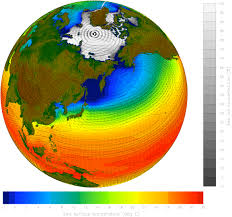 specific area where this dynamic is playing out with maximal dysfunctionality is climate science. Climate modeling codes are not predictive and tend to be highly calibrated to the mesh used. The overall modeling paradigm involves a vast number submodels to include a plethora of physical processes important within the Earth’s climate. In a very real sense the numerical solution of the equations describing the climate are forever to be under-resolved with significant numerical error. The system of Earth’s climate also involves very intricate and detailed balances between physical processes. The numerical error is generally quite a bit larger than the balance effects determining the climate, so the overall model must be calibrated to be useful.
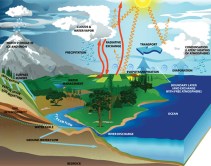 In the modern modeling and simulation world this calibration then provides the basis of very large uncertainties. The combination of numerical error and modeling error means that the true simulation uncertainty is relatively massive. The calibration assures that the actual simulation is quite close to the behavior of the true climate. The models can then be used to study the impact of various factors on climate and aid the level of understanding of climate science. This entire enterprise is highly model-driven and the level of uncertainty is quite large. When we transition over to predictive climate science, the issues become profound. We live in a world where people believe that computing should help to provide quantitative assistance for vexing problems. The magnitude of uncertainty from all sources should provide people with significant pause and provide a pushback from putting simulations in the wrong role. It should also not prevent simulation from providing a key tool in understanding this incredibly complex problem.
 program generally does not support the understanding role of simulation in science.
 In summary we have yet another case of marketing of science overwhelming the true narrative. In the search for funding to support computing, the sale’s pitch has been arranged around prediction as a product. Increasingly, we are told that a faster computer is all that we really need to do. The implied message in this sale’s pitch is a lack of necessity to support and pursue other aspects of modeling and simulation for predictive success. These issues are plaguing our scientific computing programs. Long-term success of high performance computing is going to be sacrificed, based on this funding-motivated approach. We can add the failure to recognize understanding, explaining and learning as a key products for science and engineering from computation.
 more important who does a calculation than how the work is done although these two items are linked. This was true 25 years ago with ASCI as it is today. The progress has not happened in large part because we let it, and failed to address the core issues while focusing on press releases and funding profiles. We see the truth squashed because it doesn’t match rhetoric. Now we see lack of funding and emphasis on calculation credibility in the Nation’s premier program for HPC. We continue to trumpet the fiction that the bigger the calculation and computer, the more valuable a calculation is a priori.
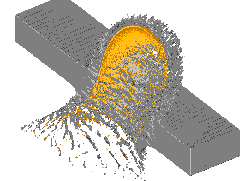
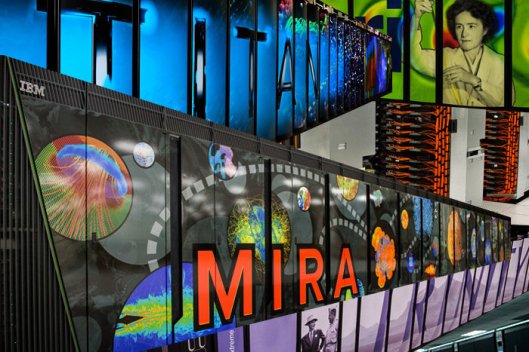 Even today with vast amounts of computer power, the job of modeling reality is subtle and nuanced. The modeler who conspires to represent reality on the computer still makes the lion’s share of the decisions necessary for high fidelity representations of reality. All of the items associated with HPC impact a relatively small amount of the overall load of analysis credibility. The analyst decides how to model problems in detail including selection of sub-models, meshes, boundary conditions, and the details included and neglected. The computer power and the mesh resolution usually end up being an afterthought and minor detail. The true overall modeling uncertainty is dominated by everything in the analyst’s power. In other words, the pacing uncertainty in modeling & simulation is not HPC; it is all the decisions made by the analysts. Even with the focus on “mesh resolution” the uncertainty associated with the finite integration of governing equations is rarely measured or estimated. We are focusing on a small part of the overall modeling & simulation capability to the exclusion of the big stuff that drives utility.
 The current HPC belief system believes that massive computations are predictive and credible solely by the virtue of overwhelming computational power. In essence they use proof by massive computation as the foundation of belief. The problem is that science and engineering do not work this way at all. Belief comes from evidence and the evidence that matters are measurements and observations of the real World (i.e., this would be validation). Models of reality can be steered and coaxed into agreement via calibration in ways that are anathema to prediction. Part of assuring that this isn’t happening is verification. We ultimately want to make sure that the calculations are getting the right answers for the right reasons. Deviations from correctness should be understood at a deep level. Part of putting everything in proper context is uncertainty quantification (UQ). UQ is part of V&V. Unfortunately UQ has replaced V&V in much of the computational science community, and UQ estimated is genuinely incomplete. Now in HPC most of UQ has been replaced by misguided overconfidence.
 At the core of the problem with bullshit as a technical medium is a general lack of trust, and inability to accept outright failure as an outcome. This combination forms the basis for bullshit and alternative facts becoming accepted within society writ large. When people are sure they will be punished for the truth, you get lies, and finely packaged lies are bullshit. If you want the truth you need to accept it and today, the truth can get you skewered. The same principle holds for the acceptance of failure. Failures are viewed as scandals and not accepted. The flipside of this coin is the truth that failures are the fuel for progress. We need to fail to learn, if we are not failing, we are not learning. Instead of hiding, or bullshitting our way through in order to avoid being labeled failures, we avoid learning, and also corrode our foundational principles. We are locked in a tight downward spiral and all our institutions are under siege. Our political, scientific and intellectual elite are not respected because truth is not valued. False success and feeling good is acceptable as an alternative to reality. In this environment bullshit reigns supreme and being useful isn’t enough to be important.
 huge program ($250 million/year) and the talent present at the meeting was truly astounding, a veritable who’s who in computational science in the United States. This project is the crown jewel of the national strategy to retain (or recapture) pre-eminence in high performance computing. Such a meeting has all the makings for banquet of inspiration, and intellectually thought-provoking discussions along with incredible energy. Simply meeting all of these great scientists, many of whom also happen to be wonderful friends only added to the potential. While friends abounded and acquaintances were made or rekindled, this was the high point of the week. The wealth of inspiration and intellectual discourse possible was quenched by bureaucratic imperatives leaving the meeting a barren and lifeless launch of a soulless project.
 degree of project management formality being applied, which is appropriate for a benign construction projects and completely inappropriate for HPC success. The demands of the management formality was delivered to the audience much like the wasteful prep work for standardized testing in our public schools. It will almost certainly have the same mediocrity inducing impact as that same testing regime, the illusion of progress and success where none actually exists. The misapplication of this management formality is likely to provide a merciful deathblow to this wounded mutant of a program. Some point in the next couple of years we will see the euthanized project as being the subject of a mercy killing.
 is exactly the same except the power of the computers is 1000 times greater than the computers that would unlock the secrets of the universe a quarter of a century ago. Aside from the Exascale replacing Petascale in computing power, the vision of 25 years ago is identical to today’s vision. The problem then as now is the incompleteness of the vision and fatal flaws in how it is executed. If one adds a management approach that is seemingly devised by Chinese spies to undermine the program’s productivity and morale, the outcome of ECP seems assured, failure. This wouldn’t be the glorious failure of putting your best foot forward seeking great things, but failure born of incompetence and almost malicious disregard for the talent at their disposal.
 succeed at something so massive and difficult while the voices of those paid to work on the project are silenced? At the same time we are failing to develop an entire generation of scientists with the holistic set of activities needed for successful HPC. The balance of technical activities needed for healthy useful HPC capability is simply unsupported and almost actively discouraged. We are effectively hollowing out an entire generation of applied mathematicians, computational engineers and physicists pushing them to focus more on software engineering than their primary disiplines. Today someone working in applied mathematics is more likely to focus on object oriented constructs in C++ than functional analysis. Moreover the software is acting as a straightjacket for the mathematics slowly suffocating actual mathematical investigations. We see important applied mathematical work avoided because software interfaces and assumptions are incompatible. One of the key aspects of ECP is the drive for everything to be expressed in software as products and our raison d’être. We’ve lost the balance of software as a necessary element in checking the utility of mathematics. We now have software in ascendency, and mathematics as a mere afterthought. Seeing this unfold with the arrayed talents on display in Knoxville last week felt absolutely and utterly tragic. Key scientific questions that the vitality of scientific computing absolutely hinge upon are left hanging without attention and progress on them is almost actively discouraged.
 the methods used to solve these models. Much of the enabling efficiency of solution is found in innovative algorithms. The key to this discussion is the subtext that these three most important elements in the HPC ecosystem are unsupported and minimized in priority by ECP. The focal point on hardware arises from two elements, the easier path to funding, and the fandom of hardware among the HPC cognoscenti.
 y has been a leading light in progress globally. A combination of our political climate and innate limits in the American mindset seem to be conspiring to undo this engine of progress. Looking at the ECP program as a microcosm of the American experience is instructive. The overt control of all activities is suggestive of the pervasive lack of trust in our society. This lack of trust is paired with deep fear of scandal and more demands for control. Working in almost unison with these twin engines of destruction is the lack of respect for human capital in general, which is only made more tragic when one realizes the magnitude of the talent being wasted. Instead of trust and faith in the arrayed talent of the individuals being funded by the program, we are going to undermine all their efforts with doubt, fear and marginalization. The active role of bullshit in defining success allows the disregard for talent to go unnoticed (think bullshit and alternative facts as brothers).
 potential of the human resource available to them. Proper and able management of the people working on the project would harness and channel their efforts productively. Better yet, it would inspire and enable these talented individuals to innovate and discover new things that might power a brighter future for all of us. Instead we see the rule of fear, and limitations governing people’s actions. Instead we see an ever-tightening leash placed around people’s neck suffocating their ability to perform at their best. This is the core of the unfolding research tragedy that is doubtlessly playing out across a myriad of programs far beyond the small-scale tragedy unfolding with HPC.
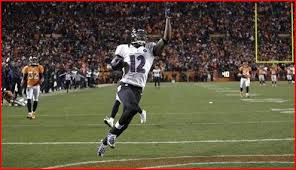 If one wants to understand fear and how it can destroy competence and achievement take a look at (American) football. How many times have you seen a team undone during the two minute drill? A team who has been dominating the other team defensively suddenly becomes porous when it switches to the prevent defense, it is a strategy born out of fear. They stop doing what works, but is risking and takes a safety first approach. It happens over and over providing the Madden quip that the only thing the prevent defense prevents is victory. It is a perfect metaphor for how fear plays out in society.
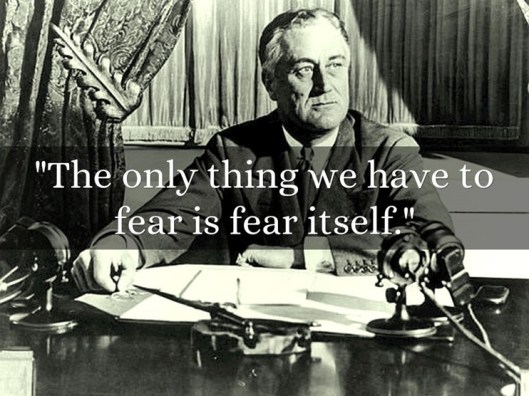 Over 80 years ago we had a leader, FDR, who chastened us against fear saying, “we have nothing to fear but fear itself”. Today we have leaders who embrace fear as a prime motivator in almost every single public policy decision. We have the cynical use of fear to gain power used across the globe. Fear is also a really powerful way to free money from governments too. Terrorism is both a powerful political tool for both those committing the terrorist acts, and the military-police-industrial complexes to retain their control over society. We see the rise of vast police states across the Western world fueled by irrational fears of terrorism.
 Fear also keeps people from taking risks. Many people decide not to travel because of fears associated with terrorism, among other things. Fear plays a more subtle role in work. If failure becomes unacceptable, fear will keep people from taking on difficult work, and focus on easier, low-risk work. This ultimately undermines our ability to achieve great things. If one does not focus on attempting to achieve great things, the great things simply will not happen. We are all poorer for it. Fear is ultimately the victory of small-minded limited thinking over hope and abundance of a better future. Instead of attacking the future with gusto and optimism, fear pushes us to contact to the past and turn our backs on progress.
 ommunication. Good communication is based on trust. Fear is the absence of trust. People are afraid of ideas, and afraid to share their ideas or information with others. As Google amply demonstrates, knowledge is power. Fear keeps people form sharing information and leader to an overall diminishment in power. Information if held closely will produce control, but control of a smaller pie. Free information makes the pie bigger, creates abundance, but people are afraid of this. For example a lot of information is viewed as dangerous and held closely leading to things like classification. This is necessary, but also prone to horrible abuse.


 Without leadership rejecting fear too many people simply give into it. Today leaders do not reject fear; they embrace it; they use it for their purposes, and amplify their power. It is easy to do because fear engages people’s animal core and it is prone to cynical manipulation. This fear paralyzes us and makes us weak. Fear is expensive, and slow. Fear is starving the efforts society could be making to make a better future. Progress and the hope of a better future rests squarely on our courage and bravery in the face of fear and the rejection of it as the organizing principle for our civilization.
 combination of mathematical structure and computer code the ideas can produce almost magical capabilities in understanding and explaining the World around us allowing us to tame reality in new innovative ways. One little correction is immediately in order; models themselves can be useful without computers. Simple models can be solved via analytical means and these solutions provided classical physics with many breakthroughs in the era before computers. Computers offered the ability expand the scope of these solutions to far more difficult and general models of reality.
 This then takes us to the magic from methods and algorithms, which are similar, but differing in character. The method is the means of taking a model and solving it. The method enables a model to be solved, the nature of that solution, and the basic efficiency of the solution. Ultimately the methods power what is possible to achieve with computers. All our modeling and simulation codes depend upon these methods for their core abilities
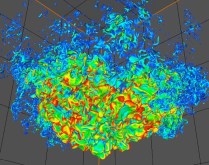 The magic isn’t limited to just making solutions possible, the means of making the solution possible also added important physical modeling to the equations. The core methodology used for shock capturing is the addition of subgrid dissipative physics (i.e., artificial viscosity). The foundation of shock capturing led directly to large eddy simulation and the ability to simulate turbulence. Improved shock capturing developed in the 1970’s and 1980’s created implicit large eddy simulation. To many this seemed completely magical; the modeling simply came for free. In reality this magic was predictable. The basic method of shock capturing was the same as the basic subgrid modeling in LES. Finding out that improved shock capturing gives automatic LES modeling is actually quite logical. In essence the connection is due to the model leaving key physics out of the equations. Nature doesn’t allow this to go unpunished.
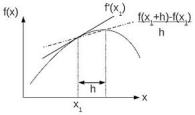 -order accuracy. The trick is that the classical second-order results are oscillatory and prone to being unphysical. Modern shock capturing methods solve this issue and make solutions realizable. It turns out that the fundamental and leading truncation error in a second-order finite volume method produces the same form of dissipation as many models produce in the limit of vanishing viscosity. In other words, the second order solutions match the asymptotic structure of the solutions to the inviscid equations in a deep manner. This structural matching is the basis of the seemingly magic ability of second-order methods to produce convincingly turbulent calculations.
 ughs and adaption of complex efforts. Instead we tend to have highly controlled and scripted work lacking any innovation and discovery. In other words the control and lack of trust conspire to remove magic as a potential result. Over the years this leads to a lessening of the wonderful things we can accomplish.
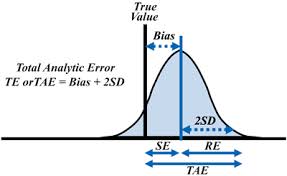
 Despite a relatively obvious path to fulfillment, the estimation of numerical error in modeling and simulation appears to be worryingly difficult to achieve. A big part of the problem is outright laziness, inattention, and poor standards. A secondary issue is the mismatch between theory and practice. If we maintain reasonable pressure on the modeling and simulation community we can overcome the first problem, but it does require not accepting substandard work. The second problem requires some focused research, along with a more pragmatic approach to practical problems. Along with these systemic issues we can deal with a simpler problem, where to put the error bars on simulations, or should they show a bias or symmetric error. I strongly favor a bias.
 where
where  is the mesh converged solution,
  is the solution on a grid
  ,
,  is the mesh density,
  is a constant of proportionality and
  is the convergence rate. We see three unknowns in this assumed form,
  . Notice that this whole error model assumes that the sequence of solutions
  . There is also no evidence at all that the solution is moving the opposite direction. The problem I’m highlighting today is that the standard in solution verification does not apply these rather obvious conclusions in setting the numerical error bar.
 , and then centers it about the mesh solution,
  . So half the error bar is consistent with all the evidence, but the other half is not. This is easy to fix by ridding ourselves of the inconsistent piece.
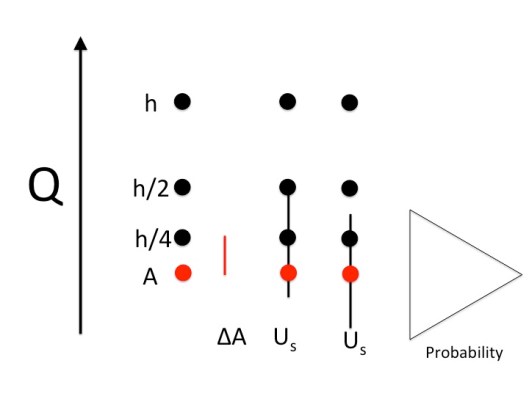 The core issue I’m talking about is the position of the numerical error bar. Current approaches center the error bar on the finite grid solution of interest, usually the finest mesh used. This has the effect of giving the impression that this solution is the most likely answer, and the true answer could be either direction from that answer. Neither of these suggestions is supported by the data used to construct the error bar. For this reason the standard practice today is problematic and should be changed to something supportable by the evidence. The current error bars suggest incorrectly that the most likely error is zero. This is completely and utterly unsupported by evidence.
 , the error bar would include the mesh solution,
  The Regularized Singularity