
In the councils of government, we must guard against the acquisition of unwarranted influence, whether sought or unsought, by the military-industrial complex. The potential for the disastrous rise of misplaced power exists and will persist. We must never let the weight of this combination endanger our liberties or democratic processes. We should take nothing for granted. Only an alert and knowledgeable citizenry can compel the proper meshing of the huge industrial and military machinery of defense with our peaceful methods and goals, so that security and liberty may prosper together.
-President Eisenhower
Our republic is evolving quickly into some sort of nationalist-kleptocratic union of industrial interests who have the political apparatus in their pocket. They have all the tools needed to market (dupe) the public into voting for their interests. Their interests are siphoning as much money as possible into as few pockets as possible. They have created a system where the Nation’s laws are being written for the sole purpose of enabling their greed. The nation is increasingly being organized for sole benefit of a vastly rich ruling class served by a vast underclass whose good is ignored. The underclass is brainwashed through mass media propaganda into supporting the very policies that are hurting them. All of this is viewed as being utterly patriotic. This is a shining example of American Exceptionalism.
So what are these complexes?
The most effective way to destroy people is to deny and obliterate their own understanding of their history.
 The military-industrial complex. The classic, the original or at least the one you were warned about. It is still around and still draining a huge amount of money from the economy. Our defense budget is still the size of the next 10 largest in the World, yet it still isn’t enough. Any cut in spending sends people into a frenzy of fear. We have to be the World’s policemen and go around killing various enemies who really offer no threat to us at all. This leads to war after was that simply offer the defense industry the opportunity to profit on other’s misery. We could really do with a budget of half to a third of its current size. The only risk it would pose is to the bottom line and profit margin of defense contractors.
They who can give up essential liberty to obtain a little temporary safety deserve neither liberty nor safety.
 The national security-industrial complex. This is the new and improved version of the original complex. Where the military-industrial complex is sold through nationalism and the ability to exercise raw power, this complex has the selling point of irrational fear. Make no mistake; this one is coupled to the other. The activities of this complex are cloaked in secrecy and a vast unspecified (black) budget that is completely justified in the eyes of the cowering-terrified masses of voters. Americans have agreed in overwhelming numbers to part with liberty and a great deal of money in service of this complex. The true aim of this complex is control by the powerful as well as profit. Again, the threats we are facing are vastly overblown.
 I would argue that the security state we are creating is more of a threat to our way of life than any of the enemies they are “protecting” us from. We have allowed ourselves to become fearful as a Nation and we will suffer a fate befitting this trend. Recently and increasingly this complex is supporting the militarized and aggressive police.
Propaganda is to a democracy what the bludgeon is to a totalitarian state.
― Noam Chomsky,
 The financial-investment-industrial complex. You know who these guys are. This is the industry that almost melted down the economy five years ago. Bailouts happened and the incomes of most of the guilty were saved (if temporarily diminished slightly). Reform was promised and never delivered upon. Almost none of the shady, sleazy or corrupt practices that enriched the financial managers and preyed upon common citizens resulted in any legal action. New financial vehicles have been created to prey on the citizenry (e.g., student loans). More than nuclear weapons, this vehicle of mass destruction looms over the economy waiting for the next bubble to burst. The national-security-police apparatus was used to crust any resistence and treated the Occupy Wall Street movement like domestic terrorists. So much for democracy.
In a society governed passively by free markets and free elections, organized greed always defeats disorganized democracy.
 This complex has the money to buy immense favor, does almost nothing for society, and unlike the others produces only rich people. Somehow they have conned to electorate into believing that they create economic opportunity. Once finance did this, now all the opportunity is in the hands of the “shareholders” who are mostly financial managers. Increasingly business interests is just code for ability for executives to be compensated in repugnantly extravagant ways. Much of the deplorable situation with education can be traced to student loans as investment vehicles along with the concentration of wealth cascading to enhanced support of a cadre of private universities that serve the rich. No other complex is so singularly responsible for the erosion of the middle class as this one.
Health makes good propaganda.
 The medical-industrial complex. This complex is the two-edged sword of overwhelming good on one side and horrific greed on the other. Medicine does enormous good and healing people is a worthy profession. Too bad it has become the cover for a massive plundering operation. Medicine in the USA consumes nearly to over twice the amount of GDP than it does in other comparable Nations. In return for this massive cost we get substandard care. Our health outcomes and quality of care is actually lower than comparable nations. We get a lousy deal and the medical industry makes even more money.
Marketing is what you do when your product is no good.
Are Americans just incompetent? No. We simply have adopted a system that is immensely wasteful and has massive opportunities for profit taking by corporate interests who only care about how much money they make. These interests have managed to sabotage any effort to introduce a better system. Even a relatively favorable to industry, modest and small change is marketed to the electorate as being socialism. Yes I mean Obamacare, which is largely a free-market based plan that only modestly changes the dynamic. It only diminishes their returns a bit and does little to change the underlying problems.
 The criminal-justice-prison-industrial complex. The embarrassment we should be feeling over the incarnation rate of our citizens is absent. Do we really feel that the American public is so awful that they should be imprisoned at a rate two to ten times larger than comparable countries? Are Americans inherently violent and criminal in our conduct? Is that the way we are exceptional? The answer to all these questions is no. The problem is that power and money flow from locking up Americans. It has also become a convenient way of reinstituting “Jim Crow” laws.
 This all began with the failed war on drugs. Ultimately this produced a bunch of people to imprison. Eventually the prisons became privatized and a way to make money. Prisons had a lobby. At the same time law enforcement found ways of increasing their power through the same war. Increased weaponry, increased surveillance, increased powers of seizure. All of this coupled together to produce an orgy of imprisonment, and a deluge of cash to industry. This has been amplified by the rise of the national security industrial complex that provides an additional source of enhanced power.
These industrial interests have absolutely no interest of consciousness about the damage done to society. The good of society as a whole is not of consequence. All of these complexes are unremittingly self-interested and self-serving, only concerning themselves with their bottom line. This is the core of the problem. These complexes are monuments to shortsighted and internally focused narcissism without conscious or morality that considers the good of others. It is a derelict philosophy that the United States appears to have adopted as its core operating principle.
The election this week will be an enormous boon to the collection of “complexes” that run our lives. It will not be good for the economic, security or personal destinies of most Americans. On the other hand it will help propel the fortunes of the leaders of these complexes to new heights on the backs of the labor and suffering of most of the citizens. I’m not convinced that an alternate end to the election would have been bad for the complexes, just not as good. Complexes have broad bipartisan support. In other words they have enough money to legally buy both parties.
 Today and tomorrow I am visiting the University of Notre Dame for the purpose of reviewing and advising a DOE sponsored research center (CSWARM). The project combines material science, computation and computer science as the scientific world struggles toward the next generation of computing. Given today’s work, my
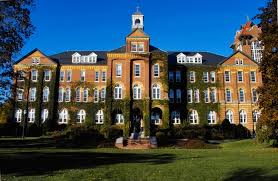 background and my son’s entry into science and engineering education next year, the topic of college and its health is keenly in my focus. Universities are perhaps one of the most important institutions in our society. They should be emblematic of the best we have to offer and a shining example of what we aspire to be. So what do university’s have to say about us today?
 projects do not get the full brunt of government management, but enough of their guidance is the sort of “do not ever fail” category to run afoul of educational optimality. Research if done properly will fail, and fail a lot. It is research because we don’t know exactly what we are doing. If it isn’t failing a great deal it probably isn’t good research. Too much of what I work on is under a no-failure edict. This creates an environment that largely runs counter to the capability to create of good educational setting. Given that the current nature of the educational setting is itself a problem, we may not be doing too much extra harm.
 stadium looms over the campus like the shrine to modern gladiatorial combat that football is. It is a semi-pro team in every respect except paying the players and name. Its impact and importance at an educational institution is both unsettling and all too common. The opulence of the setting is somewhat out of character with ought to be the priorities.
 All of this is merely a backdrop to an educational setting where research is also happening. Research in and of itself has become a similar obsession for universities because of its place as a source of money. This has in turn driven resources and focus away from education as the principal focus for universities. At least research can serve a proper place in education. If done with the proper balance research can be a powerful for educating the participants and continuing the development of the senior people involved. I wonder whether in some places the focus is even further removed from education by rich alumni, and massive athletics. Is this really what we need from these institutions? Is this really in service of the best interests of society as a whole, or are these institutions being highjacked to entertain the wealthy while giving substandard educations to the less fortunate?
 gave a talk on my experiences and any wisdom gained through 15 years of effort in the largest scientific software project ever. Afterward, I participated in a panel discussion of the topic and the prospects for crafting a path forward.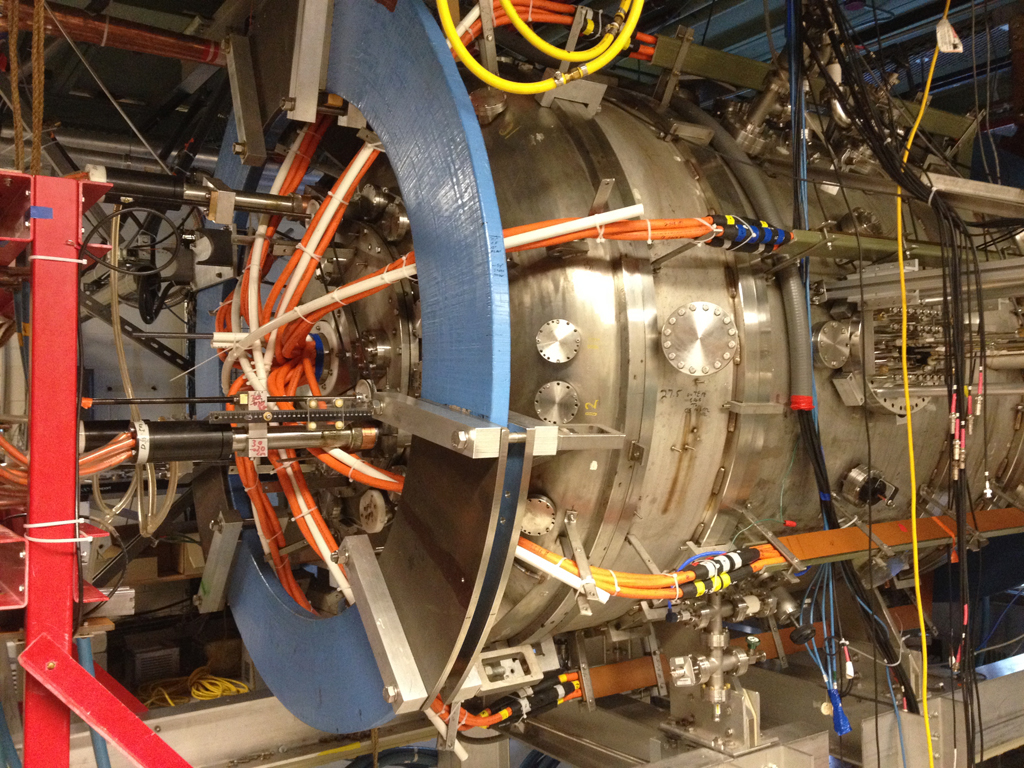
 The people I was speaking to are working with vastly less. Who was I to be giving them advice? It was like the rich guy rolling down the window of his limo to encourage the homeless person to “get a job, you bum!”
 purposes. Without a common axis to orient their efforts, the efforts are horribly fragmented, and naturally incoherent. I think about my situation and think, “holy shit! I do have it easy!”
 have left their community with too little to build on. In many respects the plasma physics community has lagged behind in some significant ways. It felt good to admit to the audience yesterday that in many respects plasma physics is the whipping boy in some V&V circles for how NOT to do things. I asked this in providing the audience with a compliment that they were doing something to change this. It was also a question to them about how the broader plasma physics community feels about V&V and what their collective concerns are.
 ability to advance as a society because so many are left behind without any capacity to fully contribute to the success of the whole. A large part of the reason for the deficit of capacity for contribution is the lack of meaningful outlet when society as a whole is organized to funnel the product of societal efforts into the hands of precious few. We are not organized to maximize the efforts of our citizens, but rather maximize the wealth of a select few.
 The inequality is society is impacting science massively. Money has become the barometer by which all things are measured. It is seemingly the one size fits all metric for the value of all things. It is driving the short-term thinking permeating business thinking today. The reasoning for the short-term thinking is its ability to maximize the flow of resources into the hands of the already rich in the credit and investment markets; it is not because it maximizes the aggregate benefit to society or even the long-term benefit to business. The policies governing our World today are for the benefit of the few, not the many.
 principled approach of education. This is driven by and justified by the lack of societal investment in higher education. The research focus of universities is being driven toward the “publish or perish” philosophy that hollows out the depth of the research while draining away the critical training of the next generation of researchers. The consequences are grim. We are producing much more work, with much less quality and impact.
 into the middle of an extremely contentious topic (almost a religious war from what I found out later). Three famous scientists reviewed the paper; one of them identified himself to me via letter (the late Ami Harten). His review was quite cursory, simply “accept, and publish immediately.” I was beside myself with joy. That emotion was short-lived.
 I certainly didn’t have my best game, but it wasn’t bad either. His feedback to me felt extraordinarily harsh, and even a bit personal. He has been reviewed by the very top referees in the United States (i.e., assessed). I took his comments with the utmost seriousness, but still his style made me feel awful, and undermined the effectiveness of the comments.
 This young man has as you might expect a very serious style, which is keenly reflected in his success and personal style. Plus critiquing someone twice your age can’t be easy. So, I will take his feedback to heart, and make efforts to improve my performance (work on positioning, signaling advantage and style in man-management). In addition I need to reflect upon the dynamic of critique in every part of my life.
 There seems to be a pervasive attitude that difficult things should be avoided and any difficulty is treated as an approximation to failure. I have had this theme play out repeatedly this week where something difficult is ta ken as tantamount to failing. For someone looking to grow, and excel, difficult work is the chance to improve through stringent testing. Difficulty should stir one to the core and call them forward toward achievement. The worst thing is the inability to see the opportunity being granted, most of our best, strongest attributes were forged in our most difficult moments.
 Problems are seen when work that should have done years ago is missing. Instead it is the opportunity to do meaningful, interesting and important work that fills in an essential gap. In another case a procedure was found to be lacking, which turned out to be embarrassing. Instead it is a reward of due diligence and points toward a higher future standard, but also toward important shortcomings in tools used. These tools will require substantial effort to make better. We see to have created a system that tells us that these cases should be avoided. Instead they need to be celebrated as opportunities for interesting and necessary work that will stretch the capabilities of the lucky people doing the work.
 This is quite sharply related to the absolute intolerance for anything that could be interpreted as failure. Failure brings the possibility of rebuke and scandal. The lessons of almost every success has been lost in the process, to achieve greatness, risk must be taken, and risk entails the possibility of failure. We are avoiding short-term pain and the cost of long-term success, which will manifest itself as a decline toward inevitable mediocrity.
 In a similar vein we test our codes. For a good professional code there will be an immense number of tests executed and potentially a sizable team involved in testing the code. Nonetheless, the code will break with almost certainty because it will be used in innovative ways not foreseen by the developers or testers. The real test is when the code is used for something we didn’t anticipate. Then we find out how good it really is. As usual the problems that arise are usually viewed as failures rather than opportunities. We should endeavor to view this differently; these failures are the opportunity to take the code to the next level of performance.
 Simplicity is the ultimate sophistication.
 The heuristic of Occam’s razor comes in as a principle to clarify things. At its simplest it specifies a tendency for choosing between explanations based on their relative simplicity; if they are otherwise equal, the simplest explanation is preferred. One might be properly tempted to apply the same principle, but replace “simple” by “elegant,” “beautiful” or “graceful”. This gets to the core of the manner in which science takes on the mantle of an art; beauty, elegance and grace have a roll to play in shaping opinions.
 One could easily take the view that this is a bad thing, but the concepts of artistic opinion are useful. These concepts capture the deep essence of the subconscious. The subconscious is integrating many factors that hidden from the superficial thinking usually operating in people. We know beauty and elegance when we see it, and we naturally gravitate toward it. Unfortunately these also include bias and preconceptions that would tend to hold progress back. Given this possibility the whole artistic approach to science needs to be taken in a mindful fashion fully acknowledging the tendency to give into traditional bias and counter-balancing this trend with careful consideration of alternatives. This is where Occam’s razor and attractiveness of simplicity can play a deeply powerful roll in progress.
 profit. Americans have bought into the fear-based culture fully. Mass media and particularly the news media have learned that fear sells and drives profits. Industry plays upon peoples deepest fears to sell products whether the fear is cultural, physiological or subliminal it drives sales.
 based because nothing drives the people to the polls like fear. Fear of immigrants, loss of jobs, terrorism, Ebola, and most of all the loss of the America of memory is a reason to fear. The result is fear-driven policy. Our government is rife with fear-based, counter-productive laws and governance. Government institutions are driven by fear. As just one example air travel is teeming with stupid fear-based practices.
 Take the threat of ISIS (ISIL). Are they really a threat? Really? A bunch of poorly educated barbarians half a world away? No they aren’t. Man the hell up, what sort of wimps have Americans become? They are a bunch of idiotic zealots that represent no threat at all to our Country. They are bad people that the World needs to manage, but not an actual threat. The actual threat is to our tax dollars. ISIS is another convenient threat used by the politicians and the military-security-industrial complex to drive money into their pockets. Nothing more.
 This is just the tip of the iceberg in imaginary threats that Americans are allowing to rule their lives. Ebola is another great example. All we need is competence and it offers no threat. My only fear is that we can’t muster competence any more.
 rejection of rationality is not a left or right characteristic; it has become an American characteristic. Whether it is climate change, diseases (e.g., Ebola), nuclear power, vaccines, GMO and a host of other scientific or technological questions Americans are irrational. We have become governed by hoax and conspiracy rather than truth, trust and logic.
 Explosives Code Development Conference. I can’t make the usual sort of summary of a meeting that I’d ordinarily write about, but I will offer a few high level comments. There certainly were some memorable talks during the week. They offered some great new ideas in computational physics or a much needed progress report on important work.
 tidy package. Lawrence Livermore showed some really interesting efforts in several areas including advanced shock hydrodynamic methods using high order methods, and progress on an age old problem of combining particles with interface tracking. Despite these highlights among others, the best and most important thing about the meeting was what happened when talks were not being given.

 The Regularized Singularity