



Which of us can resist the temptation of being thought indispensable?

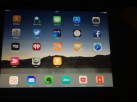

In the past year I’ve fully embraced the online world. This is in a lot more ways than just writing a blog, tweeting etc. My most used programs have changed from the standard laptop, desktop applications like Microsoft office to a set of mobile apps: Evernote, Pocket, Zite and recently Wunderlist. I’m finding the apps to be indispensible, and hope they can make me more capable of working effectively. It also helps the ability to balance things between work and home.
Best of all these apps work together and run across multiple platforms. Evernote is the hub, but all of them add a lot of value to my day.
Be infinitely flexible and constantly amazed.
Evernote is the definitely the flagship app for me. If you’re not familiar with it, 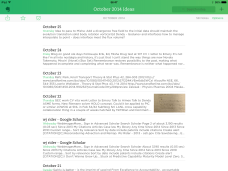 Evernote is an electronic filling cabinet. It ends up being the clearinghouse for information flowing from all these other apps and more. Evernote also runs on every platform (phone iPhone/Android, laptop, desktop, iPad, and web). You can always get your data. My wife uses it at her office as the common system for managing multiple accounts able to deal with data from many sources.
 I use it to jot down ideas, plan writing assignments, take notes at meetings, save articles, and keep a food, exercise, and personal journal. It can accept info in almost any format and allows you to write notes, and draw graphical comments inside most. It also has a fantastic web clipper that allows me to save web pages directly plus add comments. Another great thing to do is use Evernote to save business cards, travel cards, and other documents that pile up in wallets, or get easily lost. I’ve also used it for saving details of medical appointments, and repair/remodel work at home. It’s the place where I store the details of my referee assignments for soccer as well as notes on the games for future reference.
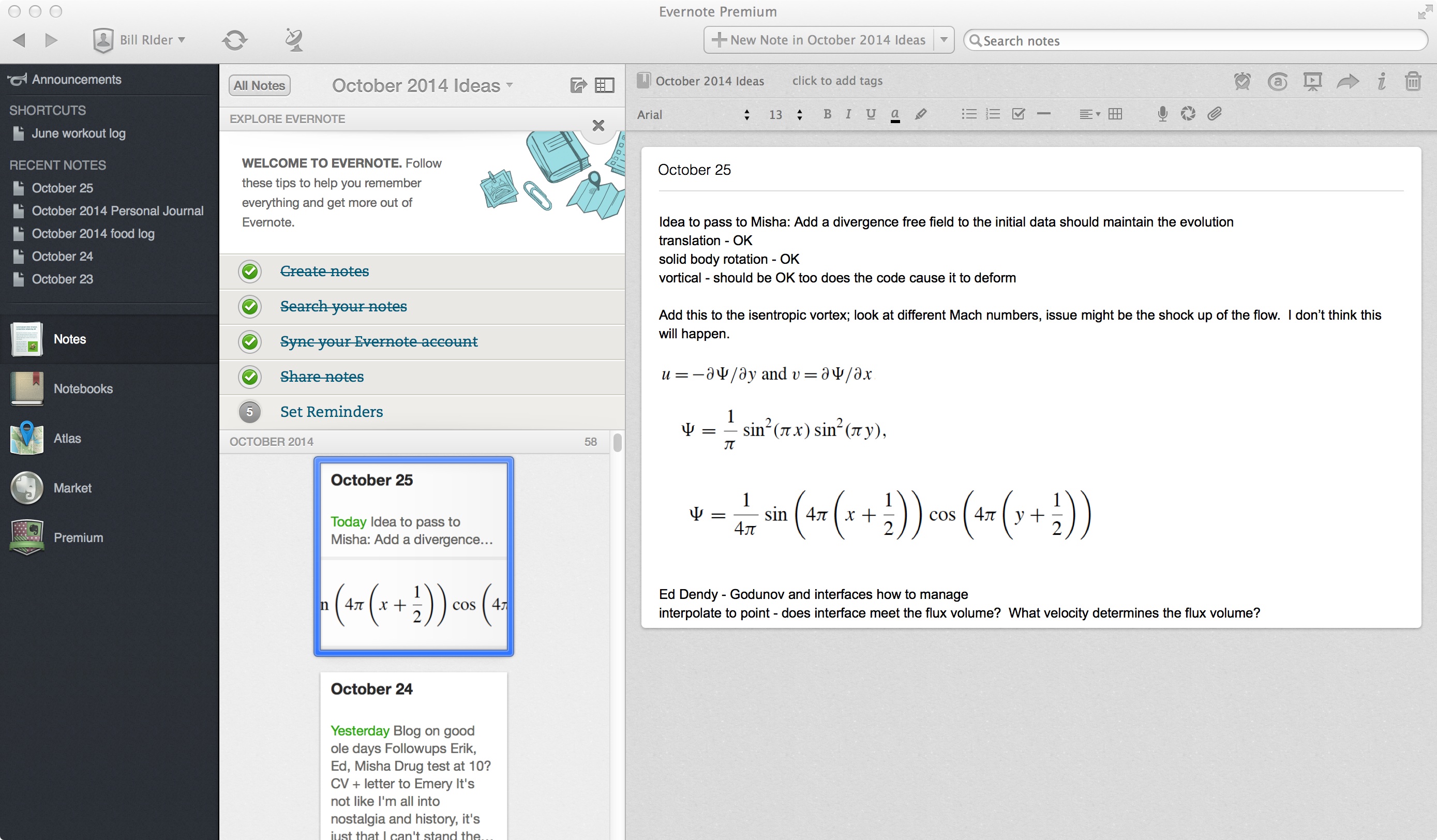
It is really appropriate to use the overused word, awesome, to describe it. Evernote is awesome and utterly indispensible. If you haven’t tried it you should.
 Next is the most recent addition to my staple of mobile apps, Wunderlist. Wunderlist is a to do and task manager. I’ve added it because it is multiplatform. I can have a uniform and synched list across mobile, laptop and desktop apps. I have a set of things that I want to accomplish every day, which repeat along with a set of single use items. All of them can be tracked and dealt with. It is still being tried out, but it’s almost sure that it will be a keeper.
The last two apps are Pocket and Zite, which work hand-in-hand. 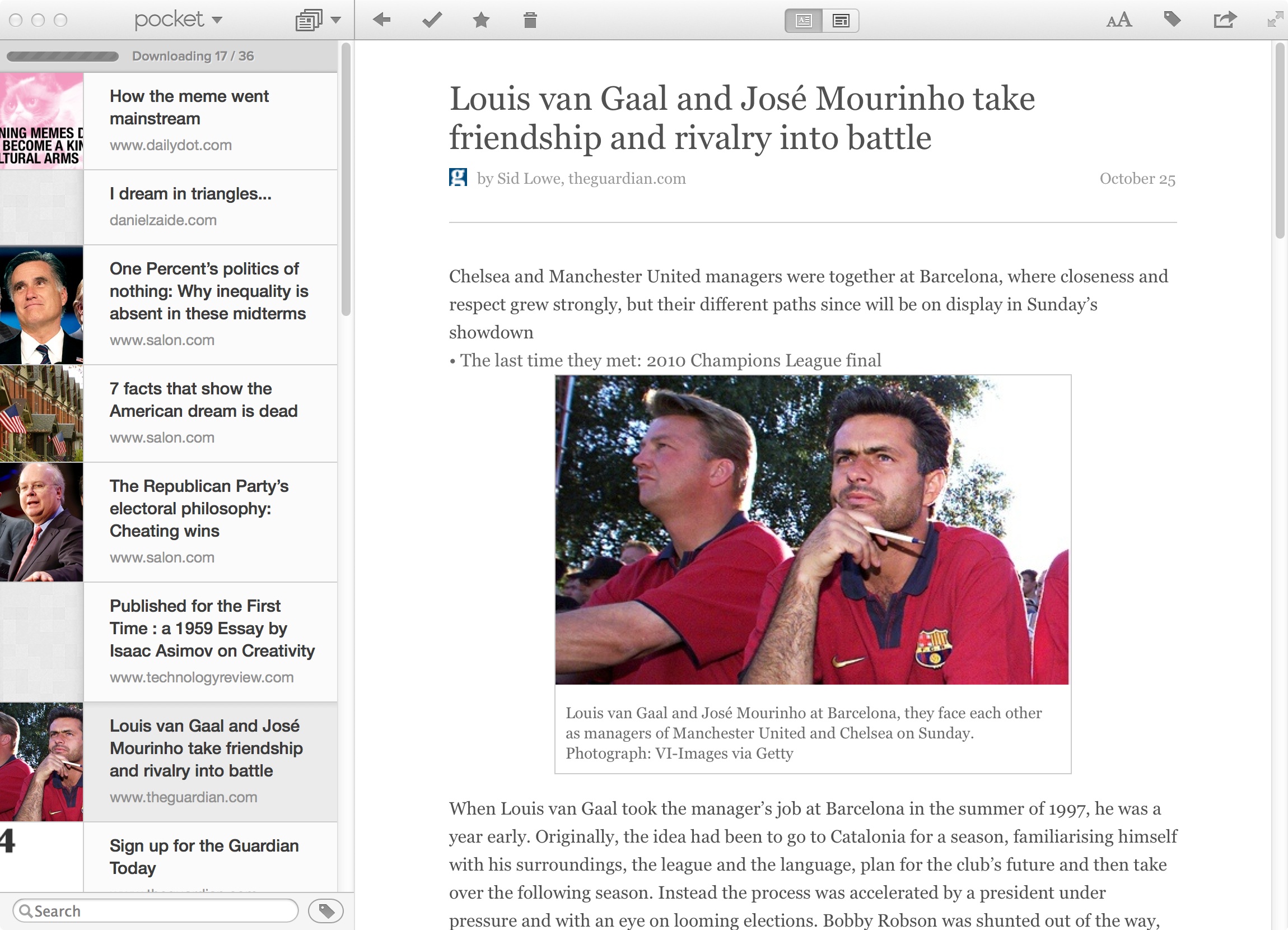 Pocket is a way of saving almost anything to read. I use it mostly for web articles to read later, mostly while exercising at the gym. It can also save files from multiple formats. The best thing is that it works automatically from web browsers, and other apps. I can also push the articles directly to Evernote if I really like it! Pocket also has an archive of its own to save things for the long term.
Zite is a way of reading online content. It takes the top articles from multiple sources and making it available for viewing. Often I’ll find interesting things and saving it for later reading in Pocket. I get to choose what I’m interested in and Zite collates the top articles in each area for me to see. It also puts everything together for a list of the top, top stories in my interest list. The only downside to Zite is its unavailability on laptops, desktops and web browsers. I do wish it were more available on all my platforms. On my mobile platforms it is right near the top of my use.
The only way to get what you’re worth is to stand out, to exert emotional labor, to be seen as indispensable, and to produce interactions that organizations and people care deeply about.
These apps have made me more productive and well informed. Maybe they could help you too.
 conference in Los Alamos. It is difficult to not be nostalgic having worked there for 18 years. It harkens to the old saw that people tend to pull out, “those were the good ole days”. What if they were? Why aren’t things getting better?
 The Internet, Google, smartphones, instant messaging and a host of other miracles make our lives better in many ways. I used to spend hours in the Los Alamos Lab library doing research; copying papers where today I could do even more from home or my office with almost everything being available as a PDF. Some of the collateral consequences are problematic, but I have faith that a happy equilibrium will be achieved.
 dramatically better. The Lab was better, working conditions were better and the Lab’s work meant something to the Nation. With Los Alamos it is almost a fait accompli with its role in World history guaranteeing a downhill slide over time. Nonetheless, Los Alamos continued to make history for its first twenty years or so, before decay set in. Of course, its origin included a host of future Nobel Laureates, and a job of monumental gravity. The success played a key roll in shaping the remainder of the 20th Century.
 The issues dragging Los Alamos down go well beyond local conditions. Ultimately, with the end of the Cold War the Nation as well as Los Alamos has lost its bearings. We continue to move down a path where any sense of deeper meaning is hard to find in the lives we live. The almost systematic destruction of the middle class seems to go hand-in-hand. It is as if the powers that be were working to assure that most people’s lives are spent in pursuit of survival rather than the achievement of aspirational goals. Our systems are in deep decline and no one seems to be able to muster enough vision and leadership to see a way out.
 engineering. No more. Over time the Nation has demanded that the Labs become paragons of accountability. The over-emphasis on accountability has ironically worked to drive excellence from the Labs. In an accountability-driven culture if no one is accountable for excellence, excellence dies. This is a direct consequence of our current over-managed and under-led status both locally and nationally.
 them. Continually the projects drive the staff to think only in a short-term tactical project-focused manner despite the damage done to their long-term development.
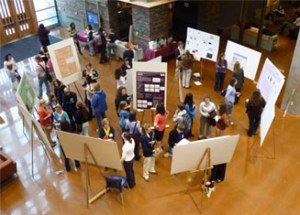 Almost any conference I attend is a broad-brushed opportunity to develop professionally across a suite of projects present and future. The accountability culture only cares about what I am presenting, but nothing about what is presented to me. In other words attending a conference is all about what is the attendee is presenting.
 he true irony is that no one is accountable for this act violence against our National security. In fact it is hidden behind a veil of accountability standards that provide the façade that everything is being done well. We only assure that the terrible things are done efficiently. A large part of the devotion to accountability is couched in fear and suspicion. Excellence is founded on hope and trust guided by principle.
 ng has less value than research. Our students are not simply burdened by student loans and the concomitant debt, but also by increasingly poor instruction. They are getting a worse education at a substantially higher price. At the core of the problem is money. Less societal support for education is driving universities to focus on research grants as a source for money along with the student loans. The grants drive emphasis from teaching and push a variety of inappropriate foci such as research associates, post-docs as labor, and adjunct professors as cheap teacher (adjuncts are another key measure of the value placed in teaching, which ain’t much!).
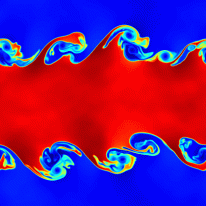 c manner that may not actually provide an accurate assessment of quality. At some point the disorder in the computation is too great and the quality is judged to be lower. This is done purely by expert judgment, not based on any sort of clear definitive measure or feature. The real issue is whether the computation is swirlier due to incipient errors that are on the verge of losing stability. This may inadvertently favor instability in the numerical method point-of-view (in fact, almost certainly).
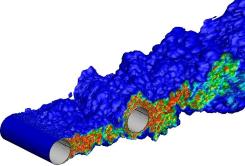 This topic involves deep-seated issues with each of these branches.
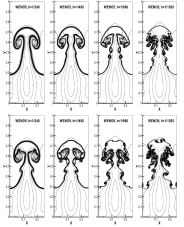 a standard applied, which amounts to “the more swirly the result, the better the method” (more swirly means more vorticity). An exemplar of this approach is the paper by Shi, Zhang and Shu in the Journal of Computational Physics, 186, pp. 690 (1993)
 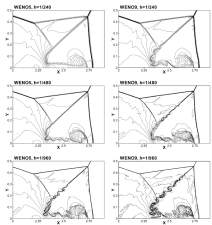 My concern about this issue is that the higher order methods also contain insidious and problematic numerical instabilities that could potentially contribute to physically incorrect solutions. The current “swirlier is better” standard yields little or no guidance towards improving the methods or uncovering their shortcomings. The problems with these methods can manifest themselves as entropy violating solutions, which are by definition unphysical. An unphysical solution will produce more vorticity, and hence be swirlier by the standard applied in the community; it would be viewed as better. In fact it would be worse and dangerously so.
 but also had large errors. These errors led to the destruction of vorticity, which made flows distinctly less swirly than reality. Modern methods provided the robustness of upwind methods with much smaller error, and much more realistic swirliness. The problem is that instabilities can lead to swirliness too and this standard leaves no room for determining the limits for methods. This is left for validation against experimental data. This is thoroughly unsatisfying because there is not a mathematical ground truth. Modeling and numerical effects are muddled together. Unfortunately, mathematics is not currently attacking this problem very aggressively (see my Applied Math critique
 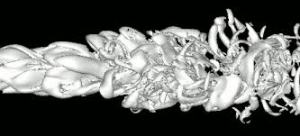 What can be done to improve matters? One way would be to rely upon experimental comparison to decide quality. This leaves little guidance for improving the methods based on mathematical principles. Insofar as applied mathematics is concerned, a better theory for the development of these instabilities would enable guidance toward better methods. This is lacking today rather seriously. It would be useful to have a refined understanding of what unphysical solutions look like for these cases. Today such a characterization is not available to be applied. We are left with experimental comparison and/or expert judgment.
 o Los Alamos and back. While in Los Alamos I am in a classified meeting, so no electronics. I also give a talk and will chair a session. With three to three-and-a-half hours of driving there isn’t much time for anything.
 spotlight. While some conservative voices would point at the failing of government, I believe their aim is both spot on, and completely wrong. We don’t have a failure of government, we have a failing of governance both private and public. The problems with Ebola are exemplars of incompetence from both government and business with both contributing greatly to the debacle in Dallas.
 The greater issue is the general crisis in governance in our country. No one seems to be able to do anything right. Government is ineffective and wasteful. Business is amoral and unethical. Neither should be acceptable. The only thing we are doing with any competence is directing more and more of our societal wealth into the hands of a very select few. This is being done in an intrinsically amoral and unethical manner despite its explicit legality since the laws are basically for sale.
 ciety-wide incompetence. We need competence and effective governance from both private and public entities. I would argue that the problem is an unhealthy focus on the individual rather than the overall society. The narrow definition of success associated with the combination of short-term gains and organizational locality are making every decision tactical. This tactical decision-making benefits very few and leads to outcomes that hurt society at the large scale.
 public sectors. The outcomes need to balance the good of the individual and society as a whole. We need to explicitly reject the governance that only benefits a precious few. In the long run a more balanced approach will lead to a far better future for everyone including those few who take nearly all the benefits today.
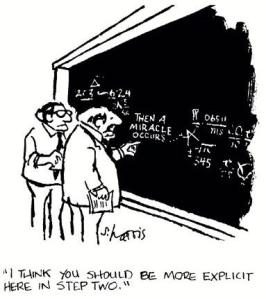 relatively well-known and successful professor came for a visit and gave a research seminar on his work. On the face of it, the talk looked interesting and topical. This rapidly faded when the talk unfolded for a very simple reason. The professor was limiting discussion to where he could prove results. If the flow he was studying became too energetic (too high a Reynolds number, or its equivalent, the proofs couldn’t be constructed). As a result the work had limited applicability to investigations because results can’t be proven for most applied problems. Most applied problems
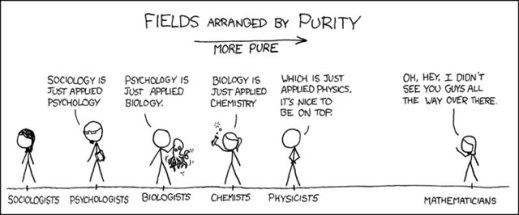 avoids the situations of interest, can’t be demonstrated, or simply doesn’t demonstrate itself, I won’t make the effort because the mathematician hasn’t done their part to meet me half way. What should happen when we have important applied cases where results can’t be proven? Should the effort in math be given to expand the grasp of mathematics to handle these cases? Or should mathematicians work on proving weaker bounds or results?
 computational, modeling and physics progress. This role has shrunk over time due to an unwillingness to get their hands dirty. There also seems to be a desire to look more like pure math, which leads to a lack of demonstration.
 The Regularized Singularity