
Nothing limits you like not knowing your limitations.
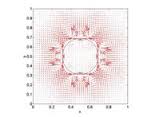 We spend too much time showing how well things work, and not nearly enough time figuring out where they don’t. Progress is there to be made by systematically exploring the limits of applicability for methods rather than show them off on cream-puff problems. Despite this, the reward system is hopelessly tilted toward the demonstration of methods through relatively trivial tests.
I mean that gods do not limit men. Men limit men.
Exposition in science is quite success focused much to the detriment of everyone. Failures are not tolerated much less expressed in many structured ways. Numerical methods are no different. In writing, people show demonstrations of their methods working, but rarely how the methods fail. This is quite unfortunate because it is limiting progress. For a numerical method people will typically simply solve a few standard test problems show results and call it a day. Rarely does anyone discuss how things fall apart or describe what the limitations on a methodology are.
Only those who dare to fail greatly can ever achieve greatly.
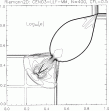 I have always found that the best way to make methods better is to continually break them. I will routinely torture methods to the breaking point fully knowing that “breaking” is itself complex. Methods break in many ways starting with a failure to converge to the “right” solution, or converge at the right rate, followed by a failure to converge to a solution, followed by a loss of stability. The improvement comes from understanding the cause of the failure, and changing the method to expand the range where a better outcome can be achieved. The process of failure is often demonstrably Edisonian, and the challenge is to provide the scientific, structural explanation for the failure to blunt the purely empirical edge. This tension is how progress and knowledge grow, and failure is the engine.
I have not failed. I’ve just found 10,000 ways that won’t work.
Failures are the engine of success. This is widely known and acknowledged, and 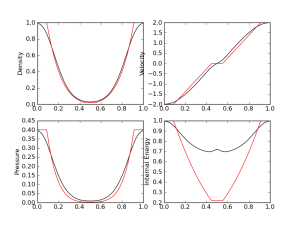 despite this failure is not encouraged because of superficial fears regarding perception. As a result we have come to accept mediocrity as success, losing almost any conception of what true success looks like. Our success is almost by fiat rather than achievement. We will ultimately pay the price of this orgy of over-evaluation unless something changes in how we view things.
Not knowing that we learn from our mistakes and failures is perhaps the biggest one of them all.
Have no fear of perfection – you’ll never reach it.
 I wrote this in a notebook a few weeks ago and it would be a good idea to explain myself. The lack of certainty and chaos in the Universe is obvious, yet so much of our modeling is based on deterministic thinking. This legacy of Newton pollutes so much of
 ―
― 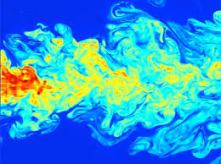 It is the enshrinement of mathematics as divorced from reality. The reason is several fold: the equations as given are patently unphysical, and singularities are a relic of the same Newtonian thinking that defines the Universe as a clock simply moving forward with complete determinism.
 This is only one instance where determinism is hurting science. In general the modeling of the World or Universe proceeds along lines that implicitly expect determinism despite all the evidence to the contrary. A lot of the time the variation in behavior of a system is relatively small, or the nature of variability is reliable and can be captured in the constitutive laws. A problem that we are increasingly facing is the solution of systems where length and time scales where the variability exists are coming into the resolution of our codes. Continuing to promote the fallacy that the system is deterministic is simply wrong on the face of it.
 to avoid answering a question. It has been a source of much discussion, a recent documentary
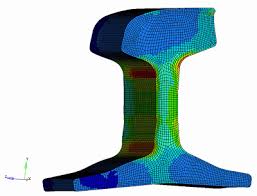 So what our some of the unknown knowns for that I deal with?
 egions and apply homogeneous properties even though the materials are definitely heterogeneous at the scale of the mesh. Generally speaking, the changes necessary to model things correctly is barely on the technical agenda. These features are more prevalent in
 wn known. It has become the prevalent way of managing complexity and simply assuming the answer is easier than thinking about the inherent complexity of things. This thought process is the heart of racism, sexism, gay bashing and a host of societies greatest ills. By simply assuming certain things to be true without question makes life easy, but it also allows people to do terrible things with complete justification. This brings us back to Rumsfeld.
 In today’s America it is axiomatic that the concept that applying corporate principles to organizational governance is good and appropriate. It is applied without question and used to justify all manner of mismanagement. The reality is that corporate governance principles are somewhere between inappropriate to completely incompetent for managing research institutions. I’d argue that they are ruining the economy itself because the current “principles” are oriented toward the benefit of the few people at the top of the food chain.
 onflict of interest, and society as a whole is paying the price. The business principles being used are bad for the businesses as they are used as sources of money that is systematically siphoned off to compensate “shareholders”.
 with disaster. Our dominance of science and research is ending. Europe and China are overtaking the United States. Our government seems to be in denial of this, but it is more obvious all the time. A large part of the blame can be laid at the feet of the misapplication of corporate governance to research institutions.
 that kept him employed into his 80’s and able to generously support his family.
 ch of these four categories. For example there might be a big difference between solutions that are wandering in phase space as opposed to one that is bouncing between several possible equilibrium points.
 he point is that if your calculation runs to completion it could be in one of three states. You should be quite interested in which one. Verification is the vehicle to help you figure this out. You can really only start to sleuth out what state the calculation is in by doing a sequence of nearby calculations using variations in the models and methods. If you run a family of problems you will generally find that the easier problems converge to the exact solution without problems (assuming you have an exact solution). You can only distinguish between 1 & 2 when you have an exact solution.
 As you raise the problem difficulty either by varying the parameters or geometry or materials, you will gradually get solutions that depart of the exact one, but converge to some solution. As the conditions for the problem become more extreme, the code will stop converging to a single answer, and ultimately encounter stability problems. For more complicated problems especially in multiple dimensions one may always be looking at problems that don’t converge to a single solution, nonetheless you should be asking these questions all the time.
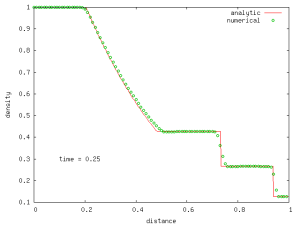 itute proof, it’s a rough check. Sometimes it is offered as evidence because the author doesn’t want to look to close either because they are lazy, or they know that the result won’t bear up under scrutiny.
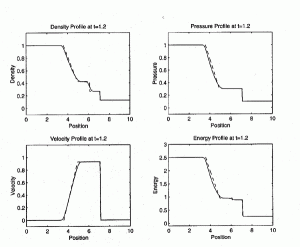 ctually is, the longer the speaker will leave the viewgraph up to be examined. If the result is poor, the viewgraph won’t be available for examination for more than a few seconds.
 rs of technology, as well as a metaphor for the dehumanizing effect of the modern world. The zombie lives the existence of the undead driven by an inhuman hunger for flesh (or brains!). It has no other purpose, but to mindlessly consume the living.
 sed. We don’t endeavor to have the World’s largest hammer or wrench; we recognize that these are tools whose function is essential. We don’t recognize this about computers, for some reason their status as tools has been lost. In this sense supercomputing research has become a bit of a fetish.
 This blog is intended primarily as a place for me to focus on positive habits like writing every day, and establishing more of an online presence. I think its working well, but I need change it up. I’ve decided to move to a daily blog post instead of the weekly one. The writing is usually related to something I’m working on, or thinking about, or ne
 The Regularized Singularity