Or
A Social Revolution is taking us to the Edge of Civil War
We’re collectively living through 1500, when it’s easier to see what’s broken than what will replace it.
― Clay Shirky
 I was talking to some people a week ago about the times we live in. I wondered aloud if this is what the 1960’s felt like with societal upheaval seemingly everywhere. Are we in the midst of a similar level of upheaval that will leave a much different World in its wake? Looking at the World the signs of major change and the inevitable reaction to it are everywhere. The ubiquity of the Internet through mobile computing is changing society in a myriad of ways. Demographics are approaching tipping points while the inequality of wealth is at or over an economic tipping point. Open bigotry, racism and class struggle are erupting across the World. Fear mongering and demagoguery are the stock and trade of politicians seeking to benefit from the under-currents of discomfort. The populace is afraid and the political opportunists are poised to take advantage.
 Terrorism and ISIS are simply symptoms of the times rather than driving forces. The same for the rise of right wing extremism in the United States (and Europe); it is a symptom of the times. They seem to be driving the issues and debate, but instead should be viewed as the most glaring evidence of the conflict poised to erupt. Both of these major problems are simply rather natural reactions to the upset of numerous equilibriums we once relied upon. Numerous forces have destabilized our society and reactionary movements are to be expected as a result.
Change is not what we expect from religious people. They tend to love the past more than the present or the future.
― Richard Rohr
My conclusion is that today’s World is in the midst of changes and conflict that may be larger, more dangerous and more pervasive than anything we have seen for centuries. The 1960’s were tranquil by comparison to the storm we are living through.
The essence of Conservatism is fear: fear of what is not understood, fear of change, fear of the new, fear of what’s different, fear of the other.
― Gene Pozniak
While the two symptoms would seem to be at odd with each other, they are actually allies, forces of conservatism trying to overthrow the vast changes pushing forth out of demographics, economics and technology. Both ISIS and right wing extremism have strong religious elements combined with a distain for the new, liberalism arising everywhere. The new societal structures emerging are terrifying to the traditional elements in society. Nothing spurs a conservative response like feminism, sexuality and gender. Both have elements of violence in their approach being pervasive with ISIS and still on the fringe with right wing extremists, but becoming more normative. While both use technology to varying degrees in furthering their cause ultimately technology is one of the elements driving these forces toward reactionary extremist views.
Through the open warfare conducted by the fearful right wing in the West and terrorism from the Islamic World, we see effective combat against the forces of change in society across the World. Whether it is directly through violence as with ISIS or the rise of the National Security state in the West, the open, pluralistic and secular society is driven back into the shadows. In many respects the impact of terrorism is similar to the military-law enforcement’s response to it; the freedom of the populations exposed to it is reduced.  It acts to squash the liberalization of society by violence or the response to it. Fear of terrorism is the greatest impact of terrorism and its most powerful weapon. The right wing reactionary movements in the West act to empower terrorists by stoking the elements of fear in society. These right wing movements use fear to further their own goals for pushing back against secular elements.
When we change the way we communicate, we change society
― Clay Shirky
In this way ISIS and the right are allies. They both seek to drive social progress backwards and revert the rules of life back to the middle ages. They hate each other because of bigoted religious views held on both sides, but socially their aims are quite similar. Both seek to impose a religious rule at home and across the world largely in reaction to the discomfort arising from the vast changes in society that make them
uncomfortable. Religion in this case is simply a tool of the fearful to drive away the changes that drive their discomfort. Perhaps nothing stokes the fear of the reactionary elements like sex. Whether it is the empowerment of women in society toward equality, freedom of sexual expression, normalization of homosexuality, broader changes in the definition of marriage, or gender, these conservative elements respond with anger, violence and fear.
Our social tools are not an improvement to modern society, they are a challenge to it.
― Clay Shirky
Of course this societal Molotov’s cocktail is fueled by more than just sexuality; it has an economic element to push it over the top. We have an economic system that is near crisis. In the United States the inequality of wealth is near an all-time high. In the past this level of inequality preceded massive upheavals. Society stands on the brink of tumbling into despotic governance or rampant corruption if it isn’t already there. The rich know this and work actively to control the levers of power to hold onto and increase their ill-gotten wealth.
[N]ew technology enables new kinds of group-forming.
― Clay Shirky
In the Islamic World this sort of inequality is epidemic and provides a fertile breeding ground for the sort of political-religious extremism that ISIS is. Nothing would defuse this ticking time bomb better than economic equality and education. Ignorance and poverty are the fuel for the violent extremism we see. Moreover the United States in particular and the World in general is well on its way to creating the same elements with itself due to corrupt and incompetent governance. This volatile mixture is itself the recipe for revolution or societal free-fall, but even more problems contend to make these times uniquely dangerous.
How is the United States at once the most conservative and commercial AND the most revolutionary society on Earth?
― Christopher Hitchens
Technology allows new things to happen, new ways of communicating, and new ways of living, and new ways of working. Each of these threatens the status quo and stokes discomfort especially among those not ready for change. In many respects technology has the impact of enabling the inequality to grow, but also democratize the masses and allow liberalization of many social norms. The rich and powerful have the advantage of training and education, buying technology, but have the disadvantage of being conservative and not accepting changes. The key to the discussion is the ubiquity of the technology’s capacity to create the environment for change and the threat it poses to the foundation of our lives.
One of the biggest changes in our society is the shift from prevention to reaction…
― Clay Shirky

This has played out in the Arab spring. Social media played a role in powering a popular uprising only to see much of the progress undone by reactionary counter-movements. To a large respect the cancer that is ISIS arose from this environment. Just as ISIS uses social media to spread its message, the populist movements similarly utilize this means to boost their power base. While the use of social media by ISIS is disquieting, the power of social media is strongly slanted towards being a force for liberalizing social structures across the World. To win the fight against forces like ISIS we must simply have faith that the force of light and good are stronger than the dark. Social media is like everything in humanity; it can be used for good or evil to equal measures. Those who would destroy its power because of fear act in a manner that makes them evil. The fear used and powering the right wing reactionary movement is itself an evil that must be defeated.
Collaboration is not an absolute good.
― Clay Shirky
The final element is this recipe for crisis is environmental danger. There is a combination of issues that will produce tremendous opportunities for warfare, violence and chaos. Climate change is an active element in producing and exaggerating economic and political problems Worldwide. Shortages of food, water and  energy create wars and fuel elements of extremist movements. Every aspect of society that reacts poorly to social changes is driven further by environmental crises. Together these elements produce a deep well of danger for much of the World. At the same time we see the right wing reactionary apparatus is geared to denying the impact of environmental change. To a large degree this reaction is dominated by the business element’s desire to not kill the goose that is laying golden eggs.
What is changing in society? We are in the midst of massive changes in how our social structures work.
At the same time as this massive social change, we see economic conditions that are primed for conflict. The levels of inequality both nationally and internationally have evolved to a level that threatens the stability of society by themselves. We already dodged a bullet seven years ago when our financial system almost c ollapsed. We have done far to little to assure that the sort of bubble that created that problem cannot happen again. Instead we are primed for another crisis. In the United States the steady decline in the middle class is producing an increasingly stratified country. Levels of poverty are growing and the educational system that serves to buoy citizens against the downward forces is falling apart. The economic conditions produce a real source of fear and are useful for collecting people into fear-driven angry mobs.
The increasingly level of corpulent wealth among the rich is working to remove resources from society as a whole, and pitting the rich against the poor. The rich are growing in their ability to control the levers of political power primarily to attempt to stabilize the economic and legal systems in a manner that benefits the rich. The fear of change, terrorism and race is a perfect vehicle for the rich to exploit. All of these things create a recipe for an angry mob under the control of the rich and powerful. Right now the angry mob is supporting Donald Trump, and aren’t exactly acting as the rich (aside from Trump) would like. The rich may get the last laugh and put one of their own puppets in control of the mob. Overall it is simply another element in looking toward a chaotic outcome.
The social fabric of society is also changing in ways that stoke the fears of the populace. Technology is changing how we interact with one another in a myriad of ways. Facebook is the simplest and perhaps most innocuous of these forces. Other aspects of the Internet and mobile apps have a greater degree of impact on society. Changes in how relationships form, develop and proceed are undergoing fundamental changes. The nature of the family unit, marriage and our basic identity as adults is evolving. Your tribe no longer depends upon locality, but now can form remotely and far more specifically a person’s interests and desired social niche.
 The deepest penetration of this change has been seen in the societal adoption of gay marriage, but it is the tip of a societal iceberg. It is driven by a massive change in societal comfort with homosexuality. Almost everyone now knows an openly gay person, and sees them as someone who needs their rights to be respected. Beyond gay marriage movements are afoot to normalize polyamourous relationships, open marriage, and other forms of family and relationship dynamics. Online and mobile communication allows new communities to form without intersecting with traditional mediums of social structure.
 Sexual freedom that provided one of the key elements for the 1960’s is undergoing a new renaissance revolving around mobile computing. Mobile apps and new forms of dating like Tinder, OKCupid are the most innocuous forms for these changes in the relationship landscape. The forces of conservatism are horrified and fearful of these changes, and are mobilizing to push back against them. All of this is ripe for deep and wrenching conflict on new social battlefields. Just as the forces of liberalization utilize modern technology, the forces arrayed against changes organize themselves with modern technology too (ISIS is an example!).
All of this comes together to challenge the traditional views of what constitutes moral behavior. Discussions of morality become the fuel for the right wing reactionary movements. This produces a deep societal tension between those who are freed by personal prisons through liberalization of morality and those whose power is magnified by the older moral norms. LBGT issues are a common lightning rod for polarization of the two sides of the equation. While LBGT is the epitome of the tensions around morality, it is the tip of the iceberg. All the elements in the modern World conspire to create quantries to be solved and challenges to traditional morality.
In the United States and Europe right wing extremism is a reaction to all of the change. There is a pervasive social, religious and racial basis to these reactionary movements. They are responding to all of the changes seen across society at large. The combination of quickly growing minority populations in Europe and the impending minority majority in the United States has the traditional white majorities terrified. The combination of gender, sexual and social changes in the structure of families and relationships are furthering the depth of fear of change. All of this is driven by a combination of demographic shifts, technology and generational changes that are inevitable. This does not mean that the forces of status quo will not fight back. The resistance to change will be mighty and the potential for violence is rather extreme.
 ISIS is another reactionary force. It is a reaction to a broad based economic deprivation and widespread corruption in the Islamic World. Of course the West has had a hand in creating the elements in Islamic society that have produced ISIS. The form of extreme religious views is simply a detail, not the core of the problem. ISIS is not an Islamic movement; it is driven by large scale poverty, lack of opportunity and powerless masses. It derives its power and manpower base from the millions of poor, uneducated and desperate masses in the Islamic World. The elements of religious extremism play to lack of economic power and uneducated populace whether it is Islamic or Christian.
The irony of ISIS is how alike the American and European right wing movements they are. They should be allies and thankfully they cannot be. The truth is that the right wing movements in the West help ISIS with every bomb they drop and every right they suppress. The liberalization of the West is the single greatest weapon against ISIS. Feminism, secular society, mass media and sexuality all work to undermine the right wing whether it is Christian-based or Islamic. Our movies, television, Facebook and yes our porn all work to hurt ISIS. When the right wing religious zealots in the West attack any of these liberal forces, they help ISIS. The right wing in the West would like to unplug everything that would act to undermine ISIS.
 Change is here; change is upon us. There is no going back, but there is going to be deep conflict around all these beachheads. The forces of inequality and traditional society will not go away quietly. Traditional religion, gender, family and inequality will not relinquish their power without a fight. The changes in society are giving power to the disenfranchised, and they will not go back into the shadows without a fight either. This is a recipe for conflict, warfare and perhaps even revolution. We may be set for a period of change in society that will make the 1960’s look like a peaceful serene episode in history.
This creates the recipe for war.
Real generosity towards the future lies in giving all to the present.
― Albert Camus



 more apt description. There is frightfully little investigation or intellectual engagement
 Societally, the concept of too big to fail applies to the banking and financial institutions that almost destroyed the World economy eight years ago. We demonstrated that they were both too big to fail and too big and too powerful to change thus remaining a ticking time bomb. It is only a matter of time before the same issues present in 2007 erupt again and wreck havoc on the World economy. All the evidence needed to energize real change is available, but there is simply too much money to be made, and greed is more powerful than common sense. I realized that our application codes and computers probably properly deserve to be thought of in exactly the same light, they are too big to fail too. This character is slowly and steadily poisoning the environment we live in and any discussion of different intellectual paths is simply forbidden.
 As I said, the depth of intellectual ownership of these very codes is diminishing with each passing day. The essential aspects of these code’s utility and success in our application areas is based on deep knowledge and intense focus of talented individuals. The talent and skills leading to successful codes are difficult to develop and maintain; the skills must be developed by simultaneously pushing several envelopes: the applications, the models, methods to solve models, and computer science-programming. Today we really only focus on the computer science-programming and simply sort all the other details. Rather than continually reinvest in people and science, we are creating an environment where codes are curated. This state is actually a recipe for catastrophic failure rather than glorious success. The path forward should be adaptive, flexible and agile; instead the path is a lumbering goliath and viewed as a fait accompli.
 humans who understand the basis of models and how these models are solved. When we curate code this key connection is lost. We lose the fundamental nature of the model as our impression of nature, rather than its direct image. We use models as a way of explaining nature rather than a substitute for the natural World. This tie is being systematically undermined by the way we compute today and results in a potentially catastrophic loss of humility. Such loses of humility ultimately produce reactions that are unpleasant and damaging.
 We are creating a program that will collide with reality leaving a broken and limping community in its wake. It has a demonstrated track record of not learning from past mistakes, producing a plan for moving ahead that is devoid of innovation and deep thought. Today’s path forward is solely predicated on the idea that we must have the fastest computer rather than the best computing. It is the epitome of bigger and more expensive is better, rather than faster, smarter and more agile. Perhaps more damaging is a perspective that the problems we face are already solved save the availability of more computer power. We will end up eviscerating the very communities of scientists that are the lifeblood of modeling and simulation. The program may be a massive mistake and no one is questioning any of it.
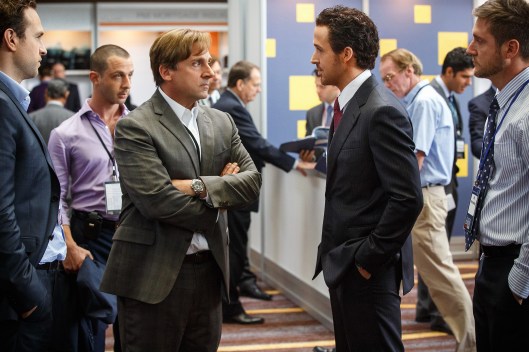
 One scene in “The Big Short” stands out as helping define the depth of the dysfunction in the system, the trip to Moody’s, the rating agency for the securities. The securities created by the banks were incredibly unstable and literally junk, yet the ratings agencies kept putting their top seal of approval on them, AAA. When pressed on the matter, the woman representing Moody’s said, “if we don’t give them the rating they want, the guy down the street will, we want the business.” The people watching the system for fraud were completely in bed with the crooks. The reality is that this practice and problem are everywhere. It is true where I’ve worked, it is obviously true in politics, and sports, and education, and… Our whole nation is living in the Golden Age of Bullshit. This serves no purpose but perpetuating the existing structures of power at the cost of progress, quality and ethical behavior.
 cause being responsible will just get you replaced by a more corrupt or corruptible irresponsible person. The sorts of peer reviews that we see at work are the same thing. Everything is graded on a curve, and a bad failing grade is never allowed. Failure isn’t allowed, if it comes up the messenger is “shot” (usually by being dismissed from the peer review). We never confront any problems until they blow up in our faces. This tendency basically allows progress to grind to a proverbial halt. Failures are the fuel for progress and when you disallow failure, you disallow progress.
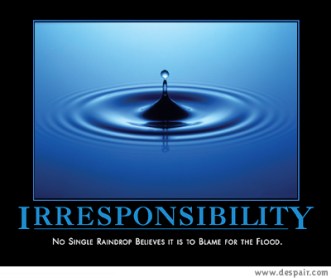 of bullshit responses that hamper us today. If everyone is an expert then no one is an expert. If people don’t like the information they get, they find someone else who gives them a different answer. As a result science in our society is in decline. Actual science is being hurt, and science’s role in society is similarly degrading. Look at the whole anti-vaxxer movement, which has absolutely no basis, but lots of proponents. We get ideas where any risk at all is unacceptable and we allow progress to grind to a complete halt. Failure, problems and the identification of things that need to be improved creates the basis of valuable work. We have structurally destroyed mechanisms for doing this by our addiction to praise and inability to identify and confront problems while they are small.
 management provides. Progress often comes from applying new thinking to old problems. One of the key things to do is identify and take on unsolved problems, another name for failures. Making progress is often the antithesis of things that can be managed in today’s common fashion, so progress makes way for management satisfaction. The key is the project management is simply a tool, and a useful one at that. It is not a recipe for success or an alternative to thinking deeply and differently.
 Even with a day off, work last week really, completely sucked. I got to spend very little time doing my daily habit of writing in a focused manner. Every day at work was a pain and ended the week with hosting a group of visitors who are responsible for part of the new exascale computing initiative. Among the visitors were a few people whom I have history with both good and bad. If you’ve read this blog you know that I’m not a fan of the exascale computing imitative. Despite this, I was expected to be on my best behavior (and I think that I was). It was not the time, nor place to debate the program’s goals or wisdom (to be honest I’m not sure what the right time is). It’s pretty clear to me that there hasn’t been much of any debate or thought put into the whole thing. That’s a discussion for a different day.
 I also noted the distinct air of control from the visitors and discussion of their colleagues who run our programs. The programs want to give us very little breathing room to exercise our own judgment on priorities. They want to define and narrow our focus to their priorities. Given the lack of technical prowess from those running things it’s dangerous. Awful programs like exascale are the direct result of this sort of control and lack of intellectual thought running research. Everything is politically engineered and nothing is really composed of elements that are designed to maximize science. The result is a long-term malaise in research, progress and science we are suffering from. Ultimately, the system we are laboring under will result is less growth and prosperity for us all. It is the inevitable result of basing our decisions on fear and risk avoidance instead of hope, faith and boldness.
 Because our program is all about stockpile stewardship the meeting was held in a classified setting. This means no electronics and a requirement that I unplug. It might be a good excuse to get some reading done, but I had to look like I was paying attention all day. So I took copious notes. Not much interesting happened so most of the notes were to self and captured my thoughts, reflections and perspectives. This alone made the entire experience valuable from a personal-professional perspective. I managed to digest a lot of my backlog of thinking that the well-connected World distracts you from constantly. I had some well-structured time with my own thoughts and that’s a really good thing.
 Aside from the deeper thoughts I also realize that it pays to think in many different ways even from a mechanical point of view. I try walking each day along with a walking meditation, followed by free association. It ends up being a very effective way to self-brainstorm. I keep a notebook for each day in a cloud app. There is this blog, which allows for a freeform prose, but done in an electronic form. Writing things down on paper has subsided a lot, and last week I rediscover the virtue of that medium albeit by the nature of the circumstances. For a long time I kept a pad of lined post-it notes in my car since a lot of good ideas would just come to me driving to and from work. It might be good to force myself to use paper alone more often. By the power of cameras and remarkable text recognition the paper can go directly into my electronic notebook any way.
 contempt. Our overlords encourage us to ignore the carnage they are subjecting the world to, but it is there hidden in plain sight. Today we live in a coarse and belligerent culture that threatens to undermine everything good. I’m not talking about the sort of moral decay social conservatives would point to. I’m talking about the fundamental rewards, checks and balances that encourage an environment of selfish and greedy behavior. At the same time these same forces work to undermine every effort to pay attention to larger societal, organizational and social imperatives that collectively make everything better. We act selfish in the service of maintaining the power of others, and avoiding the sort of collective service that raises everyone.


 We really don’t have to have our collective act together to compete. It’s all fear and no benefit of accomplishing great things, and we aren’t. We just have the requisite reduction in freedom in response to this fear without any of the virtues. This dismal state of affairs results in a virtual emptying of meaning from work that used to be important. I work at a place where work ought to have value and importance, yet we’ve managed to ruin it.
 gment to feel truly empowered at work. All the control and accountability at work is primarily disempowering employees and sucking all the meaning from work. I ought feel an immense amount of importance to what I do. My management, writ large, is managing to destroy something that ought to be completely easy to achieve. This malaise is something we see nationally as the general sense that your work has little larger meaning is used to crush people’s wills. Instead of empowering people and achieving their best efforts, we see control used to minimize contributions and destroy any attempt toward deeper meaning. This sense is deeply reflected in the current political situation in the World and the broad sweeping anger seen in the populace.
 The love affair with corporate governance for science is another aspect of the current milieu that is deeply corrupting science. Our corporate culture is corrupting society as a whole and science is no exception. The greed and bottom line infatuation perverts and distorts value systems and has systematically harshened the cultures of everything it touches. Increasingly, the accepted moral thing to do is make yourself as successful as possible. This includes lying, cheating and stealing if necessary (and you can get away with it). More corrosively it means losing any view of broader social, societal, organizational or professional responsibility and obligation. This undermines collaboration and free exchange of ideas, which ultimately destroys innovation and discovery.
 Accountability has been instituted that allows people to ethically ignore the broader context in favor of narrow focus. They are told that doing this is the “right” thing to do, and basically they should otherwise mind their own business. This attitude extends to society as a whole and we are all poorer for it. We keep ideas to ourselves, and the narrowly defined parochial interests of those who pay us. Instead we should operate as engaged and collaborative stewards of our society, organizations or professions. We have adopted a system that encourages the worst in people rather than the best. We should absolutely expect problems to be caused by this culture of selfishness. The symptoms are everywhere and threaten our society in a myriad of ways. The only portion of society that benefits from our present culture is the rich and powerful overlords. These systems maintain and expand their ability to keep their corrupt and poisonous stranglehold on everyone else.
 merely to demonstrate rote knowledge; one needs to understand the principles underlying the knowledge. One way to demonstrate the mastery over knowledge is utilize the current knowledge and then extend the knowledge in that area to something new. This gets to the core of our current problem in science, we are not being asked to extend knowledge, and we are asked to curate knowledge. As a result we are losing the ownership that denotes mastery.
 tware libraries, and the mapping of all of these to modern computing architectures. Because of the demise of Moore’s law we are exploring a myriad of extremely exotic computing approaches. These exotic computer architectures are causing implementations to become similarly exotic. In a sense my concern is that the difficulty of simply using these computers has the effect of sucking “all the oxygen” from the system and leaves precious little resource behind for any other creative endeavor, or risk taking. As a result we have no real progress being made in any of the activities in modeling and simulation beyond mere implementations.
 ls? Or improved methods? Or improved algorithms? The answers to these questions are not uniform by any means. There are times when the greatest need for modeling and simulation is the capacity of the computing hardware. At other times the models, methods or algorithms are the limiting factors. The question we should answer is what is the limiting factor today? It is not computing hardware. While we can always use more computing power, it is not limiting us today. I believe we are far more limited by our models of reality, and the manner in which we create, analyze and assess these models. Despite this lack of need for improved hardware, computing hardware is the focus of our efforts.
 time those people go away and the logic and rationale for the code’s form and function begins to fade away. We often find that certain things in the code can never be changed lest the code become non-functional. We are left with something that looks and feels like magic. It works and we don’t know why or understand how it works, but it does.
 he space of knowledge is taken off the table and relegated to being purely curated. This full demonstration has the role of providing an important feedback of reality to the work being done. Reality is very good at injecting humility into the system when it is most needed. When the knowledge is curated we rapidly remove important and essential aspects of stewardship. We have immense issues associated with the long-term responsibility of caring for a stockpile. New issues arise that are beyond the set of conditions the systems were originally designed for. All of this needs a fertile intellectual environment to be properly stewarded. We are not doing this today. Instead the intellectual environment is actually being steadily eroded in favor of curating knowledge. In computing, the creation of legacy codes is a key symptom of this environment.
 ually undocumented. Many of the tricks are far more obvious and logical to use, and their failure is usually unexplained. Hence the production code works on the basis of tricks of the trade that are often history dependent, and rarely explained, yet utterly essential.
 for it is the standard way things unfold. The reason this happens is because creating a new production code is a risky thing. Most of the time the effort fails. The creation of the code requires a good environment that nurtures the effort. If the environment is not biased toward replacing older codes with new codes (i.e., progress and improving technology), the inertia of the status quo will almost invariably win. This inertia is based on the very human tendency to base correctness on what you are already doing. The current answer has a great deal greater propriety than the new answer. In many cases the results of existing codes provide the strongest and clearest mental image of what a phenomena looks like to people utilizing modeling and simulation especially in fields where experimental visuals do not exist.
 The path toward better performance in modeling and simulation has focused to an unhealthy degree on hardware for the past quarter century. This focus has been driven to a very large degree by a reliance on Moore’s law. It is a rather pathetic risk avoidance strategy. Moore’s law is the not really a law, but rather an empirical observation that computing power (or other equivalent measures) is growing at roughly a rate of doubling every 18 months. This observation has held since 1965 although its demise is now rapidly upon us. The reality is that Moore’s law has held for far longer than it ever could have been expected to hold, and its demise is probably overdue.
 We can almost be certain that Moore’s law will be completely and unequivocally dead by 2020. For most of us its death has already been a fact of life for nearly a decade. Its death during the last decade was actually a good thing, and benefited the computing industry. They stopped trying to sell us new computers every year and unleashed the immense power of mobile computing and unparalleled connectivity. Could it actually be a good thing for scientific computing? Could its demise actually unleash innovation and positive change that we are denying ourselves?
 Each of these questions can be answered in a deeply affirmative way, but requires a rather complete and well-structured alteration in our current path. The opportunity relies upon the recognition that activities in modeling and simulation that have been under-emphasized for decades provide even greater benefits than advances in hardware. During the quarter century of reliance on hardware for advancing modeling and simulation we have failed to get the benefits of these other activities. These neglected activities are modeling, solution methods and algorithms. Each of these activities entails far higher risk than relying upon hardware, but also produce far greater benefits when breakthroughs are made. I’m a believer in humanity’s capacity for creation and the inevitability of progress if we remove the artificial barriers to creation we have placed upon ourselves.
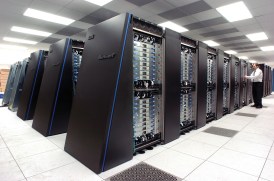 If we look at the lost opportunities and performance from our failure to invest in these areas, we can easily see how much has been sacrificed. In a nutshell we have (in all probability) lost as much performance (and likely more) as Moore’s law could have given us. If we acknowledge that Moore’s law’s gains are actually not seen in real applications, we have lost an even greater level. Our lack of taste for failure and unpredictable research outcomes is costing us a huge amount of capability. More troublingly, the outcomes from research in each of these areas can actually enable things that are completely different in character than the legacy applications. There are wonderful things we can’t do today because of the lack of courage and vision. Instead the hardware path we are on almost assures that the applications only evolve in incremental, non-revolutionary ways.
 Earlier this week I gave a talk on modernizing codes to a rather large audience at work. The abstract for the talk was based on the very first draft of my Christmas blog post. It was pointed and fiery enough to almost guarantee me a great audience. I can only hope that the talk didn’t disappoint. A valid critique of the talk was my general lack of solutions to the problems I articulate. I countered that the solutions are dramatically more controversial than the statement of the problems. Nonetheless the critique is valid and I will attempt to provide the start of a response here.
 ASC is a prime example of failing to label and learn from failures. As a result we make the same mistakes over and over again. We are currently doing this in ASC in the march toward exascale. The national exascale initiative is doing the same thing. This tendency to relabel failures as success was the topic of my recent “bullshit” post. We need failure to be seen as such so that we do better things in the place of repeating our mistakes. Today the mistakes simply go unacknowledged and become the foundation of a lie. Such lies then become the truth and we lose all contact with reality. Loss of contact with reality is the hallmark of today’s programs.
 One of the serious problems for the science programs is their capacity to masquerade as applied programs. For example ASC is sold as an applied program doing stockpile stewardship. It is not. It is a computer hardware program. Ditto for the exascale initiative, which is just a computing hardware program too. Science or the stockpile stewardship missions are mere afterthoughts. The hardware focus becomes invariant to any need for the hardware. Other activities that do not resonate with the hardware focus simply get shortchanged even when they have the greatest leverage in the real world.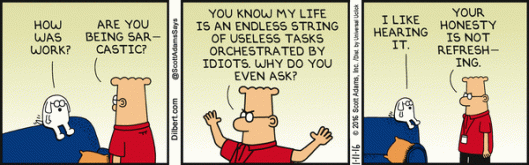
 The beginning of the year is a prime time for such a discussion. Too often the question of importance is simply ignored in lieu of simple and thoughtless subservience to other’s judgment. If I listen to my training at work, the guidance is simple. Do what you’re paid to do as directed by your customer. This is an ethos of obedience and your particular judgment and prioritization is not really a guide. This is a rather depressing state of affairs for someone trained to do independent research; let someone else decide for you what is important, what is a priority. This seems to be what the government wants to do to the Lab, destroy them as independent entities, and replace this with an obedient workforce doing whatever they are directed to do.
 An important, but depressing observation about my work currently is that I do what I am supposed to be doing, but it isn’t what is important to be doing. Instead of some degree of autonomy and judgment being regularly exercised in my choice of daily activities, I do what I’m supposed to do. Part of the current milieu at work is the concept of accountability to customers. If a customer pays you to do something, you’re supposed to do it. Even if the thing you’re being paid for is a complete waste of time. The truth is most of what we are tasked to do at the Labs these days is wasteful and nigh on useless. It’s the rule of the day, so we just chug along doing our useless work, collecting a regular paycheck, and following the rules.
 The real world is important. Things in the real world are important. This is an important thing to keep in mind at all times with modeling and simulation. We are supposed to be modeling the real world for the purpose of solving real world problems. Too often in the programs I work on this seemingly obvious maxim gets lost. Sometimes it is completely absent from the modeling and simulation narrative. Its lack of presence is palpable in today’s efforts in high performance computing. All the energy is going into producing the “fastest” computers. The United States must have the fastest computer in the World, and if it doesn’t it is a calamity. The fact that this fastest computer will allow us to simulate reality better is a foregone conclusion.
 This is a rather faulty assumption. Not just a little bit faulty, but deeply and completely flawed. This is true under a set of conditions that are increasingly under threat. If the model of reality is flawed, no computer, no matter how fast can rescue the model. A whole bunch of other activities can provide an equal or greater impact onto the efficiency of modeling than a faster computer. Moreover the title of fastest computer has less a less to do with having the fastest simulation. The benchmark that measures the fastest computer is becoming ever less relevant to measuring speed with simulations. So in summary, efforts geared toward the fastest computer are not very important. Nonetheless they are the priority for my customer.
 The reason for the lack of progress is simple, high performance computing is still acting as if it were in the mainframe era. We still have the same sort of painful IT departments that typified that era. High performance computing is more Mad Men than Star Trek. The control of computing resources, the policy based use and the culture of specialization all contribute to this community-wide failing. We still rely
 upon centralized massive computing resources to be the principle delivery mechanism. Instead we should focus energy on getting computing for modeling and simulation to run seamlessly from the mobile computer all the way to the supercomputer without all the barriers we self-impose. We are doing far too little to simply put it at our collective
 to be a niche activity, and not fulfill its potential.
 It goes without saying that we want to have modern things. A modern car is generally better functionally than its predecessors. Classic cars primarily provide the benefit of nostalgia rather than performance, safety or functionality. Modern things are certainly even more favored in computing. We see computers, cell phones and tablets replaced on an approximately annual basis with hardware having far greater capability. Software (or apps) gets replaced even more frequently. Research programs are supposed to be the epitome of modernity and pave the road to the future. In high end computing no program has applied more resources (i.e., lots of money!! $$) to scientific computing than the DoE’s Advanced Simulation & Computing(ASC) program and its original ASCI. This program is part of a broader set of science campaigns to support the USA’s nuclear weapons’ stockpile in the absence of full scale testing. It is referred to as “Science-based” stockpile stewardship, and generally a commendable idea. Its been going on for nearly 25 years now, and perhaps the time is ripe (over-ripe?) for assessing our progress.
 My judgment is that ASC has succeeded in replacing the old generation of legacy codes with a new generation of legacy codes. This is now marketed to the unwitting masses as “preserving the code base”. This is a terrible reason to spend a lot of money and fails to recognize the real role of code, which is to encode expertise and knowledge of the scientists into a working recipe. Legacy codes simply make this an intellectually empty exercise making the intellect of the current scientists subservient to the past. The codes of today have the same intellectual core as the codes of a quarter of a century ago. The lack of progress in developing new ideas into working code is palpable and hangs heavy around the entire modeling and simulation program like a noose.
 A modern version of a legacy code is not modernizing; it is surrender. We have surrendered to fear, and risk aversion. We have surrendered to the belief that we already know enough. We have surrendered to the belief that the current scientists aren’t good enough to create something better than what already exists. As I will outline this modernization is more of an attempt to avoid any attempt to engage in risky or innovative work. It places all of the innovation in an inevitable change in computing platforms. The complexity of these new platforms makes programming so difficult that it swallows every amount of effort that could be going into more useful endeavors.
 Is a code modern if it executes on the newest computing platforms? Is a code modern if it is implemented using a new computer language? Is a code modern if it utilizes new software libraries in its construction and execution? Is a code modern if it has embedded uncertainty quantification? Is a code modern if it does not solve today’s problems? Is a code modern if it uses methods developed decades ago? Is a code modern if it runs on my iPhone?
 The conventional wisdom would have us believe that we are presently modernizing our codes in preparation for the next generation of supercomputers. This is certainly a positive take on the current efforts in code development, but not a terribly accurate characterization either. The modernization program is certainly limited to the aspects of the code that have the least impact on the results, and avoids modernizing the aspects of a code most responsible for its utility. To understand this rather bold statement requires a detailed explanation.
 So this is where we are at, stuck in the past, trapped by our own cowardice and lack of imagination. Instead of simply creating modern codes, we should be creating the codes of the future, applications for tomorrow. We should be trailblazers, but this requires risk and taking bold chances. Our current system cannot tolerate risk because it entails the distinct chance of failure, or unintended consequence. If we had a functioning research program there is the distinct chance that we would create something unintended and unplanned. It would be wonderful and disruptive in a wonderful way, but it would require the sort of courage that is in woefully short supply today. Instead we want to have certain outcomes and control, which means that our chance of discovering anything unintended disappears from the realm of the possible.
 The core of the issue is the difficulty of using the next generation of computers. These machines are literally monstrous in character. They raise parallelism to a level that makes the implementation of codes incredibly difficult. We are already in a massive deficit in terms of performance on computers. For the last 25 years we have steadily lost ground in accessing the potential performance of our computers. Our lack of evolution for algorithms and methods plays a clear role here. By choosing to follow our legacy code path we are locked into methods and algorithms that are suboptimal both in terms of performance, accuracy and utility on modern and future computing architectures. The amount of technical debt is mounting and magnified by acute technical inflation.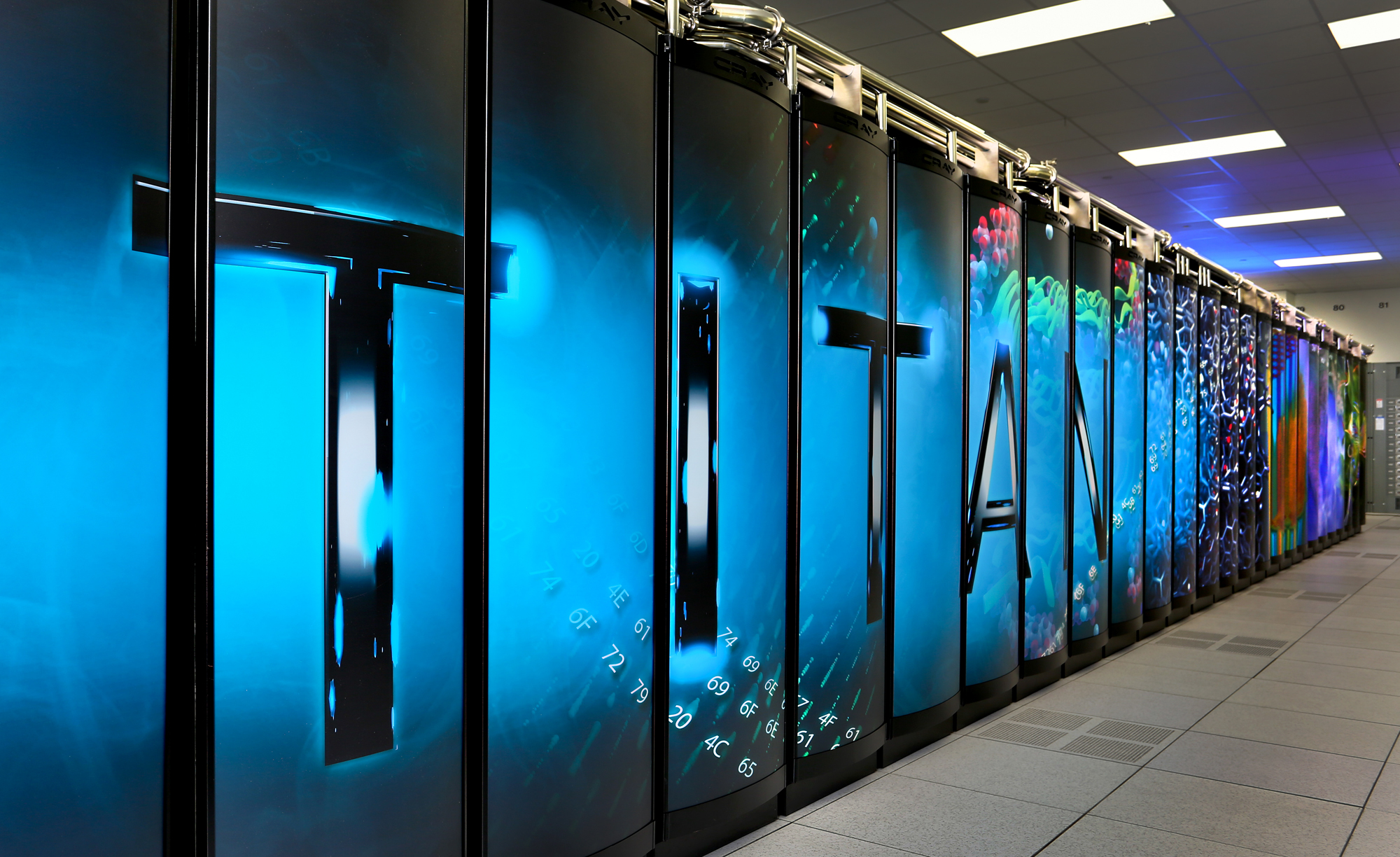










 The Regularized Singularity