
This gallery contains 2 photos.
A lie that is half-truth is the darkest of all lies. ― Alfred Lord Tennyson Note: Today’s post contains a …

10 Thursday Dec 2015
Posted in Uncategorized
This gallery contains 2 photos.
A lie that is half-truth is the darkest of all lies. ― Alfred Lord Tennyson Note: Today’s post contains a …
04 Friday Dec 2015
Posted in Uncategorized
Judge a man by his questions rather than by his answers.
― Voltaire
It probably isn’t much of a stretch to say that science takes on the characteristics of the era in which it is conducted. When I look at science today, it seems to reflect the basic character of the time we live in: timidity born of baseless fear, short-term thinking and goals with a general lack of imagination. Science like many things in society is swept up in the overall sea of culture and experience. Perhaps it might be too much to ask for science to have a differing tone than other aspects of our  World. On the other hand, the downsides to the current milieu with regard to science are stark and obvious. Science is in complete disarray and we are to blame.
For example, I work largely on a National project with enormously aggressive goals and sweep. I’ve worked in this program for two decades. This is Science-based Stockpile Stewardship (SBSS). This is the answer of the United States to the cessation of nuclear weapons’ testing and an important cornerstone of the effective test ban. To succeed it must be executed in a bold and fearless fashion with an unerring long-term vision aided by expressive creativity. The reality is so different. Our national leaders declare success without any basis in truth. It is part of the overall problem where the actual definition of success sews the seeds of failure. The actual program falls so far short of its vision as to be nearly comical if it weren’t so important.
It is hard to fail, but it is worse never to have tried to succeed.
― Theodore Roosevelt
Why then is the reality so different from this expression of the character of success? For all of its vision and importance, SBSS is caught up in the realities of today and the political nature of science today. As our political  climate has become a festering and poisonous environment, the conduct of science has taken on a similar air. Part of this issue comes from the public funding of science, which is an absolute necessity considering the utter wasting away of corporate science. The imposition of short-term thinking as the principle organizing principle for industry has obliterated basic research at the corporate level. Unfortunately the corporate mantra has been adopted by the government as a way of improving the quality of governance. This has simply multiplied the harm done by the sort-term thinking and its ability to ravage any long-term accomplishments.
As a nation we can’t even take care of our roads, bridges, airports in a reasonable fashion because it’s payoff is not realized immediately. The undoing of the Nation’s infrastructure and failure to invest in its 21st Century equivalents is a clear and present danger to the economic future of the United States. Yet inaction rules the political response to the obvious need for investment. Science, whose benefits are far more ephemeral, is far more difficult to manage in a similarly long-term fashion. Like infrastructure, the investment in science is utterly inadequate and the destructive management environment imposed on it then compounds this inadequacy. Everything from politics to business is operating in a completely short-term, immediate payoff fashion. Almost everything must show progress and payoff quarterly and all long-term interests are scarified at this altar.
 The truth is that short-term thinking is bad for business, bad for science, bad for careers, bad for everyone except those at the top. It only benefits activities like finance as a way of powering their moneymaking shell game. It benefits the very rich and their rent-seeking behavior. We get sold a complete line of bullshit in calling all the finance “investment” when it is simply moving money around to make more money. The middle class has been sold on this strategy through their retirement accounts, but this is the equivalent of a bribe as it only buys their acceptance of a system that harms the middle-class in the long-term. The only interest that truly benefits is the status quo that is locked in from this focus. For science, the short-term thinking is simply destructive and a recipe for mediocrity and lack of progress. Again, the problems are only seen in the long-term when the lack of scientific progress will harm our descendants.
Despite this obvious downside of defining all benefit in a short-term fashion everyone has bought this idea hook, line and sinker. The quarterly report driven attitude is driven by a false belief that it is good for business. All it is good for is driving the stock market and money around in the giant shell game that finance is today. In the process we have systematically destroyed many business interests and undermined the economic well being of the entire World. As bad as this is the damage to the conduct of science is greater. It has destroyed the scientific vitality of corporate laboratories. Discoveries that could have been the basis of the future economy are now being driven out of existence. Our World will be poorer; lives will be shorter in the long run due to the shortsighted, risk adverse and fear-driven policies of today.
Only those who dare to fail greatly can ever achieve greatly.
― Robert F. Kennedy
 For me I see my life and career playing out in this shitty time. I could have been part of something bold and wonderful with science providing the backbone of an important societal endeavor. Instead we are destroying research institutions through utter neglect. We are wasting careers and lives in pushing down risks due to irrational fears. All of this is done in service to short-term thinking that benefits the rich and powerful. No one else benefits from the short-term thinking, no one, it is simply a vehicle for empowering the status quo and assuring that the identities of those on top do not change. It is the straightjacket through which lack of social mobility arises.
How did all this happen?
 All one has to do is look at the political environment today. Americans and perhaps the entire Western world have never been more fearful and afraid. At the same time the World has never been more peaceful. Our society and so-called leaders amp up every little fear and problem into a giant boogieman when the actual reality is completely opposite. We have never ever been safer than today. This is true even with the orgy of gun violence in the United States. The powers that be use the tiny danger of terrorism to drive the forces of the status quo while utterly ignoring larger dangers (like firearms). The truth is that we have never had less to fear. Yet fear is the driving force politically and used to sell fear-spewing candidates to a weak, shivering populace. Fear sells products to people whether is drugs, cars, media content, guns, or almost anything else. Our mass media is simply a tool of their corporate overlords with the ultimate design to enslave us to the status quo. Our society runs on fear and fear is used to enslave the populace. Science is simply an innocent bystander slain by the societal drive-by.
If you’re not prepared to be wrong, you’ll never come up with anything original.
― Ken Robinson
The consequence of this constant fear-mongering and risk avoidance is a societal timidity. This timidity is a slow-motion surrender to the forces of stasis and decay. In almost all endeavors fortune favors the bold and aggressive, yet everything in the system discourages such attitudes. We have a socially imposed lack of confidence born of fear and enforced by systematic cowardice. The result is a broad-based diminishment of accomplishment. All the while the forces of the establishment openly crow about their successes and achievements publically while privately undermining every attempt to actually produce progress. We have reaped a World that makes Orwell’s vision of 1984 seem remarkably prescient.
To produce the sort of progress we are capable of the system needs to support it. Fear must be tamped down and reduced, and risks should be actively encouraged. We should seek aggressive and bold paths forward perhaps approached with some degree of reckless abandon, or the sort of over-confidence that allows the impossible to be achieved. Rather than squash progress at every opportunity, it needs to be fertilized and nurtured. Today’s systems effectively strangle the infant progress in its crib, aborting virtually every attempt to do anything that breaks the mold. You never hear a proposal being criticized for not being risky enough, only being too risky.
In the process we stay within the realm of the known and keep the unknown at bay. The unknown is where progress lives along with risk and fear. Without courting failure we cannot produce anything new. Today’s management looks for everything that could go wrong with a bold research path, and rarely looks for what could go right. We seek that safe and obvious incremental path because it will almost surely succeed with a little bit of competent effort.
 This thinking infests the approach to high performance computing where a tried and true path of relying upon Moore’s law has powered modest improvements for decades. At the same time we have avoided progress in other areas of computing with greater benefits, but also greater risks and higher probabilities of failure. A prime example of this disservice can be found in numerical linear algebra where the solution of sparse systems has stagnated for decades. All the effort has been consumed by moving the existing methods to the new computing platforms, and little or nothing on improving the methods themselves. Orders of magnitude in performance improvements have been scarified to fear and risk avoidance. Let’s not forget that the principle beneficiaries of the current supercomputing program are computer vendors who will receive great sums of money to produce the monstrous computers being contemplated. These horrible machines will sap the resources left over to actually use them and simply compound the stasis already evident in the field.
Perhaps no area of modeling and simulation has been more neglected than the physical models used. We are in a decades long trajectory where the basic assumptions of the physical models used in simulation have been fixed. Despite rapidly accumulating evidence of the utter lack of applicability and appropriateness of many models forming the basis of codes, the models remain fixed. In a number of cases key assumptions such as separation of scales has broken down, yet no attempt has been made to overhaul the models. If a model is flawed no amount of raw computing power can save it, yet we are devoting massive resources and political will to increasing raw computing power.
It is quite evident that the key to successful modeling and simulation is not found in computer power, but rather in a variety of other activities. Rather than pursue a path that leads to greater success, but requires greater risk and more opportunity for failure, we pursue the path that seems safe. We need to focus on models, methods and algorithms along with innovative uses of computing. Instead we hold all of these aspects fixed while pursuing a host of rather safe and pedestrian activities that will do little to improve science. The lack of bold visionary leadership in scientific computing is somewhere between depressing and pathetic.
I n a very clear way we are taking enormous risks with our future. We are accumulating massive long-term risk by consistently taking the low-risk short-term path. This is clearest when examining the state of the careers in science. Once we allowed people to aggressively pursue research with a high change of failure, but the possibility of massive payoffs. Today we timidly pursue incremental progress, yet view this as enormously risky. The greatest risk of the continued pursuit of a computing hardware driven path in high performance computing is the destruction of promising scientific careers, and the destruction of a balanced program for advancing modeling and simulation. Make no mistake, the current approach to modeling and simulation is completely unbalanced. It is timid. It lacks creativity. It lacks vitality. It is not science-based; it is fear-based. It is the result of an unhealthy fixation on short-term thinking about progress.
I work in computing, so I see the field rather fully. I am fairly certain that the attributes seen in computing are fairly broadly applicable to science in general. In areas close to computing and essential for progress, the same symptoms are there. By all accounts, experimental science is in even worse shape than computational science; theoretical physics even more so. The failings of experimental and theoretical science are profoundly evident in the lack of any vibrancy or vitality in modeling for computing, as they are the source of change. In both bases the state of these fields should roundly condemn SBSS to utter and complete failure. Those in power have declared success in SBSS, but the evidence is all to the contrary.
Perhaps my greatest concern is that these issues are all embedded with a societal environment that shows no sign of changing without great upheaval. Such an upheaval would be enormously painful, but perhaps greatly overdue. The last upheaval of such a magnitude was the 1960’s and probably created the environment we have today. The level of income and societal inequality we have today in unsustainable, and probably creates a social instability that will sooner or later explode. Perhaps we are seeing the beginnings of this, and it might be the best thing in the end.
The scientist is not a person who gives the right answers, he’s one who asks the right questions.
― Claude Lévi-Strauss
27 Friday Nov 2015
Posted in Uncategorized
When the number of factors coming into play in a phenomenological complex is too large scientific method in most cases fails. One need only think of the weather, in which case the prediction even for a few days ahead is impossible.
― Albert Einstein
One of the dirty little secrets of computing in the scientific and engineering worlds is the fact that the vast majority of serious calculations are highly calibrated (and that’s the nice way to say it). In many important cases, the quality of the “prediction” is highly dependent upon models being calibrated against data. In some cases calling the calibrated “models,” does modeling a great disservice, and the calibration instruments are simply knobs used to tune the calculation. The tuning accounts for serious modeling shortcomings and often allows the simulation to produce results that approximate the fundamental balances of the physical system. Often without the calibrated or knobbed “modeling” the entire simulation is of little use and bears no resemblance of reality. In all cases this essential simulation practice creates a huge issue for the proper and accurate uncertainty estimation.
Confidence is ignorance. If you’re feeling cocky, it’s because there’s something you don’t know.
― Eoin Colfer
At some deep level the practice of calibrating simulations against data is entirely unavoidable. Behind this unavoidable reality is a more troubling conclusion that our knowledge of the World is substantially less than we might like to freely admit to ourselves. By the same token the actual  uncertainty in our knowledge is far larger than we are willing to admit. The sort of uncertainty that is present cannot be meaningfully addressed through the focus on more computing hardware (its assessment could be helped, but not solved). This uncertainty can only be addressed through a systematic effort to improve models and engage in broad experimental and observation science and engineering. If we work hard to actively understand reality better the knobs can be reduced or even removed as knowledge grows. This sort of work is exactly the sort of risky thing our current research culture eschews as a matter of course.
Do not fear to be eccentric in opinion, for every opinion now accepted was once eccentric.
― Bertrand Russell
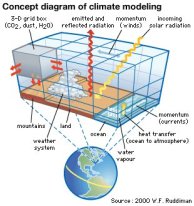
This area of modeling and simulation is essential to many areas to varying degrees. If we are to advance our use and utility of modeling and simulation with confidence, it must be dealt with in a better and more honest way. It is useful to point to a number of important applications where calibration or knobs are essential to success. For air flow over an airplane or automobiles turbulence modeling is essential and turbulence is one of the key areas for calibrated results. Climate and weather modeling is another area where knobs are utterly essential. Plasma physics is yet another area where the modeling is so poor that calibration is absolutely necessary. Inertial or magnetically confined fusion both require knobs to allow simulations to be useful. In addition to turbulence and mixing, various magnetic or laser physics add to the problems with simulation quality, which can only be dealt with effectively through calibration and knobs.
You couldn’t predict what was going to happen for one simple reason: people.
― Sara Sheridan
The conclusion that I’ve come to is that the uncertainty in the cases of calibrated or knobbed calculation has two distinct faces each of which should be fully articulated by those conducting simulations. One is the best-case scenario of the simulated uncertainty, which depends on the modeling and its calibration being rather complete and accurate in capturing reality. The second is the pessimistic case where the uncertainty comes from the lack of knowledge that led to the need for calibration in the first place. If the simulation is calibrated, the truth is that the calibration is highly dependent upon the data used and guarantees of validity are dependent on matching the conditions closely associated with the data. Outside the range where the data was collected, the calibration should carry with it greater uncertainty. The further we move outside the range defined by the data, the greater the uncertainty.
This is most commonly seen in curve fitting using regression. The curve and the data are closely correlated and standard uncertainties are relatively small. When the uncertainty is taken outside the range of the data, it grows much larger. In the assessment of uncertainty in calculations this is rarely taken into account. Generally those using calculation like to be blithely unaware of whether the calibrations they are using are well within the range of validity. Calibration is also imperfect and carries an error with them intrinsic to the determination of the settings. The uncertainty associated with the data itself is always an issue when either taking the optimistic or more pessimistic face of uncertainty.
A potentially more problematic aspect of calibration is using the knobs to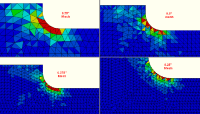 account for multiple effects (turbulence, mixing, plasma physics, radiation and numerical resolution are common). In this cases the knobs may account for a multitude of poorly understood physical phenomena, mystery physics and lack of numerical resolution. This creates a massive opportunity for severe cognitive dissonance, which is reflected in an over-confidence in simulation quality. Scientists using simulations like to provide those funding their work with greater confidence than it should carry because the actual uncertainty would trouble those paying for it. Moreover the range of validity for such calculation is not well understood or explicitly stated. One of the key aspects of the calibration being necessary is that the calculation cannot reflect a real World situation without it. The model simply misses key aspects of reality without the knobs (climate modeling is an essential example).
In the cases of the knobs accounting for numerical resolution, the effect is usually crystal clear when the calibration of the knob settings needs to be redone whenever the numerical resolution changes because a new faster computer becomes available. The problem is that those conducting the calculations rarely make a careful accounting of this effect. They simply recalibrate the calculations and go on without ever making much of it. This often reflects a cavalier attitude toward computational simulation that rarely intersects with high quality. This lack of transparency can border on delusional. At best this is simply intellectually sloppy, at worst it reflects a core of intellectual dishonesty. In either case a better path is available to us.
Science is not about making predictions or performing experiments. Science is about explaining.
― Bill Gaede
 In essence there are two uncertainties that matter: the calibrated uncertainty where data is keeping the model reasonable, and the actual predictive uncertainty that is much larger and reflects the lack of knowledge that makes the calibration necessary in the first place. Another aspect of the modeling in the calibrated setting is the proper use of the model for computing quantities. If the quantity coming from the simulation can be tied to the data used for calibration, the calibrated uncertainty is a reasonable thing to use. If the quantity from the simulation is inferred and not directly calibrated, the larger uncertainty is appropriate. Thus we see that the calibrated model has intrinsic limitations, and cannot be used for predictions that go beyond the data’s physical implications. For example climate modeling is certainly reasonable for examining the mean temperature of the Earth. One the other hand the data associated with extreme weather events like flooding rains are not calibrated, and uncertainty regarding their prediction under climate change are more problematic.
 In modeling and simulation nothing comes for free. If the model needs to be calibrated to accurately simulate a system, the modeling is limited in an essential way. The limitations in the model are uncertainties about aspects of the system tied to the modeling inadequacies. Any predictions of the details associated with these aspects of the model are intrinsically uncertain. The key is the acknowledgement of the limitations associated with calibration. Calibration is needed to deal with uncertainty about modeling, and the lack of knowledge limits the applicability of simulation. One applies the modeling in a manner that is cautious, if they are being rational. Unfortunately people are not rational and tend to put far too much faith in these calibrated models. In these cases they engage in wishful thinking, and fail to account for the uncertainty in applying the simulations for prediction.
It is impossible to trap modern physics into predicting anything with perfect determinism because it deals with probabilities from the outset.
― Arthur Stanley Eddington
If we are to improve the science associated with modeling and simulation the key is uncertainty. We should charter work that addresses the most important uncertainties through well-designed scientific investigations. Many of these mysteries cannot be addressed without adventurous experimentation. Current modeling approaches need to be overthrown and replaced with different approaches without limitations (e.g., the pervasive mean field models of today). No amount of raw computing power can solve any of these problems. Our current research programs in high performance computing are operating in complete ignorance of the approach necessary for progress.
All you need in this life is ignorance and confidence, and then success is sure.
– Mark Twain
19 Thursday Nov 2015
Posted in Uncategorized
We adhere to the saying, “if it ain’t broke, don’t fix it,” while not really questioning whether “it” is “broke.”
― Clayton M. Christensen
Supercomputing is a trade show masquerading as a scientific conference and at its core big money chasing small ideas. It takes place this week in Austin, and features the slogan “HPC Transforms“. The small idea is that all we need to do for modeling & simulation (and big data) to succeed is build faster computers. This isn’t a wrong idea per se, but rather a naïve and simplistic strategy that is suboptimal in the extreme. Its what we are doing despite the vacuous thinking behind it. Unfortunately we and other countries are prepared to spend big money on this strategy while overlooking the rather obvious and more balanced path to success. The balanced path is more difficult, challenging and risky, which is part of our unwillingness to pursue it. The tragedy that is unfolding is one of lost opportunity for true sustainable progress and massive societal impact.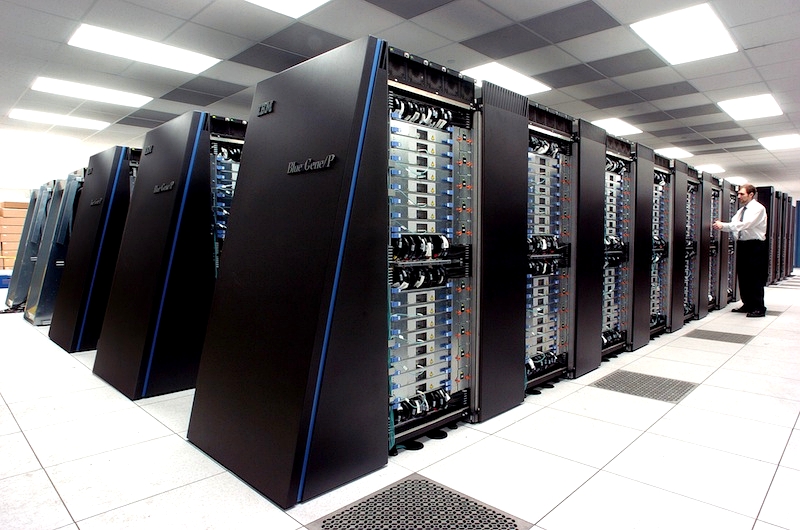
“HPC Transforms” isn’t a bad or wrong idea either. The problem is the basic concept of transformation happened decades ago, and today HPC works on the pure inertia of that generation old progress. It was the 1980’s that marked the birth of HPC and its transformative power on science. If look at HPC today we see a shell left over with only massive computing hardware being the focus. The elements of progress and success that fed the original transformative power of HPC have been allowed to whither. The heart and soul of HPC is whithering due to lack of care and feeding. A once balanced and important effort has become a dismal shell of its former self. We have allowed shallow slogans to replace a once magnificent scientific field’s path to change.
This week marked some insightful commentary about Clayton Christensen’s theory of disruptive innovation (https://hbr.org/2015/12/what-is-disruptive-innovation or the reader’s digest version http://www.businessinsider.com/clay-christensen-defends-his-theory-of-disruption-2015-11), which has become a bit of a hollow mantra and buzzword in many places. For many, like those in HPC, it has become a bit of a shallow offering about the nature of Supercomputing. Instead I’ll submit that the last twenty years has been marked by a disruptive disinnovation. The parallel computing “revolution” has ripped the heart and soul from supercomputing and left a rotting husk behind. The next generation of computing will only offer an acceleration of the process that has lobodomized supercomputing, and left a vertiable zombie  behind. The lobodomy is the removal of attention and focus on the two pieces of computing that are most responsible for impacting reality, which I am going to refer to as the heart and soul of HPC. It doesn’t need to be this way, instead the path we are taking is a conscious choice driven by naivity and risk-aversion.
If you defer investing your time and energy until you see that you need to, chances are it will already be too late.
― Clayton M. Christensen
So what is this opposing concept of disruptive disinnovation that I’m proposing? It is a new technology that you are forced into using that undermines other important technologies. For supercomputing the concept is relatively easy to see. Computing has transformed quickly into a global economic colossus, but focused on the mobile market, which derive their value primarily through mobility, connectivity and innovation in applications.
Traditional mainframe sort of computing has changed with a distinct lack of drive for raw computing power. Low power that allows long battery life became the design mantra for computer chips and the easy performance of improvements of Moore’s law ended last decade. At the same time we have a mantra that we must have the most powerful computer (measured by some stupid benchmark that is meaningless!). This demand for the fastest computer became some sort of empty national security issue to sell it without a scintila of comprehension for what makes these computers useful in the first place. The speed of the computer is one of the least important aspects of the real transformative power of supercomputing, and the most distant from its capasity to influence the real world.
To enable us to claim to have the fastest computer, which naively means we have the best science. In the process of using these new computers we undermine our modeling, methods and algorithmic work because just using these new computers was so hard. The quality of the science done with computers is completely and utterly predicated on the modeling used.
There are quarters that like to say that parallel computing was a disruptive innovation, except it made things worse. In the process we underminded the most important aspect of supercomputing to enable meaningless boasting. The concept is really simple to understand and communicate: it’s the apps stupid. The true value of computers are the applications, not the hardware. If anything should be obvious about the mobile computing era, it is the software that determines the value of computing, and we have systematically undermined the value, content and quality of our software. When I say this it is not an SQE question, but the application’s utility to impact reality.
What is this heart and soul of HPC?
Modeling is the heart of high performance computing. Modeling is the process of producing a mathematical model of the real world. HPC provided a path to solving a far greater variety and complexity of models scientifically and opened new vistas for scientific exploration and engineering creation. When modeling is a living breathing entity, it grows when it is critically compared with the reality it is supposed to represent. Some models die and others are born to replace them. Models breed with their genetic material mixing to produce better and more powerful offspring.
Today we have created walls that keep our models from breeding, growing and extending them to become better and more relevant to the issues that society is depending upon them to contribute toward. The whole modeling aspect of HPC is rather static and simply reflects a fixed point-of-view toward what we should be modeling. More than anything the current slogan-based approach to HPC simply promulgates models from the past into the future by fiat rather than an explicit choice.
You view the world from within a model.
― Nassim Nicholas Taleb
Perhaps the worst thing about the lack of attention being paid to modeling is the extreme needs that are unmet and the degree of opportunity being lost. The degree of societal impact that supercomputing could be having is being horrendously shortchanged. The leadership is fixated on hardware primarily as a low-risk path to seeming progress (a gravy train that is about to end). A higher risk path would be the support of work that evolves the utility of supercomputing into the modern world. The risk is higher, but the payoff would be potentially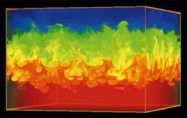 immense and truly transformative. We have deep scientific, engineering and societal questions that will be unanswered, or answered poorly due to our risk aversion. For example, how does climate change impact the prevalence of extreme weather events? Our existing models can only infer this rather than simulate it directly. Other questions related to material failure, extremes of response for engineered systems, and numerous scientific challenges will remain beyond our collective grasp. All of this
opportunity is missed because we are unwilling to robustly fund risky research that would challenge existing modeling approaches.
Risks must be taken because the greatest hazard in life is to risk nothing.
― Leo Buscaglia
The soul of HPC is methods and algorithms, which together power the results that the computer can produce. We used to invest a great deal in improving methods and algorithms to amplify the good that the computer does. Today we simply use what we already have developed and re-implement them to fit onto the modern monstrosities we call supercomputers. The drive to continually improve and extend existing methods and algorithms to new heights of quality and performance is gone. We have replaced this with the attitude that these areas are mature and well developed not needing attention. Again, we can honestly assess this as a lost opportunity. In the past methods and algorithms have produced as much gain in performance as the machines. In effect they have been a powerful multiplier to the advances in hardware. Today we deny ourselves this effect to the detriment of the transformation this conference is touting to the World.
 All of this reflects a rather fundamental misunderstanding of what HPC is and could be. It is not a fully matured topic, nor is it ready to simply go into this station-keeping mode of operation. It still requires the extreme intellectual efforts and labors that put it in this transformative place societally. If HPC were more mature we might reasonably be more confident in its results. Instead HPC relies upon bravado of boastful claims that hardly match what capability it truly has. Any focused on attention on the credibility of computed results reveals that HPC has a great deal of work to do, and the focus on hardware does little to solve it. The greatest depth of work is found in modeling closely followed by issues associated with methods and algorithms.
Instead of basing a program for making HPC transformative on empirical evidence, we have a program based on unsupported suppositions. Hardware is easily understood by the naïve masses, which includes politicians and paper pushers. They see big computers making noise and lots of blinking lights. Models, methods and algorithms don’t have that appeal, yet without them the hardware is completely useless. With an investment in them we could make the hardware vastly more powerful and useful. The problem at hand isn’t that the new hardware is a bad investment; it is a good investment. The problem is how much better the new hardware could be with an appropriately balanced development program that systematically invested in modeling, methods and algorithms too.
People don’t want to buy a quarter-inch drill. They want a quarter-inch hole.
― Clayton M. Christensen
Despite this we have systematically disinvested in the heart and soul of HPC. It is arguable that our actual capacity for solving problems has been harmed by this lack of investment to the tune of 10, 100 or even 1000 times. We could have HPC that is a 1000 times more powerful today if we had simply put our resources into a path that had already been proven for decades. If we had a bolder and more nuanced view of supercomputing, the machines we are buying today could be vastly more powerful and impactful. Instead we clunk along and crow about a transformative capability that largely already happened. There are stunning potential payoffs societally that we are denying ourselves.
Modeling defines what a computer can do, and methods/algorithms define how well they can do it. What our leadership does not seem to realize is that no amount of computing power can do anything to improve a model that is not correct. The only answer that improves the ability to impact reality is a newer, better model of reality. The second aspect of supercomputing we miss is the degree to which methods and algorithms provide benefit.
Our computing power today is more dependent and has received greater benefit from the quality and efficiency of methods and algorithms than hardware. Despite the 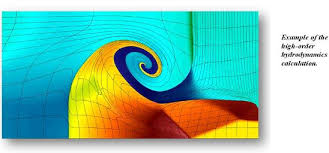 clear evidence of its importance we are shunning progress in method and algorithms in order to focus on hardware. This is a complete and utter abdication of leadership. We are taking a naïve path simply because it is politically saleable and seemingly lower in obvious risk. The risk we push aside is short term, in the long term the risks we are taking on are massive and potentially fatal. Unfortunately we live in a World where our so-called leaders can make these choices without consequence.
This is an absolute and complete failure of our leadership. It is a tragedy of epic proportions. It reflects poorly on the intellectual integrity of the field. The choices made today reflect a mindset that erupted at the end of the cold war and was successful then in keeping the DOE’s national labs alive. We have gotten into a model of confusing survival with success. Instead of building from this survival strategy into something sustainable, the survival strategy has become the only strategy. If science were actually working properly, the lack of balance in HPC would have become evident. The Supercomputing meeting this week is an annual monument to the folly of our choices in investment in HPC.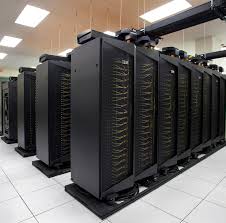
I can only hope that saner, more intelligent and braver choices will be made in the not too distant future. If we do we can look forward to a smarter, less naïve and far bolder future with high performance computing that brings the transformative power of modeling and simulation to life. The tragedy of HPC today isn’t what it is doing; it is what isn’t being done and the immense opportunities squandered.
We all die. The goal isn’t to live forever, the goal is to create something that will.
― Chuck Palahniuk
13 Friday Nov 2015
Posted in Uncategorized
Accountability is generally a good thing. We are at our best when we are held accountable to our colleagues, our efforts and ourselves. So how can accountability ever be a bad thing? The way it’s done today is a vehicle of unparalleled destructive power.
There is nothing so useless as doing efficiently that which should not be done at all.
― Peter Drucker
 Avoiding accountability is never a good thing. On the other hand too much overbearing accountability starts to look like pervasive trust issues. The concomitant effects of working in a low-trust environment are corrosive to everything held accountable. As most things the key is balance between accountability and freedom, too much of either lowers performance. Today we have too little freedom and far too much accountability in a destructive form. For the sake of progress and quality a better balance must be restored. Today’s research environment is being held accountable in ways that reflect a lack of trust, and a complete lack of faith in the people doing the work, and perhaps most importantly produce a dramatic lack of quality in the work (https://williamjrider.wordpress.com/2014/10/23/excellence-and-accountability/).
Accountability can be implemented in many ways, and today in science it looks like micromanagement. How can we make accountability (a generally good thing!) destructive? We define work that should be innovative and creative in terms of well-defined deliverables and milestones (https://williamjrider.wordpress.com/2014/12/04/the-scheduled-breakthrough/), which must never be failed to execute. An important thing that comes from research is finding out what are distinctly bad ideas. The right thing to do is stop when you something is a bad idea and finds a new idea. Today we continue to plow along a path even when we know it’s the wrong one because of the sort of contracts we are accountable to. Perhaps most importantly the quality of the work rarely if ever enters into the accountability. We live in an environment where quality is simply assumed to be in place, and no one seems to have a direct and unbreakable commitment to it. In today’s accountability culture, quality is simply not part of the expectations.
 It shows in everything we do.
We divvy up the work into smaller and smaller bins with well-defined deliverables and quarterly progress reports. The same principles that are corrupting our business world are being applied to science (https://williamjrider.wordpress.com/2014/10/10/corporate-principles-do-not-equal-good-management/). Where these principles are arguably appropriate for business (the whole shareholder value concept as the point of business), they are unremittingly damaging to science. Yet apply them we do gleefully and wantonly. It is strangling the quality of the work that is being made accountable as surely as it wastes precious resources. Time and money are interchangeable, but the most unforgivable aspect of this is the waste of careers, talent and human potential to a cause that undermines more than it builds.
Small minds just like small stones can never create giant waves.
― Mehmet Murat ildan
The accountability we see today is destroying the ability to define, think about, and executes big ideas. We live in an era of small-minded, small ideas and a general lack of accomplishment of anything that matters. People are encouraged to work very prescriptively and narrowly within their prescriptively and narrowly defined scope of work. Success often (if not always) depends on things outside the scope of the work we are accountably doing. How can we do something “out of the box” if we are driven to always stay in “the box”? We then say that since it is outside our scope of work, it is outside what we are responsible for. We then feel that ignoring things out of scope for our responsibilities is a duty we are accountable for. The present form of accountability allows one to ignore the big picture and execute the body of work promised whether it matter or not, whether it is useful of not, and whether it is quality or not. It almost assures that work done is not well integrated or adaptive to deeper understanding.
…If there is no risk, there is no reward.
― Christy Raedeke
Another impact of the small-minded thinking is a complete lack of ownership of anything bigger than what you are directly accountable for. You are encouraged to focus only on what you are directly being paid to focus on. Coupled with naïve intellectually shallow management you have a recipe for systematic mediocrity. Just as damning is the extreme risk aversion of the management and increasingly by rank and file scientists. This pervasive risk aversion almost assures that nothing of significance will be accomplished. One can work hard on meaningless tasks and feel successful empowering an ever-diminishing quality standard for all the work touched by accountability. It assures that we will never accomplish anything big or important. In many cases this sort of approach is appropriate for building bridges, repaving roads or putting up a skyscraper. For research, science or high-end engineering it is harmful, damaging and ultimately a giant waste of money. We follow plans that do not stand the test of time and we fail to adjust to what we learn.
 Our accounting systems are out of control. They spawn an ever-growing set of rules and accounts to manage the work. All of this work is nothing more than a feel good exercise for managers who mostly want to show “due-diligence” and those they “manage risk”. No money is ever wasted doing anything (except increasingly all the money is wasted). Instead we are squeezing the life out of our science, which manifests itself as low quality work. In a very real way low quality science is easier to manage, far more predictable and easy to make accountable. One can easily argue that really great science with discovery and surprise completely undermines accountability, so we implicitly try to remove it from the realm of possibility. Without discovery, serendipity and surprise, the whole enterprise is much more fitting to tried and true business principles. In light of where the accountability has come from, it might be good to take a hard look at these business principles and the consequences they have reaped.
We exist in an increasingly risk adverse (https://williamjrider.wordpress.com/2015/10/23/we-want-no-risk-and-complete-safety-we-get-mediocrity-and-decline/) and fearful society beset by massive inequality of income, wealth and opportunity. Many of these terrible outcomes can be traced directly to the sorts of business principles being applied to science. Such principles are completely oriented toward driving outcomes preferentially toward the “haves” and away from the “have not’s”. Ultimately, the biggest threat to the rich and powerful is change in the status quo. The sorts of management and accountability used today mostly works to undermine any real progress, which favors the status quo. Science is one of the major societal engines of progress and change. The rich and powerful are fearful of progress, and work to kill it. We are tremendously successful at killing progress, and modern accountability is one of the best tools to do it.
Creativity requires the courage to let go of certainties.
― Erich Fromm
 Quality suffers because of loss of breadth of perspective and injection of ideas from divergent points of view. Creativity and innovation (i.e., discovery) are driven by broad and divergent perspectives. Most discoveries in science are simply repurposed ideas from another field. Discovery is the thing we need to progress in science and society. It is the very thing that our current accountability climate is destroying. Accountability helps to drive away any thoughts from outside the prescribed boundaries of the work. Another maxim of today is the customer is always right. For us the customers are working under similar accountability standards. Since they are “right” and just as starved for perspective, the customer works to narrow the focus. We get a negative flywheel effect where narrowing focus and perspective work to enhance their effect.
Never attribute to malice that which can be adequately explained by stupidity.
― Robert Heinlein
This has manifested itself as the loss of the Labs as honest brokers. The Labs are simply sycophants today who work on what they are paid to work on. A large-scale extension of the customer is always right principle. They never provide even a scintilla of feedback to government programs because of the fear of having their funding cut. Instead they pile on to poorly constructed and intellectually shallow programs because they promise funding. Thus we get programs that are phenomenally shallow and intellectually empty, but are managed at a level that provides no freedom or innovation to rescue them from their mediocrity. The accountability means that the empty intellectual goals are executed to a tee, and any value that might have arisen from the resources is sacrificed to the altar of doing what you’re told to do.
When programs of the sort that the government is funding are integrated over decades you see an immense decline in the institutions due to the loss of autonomy of the staff. Our National leadership in science simply corrodes and younger scientists do not develop in any sort of coherent way. Careers are starved of the sorts of efforts needed to build them. We have created a generation of mediocre scientists who excel at obedience and simply grinding through projects. They are distinguished by their ability to produce the deliverables they promised and little else. Once great institutions are steaming caldrons of mediocrity and mostly just pork barrel spending (I often joke that the execution of the Lab Mission is best achieved by going out and buying a car).
An inappropriate focus on money is the root of many of these problems. These days we will do almost anything for money, and money is the primary measure of everything (https://williamjrider.wordpress.com/2014/08/29/money-makes-for-terrible-priorities/). In particular the accountability of what money is spent on provides the standard form of success. Did we do what the money was supposed to pay for? If so, success is declared. Never mind that the money has been sub-divided into ever-smaller bins that effectively destroy the ability to achieve anything bigger and more coherent. The big ideas that would really make a huge difference to everyone never happen because we can’t ever produce a body of work that is coherent enough to succeed. We are always doing work “in the box”.
 The end result of our current form accountability is small-minded success. In other words we succeed at many small unimportant things, but fail at large important things. The management can claim that everything is being done properly, but never produce anything that really succeeds in a big way. From the viewpoint of accountability we see nothing wrong all deliverables are met and on time. True success would arise by attempting to succeed at bigger things, and sometimes failing. The big successes are the root of progress and the principal benefit of dreaming big and attempting to achieve big. In order to succeed big, one must be willing to fail big too. Today big failure surely brings congressional hearings and the all to familiar witch-hunt. Without the risks of failure we are left with small-minded success being the best we can do.
Big goals, trust and leadership are the cures. We need to prioritize progress and discovery by producing an environment that is tailored to produce it. Hand in hand with this is a level of faith in the human spirit and ingenuity. Let people believe that their work matters with proof that they are contributing to a meaningful goal. Daniel Pink wrote a book called “Drive” where a workplace is described that is the utter antithesis to the sort of accountability science labors under today (http://www.amazon.com/Drive-Surprising-Truth-About-Motivates/dp/1594484805/ref=sr_1_1?ie=UTF8&qid=1447431195&sr=8-1&keywords=drive). I was stunned by how empowering his description of work could be, and how far from this vision I work under today. I might simply suggest that my management read that book and implement everything in it. The scary thing is that they did read it, and nothing came of it. The current system seems to be completely impervious to good ideas (or perhaps following the book would have been too empowering to the employees!). Of course the book suggests a large number of practices that are completely impossible under current rules and opposed by the whole concept of accountability we are under today.
It is completely ironic that the very forces that are pushing accountability down our throats are completely free of any accountability themselves. Our current political class is virtually invulnerable to any accountability from the voters. The rich and powerful overlords rule the masses with impunity. Their degree of wealth makes them completely resistant to accountability. The accountability thrust upon the rest of us is simply a tool to maintain and magnify their power through killing progress and assuring that the status quo that favors them is never threatened. Accountability is simply a way of crushing progress, and making sure that the current societal order is maintained.
I worry that only some external force and/or event will be able to dismantle the current system, and it will not be pretty or pleasant for anyone. The forces in power today are quite entrenched and resist any move that might reduce their stranglehold on the World.
The best way to find out if you can trust somebody is to trust them.
― Ernest Hemingway
06 Friday Nov 2015
Posted in Uncategorized

Never ascribe to malice that which is adequately explained by incompetence.
― Robert J. Hanlon
I’ve written mostly about modeling and simulation because that’s what I do and what I know best, but its part of a larger effort and a larger problem. I work for a massive effort known as science-based stockpile stewardship where modeling and simulation is one of the major themes. This whole effort was conceived of as a way of maintaining our confidence (faith) in our nuclear weapons in the absence of actually testing them. There is absolutely no techn ical reason not to test them; the idea of not testing is purely political. It is a good political stance from a moral and ethical point-of-view and I have no issue with taking that stand on those grounds. From a scientific and engineering point-of-view it is an awful approach, and clearly far from optimal and prone to difficulties. These difficulties can be a very good thing if harnessed appropriately, but today such utility is not present in the execution of our Lab’s mission. As one should always remember, nuclear weapons are political things, not scientific, and politics is always in charge.
The science-based stockpile stewardship program is celebrating its twenty-year anniversary. Our political leaders are declaring it to be a massive success. They have been busy taking a victory lap and crowing about its achievements. The greatest part of this success is high performance computing. These proclamations are at odds with reality. The truth is that the past 20 years have marked the downfall of the quality and superiority of our Labs and the supremacy of these institutions scientifically. The program should have been a powerful hedge against decline, and perhaps it has been. Perhaps without stockpile stewardship the Labs would be in even worse shape than they are today. That is a truly terrifying thought. We see a broad-based decline in the quality of the scientific output of the United States, and our nuclear weapons’ Labs are no different. It appears that the best days are behind us. It need not be this way with proper leadership and direction.
Confidence is something you feel before you truly understand the situation
― Julie E Czerneda
 Nonetheless given the stance of not testing we should be in the business of doing the very best job possible within these self-imposed rules (i.e., no full up testing). We are not and we are not to a relatively massive degree. This is not on purpose, but rather by a stunning lack of clarity in objectives and priorities. We have allowed a host of other priorities to undermine success in this essential endeavor. By taking the fully integrated testing of the weapons off the table requires that we bring our very best to everything else we do.
 I’ve written a great deal about how bad our approach to modeling and simulation is, but it’s the tip of the proverbial iceberg of incompetence and steps that systematically undermine the work necessary to succeed. Where modeling and simulation gets a lot of misdirected resources the experimental and theoretical efforts at the Labs have been eviscerated. The impact of this evisceration on modeling and simulation is evident in issues with the actual credibility of simulation. This destruction has been done at the time when they are needed the most. Instead support for these essential scientific engines for progress have been “knee-capped”. Just as importantly a positive work environment has been absolutely annihilated by how the Lab’s are managed.
Without the big integrated experiment to tell you what you need to know for confidence all the other experiments need to be taken up a notch or two to fill in the gap. Instead we have created an environment where experimental science has been lobotomized and exists in an atmosphere of extreme caution that almost assures the lack of necessary results for healthy science. Hand in hand with a destruction of experimental science is the loss of any vibrancy of theoretical science. The necessary bond between experimental and theoretical science has been torn asunder. Usually when working well the two approaches push and pull each other to assure progress. With neither functioning, science grinds to a halt. Engineering is similarly dysfunctional. We do not know enough today to execute the mission. In a very real sense we will never know enough, but our growth of knowledge is completely dependent on a functioning engine of discovery powered primarily by experiment, but also theory. Without either functioning properly modeling and simulation is simply a recipe for over-confidence.
We can only see a short distance ahead, but we can see plenty there that needs to be done.
― Alan Turing
We have gotten to this point with the best of intentions, but the worst in performance and understanding of what it takes to be successful. We are not talking about malice on the part of our national leadership, which would be tantamount to treason, but rather the sort of incompetence that arises from the political chaos of the modern era. When we add a completely dysfunctional and spoiled public consciousness governed principally by fear we have the recipe for wholesale decline and the seemingly systematic destruction of formerly great institutions. Make no mistake, we are destroying our technical base as surely as our worst enemy would, but through our own inept management and internal discord.
Let’s start with the first nail in the coffin, the “Tiger teams” of the mid-1990’s. We decided to apply the same forces that have made nuclear power economically unviable to the National Labs (nuclear power has been made massively expensive through over regulation, and a legal environment which causes costs to explode through the time-integrated value of money). This isn’t actual safety, but rather an imposition of a massive paperwork and procedural burden on the Labs, which produces safety primarily by decreasing productivity to the level where nothing happens.
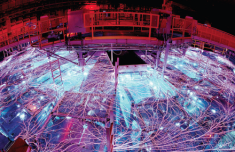 Science becomes so incremental that progress is glacial. You almost completely guarantee safety and in the process a complete lack of discovery. Experiments lose all their essence and utility in acting as a hedge against over-confidence by surprising us. Add the risk aversion we talk about below, and you have experimental science that does almost nothing. As a result we get very little for our experimental dollar, and allow ourselves to do almost nothing innovative or exciting. So yes, safety is really important, and we need to produce a safe working environment. This same environment must also be a productive place. The productivity gains that we have seen in the private world have been systematically undermined at the Labs, not just by safety, but two other drivers risk aversion and security.
Guaranteed security is another pox on the Labs. This pox is impacting society as a whole, but Labs suffer under another burden. We pay an immense tax on our lives by trying to defend ourselves from minuscule risks associated with terrorism. We have given up privacy as a society so that our security forces can find the scant number of terrorists who represent almost no actual risk to citizens. The security stance at the Labs is no different. We have almost no risk or danger of anything, yet we pay a huge price in terms of privacy, productivity and work environment to avoid vanishing small risks. Instead of producing Labs that are so fantastic that we constantly push back the barriers of knowledge and stay ahead of our enemies, we kill ourselves with security. We keep ourselves from communicating, producing work and collaborating effectively for virtually no true benefit aside from soothing irrational fear.
 Finally we have a focus on accountability where we want to be guaranteed that no money be wasted at any time. Part of this is risk aversion where research that might not pan out and doesn’t get funded because not panning out is viewed as failure. Instead these failures are at the core of learning and growing. Failure is essential to learning and acquiring knowledge. Our accountability system is working to destroy the scientific method, the development of staff, and our ability to be the best. To some extent we account not because we need to, but because we can. Computers allow us to sub-divide our sources of money into ever-smaller bins along with everyone’s time, and effort. In the process we lose the crosscutting nature of the Lab’s science in the process. We get a destruction of multi-disciplinary science that is absolutely essential to doing the work of stewardship. Without multi-disciplinary science we will surely fail at this essential mission, and we are managing the Labs in a way that assures this outcome.
 All of this is systematically crushing our workforce and its morale. In addition, we are failing to build the next generation of scientists and engineers with a level of quality necessary for the job. We are allowing the quality of the staff to degrade through the mismanagement of the entire enterprise at a National level. Without a commitment to real unequivocal success in the stewardship mission, the entire activity is simply an exercise in futility.
We seek guaranteed safety and that simply cannot happen without doing nothing at all. We seek guaranteed lack of risk, and no chance of failure, which is the antithesis of research and learning. Science is powered by risk and voyage into the unknown. Without the unknown, an inherently risky thing, science is simply a curating of existing knowledge. Our security stance seems totally rational especially in the post-911 world. It is nothing more than a fear mongering that strives to do the impossible, maintain a tight control over information based on science, and maintain our advantage by keeping us from using the best available technology. Instead of enhancing our productivity with technology and science, we hamstring ourselves to defend our possession of old knowledge. The power of the Labs and their staff is driven by achievement and discovery and the push for safety, risk-free and total security is completely at odds and work to destroy what used to be our strength.
The reasonable man adapts himself to the world: the unreasonable one persists in trying to adapt the world to himself. Therefore all progress depends on the unreasonable man.
― George Bernard Shaw
 When we look at the overall picture we see a system that is not working. We spend more than enough money on stockpile stewardship, but we spend the money foolishly. The money is being wasted on a whole bunch of things that have nothing to do with stewardship. Most of the resources are going into guaranteeing complete safety, complete absence of risk, complete security and complete accountability. It is a recipe for abject failure at the integrated job of safeguarding the Nation. We are failing in a monumental way while giving our country the picture of success. Of course the average American is so easily fooled because if they weren’t would our politics be so dysfunctional and dominated by fear-based appeals?
Evil people rely on the acquiescence of naive good people to allow them to continue with their evil.
― Stuart Aken
What could we be doing to make things better and step toward success?
The first thing we need a big audacious goals with enough resources and freedom to solve the problems. Stockpile stewardship itself should be enough of a challenge, and we do have the resources to solve the problem. What we are missing is the freedom to get the job done, and the general waste of resources on things that contribute nothing toward success. Actually much of our resourcing goes directly into things that detract from success. Think about it, we spend most of our precious money undermining any chance at succeeding. One of the core issues is that we are not answering the new questions that today’s World is asking. Instead we are continuing to try to answer yesterday’s questions even when they are no longer relevant.
Theories might inspire you, but experiments will advance you.
― Amit Kalantri
 Another way of making progress is to renew our intent towards building truly World-class scientists at the Labs. We can do this by harnessing the Lab’s missions to do work that challenges the boundary of science. Today we are World class by definition and not through our actions. We can change this by simply addressing the challenges we have with a bold and aggressive research program. This will drive the professional development to heights that today’s current approach cannot match. Part of the key to developing people is to allow their work to be the engine of learning. For learning, failure and risk is key. Without failure we learn nothing, just recreate the success we already know about. World-class science is about learning new things and cannot happen without failure, and failure is not tolerated today. Without failure science does not work.
A big piece of today’s issues with the Labs are a deep disconnect between experiment, and theory that is necessary to drive science forward. As well as the admonitions against failure, the push and pull of experiment and theory has broken down. This tie must be re-established if scientific health and vitality is to be restored. When it works properly we see a competition between experimental science and theory. Sometimes experiments provide results that theory cannot explain driving theory forward. At other times theory makes predictions that experiments have to progress to measure and confirm. Today we simply work in a mode where we continually confirm existing theory, and fail to push either into the unknown. Science cannot progress under such conditions.
Much of the problem with the lack of progress can be traced to the enormous time, effort and resource that go into useless regulation, training and paperwork. These efforts go far beyond the necessary level of seriousness in assuring safety and security to trying to guarantee safety and security in all endeavors. These guarantees are foolish and lead to an overly cautious workplace where failure is ruled out by dictum and risks necessary for progress are avoided. This leads to lack of progress, meaning and excellence in science. It is a recipe for decline. We do not have a system that prioritizes productivity, progress and quality of work. We have lost the perspective in balancing our efforts in favor of the seemingly safest and securest mode of effort.
 The stupid, naïve and unremittingly lazy thinking that permeate high performance computing aren’t just found there. It dominates the approach to stockpile stewardship. We are stewarding our nuclear weapons with a bunch of wishful thinking instead of a
 well-conceived and executed plan. We are in the process of systematically destroying the research excellence that has been the foundation of our National security. It is not malice, but rather societal incompetence that is leading us down this path. Increasingly, the faith in our current approach is dependent on the lack of reality of the whole nuclear weapons’ enterprise. They haven’t been used for 70 years and hopefully that lack of use will continue. If they are used we will be in a much different World if they are used, and a World we are not ready for any more. I seriously worry that our lack of seriousness and pervasive naivety about the stewardship mission will haunt us. If we have screwed this up, history will not be kind to us.
You have attributed conditions to villainy that simply result from stupidity.
― Robert A. Heinlein
30 Friday Oct 2015
Posted in Uncategorized
The greater danger for most of us lies not in setting our aim too high and falling short; but in setting our aim too low, and achieving our mark.
The DOE ASC program has turned into “Let’s create a program that will replace the old generation of legacy codes with a new generation of legacy codes.” In this way the program which just celebrated its 20th anniversary has been a massive success. Unfortunately this end product is not in service to our National security, it is a threat.
One of the reasons I have been given for some of the work we are doing is the need to “preserve our code base”. This code base is called a multi-billion dollar investment that DOE has made and needs to be maintained for the future. Nothing could be further from the truth. It is one of the most defeatist and insulting things I can imagine. It is naïve and simplistic at it core. This makes me want to puke.
Why should I have such a strong and visceral reaction to a statement of “support” for the importance of modeling and simulation work? After all to preserve the code base comes with funding for lots of work and the purchase of super-exotic super-computers that seem really cool (they’re really big and complicated with lots of flashing lights plus cost a shit-ton of money). My problem comes from the lack of faith this approach denotes in the ability of our current scientists to produce anything of intellectual value. Instead the valuing the creativity and creation of knowledge by our current generation of scientists, we are implicitly valuing the contributions from the past. We should value the work of the past, but as a foundation to build upon not worship as an idol. The impact of the approach means the value of work today is diminished, and the careers of current scientists are diminished to the point of simply being caretakers. It makes today’s scientists mindless high priests of the past. We end up asking very little of them in terms of challenge and accomplishment, and end up harming the Nation’s future in the process. Hence the reason for the “makes me want to puke,” comment.
So why the hell does this messaging exist?
It is a rather feeble attempt to justify the existence of the work that exists. It is feeble because it completely misrepresents the work entirely and creates a harmful narrative. The question exist because people simply don’t understand what “code” is. They think of code like a bridge that once built simply does the job for a very long time. Code is nothing at all like a bridge or building and trying to manage it in the manner that is being promoted is dangerous, destructive and borders on incompetence. It is certainly an attitude born of complete ignorance.
Cooking requires confident guesswork and improvisation– experimentation and substitution, dealing with failure and uncertainty in a creative way
― Paul Theroux
 A much better analogy is cooking. Code is simply the ingredients used to cook a dish. Good ingredients are essential, but insufficient to assure you get a great meal. Moreover food spoils and needs to be thrown out, replaced or better ones choses. Likewise parts of the code are in constant need of replacement or repair or simply being thrown out. The computing hardware is much like the cooking hardware, the stove top, oven, food processors, etc. which are important to the process, but never determine the quality of the meal. They may determine the ease of preparation of the meal, but almost never the actually taste and flavor. In the kitchen nothing is more
 important than the chef. Nothing. A talented chef can turn ordinary ingredients into an extraordinary culinary experience. Give that same talented chef great ingredients, and the resulting dining experience could be absolutely transcendent.
 Our scientists are like the chefs and their talents determine the value of the code and its use. Without their talents the same code can be rendered utterly ordinary. The code is merely a tool that translates simple instructions into something the computer can understand. In skilled hands it can render the unsolvable, solvable and unveil an understanding of reality invisible to experiment. In unskilled hands, it can use a lot of electricity and fool the masses. With our current attitude toward computers we are turning Labs once stocked with outstanding ingredients and masterful chefs into fast food frycooks. The narrative of preserve the code base, isn’t just wrong, it is downright dangerous and destructive.
…no one is born a great cook, one learns by doing.
― Julia Child
It does represent modeling and simulation in support of our Nation’s nuclear weapons, and this should worry everyone a lot. Rather than talk about investing in knowledge, talent and people, we are investing our energy in keeping old stale code alive and well as our computers change. Of course we are evolving our computers in utterly idiotic ways that do little or nothing to help us solve problems that we really care about. Instead we are designing and evolving our computers to solve problems that only matter for press releases. More and more the computers that make for good press releases are the opposite for real problems; the new computers just suck so much harder for solving real problems.
 Computing at the high end of modeling and simulation is undergoing great change in a largely futile endeavor to squeeze what little life Moore’s law has left in it. The truth is that Moore’s law for all intents and purposes died a while ago, at least for real codes solving real problems. Moore’s law only lives in its zombie-guise of a benchmark involving dense linear algebra that has no relevance to the codes we actually buy computers for. So I am right in the middle of a giant bait and switch scheme that depends on the even greater naivety and outright ignorance on the part of those cutting the checks for the computers than those defining the plan for the future of computing.
At the middle of this great swindle is code. What is code, or more properly code for solving models used to simulate the real world? The simplest way to think about code is to view it as a recipe that a “master” chef created to produce a model of reality. A more subtle way to think about a code is as a record of intellectual labor made toward defining and solving models proposed to simulate reality. If we dig our way deeper, we see that code is way of taking a model of reality and solving it generally without making gross assumptions to render it analytically tractable. The model is only as good as the intellect and knowledge base used to comprise it in conjunction with the intellect and knowledge used to solve the problem. At the deepest level the code is only as good as the people using it. By not investing in the quality of our scientists we are systematically undermining the value of the code. For the scientists to be good their talent must be developed through engaging in the solution of difficult problems.
 If we stay superficial and dispense with any and all sophistication then we get rid of the talented people, and we can get by with trained monkeys. If you don’t understand what is happening in the code, it just seems like magic. With increasing regularity the people running these codes treat the codes like magical recipes for simulating “reality”. As long as the reality being simulated isn’t actually being examined experimentally, the magic works. If you have magic recipes, you don’t change them because you don’t understand them. This is what we are creating at the labs today, trained monkeys using magical recipes to simulate reality.
In a lot of ways the current situation is quintessentially modern and exceptionally American in tenor. We have massive computers purchased at great cost running magical codes written by long dead (or just retired) wizards maintained by a well-paid, well-educated cadre of pheasants. Behind these two god-awful reasons to spend money is a devaluing of the people working at the Labs. Development of talent and the creation of intellectual capital by that talent are completely absent from the plan. It creates a working environment that is completely backward looking and devoid of intellectual ownership. It is draining the Labs of quality and undermining one of the great engines of innovation and ingenuity for the Nation and World.
 The computers aren’t even built to run the magical code, but rather run a benchmark that only produces results for press releases. Running the magical code is the biggest challenge for serfs because the computers are so ill suited to their “true” purpose. The serfs are never given the license of ability to learn enough to create their own magic; all their efforts go into simply maintaining the magic of the bygone era.
What could we accomplish if we knew we could not fail?
― Eleanor Roosevelt
What would be better?
One option would be to stop buying these computers whose sole purpose is to create a splashy press release then struggle forever to run magical codes. Instead we should build computers that are optimized within constraints to solve the problems the agencies they are purchased for a solving. We could work to push back against the ever-steeper decline in realized performance. Maybe we should actually design, build and buy computers we actually want to use. What a novel concept, buy a computer you actually want to use instead of one you are forced to use!
That, my friends, is the simplest thing to achieve. The much more difficult thing is overcoming the magical code problem. The first thing is overcoming magical code is to show the magic for what it is, the product of superior intellect and clever problem solving and nothing more. We have to allow ourselves to create new solutions to new problems grounded by the past, but never chained to it. The codes we are working with are solving the problems posed in the past, and the problems of today are different.
One of the biggest issues with the magical codes is their masterful solution of the problems they were created to solve. The problems they are solving are not the problems we need to solve today. The questions driving technological decision making today are different than yesterday. Even if there is a good reason to preserve the code base (there isn’t), the code base is solving the wrong problems; it is solving yesterday’s problems (really yesteryear’s or yester-decade’s problems).
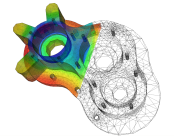 All of this is still avoiding the impact of solution algorithms on the matter of efficiency. As others and I have written, algorithms can do far more than computers to improve the efficiency of solution. Current algorithms are an important part of the magical recipes in current codes. We generally are not doing anything to improve the algorithmic performance in our codes. We simply push the existing algorithms along into the future.
 This is another form of the intellectual product (or lack thereof) that the current preserve the code base attitude favors. We completely avoid the possibility of doing anything better than we did in the past algorithmically. Historically improvements in algorithms provided vastly greater advances in capability than Moore’s law provided. I say historically because these advances largely occurred prior to the turn of the Century (i.e., 2000). In the 15 years since progress due to algorithmic improvements has ground to a virtual halt.
Why?
All the energy in scientific computing has gone into implementing existing algorithms on the new generation of genuinely awful computers. Instead of investing in a proven intellectual path for progress that has paired with computer improvements, we have shifted virtually all effort into computers and their direct consequences. Algorithmic research is risky and produces many failures. It takes a great deal of tolerance for failures to invest sufficiently to get the big payoff.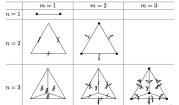
Our funding agencies have almost no tolerance for failure, and without the tolerance for failure the huge successes are impossible. The result is a systematic lack of progress, and complete reliance on computer hardware for improvement. This is a path that will ultimately and undeniably leads to a complete dead end. In the process of reaching this dead end we will sacrifice an entire generation of scientists to this obviously sub-optimal and stupid approach.
Ultimately, the irritation over the current path is primarily directed at the horrible waste of opportunity it represents. There is so much important work that needs to be done to improve modeling and simulation’s quality and impact. At this point in time computing hardware might be the least important aspect to work on; instead it is the focal point.
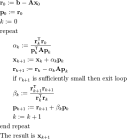 Much greater benefits could be realized through developing better models, extending physical theories, and fundamental improvements in algorithms. Each of these areas is risky and difficult research, but offers massive payoffs with each successful breakthrough. The rub is that breakthroughs are not guaranteed, but rather require an element of faith in ability of human intellect to succeed. Instead we are placing our resources behind an increasingly pathetic status quo approach. Part of the reason for continuation of the approach is merely the desire of current leadership to take a virtual victory lap by falsely claiming the success of the approach they are continuing.
In a variety of fields the key aspect of modeling and simulation that evades our grasp today are complex chaotic phenomena that are not understood well. In fluid dynamics turbulence continues to be vexing. In solid mechanics fracture and failure serve a similar role in limiting progress. Both areas are in dire need of new fresh ideas that might break the collective failures down and allow progress. In neither area will massive computing provide the hammer blow to allow progress. Only by harnessing human creativity and ingenuity will these areas progress.
In many ways I believe that one of the key aspect that limits progress is our intrinsic devotion to deterministic models. Most of our limiting problems all lend themselves more naturally to non-deterministic models. These all require new mathematics, new methods, new algorithms to unleash their power. Faster computers are always useful, but without the new ideas these new faster computers will simply waste resources. The issue isn’t that our emphasis is necessarily unambiguously bad, but rather grossly imbalanced and out of step with where our priorities should be.
Mediocrity knows nothing higher than itself; but talent instantly recognizes genius.
― Arthur Conan Doyle
At the core of our current problems is human talent. Once we found our greatest strength in the talent of the scientists and engineers working at the Labs. Today we focus on things, code, computers, and machines as the strength while starving the pipeline of human talent. When the topic of talent comes up they speak about hiring the best and brightest while paying them at the “market” rate. More damning is how the talent is treated when it hires on. The preserve the code mantra speaks to a systematic failure to develop, nurture and utilize talent. We hire people with potential and then systematically squander it through inept management and vacant leadership. Our efforts in theory and experiment are equally devoid of excellence, utility and vision.
 Once we developed talent by providing tremendously important problem to solve and turn excellent people loose to solve these problems in an environment that encouraged risky, innovative solutions. In this way the potentially talented people become truly talented and accomplished, ready to slay the next dragon using the experience of the previous slain beasts. Today we don’t even show let them see an actual dragon. Our staff never realize any of their potential because they are simply curating the accomplishments of the past. The code we are preserving is one of these artifacts we are guarding. This approach is steadily strangling the future.
Human resources are like natural resources; they’re often buried deep. You have to go looking for them, they’re not just lying around on the surface. You have to create the circumstances where they show themselves.
― Ken Robinson
23 Friday Oct 2015
Posted in Uncategorized
Only those who dare to fail greatly can ever achieve greatly.
― Robert F. Kennedy
With each passing day I am more dismayed by the tendency for mediocrity to be excused by people in the work they do. Instead of taking pride in our work, we are increasingly simply acting life mindless serfs farming and toiling on land by aristocratic overlords. The refrain is so often based on ceding the authority to define the quality of your work to others with statements like the following:
“It was what the customer wanted.”
“It met all requirements.”
“We gave them what they paid for.”
All of these statements end up paving the road for second-rate work and remove all responsibility from ourselves for the state of affairs. We are responsible because we don’t allow ourselves to take any real risks.
They who can give up essential liberty to obtain a little temporary safety deserve neither liberty nor safety.
― Benjamin Franklin
 The whole risk-benefit equation is totally out of whack for society as a whole. The issue is massive across the whole of the Western world, but nowhere is it more in play than the United States. Acronyms like TSA and NSA immediately bring to mind. We have traded a massive amount of time, effort and freedom for a modest to fleeting amount of added security. It is unequivocal that Americans have never been safer and more secure than now. Americans are have also never been more fearful. Our fears have been amplified for political gain and focused on things that barely qualify as threats. Meanwhile we ignore real danger and threats because they are relatively obscure and largely hidden from plain view (think income inequality, climate change, sugar, sedentary lifestyle, guns, …). Among the costs of this focus on removing the risk of bad things happening is the chance to do anything unique and wonderful in our work.
The core issue that defines the collapse of quality is the desire for absolute guarantees that nothing bad will ever happen. There are no guarantees in life. This hasn’t stopped us from trying to remove failure from the lexicon. What this desire creates is destruction of progress and hope. We end up being so cautious and risk adverse that we have no adventure, and never produce anything unintended. Unintended can be bad so we avoid it, but unintended can be wonderful and be a discovery. We avoid that too.
I am reminded of chocolate chip cookies as an apt analogy for what we have created. If I go to the store and buy a package of Nestle Toll House morsels, and follow the instructions on the back I will produce a perfectly edible, delicious, cookie. These cookies are quite serviceable, utterly mediocre and totally uninspired. Our National Labs are well on their way to be the Toll House cookies of science.
 I can make some really awesome chocolate chip cookies using a recipe that has taken 25 years to perfect. Along the way I have made some batches of truly horrific cookies while conducting “experiments” with new wrinkles on the recipe. If I had never made these horrible batches of cookies, the recipe I use today would be no better than the Toll House one I started with. The failures are completely essential for the success in the long run. Sometimes I make a change that is incredible and a keeper, and sometimes it destroys or undermines the taste. The point is that I have to accept the chance that any given batch of cookies will be awful if I expect to create a recipe that is in any way remarkable of unique.
 The process that I’ve used to make really wonderful cookies is the same one as science needs to make progress. It is a process that cannot be tolerated today. Today the failures are simply unacceptable. Saying that you cannot fail is equivalent to saying that you cannot discover anything and cannot learn. This is exactly what we are getting. We have destroyed discovery and we have destroyed the creation of deep knowledge and deep learning in the process.
There is only one thing that makes a dream impossible to achieve: the fear of failure.
― Paulo Coelho
16 Friday Oct 2015
Posted in Uncategorized
I find my life is a lot easier the lower I keep my expectations.
― Bill Watterson
I’ve been troubled a lot recently by the thought that things I’m working on are not terribly important, or worse yet not the right thing to be focusing on. Its not a very quieting thought to think that your life’s work is nigh on useless. So what the hell do I do? Something else?
My job is also bound to numerous personal responsibilities and the fates of my loved ones. I am left with a set of really horrible quandaries about my professional life. I can’t just pick up and leave, or at least do that and respect myself. My job is really well paying, but every day it becomes more of a job. The worst thing is the
overwhelming lack of intellectual honesty associated with the importance of the work I do. I’m working on projects with goals that are at odds with progress. We are spending careers and lives working on things that will not improve science, and  engineering much less positively effect society as a whole.
I really believe that computational modeling is a boon to society and should be transformative if used properly. It needs capable and able computing to work well. All of this sounds great, but the efforts in this direction are slowing diverging from a path of success. In no aspect of the overall effort is this truer than high performance or scientific computing. We are on a path to squandering a massive amount of effort to achieve almost nothing of utility for solving actual problems in the so-called exascale initiative. The only exascale that will actually be achieved in on a meaningless benchmark, and the actual gains in computational modeling performance are fleeting and modest to the point of embarrassment. It is a marketing ploy masquerading as strategy and professional malpractice, or simply mass incompetence.
 Strong language, you might say, but it’s at the core of much of my personal disquiet. I’m honest almost to a fault and the level of intellectual dishonesty in my work is implicitly at odds with my mostly held values. For the most part the impact is some degree of personal morale decline and definite feel of lacking inspiration and passion for work. I’ve been fortunate to live large portions of my life feeling deeply passionate and inspired by my work, but those positive feelings have waned considerably.
I’ve written about the shortcomings of our path in high performance computing a good bit. I discussed a fair bit the nature of modeling and simulation activities and their relationship to reality. For modeling and simulation to benefit society things in the real world need to be impacted by it. Ultimately, the current focus is on the parts of computing furthest from reality. Every bit of evidence is that the effort should be focused completely differently.
The only real mistake is the one from which we learn nothing.
― Henry Ford
The current program is a recreating the mistakes made twenty years ago in high performance computing in the original ASCI program. Perhaps the greatest sin is not learning anything from the mistakes made then. We have had twenty years of history and lessons learned that have been conspicuously ignored in the present time. This isn’t simply bad or stupid; it is absolutely the sins of being both unthinking and incompetent. We are going to waste entire careers and huge amounts of money in service of intellectually shallow efforts that could have been avoided by the slightest attention to history. To call what we do science when we haven’t bothered to learn the obvious lessons right in front of us is simply malpractice of the worst possible sort.
All of this is really servicing our aversion to risk. Real discovery and advances in science require risk, require failure and cannot be managed like building a bridge. It is an inherently error-prone and failure-driven exercise that requires leaps of faith in the ability of humanity to overcome the unknown. We must take risks and the bigger the risk, the bigger the potential reward. If we are unwilling to take risks and perhaps fail, we will achieve nothing. The current efforts are constructed to avoid failure at all cost. We will spend a lot to achieve very little.
In a deep way it makes a lot of sense to clearly state what the point of all this work is. Is it “pure” research where we simply look to expand knowledge? Are we trying to better deliver a certain product? How grounded in reality are the discoveries needed to advance? Is the whole thing focused on advancing the economics of computing? Are we powering other scientific efforts and viewing computing as an engine of discovery?
None of these questions really matter though, the current direction fails in every respect. I would answer that the current high performance-computing trajectory is not focused on success in answering any of these questions except for a near-term give-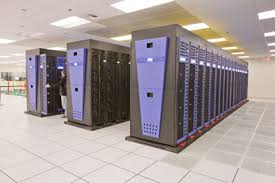 away to the computing industry (like so much of government spending, it is simply largess to the rich). Given the size of the computing industry, this emphasis is somewhere between silly and moronic. If we are interested in modeling and simulation for any purpose of scientific and engineering performance, the current trajectory is woefully sub-optimal. We are not working on the aspects of computing that impact reality in any focused manner. The only benefit of the current trajectory is using computers that are enormously wasteful with electricity and stupendously hard to use.
By seeking and blundering we learn.
― Johann Wolfgang von Goethe
We could do so much better with a little bit of thought, and probably spend far less money, or spend the same amount of money more intelligently. We need substantial work on the models we solve. The models we are working on today are largely identical to those we solved twenty years ago, but the questions being asked in engineering and science are far different. We need new models to answer these questions. We need to focus on algorithms for solving existing and new models. These algorithms are as or more effective than computing power in improving the efficiency of solution. Despite this, the amount of effort going into improving algorithms is trivial and fleeting. Instead we are focused on a bunch of activities that have almost no impact on the efficiency or quality of modeling and simulation.
The efforts today simply focus on computing power during a time where the increases in computing power are becoming increasingly challenged by the laws of physics. In a very real sense the community is addicted to Moore’s law, and the demise of Moore’s law threatens the risk adverse manner that progress has been easily achieved for twenty years. We need to return to a high risk, high payoffs research that once powered modeling and simulation, but the community eschews today. We are managed like we are building bridges and science is not like building a bridge at all. The management style for science today is so completely risk adverse that it systematically undermines the very engine that powers discovery (risk and failure).
Models will generally get worse with greater computing resources. If the model is wrong there is no amount of computing resources that can fix it. It will simply converge to a better wrong answer. If the model is answering the wrong question, the faster computer cannot force it to answer the right one. The only thing that can improve matter is a better or more appropriate model. Today working on better or more appropriate models receives little attention or resources instead we pour our efforts into faster computers. These faster computers are solving yesterday’s model faster and to more high fidelity wrong answers than ever before.
 Most of our codes and efforts on the next generation of computers are simply rehashed versions of the codes of yesterday including the models solved. Despite overwhelming evidence of these models intrinsic shortcomings, we continue to pour effort in to solving these wrong models faster. In addition the models being solved are simply ill suited to the societal questions being addressed with modeling and simulation. A case in point is the simulation of extreme events (think 100 year floods, or failures of engineered products, or economic catastrophes). If the model is geared to solving the average behavior of a system, these extreme events cannot be directly simulated, only inferred empirically. These new models are necessary and need new math and new algorithms to solve them. We are failing to do this in a wholesale way.
Next the hierarchy of activities in modeling and simulation are algorithms (and methods). These algorithms allow the solution of the aforementioned models. The algorithm defines the efficiency, and character of the solution to models. These algorithms are the recipes for solution that computer science supports and the computers are built to work on. Despite their centrality and importance to the entire enterprise, the development of better algorithms receives almost no support.
A better algorithm will positively influence the solution of models on every single computer that employs it. Any algorithmic support today is oriented toward the very largest and most exotic computers with a focus on parallelism and efficiency of implementation. Issues such as accuracy and operational efficiency are simply not a focus. A large part of the reason for the current focus is the emphasis and difficulty of simply moving current algorithms to the exotic and difficult to use computing platforms being devised today. This emphasis is squeezing everything else out of existence, and reflects a misguided and intellectually empty view of what would make a difference.
There. I feel a little better having vented, but only a little.
Don’t mistake activity with achievement.
― John Wooden
09 Friday Oct 2015
Posted in Uncategorized
Integrity is telling myself the truth. And honesty is telling the truth to other people.
― Spencer Johnson
 As tools the frameworks of PIRT and PCMM are only as good as how they are used to support high quality work. Using these tools will not necessarily improve your credibility, but rather help you assess it holistically. Ultimately the credibility of your modeling & simulation capability is driven by the honesty and integrity of your assessment. It is easy to discuss what you do well and where you have mastery over a topic. The real key to assessment includes a will and willingness to articulate where an effort is weak and where the fundamental foundational knowledge in a field is the limiting factor in your capacity for solving problems. The goal in credibility assessment is not demonstration of mastery over a topic, but rather a demonstration of the actual state of affairs so that decisions can be made with full knowledge of the weight to place and risks inherent in modeling & simulation.
A thing like quality is highly subjective and certainly subject to a great deal of relativity where considerations of the problem being solved and the modeling & simulation capabilities of the field or fields relevant come into consideration. As such the frameworks serve to provide a basic rubric and commonly consistent foundation for the consideration of modeling & simulation quality. As such PIRT and PCMM are blueprints for numerical modeling. The craft of executing the modeling & simulation within the confines of resources available is the work of the scientists and engineers. These resources include the ability to muster effort towards completing work, but also the knowledge and capability base that you can draw upon. The goal of high quality is to provide an honest and holistic approach to guiding the assessment of modeling & simulation quality.
In the assessment of quality the most important aspect to get right is honesty about the limitations of a modeling & simulation capability. This may be the single most difficult thing to accomplish. There are significant physiological and social factors that lead to a lack of honesty in evaluation and assessment. No framework or system can completely overcome such tendencies, but might act as a hedge against the tendency to overlook critical details that do not reflect well on the assessment. The framework assures that each important category is addressed. The ultimate test for the overall integrity and honesty of an assessment of modeling & simulation credibility depends upon deeper technical knowledge than any framework can capture.
Quite often an assessment will avoid dealing with systematic problems for a given capability that have not been solved sufficiently. Several examples of this phenomenon are useful in demonstrating where this can manifest itself. In fluid dynamics, turbulence remains a largely unsolved problem. Turbulence has intrinsic and irreducible uncertainty associated with it, and no single model or modeling approach is adequate to elucidate the important details. In Lagrangian solid mechanics the technique of element death is pervasively utilized for highly strained flows where fracture and failure occur. It is essential for many simulations and often renders a simulation to be non-convergent under mesh refinement. In both cases the communities dependent upon utilizing modeling & simulation with these characteristics tend to under-emphasize the systematic issues associated with both. This produces a systematically higher confidence and credibility than is technically justifiable. The general principle is to be intrinsically wary of unsolved problems in any given technical discipline.
 Together the PIRT and PCMM adapted and applied to any modeling & simulation activity form part of the delivery of defined credibility of the effort. The PIRT gives context to the modeling efforts and the level of importance and knowledge of each part of the work. It is a structured manner for the experts in a given field to weigh in on the basis for model construction. The actual activities should be strongly reflected in the sort of assessed importance and knowledge basis reflected in the PIRT. Similarly the PCMM can be used for a structured assessment of the specific aspects of the modeling & simulation.
The degree of foundational work providing the basis for confidence for the work is spelled out in the PCMM categories. Included among these are the major areas of emphasis some of which may be drawn from outside the specific effort. Code verification being an exemplar of this where its presence and quality provides a distinct starting point for the specific aspects of the estimation of the numerical error for the specific modeling & simulation activity being assessed. Each of the assessed categories forms the starting point for the specific credibility assessment.
One concrete way to facilitate the delivery of results is the consideration of the uncertainty budget for a given modeling activity. Here the delivery of results using PIRT and PCMM is enabled by considering them to be resource guides for the concrete assessment of an analysis and its credibility. This credibility is quantitatively defined by the uncertainty and the intended application’s capability to absorb such uncertainties for the sort of questions to be answered or decision to be made. If the application is relatively immune to uncertainty or only needing a qualitative assessment then large uncertainties are not worrisome. If on the other hand an application is operating under tight constraints associated with other considerations (sometimes called a design margin) then the uncertainties need to be carefully considered in making any decisions based on modeling & simulation.
This gets to the topic of how modeling & simulation are being used. Traditionally modeling & simulation goes through two distinct phases of use. The first phase is dominated by “what if” modeling efforts where the results are largely qualitative and exploratory in nature. The impact of decisions or options is considered on a qualitative basis and guides decisions in a largely subjective way. Here the standards of quality tend to focus on completeness and high-level issues. As modeling & simulation proves its worth for these sorts of studies, it begins to have greater quantitative demands placed on it. This forms a transition to a more demanding case for modeling & simulation where design or analysis decision is made. In this case the standards for uncertainty become far more taxing. This is the place where these frameworks become vital tools in organizing and managing the assessment of quality.
This is not to say that these tools cannot assist in earlier uses of modeling & simulation. In particular the PIRT can be a great tool to engage with in determining modeling requirements for an effort. Similarly, the PCMM can be used to judge the appropriate level of formality and completeness for an effort to engage with. Nonetheless these frameworks are far more important and impactful when utilized for more mature, “engineering” focused modeling & simulation efforts.
Any high level integrated view of credibility is built upon the foundation of the issues exposed in PIRT and PCMM. The problem that often arises in a complex modeling & simulation activity is managing the complexity of the overall activity. Invariably gaps, missing efforts and oversights will creep into the execution of the work. The basic modeling activity is informed by the PIRT’s structure. Are there important parts of the model that are missing, or poorly grounded in available knowledge? From PCMM, are the important parts of the model tested adequately? The PIRT becomes a fuel for assessing the quality of the validation, and planning for an appropriate level of activity around important modeling details. Questions regarding the experimental support for the modeling can be explored in a structured and complete manner. While the credibility is not built on the PCMM and PIRT, the ability to manage its assessment is enabled by their mastery of the complexity of modeling & simulation.
In getting to the quantitative basis for assessment of credibility, the definition of the uncertainty budget for a modeling & simulation activity can be enlightening. While the PCMM and PIRT provide a broadly encompassing view of modeling & simulation quality from a qualitative point of view, the uncertainty budget is ultimately a quantitative assessment of quality. Forcing the production of numerical values to the quality is immensely useful and provides important focus. For this to be a useful and powerful tool, this budget must be determined with well-defined principles and fairly good disciplined decision-making.
 One of the key principles underlying a successful uncertainty budget is the determination of unambiguous categories for assessment. Each of these broad categories can be populated with sub-categories, and finer and finer categorization. Once an effort has committed to a certain level of granularity in defining uncertainty, it is essential that the uncertainty be assessed broadly and holistically. In other words, it is important, if not essential that none of the categories be ignored.
This can be extremely difficult because some areas of uncertainty are truly uncertain, no information may exist to enable a definitive estimation. This is the core of the difficulty for uncertainty estimation, the unknown value and basis for some quantitative uncertainties. Generally speaking, the unknown or poorly known uncertainties are more important to assess than some of the well-known ones. In practice the opposite happens, when something is poorly known the value often adopted in the assessment is implicitly defined quantitatively as “zero”. This is implicit because the uncertainty is simply ignored, and it is not mentioned, or assigned any value. This is dangerous. Again, the availability of the frameworks comes in handy to help the assessment identify major areas of effort.
A reasonable decomposition of the sources of uncertainty can fairly generically be defined at a high level: experimental, modeling and numerical sources. We would suggest that each of these broad areas be populated with a finite uncertainty, and each of the finite values assigned be supported by well-defined technical arguments. Of course, each of these high level areas will have a multitude of finer grained components describing the sources of uncertainty along with routes toward their quantitative assessment. For example, experimental uncertainty has two major components, observational uncertainty and natural variability. Each of these categories can in kind be analyzed by a host of additional detailed aspects. Numerical uncertainty lends itself to many sub-categories: discretization, linear, nonlinear, parallel consistency, and so on.
The key is to provide a quantitative assessment for each category at a high level with a non-zero value for uncertainty and a well-defined technical basis. We note that the technical basis could very well be “expert” judgment as long as this is explicitly defined. This gets to the core of the matter; the assessments should always be explicit and not leave essential content for implicit interpretation. A successful uncertainty budget would define the major sources of uncertainty for all three areas along with a quantitative value for each. In the case where the technical basis for the assessment is weak or non-existent, the uncertainty should be necessarily large to reflect the lack of technical basis. Like statistical sampling, the benefit to doing more work is a reduction in the magnitude of the uncertainty associated with the quantity. Enforcing this principle means that follow-on work that produces larger uncertainties requires the admission that earlier uncertainties were under-estimated. The assessment process and uncertainty budget are inherently learning opportunities for the overall effort. The assessment is simply an encapsulation of the current state of knowledge and understanding.
Too often in modeling & simulation uncertainty, efforts receive a benefit through ignoring important sources of uncertainty. By doing nothing to assess uncertainty they report no uncertainty associated with the quantity. Insult is done to this injury when the effort realizes that doing work to assess the uncertainty then can only increase its value. This sort of dynamic becomes self-sustaining, and more knowledge and information results in more uncertainty. This is a common and often seen impact of uncertainty assessment. Unfortunately this is a pathological issue. The reality is that this indicts the earlier assessment of uncertainty where the estimate that was made earlier is actually too small. A vital principle is that more work in assessing uncertainty should always reduce uncertainty. If this does not happen the previous assessment of uncertainty was too small. This is an all to common occurrence that occurs when a modeling & simulation effort is attempting to convey a too large sense of confidence in their predictive capability. The value of assessed uncertainty should converge to the irreducible core of uncertainty associated with the true lack of knowledge or intrinsic variability of the thing being modeled. In many cases the uncertainty is interacting with an important design or analysis decision where a performance margin needs to be balanced with the modeling uncertainty.
An ironic aspect to uncertainty estimation is the tendency to estimate large uncertainties where expertise and knowledge are strong, while under-estimating uncertainty in areas where expertise is weak. This is often seen with numerical error. A general trend in modeling & simulation is the tendency to treat computer codes as black boxes. As such, the level of expertise in numerical methods used in modeling & simulation can be quite low. This has the knock-on effect of lowering the estimation of numerical uncertainty, and utilizing the standard methodology for solving the equations numerically. Quite often the numerical error is completely ignored in analysis. In many cases the discretization error should dominate the uncertainty, but aspects of the solution methodology can color this assessment. Key among these issues is the nonlinear error, which can compete with the discretization error if care is not taken.
This problem is compounded by a lack of knowledge associated with the explicit details of the numerical algorithm and the aspects of the solution that can lead to issues. In this case the PCMM can assist greatly in deducing these structural problems. The PCMM provides several key points that allow the work to proceed with greater degrees of transparency with regard to the numerical solution. The code verification category provides a connection to the basis for confidence in any numerical method. Are the basic features and aspects of the numerical solution being adequately tested? The solution verification category asks whether the basic error analysis and uncertainty estimation is being done. Again the frameworks encourage a holistic and complete assessment of important details.
The final aspects to highlight in the definition of credibility are the need for honesty and transparency in the assessment. Too often assessments of modeling & simulation lack the fortitude to engage in a fundamental honesty regarding the limitations of the technology and science. If the effort is truly interested in not exposing their flaws, no framework can help. Much of the key value in the assessment is defining where effort can be placed to improve the modeling & simulation. It should help to identify the areas that drive the quality of the current capability.
 If the effort is interested in a complete and holistic assessment of its credibility, the frameworks can be invaluable. The value is key in making certain that important details and areas of focus are not over- or under-valued in the assessment. The areas of strong technical expertise are often focused upon, while areas of weakness can be ignored. This can produce systematic weaknesses in the assessment that may produce wrong conclusions. More perniciously, the assessment can willfully or not ignores systematic shortcomings in a modeling & simulation capability. This can lead to a deep under-estimate in uncertainty while significantly over-estimating confidence and credibility.
For modeling & simulation efforts properly focused on an honest and high integrity assessment of their capability, the frameworks of PCMM and PIRT can be an invaluable aid. The assessment can be more focused and complete than it would be in their absence. The principle good of the frameworks is to make the assessment explicit and intentional, and avoid unintentional oversights. Their use can go great lengths to provide direct evidence of due diligence in the assessment and highlight the quality of the credibility provided to whomever utilizes the results.
We should not judge people by their peak of excellence; but by the distance they have traveled from the point where they started.
― Henry Ward Beecher
 The Regularized Singularity