
The trouble with most of us is that we’d rather be ruined by praise than saved by criticism.
―Norman Vincent Peale
 The phrase “world class” appears so often in reviews I’ve seen that it has become a cliché. It is a completely unnecessary throwaway compliment handed out like candy on Halloween. It’s become expected, hollow praise that ultimately undermines any honest critique that follows its utterance. It’s time to stop handing out this compliment unless the situation calls for it, which is almost never.
Critics are our friends, they show us our faults.
―Benjamin Franklin
If I were to believe the external reviews of organizations and projects I’ve seen, I live an immensely charmed life. I’ve moved from organization-to-organization and projec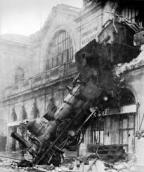 t-to-project all of them being “world class”. The first few times I heard it, I felt great. Like wow, I’m a high performing individual in a world class organization, doing world class research. I must be really great too. As time went on, I kept hearing this even if the review was a complete train wreck. The comment would come even if the content of the review were decisively mediocre.
Truth builds trust.
― Marilyn Suttle
By now I’ve heard this compliment so often that I now hear, “now for the bullshit filled,  ego massaging part of the review.” Are the organizations I work for so weak-willed and pathetic that they need this sort of garbage? Is the overly defensive and meagerly technical content of the review actually worthy of such high praise? Increasingly this oft-heard phrase has become an excuse to dismiss everything the review has to say. Mostly for the sentiment that if they think that was “world class”, these guys are a bunch a bozos. They are either stupid or dishonest, if not both. Are we paying them to give us this empty praise? How did we find people with such low standards?
It takes strength and courage to admit the truth.
― Rick Riordan
More than simply being a half-hearted and empty compliment, the comment “world class” allows those being reviewed to discount and ignore all the criticism that follows. If we are world class, why do we have to listen to these criticisms? It allows any critique to become optional and half-hearted. For those of us paying attention it makes the entire review’s integrity seem questionable. I walk away most of the time thinking did the reviewers really mean that? Did they actually buy the shit we were selling?
What a sad state of affairs.
What makes this even more critical is the necessity of hard-nosed critique of our current organizations. The research labs I work at are in complete free-fall in terms of quality. At some time in the past these organizations were world-class, but no more. By telling us these lies we are allowing the damage to continue unchecked. We are being horribly mismanaged and savaged by external and internal forces that are continually dragging our quality down.
Truth without love is brutality, and love without truth is hypocrisy.
― Warren W. Wiersbe
The Labs have adopted a modern social contract with employees and increasingly treat the research staff like commodities, and undermine the career prospects of everyone working there. Talented scientists are no longer encouraged to build deep and sustained careers necessary to be world class. Without these people any statement that the Labs are world class is utterly specious. The Labs are doing everything possible to undermine and drive away the very work and expertise that would make them actually world class.
Integrity is telling myself the truth. And honesty is telling the truth to other people.
― Spencer Johnson
Funding for high-risk, high-impact research is gone. Key Laboratory capabilities are falling into increasing disrepair. Everything today is short-term, “customer” focused. If a customer won’t pay for it, the capability is allowed to simply rot. Of course most of the customers aren’t willing to pay for world-class work. They want it on the cheap, and the result is a customer who is happy to siphon off the quality on the cheap without paying to keep it cutting edge. Calling them a customer is an extreme compliment to someone who acts much more like a vampire or leech.
Of course a lot of this is work that our main sponsor (the other euphemistic phrase for our funding source) won’t pay for this sort of work at all. The customers we do have don’t have the capacity to fund good work either. For this reason the basic research is being destroyed hand-in-hand with the Labs that once produced it. The truly scary thing is that these Labs are better than a lot of places that have it even worse. This terrifies me because things are increasingly awful where I’m at. The fact that things are worse elsewhere provides me no comfort.
But knowing that things could be worse should not stop us from trying to make them better.
― Sheryl Sandberg
 This plays into the general theme of the role of bullshit in today’s society. Telling the truth is the new sin. It’s so much more acceptable to tell the lies you are intended to believe. If someone actually expressed the truth that should be said they would be treated like a pariah. This explains why we pay external reviews to come around every year and tell us that we are still “world class”. Along with the empty platitudes we get a handful of suggestions that can all be ignored because why would a “world class” organization need to improve.
We’re great, everything is fine, nothing to see here, move along.
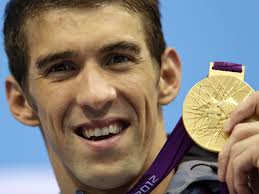
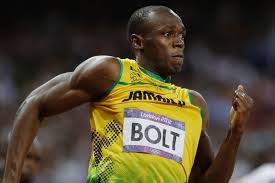


Some examples of what World Class really means!
 One of the keys to using a backup plan effectively is that it allows your primary plan to be more aggressive. Knowing that a viable alternative is available allows a more expansive primary plan to be envisioned. Presently the sort of planning that yields a single path forward produces risk adverse objectives. This produces the state of affairs we see today. Plans are generally too short-term focused and contain relatively little risk. Having contingency plans to fall back upon would allow a much greater amount of risk to be absorbed in the primary plan.
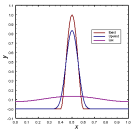 principle by which to combine them. The principle is use the high-order when the situation is safe and won’t produce oscillations, and fall back to the low-order method when danger ensues. Now multiple methods work well enough that people think that nothing more needs to be done (I don’t agree!). The same approach has worked well in other areas, and in my opinion could be employed far more broadly.
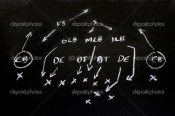 Sports provide another way to look at adaptive approaches and planning. Some teams are exceptional in a single approach to playing the game, and fail when they come up against the perfect counter. Great teams can play multiple ways and can be effective with Plan A, Plan B, Plan C… They can attack and defend is a variety of ways. The best among them can switch between different approaches seamlessly either to adapt to an opponent, or to surprise or overwhelm an opponent. To execute well in a variety of ways requires immense effort and practice, but this is the price of excellence.
 The key element in this thought process is the devotion to solve problems. The secondary element is the development of multiple solutions to problems. This requires the developer of the plans to not be over-committed to a single approach. Sometimes the biggest problem with a plan is the over-investment of those executing the plan in the single path to success.

 I used to work at McDonalds a long time ago. Most people know that a Big Mac uses a secret sauce in dressing the sandwich. It looks like Thousand Island dressing, but rest assured, it is a secret sauce of some sort. Ideally, the secret sauce is the literal trademark of the sandwich, its identity and it’s a secret only known by a hallowed priesthood. Little did I know that in my chosen professional life I would be exposed to a completely different “secret sauce”.
 A successful modeling and simulation code is very much the same thing; it has a trademark “secret sauce”. Usually this is the character for the code is determined by how it is made robust enough to run interesting applied problems. Someone special figured out how to take the combination of physical models, numerical methods, mesh, computer code, round-off error, input, output… and figured out how to make it all work. This isn’t usually documented well, if at all. Quite often it is more than a little embarrassing. The naïve implementation of the same method usually doesn’t quite work. This is a dark art, the work of wizards and the difference between success and failure.
 The rub is that we are losing the recipes. In many places the people who developed the secret sauce are retiring and dying. They aren’t being replaced. We are losing the community knowledge of the practices that lead to success. We may be in for a rude awakening because these aspects of modeling and simulation are underappreciated, undocumented and generally ignored. Sometimes the secret to make the code work is sort-to-very embarrassing.
 Conservatives are not necessarily stupid, but most stupid people are conservatives…
 keep-out-of-partisan-politics-1.16473
 to allow that all those who conduct themselves as worthy members of the community are equally entitled to the protections of civil government. I hope ever to see America among the foremost nations of justice and liberality.
 The assault on science and reason by conservatives is seemingly endless. Leading the charge is the denial of climate change and the threat it poses to humanity. The reasoning for the denial is two-fold, the risk action on climate would impart to the ruling corporate class, and the conservatives love of their wasteful, destructive lifestyles (which largely fuel profit to the corporate overlords). Further attacks occur within their embrace of fundamental religious faction’s desire to indoctrinate our
  children with their myths in place of science (i.e., creationism). In other venues the conservatives attack science that goes against corporate greed be it environmental science, medicine and especially the social sciences. Conservatives deny the underlying biological basis of homosexuality because of its implications for their religious beliefs. Time and time again it is their commitment to traditional religious belief over science and reason that drives a wedge.
 The attacks on science and reason are by no means completely one-sided. Both liberals and conservatives fail to repudiate the various science deniers and neo-Luddite factions in their midst. For instance liberal anti-science can be see with anti-vaccine, anti-GMO and anti-nuclear movements. Each of these is based on fear of technology and is fundamentally irrational. For instance, the coupling of liberal environmental leanings and anti-nuclear mindsets undermines support for action on climate change
  (
( What do you do when you’re in a leadership position for a project that you’re sure is moving in the wrong direction?
 used twenty years ago. Furthermore most of innovative and creative energy has gone into implementing the codes on modern computers. The result is a phalanx of missed opportunity whose implicit costs are massive. I’d like to sketch out what some of these opportunities and the costs associated with missing them.
 What are some of the things we are missing? Clearly one of the greatest sacrifices of the “sunk cost” code is static discretizations and models. The numerical methods that implement the physical models in codes are generally completely intertwined with the codes basic structure. Over time, these aspects of the code become a virtual skeleton for everything else the code does. The skeletal replacement surgery usually kills the patient, and that can be allowed. Therefore we get stuck. New discretizations could provide far more accurate solutions, and new models could provide greater fidelity to reality, but this has been taken off the table to maintain continuity of effort. Part of the work that we need to conduct is a better understanding of how practical discretization accuracy is achieved. For most applications we don’t have smooth solutions and the nominal notions of numerical
 accuracy do not hold. How do discretization choices impact this? And how can these choices be optimized given resources? Furthermore changes in these areas are risky and never sure to succeed, while risk reduction with fear of failure is the preeminent maxim of project management today.
 Moving on to other more technical aspects of computing and potential benefits I’ll touch on two other missing elements. One of these is stability theory. As I noted a couple of posts ago, robustness is a key to a code’s success. At a very deep level robustness is a crude form of stability. The crudeness is a symptom of failings in the current stability theory. This implies that we could be far better with a more extensive and useful stability theory. Part of this is defining a stability that captures the requirements mathematically for producing robust, physical results. Today we simply don’t have this. Stability theory is a starting point, and we have to kludge our way to robustness.
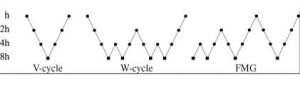 A second area of progress that we have suffered from not having is numerical linear algebra. We are thirty years on from the last big breakthrough, multigrid. Multigrid is viewed as being the ultimate algorithm given its ideal scaling with respect to the number of unknowns (being linear, and all other methods are super linear). Since then we have moved to using multigrid as a preconditioner for Krylov method improving both methods, and implemented the method on modern computers (which is really hard). Thirty years is a long time especially considering that other advances in this field came on a faster than decadal pace. A good question to ask is whether a sub-
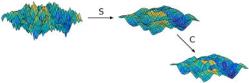 linear method can be defined? Is multigrid the ultimate algorithm? I suspect that the answer is sub-linear method can be discovered, and work on “big data” is pointing the direction. Beyond this we typically solve linear algebra far more accurately (very small residuals) than probably necessary. It is done almost reflexively with a better safe than sorry attitude. This is a huge waste of effort, and someone should come up with a sensible way to set solver tolerances and optimize computational resources.
 Expect to see a lot of money going into computing to support “extreme” or “exascale” initiatives. It is too bad that this effort is largely misplaced and inefficient. The chosen approach is grossly imbalanced and not indicative of historical perspective. The work we are not doing is risky, but capable of massive benefit. Current management models seem to be immune to measuring opportunity cost while amplifying the tendency to avoid risk and failure at all costs.
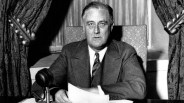 our single greatest weakness. It has become our defining characteristic. Fear is driving everything we do as a nation, and it is choking us. FDR spoke those words to a generation whose early lives spat at fear, but whose actions later in life paved the way to its control. More than the loss of innovation that I wrote about last, we have lost our courage and become a nation frightened cowards. We fight wars against weak nations for terrible reasons. We allow our vastly armed police force to terrorize our citizens. We imprison huge numbers of Americans without any thought to what it implies. We torture using methods we have executed people for. Its all because we are afraid.We are a shadow of the
  nation that faced facism because we have lost
 diate attention. Without change the problems will move from festering to metastasizing and exploding. Whether it is the curse of massive economic inequality and its risks to the bulk of the population and its toxic impact on politics, or our continuing racial inequities both are shrinking from any progress. We are allowing inequality to continue undermining any reality of to the increasingly mythical “American Dream” while allowing the elite to buy elections “legally”. We might have an abysmal level of social mobility; if you’re poor you’ll stay poor, if you’re rich you’ll stay rich. Race is continuing stain that will explode soon as the identity of minority and majority switch identity. We run the risk of having the minority rule, which is the recipe for revolution as is the scourge of inequality.
 The war on terror is the epitome of our collective fear. While 9/11 was tragic, it shouldn’t have ever resulted in the sort of resources devoted to its response. We have lost much of our soul to it. Terror has bred terror, and America committed torture, murder and other crimes in its wake. We have sacrificed freedom and privacy in the name of fear. Terror kills very few Americans even factoring 9/11 in, or the lives of soldiers fighting overseas. Americans do a much better job of killing other Americans than terrorists be it by gunfire citizen-to-citizen or our completely and utterly out of control police force.
 On top of this we have a completely out of control prison system. It has become a new day Jim Crow with its racial imbalances, and a complete lack of perspective on it terribly reflects on all of us. We destroy more lives of fellow citizens with the moronic war on drugs than the war on terror could have ever caused. The criminalization of drugs is mostly about subjugating minorities and little about public safety (alcohol is a very dangerous drug, but the drug of choice for the white power structure). The drug war isn’t about safety; it’s a replacement for Jim Crow.
 Yesterday while working out I read a stunningly good article from Aeon (

 Cold War. The great stagnation that started in the early 1970’s has seen each of those elements come to a halt, and an immense rise of two paired elements massive inequality and conservatism. The rebuilding of the class of oligarchs is destroying the vast middle class that marked that period of great progress. The conservative movements are a direct response to the vast social (and technological) progress. The conservatism is a reaction to the outright fear of change that Hanlon identifies.
 creating wealth that is outside the established channels of the social order. The conservatives have come as a reaction to the sort of changes produced in the “Golden Quarter” as Hanlon describes it. Fear of racial equality is driven by the loss of the white majority, and religious fundamentalism reacts to the sorts of freedoms earned during that period. All of this amplified by the discomfort of new technology while the new technology creates change in society that wreck havoc with the traditional social order.
 Old Europe started to die in World War 1 and its wake helped set in motion forces that created the depths of the depression and the cataclysm of World War 2, which marked the end of Old Europe and the birth of that Golden Quarter. One must also remember that the excesses of the hyper-rich and inequality also played a key roll in how WWI and the depression unfolded. These excesses unleashed a torrent of progressive action to fix the damage to society. It seems that the same thing could unfold in the future to end the current era of stagnation and greed. Let’s hope not. One might hope we have the wisdom to turn away before things get so bad.
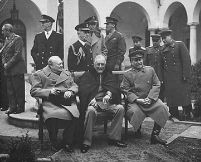 The bind we are in today is largely about trust and faith in each other. We don’t trust because we know how selfish, self-centered and fundamentally corrupt we are. We assume everyone else is just as untrustworthy. Without trust the ability to do anything important or great simply doesn’t exist. No one is worth investing anything for the good of the whole. Every action has become centered on the good of the self. Crisis and calamity are built by such selfishness. Unfortunately, America is the most selfish place in the world, bar none. You do the math, who is the most likely to trigger the next calamity?
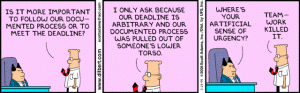 he process. Our mode of project/program management and accountability is crushing our ability to do meaningful work. We make plans for our research, which includes milestones, Gantt charts, and the like. While I don’t have anything against planning per se, I have a lot being held to the plans. The quarterly reports are exemplars of being held to a plan that should only be an initial trajectory, and not the final destination.
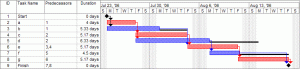 I will grant you that the approach to project management has its place. A lot of rote construction projects should be done this way. A complex, but often executed project should run this way. I am talking about research. Research is the exemplar of what should absolutely not be run this way. Yet we do it with almost Pavlovian glee.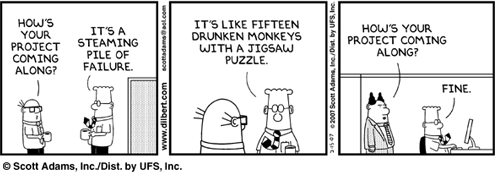
 I thought about what I wrote a few weeks ago, and realized that when I state robust, I mean almost the same thing as stable. Well almost the same is not the same. Robust is actually a stronger statement since it implies that the answer is useful in a sense. A stable calculation can certainly produce utter and complete gibberish (it may be even more dangerous to produce realistic-looking, but qualitatively/quantitatively useless results). I might posit that robustness could be viewed as a stronger form of stability that provides a guarantee that the result should not be regarded as bullshit.
 Perhaps this is the path forward I’m suggesting. The theory of PDE stability is rather sparse and barren compared to ODE theory. PDE stability is really quite simple conceptually, while ODE stability theory is rich with detail and nuance. One has useful and important concepts such as A-stability, L-stability and so on. There are appealing concepts such as relative-stability and order stars, which have no parallel in PDE stability. I might be so bold as to suggest that PDE stability theory is incomplete and unfinished. We have moved toward accuracy and efficiency and never returned to finish the foundation they should be built upon. We are left with a field that has serious problems with determining quality and correctness of solutions (
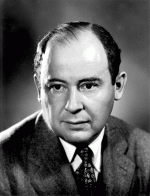 The PDE stability theory was first, and clearly articulated by John Von Neumann and first communicated during lectures in February 1947, and in a report that same year [VNR47]. These same concepts appeared in print albeit obliquely in Von Neumann and Goldstine [VNG47], and Crank-Nicholson’s classic [CN47]. Joe Grcar gives a stunning and full accounting of the work of Von Neumann and Goldstine and its impact on applied mathematics and computing in SIAM Review [Grcar]. Since Von Neumann had access to and saw the power of computing, he saw stability issues first hand, and tackled them. He had to, it bit him hard in 1944 [MR14]. His stability analysis methodology is still the gold standard for PDEs (
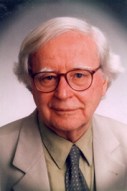 As Dahlquist relays the PDE world had a head start, and other important work was conducted perhaps most significantly the equivalence theorem of Lax [LaxEquiv]. This theorem was largely recreated independently by Dahlquist two or three years later (he reports that Lax gave the theory in a seminar in 1953). The equivalence theorem states that the combination of stability and consistency is equivalent to convergence. Being rather flip about this stability means getting an answer and consistency means solving the right problem.
 The Regularized Singularity