
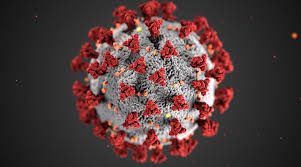
“I am a firm believer in the people. If given the truth, they can be depended upon to meet any national crisis. The great point is to bring them the real facts.”– Abraham Lincoln
If I’d still been writing the blog in 2020, it would have been a banner year. I’d likely written 30-40 posts about the events that year. At my normal rate of writing, this would have been 60-80,000 words. How am I going to condense that into a single (approximately 2000 word) post? Hindsight and perspective will allow for a lot of compression. If I’m right about the perspective, this won’t be the last time I touch on what 2020 can teach us. More importantly, we didn’t learn much from the year.

It is not much of a leap to say 2020 was the worst year of our lives, although 2024 still has time! The centerpiece for this disaster was the Covid-19 pandemic’s effects. We had a horrible election too. A brutal murder and reaction generated more racism in response. All of this was amplified by incompetent leadership. The USA performed horribly during the pandemic by any objective measure. The reasons for this are both specific and structural. The broad response to the pandemic has also had lasting influences on our lives today. Whether we like it or not, today’s world was shaped in 2020.
We sit here in 2024 with a monumental decision in front of the American public. We have the worst choice of Presidents in history. Either decision is bad. On the one hand, you have a declining feeble elderly man whose best days are well behind him. He’s not terribly likable or charismatic. He is decent, but absolutely uninspiring. On the other hand, we have a complete and total asshole. We have a crisis of leadership and either man will deepen it.
As I will discuss, Trump has demonstrated incompetence and horrible judgment. He constantly lies and seems to have no comprehension of truth. He botched the response to a crisis and actively made things worse. He is racist, sexist, misogynist, incurious, and ignorant. He is a convicted felon and legally judged to have committed rape. He is impulsively and habitually criminally minded. It is an awful choice and we are likely to make the worst of it. What it really confirms is that we didn’t learn a fucking thing from the mistakes of 2020. That is unforgivable.
The central drama of the year was the Covid-19 pandemic. Starting off in China, it spread across the globe and the United States. It wreaked havoc everywhere in the world, bringing death, fear, and chaos. Initially, the worst of the pandemic attacked Western Europe, with Italy getting the worst of it. Soon the massive death toll came to the USA, centering on New York City. As the virus was new, uncertainty reigned. Public health and medical officials knew little, and mistakes from caution abounded. The vulnerable died at a dizzying rate without any immunity to the illness. The medical systems strained and broke under the weight of the severely ill.
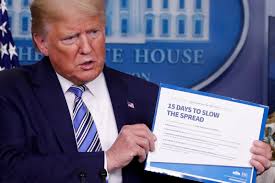
A couple of themes can already be seen at the outset of the pandemic. The controversy of the origin of the crisis shows a lack of trust and faith in institutions. We saw the chaos our federal decentralized system of government produced. Rather than local and better adaptation, the response was almost uniformly worse. Everything was made political. Liberal leaders tended to overreact and chose safety and caution. Conservative leaders chose business and minimized human life. Both sides were wrong and went too far. Liberals ended up hurting the future of children and their education. Conservatives took actions that led to more death, especially the poor, minorities, and the vulnerable.
Under this stress, we got to see the mettle of our leaders. In the USA, our leaders did horrendously. The most awful was our President. He seemed to first wish the pandemic away and then provided divisive and unvetted advice. He undermined those trying to provide expertise and guidance. As a result of inaction, Trump made the pandemic worse. The actions he took made it worse. The vaccine was the only saving grace. More true to form, Trump sowed dissent and chaos politically. This included attacking the vaccine when it became available. A crisis that should have brought people together divided them. Instead of making the country stronger, he made the country weaker and less united.
“In a time of domestic crisis, men of goodwill and generosity should be able to unite regardless of party or politics.”– John F. Kennedy
Personally, the year was a mixed bag. As the pandemic broke in the USA and the country closed down, I was with my family with my mother in hospice. It was from entirely different issues than Covid that she died. The backdrop to her passing was the world closing down. When I looked up from this, I found the nation closed down. Suddenly my wife and I were working from home. We adapted, as did everyone.
Working from home was rocky at first, but improved with better software and better habits. The whole arrangement had distinct advantages, removing the commute. Meals could be prepared during the day and dinner was served early. Exercise was a challenge, but equipment was purchased and walking became central too. I went 4-7 miles a day. In spite of the health challenges and the viral threat, I felt like the whole experience improved my physical health. This wasn’t my only benefit.

All in all, we did well personally. We both appreciated working from home and put ourselves to work on major home projects. We formed our own pod of friends to retain a social life. We and our friends made conscious choices based on our risk profiles. It was greatly enabled by working from home. We balanced our safety with our sanity. I fully recognize that all this good is firmly grounded in a lot of privilege and luck. For many people, the situation was terrible. One of these was my son. He was at the end of his Bachelor’s degree and working from home didn’t work for him. It was a microcosm of the damage done to millions of young people’s lives.
I also need to acknowledge that many people could not work from home. With schools out and day cares closed this was an exceptionally difficult time. Our children are grown and we didn’t have to try to work while managing day care and school. Anyone with children had a difficult time.
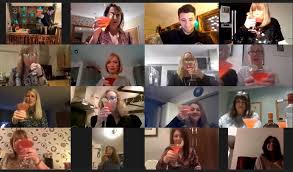
We also saw an online community spring up for Zoom-based cocktail parties. These mixers were amazing, well run, and satisfying. Not as good as doing this in person, but set the standard for online meetings. Frankly, my work meetings have never equaled the quality and intent of these Zoom meetings. Granted, the online meeting software and basic approach have improved leaps and bounds. It shows what motivated people and good leadership can do for meetings, even remote. Of course, all this was true with in-person meetings too. Work meetings have had problems forever.
“I wish it need not have happened in my time,” said Frodo. “So do I,” said Gandalf, “and so do all who live to see such times. But that is not for them to decide. All we have to decide is what to do with the time that is given us.”― J.R.R. Tolkien
In the midst of the pandemic, as the first stage of it drew to a close, something else terrible happened. A black man (George Floyd) was brutally and callously murdered by a police officer. This happened while other officers looked on without stopping it. Essentially, the murder was filmed, and the film went viral. It went out into a nation that was relentlessly online. People were properly outraged. People went to the streets to protest in massive numbers. This became the Black Lives Matter movement. It spawned some of the largest public protests in recent history.
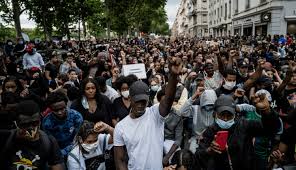
It was born out of the over-militarized American police and a virtual acceptance of police abuse and violence by many. Police and their thin blue line attitude allow abuse to persist. Rather than demand legal and proper behavior in their ranks, police protect lawbreaking in their ranks. The left also overreacted with some well-intentioned and genuinely stupid ideas. Key was the defund the police stance. It was still incredibly counter-productive and just the start. It appeared to be a genuine racial reckoning. The overreach on the left was the undoing of something needed.
“There comes a time when one must take a position that is neither safe, nor politic, nor popular, but he must take it because conscience tells him it is right.”― Martin Luther King Jr.
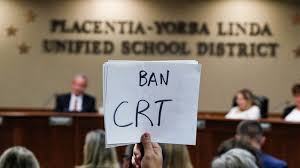
It also produced a huge backlash from the right. With the defund movement as cover, the right attacked the reaction to police abuse and murder. Much of this was supported and encouraged by the President. He is horribly racist after all. It also drove more insidious efforts like the label of “critical race theory” for racially sensitive education. CRT is absolute bullshit as actual CRT is a graduate-level legal theory (learned about Chris Rufo a brilliant, but horrible person). Nonetheless, it energized the right to remove any material that encouraged racial sensitivity. The right also engaged in violence at the protests. Most prominently, the coward Kyle Rittenhouse killed two people at a protest. In the end, it is arguable that the right won the day. Rather than a reckoning, we ended with a setback.
This gets to why we need to look back at 2020. There were numerous lessons we should have learned. We have not. We fucked up our response to things over and over. We made non-political things controversial. We attacked and undermined institutions and expertise. The result was objectively bad performance and lots of unnecessary dead people. We harmed the future of our children unnecessarily. We had painfully incompetent leadership. Rather than punish this incompetence and division, we may reward it. We are inviting disaster. An important question is why aren’t we learning? Why are we about to make some of the same mistakes again?
A big aspect of the pandemic year was how it affected one’s personal life in virtually every respect. One’s social life is an obvious thing, which takes a major hit removing the usual locales for getting together with people. We managed this by forming a small risk-informed pod of friends we continued to see. Our choices had a big impact on preserving our sanity. All things considered, we remained happy throughout the year.
Health is another obvious impact. For me, Covid-19 got in the way of health care. Covid-19 itself did not pose a problem personally. On the other hand, it got in the way of treating several problems. I have glaucoma and during the first half of 2020 I had a permanent minor loss of vision. I was also suffering from AFib during 2020. The pandemic modestly slowed my treatment. I ultimately had two ablation surgeries that appear to have fixed the problem (in 2022). Still, these medical issues were impacted by the overburdened medical system. Compared to many, I got off easy, but not unscathed.
A big part of improving my happiness and sanity was working from home. For both my wife and me, this was a welcome change. Firstly, I had a manager who I could not stand. He couldn’t stand me either. I welcomed not having to see him regularly. In addition, it was a welcome relief from having to put on “a mask” and walk on eggshells around coworkers. I don’t mean a physical mask, but the masking of my authentic self in order to be acceptable. It led to the realization of how little I wanted to spend time with most of these people. Now I could choose who I graced with my physical presence explicitly. I’ve come to realize that authenticity in the workplace is a joke. At least if you are me. The real me is not fit for the modern workplace. I’m too outspoken, profane, and sharp-tongued. I suppose people who are quiet, reserved, and dull as dirt can be authentic. The pandemic gave me time to realize all this from living differently.
While all this positivity surrounded my personal situation, the same can’t be said for the USA. The USA has a rather extreme problem with leadership. This is not all about Trump either. Trump is a real indicator of the problem. We don’t demand competence from our leaders. It is all image and bullshit. The result is our institutions failing at every level. We are incredibly low on trust. No one trusts anyone else.
“Trust is the glue of life. It’s the most essential ingredient in effective communication. It’s the foundational principle that holds all relationships.”― Stephen R. Covey
Public health and medicine took the brunt of this, and this lack of trust made the pandemic worse. It cost many lives. Worse yet, the pandemic made it all even worse. Conspiracy theories abounded. The vaccines that should have been a triumph drove division. A national crisis that should have brought people together did the opposite. By the end of the year, we were more divided and cynical.
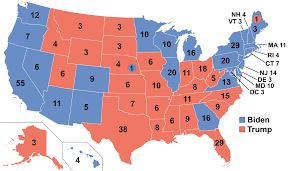
I cannot pass through 2020 without talking about the election. In many ways, it was the shitty icing on the shit sandwich of a year. On the one hand, it was a repudiation of the incompetence of the Trump administration. Yet about half the populace accepted the lie that the election was a fraud. There was no peaceful transition of power for the first time in nearly 250 years. The beaten and bruised reputation of the USA took another hit. The former beacon of democracy is a basket case. We left the year with dramatically less trust than we started; we started the year with very little trust.
“The heaviest penalty for declining to rule is to be ruled by someone inferior to yourself.”― Plato
Here we stand four years on with decisions in front of us. The hard lessons of 2020 have been forgotten. We never learned from them. We could very well reward the worst President in the history of the nation with that office again. It would be a self-inflicted wound of unparalleled magnitude. We would be taking a risk on a leader that we know is incompetent. We would be choosing a habitual liar to lead a nation without trust. We would be choosing a leader who will destroy our institutions rather than repair and fix them. We will be courting disaster when we need healing. It may be national suicide.
It is all because we want to forget what happened in 2020.
Next week, we need to talk about people who are assholes and why they are awful.
 being forced to. In addition, I do not feel that I am at liberty to go into the nature of the pressure being placed on me to stop. Nonetheless, I am being clearly pressured, if not threatened. When you call your wife to talk to her about an event and her response is fear bordering on terror, it gets your attention. I don’t want to hear that ever again. That is enough to get you to say, “fuck this shit”.
 sons are varied and largely personal. First and foremost, the blog was a way to practice writing as a habit. Writing is a core professional and personal activity. A focus on writing is key area of personal and professional development. It is difficult and often exposes one to intense and personal criticism. A blog meant that the work would be published and read by others. That has a way of focusing the mind, and you take things more seriously. When you write only for yourself, the level of care and attention is not nearly so acute. Occasionally a blog post would resonate and get a lot of viewers, which is a nice feeling. More often I would get a handful of viewers, but the post had already achieved its intended purpose.
 at a National level. The level of intellectual discourse around our programs is dismal, I’m lending my thoughts to the vacuum of ideas. Other blog pasts were pointed at dealing with the management of science. To say that science is managed poorly today is an understatement of some magnitude. It is getting worse. Finally, a handful of posts were completely out of character, and simply existed to maintain the writing habit and speak to something I really believe in. This won’t be the end of my writing, but it will happen in a different forum probably anonymously. I may experiment with different forms of writing too, fiction, poetry, …
 uch of my thinking goes into figuring out what the hell is going on these days. I’m distinctly unhappy with how work has evolved over the course of my career. On the one hand I feel like I’ve become that guy who pines for the “good ole days”. At the same time, I crave progress and a better world. I don’t want tomorrow to be like yesterday at all. The progress and World I desire didn’t exist in the past, but we were moving far faster toward it then. The good times of the past were defined by progress and purpose of work. It is the sense of progress, the meaning of work and sense of purpose that has been drained from my day. I realize that my expectations of work resolve around the spirit of progress toward something with importance and meaning. Work should have a clear purpose beyond simply delivering a paycheck. Work should be life affirming beyond its mere conduct.
 I sat down recently with one of my managers to make an admission that felt rather profound. My expectations of work are rather far beyond anything my employer can deliver on. This conclusion is rather intensely sad. Rather than lift me up and encourage me to greater heights, the demands of my job are smaller than me. I will have to lower myself to meet them. I don’t think this is uncommon, but rather a sad testament to today. I think this sentiment is broadly applicable and the strain between survival and a life of meaning has grown acute society-wide. More and more we aren’t dreaming or grasping for something bigger than ourselves. Day in and day out life is merely about survival and a host of petty concerns. The lack of meaning and purpose is a reflection of society as a whole. Most people are struggling even if the economy is humming. Our Nation is about reacting to fear, distrust and hatreds than aspiring to progress, hope and betterment. Work sadly reflects this time with cruel parallels. \
 wait to leave each day to really live, and found the weekends were never long enough to make up for the time lost. Yet here I am, being all those things because work has become so entirely empty of importance, meaning and value. It does not have to be like this, and ultimately this state serves no one, not even those who seemingly benefit.
 It is instructional to examine some of the concrete aspects of work that could step into this abyss and form some purpose and meaning. For example, we have a national program to reclaim the supercomputing throne again. It is an exemplar of what is wrong with today’s World in many ways. It is what masquerades as a big idea today. Instead, it is a very small idea. Supercomputing has ridden the coattails of Moore’s law for fifty years and that time is coming to an end. For a while we could advance in computing without any strategy or effort, just an expenditure of money. Those days are over, but the tiny thoughts surrounding it are still present. Rather than react to this reality we are simply repackaging the same old stale ideas we have used for the past 25 years. The use of modeling and simulation is an essential modern scientific tool. Among the things that need to be done to enable effective modeling and simulation the supercomputing hardware is the least important thing. It is the furthest away from reality and its impact is diluted by a host of steps that all must be done correctly for the hardware to have meaning. This current program is shorn of effort in all of the most important things in modeling and simulation. The greatest gap is the sense of meaning that this program has in the real world is simply a marketing ploy. It has no reality or substance at all.
 that will end up killing people. Long before people die the social chaos and damage will unfold. We will see problems already present due to low trust to magnify. The challenges already existed, and the current situation is only amplifying an already dangerous situation. A host of difficult economic concerns that already limit any benefit that normal people receive from economic growth will only get more strained.
 Vexing problems require risky solutions as well, and with risk off the table we simply avoid hard problems. Today that chain is broken at every level with our leadership being increasingly devoid of intellectual depth. Our experts are ignored, the institutions just want money and the government controls the money. Expertise is unwelcome because it only complicates the process and gets in the way of the money. This problem is one of the core issues with any strive for excellence and utility of peer review. Our institutions increasingly don’t care what they do as long as its paid for. The government has no interest in the work or its quality. All of this is a horrible downward spiral. In its wake value, meaning and quality are sacrificed. At the core of this maelstrom is an awful lack of trust and honesty that sprawls across society. If we can’t trust each other, we can’t work together and doing anything great is completely out of reach.
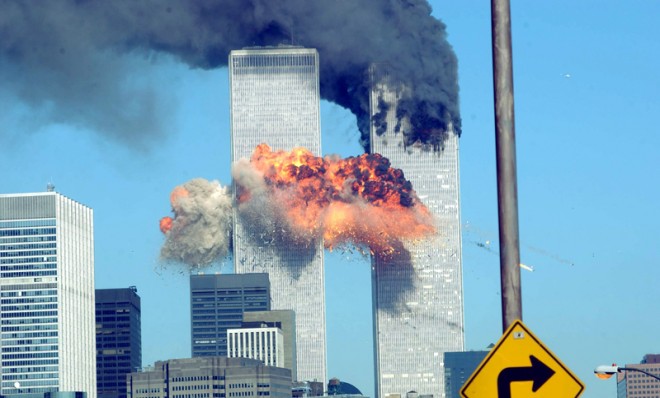 by the lack of growth overall. They only gain a relative degree of power, wealth and standing in comparison to the common man. We are living in a period where overwhelming fear is being used as a tool of the powerful. In the wake of 9/11 we saw irrational fears used to justify vast authoritarian overreach that continues to this day. We see huge defense budgets to be pillaged by the wealthy. The post 9/11 World has taken the United States directly toward a being a police state. People don’t even bat an eyelash at our massive level of imprisonment. It is a deeply unhealthy characteristic of our Nation, and most people are oblivious. At the same time the fear produces a compliant populace hungering for the safety of strong man rule. We see this playing out across the West as Democracy recedes in response. As Democracy recedes war will surely follow.
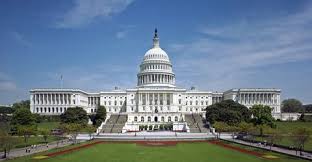 Today I’ll stick my nose into some of the appallingly destructive laws we have to live under. We are about to see a new one enacted to all of our detriments. We are a Nation that depends on laws for order and the common good. When the laws are simply veiled attempts to push other agendas that harm innocents, all law is undermined. In other cases, the law is simply incompetent and ill-suited to provide the intended good. The worst case are laws that are both veiled agendas and incompetent. These laws threaten the future, order and the tolerance of people. They do genuine harm to all of us. Unfortunately, we have far too much legislation that follows these characteristics. Many of these laws are marketed as something they are not so that they can serve the agendas of the powerful, often oppressing the weak and vulnerable as a side-effect.
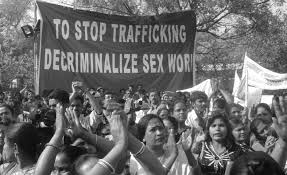 Most people are not aware of what is happening to the Internet right now. The congress is in the process of passing a censorship of free speech associated with sexuality. These laws are packaged as efforts to stop sex trafficking, a horrendous crime and genuine problem. The bills are quite frankly Trojan horses for a whole bunch of other stuff and will actually harm the people it is marketed to help (
 harms the people it is purported to help and amplifies existing problems in society rather than alleviate them. We already live in an obsessively shame driven culture with a sex negativity that harms many especially women. The way to combat human trafficking is to make sex work legal and allow it to proceed in the full light of day. It will happen and when it is underground it will attract criminals.
 Let’s look at some concrete examples of current laws. At my work we have to abide by export control laws. Calling this law idiotic is an insult to idiots. It combines terrifying penalties for violations with sketchy and piecemeal guidance. It rules by fear and incompetence blended into a toxic stew. For what I do the technical guidance needed for export control is intricate, and the law provides none. At the same time the legal jeopardy is extreme and exceeding that for classified data associated with nuclear weapons. The result is chaos and non-uniformity. The parallels to FOSTA/SESTA are stunning and terrifying. The new legislation is defined by the threat of massive legal jeopardy. These legal hammers are bludgeoning people like Craigslist to take steps to insulate themselves as a result.

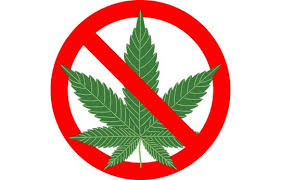 Marijuana is illegal without regard for its level of risk. It has genuine medical benefits that the law does not acknowledge, and its hard is far less than alcohol by virtually every reasonable standard. Rather than be a gateway to harder drugs, it is an alternative that reduces abuse of opioids. It is only illegal because it was the drug of choice by minority groups and an invitation for systematic targeting by police. Again, the parallels with FOSTA/SESTA are uncanny. We see legislation that sounds like it is a public good and instead is a targeting a vulnerable population. It make sex more illegal and drive it underground where it will help provide money to organized crime. Superficially the legislation sounds good, enacted and in practice it will hurt people and our society.
 A few weeks ago, I wrote about the variety of partial differential equations with their hyperbolic, parabolic and elliptic character. The point of the essay was noting that parabolic and elliptic equations have some intrinsically unphysical aspects. While this is true to an extent, I failed to note the linearity of these concepts. Some of my wise readers called me on this oversight in particular with respect to nonlinear parabolic equations that exhibit clear wave like behavior. Where linear parabolic equations produce infinite speeds that are clearly unphysical, the nonlinearity of the diffusion produces finite wave speeds and fronts usually associated with compressible flows. The nonlinear diffusion equations are used to model porous media and radiative transfer. The higher the degree of nonlinearity, the sharper and more shock-like the fronts behave. Furthermore, this sort of diffusion can be extremely useful for numerically stabilizing the solution of hyperbolic PDEs. My failure to note this texture was a significant oversight on my part.
 Other aspects of modeling with PDEs are problematic. One issue that comes up frequently with hyperbolic heat conduction is relativity. Generally, models are not Lorenz invariant. Almost every equation can be recast in a relativistic form to fix this issue. For many cases this has no significant influence on the solutions to the model. In hyperbolic heat conduction the changes return the equations to satisfying the second law of thermodynamics. The speeds in the equations are generally not relativistic, which makes this an extremely curious result. In greater depth, the entire notion that grounds the second law is equilibrium thermodynamics, and the processes in hyperbolic heat conduction are out of equilibrium. We need to carefully apply principles and assumptions when their foundations are being shaken.
 seems to indicate this. At the same time the vast majority of people are not benefiting. Life is genuinely hard for most people and getting harder. People have generally had jobs, but the jobs don’t lead to a good life with people stretched paycheck to paycheck, and health care ravaging any chance of having extra money. Simultaneously the rich are just getting richer. At the core of this disparity in outcomes from a seemingly robust business climate is the fundamental philosophy of our businesses, the maximization of stockholder value as the preeminent goal of business. This philosophy does not benefit business, customers, employees or society, it benefits shareholders who are the very rich. We now have moved to the point where the idea and the wealth it created at the top of the food chain has bred graft and corruption. The laws of the Nation have been altered to serve their wealth and away from serving the people. We are moving headlong toward catastrophe ushered in by the resulting imbalance.
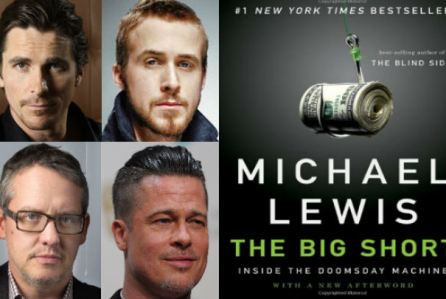 he situation gets worse when one looks at government. Increasingly the government looks to business practices to effectively deliver results from their programs. The business practices that the government looks to are drawn from the prevailing philosophy, maximized shareholder value. Government programs don’t have shareholders, but the influence is strong. We see money as driving everything in our work. Technical excellence, service, employee engagement, social impacts and long-term health of programs are all scarified to this philosophy. In business the maximize shareholder value leads to short-term thinking (driven by quarterly statements, profits), and these breeds short-term thinking in government programs. As a result, we have produced terrible government, and terrible results. Increasingly, the result of government being ineffective and awful is a self-fulfilling prophesy. Government can be effective, but only if we manage using principles that focus on effectiveness. In a sense the right philosophy for government needs to be different because the profit motive is not present. In the place of profit we simply see an acute focus on money and cheapness replacing service and excellence.

 e to use. This choice was largely an article of faith. The leaders of business on like maximizing shareholder value because they are shareholders. It benefits them financially. In every other resect his philosophy is terrible for the businesses themselves, hurts employees, harms customers and allows abdication of social responsibility. We see businesses that are absolutely eager to harm the Nation, its citizens, the environment, and break the law all in the name of short-term profit.
 United States at large. The bosses are doing great. The higher the boss is in the company or government function, the better they doing. Executive compensation is soaring while everyone else falls behind. The nation has become utterly short-term focused in its thinking. We can barely focus on anything for more than a day these days. The employees are struggling mightily. People are hurting, and these people are the employees. We can’t expect people to be good employees, parents, citizens if their lives are hanging by a thread. Almost no one exercises any social responsibility with both government and businesses showing total disregard for the citizens of their nation and community. All of these ills are the direct result of embracing greed as the core principle for business and government. The outcomes should surprise no one. Fixing this would mean a wholesale change in the emphasis of the ruling class away from self-enrichment to broader leadership with responsibility for others.
 with measurements to yield comfort to those who use them. In particular when we have a calibrated result, the bias in uncertainty is utterly essential to represent if we hope to predict with any justifiable confidence. For most cases where calibration is utilized, the bias is inherent in that process, and should be reflected in the uncertainty. If we are engaged in genuine prediction with the uncertainty, these biases can have rather profound impacts away from where we have data and where we are actually predicting results.
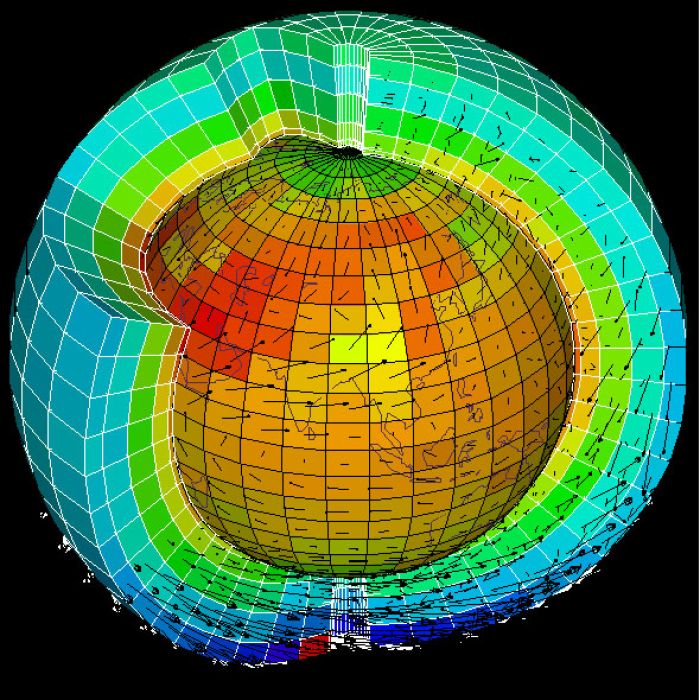
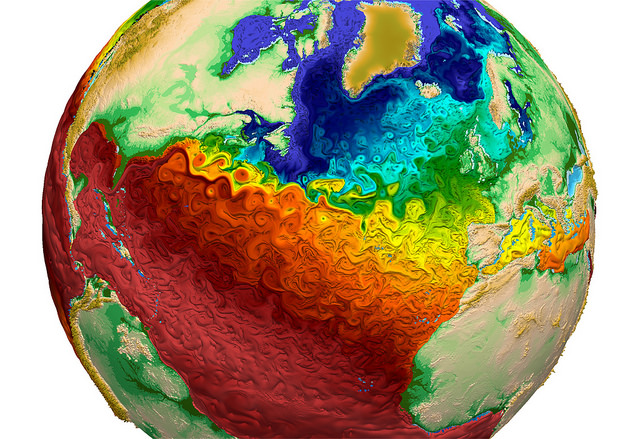 climate are epitomes of this principle. In these systems the answer is determined by small deviations away from the equilibrium state. Another wonderful example of this principle is a Type II Supernova where it teeters on the edge of this equilibrium and complex processes determine whether the star explodes or collapses into a black hole. A well represented equilibrium is more important to modeling than numerical or physical accuracy of the individual terms. In these cases the numerical error can be sufficient to upset the equilibrium rendering the simulation functionally useless. A calibration of a poorly understood model is used to compensate for the numerical error and place the system back into equilibrium. This common circumstance presents a distinct challenge for uncertainty estimation.

 The Regularized Singularity