If you had to identify, in one word, the reason why the human race has not achieved, and never will achieve, its full potential, that word would be “meetings.”
― Dave Barry
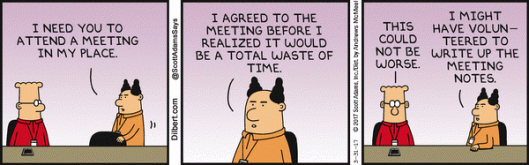 Meetings. Meetings, Meetings. Meetings suck. Meetings are awful. Meeting are soul sucking, time wasters. Meetings are a good way to “work” without actually working. Meetings absolutely deserve the bad rap they get. Most people think that meetings should be abolished. One of the most dreaded workplace events is a day that is completely full of meetings. These days invariably feel like complete losses, draining all productive energy from what ought to be a day full of promise. I say this as an unabashed extrovert knowing that the introvert is going to feel overwhelmed by the prospect.
Meetings are a symptom of bad organization. The fewer meetings the better.
– Peter Drucker

All of this is true, and yet meetings are important, even essential to a properly functioning workplace. As such, meetings need to be the focus of real effort to fix while minimizing unnecessary time spent there. Meetings are a vital humanizing element in collective, collaborative work. Deep engagement with people is enriching, educational, and necessary for fulfilling work. Making meetings better would produce immense benefits in quality, productivity and satisfaction in work.
Meetings are at the heart of an effective organization, and each meeting is an opportunity to clarify issues, set new directions, sharpen focus, create alignment, and move objectives forward.
― Paul Axtell
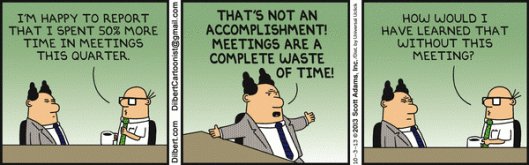 If there is one thing that unifies people at work, it is meetings, and how much we despise them. Workplace culture is full of meetings and most of them are genuinely awful. Poorly run meetings are a veritable plague in the workplace. Meetings are also an essential human element in work, and work is a completely human and social endeavor. A large part of the problem is the relative difficulty of running a meeting well, which exceeds the talent and will of most people (managers). It is actually very hard to do this well. We have now gotten to the point where all of us almost reflexively expect a meeting to be awful and plan accordingly. For my own part, I take something to read, or my computer to do actual work, or the old stand-by of passing time (i.e., fucking off) on my handy dandy iPhone. I’ve even resorted to the newest meeting past-time of texting another meeting attendee to talk about how shitty the meeting is. All of this can be avoided by taking meetings more seriously and crafting time that is well spent. If this can’t be done the meeting should be cancelled until the time is well spent.
The least productive people are usually the ones who are most in favor of holding meetings.
― Thomas Sewell
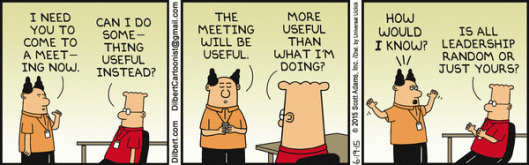
There are a few uniform things that can be done to improve the impact of meetings on the workplace. If a meeting is mandatory, it will almost surely suck. It will almost always suck hard. No meeting should ever be mandatory, ever. By forcing people to go to mandatory meetings, those running the meeting have no reason to make the meeting enjoyable, useful or engaging. They are not competing for your time, and this allows your time to be abused. A meeting should always be trying to make you want to be there, and honestly compete for your time. A fundamental notion that makes all meetings better is a strong sense that you know why you are at a meeting, and how you are participating. There is no reason for attendance to a meeting where you passively absorb information without any active role. If this is the only way to get the information, we highlight deeper problems that are all too common! Everyone should have an active role in the meeting’s life. If someone is not active, they probably don’t need to be there.
Meetings at work present great opportunities to showcase your talent. Do not let them go to waste.
― Abhishek Ratna
There are a lot of types of meetings, and generally speaking all of them are terrible, and they don’t need to be. None of them really have to be awful, but they are. Some of the reasons are a tremendously deep issue with the modern workplace. It is only a small over reach to say that better meetings would go a huge distance to improve the average workplace and provide untold benefits in terms of productivity and morale. So, to set the stage, let’s talk about the general types of meetings that most of us encounter:
- Conferences, Talks and symposiums
- Informational Meetings
- Organizational Meetings
- Project Meetings
- Reviews
- Phone, Skype, Video Meetings
- Working meetings
- Training Meetings
All of these meetings can stand some serious improvement that would have immense benefits.
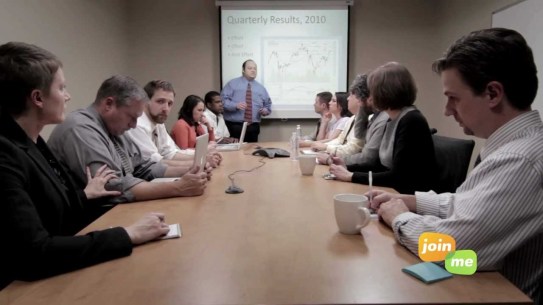
Meetings are indispensable when you don’t want to do anything.
–John Kenneth Galbraith
The key common step to a good meeting is planning and attention to the value of people’s time. Part of the planning is a commitment to engagement with the meeting attendees. Do those running the meeting know how to convert the attendees to participants? Part of the meeting is engaging people as social animals and building connections and bonds. The worst thing is a meeting that a person attends solely because they are supposed to be there. Too often our meetings drain energy and make people feel utterly powerless. A person should walk out of a meeting energized and empowered. Instead, meeting are energy and morale sucking machines. A large part of the meeting’s benefit should be a feeling of community and bonding with others. Collaborations and connections should arise naturally from a well run meeting. All of this seems difficult and it is, but anything less does not honor the time of those attending and the great expense their time represents. In the end, the meeting should be a valuable expenditure of time. More than simply valuable, the meeting should produce something better, a stronger human connection and common purpose of all those attending. If the meeting isn’t a better expenditure of people’s time, it probably shouldn’t happen.
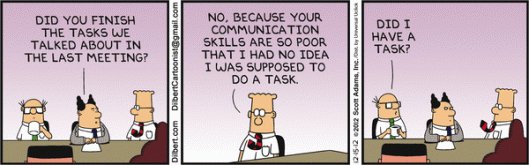
A meeting consists of a group of people who have little to say – until after the meeting.
― P.K. Shaw
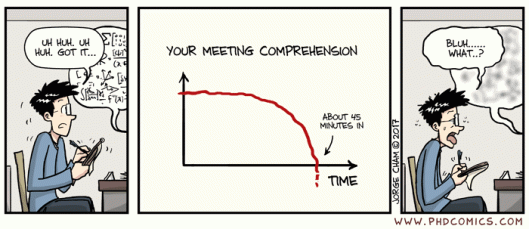 Conferences, Talks and symposiums. This is a form of meeting that generally works pretty well. The conference has a huge advantage as a form of meeting. Time spend at a conference is almost always time well spent. Even at their worst, a conference should be a banquet of new information and exposure to new ideas. Of course, they can be done very poorly and the benefits can be undermined by poor execution and lack of attention to detail.
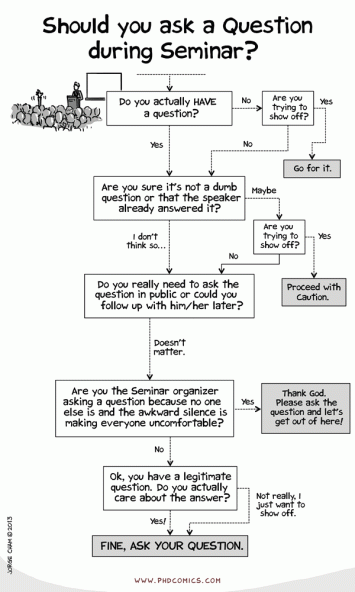 Conversely, a conference’s benefits can be magnified by careful and professional planning and execution. One way to augment a conference significantly is find really great keynote speakers to set the tone, provide energy and engage the audience. A thoughtful and thought-provoking talk delivered by an expert who is a great speaker can propel a conference to new heights and send people away with renewed energy. Conferences can also go to greater lengths to make the format and approach welcoming to greater audience participation especially getting the audience to ask questions and stay awake and aware. It’s too easy to tune out these days with a phone or laptop. Good time keeping and attention to the schedule is another way of making a conference work to the greatest benefit. This means staying on time and on schedule. It means paying attention to scheduling so that the best talks don’t compete with each other if there are multiple sessions. It means not letting speaker filibuster through the Q&A period. All of these maxims hold for a talk given in the work hours, just on a smaller and specific scale. There the setting, time of the talk and the time keeping all help to make the experience better. Another hugely beneficial aspect of meetings is food and drink. Sharing food or drink at a meeting is a wonderful way for people to bond and seek greater depth of connection. This sort of engagement can help to foster collaboration and greater information exchange. It engages with the innate human social element that meeting should foster (I will note that my workplace has mostly outlawed food and drink helping to make our meetings suck more uniformly). Too often aspects of the talk or conference that would make the great expense of people’s time worthwhile are skimped on undermining and diminishing the value.
Highly engaged teams have highly engaged leaders. Leaders must be about presence not productivity. Make meetings a no phone zone.
― Janna Cachola
Informational Meetings. The informational meeting is one of the worst abuses of people’s time. Lots of these meetings are mandatory, and force people to waste time witnessing evidence of what kind of shit show they are part of. This is very often a one-way exchange where people are expected to just sit and absorb. The information content is often poorly packaged, and ham handed in delivery. The talks usually are humorless and lack any soul. The sins are all compounded with a general lack of audience engagement. Their greatest feature is a really good and completely work appropriate time wasting exercise. You are at work and not working at all. You aren’t learning much either, it is almost always some sort of management BS delivered in a politically correct manner. Most of the time the best option is to completely eliminate these meetings. If these meetings are held, those conducting them should spend some real effort into making them worthwhile can valuable. They should seek a format that engages the audience and encourages genuine participation.
When you kill time, remember that it has no resurrection.
― A.W. Tozer
Organizational Meetings. The information’s meeting’s close relative is the organizational meeting. Often this is an informational meeting is disguise. This sort of meeting is called for an organization of some size to get together and hear the management give them some sort of spiel. These meeting happen at various organizational levels and almost all of them are awful. Time wasting drivel is the norm. Corporate or organizational policies, work milestones, and cheesy awards abound. Since these meeting is more personal than the pure informational meeting there is some soul and benefit to them. The biggest sin in these meetings is the faux engagement. Do the managers running these meetings really want questions, and are they really listening to the audience. Will they actually do anything with the feedback? More often than not, the questions and answers are handled professionally then forgotten. The management generally has no interest in really hearing people’s opinions and doing anything with their views, it is mostly a hollow feel good maneuver. Honest and genuine engagement is needed and these days management needs to prove that its more than just a show.
People who enjoy meetings should not be in charge of anything.
― Thomas Sowell
Project Meetings. In many places this is the most common meeting type. It is also tending to be one of the best meeting types where everyone is active and participating. The meeting involves people working to common ends and promotes genuine connection between efforts. These can take a variety of forms such as the stand-up meeting where everyone participates by construction. An important function of the project meeting is active listening. While this form of meeting tends to be good, it still needs planning and effort to keep it positive. If the project meeting is not good, it probably reflects quite fully on the project itself. Some sort of restructuring of the project is a cure. What are the signs that a project meeting is bad? If lots of people are sitting like potted plants and not engaged with the meeting, the project is probably not healthy. The project meeting should be time well spent, if they aren’t engaged, they should be doing something else.
Integrity is telling myself the truth. And honesty is telling the truth to other people.
― Spencer Johnson
 Reviews. A review meeting is akin to a project meeting, but has an edge that makes it worse. Reviews often teem with political context and fear. A common form is a project team, reviewers and then stakeholders. The project team presents work to the reviewers, and if things are working well, the reviewers ask lots of questions. The stakeholders sit nervously and watch rarely participating. The spirit of the review is the thing that determines whether the engagement is positive and productive. The core value about which value revolves is honesty and trust. If honesty and trust are high, those being reviewed are forthcoming and their work is presented in a way where everyone learns and benefits. If the reviewers are confident in their charge and role, they can ask probing questions and provide value to the project and the stakeholders. Under the best of circumstances, the audience of stakeholders can be profitably engaged in deepening the discussion, and themselves learn greater context for the work. Too often, the environment is so charged that honesty is not encouraged, and the project team tends to hide unpleasant things. If reviewers do not trust the reception for a truly probing and critical review, they will pull their punches and the engagement will be needlessly and harmfully moderated. A sign that neither trust nor honesty is present comes from an anxious and uninvolved audience.
I think there needs to be a meeting to set an agenda for more meetings about meetings.
― Jonah Goldberg
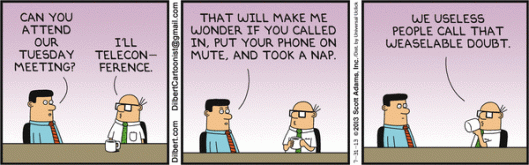
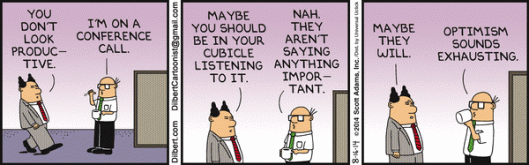
Phone, Skype, Video Meetings. These meetings are convenient and often encouraged as part of a cost saving strategy. Because of the nature of the medium these meetings are often terrible. Most often it turns into a series of monologs usually best suited for reporting work. Such meetings are rarely good places to hear about work. This comes from two truths: the people on the phone are often disengaged and listening while attending to other things. It is difficult to participate in any dynamic discussion, it happens, but it is rare. Most of the content is limited to the spoken word, and lacks body language and visual content. The result is much less information being transmitted, along with a low bandwidth of listening. For the most part these meeting should be done away with. If someone has something really interesting and very timely it might be useful, but only if we are sure the audience is paying real attention. Without dynamic participation one cannot be sure the attention is actually being paid.
Working meetings. These are the best meetings, hands down. They are informal, voluntary and dynamic. The people are there because they want to get something done that requires collaboration. If other types of meetings could incorporate the approach and dynamic of a working meeting, all of them would improve dramatically. Quite often these meetings are deep on communication and low on hierarchical transmission. Everyone in the meeting is usually engaged and active. People are rarely passive. They are there because they want to be there, or they need to be there. In many ways all of meeting could benefit mightily by examining working meetings, and adopting their characteristics more broadly.
Training Meetings. The use of a meeting to conduct training is common, as they are bad. These meetings could be improved greatly by adopting the principles from education. A good training is educational. Again dynamic, engaged meeting attendees are a benefit. If they are viewed as students, good outcomes can be had. Far too often the training is delivered in a hollow mandatory tone that provides little real value for these receiving it. We have a lot of soulless compliance training that simply pollutes the workplace with time wasting. Compliance is often associated with hot-button issues where the organization has no interest in engaging the employees. They are simply forced to do things because those in power say so. A real discussion on this sort of training is likely to be difficult and cast doubt. The conversations are difficult and likely to be confrontational. It is easier to passively waste people’s time and get it over with. This attitude is some blend of mediocrity and cowardice that has a corrosive impact on the workplace.
One source of frustration in the workplace is the frequent mismatch between what people must do and what people can do. When what they must do exceeds their capabilities, the result is anxiety. When what they must do falls short of their capabilities, the result is boredom. But when the match is just right, the results can be glorious. This is the essence of flow.
― Daniel H. Pink
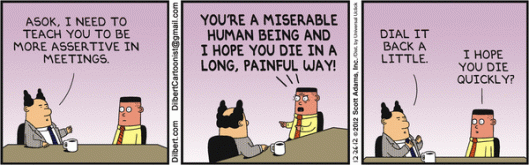 Better meetings are a mechanism where our workplaces have an immense ability to improve. A broad principle is that a meeting needs to have a purpose and desired outcome that is well known and communicated to all participants. The meeting should engage everyone attending, and no one should be a potted plant, or otherwise engaged. Everyone’s time is valuable and expensive, the meeting should be structured and executed in a manner fitting its costs. A simple way of testing the waters are people’s attitudes toward the meeting and whether they are positive or negative. Do they want to go? Are they looking forward to it? Do they know why the meeting is happening? Is there an outcome that they are invested in? If these questions are answered honestly, those calling the meeting will know a lot and they should act accordingly.
The cure for bad meetings is recognition of their badness, and a commitment to making the effort necessary to improve them. Few things have a greater capacity to make the workplace better, more productive and improve morale.
When employees feel valued, and are more productive and engaged, they create a culture that can truly be a strategic advantage in today’s competitive market.
― Michael Hyatt

 Looking out into the wide world one can easily conclude that people are really weird. There are lots of odd ones who engage in all sorts of irrational and odd behavior. I’m certain that I’m weird too. At the base of all this weirdness is a general lack of honesty and openness. No matter how much I might want to be honest and open, it is generically impossible. Generally speaking, if people could be more honest their behavior would make much more sense. Such honesty is breathtakingly hard to accomplish. In many cases honesty is punished brutally. To be honest is to risk judgement, confrontation, and ridicule from many quarters. Many of those engaging in these reactions themselves hide major portions of themselves for the same reasons. As a result of all this, people are weird, and their actions are not rationally explicable.
 The differences in people add to the weirdness because I react to things far differently than others. I’m sure that many others are put off by my wiliness to directly confront issues is weird. In other ways I might dress or act weirdly. This could be a direct result of different tastes, lack of attention or reasoning that is completely hidden by secrecy. For other people who I’m judging as weird, the reasons could be exactly the same. Sometimes the secrecy is driven by shame, or a desire for privacy, or difficulty in managing any meaningful communication. For example, people are highly motivated by sex, but society is extremely sex negative. The combination is shame. People want things with passion yet are pushed to disavow these wants from any public face. We live in an increasingly hostile and judgmental world and many things that might engender these reactions are kept private. Some people simply can’t be bothered to communicate effectively. They simply don’t try. In other cases, if I communicated to you exactly what motivated me, the actions would be entirely sensible. The result is the appearance of unbridled weirdness.
 Pushing all of these things out of society and organizations would be worthy progress toward a better World. Shame does nothing for anyone but drive natural behaviors and desires underground. Everyone would be better without its negative force on society. It only works as an engine for projecting someone else’s moral code onto an unwilling person. It creates a host of horrible side-effects that harm people. Desires for privacy are similar. We want things to be private because they are shameful. Some things are worthy of privacy like financial information because of potential for criminal conduct. Some things like a personal pain simply are not the subject of broad interest. In other cases, one wishes to only have certain things shared with a person whom they are intimate. All of this ultimately revolves back to communication. Our communication is the most important and essential aspect of our humanity. Without communication we are just animals. With it we are a society. A focus on doing it well is worth the effort.
 Every Monday I stare at a blank page and write. Sometimes it is obvious with work demands driving my thoughts in a very focused direction. I’d love to be there right now. Work is pissing me off, and providing no such inspiration, only anger. It’s especially unfortunate because I ought to have something to say on differential equations. Last week’s post was interesting, and the feedback has provided wonderful topics to pick up. One comment focused on other constraints and invariants for modeling that equations commonly violate. A wonderful manager I had from Los Alamos argued with me about nonlinearity, and integral laws with respect to hyperbolic PDEs and causality. Both of these topics are worthy of deep exploration, but my head isn’t there. The issue of societal inclusivity and the maintenance of power structures looms in my thinking. The acceptance of individuality and personal differences within our social structures is another theme that resonates. So, I take a pause from technical to ponder the ability of our modern World to honor and harness the life work and experience from others especially those who are different. The gulf between our leader’s rhetoric and actions is vast leading to poor results, and maintenance of traditional power.
 who is a member of the intellectual elite. I’m not a racial minority, a foreigner or part of the LBGTQ community although I have a child who is. Of course, my (true) identity is far more complex than that. For example, my personality an outlier at work. It makes many of my co-workers extremely uncomfortable. I’m an atheist and this makes people of faith uncomfortable. Other aspects of my life remain hidden too, maybe they aren’t germane; maybe they simply would make people uncomfortable; maybe they would result in implicit shunning and rejection. All of this runs against the theme of inclusion and diversity, which society as a whole and our institutions play lip service to. In the backdrop of this lip service are entrenched behaviors, practices and power that undermines inclusion at every turn. Many forms of diversity have no protection at all, and the power structures attack them without relief. The talk is all about diversity and inclusion, the actions are all about exclusivity. Without genuine leadership and commitment diversity and inclusion fail. Worse yet, a great deal of our leadership has moved to explicit attacks on diversity as a social ill.
 modern society. Any examination of the prisons in the United States shows massive racial inequity. Police enforce laws in a selective fashion letting whites go, while imprisoning blacks and Hispanics for the same offenses. Prison sentences are also harsher toward minorities. Other minority groups have been targeted and selected for similar treatments. In these cases, everyone is claimed to be under the same legal system, but the execution of the law lacks uniformity. At work we have policies and practices often revolving around hiring that have the same effect. They work to implicitly exclude people and undermine the actual impact of diversity.
 In the past decades we have seen huge strides for the LBGTQ community. The greatest victory is marriage equality. Discrimination is still something many people in society would love to practice. At an implicit level they do. Everywhere that discrimination can be gotten away with, it happens. Many people remain in the closet and do not feel free letting people know who they really are. Of course, this is a bigger issue for transgender people for whom hiding is almost impossible. At the same time the level of discrimination is still largely approved by society. Most of the discrimination is the result of people’s innate discomfort with LBGTQ sexuality and opening themselves to even considering being somewhere on any non-standard spectrum of sexuality. It becomes an issue and a thought they would just as soon submerge. This discomfort extends to other forms of non-standard expressions of sexuality that invariably leak out into people’s everyday lives. This sort of discomfort is greater in the United States where sexuality is heavily suppressed and viewed as morally inferior. Our sexuality is an important part of our self-identity. For many people it is an aspect of self that must be hidden lest they suffer reprisals.


 In many cases this whole issue is framed in terms of religion. Many traditional religious views are really excuses and justification for exclusion and bigotry. The aspects of the religious traditions focused on love, compassion and inclusion are diminished or ignored. This sort of perversion of religious views is a common practice by authoritarian regimes who harness the fear-based aspects of faith to enhance their power and sway over the masses. This is true for Christians, Jews, Muslims, Hindus, … virtually every major faith. It is manifesting itself in the movement to authoritarian rule in the United States. The forces of hate are cloaked in faith to immunize themselves from critical views. Hatred, discrimination and bigotry are justified in their faith and freed from much critical feedback. They also complain about being repressed by society even when they are the majority and ruling social order. This is a common response when the forces of inclusion complain about their institutionalized bigotry. In the United States the minority that is truly oppressed are atheists. An atheist can’t generally get elected to office and in many places needs to hide this identity lest be subject to persecution. It is among the personal identities that I need to hide. At the same time Christians can be utterly open and brazen in self-expression of their faith.

 If one trait defines the vast number of people today, it is disempowerment. Your personal value and potential are meaningless to our management. Do you job; do what you are told to do; comply with their requirements. Whatever you do don’t make waves or question the powers. I’ve done this, and the reaction is to punish people through marginalization and lack of access. Retribution is implicit and subtle. In the end you don’t know how much you were punished through opportunity and information denial. The key is that the powers that be are in control of you and if you don’t play ball with them, you are an outsider. A way of not getting into trouble is being a compliant, boring and utterly vanilla worker bee. If you tow the party line you simply get the benefit of employment “success”. Eventually if you play your cards right you can join the power structure as one of them. In this way diversity of any sort is punished. They see diversity as a threat and work to drive it out.
 What happens when someone falls outside these identities? If one is female and/or non-white there are protections and discrimination and bias is purely implicit. What about being an atheist? What about being gay, or transsexual? The legal protections begin to be weaker, and major societal elements seek to remove these protections. What if you’re non-monogamous, or committed to some other divergent sexual identity? What if you’re a communist or fascist? Then you are likely to be actively persecuted and discriminated against. Where is the line where this should happen? What life choices are so completely outside the norm of societal acceptance that they should be subject to effective banishment. If you have made one of these life choices, your choice is often hidden and secret. You are in the closet. This is a very real issue especially when large parts of society want you in the closet or put you back there. Moreover, this part of society is emboldened to try and put gays, women and people of color back in their traditional closets, kitchens and ghettos.
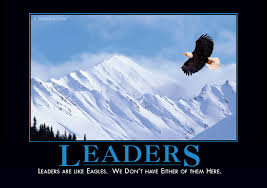 eople act out through their basest fears to squash people and ideas that are uncomfortable. We are not leading people to be better, we are encouraging them to be worse. Rather than act out of love, we are emboldening hate. Rather than accept people and allow them flourish using their distinct individuality and achieve satisfying lives, we choose conformity and order. The conformity and order that is imposed serves only those in power and limits any aspirational dreams of the masses. The masses are controlled by fear that naturally arises with those who are different. Humans are naturally fearful of other humans that are different. Rather than encourage people to accept these differences (i.e., accept and promote diversity), we encourage them to discriminate against them by promoting fear of the other. This fear is the tool of rich and powerful to create systems that maintain their grip on society.
 rovide a systematic explanation for what we see. More often than not this explanation has a mathematical character as the mechanism we use. Among our mathematical devices differential equations are among our most powerful tools. In the most basic form these equations are rate of change laws for some observable in the World. Most crudely these rate equations can be empirical vehicles for taking observations into a form useful for prediction, design and optimization. A more basic form is partial differential equations (PDEs) that describe the basic physics in a more expansive form. It is important to consider the consequences of the model forms we use. Several important categories of models are intrinsically unphysical in aspects thus highlighting the George Box aphorism that “essentially, all models are wrong”!

 . Elliptic equations are the simplest form and often describe physics where spatial terms are in equilibrium and there is no temporal, rate terms. Elliptic equations can include time terms, but usually implying something so deeply unphysical as to be utterly outlawed. If time is elliptic, the past is determined by the future, and since we know that time flows in one direction, this is deeply and fundamentally unphysical. In other uses, the elliptic PDEs are found through ignoring temporal t
 erms. This is a philosophical violation of the second law of thermodynamics, which can be used to establish the arrow of time. In this sense we find that elliptic equations are an asymptotic simplification of more fundamental laws. Another implication of ellipticity of PDEs is infinite speed of information, or more correctly an absence of time. If elliptic equations are found within a set of equations, we can be absolutely sure that some physics has been chosen to be ignored. In many cases these ignored physics are not important and some benefit is achieved through the simplification. On the other hand, we shouldn’t lose sight of what has been done and its potential for mischief. At some point this mischief will become relevant and disqualifying.
 . We often learn that these diffusion processes are fundamental, leading to the second law of thermodynamics. This comes with a deep problem that we should acknowledge. The parabolic equations imply an infinite propagation speed. Physically the process of diffusion is quite discrete associated with collisionality of the particles that make up materials, or discrete effects of solids (where electrons are particles that move, exchange and interact). This physical effect is utterly bound by finite speeds of propagation.
 With elliptic equations the strength of the signal is unabated in time, but with parabolic equations, the signal diminishes in time. As such the sin of causality violation isn’t quite so profound, but it is a sin nonetheless. As before we get parabolic equations by ignoring physics. Usually this is a valid thing to do based on the time and length scales of interest. We need to remember that at some point this ignorance will damage the ability to model. We are making simplifications that are not always justified. This point is lost quite often. People are allowed to think the elliptic or parabolic equations are fundamental when they are not.
 . This can be written as a system of equations first-order PDEs,
  and
and  . We can derive the simple wave equation by differentiating the first equation in time and the second in space then substituting to eliminate
  . The propriety of these steps depends on the variable being continuously differentiable, i.e., smooth. The second, first-order form is the entry point for the beautiful mathematics of hyperbolic conservation laws. As we will show, the elliptic and parabolic equations are simplifications of the hyperbolic equations made upon applying some assumptions.
 . Instead this is a simplification of a more broadly valid law where heat flows using a hyperbolic equation. This requires a simple modification of the Fourier law to
  . For most applications heat flow can be modeled in the parabolic form as the hyperbolic form is important over very short time and space scales. Still the more fundamental law is the hyperbolic form, and the classical parabolic form is derived by assuming that certain aspects of the dynamics can be ignored. We must always remember that the standard modeling of diffusion processes has an unphysical aspect baked into the equations.

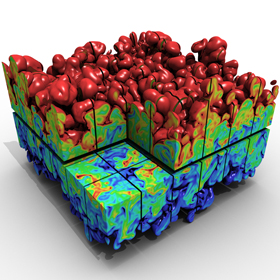 The incompressible Navier-Stokes equations are second primal example where hyperbolic equations are replaced by both parabolic-elliptic equations. A starting point would be the compressible equations that are purely hyperbolic without viscosity. Of course, the viscosity could be replaced with hyperbolic equations to make the compressible flow totally hyperbolic. These equations are the following,
  . Previously, we discussed the replacement of hyperbolic diffusion by the parabolic terms. For the incompressibility we remove sound waves analytically. The key to doing this is remove any connection between pressure and density with the divergence free constraint,
  . This also turns mass into a passively advected scalar. This is a useful model for low speed flows, but the diffusion and suppressed sound waves both produce infinite speeds of propagation. This violates the principle of causality where there is cause and effect. Instead everywhere is impacted by everything immediately.
 For modeling and numerical work, the selection of the less physical parabolic and elliptic equations provides better conditioning. The conditioning provides a better numerical and analytical basis for the solutions. The recognition that the equations are less physical is not commonly appreciated. A broader and common appreciation may provide impetus for identifying when these differences are significant. Holding models that are unphysical as sacrosanct is always dangerous. It is important to recognize the limitations of models and allow ourselves to question them regularly. Even models that are fully hyperbolic are wrong themselves, this is the very nature of models. By using hyperbolic models, we remove an obviously unphysical aspect of a given model. Models are abstractions of reality, not the operating system of the universe. We must never lose sight of this.
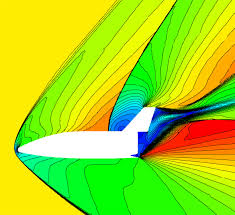 ms, the deterministic attitude runs aground. The natural World and engineered systems rarely behave in a completely deterministic manner. We see varying degrees of non-determinism and chance in how things work. Some of this is the action of humans in a system, some of it are complex initial conditions, or structure that deterministic models ignore. This variability, chance, and structure is typically not captured by our modeling, and as such modeling is limited in utility for understanding reality.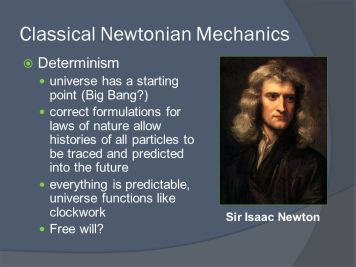
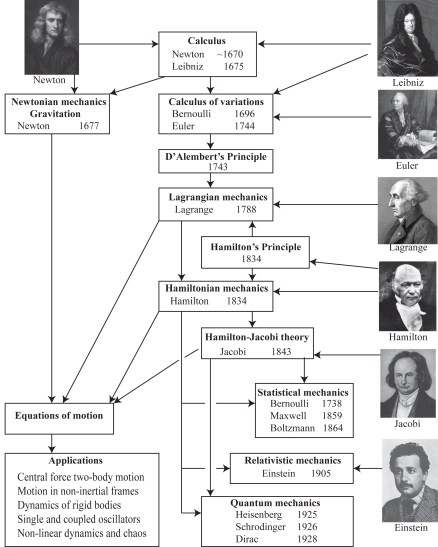
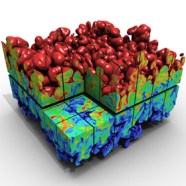 To move forward we should embrace some degree of randomness in the fundamental models we solve. This random response naturally arises from various sources. In our deterministic models, the random response is heavily incorporated in boundary and initial conditions. The initial conditions include things like texture and structure that the standard models homogenize over. Boundary conditions are the means for the model to communicate with the broader world, which has vast complexities are grossly simplified. In reality both the initial and boundary conditions are far more complex than our models currently use.
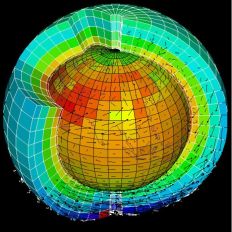 Another aspect of the complexity that current modeling ignores are the dynamics associated with the stochastic phenomena or lumps it whole cloth into the model’s closure. In a real system the stochastic aspects of the model evolve over time including nonlinear interactions between deterministic and stochastic aspects. When the dynamics are completely confined to deterministic models, these nonlinearities are ignored or lumped into the deterministic mean field. When models lack the proper connection to the correct dynamics, the modeling capability is diminished. The result is greater uncertainty and less explanation of what is happening in nature. From an engineering point of view, the problem is that the ability to explicitly control for the non-deterministic aspect of systems is diminished because its influence on results isn’t directly exposed. If the actual dynamics were exposed, we could work proactively to design better. This is the power of understanding in science; if we understand we can attempt to mitigate and control the phenomena. Without proper modeling we are effectively flying blind.

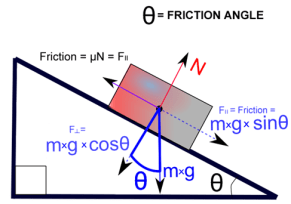 The sort of science needed is enormously risky. I am proposing that we have reached the end of utility for models used for hundreds of years. This is a rather bold assertion on the face of it. On the other hand, the models we are using have a legacy going back to when only analytical solutions to models were used, or only very crude numerical tools. Now our modeling is dominated by numerical solutions, and computing from the desktop (or handheld) to supercomputers of unyielding size and complexity. Why should we expect models derived in the 18th and 19th centuries to still be used today? Shouldn’t our modeling advance as much as our solution methods have. Shouldn’t all the aspects of modeling and simulation be advancing. The answer is a dismal no.
 uncertainty and error. Most good results using these models are heavily calibrated and lack any true predictive power. In the absence of experiments, we are generally lost and rarely hit the mark. Instead of seeing any of this as shortcomings in the models, we seek to continue using the same models and focus primarily on computing power as a remedy. This is both foolhardy and intellectually empty if not outright dishonest.

 We would be far better off removing the word “predictive” as a focus for science. If we replaced the emphasis on prediction with a focus on explanation and understanding, our science would improve overnight. The sense that our science must predict carries connotations that are unrelentingly counter-productive to the conduct of science. The side-effects of the predictivity undermine the scientific method at every turn. The goal of understanding nature and explaining what happens in the natural world is consistent with the conduct of high quality science. In many respects large swaths of the natural world are unpredictable in highly predictable ways. Our weather is a canonical example of this. Moreover, we find the weather to be unpredictable in a bounded manner as time scales become longer. Science that has focused on understanding and explanation has revealed these truths. Attempting to focus prediction under some circumstances is both foolhardy and technically impossible. As such the reality of prediction needs to be entered into carefully and thoughtfully under well-chosen circumstances. We also need the freedom to find out that we are wrong and incapable of prediction. Ultimately, we need to find out limits on prediction and work to improve or accept these limits.
 chances of hitting funding. A slightly less cynical take would take predictive as the objective for science that is completely aspirational. In the context of our current world, we strive for predictive science as a means of confirming our mastery over a scientific subject. In this context the word predictive implies that the we understand the science well enough to foresee outcomes. We should also practice some deep humility in what this means. Predictivity is always a limited statement, and these limitations should always be firmly in mind. First, predictions are limited to some subset of what can be measured and fail for other quantities. The question is whether the predictions are correct for what matters? Secondly, the understanding is always waiting to be disproved by a reality that is more complex than we realize. Good science is acutely aware of these limitations and actively probes the boundary of our understanding.
 In the modern world we constantly have new tools to help expand our understanding of science. Among the most important of these new tools is modeling and simulation. Modeling and simulation is simply an extension of the classical scientific approach. Computers allow us to solve our models in science more generally than classical means. This has increased the importance and role of models in science. We can envision more complex models having more general solutions with computational solutions. Part of this power comes with some substantial responsibility; computational simulations are highly technical and difficult. They come with a host of potential flaws, errors and uncertainties that cloud results and need focused assessment. Getting the science of computation correct and assessed to play a significant role in the scientific enterprise requires a broad multidisciplinary approach with substantial rigor. Playing a broad integrating role in predictive science is verification and validation (V&V). In a nutshell V&V is the scientific method as applied to modeling and simulation. Its outcomes are essential for making any claims regarding how predictive your science is.
 We can take a moment to articulate the scientific method and then restate it in a modern context using computational simulation. The scientific method involves making hypotheses about the universe and testing those hypotheses against observations of the natural world. One of the key ways to make observations are experiments where the measurements of reality are controlled and focused to elucidate nature more clearly. These hypotheses or theories usually produce models of reality, which take the form of mathematical statements. These models can be used to make predictions about what an observation will be, which then confirms the hypothesis. If the observations are in conflict with the model’s predictions, the hypothesis and model need to be discarded or modified. Over time observations become more accurate, often showing the flaws in models. This usually means a model needs to be refined rather than thrown out. This process is the source of progress in science. In a sense it is a competition between what we observe and how well we observe it, and the quality of our models of reality. Predictions are the crucible where this tension can be realized.
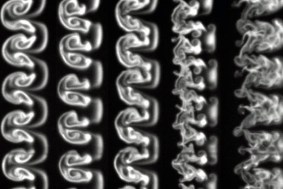 Validation is then the structured comparison of the simulated model’s solution with observations. Validation is not something that is completed, but rather it is an assessment of work. At the end of the validation process evidence has been accumulated as to the state of the model. Is the model consistent with the observations? If the uncertainties in the modeling and simulation process along with the uncertainties in the observations can lead to the conclusion that the model is correct enough to be used. In many cases the model is found to be inadequate for the purpose and needs to be modified ˙or changed completely. This process is simply the hypothesis testing so central to the conduct of science.
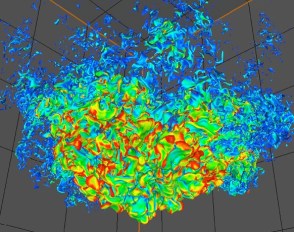 Let’s take a well thought of and highly accepted model, the incompressible Navier-Stokes equations. This model is thought to largely contain the proper physics of fluid mechanics, most notably turbulence. Perhaps this is true although our lack of progress in turbulence might indicate that something is amiss. I will state without doubt that the incompressible Navier-Stokes equations are wrong in some clear and unambiguous ways. The deepest problem with the model is incompressibility. Incompressible fluids do not exist and the form of the mass equation showing divergence free velocity fields implies several deeply unphysical things. All materials in the universe are compressible and support sound waves, and this relation opposes this truth. Incompressible flow is largely divorced from thermodynamics and materials are thermodynamic. The system of equations violates causality rather severely, the sound waves travel at infinite speeds. All of this is true, but at the same time this system of equations is undeniably useful. There are large categories of fluid physics that they explain quite remarkably. Nonetheless the equations are also obviously unphysical. Whether or not this unphysical character is consequential should be something people keep in mind.
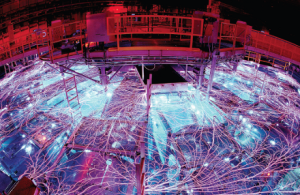 In conducting predictive science one of the most important things you can do is make a prediction. While you might start with something where you expect the prediction to be correct (or correct enough), the real learning comes from making predictions that turn out to be wrong. It is wrong predictions that will teach you something. Sometimes the thing you learn is something about your measurement or experiment that needs to be refined. At other times the wrong prediction can be traced back to the model itself. This is your demand and opportunity to improve the model. Is the difference due to something fundamental in the model’s assumptions? Or is it simply something that can be fixed by adjusting the closure of the model? Too often we view failed predictions as problems when instead they are opportunities to improve the state of affairs. I might posit that if you succeed with a prediction, it is a call to improvement; either improve the measurement and experiment, or the model. Experiments should set out to show flaws in the models. If this is done the model needs to be improved. Successful predictions are simply not vehicles for improving scientific knowledge, they tell us we need to do better.
 A healthy focus on predictive science with a taste for failure produces a strong driver for lubricating the scientific method and successfully integrating modeling and simulation as a valuable tool. Prediction involves two sides of science to work in concert; the experiment-observation of the natural world, and the modeling of the natural world via mathematical abstraction. The better the observations and experiments, the greater the challenge to models. Conversely, the better the model, the greater the challenge to observations. We need to tee up the tension between how we sense and perceive the natural world, and how we understand that world through modeling. It is important to examine where the ascendency in science exists. Are the observations too good for the models? Or can no observation challenge the models? This tells us clearly where we should prioritize.
 The important word I haven’t mentioned yet is “uncertainty”. We cannot have predictive science without dealing with uncertainty and its sources. In general, we systematically or perhaps even pathologically underestimate how uncertain our knowledge is. We like to believe our experiments and models are more certain than they actually are. This is really easy to do in practice. For many categories of experiments, we ignore sources of uncertainty and simply get away with an estimate of zero for that uncertainty. If we do a single experiment, we never have to explicitly confront that the experiment isn’t completely reproducible. On the modeling side we see the particular experiment as something to be modeling precisely even if the phenomena of interest are highly variable. This is common and a source of willful cognitive dissonance. Rather than confront this rather fundamental uncertainty, we willfully ignore it. We do not run replicate experiments and measure the variation in results. We do not subject the modeling to reasonable variations in the experimental conditions and check the variation in the results. We pretend that the experiment is completely well-posed, and the model is too. In doing this we fail at the scientific method rather profoundly.
 In this light we can see that V&V is simply a structured way of collecting evidence necessary the scientific method. Collecting this evidence is difficult and requires assumptions to be challenged. Challenging assumptions is courting failure. Making progress requires failure and the invalidation of models. It requires doing experiments that we fail to be able to predict with existing models. We need to assure that the model is the problem, and the failure isn’t due to numerical error. To determine these predictive failures requires a good understanding of uncertainty in both experiments and computational modeling. The more genuinely high quality the experimental work is, the more genuinely testing the validation is to model. We can collect evidence about the correctness of the model and clear standards for judging improvements in the models. The same goes for the uncertainty in computations, which needs evidence so that progress can be measured.
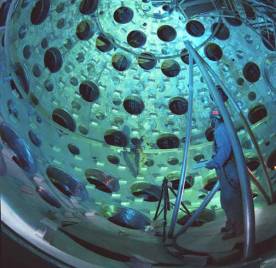 In the process we create conditions where the larger goal of prediction is undermined at every turn. Rather than define success in terms of real progress, we produce artificial measures of success. A key to improving this state of affairs is an honest assessment of all of our uncertainties both experimentally and computationally. There are genuine challenges to this honesty. Generally, the more work we do, the more uncertainty we unveil. This is true of experiments and computations. Think about examining replicate uncertainty in complex experiments. In most cases the experiment is done exactly once, and the prospect of reproducing the experiment is completely avoided. As soon as replicate experiments are conducted the uncertainty becomes larger. Before the replicates, this uncertainty was simply zero and no one challenges this assertion. Instead of going back and adjusting our past state based on current knowledge we run the very real risk of looking like we are moving backwards. The answer is not to continue this willful ignorance but take a mea culpa and admit our former shortcomings. These mea culpas are similarly avoided thus backing the forces of progress into an ever-tighter corner.
 The core of the issue is relentlessly psychological. People are uncomfortable with uncertainty and want to believe things are certain. They are uncomfortable about random events, and a sense of determinism is comforting. As such modeling reflects these desires and beliefs. Experiments are similarly biased toward these beliefs. When we allow these beliefs to go unchallenged, the entire basis of scientific progress becomes unhinged. Confronting and challenging these comforting implicit assumptions may be the single most difficult for predictive science. We are governed by assumptions that limit our actual capacity to predict nature. Admitting flaws in these assumptions and measuring how much we don’t know is essential for creating the environment necessary for progress. The fear of saying, “I don’t know” is our biggest challenge. In many respects we are managed to never give that response. We need to admit what we don’t know and challenge ourselves to seek those answers.
 n today’s world from work to private life to public discourse, experts are receding in importance. They used to be respected voices who added deep knowledge to any discussion, not any more. Time and time again experts are being rejected by the current flow of events. Experts are messy and bring painful reality into focus. With the Internet, Facebook and the manufactured reality they allow, it’s just easier to dispense with the expert. One can replace the expert with a more comforting and simpler narrative. One can provide a politically tuned narrative that is framed to support an objective. One can simply take a page from the legal world and hire their own expert. The expert is a pain to control, and expertise is expensive. Today we can just make shit up and it’s just as credible as the truth, and much less trouble to manage. Today our management culture with its marketing focus has no time for facts and experts to cloud matters. Why deal with the difficulties that reality offers when you can wish them away. The pitch for money is much cleaner without objective reality to make things hard. Since quality really doesn’t matter anyway, no one knows the difference. We live in the age of bullshit and lies. The expert is obsolete.


 All of these horrors have been slowing dawning on me while seeing our broader world begin to go up in flames. The evening news is a cascade of ever more surreal and unbelievable events. The news has become absolutely painful to watch. A big part of this horrible discourse is the chants of “fake news” and the reality of it. The problems with fake news are permeating the discourse across society. Science and scientific experts are no different. A lack of confidence and credibility in the sources of information is a broad problem. Unless the system values integrity, quality and truth it will fade from view. Increasingly, the system values none of these things and we are getting their opposites. For each thing experts acts as gatekeepers of integrity, quality and truth. As such they are to be pushed out the way as impediments to success. The simple politically crafted message that comforts those with a certain point of view is welcomed by the masses. The messy objective reality with its subtle shadings and complexity are something people would rather not examine.


 One of the clearest characteristics of our current research environment is the dominance of money. This only shadows the role of money is society at large. Money has become the one-size-fits-all measuring stick for science. This includes the view of the quality of science. If something gets a lot of money, it must be good. Quality is defined by budget. This shallow mindset is incredibly corrupting all the way from the sort of Lab’s where I work at to Universities and everything in between. Among the corrupting influences is the tendency for promotion of science to morph into pure marketing. Science is increasingly managed as a marketing problem and quality is equivalent to its potential for being flashy. In the wake of this attitude is a loss of focus on the basics and fundamentals of managing research quality.
 Money is a tool. Just like a screwdriver, or a pencil, or a gun. We have lost sight of this fact. Money has become a thing unto itself and replaced the value it represents as an objective. Along the way the principles that should be attached to the money have also been scuttled. This entire ethos has infected society from top to bottom with the moneyed interests at the top lording over those without money. Our research institutions are properly a focused reflection of these societal trends. They have a similar social stratification and general loss of collective purpose and identity. Managers have become the most important thing superseding science or mission in priority. Our staff are simply necessary details and utterly replaceable especially with quality being an exercise in messaging. Expertise is a nuisance, and expert knowledge something that only creates problems. This environment is tailored to a recession of science, knowledge and intellect from public life. This is exactly what we see in every corner of our society. In its place reigns managers and the money, they control. Quality and excellence are meaningless unless they come with dollars attached. This is our value system, everything is for sale.
 The result of the system we have created is research quality in virtual freefall. The technical class has become part of the general underclass whose well-being is not the priority of this social order. Part of the rise of the management elite as the identity of organizations is driven by this focus on money. Managers look down into organizations for glitzy marketing ammo, to help the money flow. The actual quality and meaning of the research is without value unless it comes with lots of money. Send us your slide decks and especially those beautiful colorful graphics and movies. Those things sell this program and get the money in the door. That is what we are all about, selling to the customer. The customer is always right, even when they are wrong as long as they have the cash. The program’s value is measured in dollars. Truth is measured in dollars, and available for purchase. We are obsessed with metrics, and organizations far and wide work hard to massage them to look good. Things like peer review are to be managed and generally can be politicked into something that makes organizations look good. In the process every bit of ethics and integrity can be squeezed out. These managers have rewritten the rules to make this all kosher. They are clueless about the corrosive and damaging all of this is to the research culture.


 our highest leadership today. We are not led by people with integrity, ethics or basic competence. The United States has installed a rampant symptom of corruption and incompetence in its highest office. Trump is not the problem, he is the symptom of the issue. He may become a bigger problem if allowed to reign too long, he can become a secondary infection. He exemplified every single issue we have with ethics, integrity and competence to an almost cartoonish magnitude. Donald Trump is the embodiment of every horrible boss you’ve ever had, then amplified to an unimaginable degree. He is completely and utterly unfit for the job of President whether measured by intellect, demeanor, ethics, integrity or philosophy. He is pathologically incurious. He is a rampant narcissist whose only concern is himself. He is lazy and incompetent. He is likely a career white color criminal who has used money and privilege to escape legal consequences. He is a gifted grifter and conman (whose greatest con is getting this office). He has no governing philosophy or moral compass. He is a racist, bigot and serial abuser of women.
 In a nutshell Donald Trump is someone you never want to meet and someone who should never wield the power of his current office. You don’t want him to be your boss, he will make your life miserable and throw you under the bus if it suits him. He is a threat to our future both physically and morally. In the context of this discussion he is the exemplar of what ills the United States including organizations that conduct research. He stands as the symbol of what the management class represents. He is decay. He is incompetence. He is a pathological liar. He is worthy of no respect or admiration save his ability to fool millions. He is the supremacy of marketing over substance. He is someone who has no idea how ironic his mantra “make America great again” is completely undermined by his every breath. His rise to power is the most clear and evident example of how our greatness as a nation has been lost and his every action accelerates our decline. People across the World have lost faith in the United States for the good reason. Any country that elected this moronic, unethical con man as leader is completely untrustworthy. No one symbolizes our fall from greatness more completely than Donald Trump as President.
 The long-term impact could well be catastrophic. We can only fake it for so long before it catches up with us. We can allow our leadership to demonstrate such radical disregard for those they lead for so long. The lack of integrity, ethics and morality from our leadership even when approved by society will create damage that our culture cannot sustain. Even if we measure things in the faulty lens of money, the problems are obvious. Money has been flowing steadily into the pockets of the very rich and the management class and away from societal investment. We have been starving our infrastructure for decades. Our roads are awful, and bridges will collapse. 21st Century infrastructure is a pipe dream. Our investments in research and development have been declining in the same time frame scarified for short term profit. At the same time the wealth of the rich has grown, and inequality has become profound and historically unprecedented. These figures are completely correlated. This correlation is not incidental, it is a change in the priorities of society to favor wealth accumulation. The decline of research is simply another symptom.
 After monotonicity-preserving methods came along and revolutionized the numerical solution of hyperbolic conservation laws, people began pursuing follow-on breakthroughs. Heretofore nothing has appeared as a real breakthrough although progress has been made. There are some very good reasons for this and understanding them helps us see how and where progress might be made and how. As I noted several weeks ago in the blog post about Total Variation Diminishing methods, the breakthrough with monotonicity preserving came in several stages. The methods were invented by practitioners who were solving difficult practical problems. This process drove the innovation in the methods. Once the methods received significantly notice as a breakthrough, the math came along to bring the methodology into rigor and explanation. The math produced a series of wonderful connections to theory that gave results legitimacy, and the theory also connected the methods to earlier methods dominating the codes at that time. People were very confident about the methods once math theory was present to provide structural explanations. With essential non-oscillatory (ENO) methods, the math came first. This is the very heart of the problem.
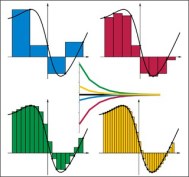 As I noted the monotonicity preserving methods came along and total variation theory to make it feel rigorous and tie it to solid mathematical expectations. Before this the monotonicity preserving methods felt sort of magical and unreliable. The math solidified the hold of these methods and allowed people to trust the results they were seeing. With ENO, the math came first with a specific mathematical intent expressed by the methods. The methods were not created to solve hard problems although they had some advantages for some hard problems. This created a number of issues that these methods could not overcome. First and foremost was fragility, followed by a lack of genuine efficacy. The methods would tend to fail when confronted with real problems and didn’t give better results for the same cost. More deeply, the methods didn’t have the pedigree of doing something amazing that no one had seen before. ENO methods had no pull.

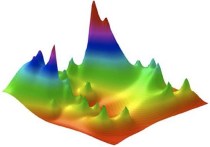 ENO methods were devised to move the methods ahead. ENO took the adaptive discrete representation to new heights. Aside from the “adaptive” aspect the new method was a radical departure from those it preceded. The math itself was mostly notional and fuzzy lacking a firm connection to the same preceding work. If you had invested in TVD methods, the basic machinery you used had to be completely overhauled for ENO. The method also came with very few guarantees of success. Finally, it was expensive, and suffered from numerous frailties. It was a postulated exploration of interesting ideas, but in the mathematical frame, not the application frame. Its development also happened at the time when applied mathematics began to abandon applications in favor of a more abstract and remote connection via packaged software.
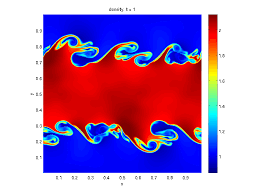 ENO and WENO methods were advantageous for a narrow class of problems usually having a great deal of fine scale structure. At the same time, they were not a significant (or any) improvement over the second-order accurate methods that dominate the production codes for the broadest class of important application problems. It’s reasonable to ask what might have been done differently to product a more effective outcome? One of the things that hurt the broader adoption of ENO and WENO methods is an increasingly impenetrable codes where large modification is nearly impossible as we create a new generation of legacy codes (retaining the code base).
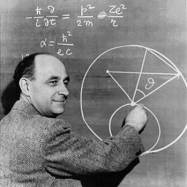
 When I got my first job out of school it was in Los Alamos home of one of the greatest scientific institutions in the World. This Lab birthed the Atomic Age and changed the World. I went there to work, but also learn and grow in a place where science reigned supreme and technical credibility really and truly mattered. Los Alamos did not disappoint at all. The place lived and breathed science, and I was bathed in knowledge and expertise. I can’t think of a better place to be a young scientist. Little did I know that the era of great science and technical superiority was drawing to a close. The place that welcomed me with so much generosity of spirit was dying. Today it is a mere shell of its former self along with Laboratories strewn across the country whose former greatness has been replaced by rampant mediocrity, pathetic leadership and a management class that rules this decline. Money has replaced achievement, integrity and quality as the lifeblood of science. Starting with a quote by Feynman is apt because the spirit he represents so well is the very thing we have completely beat out of the system.
 The days of technical competence and scientific accomplishment are over. This foundation for American greatness has been overrun by risk aversion, fear and compliance with a spirit of commonness. I use the word “greatness” with gritted teeth because of the perversion of its meaning by the current President. This perversion is acute in the context of science because he represents everything that is destroying the greatness of the United States. Rather than “making America great again” he is accelerating every trend that has been eroding the foundation of American achievement. The management he epitomizes is the very thing that is the blunt tool bludgeoning American greatness into a bloody pulp. Trump’s pervasive incompetence masquerading as management expertise will surely push numerous American institutions further over the edge into mediocrity. His brand of management is all to prevalent today and utterly toxic to quality and integrity.
 “butthead cowboys” and keep them from fucking up. Put differently, the management is there to destroy any individuality and make sure no one ever achieves anything great because no one can take a risk sufficient to achieve something miraculous. Anyone expressing individuality is a threat and needs to be chained up. We replaced stunning World class technical achievement with controlled staff, copious reporting, milestone setting, project management and compliance all delivered with mediocrity. This is bad enough by itself, but for an institution responsible for maintaining our nuclear weapons stockpile, the consequences are dire. Los Alamos isn’t remotely alone. Everything in the United States is being assaulted by the arrayed forces of mediocrity. It is reasonable to ask whether the responsibilities the Labs are charged with continue to be competently achieved.


 All of this is now blazoned across the political landscape with an inescapable sense that America’s best days are behind us. The deeply perverse outcome of the latest National election is a president who is a cartoonish version of a successful manager. We have put our abuser and a representative of the class that has undermined our Nation’s true greatness in the position of restoring that greatness. What a grand farce! Every day produces evidence that the current efforts toward restoring greatness are using the very things undermining it. The level of irony is so great as to defy credulity. The current administration’s efforts are the end point of a process that started over 20 years ago, obliterating professional government service and hollowing out technical expertise in every corner. The management class that has arisen in their place cannot achieve anything but moving money and people. Their ability to create the new and wonderful foundation of technical achievement is absent.

 from the beginning. In a very real way the bullshit science of Star Wars was a trail blazer for today’s rampant scientific charlatans. Rather than give science a free reign to seek breakthroughs along with the inevitable failure, society suddenly sought guaranteed achievement at a reduced cost. In reality it got neither achievement or economized results. With the flow of money being equated to quality as opposed to results, the combination has poisoned science.
 the dominant factor in every decision. Since the managers are the gate keepers for funding they have uprooted technical achievement and progress as the core of organizational identity. It is no understatement to say that the dominance of financial concerns is tied to the ascendency of management and the decline of technical work. At the same time the desire for assured results produced a legion of charlatans who began to infest the research establishment. This combination has produced the corrosive effect of reducing the integrity of the entire system where money rules and results can be finessed to outright fabricated. Standards are so low now that it doesn’t really matter.
 One of the key trends impacting our government funded Labs and research is the languid approach to science by the government. Spearheading this systematic decline in support is the long-term Republican approach to starving government that really took the stage in 1994 with the “Contract with America”. Since that time the funding for science has declined in real dollars along with a decrease in the support for professionalism by those in government. Over time the salaries and level of professional management has been under siege as part of an overall assault on governing. A compounding effect has been an ever-present squeeze on the rules related to conducting science. On the one hand we are told that the best business practices will be utilized to make science more efficient. Simultaneously, best practices in support for science have denied us. The result is no efficiency along with no best practices and simply a decline in overall professionalism for the Labs. All of this is deeply compounding the overall decline in support for research.
 The Regularized Singularity