When truth is replaced by silence, the silence is a lie.
― Yevgeny Yevtushenko
We all live in a golden age for the abuse of power. Examples abound and touch everyone’s life. We see profound abuses in politics daily. Recently the decades of abuse committed by Harvey Weinstein have come to light. Apparently, it barely exis
ted in the shadows for years and years as one of Hollywood’s worst kept secrets. Weinstein preyed on women with virtual impunity with his power and prestige acting to keep his actions in the dark. The promise and threat of his power in that industry gave him virtual license to act. The silence of the myriad of insiders who knew about the pattern of abuse allowed the crimes to continue unabated. Only after the abuse came to light broadly and outside the movie industry did the unacceptability arise. When the abuse stayed in the shadows, and its knowledge limited to industry insiders, it continued.
Cowardice rightly understood begins with selfishness and ends with shame.
― José Rizal
The power of the online world and our free press should be a boon to exposing and bringing these monsters down. People can be alerted to unacceptable behavior and demand action to remove these abominations from power. It is not working out this way. Instead the power of information has been turned on its head, and the modern world of information has empowered them to new heights. We only need to look at the occupant of the Oval Office for proof. People in power have access to resources and talent not available to others. This power can be turned to marketing and shaping the message to allow them to retain power. Power has its privileges and among these are access to wealth, information and (sexual) favors, most of us can’t even dare to dream of. The abusers turn all of this into a machine that retains and even grows their power. The modern world of interconnection is the latest tool in their arsenal of power. The powerful have largely controlled the media forever, but this control has taken on a new character with Facebook and Twitter.
People follow leaders by choice. Without trust, at best you get compliance.
― Jesse Lyn Stoner
I see it at work in small ways. Sometimes it’s the desire of those in power to keep their poor leadership or stewardship from being open to criticism, i.e., an honest peer review. More recently we have seen ourselves subjected to training on information security that was merely an excuse to be threatened by the United States Attorney General, Jeff Sessions. It was a gross waste of resources to provide a platform for abuse of power (at the cost many millions of dollars to threaten people, and help crush morale). Ostensibly the training was to highlight the importance of protecting sensitive and classified information. This is a topic that we are already trained heavily on, and we are acutely aware of in our daily work. Given our ongoing knowledge of the topic, the whole training was provided to silence the critics of the administration, who will now misuse information control to hide their crimes.
Compliance” is just a subset of “governance” and not the other way around.
― Pearl Zhu
The United States has gone through a virtual orgy of classification since 9/11. This is an extremely serious issue and its tendrils permeate this entire topic. I’ve written in the past about our problems in this regard. Our government, related organizations, and contractors are running wild classifying everything in sight. Increasingly the classification is used to hide and bury information. Quite often things are labeled with the “official use only” category because it is basically unregulated. There is no standard and the tendency is to simply hide as much as possible. It is primed for wide scale abuse. I’m fairly certain that the abuse is already happening on an enormous scale. It is quite often used to keep embarrassing, criminal or simply slip-shod work out of sight and away from scrutiny. It is exactly the sort of thing the current (and past) administrations would use to hide stuff from view. Of course, higher levels of classification have been used similarly. The prime example is the cover-up of the slaughter of innocents by the military in Iraq central to the whole Chelsea Manning case. It wasn’t classified, it was criminal and embarrassing, yet classification was used to attempt to bury the evidence.
Those who lack the courage will always find a philosophy to justify it.
― Albert Camus
Our current President is serial abuser of power whether it be the legal system, women, business associates or the American people, his entire life is constructed around abuse of power and the privileges of wealth. Many people are his enablers, and nothing enables it more than silence. Like Weinstein, his sexual misconducts are many and well known, yet routinely go unpunished. Others either remain silence or ignore and excuse the abuse a being completely normal.
I better use some Tic Tacs just in case I start kissing her. You know, I’m automatically attracted to beautiful — I just start kissing them. It’s like a magnet. Just kiss. I don’t even wait. And when you’re a star, they let you do it. You can do anything…. Grab ’em by the pussy. You can do anything.
– President Donald Trump
We are all enablers. We knew what kind of monster we were electing to the highest office, and people stood by silent. Worse yet they gave him their tacit approval. Weinstein is no different. Sessions is no different either, no sexual misconduct known there, but ignorance and racism is a clear part of his repertoire. In addition, he has direct conflicts of interests with vast prison stocks in his portfolio, and the power to improve his stock holdings through his office and his direct actins. Since his boss is a walking monument to conflict of interest, thus nothing will happen. He will abuse the power of his office with impunity. At this point the entire Nation has forgiven their crimes through willful ignorance. The mandated threat masquerading as training is simply the latest, and by no means the biggest violation of standards of conduct. The threat is designed to silence any documentation of violations and assist in their continued violation through our continued silence and tacit acceptance of their power.
The standards of conduct under the Trump Administration is headed straight to hell. The only thing that they are opposed to is threats to their p
ower and ability to abuse it. They are an entire collection of champion power abusers. Like all abusers, they maintain their power through the cowering masses below them. When we are silent their power is maintained. They are moving the squash all resistance. My training was pointed at the inside of the institutions and instruments of government where they can use “legal” threats to shut us up. They have waged an all-out assault against the news media. Anything they don’t like is labeled as “fake news” and attacked. The legitimacy of facts has been destroyed, providing the foundation for their power. We are now being threatened to cut off the supply of facts to base resistance upon. This training was the act of people wanting to rule like dictators in an authoritarian manner.
I am personally quite concerned about how easily we accept this authoritarian approach to leadership. We seem all too willing and able to simply salute and accept the commands of corrupt overlords. We are threatened with extreme consequences, and those in power can do as they please with virtual impunity. For those abusing power,
the set-up is perfect. They are the wolves and we, the sheep, are primed for slaughter. Recent years have witnessed an explosion in the amount of information deemed classified or sensitive. Much of this information is controlled because it is embarrassing or uncomfortable for those in power. Increasingly, information is simply hidden based on non-existent standards. This is a situation that is primed for abuse of power. People is positions of power can hide anything they don’t like. For example, something bad or embarrassing can be deemed to be proprietary or business-sensitive, and buried from view. Here the threats come in handy to make sure that everyone keeps their mouths shut. Various abuses of power can now run free within the system without risk of exposure. Add a weakened free press and you’ve created the perfect storm.
The mantle of National security and patriotism works to compliment the systematic abuse of power. One of the primary forms of abuse is financial gain. The decision making behind the flow of money is typically hidden. No one benefiting from the flow of money is too keen on the details of who got the money and why getting out. All one has to do is look at the AG’s finances. He benefits greatly through other people’s misery. More and longer prison sentences raise the stock prices he holds and enriches
him. No one even asks the question, and the abuse of power goes unchecked. Worse yet, it becomes the “way things are done”. This takes us full circle to the whole Harvey Weinstein scandal. It is a textbook example of unchecked power, and the “way we do things”.
The real division is not between conservatives and revolutionaries but between authoritarians and libertarians.
― George Orwell
The only way to rid a system of these abuses is the exposure to clear view. When people see the way that those in power abuse the system, the abusers need to change their way or lose their power. This is the exact reason why the abusers are so keen to squash any disclosures (i.e., leaks). They like being able to run their shadow empires with impunity. Without the risk of exposure, the abusers can simply take their abuses to new levels. For systems needs genuine information control and security, the threat of abuse of power is extreme. If the system is not run with the highest level of ethics and integrity, the abuse of power, and the genuine need for secrecy are on a collision course. In taking my training, the threats from someone completely lacking any visible ethics or integrity is chilling. Simply put, the Attorney General is proven racist, white supremacist apologist, and serial abuser of power. He has no ethical basis to issue his threats, only unbridled power. He has been given free reign purely on ideological grounds.

Democracy can exist only in the countries where people are brave! Coward nations always live under the authoritarian regimes!
― Mehmet Murat ildan
This value system is in complete and total collision with the values that the United States is supposedly based on. This value system is unfortunately consistent with the actual values in the United States today. We are struggling between who we should be and who we are. At work this runs headlong into the fundamental character of the institutions and the people employed. We have a generally docile workforce who are easily cowered by power. We have installed authoritarian monsters in positions of power who are more than willing to abuse this power. So the sheep bow their heads to the wolves and simply welcome the slaughter. Our institutions are similarly cowered by money. The federal government pays the bills, and with that buys what is moral and ethical. A good and logical question is where does this end. What is the point where we rise up and say “NO!”? What is the point where the actions by those in power are too much to tolerate? We aren’t there yet, and I shudder thinking of where that line is. Worse yet, I’m not entirely sure there is a line that our employees, management or the institutions themselves would enforce. This is truly a terrifying prospect.
The strategic adversary is fascism… the fascism in us all, in our heads and in our everyday behavior, the fascism that causes us to love power, to desire the very thing that dominates and exploits us.
― Michel Foucault
No matter the reasons for the training I took, the tone and approach set by those governing my workplace should be chilling to contemplate. We are creating an environment where unethical conduct and rampant abuse of power go unchecked. Abusers can thrive and run free. We can be sure that their power will grow and extend to other areas. Without the checks and balances that exposure brings, the abuse of power is free to run wild and grow. We have installed an utterly repugnant serial abuser as President. He has a history of financial, personal and sexual ethics violations. He now has more power than ever, and is actively destroying the vehicles for oversight. He has surrounded himself with people of similar morality and ethics, or parasitic enablers who trade their own morality and ethics for power (like VP Pence, who like the religious right make their bed with this devil freely).
A fascist is one whose lust for money or power is combined with such an intensity of intolerance toward those of other races, parties, classes, religions, cultures, regions or nations as to make him ruthless in his use of deceit or violence to attain his ends.
― Henry A. Wallace
This sort of deal making isn’t simply for the rampant misogyny of the right wing to answer for. Those on the left have their own crimes to answer for as the Weinstein scandal makes clear. All those people standing up for Women’s rights in the World, but tolerating his private abuse of women are no better. All of their public stands for liberal causes are made shallow through the acts of private cowardice. They are equally guilty and no better than the so-called Christians embracing Trump. Some things are not acceptable, no matter who does them or their belief system. If you are a liberal Hollywood elite and you stood by while Weinstein abused and assaulted women, your morality is for sale. If you’re an evangelical Christian who voted for Trump, you are no better. Both men are monstrous abusers and morally unacceptable. T

oo often we make the case that their misdeeds are acceptable because of the power they grant to your causes through their position. This is exactly the bargain Trump makes with the right wing, and Weinstein made with the left.
Of course, I ask myself, am I really any better? I take my paycheck with the assumption that the terms of my employment mean they own me. What is the price of my silence? I have duty to my loved ones and my support for them. This keeps me as compliant as I am. I need to ask myself what too far looks like? I’ve asked what the limits for my employers are, and I fear there is no limit; I fear they will comply to almost anything. We are rapidly approaching a moral chasm if we haven’t already gone over the edge. Will we simply fall in, and let our nation become a kleptocracy with a wink and a nod toward our standards, ethics and morality while standing by and letting the abusers run wild. For the greater part, I think that we are already there. It is terrifying to think about how much worse it’s going to get.
Terror is a powerful means of policy and one would have to be a hypocrite not to understand this.
― Leon Trotsky
I’d like to be independent empowered and passionate about work, and I definitely used to be. Instead I find that I’m generally disempowered compliant and despondent these days. The actions that manage us have this effect; sending the clear message that we are not in control; we are to be controlled, and our destiny is determined by our subservience. With the National environment headed in this direction, institutions like our National Labs cannot serve their important purpose. The situation is getting steadily worse, but as I’ve seen there is always somewhere worse. By the standards of most people I still have a good job with lots of perks and benefits. Most might tell me that I’ve got it good, and I do, but I’ve never been satisfied with such mediocrity. The standard of “it could be worse” is simply an appalling way to live. The truth is that I’m in a velvet cage. This is said with the stark realization that the same forces are dragging all of us down. Just because I’m relatively fortunate doesn’t mean that the situation is tolerable. The quip that things could be worse is simply a way of accepting the intolerable.
beings (people) into a hive where their basic humanity and individuality is lost. Everything is controlled and managed for the good of the collective. Science Fiction is an allegory for society, and the forces of depersonalized control embodied by the Borg have only intensified in our world. Even people working in my chosen profession are under the thrall of a mindless collective. Most of the time it is my maturity and experience as an adult that is called upon. My expertise and knowledge should be my most valuable commodity as a professional, yet they go unused and languishing. They come to play in an almost haphazard catch-what-catch-can manner. Most of the time it happens when I engage with someone external. It is never planned or systematic. My management is much more concerned about me being up on my compliance training than productively employing my talents. The end result is the loss of identity and sense of purpose, so that now I am simply the ninth member of the bottom unit of the collective, 9 of 13.
actually manage the work going on and the people doing the work. They are managing our compliance and control, not the work; the work we do is mere afterthought that increasingly does not need me any competent person would do. At one time work felt good and important with a deep sense of personal value and accomplishment. Slowly and surely this sense is being under-mined. We have gone on a long slow march away from being empowered and valued as contributing individuals. Today we are simply ever-replicable cogs in a machine that cannot tolerate a hint of individuality or personality.
great, and I believe in it. Management should be the art of enabling and working to get the most out of employees. If the system was working properly this would happen. For some reason society has removed its trust for people. Our systems are driven and motivated by fear. The systems are strongly motivated to make sure that people don’t fuck up. A large part of the overhead and lack of empowerment is designed to keep people from making mistakes. A big part of the issue is the punishment meted out for any fuck ups. Our institutions are mercilessly punished for any mistakes. Honest mistakes and failures are met with negative outcomes and a lack of tolerance. The result is a system that tries to defend itself through caution, training and control of people. Our innate potential is insufficient justification for risking the reaction a fuck up might generate. The result is an increasingly meek and subdued workforce unwilling to take risks because failure is such a grim prospect.
The same thing is happening to our work. Fear and risk is dominating our decision-making. Human potential, talent, productivity, and lives of value are sacrificed at the altar of fear. Caution has replaced boldness. Compliance has replaced value. Control has replaced empowerment. In the process work has lost meaning and the ability for an individual to make a difference has disappeared. Resistance is futile, you will be assimilated.
(
being in the audience. Giving talks is pretty low on the list of reasons, but not in the mind of our overlords, which starts to get at the problems I’ll discuss below. Given the track record of this meeting my expectations were sky-high, and the lack of inspiring ideas left me slightly despondent.

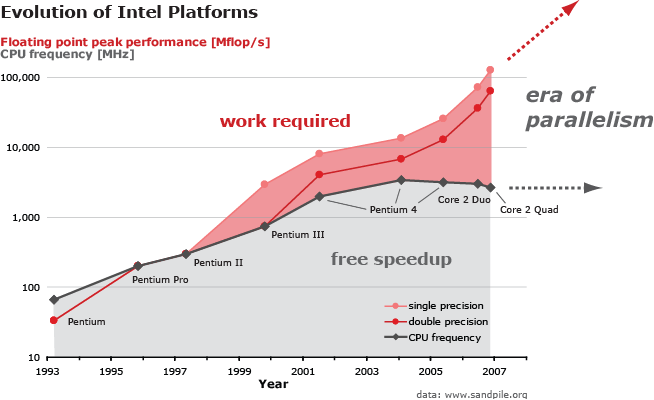
The really dirty secret is that chasing exascale as a route to scientific discovery is simply bullshit of the highest and most expensive order. We would be far better served by simply figuring out how to use the hardware we already have. Figuring out how to efficiently use hardware we have had for decades would be a difficult and worthy endeavor. The punch line is that we could get orders of magnitude in improved performance out of the hardware we’ve been using for decades. By simply figuring out how to get our codes working more efficiently on the computers already existing would meet most scientific goals without eviscerating the rest of computational science in the process. Instead we chase goals that are utterly meaningless. In the process we are destroying the research that has true and lasting value. The areas being ignored in the push for exascale have the capacity to provide far more scientific capability than even the most successful exascale program could possibly deliver. This brings me back to the meeting in Santa Fe and the lack of energy and exciting ideas. In the past the meeting has been a great survey of the active work from a creative and immensely talented group of people. As such this meeting is the proverbial canary in the coalmine. The ideas are dying right in front of our eyes.
This outcome is conflated with the general lack of intellectual vigor in any public discourse. The same lack of intellectual vigor has put this foolish exascale program in place. Ideas are viewed as counter-productive today in virtually every public square. Alarmingly, science is now suffering from the same ill. Experts and the intellectual elite are viewed unfavorably and their views held in suspicion. Their work is not supported, nor is projects and programs dependent on deep thinking, ideas or intellectual labor. The fingerprints of this systematic dumbing down of our work have reached computational science, and reaping a harvest of poisoned fruit. Another sign of the problem is the lack of engagement of our top scientists in driving new directions in research. Today, managers who do not have any active research define new directions. Every year our manager’s work gets further from any technical content. We have the blind leading the sighted and telling them to trust them, they can see where we are going. This problem highlights the core of the issue; the only thing that matters today is money. What we spend the money on, and the value of that work to advance science is essentially meaningless.
Effectively we are seeing the crisis that has infested our broader public sphere moving into science. The lack of intellectual thought and vitality pushing our public discourse to the lowest common denominator is now attacking science. Rather than integrate the best in scientific judgment into our decisions on research direction, it is ignored. The experts are simply told to get in line with the right answer or be silent. In addition, the programs defined through this process then feed back to the scientific community savaging the expertise further. The fact that this science is intimately connected to national and international security should provide a sharper point on the topic. We are caught in a vicious cycle and we are seeing the evidence in the hollowing out of good work at this conference. If one is looking for a poster child for bad research directions, the exascale programs are a good place to look. I’m sure other areas of science are suffering through similar ills. This global effort is genuinely poorly thought through and lacks any sort of intellectual curiosity.
Priority is placed on our existing codes working on the new super expensive computers. The up front cost of these computers is the tip of the proverbial cost iceberg. The explicit cost of the computers is their purchase price, their massive electrical bill and the cost of using these monstrosities. The computers are not the computers we want to use, they are the ones we are forced to use. As such the cost of developing codes on these computers is extreme. These new computers are immensely unproductive environments. They are a huge tax on everyone’s efforts. This sucks the creative air from the room and leads to a reduction in the ability to do anything else. Since all the things being suffocated by exascale are more useful for modeling and simulation, the ability to actually improve our computational modeling is hurt. The only things that benefit from the exascale program are trivial and already exist as well-defined modeling efforts.
rse. Most of the activity for working scientists is at the boundaries of our knowledge working to push back our current limits on what is known. The scientific method is there to provide structure and order to the expansion of knowledge. We have well chosen and understood ways to test proposed knowledge. A method of using and testing our theoretical knowledge in science is computational simulation. Within computational work the use of verification, validation with uncertainty quantification is basically the scientific method in action (
If the uncertainty is irreducible and unavoidable, the problem with not assessing uncertainty and taking an implied value of ZERO for uncertainty becomes truly dangerous (
may prove deadly in rather commonly encountered situations. As systems become more complex and energetic, chaotic character becomes more acute and common. This chaotic character leads to solutions that have natural variability. Understanding this natural variability is essential to understanding the system. Building this knowledge is the first step in moving to a capability to control and engineer it, and perhaps if wise, reduce it. If one does not possess the understanding of what the variability is, such variability cannot be addressed via systematic engineering or accommodation.
systematically is an ever-growing limit for science. We have a major scientific gap open in front of us and we are failing to acknowledge and attack it with our scientific tools. It is simply ignored almost by fiat. Changing our perspective would make a huge difference in experimental and theoretical science, and remove our collective heads from the sand about this matter.
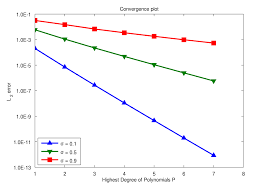
willful uncertainty ignorance. Probably the most common uncertainty to be willfully ignorant of is numerical error. The key numerical error is discretization error that arises from the need to make a continuous problem, discrete and computable. The basic premise of computing is that more discrete degrees of freedom should produce a more accurate answer. Through examining the rate that this happens, the magnitude of the error can be estimated. Other estimates can be had though making some assumptions about the solution and relating the error the nature of the solution (like the magnitude of estimated derivatives). Other generally smaller numerical errors arise from solving systems of equations to a specified tolerance, parallel consistency error and round-off error. In most circumstances these are much smaller than discretization error, but are still non-zero.
The last area of uncertainty is the modeling uncertainty. In the vast majority of cases this will be the largest source of uncertainty, but of course there will be exceptions. It has three major components, the choice of the overall discrete model, the choice of models or equations themselves, and the coefficients defining the specific model. The first two areas are usually the largest part of the uncertainty, and unfortunately the most commonly ignored in assessments. The last area is the most commonly addressed because it is amenable to automatic evaluation. Even in this case the work is generally incomplete and lacks full disclosure of the uncertainty.
repeated using values drawn to efficiently sample the probability space of the calculation and produce the uncertainty. This sampling is done for a very highly dimensional space, and carries significant errors. More often than not the degree of error associated with the under sampling is not included in the results. It most certainly should be.
Every September my wife and I attend the local TeDx event here in Albuquerque. It is a marvelous way to spend the day, and leaves a lasting impression on us. We immerse ourselves in inspiring, fresh ideas surrounded by like-minded people. It is empowering and wonderful to see the local community of progressive people together at once listening, interacting and absorbing a selection of some of the best ideas in our community. This year’s event was great and as always several talks stood out particularly including Jannell MacAulay (Lt.
Col USAF) talking about applying mindfulness to work and life, or Olivia Gatwood inspiring poetry about the seeming mundane aspects of life that speaks to far deeper issues in society. The smallest details are illustrative of the biggest concerns. Both of these talks made me want to think deeply about applying these lessons in some fashion to myself and improving my life consequentially.
We have transitioned from an animal fighting for survival during brief violent lives, to beings capable of higher thought and aspiration during unnaturally long and productive lives. We can think and invent new things instead of simply fighting to feed us and reproduce a new generation of humans to struggle in an identical manner. We also can produce work whose only value is beauty and wonder. TeD provides a beacon for human’s best characteristics along with a hopeful forward-looking community committed to positive common values. It is a powerful message that I’d like to take with me every day. I’d like to live out this promise with my actions, but the reality of work and life comes up short.
TeD talks are often the focus of criticism for their approach and general marketing nature strongly associated with the performance art nature. These critiques are valid and worth considering including the often-superficial nature of how difficult topics are covered. In many ways where research papers can be criticized increasingly as merely being the marketing of the actual work, TeD talks are simply the 30-second mass market advertisement of big ideas for big problems. Still the talks provide a deeply inspiring pitch for big ideas that one can follow up on and provide the entry to something much better. I find the talk is a perfect opening to learning or thinking more about a topic, or merely being exposed to something new.
not identify a single thing recommended in Pink’s book that made it to the workplace. It seemed to me that the book simply inspired the management to a set of ideals that could not be realized. The managers aren’t really in charge; they are simply managing the corporate compliance instead of managing in a way that maximizes the performance of its people. The Lab isn’t about progress any more; it is about everything, but progress. Compliance and subservience has become the raison d’etre.
is progressive in terms of the business world. The problem is that the status quo and central organizing principle today is anti-progressive. Progress is something everyone is afraid of, and the future appears to be terrifying and worth putting off for as long as possible. We see genuinely horrible lurch toward an embrace of the past along with all its anger, bigotry, violence and fear. Fear is the driving force for avoiding anything that looks progressive.
Still I can offer a set of TeD talks that have both inspired me and impacted my life for the better. They have either encouraged me to learn more, or make a change, or simply change perspective. I’ll start with a recent one where David Baron gave us an incredibly inspiring call to see the total eclipse in its totality (
Durkee finding a wonderful community center with a lawn and watched it with 50 people from all over the local area plus a couple from Berlin! The totality of the eclipse lasted only two minutes. It was part of a 22-hour day of driving over 800 miles, and it was totally and completely worth every second! Seeing the totality was one of the greatest experiences I can remember. My life was better for it, and my life was better for watching that TeD talk.
Another recent talk really provoked me to think about my priorities. It is a deep consideration of what your priorities are in terms of your health. Are you better off going to the gym or going to party, or the bar? Conventional wisdom says the gym will extend your life the most, but perhaps not. Susan Pinker provides a compelling case that social connection is the key to longer life (
struggle is for good reasons, and knowing the reasons provides insight to solutions. Perel powerfully explains the problem and speaks to working toward solutions.
other reason that I usually don’t. I will close by honoring the inspirational gift of Olivia Gatwood’s talk on poetry about seeking beauty and meaning in the mundane. I’ll write a narrative of a moment in my life that touched me deeply.
movie “Fight Club” again. This is my 300th blog post here. Its been an amazing experience thanks for reading.
McDonalds for my first job. I was a hard worker, and a kick ass grill man, opener, closer, and whatever else I did. I became a manager and ultimately the #2 man at a store. Still I was 100% replaceable and in no way essential, the store worked just fine without me. I was interchangeable with another hard working person. It isn’t really the best feeling; you’d like to be a person whose imprint on the World means something. This is an aspiration worth having, and when your work is truly creative, you add value in a way that no one else can replicate.
of an incubator for aspiring scientists. You were encouraged to think of the big picture, and the long term while learning and growing. The Lab was a warm and welcoming place where people were generous with knowledge, expertise and time. It was still hard work and incredibly demanding, but all in the spirit of service and work with value. I repaid the generosity through learning and growing as a professional. It was an amazing place to work, an incredible place to be, an environment to be treasured, and made me who I am today.
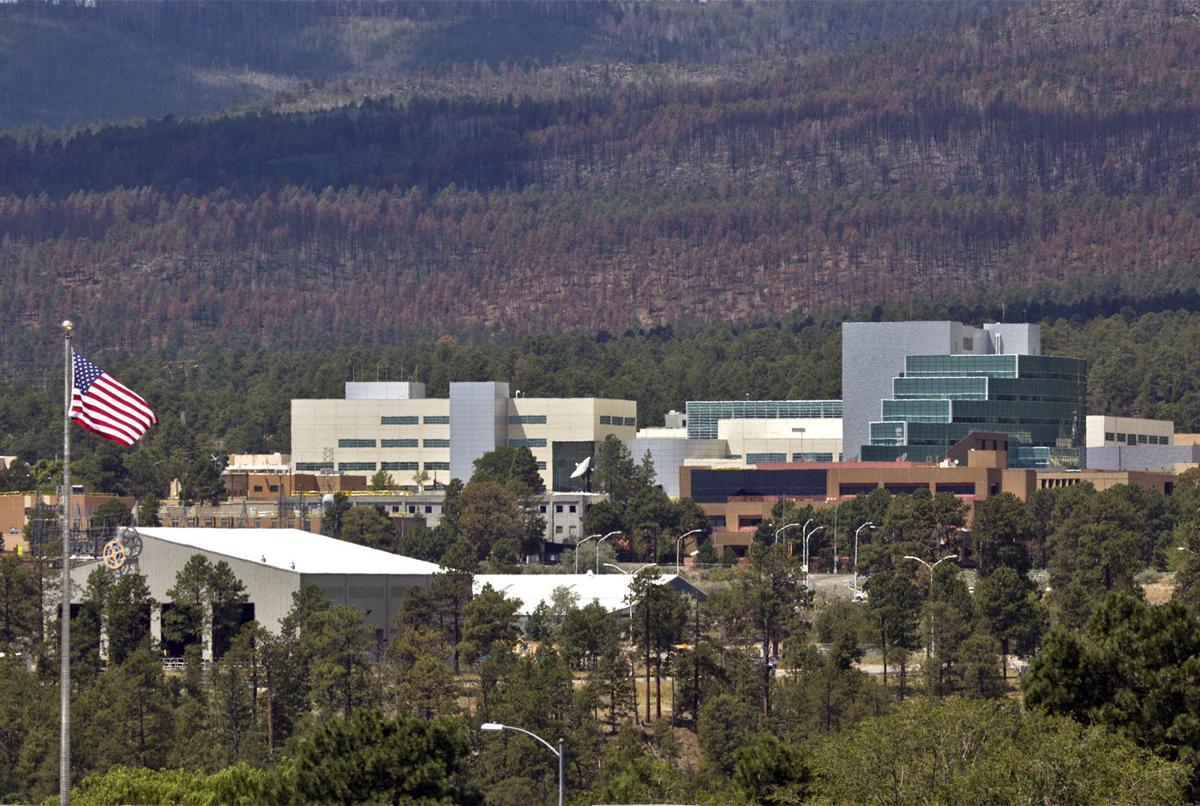
e scientific culture there were relabeled as “butthead cowboys,” troublemakers, and failures. The culture that was generous, long term in thought, viewing the big picture and focused on National service was haphazardly dismantled. Empowerment was ripped away from the scientists and replaced with control. Caution replaced boldness, management removed generosity, all in the name of formality of operations that removes anything unforeseen in outcomes. The modern world wants assured performance. Today Los Alamos is mere shadow of itself, stumbling forward toward the abyss of mediocrity. Witnessing this happen was one of the greatest tragedies of my life.
importance. Everything is process today and anything bad can be managed out of existence. No one looks at the downside to this, and the downside is sinister to the quality of the workplace.
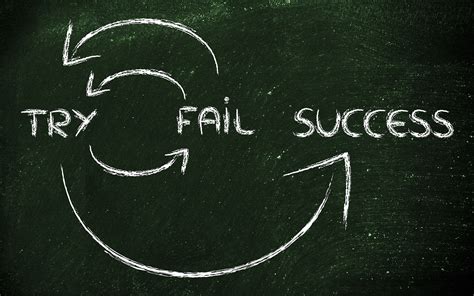
Instead of encouraging and empowering our people to take risks while tolerating and learning from failure, we do the opposite. We steer people away from doing risky work, punish failure and discourage lesson learning. It is as if we had suddenly become believers in the “free lunch”. True achievement is extremely difficult, and true achievement is powered by the ability to try to do risky almost impossible things. If failure is not used as an opportunity to learn, people will become disempowered and avoid the risks. This in turn will kill achievement before it can even be thought of. The entire system would seem to be designed to disempower people, and lower their potential for achievement.
the knowledge necessary to mentor others. This was a key aspect of my early career experience at Los Alamos. At that time the Lab was teeming with experts who were generous with their time and knowledge. All you had to do was reach out and ask, and people helped you. The experts were eager to share their experience and knowledge with others in a spirit of collective generosity. Today we are managed to completely avoid this with managed time and managed focus. We are trained to not be generous because that generosity would rob our “customers” of our effort and time. The flywheel of the experts of today helping to create the experts of tomorrow is being undone. People are trained to neither ask, nor provide expertise freely.
It is where we find ourselves today. We also know that the state of affairs can be significantly better. How can we get there from here? The first step would be some sort of collective decision that the current system isn’t working. From my perspective, the malaise and lack effectiveness of our current system is so pervasive and evident that action to correct it is overdue. On the other hand, the current system serves the purposes of those in control quite well, and they are not predisposed to be agents of change. As such, the impetus for change is almost invariably external. It is usually extremely painful because the status quo does not want to be rooted out unless it is forced to. The circumstances need to demand performance that current system cannot produce, and as systems degrade this becomes ever more likely.
and not lose all the good things in the process. Bad things, bad outcomes and bad behavior happen, and perhaps need to happen to have all the good (in other words “shit happens”). Today we are gripped with a belief that negative outcomes can be managed away. In the process of managing away bad outcomes, we destroy the foundation of everything good. To put it differently we need to value the good and accept the bad as a necessary condition for enabling good outcomes. If one looks at failure as the engine of learning, we begin to realize that the bad is the foundation of the good. If we do not allow the bad things to happen, let people fuck things up, we can’t have really good things either. One requires the other and our attempts to control bad outcomes, removes a lot of good or even great outcomes at the same time.
The reasons for not estimating uncertainties are legion. Sometimes it is just too hard (or people are lazy). Sometimes the way of examining a problem is constructed to ignore the uncertainty by construction (a common route to ignore experimental variability and numerical error). In other cases the uncertainty is large and it is far more comfortable to be delusional about its size. Smaller uncertainty is comforting and implies a level of mastery that exudes confidence. Large uncertainty is worrying and implies a lack of control. For this reason getting away with choosing a zero uncertainty is a source of false confidence and unfounded comfort, but a deeply common human trait.
If we can manage to overcome the multitude of human failings underpinning the choice of the default zero uncertainty, we are still left with the task of doing something better. To be clear, the major impediment is recognizing that the zero estimate of uncertainty is not acceptable (most “customers” like the zero estimate because it seems better even though its assuredly not!). Most of the time we have a complete absence of information to base uncertainty estimates upon. In some cases we can avoid zero uncertainty estimates by being more disciplined and industrious, in other cases we can think about the estimation from the beginning of the study and build the estimation into the work. In many cases we only have expert judgment to rely upon for estimation. In this case we need to employ a very simple and well-defined technique to providing an estimate.
speaking, there will be a worst case to consider or something more severe than the scenario at hand. Such large uncertainties are likely to be quite uncomfortable to those engaging in the work. This should be uncomfortable if we are doing things right. The goal of this exercise is not to minimize uncertainties, but get things right. If such bounding uncertainties are unavailable, one does not have the right to do high consequence decision-making with results. This is the unpleasant aspect of the process; this needs to be the delivery of the worst case. To be more concrete in the need for this part of the bounding exercise, if you don’t know how bad the uncertainty is you have no business using the results for anything serious. As stated before the bounding process needs to be evidence based, the assignment of lower and upper bounds for uncertainty should have a specific and defensible basis.
To some extent this is a rather easy lift intellectually. Cultural difficulty is another thing altogether. The indefensible optimism associated with the default zero uncertainty is extremely appealing. It provides the user with a feeling that the results are good. People tend to feel that there is a single correct answer. The smaller the uncertainty is the better they feel about the answer. Large uncertainty is associated with lack of knowledge and associated with low achievement. The precision usually communicated with the default, standard approach is highly seductive. It takes a great deal of courage to take on the full depth of uncertainty along with the honest admission of how much is not known. It is far easier to simply do nothing and assert far greater knowledge while providing no evidence for the assertion.
consider this experiment to be a completely determined event with no uncertainty at all. This is the knee jerk response of people is the consideration of this single event as being utterly and completely deterministic with no variation at all. If the experiment were repeated with every attempt to make it as perfect as possible, it would turn out slightly differently. This comes from the myriad of details associated with the experiment that determine the outcome. Generally the more complex and energetic the phenomenon of being examined is, the greater the variation (unless there are powerful forces attracting a very specific solution). There is always a variation, the only question is how large it is; it is never, ever identically zero. The choice to view the experiment as perfectly repeatable is usually an unconscious choice that has no credible basis. It is an incorrect and unjustified assumption that is usually made without a second thought. As such the choice is unquestionably bad for science or engineering. In many cases this unconscious choice is dangerous, and represents nothing more than wishful thinking.
n. Are things worse where I am, or better than the average? For most of my adult life, I’ve had far better conditions than average, and been able to find great meaning in my work. Is the steady erosion of the quality of the work environment a consequence of issues local to my institution or organization? Or is it part of the massive systemic dysfunction our society is experiencing?
government, led by an incompetent narcissistic conman without a perceptible moral compass. Racial tensions, and a variety of white supremacist/right wing ultra-Nationalists are walking the streets. Left wing and anarchist groups are waking up as well. Open warfare may soon be upon us making us long for the days where sporadic terrorist attacks were our biggest worry. A shit storm is actually a severe understatement; this is a fucking waking nightmare. I hope this is wrong and I could simply find a better place to work at and feel value in my labors. I wish the problem was simple and local with a simple job change fixing things.
Work is an important part of life for a variety of reasons. It is how we spend a substantial portion of our time, and much of our efforts go into it. In work we contribute to society and assist in the collective efforts of mankind. As I noted earlier, I’ve been fortunate for most of my life, but things have changed. Part of the issue is a relative change in the degree of self-determination in work. The degree of self-determination has decreased over time. An aspect of this is the natural growth in scope of work as a person matures. As a person grows in work and is promoted, the scope of the work increases, and the degree of freedom in work decreases. Again this is only a part of the problem as the system is working to strangle the self-determination out of people. This is control, fear of failure and generic lack of trust in people. In this environment work isn’t satisfying because the system is falling apart, and the easiest way to resist this is controlling the little guy. My work becomes more of a job and a route to a paycheck every day. Earning a living and supporting your family is a noble achievement these days, and aspiring to more simply a waking dream contracting in the rear view mirror of life.
t can unleash people’s full potential through allowing them to fail spectacularly and then fully support the next step forward. Today, cowardice and mistrust dominate and even marginal failure results in punishment. It is corroding the foundation of achievement. It makes work simply a job and life more survival than living.
comfortable and automatic. In many cases culture is the permanent habits of our social constructs, and often defines practices that impede progress. Accepted cultural practices are usually done without thinking and applied almost mindlessly. If these practices are wrong, they are difficult to dislodge or improve upon.
or fundamental human needs, but most are constructs to help regulate the structures that our collective actions are organized about. The fundamental values, moral code and behaviors of people are heavily defined by culture. If the culture is positive, the effect is resonant and amplifies the actions of people toward much greater achievements. If the culture is negative, the effect can undo and overwhelm much of the best that people are capable of. Invariably cultures are a mixture of positive and negative. Cultures persist for extremely long times and outlive those who set the cultural tone for groups. Cultures are set or can change slowly unless the group is subjected to an existential crisis. When a crisis is successfully navigated the culture that arose in its resolution is enshrined, and tends to persist without change until a new crisis is engaged.
We see all sorts of examples of the persistence of culture. The United States is still defined by the North-South divide that fractured during the Civil War. The same friction and hate that defined that war 150 years ago dominate our politics today. The culture of slavery persists in systematic racism and oppression. The white and black divide remains unhealed even though none of the people who enslaved or who were enslaved are still alive with many generations having passed. The United States is still defined by the Anglo-Saxon Protestant beliefs of the founding fathers. Their culture is dominant even after being overwhelmed in numbers of people and centuries of history. The dominant culture was formed in the crucible of history by the originating crisis for the Nation, the Revolutionary war. Companies and Laboratories are shaped by their original cultures and these habits and practices persist long after their originators have left, retired or died.
(earthquakes, floods, hurricanes, famines, …). These events can stress people and existing cultures providing the sorts of crises that shape the future to be more resilient to future disasters. Human events such as wars, trade, and general political events provide both the impact of culture in causing or navigating events, as well as producing crises that shape cultural responses and evolution. We can continue down this line of thinking to ever-smaller cultures such as organizations and businesses are influenced by crises induced by the larger systems (natural or political). This web of culture continues to smaller and smaller scale all the way to communities (towns, regions, schools, families) each having a culture shaped heavily by other cultures or events. In every case a crisis is almost invariably necessary to induce change, cultures are resistant to change unless something painful provides direct evidence of the incapacity of existing culture to succeed.
culture of the broader scientific community. This culture exists within the broader network of cultures in society with give-and-take between them. In the past science has provided deep challenges to prevailing culture, and induced changes societal culture. Today the changes in main societal culture are challenging science. One key aspect of today’s culture wars is lack of support for expertise. One of the key rifts in society is mistrust of the elite and educated. The broader society is attacking and undermining educational institutions across the board. Scientific laboratories are similar in makeup and similarly under assault. Much of this broader assault is related to a general lack of trust. Some of this is a reaction to the surplus of trust granted science in the wake of its massive contributions to the resolution of World War 2 and the Cold War. These successes are waning in memory and science is now contracting for a distinguished role societally.
ns suffers a bit relative to the other Labs, as does the rigor of computed results. Los Alamos was the birthplace of all three labs and computational work, but always puts computation in a subservient role compared to experiments. This leads to a mighty struggle between validation and calibration. Often calibration wins out so that computed results are sufficiently close to experiment. Sandia excels at process and rigor in the conduct of calculations, but struggles at other aspects (at least in a relative sense). The whole verification and validation approach to simulation quality comes from Sandia reflecting the rigor. At the same time institutional support and emphasis are weaker leading to long-term effects.
All this texture is useful to think about because it manifests itself in every place computational science is done today. The scientific culture of any institution is reflected in its emphasis, and approach to the conduct of science. The culture produces a natural set of priorities that define investments and acceptable quality. We can speak volumes about how computational work should be done, but the specific acuity to the message is related to preconceived notions about the aspects. For example, some places are more prone to focus on computing hardware as an investment. In terms of the competition for resources, the purchase of hardware is a priority, and a typical route for enhancement. This becomes important when trying to move into new “hot” areas. If the opportunity falls in line with the culture, investments flow and if it is out of line the institution will miss it.
omputational science is a relatively new area of endeavor. It is at most 70 years old as practiced at Los Alamos; it is a new area of focus in most places. Sometime it is practiced at an institution and added to the repertoire as a new innovative way of doing work. In all these cases the computational work adopts the basic culture of the institution it exists within. It then differentiates based on the local conditions usually dominated by whatever the first acknowledged success is. One of the key aspects of a culture is origin stories or mythological achievements. Origins are almost invariably fraught situations with elements of crisis. These stories pervade the culture and define what success looks like and how investments in the future are focused.
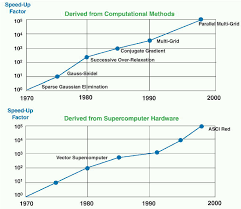
Where I work at Sandia, the origin story is dominated by early success with massively parallel computers. The greatest success was the delivery of a computer, Red Storm. As a result the culture is obsessed with computer hardware. The path to glory and success runs through hardware; a focus on hardware is culturally accepted and natural for the organization. It is a strong predisposition. At Lawrence Livermore the early stages of the Laboratory were full of danger and uncertainty. Early in the history of the Lab there was a huge breakthrough in weapons design. It used computational modeling, and the lead person in the work went on to huge professional success (Lab Director). This early success became a blueprint for others and an expected myth to be repeated. A computational study and focus was always expected and accepted by the Lab. At Los Alamos all roads culturally lead to the Manhattan Project. The success in that endeavor has defined the Laboratory ever since. The manner of operation and approach to science adopted then is blueprint for success at that Laboratory. The multitude of crises starting with the end of the Cold War, spying, fires, and scandal have all weakened the prevailing culture, and undermined the future.