
Those who deny freedom to others, deserve it not for themselves
― Abraham Lincoln
 I’d like to be independent empowered and passionate about work, and I definitely used to be. Instead I find that I’m generally disempowered compliant and despondent these days. The actions that manage us have this effect; sending the clear message that we are not in control; we are to be controlled, and our destiny is determined by our subservience. With the National environment headed in this direction, institutions like our National Labs cannot serve their important purpose. The situation is getting steadily worse, but as I’ve seen there is always somewhere worse. By the standards of most people I still have a good job with lots of perks and benefits. Most might tell me that I’ve got it good, and I do, but I’ve never been satisfied with such mediocrity. The standard of “it could be worse” is simply an appalling way to live. The truth is that I’m in a velvet cage. This is said with the stark realization that the same forces are dragging all of us down. Just because I’m relatively fortunate doesn’t mean that the situation is tolerable. The quip that things could be worse is simply a way of accepting the intolerable.
What is going on, and how did we get here?
When you read management theory, and I do, you would think that good management would do the opposite. I certainly like the feeling of being empowered and valued, it makes me feel like coming to work and doing my best. It is good to feel a real sense of purpose and value in work. I have had this experience and it is incredible. When I am creative, my voice is heard and my actions lead to positive outcomes, work is a real joy. I have definitely experienced this, but not recently. If working well, a management system would strive to engage people in this manner. The current management approach acts are pretty much completely opposite to this end. The entire system seems to be geared to putting us into a confined and controlled role. Our actions are limited because of fear, and the risk that something “bad” might happen. We are simply members of a collective and our individuality is more of a threat than a resource.
Today as always, men fall into two groups: slaves and free men. Whoever does not have two-thirds of his day for himself, is a slave, whatever he may be: a statesman, a businessman, an official, or a scholar.
― Friedrich Nietzsche
Why are we managed in such an inherently destructive short-sighted and inhumane manner?
Star Trek introduced us to the Borg, a race of semi-robotic aliens who simply absorb beings (people) into a hive where their basic humanity and individuality is lost. Everything is controlled and managed for the good of the collective. Science Fiction is an allegory for society, and the forces of depersonalized control embodied by the Borg have only intensified in our world. Even people working in my chosen profession are under the thrall of a mindless collective. Most of the time it is my maturity and experience as an adult that is called upon. My expertise and knowledge should be my most valuable commodity as a professional, yet they go unused and languishing. They come to play in an almost haphazard catch-what-catch-can manner. Most of the time it happens when I engage with someone external. It is never planned or systematic. My management is much more concerned about me being up on my compliance training than productively employing my talents. The end result is the loss of identity and sense of purpose, so that now I am simply the ninth member of the bottom unit of the collective, 9 of 13.
Disobedience is the true foundation of liberty. The obedient must be slaves.
― Henry David Thoreau
Increasingly, the forces that have demoralized the blue collar working class world and propelled White Nationalism to the forefront of American politics have worked their way to me. The forces doing this are relentless and bipartisan both the right and left are doing this, but in different ways. Conservatives prize control and order with a horrid authoritarian streak naturally leading to Trump. Fear is a political tool wielded like a scalpel, enslaving the population to the security state. Generally speaking, the rise of the management class at work comes from this side of the spectrum along with their devaluation of the rank and file people. We see a tendency toward command-driven management, and being told what to do. Workers are simply meaningless details interchangeable and disposable. The management class is the heart of importance, and value. The rest of us aren’t really worth much effort simply being necessary cogs to get the work done.
The left has their own crimes to answer for. Much of the right-ward movement is a reaction to the systematic over-reach of the bureaucratic state. Political correctness and the thought police also serve to undermine societal confidence and tolerance in the “elite”. Management is part of this elite so derided to today and each subgroup within the elite has their own axe to grind. The big crime of the left is that they seem to think that every ill and danger can be regulated out of existence. Little or no thought is put into the cost of the regulation or the opportunity lost in the process. This is similar to the behavior of the right with respect to the National Security state. In the process, the individual is lost; the individual is not valued; the individual is not trusted. The value of work and the dignity of labors toward support of the family and the good of society is not honored. Work becomes a complete waste of time. Productivity and meaning in work ceases to be prioritized. Life is too precocious to waste doing this.
A big part of the overall problem is the value of my time. For every single thing I do, I trade it against doing something else. Increasingly, my time is spend doing unproductive and useless things. Every useless thing I have to do displaces something else. Time is a valuable resource, and today my management, my institutions treat my time with flagrant disregard and outright disrespect. This is the rotten core of the problem, the disregard for the cost of making me do stupid useless things. We engage it pointless, wasteful box checking exercises rather than reject pointless activities. It is not the stupid things as much as the valuable things they displace. Almost all the time at work I could spend doing something more valuable, or more gratifying, or more satisfying, or simply something that brings me happiness and joy. I could create, solve problems, learn and find meaning and value. Instead I am enslaved to someone’s idea of what I should do. I am saddled with numerous “terms of employment” based tasks that have no value or meaning. Those saddling me always have the excuse of “it is a good idea to do this”. This sentiment is valid except it completely and utterly discounts what that time could be spent doing that is better.
The difference between technology and slavery is that slaves are fully aware that they are not free
― Nassim Nicholas Taleb
I spend complete days doing nothing, but bullshit. It is mostly what other people think is a good idea, or worse yet some sort of ass covering exercise. I can spend an entire day doing nothing productive at all, and yet I’m doing exactly what I supposed to do. This is a huge problem! Managers do this almost every day. They rarely do what they need to do,  actually manage the work going on and the people doing the work. They are managing our compliance and control, not the work; the work we do is mere afterthought that increasingly does not need me any competent person would do. At one time work felt good and important with a deep sense of personal value and accomplishment. Slowly and surely this sense is being under-mined. We have gone on a long slow march away from being empowered and valued as contributing individuals. Today we are simply ever-replicable cogs in a machine that cannot tolerate a hint of individuality or personality.
All over the place, from the popular culture to the propaganda system, there is constant pressure to make people feel that they are helpless, that the only role they can have is to ratify decisions and to consume.
― Noam Chomsky
Work place education exemplifies all of these trends. My training is almost 100% compliance oriented. Nothing I am ever trained on is job related, it is all telling me what I shouldn’t do. This training is a good avatar for priorities, and my actual work is not a priority at all. All the training that develops a person is management related. For the rank and file personal development is completely optional and hardly prioritized. We are there to get our stuff done, and the stuff we do is increasingly shit. They have lots and lots of training, and from what I see use almost none of it. It is full of the best theory that cannot be applied to the workplace. Their training would tell them to harness my passion and empower me, yet none of that ever happens. The entire system is completely oriented toward the opposite. The training system signals very clear values to all of us, the rank and file need to comply and submit, managers are the only employees’ worth developing even if the development is all delusional.
The smart way to keep people passive and obedient is to strictly limit the spectrum of acceptable opinion, but allow very lively debate within that spectrum…
― Noam Chomsky
The management literature is full of the gospel of the value of human talent. It sounds  great, and I believe in it. Management should be the art of enabling and working to get the most out of employees. If the system was working properly this would happen. For some reason society has removed its trust for people. Our systems are driven and motivated by fear. The systems are strongly motivated to make sure that people don’t fuck up. A large part of the overhead and lack of empowerment is designed to keep people from making mistakes. A big part of the issue is the punishment meted out for any fuck ups. Our institutions are mercilessly punished for any mistakes. Honest mistakes and failures are met with negative outcomes and a lack of tolerance. The result is a system that tries to defend itself through caution, training and control of people. Our innate potential is insufficient justification for risking the reaction a fuck up might generate. The result is an increasingly meek and subdued workforce unwilling to take risks because failure is such a grim prospect.
People get used to anything. The less you think about your oppression, the more your tolerance for it grows. After a while, people just think oppression is the normal state of things. But to become free, you have to be acutely aware of being a slave.
― Assata Shakur
One of the key things that drives the system is a complete lack of cost-benefit analysis

A Transportation Security Administration (TSA) officer pats down Elliott Erwitt as he works his way through security at San Francisco International Airport in San Francisco, Wednesday, Nov. 24, 2010. (AP Photo/Jeff Chiu)
. The cost of a given measure to control a risk is rarely accounted for. The TSA is a prime example. One asshole tries to blow up a shoe, and forever we can’t take toothpaste on a plane. It is patently absurd on the face of it. We give up freedom, we give up time and we expend enormous effort to control minuscule risks. In the process, we have made a wonder of technology and the modern world, something to be hated. So much of the wonder of the modern world is being sacrificed to fear designed to control risks that are so small to be ridiculous. In the process, the vast benefits of modernity are lost. The vast benefits of easy and convenient air travel are overrun by a system designed to control irrational fears. Our fears are things that are completely out of control, and the vast opportunity cost is never considered. The result is a system that destroys our time and productivity in a disproportionate manner.
If one is forever cautious, can one remain a human being?
― Aleksandr Solzhenitsyn
 The same thing is happening to our work. Fear and risk is dominating our decision-making. Human potential, talent, productivity, and lives of value are sacrificed at the altar of fear. Caution has replaced boldness. Compliance has replaced value. Control has replaced empowerment. In the process work has lost meaning and the ability for an individual to make a difference has disappeared. Resistance is futile, you will be assimilated.
To be given dominion over another is a hard thing; to wrest dominion over another is a wrong thing; to give dominion of yourself to another is a wicked thing.
― Toni Morrison
 . For almost every control volume code these terms are dissipative in shock waves, thus providing additional stability to the codes in this dangerous configuration. The opposing reaction in expansions can go unnoticed because any imperfections in the solution are modulated by the physics of the problem. For this reason, the failing has gone completely unnoticed for decades. A reasonable question to explore is whether codes based on different design principles exhibit the same problems, or produce solutions that satisfy the second law of thermodynamics more uniformly.
![f(u_l,u_r) = \frac{1}{2} \left[ f_l + f_r \right]](https://s0.wp.com/latex.php?latex=f%28u_l%2Cu_r%29+%3D+%5Cfrac%7B1%7D%7B2%7D+%5Cleft%5B+f_l+%2B+f_r+%5Cright%5D%C2%A0+%C2%A0&bg=ffffff&fg=000&s=0&c=20201002)
 $ ( u_r – u_l ) $. The quantity
  is the nonlinear flux,
  are the states to the left and right of the interface. The dissipation is defined by the eigen-decomposition of the flux Jacobian,
  . This decomposition is contained of the right and left eigenvectors and the eigenvalues,
  . These eigenvalues are the characteristic velocities, which for gas dynamics are
  being the velocities and the sound speeds,
  . This basic decomposition is the basis of flux splitting techniques.
 . One was to do this is choose a velocity,
  , and create contributions where
 ![f(u)^+ = \frac{1}{2} \left[ f(u) + \alpha u\right]](https://s0.wp.com/latex.php?latex=f%28u%29%5E%2B+%3D+%5Cfrac%7B1%7D%7B2%7D+%5Cleft%5B+f%28u%29+%2B+%5Calpha+u%5Cright%5D+&bg=ffffff&fg=000&s=0&c=20201002) and
and ![f(u)^- = \frac{1}{2}\left[ f(u) - \alpha u\right]](https://s0.wp.com/latex.php?latex=f%28u%29%5E-+%3D+%5Cfrac%7B1%7D%7B2%7D%5Cleft%5B+f%28u%29+-+%5Calpha+u%5Cright%5D&bg=ffffff&fg=000&s=0&c=20201002) . A simple choice of
. A simple choice of  creates the Lax-Friedrichs flux, the simplest (and most dissipative) Riemann solver. For the general linearized Riemann solver the flux splitting is
 ![f(u)^+ = \frac{1}{2}\left[ f(u) + R |\lambda | L u\right]](https://s0.wp.com/latex.php?latex=f%28u%29%5E%2B+%3D+%5Cfrac%7B1%7D%7B2%7D%5Cleft%5B+f%28u%29+%2B+R+%7C%5Clambda+%7C+L+u%5Cright%5D&bg=ffffff&fg=000&s=0&c=20201002) and
and ![f(u)^- = \frac{1}{2}\left[ f(u) - R | \lambda | L u\right]](https://s0.wp.com/latex.php?latex=f%28u%29%5E-+%3D+%5Cfrac%7B1%7D%7B2%7D%5Cleft%5B+f%28u%29+-+R%C2%A0+%7C+%5Clambda+%7C+L+u%5Cright%5D&bg=ffffff&fg=000&s=0&c=20201002) . The choice of the left and right states to evaluate the flux Jacobian defines the flux splitting. For example, if the states are evaluated using Roe’s recipe, we get the Roe flux splitting. If we evaluate the eigenvalues in a bounding fashion we can get the local Lax-Friedrichs method.
. The choice of the left and right states to evaluate the flux Jacobian defines the flux splitting. For example, if the states are evaluated using Roe’s recipe, we get the Roe flux splitting. If we evaluate the eigenvalues in a bounding fashion we can get the local Lax-Friedrichs method. and $ f^- = \frac{1}{2} ( f – R \mbox{sign(\lambda) L ) f$. We not in passing that the smooth or soft version of the sign function might be extremely useful in this type of splitting and introducing a continuously differentiable function (
 is the smallest wave speed and needs to be bounded at zero (i.e., it is negative). The right most wave speed is
  and is bounded below by zero. The HLL flux has the benefit of reducing to simple upwind flux for the system if all the wave speeds are either negative or positive. For a flux splitting we need to take this apart into negative and positive moving pieces for the purposes of splitting nearby fluxes as we did with the Roe, or flavors of Lax-Friedrichs.
 . If we desire a flux splitting, it needs to be defined in terms of these variables. The trick in this endeavor is choosing an algebraic structure to help produce a workable flux splitting technique. We build upon the experience of the HLL flux partially because we can incorporate the knowledge arising from the exact solution into the algebraic structure to good effect. In particular, the nature of the one-sided differencing can be reproduced effectively. This requires the wave speed bounds to use the interior states of the solution.
 our work will be done. The positive flux is $ f^+ = (a_r f + D u) / (a_r – a_l})$. The negative flux is $ f^- = (- a_l f – D u) / (a_r – a_l) $. Now we just have a little bit of algebra to arrive at our final expression. The math is nice and straightforward, $ D = (a_r f_l – a_l f_r – (a_r – a_l) f_{lr} ) / (u_r – u_l) $. A couple comments are needed at this point. When the states become equal, the solver becomes ill defined,
  . Fortunately, this is exactly where the linearized flux splitting approaches or HLL would be ideal.
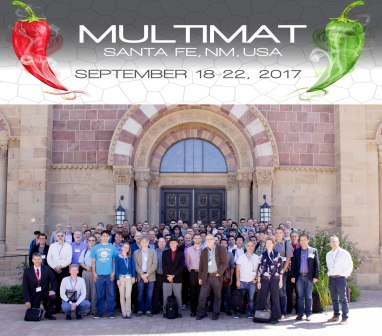 (
( being in the audience. Giving talks is pretty low on the list of reasons, but not in the mind of our overlords, which starts to get at the problems I’ll discuss below. Given the track record of this meeting my expectations were sky-high, and the lack of inspiring ideas left me slightly despondent.


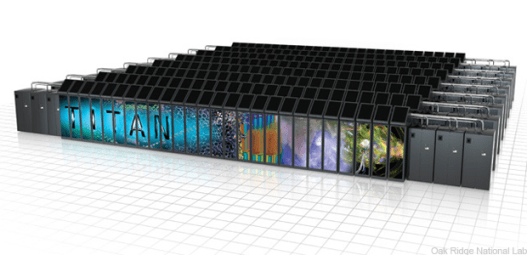


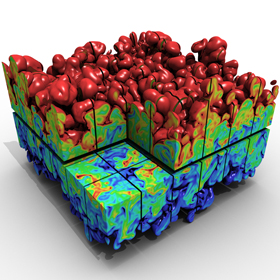 The really dirty secret is that chasing exascale as a route to scientific discovery is simply bullshit of the highest and most expensive order. We would be far better served by simply figuring out how to use the hardware we already have. Figuring out how to efficiently use hardware we have had for decades would be a difficult and worthy endeavor. The punch line is that we could get orders of magnitude in improved performance out of the hardware we’ve been using for decades. By simply figuring out how to get our codes working more efficiently on the computers already existing would meet most scientific goals without eviscerating the rest of computational science in the process. Instead we chase goals that are utterly meaningless. In the process we are destroying the research that has true and lasting value. The areas being ignored in the push for exascale have the capacity to provide far more scientific capability than even the most successful exascale program could possibly deliver. This brings me back to the meeting in Santa Fe and the lack of energy and exciting ideas. In the past the meeting has been a great survey of the active work from a creative and immensely talented group of people. As such this meeting is the proverbial canary in the coalmine. The ideas are dying right in front of our eyes.
 This outcome is conflated with the general lack of intellectual vigor in any public discourse. The same lack of intellectual vigor has put this foolish exascale program in place. Ideas are viewed as counter-productive today in virtually every public square. Alarmingly, science is now suffering from the same ill. Experts and the intellectual elite are viewed unfavorably and their views held in suspicion. Their work is not supported, nor is projects and programs dependent on deep thinking, ideas or intellectual labor. The fingerprints of this systematic dumbing down of our work have reached computational science, and reaping a harvest of poisoned fruit. Another sign of the problem is the lack of engagement of our top scientists in driving new directions in research. Today, managers who do not have any active research define new directions. Every year our manager’s work gets further from any technical content. We have the blind leading the sighted and telling them to trust them, they can see where we are going. This problem highlights the core of the issue; the only thing that matters today is money. What we spend the money on, and the value of that work to advance science is essentially meaningless.
 Effectively we are seeing the crisis that has infested our broader public sphere moving into science. The lack of intellectual thought and vitality pushing our public discourse to the lowest common denominator is now attacking science. Rather than integrate the best in scientific judgment into our decisions on research direction, it is ignored. The experts are simply told to get in line with the right answer or be silent. In addition, the programs defined through this process then feed back to the scientific community savaging the expertise further. The fact that this science is intimately connected to national and international security should provide a sharper point on the topic. We are caught in a vicious cycle and we are seeing the evidence in the hollowing out of good work at this conference. If one is looking for a poster child for bad research directions, the exascale programs are a good place to look. I’m sure other areas of science are suffering through similar ills. This global effort is genuinely poorly thought through and lacks any sort of intellectual curiosity.
 Priority is placed on our existing codes working on the new super expensive computers. The up front cost of these computers is the tip of the proverbial cost iceberg. The explicit cost of the computers is their purchase price, their massive electrical bill and the cost of using these monstrosities. The computers are not the computers we want to use, they are the ones we are forced to use. As such the cost of developing codes on these computers is extreme. These new computers are immensely unproductive environments. They are a huge tax on everyone’s efforts. This sucks the creative air from the room and leads to a reduction in the ability to do anything else. Since all the things being suffocated by exascale are more useful for modeling and simulation, the ability to actually improve our computational modeling is hurt. The only things that benefit from the exascale program are trivial and already exist as well-defined modeling efforts.


 rse. Most of the activity for working scientists is at the boundaries of our knowledge working to push back our current limits on what is known. The scientific method is there to provide structure and order to the expansion of knowledge. We have well chosen and understood ways to test proposed knowledge. A method of using and testing our theoretical knowledge in science is computational simulation. Within computational work the use of verification, validation with uncertainty quantification is basically the scientific method in action (
 If the uncertainty is irreducible and unavoidable, the problem with not assessing uncertainty and taking an implied value of ZERO for uncertainty becomes truly dangerous (
 may prove deadly in rather commonly encountered situations. As systems become more complex and energetic, chaotic character becomes more acute and common. This chaotic character leads to solutions that have natural variability. Understanding this natural variability is essential to understanding the system. Building this knowledge is the first step in moving to a capability to control and engineer it, and perhaps if wise, reduce it. If one does not possess the understanding of what the variability is, such variability cannot be addressed via systematic engineering or accommodation.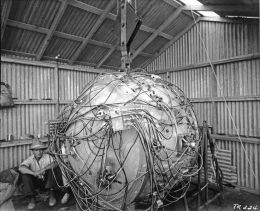
 systematically is an ever-growing limit for science. We have a major scientific gap open in front of us and we are failing to acknowledge and attack it with our scientific tools. It is simply ignored almost by fiat. Changing our perspective would make a huge difference in experimental and theoretical science, and remove our collective heads from the sand about this matter.

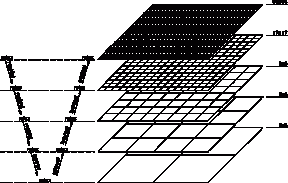 willful uncertainty ignorance. Probably the most common uncertainty to be willfully ignorant of is numerical error. The key numerical error is discretization error that arises from the need to make a continuous problem, discrete and computable. The basic premise of computing is that more discrete degrees of freedom should produce a more accurate answer. Through examining the rate that this happens, the magnitude of the error can be estimated. Other estimates can be had though making some assumptions about the solution and relating the error the nature of the solution (like the magnitude of estimated derivatives). Other generally smaller numerical errors arise from solving systems of equations to a specified tolerance, parallel consistency error and round-off error. In most circumstances these are much smaller than discretization error, but are still non-zero.
 The last area of uncertainty is the modeling uncertainty. In the vast majority of cases this will be the largest source of uncertainty, but of course there will be exceptions. It has three major components, the choice of the overall discrete model, the choice of models or equations themselves, and the coefficients defining the specific model. The first two areas are usually the largest part of the uncertainty, and unfortunately the most commonly ignored in assessments. The last area is the most commonly addressed because it is amenable to automatic evaluation. Even in this case the work is generally incomplete and lacks full disclosure of the uncertainty.
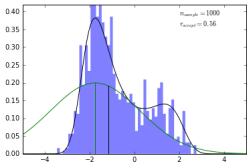 repeated using values drawn to efficiently sample the probability space of the calculation and produce the uncertainty. This sampling is done for a very highly dimensional space, and carries significant errors. More often than not the degree of error associated with the under sampling is not included in the results. It most certainly should be.
 Every September my wife and I attend the local TeDx event here in Albuquerque. It is a marvelous way to spend the day, and leaves a lasting impression on us. We immerse ourselves in inspiring, fresh ideas surrounded by like-minded people. It is empowering and wonderful to see the local community of progressive people together at once listening, interacting and absorbing a selection of some of the best ideas in our community. This year’s event was great and as always several talks stood out particularly including Jannell MacAulay (Lt.
 Col USAF) talking about applying mindfulness to work and life, or Olivia Gatwood inspiring poetry about the seeming mundane aspects of life that speaks to far deeper issues in society. The smallest details are illustrative of the biggest concerns. Both of these talks made me want to think deeply about applying these lessons in some fashion to myself and improving my life consequentially.
 We have transitioned from an animal fighting for survival during brief violent lives, to beings capable of higher thought and aspiration during unnaturally long and productive lives. We can think and invent new things instead of simply fighting to feed us and reproduce a new generation of humans to struggle in an identical manner. We also can produce work whose only value is beauty and wonder. TeD provides a beacon for human’s best characteristics along with a hopeful forward-looking community committed to positive common values. It is a powerful message that I’d like to take with me every day. I’d like to live out this promise with my actions, but the reality of work and life comes up short.
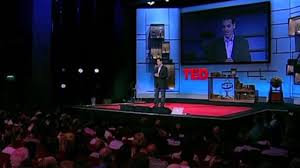 TeD talks are often the focus of criticism for their approach and general marketing nature strongly associated with the performance art nature. These critiques are valid and worth considering including the often-superficial nature of how difficult topics are covered. In many ways where research papers can be criticized increasingly as merely being the marketing of the actual work, TeD talks are simply the 30-second mass market advertisement of big ideas for big problems. Still the talks provide a deeply inspiring pitch for big ideas that one can follow up on and provide the entry to something much better. I find the talk is a perfect opening to learning or thinking more about a topic, or merely being exposed to something new.
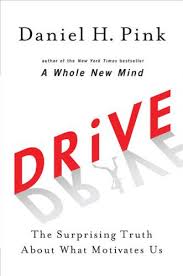 not identify a single thing recommended in Pink’s book that made it to the workplace. It seemed to me that the book simply inspired the management to a set of ideals that could not be realized. The managers aren’t really in charge; they are simply managing the corporate compliance instead of managing in a way that maximizes the performance of its people. The Lab isn’t about progress any more; it is about everything, but progress. Compliance and subservience has become the raison d’etre.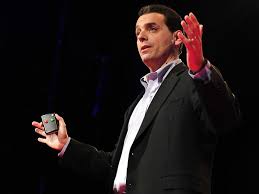
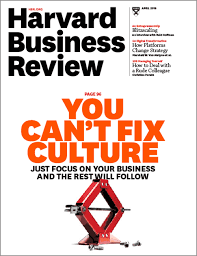 is progressive in terms of the business world. The problem is that the status quo and central organizing principle today is anti-progressive. Progress is something everyone is afraid of, and the future appears to be terrifying and worth putting off for as long as possible. We see genuinely horrible lurch toward an embrace of the past along with all its anger, bigotry, violence and fear. Fear is the driving force for avoiding anything that looks progressive.
 Still I can offer a set of TeD talks that have both inspired me and impacted my life for the better. They have either encouraged me to learn more, or make a change, or simply change perspective. I’ll start with a recent one where David Baron gave us an incredibly inspiring call to see the total eclipse in its totality (
 Durkee finding a wonderful community center with a lawn and watched it with 50 people from all over the local area plus a couple from Berlin! The totality of the eclipse lasted only two minutes. It was part of a 22-hour day of driving over 800 miles, and it was totally and completely worth every second! Seeing the totality was one of the greatest experiences I can remember. My life was better for it, and my life was better for watching that TeD talk.
 Another recent talk really provoked me to think about my priorities. It is a deep consideration of what your priorities are in terms of your health. Are you better off going to the gym or going to party, or the bar? Conventional wisdom says the gym will extend your life the most, but perhaps not. Susan Pinker provides a compelling case that social connection is the key to longer life (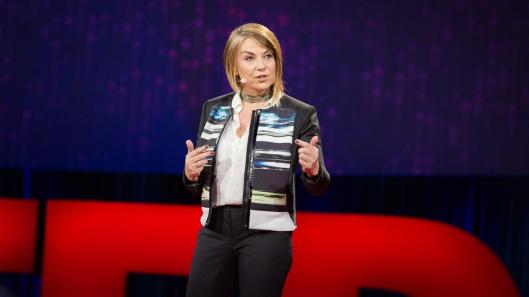
 struggle is for good reasons, and knowing the reasons provides insight to solutions. Perel powerfully explains the problem and speaks to working toward solutions.
 other reason that I usually don’t. I will close by honoring the inspirational gift of Olivia Gatwood’s talk on poetry about seeking beauty and meaning in the mundane. I’ll write a narrative of a moment in my life that touched me deeply.
 movie “Fight Club” again. This is my 300th blog post here. Its been an amazing experience thanks for reading.
 McDonalds for my first job. I was a hard worker, and a kick ass grill man, opener, closer, and whatever else I did. I became a manager and ultimately the #2 man at a store. Still I was 100% replaceable and in no way essential, the store worked just fine without me. I was interchangeable with another hard working person. It isn’t really the best feeling; you’d like to be a person whose imprint on the World means something. This is an aspiration worth having, and when your work is truly creative, you add value in a way that no one else can replicate.
 of an incubator for aspiring scientists. You were encouraged to think of the big picture, and the long term while learning and growing. The Lab was a warm and welcoming place where people were generous with knowledge, expertise and time. It was still hard work and incredibly demanding, but all in the spirit of service and work with value. I repaid the generosity through learning and growing as a professional. It was an amazing place to work, an incredible place to be, an environment to be treasured, and made me who I am today.
 e scientific culture there were relabeled as “butthead cowboys,” troublemakers, and failures. The culture that was generous, long term in thought, viewing the big picture and focused on National service was haphazardly dismantled. Empowerment was ripped away from the scientists and replaced with control. Caution replaced boldness, management removed generosity, all in the name of formality of operations that removes anything unforeseen in outcomes. The modern world wants assured performance. Today Los Alamos is mere shadow of itself, stumbling forward toward the abyss of mediocrity. Witnessing this happen was one of the greatest tragedies of my life.
 importance. Everything is process today and anything bad can be managed out of existence. No one looks at the downside to this, and the downside is sinister to the quality of the workplace.
 Instead of encouraging and empowering our people to take risks while tolerating and learning from failure, we do the opposite. We steer people away from doing risky work, punish failure and discourage lesson learning. It is as if we had suddenly become believers in the “free lunch”. True achievement is extremely difficult, and true achievement is powered by the ability to try to do risky almost impossible things. If failure is not used as an opportunity to learn, people will become disempowered and avoid the risks. This in turn will kill achievement before it can even be thought of. The entire system would seem to be designed to disempower people, and lower their potential for achievement.
 the knowledge necessary to mentor others. This was a key aspect of my early career experience at Los Alamos. At that time the Lab was teeming with experts who were generous with their time and knowledge. All you had to do was reach out and ask, and people helped you. The experts were eager to share their experience and knowledge with others in a spirit of collective generosity. Today we are managed to completely avoid this with managed time and managed focus. We are trained to not be generous because that generosity would rob our “customers” of our effort and time. The flywheel of the experts of today helping to create the experts of tomorrow is being undone. People are trained to neither ask, nor provide expertise freely.
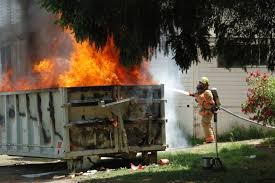 It is where we find ourselves today. We also know that the state of affairs can be significantly better. How can we get there from here? The first step would be some sort of collective decision that the current system isn’t working. From my perspective, the malaise and lack effectiveness of our current system is so pervasive and evident that action to correct it is overdue. On the other hand, the current system serves the purposes of those in control quite well, and they are not predisposed to be agents of change. As such, the impetus for change is almost invariably external. It is usually extremely painful because the status quo does not want to be rooted out unless it is forced to. The circumstances need to demand performance that current system cannot produce, and as systems degrade this becomes ever more likely.
 and not lose all the good things in the process. Bad things, bad outcomes and bad behavior happen, and perhaps need to happen to have all the good (in other words “shit happens”). Today we are gripped with a belief that negative outcomes can be managed away. In the process of managing away bad outcomes, we destroy the foundation of everything good. To put it differently we need to value the good and accept the bad as a necessary condition for enabling good outcomes. If one looks at failure as the engine of learning, we begin to realize that the bad is the foundation of the good. If we do not allow the bad things to happen, let people fuck things up, we can’t have really good things either. One requires the other and our attempts to control bad outcomes, removes a lot of good or even great outcomes at the same time.
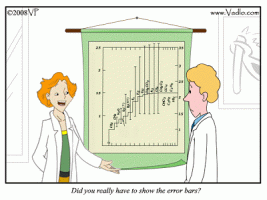 The reasons for not estimating uncertainties are legion. Sometimes it is just too hard (or people are lazy). Sometimes the way of examining a problem is constructed to ignore the uncertainty by construction (a common route to ignore experimental variability and numerical error). In other cases the uncertainty is large and it is far more comfortable to be delusional about its size. Smaller uncertainty is comforting and implies a level of mastery that exudes confidence. Large uncertainty is worrying and implies a lack of control. For this reason getting away with choosing a zero uncertainty is a source of false confidence and unfounded comfort, but a deeply common human trait.
 If we can manage to overcome the multitude of human failings underpinning the choice of the default zero uncertainty, we are still left with the task of doing something better. To be clear, the major impediment is recognizing that the zero estimate of uncertainty is not acceptable (most “customers” like the zero estimate because it seems better even though its assuredly not!). Most of the time we have a complete absence of information to base uncertainty estimates upon. In some cases we can avoid zero uncertainty estimates by being more disciplined and industrious, in other cases we can think about the estimation from the beginning of the study and build the estimation into the work. In many cases we only have expert judgment to rely upon for estimation. In this case we need to employ a very simple and well-defined technique to providing an estimate.
 speaking, there will be a worst case to consider or something more severe than the scenario at hand. Such large uncertainties are likely to be quite uncomfortable to those engaging in the work. This should be uncomfortable if we are doing things right. The goal of this exercise is not to minimize uncertainties, but get things right. If such bounding uncertainties are unavailable, one does not have the right to do high consequence decision-making with results. This is the unpleasant aspect of the process; this needs to be the delivery of the worst case. To be more concrete in the need for this part of the bounding exercise, if you don’t know how bad the uncertainty is you have no business using the results for anything serious. As stated before the bounding process needs to be evidence based, the assignment of lower and upper bounds for uncertainty should have a specific and defensible basis.
 To some extent this is a rather easy lift intellectually. Cultural difficulty is another thing altogether. The indefensible optimism associated with the default zero uncertainty is extremely appealing. It provides the user with a feeling that the results are good. People tend to feel that there is a single correct answer. The smaller the uncertainty is the better they feel about the answer. Large uncertainty is associated with lack of knowledge and associated with low achievement. The precision usually communicated with the default, standard approach is highly seductive. It takes a great deal of courage to take on the full depth of uncertainty along with the honest admission of how much is not known. It is far easier to simply do nothing and assert far greater knowledge while providing no evidence for the assertion.
 consider this experiment to be a completely determined event with no uncertainty at all. This is the knee jerk response of people is the consideration of this single event as being utterly and completely deterministic with no variation at all. If the experiment were repeated with every attempt to make it as perfect as possible, it would turn out slightly differently. This comes from the myriad of details associated with the experiment that determine the outcome. Generally the more complex and energetic the phenomenon of being examined is, the greater the variation (unless there are powerful forces attracting a very specific solution). There is always a variation, the only question is how large it is; it is never, ever identically zero. The choice to view the experiment as perfectly repeatable is usually an unconscious choice that has no credible basis. It is an incorrect and unjustified assumption that is usually made without a second thought. As such the choice is unquestionably bad for science or engineering. In many cases this unconscious choice is dangerous, and represents nothing more than wishful thinking.
 n. Are things worse where I am, or better than the average? For most of my adult life, I’ve had far better conditions than average, and been able to find great meaning in my work. Is the steady erosion of the quality of the work environment a consequence of issues local to my institution or organization? Or is it part of the massive systemic dysfunction our society is experiencing?
 government, led by an incompetent narcissistic conman without a perceptible moral compass. Racial tensions, and a variety of white supremacist/right wing ultra-Nationalists are walking the streets. Left wing and anarchist groups are waking up as well. Open warfare may soon be upon us making us long for the days where sporadic terrorist attacks were our biggest worry. A shit storm is actually a severe understatement; this is a fucking waking nightmare. I hope this is wrong and I could simply find a better place to work at and feel value in my labors. I wish the problem was simple and local with a simple job change fixing things.
 Work is an important part of life for a variety of reasons. It is how we spend a substantial portion of our time, and much of our efforts go into it. In work we contribute to society and assist in the collective efforts of mankind. As I noted earlier, I’ve been fortunate for most of my life, but things have changed. Part of the issue is a relative change in the degree of self-determination in work. The degree of self-determination has decreased over time. An aspect of this is the natural growth in scope of work as a person matures. As a person grows in work and is promoted, the scope of the work increases, and the degree of freedom in work decreases. Again this is only a part of the problem as the system is working to strangle the self-determination out of people. This is control, fear of failure and generic lack of trust in people. In this environment work isn’t satisfying because the system is falling apart, and the easiest way to resist this is controlling the little guy. My work becomes more of a job and a route to a paycheck every day. Earning a living and supporting your family is a noble achievement these days, and aspiring to more simply a waking dream contracting in the rear view mirror of life.


 t can unleash people’s full potential through allowing them to fail spectacularly and then fully support the next step forward. Today, cowardice and mistrust dominate and even marginal failure results in punishment. It is corroding the foundation of achievement. It makes work simply a job and life more survival than living.
 comfortable and automatic. In many cases culture is the permanent habits of our social constructs, and often defines practices that impede progress. Accepted cultural practices are usually done without thinking and applied almost mindlessly. If these practices are wrong, they are difficult to dislodge or improve upon.
 or fundamental human needs, but most are constructs to help regulate the structures that our collective actions are organized about. The fundamental values, moral code and behaviors of people are heavily defined by culture. If the culture is positive, the effect is resonant and amplifies the actions of people toward much greater achievements. If the culture is negative, the effect can undo and overwhelm much of the best that people are capable of. Invariably cultures are a mixture of positive and negative. Cultures persist for extremely long times and outlive those who set the cultural tone for groups. Cultures are set or can change slowly unless the group is subjected to an existential crisis. When a crisis is successfully navigated the culture that arose in its resolution is enshrined, and tends to persist without change until a new crisis is engaged.
 We see all sorts of examples of the persistence of culture. The United States is still defined by the North-South divide that fractured during the Civil War. The same friction and hate that defined that war 150 years ago dominate our politics today. The culture of slavery persists in systematic racism and oppression. The white and black divide remains unhealed even though none of the people who enslaved or who were enslaved are still alive with many generations having passed. The United States is still defined by the Anglo-Saxon Protestant beliefs of the founding fathers. Their culture is dominant even after being overwhelmed in numbers of people and centuries of history. The dominant culture was formed in the crucible of history by the originating crisis for the Nation, the Revolutionary war. Companies and Laboratories are shaped by their original cultures and these habits and practices persist long after their originators have left, retired or died.
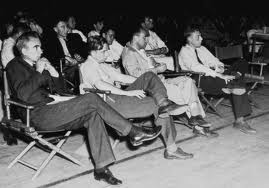 (earthquakes, floods, hurricanes, famines, …). These events can stress people and existing cultures providing the sorts of crises that shape the future to be more resilient to future disasters. Human events such as wars, trade, and general political events provide both the impact of culture in causing or navigating events, as well as producing crises that shape cultural responses and evolution. We can continue down this line of thinking to ever-smaller cultures such as organizations and businesses are influenced by crises induced by the larger systems (natural or political). This web of culture continues to smaller and smaller scale all the way to communities (towns, regions, schools, families) each having a culture shaped heavily by other cultures or events. In every case a crisis is almost invariably necessary to induce change, cultures are resistant to change unless something painful provides direct evidence of the incapacity of existing culture to succeed.
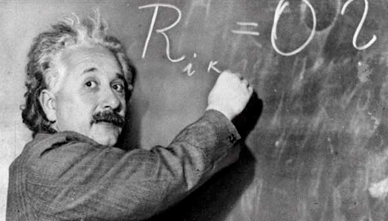 culture of the broader scientific community. This culture exists within the broader network of cultures in society with give-and-take between them. In the past science has provided deep challenges to prevailing culture, and induced changes societal culture. Today the changes in main societal culture are challenging science. One key aspect of today’s culture wars is lack of support for expertise. One of the key rifts in society is mistrust of the elite and educated. The broader society is attacking and undermining educational institutions across the board. Scientific laboratories are similar in makeup and similarly under assault. Much of this broader assault is related to a general lack of trust. Some of this is a reaction to the surplus of trust granted science in the wake of its massive contributions to the resolution of World War 2 and the Cold War. These successes are waning in memory and science is now contracting for a distinguished role societally.


 ns suffers a bit relative to the other Labs, as does the rigor of computed results. Los Alamos was the birthplace of all three labs and computational work, but always puts computation in a subservient role compared to experiments. This leads to a mighty struggle between validation and calibration. Often calibration wins out so that computed results are sufficiently close to experiment. Sandia excels at process and rigor in the conduct of calculations, but struggles at other aspects (at least in a relative sense). The whole verification and validation approach to simulation quality comes from Sandia reflecting the rigor. At the same time institutional support and emphasis are weaker leading to long-term effects.
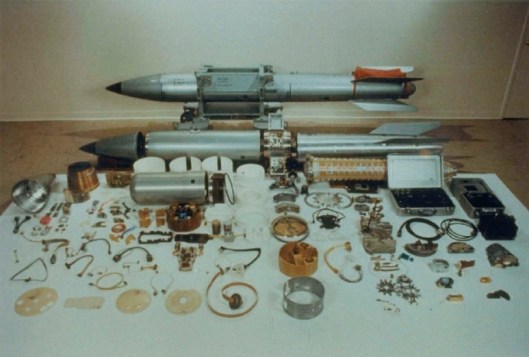 All this texture is useful to think about because it manifests itself in every place computational science is done today. The scientific culture of any institution is reflected in its emphasis, and approach to the conduct of science. The culture produces a natural set of priorities that define investments and acceptable quality. We can speak volumes about how computational work should be done, but the specific acuity to the message is related to preconceived notions about the aspects. For example, some places are more prone to focus on computing hardware as an investment. In terms of the competition for resources, the purchase of hardware is a priority, and a typical route for enhancement. This becomes important when trying to move into new “hot” areas. If the opportunity falls in line with the culture, investments flow and if it is out of line the institution will miss it.
 omputational science is a relatively new area of endeavor. It is at most 70 years old as practiced at Los Alamos; it is a new area of focus in most places. Sometime it is practiced at an institution and added to the repertoire as a new innovative way of doing work. In all these cases the computational work adopts the basic culture of the institution it exists within. It then differentiates based on the local conditions usually dominated by whatever the first acknowledged success is. One of the key aspects of a culture is origin stories or mythological achievements. Origins are almost invariably fraught situations with elements of crisis. These stories pervade the culture and define what success looks like and how investments in the future are focused.
 Where I work at Sandia, the origin story is dominated by early success with massively parallel computers. The greatest success was the delivery of a computer, Red Storm. As a result the culture is obsessed with computer hardware. The path to glory and success runs through hardware; a focus on hardware is culturally accepted and natural for the organization. It is a strong predisposition. At Lawrence Livermore the early stages of the Laboratory were full of danger and uncertainty. Early in the history of the Lab there was a huge breakthrough in weapons design. It used computational modeling, and the lead person in the work went on to huge professional success (Lab Director). This early success became a blueprint for others and an expected myth to be repeated. A computational study and focus was always expected and accepted by the Lab. At Los Alamos all roads culturally lead to the Manhattan Project. The success in that endeavor has defined the Laboratory ever since. The manner of operation and approach to science adopted then is blueprint for success at that Laboratory. The multitude of crises starting with the end of the Cold War, spying, fires, and scandal have all weakened the prevailing culture, and undermined the future.


 and knowledge. This always manifests itself with a lack of questioning in the execution of work. Both of these issues are profoundly difficult to deal with and potentially fatal to meaningful impact of modeling and simulation. These issues are seen quite frequently. Environments with weak peer review contribute to allowing confidence with credibility to persist. The biggest part of the problem is a lack of pragmatic acceptance of modeling and simulation’s intrinsic limitations. Instead we have inflated promises and expectations delivered by over confidence and personality rather than hard nosed technical work.
 When confidence and credibility are both in evidence, modeling and simulation is empowered to be impactful. It will be used appropriately with deference to what is and is not possible and known. When modeling and simulation is executed with excellence and professionalism along with hard-nosed assessment of uncertainties, using comprehensive verification and validation, the confidence is well grounded in evidence. If someone questions a simulations result, answers can be provided with well-vetted evidence. This produces confidence in the results because questions are engaged actively. In addition the limitations of the credibility are well established, and confidently be explained. Ultimately, credibility is a deeply evidence-based exercise. Properly executed and delivered, the degree of credibility depends on honest assessment and complete articulation of the basis and limits of the modeling.
 One of the major sins of over-confidence is flawed or unexamined assumptions. This can be articulated as “unknown knowns” in the famously incomplete taxonomy forwarded by Donald Rumsfeld in his infamous quote. He didn’t state this part of the issue even though it was the fatal flaw in the logic of the Iraqi war in the aftermath of 9/11. There were basic assumptions about Hussein’s regime in Iraq that were utterly false, and these skewed the intelligence assessment leading to war. They only looked at information that supported the conclusions they had already drawn or wanted to be true. The same faulty assumptions are always present in modeling. Far too many simulation professionals ignore the foundational and unfounded assumptions in their work. In many cases assumptions are employed without thought or question. They are assumptions that the community has made for as long as anyone can remember and simply cannot be questioned. This can include anything from the equations solved, to the various modeling paradigms applied as a matter of course. Usually these are unquestioned and completely unexamined for validity in most credibility assessments.
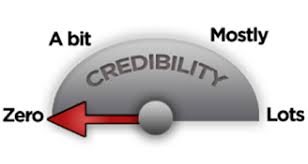 stay the course and make standard assumptions. In many cases the models have been significantly calibrated to match existing data, and new experiments or significantly more accurate measurements are needed to overturn or expose modeling limitations. Moreover the standard assumptions are usually unquestioned by peers. Questions are often met with ridicule. A deeply questioning assessment requires bravery and fortitude usually completely lacking from working scientists and utterly unsupported by our institutions.
 personality. This proof by authority is incredibly common and troubling to dislodge. In many cases personal relationships to consumers of simulations are used to provide confidence. People are entrusted with the credibility and learn how to give their customer what they want. Credibility by personality is cheap and requires so much less work plus it doesn’t raise any pesky doubts. This circumstance creates an equilibrium that is often immune to scientific examination. It is easier to bullshit the consumers of modeling and simulation results than level with them about the true quality of the work.
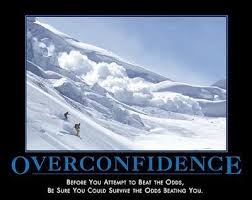 One of the biggest threats to credibility is the generation of the lack of confidence honesty has. Engaging deeply and honestly in assessment of credibility is excellent at undermining confidence. Almost invariably the accumulation of evidence regarding credibility endows the recipients of this knowledge with doubt. These doubts are healthy and often the most confident people are utterly ignorant of the shortcomings. The accumulation of evidence regarding the credibility should have a benefit for the confidence in how simulation is used. This is a problem when those selling simulation oversell what it can do. The promise of simulation has been touted widely as transformative. The problem with modeling and simulation is its tangency to reality. The credibility of simulations is grounded by reality, but the uncertainty comes from both modeling, but also the measured and sensed uncertainty with our knowledge of reality.
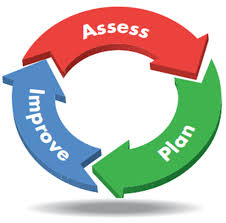 n oversold and any assessment will provide bad news. In today’s World we see a lot of bad news rejected, or repackaged (spun) to sound like good news. We are in the midst of a broader crisis of credibility with respect to information (i.e. fake news), so the issues with modeling and simulation shouldn’t be too surprising. We would all be well served by a different perspective and approach to this. The starting point is a re-centering of expectations, but so much money has been spent using grossly inflated claims.
 limitations. The difference that simulation makes is the ability to remove the limitations of analytical model solution. Far more elaborate and accurate modeling decisions are available, but carry other difficulties due to the approximate nature of numerical solutions. The tug-of-war intellectually is the balance between modeling flexibility, nonlinearity and generality with effects of numerical solution. The bottom line is the necessity of assessing the uncertainties that arise from these realities. Nothing releases the modeling from its fundamental connection to validity grounded in real world observations. One of the key things to recognize is that models are limited and approximate in and of themselves. Models are wrong, and under a sufficiently resolved examination will be invalid. For this reason an infinitely powerful computer will ultimately be useless because the model will become invalid at some resolution. Ultimately progress in modeling and simulation is based on improving the model. This fact is ignored by computational science today and will result wasting valuable time, effort and money chasing quality that is impossible to achieve.
 This is a nice way of saying this is usually a sign that the quality is actually complete bullshit! We can move a long way toward better practice by simply recalibrating our expectations about what we can and can’t predict. We should be in a state where greater knowledge about the quality, errors and uncertainty in modeling and simulation work improves our confidence.
 One of the issues of increasing gravity in this entire enterprise is the consumption of results using modeling and simulation by people unqualified to judge the quality of the work. The whole enterprise is judged to be extremely technical and complex. This inhibits those using the results from asking key questions regarding the quality of the work. With the people producing modeling and simulation results largely driven by money rather than technical excellence, we have the recipe for disaster. Increasingly, false confidence accompanies results and snows the naïve consumers into accepting the work. Often the consumers of computational results don’t know what questions to ask. We are left with quality being determined more by flashy graphics and claims about massive computer use than any evidence of prediction. This whole cycle perpetuates an attitude that starts to allow viewing reality as more of a video game and less like a valid scientific enterprise. Over inflated claims of capability are met with money to provide more flashy graphics and quality without evidence. We are left with a field that has vastly over-promised and provided the recipe for disaster.
