
tl;dr
Most of us would be love to be recognized as an expert at something. One would think it is a way to be professionally successful. The path to expertise runs through skills and experience, but takes a bit more to actually achieve. An expert sees what can’t be taught, and has the ability to move past current knowledge and practice. The expert can solve novel problems and adapt the state of the art. Expertise is earned through hard lessons that include many mistakes and failures. It also needs to be valued and respected to be born. It is an uneven and long journey guided by grit, determination and talent. Today, the expert is also the subject of critique. Expertise is under attack. Thus, expertise today is a dangerous and perilous endeavor.
“An expert is someone who knows some of the worst mistakes that can be made in his subject, and how to avoid them.” ― Werner Heisenberg
The Path of Expertise
“We need to be willing to risk embarrassment, ask silly questions, surround ourselves with people who don’t know what we’re talking about. We need to leave behind the safety of our expertise.” ― Jonah Lehrer
The start of expertise is always the same. You learn the basics and fundamentals of a field. First, the foundational principles are imparted to the burgeoning expert. With the foundation in place, the student turns to a focus in a given area. This follows a similar path with the knowledge be found in textbooks, or the literature. Ultimately, the student needs to begin to start the process of reproducing the state of the art independently. This means known results are recreated and compared with the standard. In this process, the student begins to pick up and demonstrate competence. In that competence gradually confidence is established. At this point the student is still not an expert. The student is a skilled practitioner. Most stop there and go no further.
Along the way important milestones occur that begin to lay the groundwork for expertise. Key among these are beginning to make the same mistakes as the preceding experts. This gets to a feature of the existing literature and knowledge for a field, mistakes and traps are not reported. Success is usually the only thing published. Often a mentorship can be established with an existing expert who provides the growing expert with guidance. Through the mistakes, guidance and lessons learned, the skilled novice inches their way toward expertise. At this point the novice is on the precipice of expertise. There is one more critical step forward to complete.
“This is a fundamental truth about any sort of practice: If you never push yourself beyond your comfort zone, you will never improve.” ― Anders Ericsson

Raw talent and ability is part of the picture, but offers traps that many fall into. There are many very talented students who basically become skilled technicians. The example of the perfect student who’s perfectionism rules their life. The valedictorian from high school is often the epitome of this person. A great student to be sure, but trapped by perfectionism. To become an expert you need the talent and grit, but you have to step into the unknown to risk and experience failure. Often as I’ve seen the perfectionist can’t break from the mold that created the success as a student. They never become an expert.
Being a perfectionist is antithetical to expertise. Given that many gifted and excellent students are perfectionists this might be counter-intuitive. A perfectionism will push a person away from failure and failing is a key part of becoming an expert. Perfectionists often stay within the boundaries of the known, and the boundaries of the known do not contain expertise. Doing what is needed to be an expert requires courage. The perfectionist is skilled, but their excellence in tinged with mediocrity. If you see someone who never fails and always does great work that person is almost certainly not an expert. Expertise is born from pushing hard past limits into the unknown, which invariably leads to mistakes and failure. The perfectionist must cast off their tendencies and the courage to take a leap into the unknown.
“Enthusiasm is more important than innate ability, it turns out, because the single more important element in developing an expertise is your willingness to practice.” ― Gretchen Rubin
Experts Matter?
I’ve always operated under the assumption that expertise is both good and matters. Experts can produce results that mere technicians cannot produce. They solve problems that were unforeseen and unexpected. There is a distinct and substantial difference between competence and expertise.
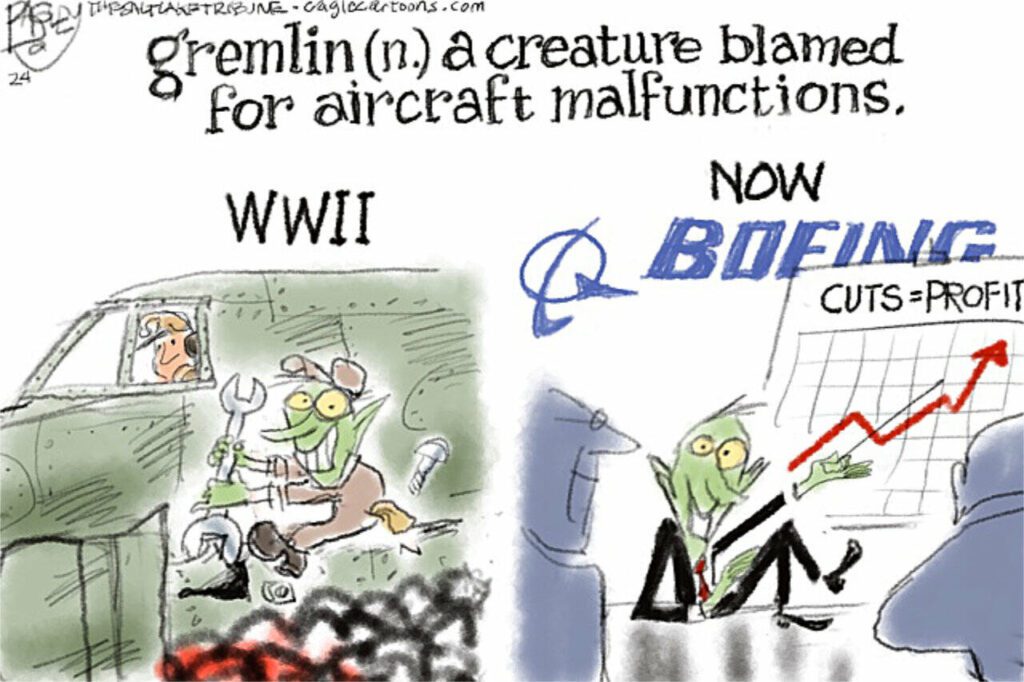
It has been recognized that experts are treated with distrust and suspicion today. This is a consequence of the unfortunate value system in the current world. There is very little doubt that expertise is under attack from all quarters. There is an entire political movement that is devoted to ignoring expertise. They are in power and operate under the premise that reality can be messaged. We see business interests built on expertise that have shed experts because they are too expensive. Boeing is a prime example. The reality is that Boeing likely a reflection of the danger rather than being an outlier.
If you want results for the long term, experts are essential. In the short term experts are terrible for the balance sheet. This is where politics and business intersect. Current trends are focused intently on the short term. Quarterly results are all that matter. Experts are simply lots of difficult reality that is cheaper to ignore. Until it isn’t. Reality will eventually assert itself. Planes crash or doors fall off. Hurricanes happen and make landfall. Reality will eventually win, and the hedge that experts represent need to be present. Then the experts are be worth every penny spent on them. Today, I wonder, will they be present to step up when needed?
I see this at work. You would think that at a National Laboratory experts would rule. They do not. Experts are a pain in the ass. When reality bites, and it will, the expert will save your ass. In these days it would seem that the message matters and reality is at bay. It is simply a matter of time, reality cannot be denied. That said, we saw experts being repudiated during Covid. More than a million people died and experts were continually beaten down or ignored. One needs to wonder, what sort of disaster would it take for the experts to be valued?
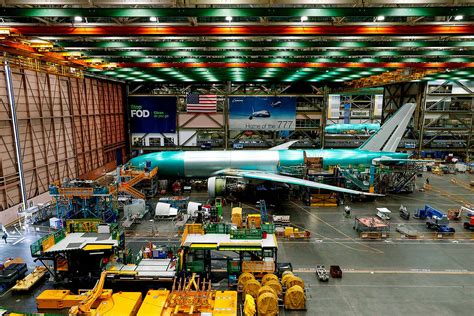
When we look at the consequences of rejection of expertise, Boeing looks like an herald of the future. I remember 20 years ago at Los Alamos taking a meeting with a Boeing engineer. He told us that Boeing eviscerated its work on turbulence getting rid of almost everyone working in the field. Only the expert who “solved” the problem was retained (Spalart) , and no more progress was needed. They had declared the problem to be solved. An absolutely ridiculous notion on the face of it. It turns out that the repudiation of expertise was even broader at Boeing. Then starting with the building of the 787 then the 737 Max, the problems started to manifest in reality. Delays and quality control problems plagued the 787. Then the actual engineering work created flaws that crashed two 737 Max planes by foreign airlines. The problems continued with a door flying off a plane more recently.

All of this seeded by the removal and rejection of expertise by the company. All of this done to improve the bottom line and the short-term financial health of the Company. Reality hit hard and now Boeing is in free fall. A sterling reputation built over decades was destroyed by cheapness and greed. The same motivations and drives are present all across the business world, and replicated at places I work. I see financial factors treated as essential and primal to success. Expertise and technical quality are afterthoughts and simply assumed to be in place.
The result is mismanagement of technical work and a collapse of expertise. The lack of trust present across society results in a fear of failure. This in turn becomes management malpractice. We are graded on how we perform on key milestones. We are basically told that these milestones cannot fail. Thus we create milestones that are too easy and can’t fail. The result being a systematic dumbing down of the most important work we do to avoid the possibility of failure. It is also the highest profile work we do, which ironically is engineered to be mediocre.

This gets to some factors in the creation of experts which are cultural and emotional. The culture of the organization needs to support the expert in several key ways. First the activities needed to develop and maintain expertise must be encouraged and resources be provided. Secondly, the expert needs to be respected and valued. The novice can easily observe whether expertise is encouraged by the management. More importantly they can see whether being an expert matters and their views are respected.
We can ask some key questions about the culture. Is being an expert a path to professional success? Does the organization provide opportunities to experts? Is being an expert a path to being supported with ease? If these questions are answered affirmatively, experts are a natural outcome.
The answer to each of these questions is now in the negative. In the business world (e.g., Boeing) and the Labs we can see this. Its consequences are starting to become obvious.
When I look at my career the answers to these questions provide a guide. When the answers were affirmative, the expertise was built and grew. When the answers were negative, expertise retreated and languished. Experts are not free, nor does their quality and availability come without broader implications. If the evidence is that expertise is not valued, one won’t put effort into being one. Without experts we cannot meet our greatest challenges with solutions that work. In the long run we can expect reality to ultimately expose our short-term strategy as flawed. It will be a failure in the bad sense of it.

Expertise is Dangerous and Expensive
“The death of expertise is not just a rejection of existing knowledge. It is fundamentally a rejection of science and dispassionate rationality, which are the foundations of modern civilization.” ― Thomas M. Nichols
In an environment that prioritizes perfectionism and allows for few or no mistakes, an expert is seen as the problem. The expert sees past the trivial and looks deeper. The perfect rarely survives past the superficial observation. The short-term management solution is to get rid of and ignore the experts. We are seeing how that worked out for Boeing. Reality bites and bites hard. What I suspect is that Boeing is simply the most evident example of a broader war on experts. Reality will show itself and expose the gaps in our strategy.

The Covid Pandemic was another example of how experts are not listened to or respected today. If the expert provides something that is uncomfortable or difficult, the current response is to ignore them. Even worse, the response is to make them a villain. The best example is the vitriol directed toward Anthony Fauci. The same is directed toward experts far and wide in less obvious ways. We simply see managers penalize and punish experts for providing a preview of reality. Usually you get the feedback that you need to work on your messaging. Be more positive and stop being a “negative Nelly.” The only good news message is broad and clear across society at large. The National Labs are no different and its hollowing them out.
“Often a sign of expertise is noticing what doesn’t happen.” ― Malcolm Gladwell
One can see the retreat of verification and validation in this light. If one is focused on perfect success V&V is the enemy. V&V is all about finding the problems with a body of work. If one looks carefully at virtually any work with V&V, problems are found. These problems are a direct assault on perfectionism. Accepting V&V examinations and evidence usually chafes the perfectionist. The simplest way for the perfectionist to survive the examination is reject it, or not do it all. This explains the retreat of V&V and the decline in the quality of the work done.

The recent death Jimmy Carter offers a window into some of the systemic problems underlying the death of expertise. While so laudable as a former President, Carter is derided for his time in office. Front and center in this assessment is the infamous “malaise” speech. It is seen as the end of the success in office as Carter called out the public in ways that ring true then and today. He was replaced in office by Reagan who foreshadowed the feel good form of communication we see replicated today. He was also an actor and public figure who mastered media. This episode also coincides with the demise of expertise as essential to success. It does not seem that these events are independent, but rather part of the same problem.
“These are dangerous times. Never have so many people had so much access to so much knowledge and yet have been so resistant to learning anything” ― Thomas M. Nichols
 The Regularized Singularity