
tl;dr
I recently discovered that one of my best friends had died. Jim was one of the most important people in my life. But I only discovered his death 21 months after it happened. There are reasons for this. To put this in context, I’ll talk about the death of three people who have touched my life for good and ill. There are lessons to learn from each of them. Among these lessons are what people mean and how I should leave life myself when my time comes.
This essay will be about death and life. It will be a little raw. If that’s not what you’re prepared for don’t read on, or come back later when you are.
“A purpose of human life, no matter who is controlling it, is to love whoever is around to be loved.” ― Kurt Vonnegut
How to Say Goodbye
A few weeks ago, my week started off wondering about a friend, wondering if that friend was still alive. She wasn’t. It was the week after Thanksgiving, and work was spinning up anew after the holiday. The day before Thanksgiving, my friend, Sandy, sent me a brief text: “Thank you for being a good friend and lover.” Sandy had been sick for over a year, afflicted with cancer. Later in the morning, my worry was confirmed. Sandy had passed away that morning. Her kids posted the news on her Facebook profile. The message the previous Wednesday was goodbye, and a heartfelt thanks.
I hadn’t seen her since the previous February when she told me of being worried about the cancer. Her brother had died from cancer, and it seemed to run in the family. We kept in touch through texting, and I knew generally how she was doing. Her treatments worked for a bit until they didn’t. I knew she had a PET scan. I also know how that can work. I remember the moment of seeing my father-in-law’s PET scan and knowing then that the end was near. It is a test that can be a release or a death sentence. I suspect this was what happened to Sandy. She was a lovely lady who loved heavy metal. We shared an enjoyment of Alice in Chains quite often when we got together. She was a casual friend, what someone would call a “FWB”. Still, she said goodbye and left me a thank you for the time we had.
We had closure.
“The fear of death follows from the fear of life. A man who lives fully is prepared to die at any time.” ― Mark Twain
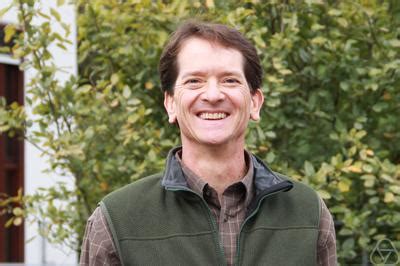
A photo of Jim from 2013 at a Mathematical Workshop he helped organize.
How Not to Say Goodbye
Sandy’s death filled me with a modest melancholy, but it was also expected. I had time to prepare and understand the context of our friendship. The very next day, I awoke to find a Facebook message that hit me hard. The previous evening, I posted the last of my series on my career, the Requiem series, with its focus this time on my time at Sandia. My friend Peter, who is a Mechanical Engineering Professor, asked about Jim. The three of us worked together in Los Alamos during Peter’s postdoc there.
About once every two or three months for the past eight years someone asks me about Jim: how can I get in touch with him? The presumption is that I will know how to contact him. I don’t, as I will explain shortly. When I woke the next morning another friend, Raphael, who is a Professor in France, notified me about Jim’s status.
My friend Jim was dead.
He had died the previous March (March 1, 2023, which I discovered via internet searches) and had managed to donate his math books to the University. He had time and knew he was going to die. He lived in a very small village in France with his wife. It was beautifully decorated in the fashion of New Mexico houses, too. That was it. I knew nothing else. Jim was gone. Worse yet, there was no closure, and there would be none.
For most of us who knew him, Jim disappeared in August 2016. I remember well our final conversation over lunch at Hot Rocks in Los Alamos a few months prior. I remember a somewhat contentious and heated discussion of the state of the Country and Lab. My own life was unsettled at that time. Jim was upset at the United States and the possibility of Trump being elected. Los Alamos had lost its luster and was disappointing him. Maybe he was disappointed with me, too. I’d been getting tattooed and had an open marriage. Maybe I wasn’t the person he thought I was. Who knows? It was a final conversation unfit for two people who had experienced so much life together. It was not a worthy goodbye to someone so important to me.
When I say Jim “disappeared”, I mean it. Aside from Raphael, no one had heard from him. Every friend I contacted since informing them that Jim had died knew nothing about his fate. I spent much of the next week contacting people who worked with Jim via e-mail and Facebook. In every case I got a note of sadness and surprise, but never anyone who said, “Yes, I had heard.” As this sank in, I felt a little bit of relief in the feeling that Jim left everyone behind. I wasn’t singled out either for good or ill. He ghosted everyone. A few friends talked about other people who disappeared suddenly, too. In every case, the disappearance of a friend is a source of pain.
“The opposite of love is not hate, it’s indifference. The opposite of art is not ugliness, it’s indifference. The opposite of faith is not heresy, it’s indifference. And the opposite of life is not death, it’s indifference.” ― Elie Wiesel
Closure and Perspective
One of the things that lingers with me with Jim’s death is the lack of closure. Closure as a process is a precarious and challenging concept. My wife has struggled with it as a relationship she had ended without any closure. Later over time, she got some closure, but it was deeply unsatisfying, too. It did not meet expectations at all. With Jim, nothing ever came, and he approached death without any attempt to close the door with me, or anyone else. So, it is left to the living to find a way to close this chapter of our continuing lives.
Someone else I knew died without giving me any closure. Unlike Jim, this person had a horrible influence on my life. Sam was one of the most toxic people I have ever met. The fact that he was placed in a position of leadership was an indictment of people’s judgment. He was disingenuous to his core; he was also manipulative and vindictive. He abused power. All of this is generally ignorable except the fact that I was the object of this abuse. He was behind one of the worst things in my adult life. With his death, the minute chance of apology was gone.
Any closure or forgiveness on my part was purely one-sided. I need this, too. I need to forgive Sam for his horrible behavior. I need to move on. It is a work in progress. Sam’s death was a genuine tragedy. In addition to the personal side of it, Sam never had a chance to be a better person. He never could heal from whatever demons drove him to such monstrous behavior. I can give myself some closure in that he was a victim of an environment that created his dysfunction, and a system that rewarded him for it. He hurt me badly and likely didn’t care at all. He didn’t care about the well-being of others in his charge. He acted with cowardice and dishonestly toward me. This is a sad way for someone to live. I can learn from this and work toward being a better human from the lesson.
I can also take this lack of closure forward to putting Jim’s life in perspective and how he impacted my life.
“Closure is just as delusive-it is the false hope that we can deaden our living grief.” ― Stephen Grosz
A Life Well-Lived
“Death ends a life, not a relationship.” ― Mitch Albom, Tuesdays with Morrie
Jim was a great influence on my life. He was a good man, and I am richer for knowing him. I have worked with many great and wonderful people during my career, but Jim stands out. We had a great bond of friendship and shared numerous battles and adventures in an exciting time. For this reason, the way Jim deserted me hurt especially deeply. Anyone who knew us would have assumed Jim would stay in touch with me. His abandonment of me and all things American was painful. It is worth some deeper consideration. Perhaps, for Jim, it was simply too painful to continue engaging with all of us.
I met Jim in 1996 as we joined the hydrodynamics group in X-Division. The burgeoning ASCI program was injecting life into a weapon’s program that had been in freefall since the end of the Cold War. Our group leader, Len, had the wisdom to introduce Jim and I, seeing we might work well together. It was a stroke of genius by Len. Jim and I shared basic ethics and goals in work but also complimented each other almost perfectly. I was creative and free-thinking but lacked attention to detail at times. Jim was more confined in thinking but had meticulous attention to detail. We helped each other with our differing strengths coupled with a common vision. Together we began to sketch out a collaboration that would stretch into the next 20 years. A fast friendship made the work even better.
I had a crisis that left me with a better workplace balance. Gone was my sense of imposter syndrome, replaced with confidence. I was now imbued with the sort of scientific superiority and spirit that made Los Alamos special. Both of us inserted ourselves into the sense of possibility that ASCI gave us. We had freedom and could explore modeling nuclear weapons with computers. Together, we understood that scientific credibility in the simulations relied upon evidence. That evidence was found in verification and validation. Verification is the proof that a simulation is mathematically correct. Validation is evidence that the simulation models something close to objective physical reality.
Jim was blessed with mathematical skill and precision. He also had attention to detail that powered him to a PhD from Caltech. My pedestrian education from the University of New Mexico felt like an anchor. I graduated with a doctorate from Los Alamos. It was far greater and broader than any university could have given me. I had creativity and big ideas with an ability to dream big. Together, we were far better than either of us could be, separately. Jim was also generous and connected well with people. Both of us grew as scientists and our statures grew. We were a great team.
We were a dynamic duo with an eager energy. Ideas would bounce from each other. Throughout our time working together, the friendship grew. We also pushed each other to new heights. We hosted the first TriLab V&V workshop, and Jim’s ideas gave my own extra bite and swag. He came up with the idea of the seven deadly sins slide with the imagery of Hieronymus Bosch to spice it up. We crafted proposals together to work on the most difficult validation problems—images of turbulent chaotic flows central to our mission. Together, we joined the trips to Russia in scientific diplomacy that were part of the hope for lasting peace after the Cold War.
These trips to Russia opened a new level of connection. Jim took the hardest part of the travel and built a level of trust with the Russians. His encouragement brought me along for trips there. I went on seven international trips for this program. Two of these trips were to Vienna for a conference we hosted that included the Russians. One trip was to Ekaterinburg, 12 time zones away in January. Temperatures were as cold as –10°F. The other four trips were to Moscow, and then a train ride to Sarov. Sarov is the place where the Soviet nuclear program was born.
These trips were long and intense. It was the hardest travel I’ve ever done. Jim was a consummate traveler, always ready for every problem. On one particularly difficult trip, we ended up with nicknames. Jim’s was “Candyman”, because of his perpetual supply of homeopathic remedies. He was like a little pharmacy away from home. I remember needing stool softeners halfway into a trip and Jim having them at the ready. My nickname was “Gutterball”, characterizing my own tendency to see the dirty in everything. I could propel any conversation into the gutter in short order.
I remember one of the funniest things Jim ever said. It was 2005 and we were walking past the new NSSB building at LANL. I asked, “When will it be completed?” being completely serious for once.
Jim replied in a completely deadpan way, “When the flaming eye of Sauron is placed on top of it!”
We erupted in gut-wrenching laughter. It also tells you how Jim felt about the new Los Alamos management. This was also a harbinger of disappointments to come.
Right before I left Los Alamos, I was a manager. Jim was one of my employees. Jim was a model employee, being the best in a group full of stars. I can’t think of someone easier to manage. When I left Los Alamos in 2007, Jim followed me to Sandia shortly thereafter. The changes in Los Alamos didn’t sit well with him either.
In retrospect, I think Jim’s movement to Sandia was a twofold break from his past. On the one hand, he was searching for work that felt good. Los Alamos’ decline was stark and heartbreaking. I was providing a naive sunny-side-up view of Sandia. I suspect he never forgave me for that. Jim’s time at Sandia was unhappy. He saw it far clearer than I did. I worry that he blamed me for it and the lack of disclosure of Sandia’s faults and shortcomings. We continued to work together at Sandia, doing some great work. Nothing we did at Sandia could hit the heights Los Alamos gave us.
“To say goodbye is to die a little.” ― Raymond Chandler
With time, Sandia wore out its welcome with Jim. He still lived near Santa Fe with his wife Celine. Celine was French and a nurse. It was clear that Jim’s plan upon retirement was to live in France with its public single-provider health care. France also had a better lifestyle and attitudes than America’s nasty dog-eat-dog culture. Gradually—and then suddenly—Sandia became harder for Jim to integrate his life with. Jim left Sandia and went back to Los Alamos. He and I stayed in touch, but a space had opened. Los Alamos had also declined and was disappointing. The United States felt increasingly foreign too. In August 2016, Jim left the United States without any notice, or information about where he was. I never saw him again.
“How lucky I am to have known somebody and something that saying goodbye to is so damned awful.” ― Evans G. Valens
I will never know the answers. I can just look at the evidence. Jim had lost faith in Los Alamos, Sandia, and the United States. I was seemingly included in his condemnations, or not. It was and remains heartbreaking to me. Jim was as close to a brother as I had at work. We fostered a deep friendship of immense value to me. I won’t ever lose that. I am eternally grateful for knowing him and having him as a friend. I hope Jim felt the same way. I simply don’t know the answers.
It tells me that I need to work on forgiveness and connection. I want to feel the love and gratitude for Jim. I hope others feel the same for me when the time comes.
“Time doesn’t heal all wounds, only distance can lessen the sting of them.” ― Shannon Alder
 The Regularized Singularity