
Tags
tl;dr
In debates around almost anything today, extremes rule. When extreme views are taken it always favors the conservative/status quo side. The progressive’s more extreme views are a loser. To provide progressive views that will win the day, nuance and subtlety need to be embraced. This means letting go of dogmatic ideology and making compromises. Simple extreme views are rarely fit for progress only playing into the conservative’s hands. Reasonable and moderate positions can offer progress in a manner that more people are comfortable with. This is the path to genuine progress.
“Tyranny is the deliberate removal of nuance” ― Albert Maysles
The extremes are ruining today
We are witnessing the broad consequences of extremes ruling the political dynamic. The conversations nationally are dominated by extreme views on the left and the right. One of the prevailing issues is that conservative extremes are more acceptable to broad swaths of the population. Why? Conservative ideas are familiar while progressive ideas are not. Thus progressive ideas carry a burden conservative ideas are free of. This is especially true of cultural topics but carries over to economics and foreign affairs. I’ve also seen this apply in the scientific and technical realms.

In my professional life I work with computer codes that simulate things in the national security world. I am paid to work on things that are very energetic and either lead to or cause explosions. These problems are extremely challenging and always push the limits of technology. Nonetheless, these problems have been successfully solved. Moreover, the codes solving them have been around for decades. At Los Alamos, the first calculations started during the Manhattan Project. At Sandia, the calculations began in the late 1960’s. As such in either place there is a successful status quo. At every juncture, smart people got the job done and successfully simulated stuff. This utility preserved the continued use of simulation and its support institutionally.
“Simplicity is the ultimate sophistication.” ― Clare Boothe Luce
The rub is that the first way to do things is crude and clumsy. This produces a status quo that many practical people hold onto. Once simulation became commonplace and powerful, the way it is done became entrenched. The users of the results started to become invested in maintaining the status quo. They would resist changes to how things were done. This produced what was called legacy codes. Through huge efforts, the legacy codes were replaced with modern codes on modern computers. Now the replacement codes are the status quo. Improving or changing them is resisted as were the original legacy codes.
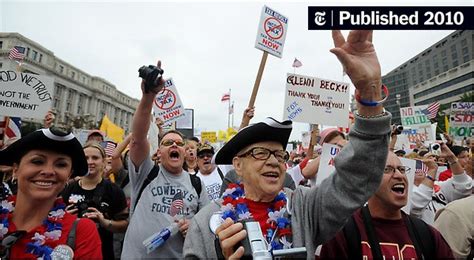
The same thing happens in politics and culture. Change requires massive effort, and once the change sets in, resistance builds as it becomes the status quo. The way to see the 2024 election is through the lens of resistance to change. Conservative politics is driven by resistance and reaction to change. They are the counter to progress and the discomfort with it. The same thing happens in science and technology. The key is that the status quo always has the advantage of simplicity. Change is always really hard and resisted by those who believe things are good enough..
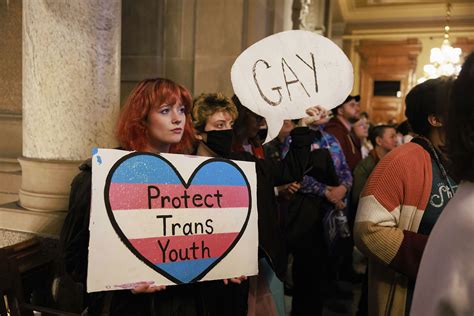
“Our lives begin to end the day we become silent about things that matter.” ― Martin Luther King Jr.
We need real answers
In science, we have Occam’s razor where the simplest solution is favored. Invariably, the existing practice or solution is seen as simple. It exists and works for all, but the most keen observers. This is true for public policy or science. In my life, we see this with computer codes and simulation. The status quo says “The current stuff is getting the job done, why change? plus it’s expensive and difficult, it could fail too.” All of this forms the natural resistance to change. It’s easier to simply stick with the status quo. I’ve seen this time and time again at work. Right now, the status quo is winning. Like our political world, science where I am is conservative and progress is resisted.
“It pays to be obvious, especially if you have a reputation for subtlety.” ― Isaac Asimov, Foundation
With little modification, this dynamic applies to politics. The basic principles I’ve seen at work apply broadly to policy. Take economic policy where unbridled capitalism is status quo. The issues it causes are profound, but change is scary. Plus capitalism has immense power available to maintain itself through propaganda. In cultural affairs, traditional relationships are the most common and have the advantage. The simple message of two biological sexes or a simple monogamous marriage of a man and woman is seen as settled. Any change feels uncomfortable for a majority of people and even downright scary. All of this powers the conservatives to use this fear to their advantage.
“If you can’t explain it to a six year old, you don’t understand it yourself.” ― Albert Einstein
When doing scientific work, the arguments for changing status quo practices are deep and nuanced. The status quo already works and always has the advantage. Any progress is difficult and has an uphill battle. In science, we have the scientific method to level the playing field. Even then the status quo has an advantage over better solutions. The spirit of science is very much focused on progress. In engineering the balance is far more tilted toward conservatism.
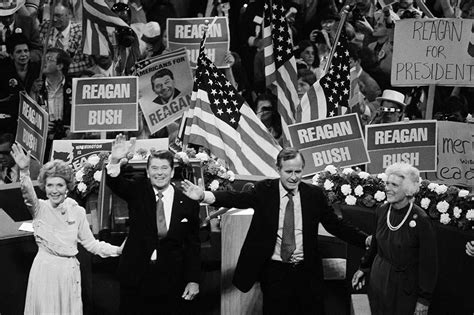
Sometimes the advantage of progress needs to be so strong that the improvement is obvious. Progress happens only when it is demonstrated. This looks like a revolution, but really it is a long process where someone takes a chance and shows the status quo what it is missing. This process is behind the time lag between discovery and broad acceptance of new ideas. There is a large bit of chance to this. This is also incredibly frustrating to us scientific progressives.
To look at this in public policy there are many examples. No single example may be more instructive than marriage equality. In a very short time, the idea of gay people marrying moved from unthinkable to broad acceptance. How did this happen?
“It was a defeat, resorting to crude threats in a game of subtlety, but sometimes one must sacrifice a battle to win the war.” ― Mark Lawrence, Prince of Thorns
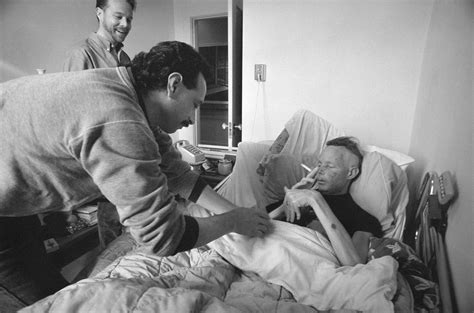
I think the reasons for success go back to tragedy. The plague of AIDS struck the gay community hard ravaging and killing broadly. On the one hand, it galvanized the gay community toward action. Their activism fell short of moving the public until the illness began to appear in the broader public. Ryan White was a child who got AIDS through the blood supply. Suddenly AIDS was more than just a gay disease. The tide turned with treatments and medicine coming eventually to subdue the disease.
The activism left a deeper mark on society. The gay community was drawn together and part of their activism was “coming out”. All of a sudden many gay people were known to broad swaths of society. They were present as coworkers, neighbors, and friends. Someone being gay suddenly became normal and commonplace. This created the necessary empathy and compassion to make marriage equality sensible. It went from unthinkable to the law of the land in a flash.

“When you dig just the tiniest bit beneath the surface, everyone’s love life is original and interesting and nuanced and defies any easy definition.” ― Taylor Jenkins Reid, The Seven Husbands of Evelyn Hugo
In my opinion, this should be the model for the progressives. The way marriage equality went from unthinkable to acceptable should be studied and deconstructed. Progressives need to apply these lessons to their causes. This requires a level of nuance and subtle action rather than what is seen as extreme and fear-causing. Simplicity always favors the status quo. Progressives, however right they are about a subject should avoid simplicity and embrace nuance.
“Everyone thinks of changing the world, but no one thinks of changing himself.” ― Leo Tolstoy
 The Regularized Singularity