• About The Regularized Singularity

The Regularized Singularity

~ The Eyes of a citizen; the voice of the silent

The Regularized Singularity

Tag Archives: mental-health

What is Expertise? How does one get it?

07 Tuesday Jan 2025

Posted by Bill Rider in Uncategorized

≈ Leave a comment

Tags

education, expertise, mental-health, perfectionism, personal-growth

tl;dr

Most of us would be love to be recognized as an expert at something. One would think it is a way to be professionally successful. The path to expertise runs through skills and experience, but takes a bit more to actually achieve. An expert sees what can’t be taught, and has the ability to move past current knowledge and practice. The expert can solve novel problems and adapt the state of the art. Expertise is earned through hard lessons that include many mistakes and failures. It also needs to be valued and respected to be born. It is an uneven and long journey guided by grit, determination and talent. Today, the expert is also the subject of critique. Expertise is under attack. Thus, expertise today is a dangerous and perilous endeavor.

“An expert is someone who knows some of the worst mistakes that can be made in his subject, and how to avoid them.” ― Werner Heisenberg

The Path of Expertise

“We need to be willing to risk embarrassment, ask silly questions, surround ourselves with people who don’t know what we’re talking about. We need to leave behind the safety of our expertise.” ― Jonah Lehrer

The start of expertise is always the same. You learn the basics and fundamentals of a field. First, the foundational principles are imparted to the burgeoning expert. With the foundation in place, the student turns to a focus in a given area. This follows a similar path with the knowledge be found in textbooks, or the literature. Ultimately, the student needs to begin to start the process of reproducing the state of the art independently. This means known results are recreated and compared with the standard. In this process, the student begins to pick up and demonstrate competence. In that competence gradually confidence is established. At this point the student is still not an expert. The student is a skilled practitioner. Most stop there and go no further.

Along the way important milestones occur that begin to lay the groundwork for expertise. Key among these are beginning to make the same mistakes as the preceding experts. This gets to a feature of the existing literature and knowledge for a field, mistakes and traps are not reported. Success is usually the only thing published. Often a mentorship can be established with an existing expert who provides the growing expert with guidance. Through the mistakes, guidance and lessons learned, the skilled novice inches their way toward expertise. At this point the novice is on the precipice of expertise. There is one more critical step forward to complete.

“This is a fundamental truth about any sort of practice: If you never push yourself beyond your comfort zone, you will never improve.” ― Anders Ericsson

Raw talent and ability is part of the picture, but offers traps that many fall into. There are many very talented students who basically become skilled technicians. The example of the perfect student who’s perfectionism rules their life. The valedictorian from high school is often the epitome of this person. A great student to be sure, but trapped by perfectionism. To become an expert you need the talent and grit, but you have to step into the unknown to risk and experience failure. Often as I’ve seen the perfectionist can’t break from the mold that created the success as a student. They never become an expert.

Being a perfectionist is antithetical to expertise. Given that many gifted and excellent students are perfectionists this might be counter-intuitive. A perfectionism will push a person away from failure and failing is a key part of becoming an expert. Perfectionists often stay within the boundaries of the known, and the boundaries of the known do not contain expertise. Doing what is needed to be an expert requires courage. The perfectionist is skilled, but their excellence in tinged with mediocrity. If you see someone who never fails and always does great work that person is almost certainly not an expert. Expertise is born from pushing hard past limits into the unknown, which invariably leads to mistakes and failure. The perfectionist must cast off their tendencies and the courage to take a leap into the unknown.

“Enthusiasm is more important than innate ability, it turns out, because the single more important element in developing an expertise is your willingness to practice.” ― Gretchen Rubin

Experts Matter?

I’ve always operated under the assumption that expertise is both good and matters. Experts can produce results that mere technicians cannot produce. They solve problems that were unforeseen and unexpected. There is a distinct and substantial difference between competence and expertise.

It has been recognized that experts are treated with distrust and suspicion today. This is a consequence of the unfortunate value system in the current world. There is very little doubt that expertise is under attack from all quarters. There is an entire political movement that is devoted to ignoring expertise. They are in power and operate under the premise that reality can be messaged. We see business interests built on expertise that have shed experts because they are too expensive. Boeing is a prime example. The reality is that Boeing likely a reflection of the danger rather than being an outlier.

If you want results for the long term, experts are essential. In the short term experts are terrible for the balance sheet. This is where politics and business intersect. Current trends are focused intently on the short term. Quarterly results are all that matter. Experts are simply lots of difficult reality that is cheaper to ignore. Until it isn’t. Reality will eventually assert itself. Planes crash or doors fall off. Hurricanes happen and make landfall. Reality will eventually win, and the hedge that experts represent need to be present. Then the experts are be worth every penny spent on them. Today, I wonder, will they be present to step up when needed?

I see this at work. You would think that at a National Laboratory experts would rule. They do not. Experts are a pain in the ass. When reality bites, and it will, the expert will save your ass. In these days it would seem that the message matters and reality is at bay. It is simply a matter of time, reality cannot be denied. That said, we saw experts being repudiated during Covid. More than a million people died and experts were continually beaten down or ignored. One needs to wonder, what sort of disaster would it take for the experts to be valued?

When we look at the consequences of rejection of expertise, Boeing looks like an herald of the future. I remember 20 years ago at Los Alamos taking a meeting with a Boeing engineer. He told us that Boeing eviscerated its work on turbulence getting rid of almost everyone working in the field. Only the expert who “solved” the problem was retained (Spalart) , and no more progress was needed. They had declared the problem to be solved. An absolutely ridiculous notion on the face of it. It turns out that the repudiation of expertise was even broader at Boeing. Then starting with the building of the 787 then the 737 Max, the problems started to manifest in reality. Delays and quality control problems plagued the 787. Then the actual engineering work created flaws that crashed two 737 Max planes by foreign airlines. The problems continued with a door flying off a plane more recently.

All of this seeded by the removal and rejection of expertise by the company. All of this done to improve the bottom line and the short-term financial health of the Company. Reality hit hard and now Boeing is in free fall. A sterling reputation built over decades was destroyed by cheapness and greed. The same motivations and drives are present all across the business world, and replicated at places I work. I see financial factors treated as essential and primal to success. Expertise and technical quality are afterthoughts and simply assumed to be in place.

The result is mismanagement of technical work and a collapse of expertise. The lack of trust present across society results in a fear of failure. This in turn becomes management malpractice. We are graded on how we perform on key milestones. We are basically told that these milestones cannot fail. Thus we create milestones that are too easy and can’t fail. The result being a systematic dumbing down of the most important work we do to avoid the possibility of failure. It is also the highest profile work we do, which ironically is engineered to be mediocre.

This gets to some factors in the creation of experts which are cultural and emotional. The culture of the organization needs to support the expert in several key ways. First the activities needed to develop and maintain expertise must be encouraged and resources be provided. Secondly, the expert needs to be respected and valued. The novice can easily observe whether expertise is encouraged by the management. More importantly they can see whether being an expert matters and their views are respected.

We can ask some key questions about the culture. Is being an expert a path to professional success? Does the organization provide opportunities to experts? Is being an expert a path to being supported with ease? If these questions are answered affirmatively, experts are a natural outcome.

The answer to each of these questions is now in the negative. In the business world (e.g., Boeing) and the Labs we can see this. Its consequences are starting to become obvious.

When I look at my career the answers to these questions provide a guide. When the answers were affirmative, the expertise was built and grew. When the answers were negative, expertise retreated and languished. Experts are not free, nor does their quality and availability come without broader implications. If the evidence is that expertise is not valued, one won’t put effort into being one. Without experts we cannot meet our greatest challenges with solutions that work. In the long run we can expect reality to ultimately expose our short-term strategy as flawed. It will be a failure in the bad sense of it.

Expertise is Dangerous and Expensive

“The death of expertise is not just a rejection of existing knowledge. It is fundamentally a rejection of science and dispassionate rationality, which are the foundations of modern civilization.” ― Thomas M. Nichols

In an environment that prioritizes perfectionism and allows for few or no mistakes, an expert is seen as the problem. The expert sees past the trivial and looks deeper. The perfect rarely survives past the superficial observation. The short-term management solution is to get rid of and ignore the experts. We are seeing how that worked out for Boeing. Reality bites and bites hard. What I suspect is that Boeing is simply the most evident example of a broader war on experts. Reality will show itself and expose the gaps in our strategy.

The Covid Pandemic was another example of how experts are not listened to or respected today. If the expert provides something that is uncomfortable or difficult, the current response is to ignore them. Even worse, the response is to make them a villain. The best example is the vitriol directed toward Anthony Fauci. The same is directed toward experts far and wide in less obvious ways. We simply see managers penalize and punish experts for providing a preview of reality. Usually you get the feedback that you need to work on your messaging. Be more positive and stop being a “negative Nelly.” The only good news message is broad and clear across society at large. The National Labs are no different and its hollowing them out.

“Often a sign of expertise is noticing what doesn’t happen.” ― Malcolm Gladwell

One can see the retreat of verification and validation in this light. If one is focused on perfect success V&V is the enemy. V&V is all about finding the problems with a body of work. If one looks carefully at virtually any work with V&V, problems are found. These problems are a direct assault on perfectionism. Accepting V&V examinations and evidence usually chafes the perfectionist. The simplest way for the perfectionist to survive the examination is reject it, or not do it all. This explains the retreat of V&V and the decline in the quality of the work done.

The recent death Jimmy Carter offers a window into some of the systemic problems underlying the death of expertise. While so laudable as a former President, Carter is derided for his time in office. Front and center in this assessment is the infamous “malaise” speech. It is seen as the end of the success in office as Carter called out the public in ways that ring true then and today. He was replaced in office by Reagan who foreshadowed the feel good form of communication we see replicated today. He was also an actor and public figure who mastered media. This episode also coincides with the demise of expertise as essential to success. It does not seem that these events are independent, but rather part of the same problem.

“These are dangerous times. Never have so many people had so much access to so much knowledge and yet have been so resistant to learning anything” ― Thomas M. Nichols
Forced Social Justice Creates the Foundation for a Backlash

24 Wednesday Jul 2024

Posted by Bill Rider in Uncategorized

≈ Leave a comment

Tags

life, masculinity, mental-health, toxic-masculinity

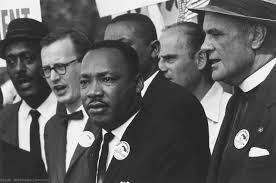
“Injustice anywhere is a threat to justice everywhere.”

– Martin Luther King Jr.

The Seeds of Failure

It’s been incredibly difficult to write this post. It feels like I’m grappling with live wires, but this is an essential topic to address. Over the past 70 years, the United States has witnessed a series of social movements that have expanded the rights of many oppressed groups. However, the tactics employed by these movements have undergone dramatic shifts. Each movement faced vehement opposition from conservatives, and their successes have been mixed. We now stand at a crossroads. While there’s a renewed push for progress with new strategies, some of these methods have inadvertently sown the seeds of a larger failure. I believe these approaches to be counterproductive and have generated a significant backlash. The reasons behind this are logical and rooted in basic human psychology.

A prime example can be found with attacks on masculinity from the left. The #MeToo movement has shed light on important excesses surrounding masculinity. We have seen masculinity attacked and broadly reviled for good reasons. It has also been a particularly difficult time for young men. The reasons are varied and mostly tangentially related to #MeToo. However, it’s important to remember that healthy masculinity exists. Modern masculinity should be built on respect,empathy, and consent. The use of power and strength should be responsible and used to help those who are weaker.

The #MeToo movement primarily highlighted the misuse of power by some men. There masculinity is a force against the weak leading to sexual violence. Unfortunately, the critique of masculinity has to led many men to embrace a more negative and spiteful form. This is what some might call “pathological masculinity” or toxic masculinity. This is exemplified by figures like Donald Trump (though Joe Rogan, Dana White, and MMA culture can also be seen as reflections of this too). The lack of a compelling alternative from progressives has further complicated the issue. There needs to be a compelling althernative. Without a positive vision of masculinity, many men are drawn to the more aggressive and dangerous traditional form.

“When all Americans are treated as equal, no matter who they are or whom they love, we are all more free.”

— Barack Obama

Online Social Movements

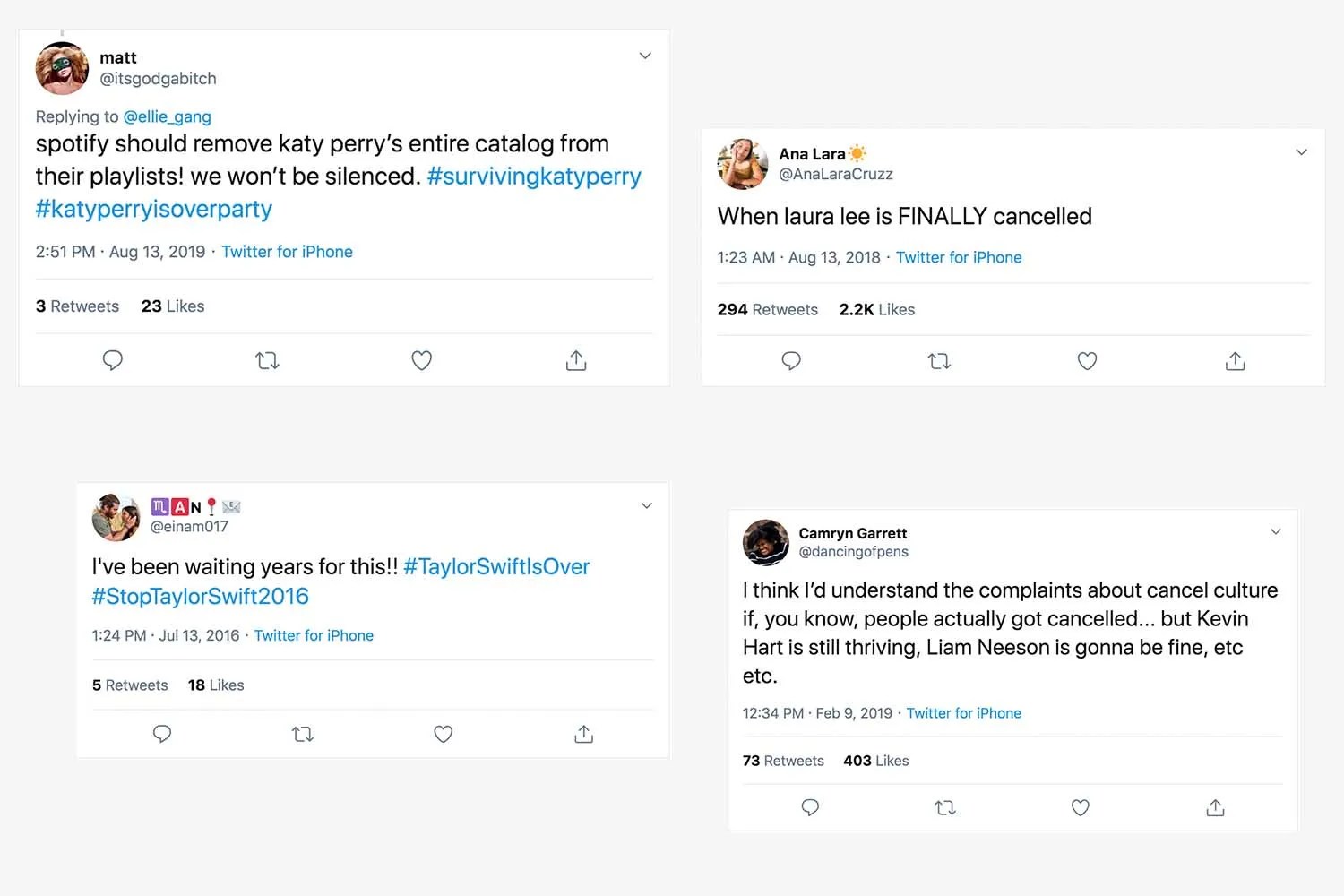
Social movements today increasingly leverage online tactics to achieve equality. These tactics include online attacks, trolling, doxing, and social media campaigns. While these methods can diminish expressions of oppression, they are ultimately harmful. Cancellation, the complete removal of a person from public discourse for expressing a dissenting view, is particularly destructive. While it may feel like a victory for the movement, it sows the seeds of future problems.

Instead of fostering debate, these tactics shut down opposing ideas. This has several negative consequences.

  • First, it undermines the principle of free speech, a cornerstone of a healthy society.
  • Second, it casts violators as victims, garnering them sympathy.
  • Third, it avoids defeating ideas through logic and reason, relying on force instead.

This reliance on force is a tactic more commonly used by the political right. In many ways it defines the right. It creates enemies rather than allies, and silences those who might be open to progressive ideas. Fear, not persuasion, becomes the tool for change. This fear breeds resistance, leading to the very backlash we are witnessing today.

“Every single American — gay, straight, lesbian, bisexual, transgender — every single American deserves to be treated equally in the eyes of the law and in the eyes of our society. It’s a pretty simple proposition.”

— Barack Obama

This is not to say that conservatives do not use cancellation themselves. The whole book banning and “don’t say gay” approach is cancellation. Anything in the realm of sexuality and sex positivity is cancelled on the right. Just look at the ridiculous ways sex is “hidden” of social media (s3x, fugg, etc). It is outright censorship. They use force and institutions under their control to remove things they oppose. Their approach is terrible in all the same ways as described above. We would all be better off if this approach was abandoned whole cloth by both sides. The violation of free speech principles is an abdication of cherished American ideals. By the same token cancellation is the use of force where the battle should be for ideas and ideals. With the temporary victories of cancellation comes the foundation of backlash.

“The master’s tools will never dismantle the master’s house.”

– Audre Lorde

A Nuanced View

One area where leftist ideology loses ground to the right is its handling of historical figures. When we judge past figures by today’s progressive standards, it weakens the left’s position. Instead of honoring those who started the nation’s progress, the left inadvertently turns them into conservative symbols. This reinforces ideas that undermine progress. The Supreme Court’s use of originalism to restrict rights exemplifies this, treating the Founders’ ideas as eternally valid.

The real truth is that the Founding Fathers were considered extremely progressive in their own time. It’s ironic that their ideas are now used to hinder progress. While they certainly had flaws and made mistakes by modern standards, judging them solely through today’s lens paints an incomplete picture. We should view their nature in today’s terms as a testament to the progress we’ve made.

Essentially, yesterday’s radical progressives resemble today’s conservatives. This should be a source of optimism. It shows how far we’ve come. We should celebrate their contributions to our advancement rather than dismiss them. Additionally,this approach weakens the arguments of those on the left who seem overly critical of past figures. The left just looks like they are attacking and tearing down a hero. Instead any critique should be done with nuance and perspective.

The inability to consider nuance is a common thread across all forms of extremism, both left and right. Most issues surrounding personal rights involve a great deal of individual variation. There’s no one-size-fits-all solution for social problems, especially those related to gender, sexuality, or race. These topics are full of complexities and individual differences. Efforts to impose uniformity are doomed to fail. While the right is known for its one-size-fits-all solutions, it’s a failing strategy for the left as well. Nuance is key to truly accepting individuals as equals.

While I personally support most social movements, empathy and compassion are ultimately the drivers of progress.”Cancel culture” and online language policing are examples of force being used. Force is a tool of oppression, not progress. Progressive social justice cannot be achieved through coercion. Force and social justice are fundamentally incompatible. Empathy is fostered by shared experiences and the desire to understand and be understood by others.Simply forcing people to acknowledge another’s rights leads to a superficial adherence to equality, not lasting change.

True equality comes from believing everyone deserves basic rights. It arises from recognizing that everyone deserves the same rights you do, even if they seem different. The route to this is empathy and compassion growing within opponents of equality. Progressives should acknowledge the progress made while maintaining patience and perspective. There are still many areas needing improvement, and vulnerable populations remain. The right often demonizes specific groups for their own gain, as seen with the shift from targeting gay men as predators to attacking drag queens and transgender people. The gay population is largely accepted by society today, and new targets are needed to fuel the backlash.

A concerning trend in social movements today is the focus on amplifying negativity. Effective social change relies on empathy and compassion, not shame. Shame is a harmful tool, particularly when used to police women’s sexuality. Online shaming tactics, like cancellation and doxxing, are a form of bullying that can lead to real-world violence and destroy lives. A more constructive approach is needed. We must engage with those who hold opposing views, even those deemed problematic. Understanding their perspectives is crucial. Instead of simply dismissing opposing ideas, we should navigate the differences. This fosters growth and allows for the development of new perspectives that can garner wider support. The current strategy of online shaming only creates entrenched opposition and fuels backlash.

“Owning our story and loving ourselves through that process is the bravest thing we’ll ever do.”

— Brené Brown

A Personal Experience

I experienced the power of understanding firsthand during a virtual work meeting a few years ago. It was an icebreaker at the beginning of a meeting, and I was getting to know my new, younger manager. As a natural storyteller, I shared a Thanksgiving anecdote about serving a standing rib roast instead of a traditional turkey. This upset my son who I said felt “gypped.”

Immediately, I sensed a shift. My manager was visibly horrified. Shame washed over me. This was a term I’d used throughout my childhood, completely unaware of its offensive connotation towards the Romani people (often referred to as “gypsies”). I didn’t even know how to spell it correctly – I simply thought it meant “to be cheated.” I’ve come to realize that there was a lot of subtle racism in my upbringing casually offered by relatives.

In that moment, I felt unfairly judged as a racist or an ignorant person. Thankfully, my new manager listened openly. I explained my lack of awareness, and she, in turn, explained the term’s true meaning with compassion. We both approached the situation with empathy and a willingness to learn. We navigated the awkwardness gracefully, and it ultimately fostered a positive working relationship that later blossomed into friendship. This is the power of understanding, empathy, and compassion on both sides.

“Race, gender, religion, sexuality, we are all people and that’s it. We’re all people. We’re all equal.”

― Connor Franta

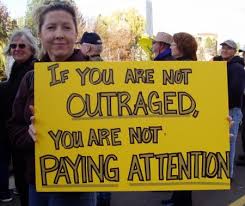
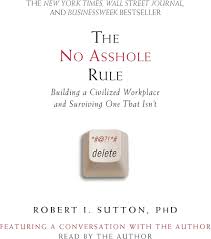
A crucial step towards sustainable progress is following the simple rule of “don’t be an asshole.” Especially online,encountering outrage should prompt you to question its effectiveness. Cancel culture often embodies this negativity and generates asshole behavior.

Understanding your own place in society, particularly if you come from a position of privilege, is essential. Intersectionality, the idea that we all have multiple social identities, is a valuable tool for this. These identities can be visible and obvious, or hidden and nuanced. For example, I am a white, middle-aged male. I have a high level of education and a great job in science. I identify as mostly straight, married, and polyamorous (although socially monogamous).

All these aspects contribute to who I am. Some provide advantages and conformity, while others challenge societal norms and even put me at a disadvantage. Recognizing these disadvantages fosters empathy for those who cannot hide their identities. This empathy is a powerful tool for progress, accessible to almost everyone. This accessibility comes from a place of authenticity, a desirable behavior for everyone to feel.

“We will not win our rights by staying quietly in our closets.”

— Harvey Milk

At its core, my view is that progress requires letting go of force and embracing empathy, understanding, and compassion.Social justice is achieved through better ideas and challenging traditional viewpoints. We need to change hearts and minds, not force compliance. Forceful tactics create a false sense of progress that quickly fades. Real social change is lasting and permanent.

Next week, I’ll return to a technical topic: the power of algorithms in advancing computational performance.

Assholes are having a moment

05 Friday Jul 2024

Posted by Bill Rider in Uncategorized

≈ Leave a comment

Tags

life, mental-health, psychology, relationships, writing

As I started to write and research this piece one thing is clear; I am not alone in seeing this. There seems to be a wide recognition that assholes are having a moment. We have the obvious example of the asshole-in-chief, Donald Trump. For him being an asshole is a badge of distinction and earns him a cult like following. The fact that our seemingly likely next President is a complete asshole is troubling. It probably should be a red flag for the Nation. We are in deep danger. Perhaps we should understand why?

A couple instances come to mind that crystalized this issue in my mind. The first happened in an odd location. I was on vacation in Cancun at an all inclusive resort. We were eating lunch and a guy came in with a t-shirt saying “Assholes Live Forever”. He was definitely projecting right wing coded energy. The thing that made the t-shirt notable was a general intent at the resort to be attractive to the opposite sex. This asshole thought being an asshole was attractive to women. Now in my experience women try to avoid assholes like the plague. Assholes are terrrible lovers, terrible about consent and terrible to people. They are dangerous. Apparently being an asshole is attractive to right wing ladies? What the fuck?

“I will canoodle with a dumb man, but I won’t snuggle with an asshole.” ― Rachel Howzell Hall

More recently I was chatting with a good friend at a conference. My friend had just led a fantastic session-discussion of the nature of masculinity in today’s world. The session touched on a wide range of issues including a full spectrum of intersectionality. A common thread is that I had met this friend on a previous trip to Cancun.. We are seemingly quite different, but immediately vibed and connected personally. He’s black, gay, Brooklynite, and works in music while I’m a white straight scientist from the Western USA. The topic of assholes came up within intersectionality. My point was that we need to recognize assholes. Assholes are present in all identities black, white, male, female, non-binary or trans. Gay, lesbian or bisexual people can be assholes too. Assholes need to be called out and identified as being toxic to whatever spaces they occupy.

A great deal of discussion around masculinity focused on the standard view. This is the “alpha” male who defines masculinity through power, aggression, and lack of emotion. No compassion or empathy is allowed. That would show weakness. Never apologize for being wrong because that is weakness. This is a great recipe for being an asshole. The discussion at the conference talked about vulnerability, openness, empathy and compassion. All of these ideas are strongly coded with political valence. In other words, assholes are accepted and promoted on the right. Assholes exist on the left, but are generally reviled (they exist specifically associated with social causes).

Assholes seem to be a defining feature of the right wing. As noted the leading figure on the right, Trump is just a pure asshole. He is a piece of shit of a man and proud of it. His supporters adore him for it. Every bit of that alpha male attitude is projected (although he’s not very alpha). No empathy or compassion, and definitely never apologize because you’re never wrong. I’ve seen how right wing ladies are looking for an asshole to date or fuck. They see being an asshole as being tantamount to being a man’s man. They like men who are bigots and hateful because that is strength. Men who bring out that kind of middle school locker room energy toward anything feminine or non traditional. Any space for LBGTQ is simply unacceptable. The right wing governance is full of assholes and they are rewarded for it.

“The problem with the world today is that there are too many assholes and not enough saints.” ― R.M. Engelhardt

Why do they like assholes? I think this is an essential issue to answer. Part of this is the general issue of masculinity today. The cultural reckoning around men (#MeToo) has resulted in a reaction on the right. There is little doubt that men are having trouble today and especially young men. The answer on the right is traditional roles. Traditional masculinity does not work any more. The right’s reaction is to double down on the status quo. Much like the BLM movement produced a reaction on the right.

What we get is performative masculinity that most commonly creates the asshole vibe. Trump is a perfect example. He is hardly masculine or manly. His toupee and makeup alone challenge this view. He isn’t really athletic. He lies about his physique, height and weight. He likely lies about his health and intellect. Golf is barely a sport, being more of an activity for businessmen and white guys. Even there he is an asshole with compulsive lying and cheating at golf. Yet his supporters love him because he is such a massive asshole. One might think all this lying and cheating would undermine the performative masculinity. Instead the desire for “owning the libs” gets them to look the other way. It is quite pathetic, but effective.

I believe a big part of the appeal of the asshole is authenticity. Trump is an authentic asshole. Being an asshole is Trump’s true and natural self. This is appealing to many people and a sign of huge problems. He is not authentic as a leader. The leader part of Trump is pure performance. The problem is that almost all the other leadership is performative too. So without leadership we are left with assholery as the alternative. This does not work for a good future for anyone. The lack of genuine authentic leadership is a future topic. A punchline of that condition is assholery as the alternative.

What makes someone an asshole? I got a pretty good answer from Google’s LLM Gemini (describes Donald Trump accurately!).

Asshole behavior can come in many flavors, but some common traits include:

  • Disrespectful: This is a big one. Assholes put themselves above others and don’t consider other people’s feelings or needs. They might interrupt constantly, talk down to people, or make rude jokes at someone’s expense.
  • Selfish: Assholes are all about themselves. They take more than their fair share, don’t reciprocate favors, and only care about what benefits them.
  • Unaccountable: They never take responsibility for their mistakes and are always quick to blame others.
  • Aggressive: They might be verbally or even physically aggressive, but they also might use aggression in a more subtle way, like constantly putting others down.
  • Unreliable: You can’t count on them to follow through on commitments or be there for you when you need them.

Here are some other behaviors that can be signs of an asshole:

  • Cheating
  • Lying constantly
  • Being condescending or arrogant
  • Not listening to others
  • Taking advantage of people
  • Publicly criticizing or humiliating others

It’s important to remember that context matters. Sometimes people might act in a way that seems like an asshole behavior,but there could be a good explanation. But if these behaviors are a pattern, then it’s a good sign you’re dealing with an asshole. Virtually all of us have been assholes at some time or another. A question is whether you can stop being an asshole or regret it. At the core is a general lack of empathy or compassion for others. Often this comes at using one’s power to abuse or take advantage of others without a feeling of conscience.

As I noted above the left has assholes. Most of them exist in the general area of “cancel culture”. The whole aspect of cancelling people is an absolute gift for the right. Time and time again the right weaponizes the left’s overreach to terrifying effect. The social movements driving the attacks are ultimately undone. This is a common thread today where many social movements are being attacked. Women, blacks and LBGTQ are all under attack. Rights and equality is being lost, not gained.

“Ninety percent of all problems are caused by people being assholes.” “What causes the other ten percent?” asked Kizzy. “Natural disasters,” said Nib.”

― Becky Chambers

A good example of assholery is found in the space of pronouns. The right is full of performative assholery around pronoun use. Not using someone’s chosen name after it is requested is awful. Its like someone says “please call me Bill” and the asshole will keep saying “Billy”. It is the definition of being an asshole. On the other hand, it can be difficult if the pronoun isn’t typical or obvious. Yet people on the left can be unforgiving about these difficulties. The question is whether someone is trying to honor the request. If someone is trying to honor it, but having difficulty, give them grace. Lashing out makes you the asshole if the desire to comply is earnest.

Am I the Asshole? This is an increasingly popular place on Reddit. The positive aspect is that the thread actually asks the question with the implied message that being an asshole is bad. Simply asking the question already makes you likely not an asshole. Real assholes just do their thing without caring. A real asshole is proud of how they act. They treat people with disregard and do awful things without the slightest bit of regard for others. Assholes are careless in the truest sense of the word; they do not care about their acts. They simply act as they want and usually thinking only of themselves. An asshole looks decisive and powerful. In reality they are simply thoughtless and self-centered.

A piece of the dynamic is the internet and its defining attention culture. Attention is sought by any means available. Authenticity is seemingly going extinct today. Everything is image. Meta is ground zero for this. Instagram and Facebook drive the society to influencer’s being the apex of endeavor. The influencer is all about projecting quality through appearance rather than through substance. Substance is about fundamentals. Fundamentals often are invisible and subtle.

“Why do shitty people always brag about being good at trolling? Troll is just another word for asshole. What kind of antisocial sociopath is proud of being an asshole?”

― Oliver Markus Malloy

Authenticity is about fundamentals. It is reality. Nothing about today’s world favors these things. Thus fundamentals are lost. They are not a priority. They are not sexy or photogenic. We don’t really know this, but we hunger for authenticity. Online we get trolls who are assholes by definition. Elon Musk now occupies a role mostly as an online troll and ally of assholes. The end result is a hollowing out of all things. Assholes get attention and clicks without adding any substance. Assholes seem like reality and substance. It is the path to destruction.

Next week, I need to address to complete lack of leadership in the United States at any level.

Subscribe

  • Entries (RSS)
  • Comments (RSS)

Archives

  • February 2026
  • August 2025
  • July 2025
  • June 2025
  • May 2025
  • April 2025
  • March 2025
  • February 2025
  • January 2025
  • December 2024
  • November 2024
  • October 2024
  • September 2024
  • August 2024
  • July 2024
  • June 2024
  • May 2018
  • April 2018
  • March 2018
  • February 2018
  • January 2018
  • December 2017
  • November 2017
  • October 2017
  • September 2017
  • August 2017
  • July 2017
  • June 2017
  • May 2017
  • April 2017
  • March 2017
  • February 2017
  • January 2017
  • December 2016
  • November 2016
  • October 2016
  • September 2016
  • August 2016
  • July 2016
  • June 2016
  • May 2016
  • April 2016
  • March 2016
  • February 2016
  • January 2016
  • December 2015
  • November 2015
  • October 2015
  • September 2015
  • August 2015
  • July 2015
  • June 2015
  • May 2015
  • April 2015
  • March 2015
  • February 2015
  • January 2015
  • December 2014
  • November 2014
  • October 2014
  • September 2014
  • August 2014
  • July 2014
  • June 2014
  • May 2014
  • April 2014
  • March 2014
  • February 2014
  • January 2014
  • December 2013
  • November 2013
  • October 2013
  • September 2013

Categories

  • Uncategorized

Meta

  • Create account
  • Log in

Blog at WordPress.com.

  • Subscribe Subscribed
    • The Regularized Singularity
    • Join 55 other subscribers
    • Already have a WordPress.com account? Log in now.
    • The Regularized Singularity
    • Subscribe Subscribed
    • Sign up
    • Log in
    • Report this content
    • View site in Reader
    • Manage subscriptions
    • Collapse this bar
 

Loading Comments...