
Tags
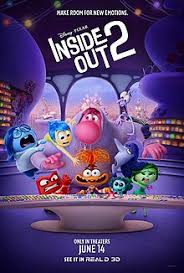
tl;dr: Inside Out 2 explores emotions in adolescence, with Anxiety causing trouble. The movie argues against using toxic positivity, showing the importance of embracing all emotions for a balanced life. It is a highly recommended movie like the first one. I also reflect on own experiences during the blogging hiatus. I promise to write about broader themes in the future, with a greater focus on my life outside of work.
It is when we lose control that we repress the emotions, not when we are in control.
– Don Miguel Ruiz
I’m Back!
This marks my return to blogging after six years. The appearance of the Pixar movie Inside Out 2 is the perfect reason. I wrote about its predecessor with glee. It’s difficult not to want to speak to the excellent sequel; so I will. At the end of this post, I will address the “elephant in the room” about this return. I will map out what the future will and will not include. This is the first post in over six years, and that alone makes it consequential.
Movie Night with a Sequel
I settled into the theater to see the movie full of anticipation and excitement. The occasion was the opening night for Inside Out 2 (my second most-looked-forward-to movie of the summer, Deadpool is in July!). I attended with three people dear to me, anticipating their own reactions. I knew my wife reacted powerfully to the first movie, as did I. I wondered how our movie-loving girlfriend would react too. My son completed the group. Our anticipation was driven by the deeply moving Inside Out (https://williamjrider.wordpress.com/2015/07/18/inside-out-lessons-from-a-kids-movie/). I was not disappointed one iota by the sequel; it is great and as good as the first movie.
The first movie touched on the life of Riley, a preteen moving from Minnesota to San Francisco. The move invoked profound sadness in her that caused her to make very bad decisions. The other main characters in the movie were the elements of Riley’s emotions: Joy, Anger, Fear, Disgust, and Sadness. Riley was full of joy, and Joy was in charge of her emotions. The role of Sadness was pushed to the back, diminished and ignored. The result was an imbalance that nearly led to disaster. The theme of the movie was the need to allow all emotions to play a role in your life. It touched on the broadly seen use of toxic positivity as a false route to happiness.
Emotional Balance Is Key Again
I’ll stop to note that the idea of emotions as characters is a gentle introduction to “parts work.” This is a psychological/therapy technique that looks at the different aspects of emotion, behavior, and reactions. The results of parts work are to integrate and balance the internal workings of a patient. This narrative mirrors the dramatic arc of Inside Out. The movie itself is a balance of a kid’s movie with deep themes that will provoke thought in adults. We found the movie to be moving and thought-provoking. It added a dialogue to our lives that we needed and benefitted from.
“We cannot selectively numb emotions, when we numb the painful emotions, we also numb the positive emotions.”
– Brené Brown
Toxic positivity shows up again in the sequel. Joy didn’t learn the lesson of how to embrace all emotions and experiences in shaping the future. Sadness is there and embraced, but Joy still squashes bad things from experience. This comes from one of the vehicles in the movie where Riley’s sense of self is being formed. This sense of self is one’s self-image. The second big element is the start of puberty and a host of new emotions, most notably anxiety. This forms the central tension in how the movie unfolds as a drama. With all this in place, we need a catalyst for things to develop.
Like any good drama, there needs to be something at stake for the main character. Here, Riley has the twin stressors of puberty and an elite hockey camp to push her buttons. She is 13 and ending middle school. She is going to a high school with an elite women’s hockey program. She and her best friends are invited to the camp by the coach. This coach is a local legend, and this serves as a huge opportunity to begin high school. She also learns some disturbing news about her friends that raises the stakes even higher.
Meanwhile, puberty is wreaking havoc with Riley’s emotions. The physical changes (like body odor) are coupled with new emotions that complicate everything. The balance created during the first movie is suddenly thrown off. These new emotions also give someone the “operating system” needed for adult life. With them come new perils that the maturing mind allows. The focus of this peril is anxiety with its planning and danger identification. Anxiety includes the ability to plan and work to mitigate dangers. It is a foundation of adult thinking. I can also lose control. Planning is great, but it can also take one out of the moment. Anxiety can falsely identify dangers or see ones that are not present.
Other emotions are part of the mature mind. Things like Envy (Jealousy) provide us comparison and objectives. Embarassment is there to provide limits and feedback on bold behavior. Finally, we have Ennui, which is best described as “don’t give a fuck”. All of these emotions have a dominantly negative valence. They also have a positive constructive role if balanced by other motivations and emotions. Anxiety brings planning and attention needed for complex challenges. Embarassment monitors adherence to norms and behavior. Envy looks critically at the success of others and their positive qualities. Ennui keeps one from taking too much seriously.
“Our anxiety does not come from thinking about the future, but from wanting to control it.”
— Kahlil Gibran
While I won’t give too much away about the plot of the movie; events lead to a crisis. In the crisis the anxiety gets out of control and precipitates a panic attack. It is shown vividly and effectively on film. It is so powerful that my wife broke down crying. I’ve experienced panic attacks several times. It was 25 years ago and I still remember the terror of it. It still stands as one of the most seminal moments of my adult life. It pushed me to make serious changes in how I lived and what my priorities were.
A panic attack is a major crisis and it can produce big impacts. A similar result follows in the movie. This gets to the common theme across the two movies, balance. The lack of balance leads to disaster in both movies. In the new one the anxiety takes over and it spirals into disaster and a panic attack. The first movie it comes from the adherence to joy and positivity. This adherence results in the wrong response to events. There embracing real sadness as a valid response cures the problem.
“Anxiety is a thin stream of fear trickling through the mind. If encouraged, it cuts a channel into which all other thoughts are drained.”
— Arthur Somers Roche
In the sequel this is a more complicated team effort. As adult life is more complex, the way to combat Anxiety’s dangerous hold is a phalanx of emotions. The key is some balance and acceptance of all the nuance of experience. Joy can be embraced and lead, but other emotions play essential roles. The reality is that experiences are rarely simple and fall into a clear narrative. We need our full range of emotions to navigate the real world. In the approach to resolution of the conflict we see another theme, which could be labeled as toxic positivity. Joy had fallen into old habits and was trying to craft Riley’s identity in only positive terms. Bad experiences were thrown to the back of the mind to be forgotten. Her sense of self was to be driven solely by positive expereinces.
In the movie Anxiety overthrows this project for another project based on anxious reactions. As this sense of self comes to life, the result is catastrophic. An identity based on doubt and catastrophizing is even worse. One could imagine identities based on any single emotion to be awful (anger, sadness, envy,…). The cure to this brings in a more complex sense of self that serves a future teenage then adult life. The key is to embrace all the joy, sadness, fear, anxiety, disgust, envy and other emotions in being yourself. A full and broad reaction to reality is robust and adaptive.
The Big Takeaway
The underlying message is the rejection of forced positivity. In this lesson we see the dangers of only seeing the positive in things and rejecting nuance. Life is too complex for a “positive vibes only” approach. Events and challenges are rarely if ever completely positive or negative. We need more nuance to succeed. As such they should be processed with a mixture of emotions for proper context and response. More importantly balance allows the full lessons to be learned from experience. It maximizes potential personal growth. In today’s world this is a lesson worth emphasizing when too many just urge us to “look on the bright side”. This is a shallow and dangerous approach leading to more misery. Instead we should see the World in an unbiased manner and react to things without prejudice.
What the Return of the Blog Means
It would be false to say that this post isn’t creating some anxiety for me. I have thought about doing this for a long time. I have carefully considered what I am doing. In this case the anxiety has alerted me to the danger and helped me navigate through it. I am tempering it with a dose of healthy fear, and allowing myself to embrace the joy in writing. I hope this step is grasping a healthy and balanced approach to this project. It has kept me away from danger while taking the opportunity to feel the pride I should for this personal project. I am seeing the lessons of Inside Out (2) in how I am doing this.
As promised I will close with touching on my return to blogging. I do so with joy, fear, excitement and anxiety. I have missed writing here greatly. It was something that brought me great joy. I did not stop doing this freely; I was forced to. Some day I will write about the specifics of those circumstances, but. I cannot do this now. It must wait until I am done working professionally and retired, but I will. I can say that was the single most painful experience of my adult life.
That said, I won’t be writing about work-related topics. This gives me the freedom to explore other themes that matter to me. So, my posts will focus less on technical topics than before, although they won’t be entirely absent. This is simply a consequence of the ground rules I must operate under. Frankly, it’s a loss for everyone as I still believe my work benefited from writing. Writing is thinking, and thinking and problem-solving are what I do at work. This truth wasn’t enough to allow the former project to continue. As a result, this is a new project with a different shape.
My experiences, life events, and influences over these past six years have reshaped me. As I’ve been reshaped, the writing will follow suit. The events of the past six years are too numerous to count and too painful to ignore. However, my own experiences have largely been positive over these years. This has been true whether weathering the pandemic or exploring innovative relationship dynamics. I’ve traded my source for information in TV news for podcasts. The onslaught of the Trump administration and the constant drama of COVID drove this. My wife has retired too, and I’m considering it for myself in the wake of this. Her experience has tempered my desire to do it too soon. Additionally, many of my contemporaries are retiring. Work is also increasingly devoid of joy and meaning. Age and health are becoming more prominent in my awareness. Time is finite and precious. Thus, the message of balance in these movies truly resonates with me at this moment.
The last six years have been consequential for me. I’m a different person now. My interests and views have been altered by the events I’ve experienced. I’m older now and see the world differently. Age has brought a handful of health concerns and crises. We all went through the COVID pandemic, which changed society in ways that are still unfolding. The future is uncertain and potentially dangerous, with disasters looming on the horizon. It’s necessary to think carefully about how to navigate this uncertain future. I will touch on work-adjacent topics, but only where they significantly impact life outside of work. I will take this as a freedom rather than a restriction.
I’m probably a little rusty, but it’s good to be back. Next week I will revisit 2020 probably the most consequential year of our lives.
“Some days I’m not okay and I’m not trying to fix that. No, I don’t need advice on how not to feel this way. I just need time to feel it.”
– Allyson Dinneen
 The Regularized Singularity