
We don’t have leaders
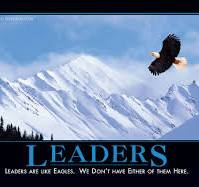
“Leadership is solving problems. The day soldiers stop bringing you their problems is the day you have stopped leading them. They have either lost confidence that you can help or concluded you do not care. Either case is a failure of leadership.”
– Colin Powell.
Over the past few years, I’ve made a broad observation of “leaders” I encounter: they don’t lead. Instead, they seem to market the success of their role through positive messaging. This leadership style feels highly performative, offering little actual leadership. It’s like a reality TV show – they’re pretending to be leaders. Their communication is tinged with an almost uniformly positive message. If things were always going great, such positivity would be appropriate. However, the problem is that things are not going well. Therefore, the constant positivity in their messaging becomes toxic and inhibits any focus or attention on solving the numerous problems we face. Right now, the USA seems to be careening towards catastrophe.
The Elephant and Donkey in the Room
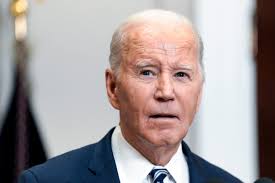
Over the past couple of weeks, we’ve been seeing this play out at the highest stakes possible: the US Presidential race. It’s replete with examples of deeply concerning leadership. Both political parties appear irresponsible. We have the recent example of Joe Biden’s continued candidacy. He’s clearly showing the effects of aging. In response, we see widespread gaslighting, with people telling us to ignore the obvious. Leaders are saying one thing in public and the opposite in private. Meanwhile, this allows Biden to maintain the status quo, protecting his ego. He’s acting just as selfishly as his opponent. He’s not doing what’s best for the nation and is failing to show leadership.

On the other side, we have an even greater demonstration of cowardice and failure. The entire Republican party has surrendered to Donald Trump. Their candidate can be most charitably described as a grifter. More accurately, he’s a habitual liar and convicted criminal. He’s engaged in numerous acts that would disqualify him from any position of authority. His first term as President was demonstrably incompetent. Were he not the President, he could never obtain a security clearance. Yet, the entire leadership of the GOP caved in the face of him. Everyone remaining in the GOP was too cowardly to stand up to Trump. They all prioritized their personal success and power over the good of the nation. They all essentially said, “Let’s support the crazy guy.”
“Being responsible sometimes means pissing people off.”
― Colin Powell,
In both cases, all the leaders have chosen their own success over the good of the nation. We see a systematic failure to confront objective reality because it is too difficult and risky. Obvious problems are ignored and minimized. The personal goals of the individuals in power overwhelm any sense of duty. Those in power turn out to be selfish narcissists. None of them are fit for leadership as a result. This behavior is not limited to the top of the power chain.
The Connection to the Covid-19 Pandemic
“One of the tests of leadership is the ability to recognize a problem before it becomes an emergency.”
—Arnold Glasow
All of this started to come to a head with Covid-19. However, to be honest, the trend had been building for a long time, even before that. President Trump’s constant dismissal of reality, claiming the virus would just disappear, exemplified this behavior. This pattern repeated itself down the chain of command and across organizations. While Covid-19 was the peak of this toxic positivity, many smaller issues are communicated in the same way.

This cognitive dissonance, the disconnect between what leaders say and reality, resulted in deaths during the pandemic. A national crisis was exacerbated by inaction. Even worse, the pattern of ignoring problems and inaction seems to be escalating. The success of leaders who practice this approach almost guarantees we’ll see more of it, until it ultimately leads to their downfall.
While the pandemic was the most high-profile example of abysmal leadership, it’s hardly unique. The inability to speak truth and focus on problems appears to be an epidemic itself. I see this constantly within the institutions I interact with. Another prominent example is Boeing, where deadly consequences arose from two crashes and recent near misses. We’re witnessing a once-great company in freefall, destroying its reputation with each calamity.

If we delve deeper into the reasons for this lack of focus on reality in leadership, money emerges as a central issue. In the case of the pandemic, there was a fear of spooking the economy. With Boeing, the focus was on protecting shareholder value by keeping stock prices from dropping. Time and again, the threat of bad news impacting finances seems to be a top priority for leaders. It would be naive to believe that Boeing is an isolated case. Boeing is a canary in the coal mine, a warning sign of danger ahead.
One key takeaway is that leadership positions often lead to wealth. Even lower-level managers are well-compensated compared to those they manage. Furthermore, the potential for promotion is highly attractive. Preserving these personal benefits by avoiding waves and keeping the status quo intact allows this entire dysfunctional system to persist. In essence, our leaders are incentivized not to lead and expose the incompetence that surrounds and surpasses them.
“Nearly all men can stand adversity, but if you want to test a man’s character, give him power.”
– Abraham Lincoln.
Money is the Only Thing We Care About
“Management is doing things right; leadership is doing the right things.” ― Peter Drucker
A key element is the rise of money as power. In today’s world, money is the heart of personal power. Leaders hold significantly more wealth and power than those they lead. This can lead many to cling to these positions far longer than is beneficial, neglecting important concerns. We’ve become a society where money is the sole measure of worth, overshadowing other values like quality, ethics, and humanity (e.g., Boeing). Financial gain is seen as the only measure of success and grants immense power. In the corporate world, shareholder value becomes the excuse for prioritizing profits over all else. This trend is a product of the neoliberal era.
This, in turn, fuels vast societal inequality, creating a leadership class with an existence entirely divorced from those they claim to lead. Leaders, naturally, are unwilling to relinquish their privilege. We also see the corrosive and dangerous aspects of concentrated wealth and power. Those in power view losing their leadership roles as a personal threat, and they actively work to maintain the status quo for their own benefit. Falling out of the leadership class translates to a significant decline in both economic standing and societal influence.
Preserving the status quo is paramount. One way to enact change is to begin addressing problems. Ignoring and perpetuating problems simply affirms the status quo. This, in many ways, explains the rightward shift. Conservatives generally favor the status quo and upholding tradition, which benefits those in power. Since power in the US is heavily tied to money, we see an alliance emerge: moneyed interests and conservatives working together to preserve the existing order.
Leading the charge for the GOP is the Supreme Court. They have transformed from a legal oracle into a partisan entity. The recent immunity ruling is arguably one of the worst decisions in history, destined to stand alongside Dred Scott in infamy. The outcome could very well lead to the dismantling of the Court and the nation itself. It’s a recipe for dictatorship. The Court relies on the Executive Branch to enforce its rulings. If the executive branch disagrees, they can now break the law with impunity. Essentially, power now resides with the President, not the law. While the Court seized significant power over the executive branch, they ultimately relinquished it all back to the President. The nation’s future hangs in the balance. We could very well descend into a de facto dictatorship, effectively losing any semblance of a functioning democracy.
Toxic Positivity
“The supreme quality of leadership is integrity.”
–Dwight Eisenhower

A significant portion of the problem stems from the overuse of toxic positivity in communication. Effective leadership hinges on clear communication and directing human effort towards shared goals. Leaders who filter out problems to create a narrative of perfect circumstances erode trust. When a leader assures you everything is great while you know it’s not, it raises a red flag. This destroys trust not only in that specific situation but also makes you question their honesty in general. This continuous erosion of trust contributes to the decline in societal trust as a whole. Each selective edit of reality feels like another betrayal, leading us to view leaders as habitual liars and fostering cynicism. While acknowledging problems can be difficult, it’s a crucial aspect of leadership. Bullshitting people with positivity is cowardly and destroys trust.

The issue of toxic positivity has profoundly impacted my life. In 2020, I had a close friend who demanded nothing but positivity during interactions. As a therapist, she dealt with people’s problems all day, so it’s understandable that she craved positivity outside of work. However, 2020 was a year of significant challenges, and the inability to share these burdens within our friendship caused me distress. Despite being part of my social circle, I eventually distanced myself due to the one-sided nature of the relationship. Her insistence on positivity came at the expense of balance, ultimately undermining the friendship.
Toxic positivity is a telltale sign of a leadership problem. Instead of honesty, we’re offered the soothing but meaningless platitudes of positivity. Problems are denied, and everything is portrayed as being under perfect control. When reality contradicts this narrative, problems fester or become hidden secrets that divide people. Leaders who resort to toxic positivity simply aren’t leading. They have no intention of tackling complex or time-consuming issues. Their strategy is to manipulate communication to maintain their leadership position and hope that problems remain hidden. This approach is infectious, and upper leaders often establish a “shoot the messenger” culture that discourages reporting bad news. This, in turn, perpetuates the cycle of toxic positivity throughout the organization.

One cannot simply dictate positivity. Life is inherently complex. The same principle applies to leaders; they cannot be effective without balance. True leadership requires a blend of acknowledging the good and the bad. Leaders who lack the ability to admit problems or recognize failures cannot lead effectively. They should celebrate successes and use them as springboards for growth. Identifying problems allows them to rally their followers to address them. It is through solving problems that leaders achieve greatness. Ultimately, the greatest success comes from transforming problems into opportunities. Unfortunately, this virtuous cycle seems to have been lost. Today, some leaders believe they can manipulate their way to success through messaging and pronounce problems solved simply by declaration.
“The first responsibility of a leader is to define reality. The last is to say thank you. In between, the leader is a servant.”
—Max DePree
Given the high stakes involved, what can be done? The philosophy of Victor Frankl, a Holocaust survivor, offers an answer. His concept of “tragic optimism” acknowledges that problems are inevitable. Death, for example, is a universal experience. We will all face tragedy repeatedly. However, tragic optimism encourages us to approach these inevitable challenges with the belief that they can be overcome. We can not only survive but also thrive in the face of tragedy. This requires acknowledging problems head-on. This is the foundation of great leadership. This philosophy can guide us towards a brighter future. However, we can only achieve this by rejecting the current generation of “leaders.” We should demand honest problem-solvers who act in the best interests of the institutions they lead. Only when we stop rewarding cowardice with power and riches can we truly turn the corner.
“My own definition of leadership is this: The capacity and the will to rally men and women to a common purpose and the character which inspires confidence.”
—General Montgomery
Next week, I will discuss the societal reckoning we are approaching in relation to social justice movements. While the causes may be just, I believe the current methods employed to achieve social justice are counterproductive. We need to re-evaluate our strategic approach to building a better society.
 The Regularized Singularity
Good post.
Thanks!