“It is our misfortune, as a historical generation, to live through the largest expansion in expressive capability in human history, a misfortune because abundance breaks more things than scarcity.” — Clay Shirky
I’ve had great appreciation for the thoughts of Clay Shirky about the internet’s impact on society. He had some quite profound thoughts about what it means more broadly. Apparently, he moved into college administration more than a decade ago. His views have faded even as the internet writ large has even larger impacts. AI is a by-product of the internet, along with algorithmic innovation and a shitload of computing power. If anything, the changes in society have accelerated. Things are evolving so quickly that we can’t adapt. Everything is breaking. This includes a host of institutions on which the stability of society depends. This includes the National Labs where I worked. The result is that everything feels broken; everything is completely fucked up.
“A revolution doesn’t happen when society adopts new tools. It happens when society adopts new behaviors.”— Clay Shirk
“Institutions will try to preserve the problem to which they are the solution.”— Clay Shirky
I am having a great deal of difficulty with part 3 of my career retrospective. I’ll muse here a bit about the core of my difficulty. My difficulty is that the years at Sandia were bad for me. Sandia isn’t necessarily bad. Primarily, Sandia wasn’t a good fit for me. By most objective standards its a good place to work and a net benefit for society. This is also complicated by the details of the time we live in. We live in a transformational time for the USA and the World. American institutions of all types are straining under the pressure of today. Huge changes are afoot. We are living in the wake of huge changes of historical proportions. This time will be marked as especially turbulent when history is written. I don’t want to be unfair to Sandia. It has issues, but much is outside their control.
“The future is already here – it’s just not evenly distributed.”— William Gibson
My thesis is that the central element breaking society is the internet and all its related technology. I have heard it quipped that the internet rivaled the printing press in terms of disruption. The printing press created changes in society that drove decades if not centuries of war. It broke the stranglehold of the Catholic church in Europe and created the conditions for the Reformation. The democratization of information changed the dynamic of society then, and it has now. The internet created the opportunity for instant communication and destroyed the preceding mass media. That destruction is accelerating today. The smartphone was a huge lever arm for this. Suddenly, the internet was ubiquitous and penetrated every aspect of life. On the heels of this, we had social media. Now we have AI, which might dwarf all the rest. All of this was enabled by the internet. These changes have disrupted society. Every institution is reacting to this. Every institution is changing. Change like this, at this rate, really, really sucks!
“When we change the way we communicate, we change society.”— Clay Shirky
The thing to consider is what institutions have done in response to the internet. How have they responded to the ease of communication and information? I’ve seen a general increase in the transmission of information, and thus scandals like those I’ve encountered. Employees also have a potential voice via blogs, video, and social media. The institutions want to cut that out because that’s a source of power. This blog is a good example. At the same time, the executives and the power of the “top” of society have unparalleled power. Billionaires (and soon Trillionaires) abound. They wield vast power and influence due to their wealth. They engage in “rent seeking” behavior to amplify their power. The legal system gives them carte blanche to rule over their minions. So they crack down on the transparency that the internet could provide. It is both the source of their wealth and a threat to their power simultaneously.
Sandia squashed my voice. They want to control their image online. They want to control the narrative. I’ve seen a relative increase in the inappropriate classification of information. It’s about asserting control, ethics and truth be damned. Again, I am a personal example. The report that ushered in the end of my career was inappropriately restricted to hide it. We’ve seen an orgy of classification across the government in the Internet age. The reason for this? To hide information that might be embarrassing. The internet makes it possible to see much more, but the institutions shut that down. We have this information war in society. Into the vacuum of information, we see the proliferation of conspiracy theories.
There’s another force at work to amplify this. In the USA, there is close to unparalleled societal inequality. It rivals the “Gilded Age” and societal upheaval is the usual consequence. Two things have come together to drive this inequality. The past 40 years of neoliberal order has driven massive wealth into a small number of hands. The USA is very rich. Even the relatively poor people have a lot. What people see is their comparative wealth, and the bulkk of society has very little to those at the top. The rich are leveraging their wealth into power via “rent seeking” (Citizens United!). The law is simply a suggestion to them, not remotely a constraint.
“Tragedy of the Commons: while each person can agree that all would benefit from common restraint, the incentives of the individuals are arrayed against that outcome.”— Clay Shirky
All of this has come together in political strife and conflict. Trump is without a doubt, a consequence of these trends. This is true whether one believes he is good or bad. I would submit that he is the result of both inequality and information technology. Trump is a transformational leader. The USA will be a different country by the end of his reign. Institutions like NATO will not be the same. Meanwhile warfare is changing due to drones, missiles and AI. American institutions are being changed. Labs and science are under assault with science funding reduced. The USA is more isolated and separate from the rest of the World. The nature of the International order will be different and more conflict ridden.
“You realize that our mistrust of the future makes it hard to give up the past.”
― Chuck Palahniuk
No one really knows where this is going. Chances for disaster and catastrophe are definitely high. The economy could explode due to AI. Or it could implode. AI could drive massive unemployment or grow massive abundance. With all this uncertainty the institutional response is caution. They are protective instead of bold. The dangers are too high. Sandia is among these places exercising caution. I need to factor this into my career assessment. It still sucked for me, and nothing can change that.
“We’re collectively living through 1500, when it’s easier to see what’s broken than what will replace it.”
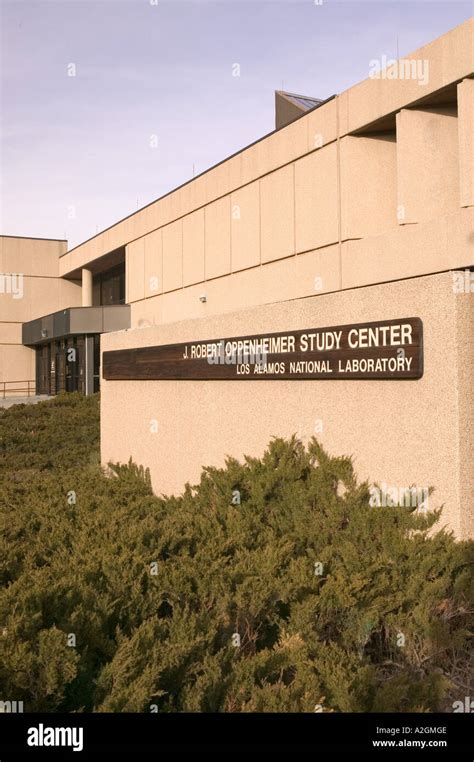
The resolution of the crisis of my Spring grad school failure perfectly set me up to succeed at Los Alamos. Los Alamos was perfectly set up to grow me. It was a place for me to meet my potential. The heart of this was a spirit of trust and generosity. In a deep sense, this was the good part of the spirit (ghost) of Oppenheimer. My time at Los Alamos made the most of this. It ended as his dark side met events. The modern USA of the 2000s could not tolerate any of the echoes of Oppenheimer. It ruined his legacy and dismantled something unique and incredible for the Nation. I was just another casualty.
“No single act of generosity remains in isolation. The ripples are many.” ― Sarah Winman
The start of Los Alamos, the perfect place for a career to gestate.
As I mentioned before, I felt amazing to have the opportunity to work at Los Alamos. Getting the job in the first place felt like a miracle. I realize in retrospect that I was lucky to be looking for a job when I did. This was not a plan or mindful, just pure dumb luck. The key was that I was ready to take advantage of that luck. This all happened in the Spring of 1989, and as I said, interviewing was an adventure. I had six interviews. Three of them took plane trips. One to Idaho Falls and two to Virginia.
In terms of pure humor and great stories, the two interviews in Virginia were both catastrophes. Either of those jobs would have been awful, and the interviews definitely exposed that. I still got job offers from them, but the pay sucked, too. One of them became completely unveiled a few years later at a NASA conference on a manned Mars mission. It still stands as the most insane conference I’ve ever attended. It was 1992, and it included a visit from the NASA administrator (Dan Golden), automatic weapons fire, and trash cans full of cheap Midwest beer. This one contractor impressed me with their sheer incompetence. They were vastly less competent than I had measured in the interview in 1989. I thought they were morons, and I overestimated them. This was my first experience with the dangers of secrecy. They had been working on an SDI “black project”. They could tell me little then, but it felt like stupid bullshit. I learned that they were even dumber. It remains one of the most singularly incompetent things I’ve ever witnessed.
When I started at Los Alamos, my excitement was palpable. I did not realize how incredible an opportunity it was. The environment was ideal for growing me as a scientist. The Lab was the best incubator anyone could ask for. In retrospect, my attitude starting there was perfect for taking advantage of it. The equitable nature of the culture. Having a PhD didn’t make you special. You were just Bill or whatever your name was. People were curious, generous, and interested in assisting you. I started to learn immediately. What I didn’t know was that Los Alamos was in decline. It had fallen from the apex of the long, wide span of excellence. Still, the excellence lingered, and I would benefit immeasurably.
Writing like this is a mechanism of deep thinking. Along the way, you realize things that were lurking right below the surface. This essay is no different. The topic of generosity is top of mind in thinking about Los Alamos. There was a deep culture of sharing knowledge and time that benefited me. That sense of deep generosity seems gone today. When I arrived in 1989, Los Alamos was a more generous place than most. It exhibited a level of generosity that has largely disappeared today. This is true society-wide. We are now a selfish, self-centered society as a whole. The more I confronted this topic, the more this became self-evident. The last 25 years have killed generosity. We are poorer for it, and we will all pay.
Part of it links back to the destruction of trust. It will be a major part of the story for me. These are the “troubles” I’ve called it from 1999 to 2004 with multiple scandals. I will elaborate in depth later.
“There is no exercise better for the heart than reaching down and lifting people up.” ― John Holmes
N-12, Being an engineer
The labs have odd systems for naming organizations. LANL had letters to describe Divisions, with 100’s of people, and numbers for groups with 10’s of people. I started in N-12. “N” was for nuclear, and in this case reactors N-12 was the nuclear reactor analysis group. We did an analysis of nuclear reactors. I got there still in grad student mode, and little about the culture urged me to change. Shorts, sandals, and a T-shirt were still my summer uniform. I started on June 19, 1989.
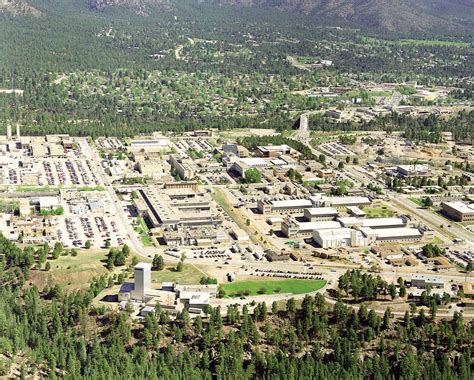
The group was outside the inner circle of LANL, out at TA-52 on a mesa. I often describe Los Alamos looking like a hand with mesas being the fingers and the mountains as knuckles. In between the fingers were canyons. The canyons had interesting names like “acid canyon,” named for the shit they dumped there in WW2. My boss was a guy named Mike Cappiello, and I’ve got nothing but praise for him. He was an excellent first boss who helped to cultivate my enthusiasm. My first assignment was to learn how to use TRAC LANL’s reactor safety code. I did that, then sought to model a high-temperature gas-cooled reactor proposed to produce tritium for our nuclear weapons.
TRAC fucked it up. It was designed for water-cooled reactors. Gas reactor pumps are big fans with huge area changes. It solved an internal energy equation, and it led to huge errors. The old timers there said, “The kid is full of shit”. Thankfully, Dennis Liles, the author of the code, came to my rescue. He said I was right. Confidence was gained. I had my first victory. Soon, my interest in modern numerical methods got harnessed. I did a unique analysis of the solvers in TRAC. I had also started back at a PhD focused on these methods. I would finish that PhD by February 1992. I harnessed the hard work ethic I developed in my undergraduate years into an unstoppable force.
“The most truly generous persons are those who give silently without hope of praise or reward.” ― Carol Ryrie Brink
Along the way, I established the start of an essential collaboration for my future. I was working on a hair-brained scheme for transmuting nuclear waste into something less dangerous. It involved spraying 800 MeV protons into a high-Z target to create a shitload of neutrons and change material to less awful shit. One concept would use flowing lead as the target. It was a nasty free-surface problem. The experts for solving such problems were in T-3, Frank Harlow’s group. I approach a fellow young scientist, Doug Kothe, for advice. In keeping with LANL’s generous spirit, Doug invited me with open arms and mind. Over the years, this blossomed into a great collaboration. Later, we wrote a paper on interface tracking, which is my most cited article. That article was based on work that no project ever funded. It was merely me learning about an important technique and finding a new way to code it up. In addition, that very code is still being used in a LANL weapons code. Working with Doug also moved me closer to the Lab’s core mission. He also worked on a code that was on the Connection Machine, among other things.
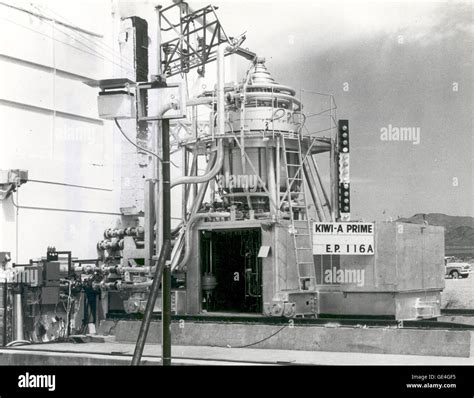
Along the way, I put a modern method into TRAC to follow the solute used to shut the reactors down at Savannah River with unerring accuracy. I also got to see nuclear rockets and the artifacts of that program shut down after Apollo and Vietnam. Once I had my PhD, it was time to move on. I had bigger dreams. An ad was placed in the weekly lab paper, and I applied. Mike, my boss, agreed and actually brought me the ad too. I had already done it. I interviewed and moved. The next chapter was starting. I was moving from the periphery of the lab towards the center.
“It is not often that a man can make opportunities for himself. But he can put himself in such shape that when or if the opportunities come he is ready.” ― Theodore Roosevelt
C-3/CIC-19, National Science
The new job was really exciting. It was part of a national project including LANL, LLNL, and LBL. The leads were a couple of heavy hitters in modern methods, John Bell and Phil Colella. I would have a chance to get to know some luminaries from the literature firsthand. The project was to work on an exotic pulse reactor that involved shock waves and combustion. I would work on the compressible methods they developed, along with incompressible flow solvers. My boss was Jeff Saltzman, also well-known. I took to the job with energy and fervor.
It was a really important time in my life. My first child was born in mid-1994. My wife was finishing her Bachelor’s degree. In a sense, the work I was doing was almost a habilitation. I ended up writing another virtual thesis in verifying and understanding the incompressible flow methods. Along the way, I learned about linear solvers from dense methods to multigrid. I started to use multigrid to precondition Krylov methods. That seeded work later in my career with radiation transfer. I wrote a compendium of work on the various options for the approximate and exact projection methods for incompressible flow. These were coupled with modern methods for advection as well. I wrote several papers on the topics.
I continued and deepened my work with Kothe. In my “free time,” I wrote a code and a paper that now has 2500 citations. I coupled the interface tracking to incompressible flows and multigrid. I continued to learn about high-resolution methods, too. I also gained confidence in directly confronting Bell and Colella. This was something my peers thought was genuinely nuts. I did it and survived their pretty direct disagreement. It was far worse than any of my thesis defenses! I did things no one else thought were rational or wise. See a pattern?
Finally, I started to move to the core mission of LANL, nuclear weapons. In 1992, we stopped testing, and by 1995, the ASCI program was being hatched. I was part of those discussions. In the computing division building, there was a sub-rosa gym called “Bo’s gym”. I worked out there with other nuts. I would read on the stairmaster turned up to 11. A fellow nut at the gym noticed all the interesting shit I was reading. I would read a paper and toss it to the floor to dry off. My material was interesting. This gym goer was Len Margolin, my future boss. He was recruiting for the hydrodynamics group in the (in)famous X-Division. I was ripe for the picking.
It was time for me to get all the way to the core of the lab’s mission. I was a LANL guy now, and this was how to focus on what the Lab was made to do, nuclear weapons. It was also a new dawn; the ASCI program was the future. I would work in this program for the remainder of my career.
“Generosity is the most natural outward expression of an inner attitude of compassion and loving-kindness.” ― Dalai Lama
X-3, Becoming a weapons physicist
In late 1995, I moved to X-3. Len Margolin was my new boss. I shared Len’s passions for methods and codes. Len and I are still friends today. One of the things I value the most is how much we are able to disagree about things. Both of us hold some beliefs very closely that oppose each other. Nevertheless, we continue to engage and spar. This was true in 1995 and is true today, 30 years later. It is one of the things I value the most. Free exchange and combat of ideas wth the goal of understanding. This is science, and amongst my most deeply held beliefs. This is the way to do things.
“Give a bowl of rice to a man and you will feed him for a day. Teach him how to grow his own rice and you will save his life.” ― Confucius
Len gave me a lot of freedom to learn. I took it on myself to learn the business of X-Division. I learned the codes, methods, and weapons. I learned and implemented Lagrangian hydrocodes based on the Von Neumann-Richtmyer methods. I learned all the details of nuclear weapons and the physics associated with them. In many ways, I was pursuing a third PhD-level learning experience. It was another trip deep into the state of knowledge in deep areas. As part of this was the science of turbulence and mixing. A second part of this was verification and validation. The pursuit of both of these would shape much of my career.
In this time, I had that second crisis. I finally felt like I belonged at LANL. I was a fully fledged member of the Lab and deserved it. My time in X-3 was the richest and most integrated time of my career. Early on in my time, Len connected me with Jim Kamm. Jim and I connected as friends and colleagues. We worked together for nearly 20 years. It was an essential friendship and part of the magic that Len worked. Another thread of richness was the hiring of Dana Knoll, a friend from Grad School, plus Dana’s colleague Vince Mousseau. We leveraged our joint knowledge into a rich vein of research on radiation transport and multi-grid. My research life was beyond my wildest dreams. It was rich and varied. It would only get deeper and richer. My life and career were in full bloom.
Things go wrong. CCS-2/X-1, Finding a place to excel
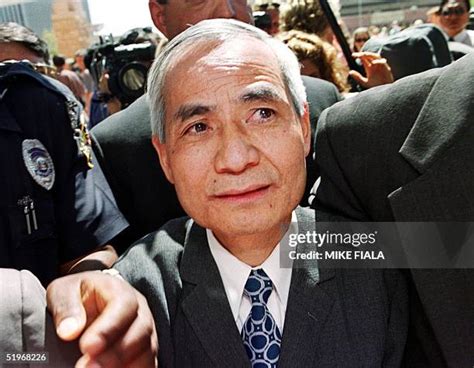
Now that my career was flying, it was time for everything to go to shit. It wasn’t for me personally, but rather for Los Alamos. There was a series of scandals and events to rock the Lab. These came one after the other, shining a national spotlight on Los Alamos in a uniformly negative light. The first of these was a spy scandal starring Wen Ho Lee. Wen Ho was a truly mediocre scientist, but he did some truly huge things. He downloaded a lot of classified material at great personal effort. Why he did this remains unknown, although theories abound. I had an office next to his for around a year and a half. As I’ve said, when someone you know is in the headlines, it usually sucks. Definitely true here.
“You make all kinds of mistakes, but as long as you are generous and true and also fierce, you cannot hurt the world or even seriously distress her.” ― Winston Churchill
The whole scandal was a complete shitshow. Ultimately, it caused a bunch of changes at the Lab. All bad changes. Trust was crushed, and the shit flowed downhill. The government’s reaction fucked the lab up. The response started to break everything good at the Lab. It was a disaster for Los Alamos. The response was akin to pouring gasoline all over a fire. There were more problems ahead. The next was a forest fire, the Cerro Grande fire. It was a “controlled” burn by the forest service that got out of control. It burned 400 homes in Los Alamos and spurred an evacuation of the entire town. It also triggered scandal number two.
This was the disappearance of classified hard drives. Someone went to pick these discs up and take them to Sandia for safekeeping as the fire raged. They were not here. These hard drives were unaccounted for during the fire and about six weeks after. Once it was reported to the government, FBI agents descended on the Lab. It was a second disaster. This took place at the same time as Wen Ho was being tried for treason. The whole thing ended up as a massive cluster fuck where everyone looked like shit. They found the hard discs behind a printer, a couple of doors down from where they were supposed to be. Wen Ho got off as the government case went up in smoke. Worse yet, the two shit shows were connected awfully. FBI agents looked like assholes and got Nazi salutes (that they deserved!).
The Lab got even more fucked up. The disasters were not over. A third catastrophe was coming. Things started to come loose again. There was a new batch of missing classified hard discs (which never actually existed, an accounting error). An accident with a laser partially blinded a student. Now that Los Alamos had a raging asshole as director, the Lab was closed. The asshole was Pete Nanos, a retired Navy admiral. What a dick! He shut the whole place down. It was a lesson in how not to lead. In retrospect, Pete’s reign was also a harbinger of a different kind of leader; the kind our President is. Terror, fear, and intimidation were the tools of power and control. These were another way to separate the leaders from the led. Nanos was clueless about what happened at the working level.
Rumors abounded that Nanos’ predecessor was disconnected from real events. John Browne was a really great guy. He had impressed me when I worked underneath him (way down below). He was a good person, but he had been insulated from the working level. Maybe, maybe not. The events could have just happened anyway. He got canned because he just happened to be there. What I’ve seen over and over is leaders who don’t know what is happening. Each layer of management fails to inform them or just tells them good news. Any bad news is simply killed before it gets to them. Again, we can see this happening at the highest level. Our cabinet members bullshit and ass-kiss the President. No one tells the truth, and reality is just something they control. Power and control are absolute, and that power defines everything. The same with our corporate leaders who exist in a World utterly different from the rest of us. This difference in perspective is the handmaiden of catastrophe.
“Don’t sacrifice yourself too much, because if you sacrifice too much there’s nothing else you can give and nobody will care for you.”
— Karl Lagerfeld.
At the same time, I had a job offer from Livermore. I declined it. Why? The salary and cost of living there were combined to make it a truly dismal prospect for my family. I wonder greatly about how taking that would change my life. I also acted as a group leader at that time to help. I watched some serious shit go down. I watched my deputy group leader resign and retire in a single day as fear swept through the Lab. The Lab that gave me so much was dying right in front of me.
“Selfishness is not living as one wishes to live, it is asking others to live as one wishes to live.” — Oscar Wilde
Meanwhile, my professional life was in bloom. The most clear sign of that was a research project I led on turbulence modeling. One of the greatest things about Los Alamos was the courage and confidence it gave me. Turbulence is an incredibly complex and intimidating topic. I had avoided it like the plague. My commitment to the Lab and its mission gave me the impetus to pursue it. I learned it during the holiday break in 1999, and by 2003, I was leading research on it. That project was incredibly successful, with many well-cited papers and a book. It was merely one of several productive, great projects.
I wrote about 100,000 lines of code on modern shock capturing methods. I used the code to study important methods for Los Alamos and Livermore. I wrote many relatively important papers. I examined exciting ideas to improve methods. They’ve been less successful and influential than I would have liked. I also wrote my first book with Dimitis Drikakis. I still think they are good ideas. I also had the work on Krylov-multigrid, which was quite well-cited and successful. Finally, my work with Jim Kamm on V&V was influential. This is especially true at the Labs. I led a V&V project, and Jim led another. We made huge strides in the practice of verification at Los Alamos. This was the most successful and productive time of my career. All of it stemmed from the environment Los Alamos created. All of it came from the scientist it made me. Everything good about the Lab was being destroyed at the same time due to the scandals.
In the midst of all this, I was looking for solace. In the wake of the scandals, I was part of forming a new computational research division, CCS. I joined, leaving X-Division behind. I was in a good place, but it created new tensions. My collaborator Doug Kothe was my group leader. When he went up to the Division office, I applied for the management job. I didn’t get it because they said I was too “decisive”. It was a real WTF moment with echoes today. It was the impetus for seeking a position at Livermore. In retrospect, it was also the harbinger of management-leadership woes of today. Our leadership across society today suck! It also foresaw the end of my time in CCS. I would return to X-Division. Now that Los Alamos had turned to shit, I was moving toward the door, but hadn’t given up yet.
Can I manage?
I moved back to X-division. At the same time, a management wizard, Paul Hommert, had taken over. Paul had started at Sandia and had been the Lab director at AWE in the UK. He would eventually be the director of Sandia. Paul was vastly over-qualified for the job and replaced a real fuck up as X-division leader. I would say in retrospect that managing X-division is harder than managing either Sandia or AWE. It was enormously difficult. The designers of nuclear weapons work there, and these people are important and powerful. They are also arrogant, often for good reason. Some of them are enormously talented and accomplished. At that time, X-division also had domain scientists in physics, code developers, and computational physicists. Anyone who wasn’t a designer was a second-class citizen.
I had some freedom earned by my successful research in the 2000’s. This was counter-balanced by the damage all the scandals had done. The government’s reaction to these scandals was massively destructive to the Lab. They had deeply harmed the Lab’s ability to work. They had created a vast bureaucracy that was expensive and wasteful. Trust had been annihilated. Worse yet, the scandals kept coming. The latest ones in Los Alamos were amongst the dumbest yet. Someone took classified documents home on a thumb drive, and a meth addict boosted it. Someone bought a car with a P-Card. The result was more bullshit and less trust. Things were spiralling. I hadn’t given up yet. I kept doing my research, but I also wanted to see if I could manage people. I applied to be a deputy group leader in Paul’s new system. Hommert had installed a Sandia-like system in X-division. Now, deputy group leaders would be akin to department managers at Sandia. I got the job.
“Every man must decide whether he will walk in the light of creative altruism or in the darkness of destructive selfishness.” —Martin Luther King Jr.
This was my last act at Los Alamos. Being a manager sucked. In retrospect, I should have seen much more of Sandia in it than I did. My group leader was a big part of the sucking. He dumped work on his deputies so he could do research. Meanwhile, all of us were supposed to work half-time on technical work. The dumping meant we couldn’t, and our programs just had to suck it. So he was a terrible group leader and a selfish piece of shit. It should surprise no one that he’s been enormously successful. He rose through the ranks as a manager (they kept picking him for jobs). A slick British accent helps, too. He also got prestigious awards. Its another abysmal comment on leadership today. We pick too many fucking assholes to lead. He is a really good scientist, and that’s the job he should have stayed in. Instead, he was allowed to be an awful manager.
“There is nothing more frightful than ignorance in action.” — Johann Wolfgang von Goethe
There were a few more nails in the Los Alamos coffin. I can relay the episode that was probably the coup de grace. We had news that funding was short of what was needed to fund everyone. There might be a RIF. I had one person who couldn’t be funded. The why of this was repulsive. He had offended powerful people, primary designers. He used to sit with them at lunch, but they had begun making homophobic comments all the time. He called them on it. He was expelled from the clique. Now he was denied funding. It was completely out of my control or ability to influence. I protected his name, but felt the need to tell him what was happening. This was coming for him, and he was a pariah in X-Division. I went to him and let him know the situation. He was screwed and needed as much time to find something else as possible. It was powerfully emotional and difficult. He found a place to work and could keep his life.
He had also hosted a difficult classified conference. It was a very hard assignment and a minefield. He did a great job, but that meant nothing. It was also the meeting where Sandia recruited me, although I also sought them out.
References: My Top LANL Papers
Rider, William J., and Douglas B. Kothe. “Reconstructing volume tracking.” Journal of computational physics 141, no. 2 (1998): 112-152. (2426 Citations)
Grinstein, Fernando F., Len G. Margolin, and William J. Rider, eds. Implicit large eddy simulation. Vol. 10. Cambridge: Cambridge university press, 2007. (1179 Citations)
Drikakis, Dimitris, and William Rider. High-resolution methods for incompressible and low-speed flows. Berlin, Heidelberg: Springer Berlin Heidelberg, 2005. (320 Citations)
Margolin, Len G., and William J. Rider. “A rationale for implicit turbulence modelling.” International Journal for Numerical Methods in Fluids 39, no. 9 (2002): 821-841. (273 Citations)
Puckett, Elbridge Gerry, Ann S. Almgren, John B. Bell, Daniel L. Marcus, and William J. Rider. “A high-order projection method for tracking fluid interfaces in variable density incompressible flows.” Journal of computational physics 130, no. 2 (1997): 269-282. (747 Citations)
Rider, William, and Douglas Kothe. “Stretching and tearing interface tracking methods.” In 12th computational fluid dynamics conference, p. 1717. 1995. (283 Citations)
Margolin, Len G., William J. Rider, and Fernando F. Grinstein. “Modeling turbulent flow with implicit LES.” Journal of Turbulence 7 (2006): N15. (295 Citations)
Mousseau, V. A., D. A. Knoll, and W. J. Rider. “Physics-based preconditioning and the Newton–Krylov method for non-equilibrium radiation diffusion.” Journal of computational physics 160, no. 2 (2000): 743-765. (188 Citations)
Rider, William J., Jeffrey A. Greenough, and James R. Kamm. “Accurate monotonicity-and extrema-preserving methods through adaptive nonlinear hybridizations.” Journal of Computational Physics 225, no. 2 (2007): 1827-1848. (96 Citations)
Rider, William J. “Revisiting wall heating.” Journal of Computational Physics 162, no. 2 (2000): 395-410. (90 Citations)
Rider, William, Douglas Kothe, S. J. A. Y. Mosso, John Cerutti, and John Hochstein. “Accurate solution algorithms for incompressible multiphase flows.” In 33rd aerospace sciences meeting and exhibit, p. 699. 1995. (119 Citations)
Knoll, D. A., W. J. Rider, and G. L. Olson. “An efficient nonlinear solution method for non-equilibrium radiation diffusion.” Journal of Quantitative Spectroscopy and Radiative Transfer 63, no. 1 (1999): 15-29. (108 Citations)
Rider, William J. “Filtering non‐solenoidal modes in numerical solutions of incompressible flows.” International journal for numerical methods in fluids 28, no. 5 (1998): 789-814. (52 Citations)
Greenough, J. A., and W. J. Rider. “A quantitative comparison of numerical methods for the compressible Euler equations: fifth-order WENO and piecewise-linear Godunov.” Journal of Computational Physics 196, no. 1 (2004): 259-281. (78 Citations)
Rider, William J., and Len G. Margolin. “Simple modifications of monotonicity-preserving limiter.” Journal of Computational Physics 174, no. 1 (2001): 473-488. (49 Citations)
Kamm, James R., Jerry S. Brock, Scott T. Brandon, David L. Cotrell, Bryan Johnson, Patrick Knupp, William J. Rider, Timothy G. Trucano, and V. Gregory Weirs. Enhanced verification test suite for physics simulation codes. No. LA-14379. Los Alamos National Laboratory (LANL), Los Alamos, NM, 2008. (45 Citations)
How did this person get created? Why am I so opinionated and vocal? Where did this come from?
I aim to get to the answers to these questions. For my earlier years, the path was uneven and definitely non-standard. The key formative moments were a couple of very personal crises that were hard resets. I emerged from them different from how I entered. Before I got to Los Alamos, I was molded by a childhood as a military brat. It gave me many good and bad things. My young adulthood offered hard work and an early marriage. I learned to work very hard, but also suffered crushing disappointments. All of this led up to my first crisis and set the stage for later success. I was able to shrug off bad habits and begin a career with a positive trajectory. Luck also played a huge role in landing my job at Los Alamos. My newfound approach to life and work provided me with the tools to make the most of it.
This is the first of three parts.
This will be an orgy of self-reflection. Needed for me, but rather self-indulgent. I hope someone finds it useful or interesting. Doing it in the open is far different than writing a personal journal; I do that every morning. It is also focused on one part of my life. The boundaries of my career with the rest of my life are varied in form. As I move into retirement, the boundaries are naturally more porous
“We write to taste life twice, in the moment and in retrospect.”
—Anais Nin
A life measured in big events that shaped me
Most of this essay will be chronological, but not this opening section. I’m going to discuss a couple of big events that really changed me professionally as well as personally. These were crises about 9 years apart that caused me to change. One happened at the end of my first year of Grad School, and the second about 7 years into my time at Los Alamos. Both of them were extremely painful psychologically and that pain demanded action. My response made these transformative.
Often, we frame our lives in big events. I am no different. There are graduations, marriages, births, deaths, moves, illnesses, vacations, … I’ve experienced all of these. Most of you have, too. These are important, but commonplace. We share these events with each other. We talk about them too. They are memorialized on Facebook and Instagram. They are not personal and private. The two things I am about to describe are those. Maybe some of you have had something similar happen. I’d love to hear about it. It would probably be healthy to discuss these more openly.
“A career is wonderful, but you can’t curl up with it on a cold night” ― Marilyn Monroe
Grad school failures
“We cannot change what we are not aware of, and once we are aware, we cannot help but change.” ― Sheryl Sandberg
The second semester of grad school was a big one for me. I had a couple of classes that were important to me: incompressible fluid mechanics and computational physics. All semester, I joked about one class as “incomprehensible flow”. Randy Truman was the professor (we ended up being friendly years later). The other class was taught by a Los Alamos fellow, Jerry Brackbill. Jerry was a colleague of a hero of mine, Frank Harlow. Deeper down. These classes were what I wanted to do: computational fluid dynamics (CFD). I struggled with incompressible flow, but I stumbled along. Jerry’s computational physics class crushed me. I floundered. Eventually, I dropped the class mid-semester rather than fail.
With this defeat squarely in mind, I doubled down on the rest of my classes. This included the incompressible flow course. With some effort, I passed with a “B”. I remember getting the final back. I sat there, and my heart sank as I thought about it. I remember getting up to leave, and a thought came to me. I was letting myself down; my dreams were collapsing before my eyes. That is a huge weight to bear. I also knew I was smarter and more capable than my classmates. I simply was not able to apply myself. I had to change, or these failures would become permanent.
I spent the summer after retooling myself. I went back and really learned all the things I had just memorized. It was a mission to really learn all the important things from my undergraduate years. I changed how I took classes rather radically. I revamped how I took lecture notes and did homework. When the Fall came, I hit the ground running with all this in hand. During that semester, I took the PhD qualifying exam. This was a large part of my summer work. I aced it. I was different in all my classes. Professors noticed and had rebooted my academic self. Years later, I became acquainted with Jerry Brackbill and collaborated with Harlow’s group, where he was a member. By then, I was a completely different man from the person Jerry had met years before. It became a tale of personal redemption.
“Becoming fearless isn’t the point. That’s impossible. It’s learning how to control your fear, and how to be free from it.” — Veronica Roth
The imposter dies
The next crisis was far more jarring. It happened 7 years into my time at Los Alamos after the birth of my second child, Jack. I was confronted with a growing list of responsibilities on the home front. During my time at Los Alamos, I had worked with two groups. First, with nuclear reactor safety (N-12), while I simultaneously worked on my PhD. Due to other parts of my past, I worked monstrously hard, holding a staff position at LANL and being a full-time PhD student. The previous crisis had created a monster. I worked constantly. Reading and research filled all my time.
After the PhD, I moved to research at the Lab. I got a job in the computational science group (C-3). It was a National project led by Phil Colella and John Bell. It was the opportunity of a lifetime. Between working with these guys and Los Alamos in general, I had some serious “Imposter Syndrome.” I could work really fucking hard. That was my silver bullet. I would just work harder than others and overcome my talent gap.
My life was on a collision course. The impact was a series of panic attacks. I had never had one before. They scared the shit out of me. It all hit one weekend as I had work to do and a major household project. I needed to take off work. All of a sudden, time was closing in on me. I coped with the immediate panic and calmed myself. I received a bit of SRI meds my wife had and started to introspect. I needed to rebalance my life. Part of this was rejecting the imposter syndrome. I belonged at the Lab and had proven myself. I was more than good enough to stand toe-to-toe with the best. I didn’t need to compensate anymore.
“It’s so hard to forget pain, but it’s even harder to remember sweetness. We have no scar to show for happiness. We learn so little from peace.” — Chuck Palanuik
What happened to me before Los Alamos?
Like all of us, I arrived at my first real job with a history and a largely unfinished article. That background matters to all that happened to me later. I have freely admitted that getting the job at Los Alamos National Lab was mostly great luck and fortuitous timing. I’ve wondered what less luck would have meant for my life. I can state without a doubt that my path is unavailable to the modern version of me. Every single element in my life’s foundation has been destroyed by the modern USA. It is just part of the erosion of social mobility that defines our lives today. The USA has truly fucked the next generation(s) over.
“Don’t confuse having a career with having a life.” ― Hillary Rodham Clinton.
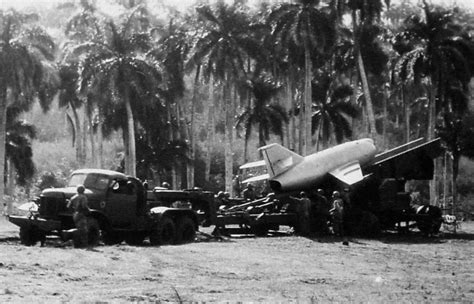
I grew up as a military brat. We moved a lot, although not as much as most. My father had a career in the US Army as an officer. He practiced field artillery and nuclear weapons. My life was largely created by nuclear weapons to a degree that boggles the mind. I was a literal Cuban Missile Crisis baby being conceived in the wake of that. My grandfather planned the never-executed invasion of Japan for 1945-1946. My dad retired to New Mexico to serve these weapons for DoD and DoE. My wife’s father served in the Army at Los Alamos after WW2. She is the product of his transferring to Albuquerque and Sandia base in 1947. Perhaps it was fate that my career ended up with nukes.
All of this led to my arriving in New Mexico in 1979 at the age of 15. There, I finished high school for my last three years. I played football and wrestled, plus grew toward adulthood. Football reached its apex in my Junior year when we won the state championship. This was mostly due to two (to five) future NFL players, including quarterback Jim Everett (if you know, you know). I was an otherwise unremarkable student. I was smart, and I knew it. I didn’t really have to apply myself to do well. I did just enough so my parents didn’t wise up to how much I was fucking off
“You can be a natural athlete with terrible work habits, and that ends up wasting your gifts.” ― Vernon Davis
Here, I should step back. All of this came from my earlier life. My father’s career and life shaped me for good and ill. He is nearing the end of his life being in hospice. His story was the backdrop for much of what was good, and bad about teenage Bill. I did leave high school with scholarships in hand. I was a National Merit scholar, and had a full ride from the Air Force. I would join ROTC at the University of New Mexico. On the flip side, I was headed for state school. In retrospect it was where I belonged. To go to a more competitive school I would have needed that first crisis to happen to 18 year old Bill, not my 24 year old self. One of my key lessons in life was that my dad’s life was ruled by fear. That was something I would not allow to govern my life, or my decisions. I’ve largely been successful on that, but it always looms over everything as a shadow.
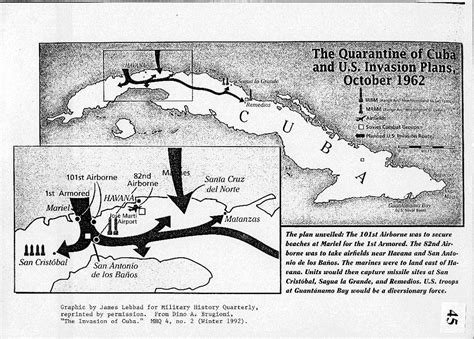
My father graduated from high school in 1955, and with his cousin joined the Marine Corps. It was a terrible experience, but his fear of being drafted and having to serve as an enlisted man pushed him to join ROTC at college. There at college he met my mom, and afterwards embarked on being a commissioned officer. There he was part of that potential Cuban invasion force, as a forward Artillery observer. A mission with an extremely short life span. After that he was assigned to oversee a battery of 8-inch howitzers in Northern Greece. These howitzers could deliver a nuclear package. This is where he was when I was born.
Shortly thereafter while I was a toddler, my father applied for and was admitted to law school. This,opportunity was not taken, as my mother urged him to decline the offer. She did not want to be the wife of a graduate student with a small toddler, me. As a result my father was sent to Vietnam for a tour of duty that proved to be absolutely disastrous for his military career. This was probably the most pivotal event of his life. It changed everything. He and his boss hated each other and my dad’s fitness reports reflected that hatred.
When he returned after his tour of duty, he was depressed and now fearful of the path that his chosen career would take. My father’s crisis, and state of mind would cast a pall over my childhood. It shaped the rest of my existence as a child. He spent xix years in Lawton, Oklahoma, at Fort Sill. He was an instructor at the Field Artillery School, he worked hard to distinguish himself. When I say he worked hard it was 100-hour weeks, just working his butt off, and rebuilding his career. He was just trying to achieve at least one more promotion. That next promotion, if he received it, would allow him to work in the military all the way to retirement. Do I see a parallel with my own life here? Of fuck yes, I do.
This became the focus point and the obsession of his life at that time. It also condemned all of us in the family to be passengers on this trip. It ultimately corrupted him in a sense as the sacrifice he made would be something that he would take in the form of a crown of thorns later on in life. It is a bitter and harsh lesson that I truly hope I can learn from. I want to avoid being like that as I move towards old age.
“I must not fear. Fear is the mind-killer. Fear is the little-death that brings total obliteration. I will face my fear. I will permit it to pass over me and through me. And when it has gone past I will turn the inner eye to see its path. Where the fear has gone there will be nothing. Only I will remain.” — Frank Herbert
Bill Goes to University
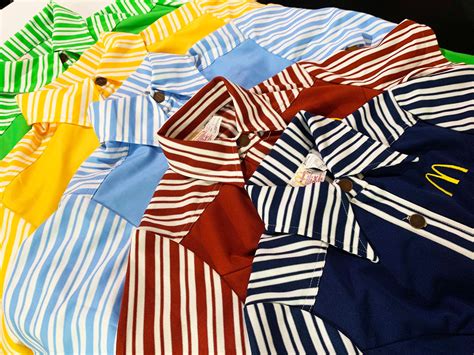
I graduated from Eldorado High School in Albuquerque in May 1982. Right after I got a job at a local McDonalds as a burger flipper. Two weeks into that job I took a lunch break with a cute blonde gal who hired on at the same time. After a bit of retrospectively funny awkwardness we became good friends. She was my future wife, Felicia. She liked my sense of humor, fun sense, and intelligence. We were both military brats. We were both going to the University of New Mexico too. We would be taking a class together, ROTC. I gave up my Air Force scholarship because I realized that I didn’t fit in and I would not be happy there. That’s an understatement, I would have been miserable and a terrible choice. It would likely be a failure. Stunningly, later in my life I had so much confidence that I refused to see that same lesson at Sandia. In many ways my failure to learn this and embody this decision later in life wasted so much of my potential.
There were two very important things that happened in my undergraduate years:
1. Meeting my wife, getting married. It was us together forming new families to make up for the shortcomings and disappointments in our families of birth. We both wanted to escape from unhappy home lives, and found happiness together. This union has been key and drove my progress through life. It has been the greatest meaning I have found in anything.
2. The extent to which I put myself through school mostly on my own. Actually it was as a team with Felicia. I worked a job for the entirety of my undergraduate career. During that time I worked harder than I would ever work in my life, taking a full load of classes and holding down a full-time job. It led to legendary, 100+ hour weeks, exhaustion, and effort only a 20 year old could muster. After this, everything else I ever did was easy. I worked at McDonalds and became a manager. It was a huge life lesson. I also worked for the best boss of my life there, Brenda Adcock. I’ve had other great bosses, but Brenda was in a league of her own. She was hard on me, taught me a lot and gave me opportunity to grow. She’s had no equal.
I broke from the pattern my father set, and did not allow fear to drive me. As I have discovered fear is pernicious and enters into any nook or cranny. It is always lurking in the shadows waiting to overwhelm you. Still I remained conscious of it and pushed back against that tendency.
“What would you do if you weren’t afraid?” ― Sheryl Sandberg,
My undergraduate career was marked with some degree of mediocrity. This was based on some of the laziness that I got away with in my younger years, along with my very hard job. I had a need to support myself and Felicia (she pulled more than her own weight). She would drop out of school after two years and work full time. She got a job with good benefits and medical insurance. After I got my PhD, she went back to school and got her degree. Later on she got her Masters once she starting working at the University. The result of my mediocrity, in the end, was a stunning lack of prospects when I got my bachelor’s degree. I applied for a number of jobs, none of them even remotely prestigious, and received not one single interview, not one single bite. I was left with almost nothing. I felt like a real fuck-up.
The back-up plan was grad school and grad school at the same place that I was an undergraduate. Again the least prestigious way to go, but I went and entered into that first year and I did not change. I kept on being the person I was as an undergrad. This was setting myself up for the crisis a year later. My inaction and lack of response to the clear feedback from life was pretty contemptible. All of us was leading to the moment of that first crisis I described and my change as a person. I simply hadn’t let myself fuck up quite sufficiently yet.
Graduate school was a huge learning experience and laid out the platform for me to ultimately excel at Los Alamos. I started off following the lead of others, doing a master’s degree project that was simply a mindless extension of others’ work. It was in modeling space nuclear reactors. By the end of graduate school I had started to eagerly and ravenously eat up new topics. I learned the basics of computational fluid dynamics. One of my office mates in graduate school, DV, was a huge influence. DV was a graduate of IIT in India. He turned me on to the works of Suhas Patankar, who shapes much of mechanical engineering CFD, following along the work of Brian Spalding. This led me naturally to the work of Frank Harlow, who inspired Spalding and laid much of the groundwork for CFD. I devoured and starting implementing their work. I was eager to understand all of it.
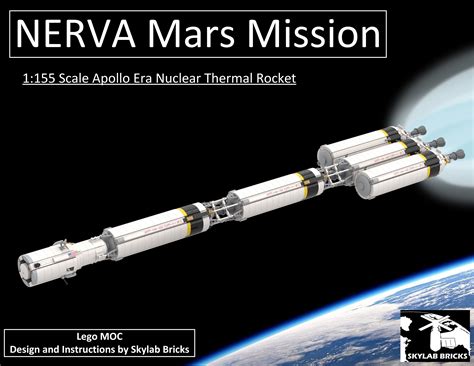
Over time, I became increasingly dissatisfied with this approach to things and started to look for other ideas. In that time, I learned about the work of Jay Boris and flux corrected transport (FCT). Ultimately, I found that approach to be lacking. I was attracted to the work of Ami Harten and Bram Van Leer by the time I left school for Los Alamos. These interests shaped my PhD work at Los Alamos, and created much of what I have focused on for the remainder of my career. At the beginning of my time in Los Alamos and periodically throughout my time as a professional, I returned to nuclear engineering and space power. My original inspiration was the manned Mars mission originally scheduled for 1981. This manned Mars mission would have been rocketed by nuclear rockets developed at Los Alamos. These were something that I was able to see in person and learn about when I arrived at LANL in my first few years there. There was a short-lived interest in Mars again as the Cold War ended and the Soviet Union fell apart.
My growing self-confidence had a huge impact on me and ultimately propelled me to leave the university. In the end, Los Alamos would give me far more than any graduate school could have. In those years Los Alamos would be better than the best school imaginable. It was beyond Ivy League in quality and scope. We should truly mourn what we have lost in destroying these institutions. They used to be great and I felt myself living in their wake pulling me along.
The consequences of that change were borne out during my second year of graduate school when I received my master’s degree. Once I had become a different person, I gained a confidence and a strength. That strength made the person who could not longer tolerate my advisor’s behavior. I could no longer tolerate his behavior, or his way of managing people. I started to see him as a bully and I refused to be bullied. To some extent this was cultural on his part. Nonetheless, I witnessed things that I found unacceptable in how others were treated. I had rapidly learned a great deal. The last straw was my advisor’s inability to learn from me. He always had to dominate me. Even though I had a fully funded Ph.D. research project through NASA, I decided that I could not stay at school there.
It was time to leave and find a new path.
“Fear doesn’t shut you down; it wakes you up” — Veronica Roth
Bill gets a real job
I looked at other graduate schools but my poor grades, and unremarkable academic record made that impossible so I was looking for a job. It would have also meant a lot of debt. In those days that felt dangerous. This job hunt would completely change my life. It also was something of immense fortune that I looked for a job when I did. It was a peculiar time. There were visions of a new space race, and also the end of the Cold War, with views of changes in our nuclear weapons program. Somebody with my background was almost assured a job. There weren’t nearly enough of me’s to go around.
I’ve often joked that I had three things that were absolutely essential for getting a job:
1. I had a Master’s degree in nuclear engineering.
2. I was an American citizen.
3. I had a pulse.
The result was I applied for six jobs. I had six interviews, and six job offers. It was just a matter of taking the best of them and the best of those jobs was at Los Alamos National Lab. It was working with a nuclear reactor safety analysis group. It took some doing because the bureaucracy at Los Alamos is atrocious. They absolutely suck at it. They still do today. I also had a job offer from another National Lab in Idaho, but the prospect of living in Idaho Falls in those days seemed dismal, horrible. I’ve visited and its not quite as bad as I had thought. At that time Idaho Falls failed what I called the radio test. I would sit in my hotel room with the radio alarm. I would try to tune in the best radio station I could find. In Idaho Falls that station was playing the Osmonds!
I pushed Los Alamos and they delivered a job offer in time. The other jobs were all with the so-called Beltway Bandits. In some cases they had produced interview trips that were comical in their outcome. They were also professionally horrifying in what I learned about those companies. Thank God I didn’t end up there. I’d be a totally different person now.
I took the job at Los Alamos. I already knew that my good fortune was almost beyond reckoning. I entered with some degree of confidence and knowledge of how to work extremely hard and apply myself. I had started become enthusiastic about CFD. Los Alamos seemed like a veritable cathedral of science. It was one of the most famous places for science and especially for all things nuclear. I was offered something miraculous on a silver platter. It was an almost mythical opportunity. I was going to grasp it and work my ass off. In my time at Los Alamos, it also grew my belief in the patriotic service of working there. This is one of the things that I most firmly embraced and still believe in today. I could pursue my science passions with a sense of meaning and purpose.
“I’ve learned that making a ‘living’ is not the same thing as ‘making a life’.” ― Maya Angelou
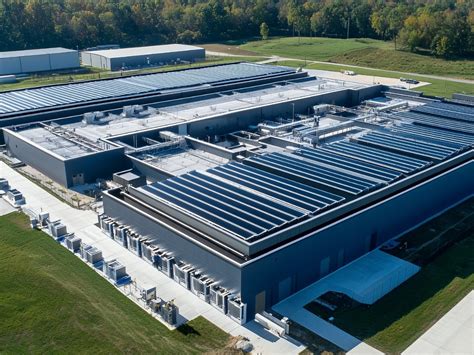
Brute force computing power has become a one-size-fits-all plan for all computational progress. This is true for classical computational science and now AI. Computers market themselves to politicians and the business community. I’ll freely submit that more computing power is always good. These computers are so expensive. Plus, they are big and loud with lots of blinking lights, so idiots love them too. This approach follows the path of the exascale program. It was declared to be wildly successful!
The key is seeing what is not there. What you do with a computer matters more than the computers themselves. True for AI; true for computational science. We need to see what was not done and not invested in while focusing on hardware. This is domain knowledge, experiments and tests, mathematics, algorithms, V&V, UQ, and applications. All of these are subservient and diminished to serve the hardware focus. The hardware focus will eventually bring ruin.
“The reasonable man adapts himself to the world: the unreasonable one persists in trying to adapt the world to himself. Therefore all progress depends on the unreasonable man.”
— George Bernard Shaw
What We Focus On
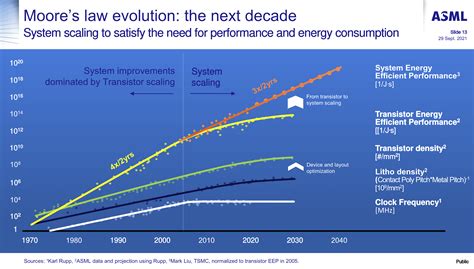
I’ve spoken out about our obsession with computers before. For most of my professional life, computing hardware has been the emphasis. This emphasis is short-sighted, especially now. The benefits of hardware are becoming less and less, with more effort needed for fewer gains. This all stems from the death of Moore’s law in all its forms. This was the exponential growth in computing power from the 1960’s to about 2010. Our overemphasis on hardware was a dumb idea 30 years ago. It is even dumber now. The dumbness stems from a lack of balance. Computers are great and important. More computing power is always good. However, what you put on them matters even more. This priority has been lost in the mourning of progress for “free” with Moore’s Law.
This lack of balance has been present for a long time, and our deficit is huge. It has played a role in the setting of American scientific dominance. We have failed to make sensible investments in science for decades. Computing has been one of our biggest investments. This investment has been focused on fighting reality and physics. It is guilty of failing to recognize the breadth of the computing ecosystem. Thus, our idiotic strategy has been an accelerant to the decline. One of the key reasons for American decline. There is a fair amount of corporate welfare, too.
Computing folks always talk about things like it were an ecosystem, including software and hardware. It is like an ecosystem. Predator-Prey balance matters there and can wax and wane. Our current system is like the deer population in much of the USA. Not healthy and doing damage. In this analogy, the wolf packs and cougars are missing. The predators are like algorithms, physics, and applications here. They are difficult to deal with and strain human systems, but are essential. Without the balance, the ecosystem is out of synch. Worse yet, we are adopting the same ideas for AI. The strategy there is hardware-focused. The rest of the ecosystem has been slaughtered.
The last blog post talked about part of what was missing. That is V&V. Now I’ll talk about what is in its place. Hardware. Software that the hardware demands for basic functionality. Algorithms that depend on the hardware. Everything else is missing. As you get closer to the use of the hardware, the effort diminishes. As you move closer to applications, the work gets harder and more failure-prone. This is key! Without trust, those failures cannot be accepted. They become proof for the propriety of withdrawing trust. Failures are the epitome of learning. Research is all about learning. This is why American science is faltering.
“Part of the inhumanity of the computer is that, once it is competently programmed and working smoothly, it is completely honest.”
— Isaac Asimov
Without failure, knowledge stagnates. This is exactly what has been wrought. We need to recognize the stagnation. Worryingly, we’ve made the same choices with AI. We need to take a different path. We need to admit how badly we’ve fucked this up. Instead, it’s all a massive “success” as our leaders declare. It isn’t. We are wasting effort and money on hardware. It could be better invested in other parts of the endeavor. We need to learn from this massive failure. This is not about not investing in hardware. That needs to happen. What we need is a better balance and care for the entire ecosystem. We have fed the bottom of the ecosystem for decades and slaughtered and starved the top of the ecosystem.
“Computers are useless. They can only give you answers.”
— Pablo Picasso
Computers and Money
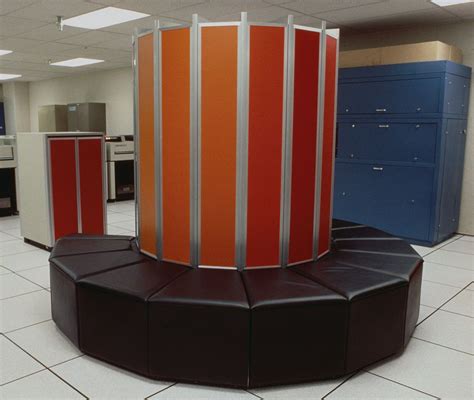
The emphasis on computing has been a constant feature during most of my professional life. We chose that path when nuclear testing stopped. We stopped the real-world tests. Then we invested in the part of the virtual world farthest from the testing. The sales pitch was that computers would replace the testing. It is not a rational or logical approach. The main reason is political. Back in the 1990’s, our leaders needed to sell “no testing” to the Nation. Two things made hardware sell: politicians can see and touch computers, and computers are bought from companies. Politicians can see computers, which are big with lights and make lots of noise. They cannot see codes, or algorithms, math, or physics. Moreover, companies have money, and our politics runs on money. Back then software was intangible. The internet was barely a thing. So they sold the computers.
“Growth for the sake of growth is the ideology of the cancer cell.”
— Edward Abbey
Within a few years, scientists identified the gaps in this plan. The hardware was great, but the science was missing. To have a credible virtual deterrence, the science needed to be “world-class”. There was a recognition that what the computers computed mattered. It was not enough to simply have super fast computers. A faster computer is not automatically better unless it also does things right. Furthermore, the reality needed to keep the computers honest and adhering to the physics was gone. That gap could not be filled with bits and bytes. It could only be filled with physics, math, and refined practice. They added things to the program to fill the gap. Science actually had a moment in the sun.
It was a short-lived sunny moment.
This did not last. Monied interests became even more powerful. Science continued to fade and decline. The hardware as the path to success narrative took hold again. Science is hard. Hardware also had the message of crisis. Moore’s Law had held for decades and progress in computing was sort of free. It just happened. Now that progress would take focus. Ultimately physics would take over and no amount of money would yield hardware progress. You just had to spend a shitload of money to buy more hardware. Computer companies love that! Their lobbyists were flush too and greased the skids for hardware.
“Remember the two benefits of failure. First, if you do fail, you learn what doesn’t work; and second, the failure gives you the opportunity to try a new approach.”
— Roger Von Oech
The Exascale Computing Program
This takes us to late 2014 and 2015. My blog was in its infancy. We got a new program to feed the Labs and sell comptuers. It was the push to make the first Exascale computer. This would be a computer that can work at an exaflop. Let’s just submit that the speed of computers is big dose of bullshit on the face of it. Let me explain. We don’t get an exascale on any application we give a fuck about.
The speed is measured with a benchmark called LINPAC which does the inversion of a dense matrix. It is almost always the best case scenario for hardware with lots of floating point operations per memory reference. Thus the benchmark gets great performance for computers in general. More importantly, it does not reflect what happens in the vast majority of applications. Especially our most important applications. So the benchmark is basically marketing, not science. It has distorted our view of hardware for decades. Someone should have called bullshit on this long ago. Its a fucking farce.
Progress in the power of hardware had started to wane. The curve of progress that is Moore’s law was bending downward. It was a crisis! We need an exascale computer to fix it. Computers by themselves are the core of our scientific and military deterrence. Plus science is even harder. The USA doesn’t do hard any more. Funding science doesn’t do shit for corporate interests. At least corporate interests in the next quarter. Science is only going to help the future and not a specific company. Science has no lobbyist. The future doesn’t either. So fuck science and the future.
The answer to the need to fuck science and the future is the Exascale Computing Program (ECP). It was a really huge waste of money. Of course, no one ever says this. No one ever admits what is really going on or why. This is simply the inevitable outcome. Sure we got faster computers, but we also hollowed out the ecosystem. In that analogy it was a slaughter of apex predators. In addition, we encouraged the deer to breed like flies.
It makes sense to explain this. How such a “successful” program could be such an ensemble of bad ideas. The stupidity was baked in from the jump. The whole program was designed to be unbalanced. It starved the science. The science part was already done, it was just a passthrough. The new computers would just magically make science better! No need for V&V either. All the calculations would magically be correct by the power of computers. No need to check the quality. V&V would just find the problems and no one wants that.
“We don’t really learn anything properly until there is a problem, until we are in pain, until something fails to go as we had hoped … We suffer, therefore we think.”
— Alain de Botton
It reflected a combination of naive and superficial views of what computational science is. It has misconceptions and outright fabrications about how to ensure quality. Alone, a faster computer will not produce quality results unless you do many things correctly. ECP just assumed all of that was in hand. Further, it assumed that the faster computer is all that was needed. The basic premise is that faster computers will naturally improve everything. It only funded things that were necessary with the new computers. The applications rather than being the focus of the work were simply marketing. They were examples of all the awesome shit the faster computer could do. Better science would just happen by osmosis. No domain scince was really needed.
ECP is done. ECP declared to be a “success”. So why belabor these points at all? We are taking the same approach with AI.
Fervor About AI
“The question of whether a computer can think is no more interesting than the question of whether a submarine can swim.”
— Edsger W. Dijkstra
It’s hard to separate this trend from the general sense that the United States is overly focused on the industrial side of things. These computers have increasingly become large big-ticket purchases for industry and government. You might have noticed that computers and “data centers” are a huge focus recently for AI. NVIDIA is the richest company in the world by selling computer chips. It is clear that the funded path for improving AI is faster (bigger, more expensive) computers. There is almost nothing else on the map. ECP paved this road and its an even dumber road for AI.
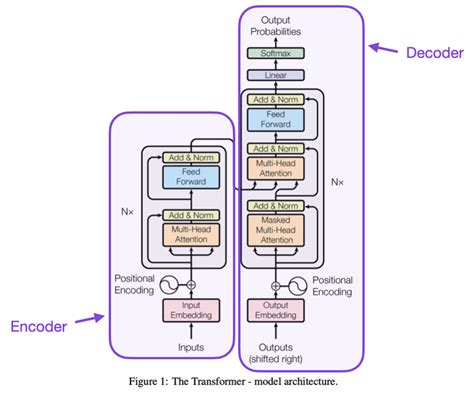
This is true to a greater degree than ECP by a mile. While the scaling of value in computation with computing power was terrible in ECP, it is worse for AI. AI improves far more slowly with computing power than scientific applications. For ECP the most optimistic strategy needed more than an order of magnitude in computing to get double accuracy. For AI, the amount of computing needed for this is 100-1000X. All of this with Moore’s Law being dead. AI is running out of data too. Its already eaten the entire internet. In both cases there is a stunning lack of recognition for what drives progress. These are algorithms and domain science. This entire moment is driven by an algorithmic breakthrough, the Transformer. Computing was at a critical mass to take advantage, but not the reason for the phase change.
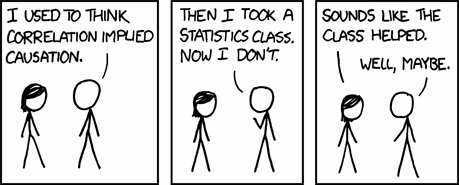
AI also needs domain knowledge especially for science. We also have a profound lack of understanding where answers come from. The pathology of correlation equaling causation is quite central to AI. False positives are a very real danger. Indeed this could be part of explaining hallucinations. Training of models and bias is probably some of this along with the bullshitting of models. All of this demands V&V. Approaching AI with profound doubt and questioning results would simply be common sense. There is a huge need for deep applied mathematics to help comprehend AI better. Applied math has been declining for decades. A horrible trend for computational science. It may be a fatal trend for AI.
With the major DOE program, Genesis, none of the healthy balance is seen. It simply amplifies the imbalances present under exascale. The whole program is bunch of stunt projects. Core science, algorithms, applied math and V&V are all absent. The whole thing smells just like ECP. The aroma is a stench.
“Each day we take another step to hell,
Descending through the stench, unhorrified”
— Charles Baudelaire
We have Failed in Advance
Earlier, I talked about failure. It is essential. We are engaged in systemic failure that provides no lessons. If one learns and improves on the basis of failure, success is the usual outcome. ECP is reallyjust failure. Full stop. We are structuring our AI future just like ECP. It is a failure by construction. Within our current incentive and value system both are a success. This is simply because of money. These projects get funded and make people rich. Success is not knowledge, it is just funding. It is a value system that leverages funding without investing in the future. The deer are breeding like crazy and we are driving the predators to extinction.
“Someone’s sitting in the shade today because someone planted a tree a long time ago.”
– Warren Buffett
The future has no constituency. The only future we seem to care about is the next quarter. We’ve seen this with how climate change is being ignored. There inconvenient facts are simply ignored. The same is happening with all this computational stuff. The terrible scaling laws I mention above were ignored in ECP. The even worse scaling laws for AI are ignored. They are such a bummer. The difficult work needed to advance algorithms, understand technology plus find problems are all ignored. These are too hard. It is too likely that progress would be uneven. We cannot manage hard things that payoff in decades instead of months. We have failed in the worst way possible. We have failed at the starting line.
“Between stimulus and response there is a space. In that space is our power to choose our response. In our response lies our growth and our freedom.”
Verification and validation (V&V) is receding from focus. This has been happening in traditional computational science for the past 15-20 years. Now, attention is focused on AI. The problem with V&V is its attention to quality. Quality is something we don’t care about anymore. More importantly, V&V is finding failure, and failure is the engine of progress. We’ve learned that success is all marketing and messaging. Success can simply be declared. Why do the work? AI has none of the quality advantages of traditional computational science. AI hallucinates regularly. These hallucinations are actually lies or bullshitting. AI confidently provides answers when it knows nothing. V&V could detect this, but that wouldn’t look like success, so no V&V.
“We can judge our progress by the courage of our questions and the depth of our answers, our willingness to embrace what is true rather than what feels good.” ― Carl Sagan
V&V for AI?
This was not my first title. My first title was actually “Where the fuck is the V&V?” I found that this was probably too jarring even for me. The reduced readership would be bad, but it captures my thoughts about what’s going on. V&V is a truly important part of the quality of anything computational. It was first slowly, then rapidly disappearing. The consequences of this are profound and quite poor for the quality of anything computational and the progress in science. It is bad enough for “classical” computational science; for AI, it is malpractice. That same lack of quality and progress is now being embedded in work on AI.
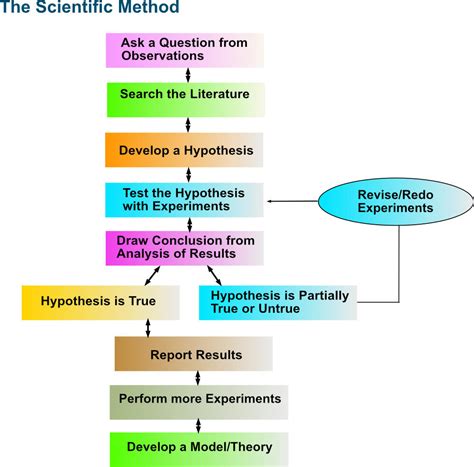
I’ve written many times on the concept that V&V is really just applying the scientific method to computations. It follows that a lack of V&V is a lack of science. This is what is going on. Part of science is progress and the advancement of knowledge. Progress depends on failure. Failure is how we learn. V&V is about looking for failures and gaps. It is up to the programs to respond to these failures by improving and closing these gaps. For science and progress to proceed, this is not optional. It is the essence of what we are investing in. Somehow, we have decided that all the failure and learning is optional. Computational science still needs progress. It seems we’ve missed that. AI is even more immature. Somehow, we have decided that success can be had without the hard part. This is not objectively supportable.
Our leaders are truly fucked in the head.
“It is hard to fail, but it is worse never to have tried to succeed.” ― Theodore Roosevelt
They don’t want actual success; it has become too easy to just declare it. Somehow, we’ve all bought into this fantasy. We have become comfortable rewarding outright incompetence. I have seen it in person. That is where the money is, and money is all that matters. This is true for business and science. Reality will not look kindly on our choices. AI in particular will be harmed by the approach we are taking. For it to evolve and grow successfully, the critical feedback that V&V produces is essential.
The core of the problem is the incentives the leaders respond to. None of the incentives connect to quality and progress. Our leaders have learned that quality and progress are expensive and uneven. We can have success on the cheap if we simply declare it. Any practice of legitimate V&V is a threat to the declaration of success. The warning signs for AI are clear and obvious. The leadership benefits from avoiding the work of V&V (and saving $$$ and complexity). The simple route is defining victory without quality assurance. Who’s going to check? No one! That shit is expensive. We already have the most awesome technology, no progress needed. This is a recipe for mediocrity and decline.
In AI, we see a technology that needs checking and to be treated with significant doubt. V&V is a practice that reveals this doubt. In many cases, the V&V offers assurance of quality, too. AI needs this, especially if used for consequential purposes. In science and engineering, we can map a path to a more reliable AI. To get to reliability, we need to work out the faults and remove them. Instead, we simply see a technology that is being implemented and executed as if it were perfect (and almost magical). The reality is that it is far less perfect than what it claims to replace.
This is nuts. This is shortsighted. This is completely and utterly irresponsible. Judging by the way the leaders of our society act, we should expect irresponsibility. Irresponsibility is exactly what we are getting. We as a society will suffer over the long run from today’s foolish decisions.
“Have no fear of perfection – you’ll never reach it.” ― Salvador Dali
V&V is Regressing in Plain Sight
I’ve seen two successive major programs at the Department of Energy, both neglecting V&V. One was the Exascale program. Now we have the Genesis program. They would claim V&V was “baked in.” This claim is bullshit. In the current incentive system, V&V produces friction. The response to friction is rejection, and V&V gets jettisoned. It is only supported if the results confirm the success narrative. As soon as V&V needs to confirm a narrative, it ceases to be V&V. It becomes a bullshit factory. In the precursor program ASC, this is where V&V has evolved. Over the past decade, V&V has become defanged and toothless. All assessments now need to be positive. Those who are not are buried. One such burial led me to retire.
“Life is full of screwups. You’re supposed to fail sometimes. It’s a required part of the human existence.” ― Sarah Dessen
The role of V&V is to determine the correctness of the computational work that’s done. Part of determining the correctness is that, when there are issues or problems (and there always are), you have a plan to fix those things. Fixing shit is progress. Fixing shit is what scientists and engineers are good at. What the leadership has discovered is that the cheapest and easiest way to succeed is to simply declare it. Part of this is avoiding the whole V&V step altogether. This, in our money-driven world, is the most efficient way to do things. It’s really a stupid way to fuck everything up.
“We are all failures- at least the best of us are.” ― J.M. Barrie
The Cost of No V&V
The real process of science, which V&V is at its core, is messy, expensive, and time-consuming. These are all things the leaders would rather do without. It’s become much more efficient and cost-effective to simply declare success and be excellent by definition. I saw this in spades during the Exascale program, where V&V was nodded and winked at but rarely done. With that program being a “success: we see the same approach with Genesys, I fear exactly the same will be done. The leaders will declare and bullshit their way to glorious success. AI is too immature and dangerous for this level of abject irresponsibility. The deeper cost will be a stagnation of this important technology. Basically, we are giving up on the future.
As I’ve noted with AI, the role of V&V is more important. It still was with the sort of computational science done with Exascale-scale computing. That program failed to make progress aside from fast computers. With AI, there are no decided-upon models or methods to solve things that have rigorous connections back to physical and mathematical theories. There, it is the data that drives things, along with algorithms that manipulate that data. Algorithms that converge but only in some nebulous, unspecified sense. They are without any sort of guarantees that we’re used to in computational science. This makes everything harder with AI. The freedom it provides is an illusion. The result is something that can often give answers that are called hallucinations. This is the most generous way to put it. In many cases could be called outright lies or bullshitting. Our current AI practice is to give answers without guardrails or warnings with complete confidence.
Now we are trying to do science without V&V, which would unveil the bullshit. For AI to do science successfully, it needs to have guardrails and come with a “bullshit” detector. V&V is that bullshit detector. The program that has been unveiled is not science. Maybe if I’m generous, I could say it’s bad or weak science. Somehow, we have gotten comfortable with programs that are called science while being unscientific. This needs to stop. By avoiding failure in small ways as part of this program, we are failing massively.
“Success is not final, failure is not fatal: it is the courage to continue that counts.” ― Winston S. Churchill
Disappearing V&V
This has become an almost ever-present thought in my mind. I watched as the V&V programs became funded and important back in the late 90s, and then went through a zenith and decline. Now I’m watching the V&V programs dissipate, fall into uselessness, and become utterly feckless. In recent years, it has turned into a rubber stamp. Whenever V&V found a problem, management would just bury it and ignore it. Only positive news was accepted. The essence of toxic positivity. We are allowing management to act like children who live in a fantasy world.
V&V for modeling is essential. This is where we are solving well-known, well-understood, and well-accepted models. These models are solved with well-known, well-accepted discretizations using real geometries. It is still essential; it still finds problems. V&V is needed to manifest the full scientific method in these domains. Now we see AI coming to the fore. With AI, we see even less V&V, even where there are none of the advantages that classical computational science has. Even when AI has a known propensity to hallucinate (lie, BS,..). V&V is more needed with AI, and yet there is less.
“You never change things by fighting the existing reality. To change something, build a new model that makes the existing model obsolete.” ― Buckminster Fuller
The real tension is the notion that we have already created the technology breakthrough. Now it is simply a matter of showing what it can do (and make a shitload of money). The current programs have declared victory and eschew the need for progress. We just need to demo the awesomeness. This is a self-own. This is why there is no V&V, and it is a symptom of extreme weakness. They cannot stand to have any hard look at the current state of things. That is what V&V would do. It would do a great deal more. V&V would power progress by pointing to problems and weaknesses. These problems and weaknesses are where research and advances are needed. This is the very heart of the flywheel of progress.
Without the introspection that V&V provides, we have stagnation. My belief is that the technology (AI and computational science) is quite far from where it should be and needs serious attention. Certainly, we need to demonstrate the current state of AI. The key to progress is a stern examination of the quality of this work with a critical eye. V&V provides this and a map of where progress is needed. Without V&V, there are claims of false victory and stalled progress. Progress is grounded in failure because failure is learning. The sort of victory being planned now is hollow and feeble-minded. It is not how science is done, and the recipe for mediocrity. Science in the USA is already quite far along the road to mediocrity. Our current approach widens that road into a superhighway.
“Those who make peaceful revolution impossible will make violent revolution inevitable.” ― John F. Kennedy
This is my 400th post on the Regularized Singularity!
tl;dr
Few topics in computational physics are as polarizing as numerical dissipation. Dissipation is ubiquitous in nature and technology. Often, it is unwanted or a nuisance. Its absence is usually wishful thinking. Some schools of thought think they can model it effectively. For general numerical modeling, some sort of effective dissipation is essential to robust, reliable simulations. To understand the various viewpoints requires a far more nuanced perspective. Numerical dissipation or its absence is the direct result of different philosophies. Usually, the grounding philosophy is unstated and implicit. Here we explore this in depth.
“Whenever a theory appears to you as the only possible one, take this as a sign that you have neither understood the theory nor the problem which it was intended to solve.” ― Karl Popper
The Physics of Dissipation
The physics of dissipation is essential. The part of dissipation that is least important in current methodology is that which is well resolved. I mean no disrespect towards the types of physics appearing at the nano scale or in well-resolved areas with very exotic viscoelastic effects. The really important parts for nature and technology are where the dissipation is so small it can’t be resolved. These are challenging in the extreme. The truth is that there is a certain magic in dissipation at those scales, where the amount of energy and entropy evolve due to the non-linear impact of the hyperbolic parts of the system. These dynamics remain mysterious.
This sort of physics dominates shock waves and turbulence. If one is dealing with highly energetic physics of almost any kind in technology or nature, one is dealing with these sorts of physics. Moreover, detailed direct numerical simulation of this kind of physics is a pipe dream, and there’s no way that computers available in any of our lifetimes will be able to tackle this. It is completely out of scope. It is also the kind of physics where AI isn’t the way out. It requires deep understanding and mathematics that is often quite just beyond our reach. We need a focused exploration of the physics and mathematics of it. Something we are not doing as a society.
This is exactly the domain where numerical dissipation is essential for computational science, and all the controversy lives. There are two main schools of thought:
1. This is built into the dissipation to the numerics, effectively making it implicit or modeling it. The domain of Riemann solvers and high-resolution methods.
2. One of the more foolhardy aspects is that the physical modeling that we have today is actually up to the task of accurately depicting its effects.
The thing that’s often missing is an understanding of how numerical techniques like artificial viscosity are intimately related to the fundamental models. They are far more the same than different, and there lies the path ahead.
“In theory, there is no difference between theory and practice. But in practice, there is.” ― Benjamin Brewster
Shock Capturing and Dissipation
To understand numerical dissipation, its origins are essential. Artificial viscosity allowed shock-capturing methods to work, but I need to rewind a little. In World War 2 the USA built an atomic bomb. Part of the design and creation of the weapon was numerical simulations of shock waves. This was, to a large degree, the vision of John Von Neumann. It was brought to life in Los Alamos by Feynman and Bethe. Von Neumann had developed a numerical method for solving shock waves. The issue was that it failed spectacularly ( blowing up into horrible oscillations). I
Instead, a method designed by a cadre of the British mission developed a method that worked. Peierls and Skryme worked on ideas using shock tracking plus finite difference (well documented by Morgan and Archer). This method successfully computed the problem they set before them. They also puzzled over the failure of Von Neumann’s method. Peierls suggested that dissipation was the missing element, but the greats of Los Alamos moved on. After the war, as the Cold War was warming up, Robert Richtmyer returned to this problem. The work at Los Alamos had grown in complexity, and the methods of WW2 weren’t up to the task.
In 1947 and 1948, Richtmyer devised a numerical dissipation to add to Von Neumann’s method. It worked extremely well and was published to the World by him and Von Neumann in 1950. This method was called artificial viscosity. The derivation by Richtmyer was based on the physics of shock waves and the changes in entropy required for the correct solution. These asymptotics were embedded in the method, and Richymer’s method was not arbitrary. This method was then a proof of principle.
In short order, the use of dissipation made methods work, and many methods flourished. Harlow at Los Alamos could advance new ideas for methods and codes. Lax was inspired by Los Alamos and created a method where dissipation was implicit in the differencing method. There was no added viscosity. Instead, the viscosity was built into his Lax-Friedrichs method. Von Neumann took his ideas to Princeton (and the Institute for Advanced Study). There, he was interested in weather (and climate) modeling.
“It doesn’t matter how beautiful your theory is, it doesn’t matter how smart you are. If it doesn’t agree with experiment, it’s wrong.” ― Richard P. Feynman
In 1956, Norm Phillips did the initial calculations of a month of weather in the Eastern USA. All was well except for the appearance of those pesky oscillations by the end of the month. The follow-on work fell to Joseph Smagorinsky (that name should be familiar). Smagorinsky was going to move to 3-D and implement a suggestion to fix the oscillations (ringing). The suggestion was made by Von Neumann’s famous collaborator, Jules Charney. The work culminated with his 1963 paper, which was simultaneously the first LES calculation and global circulation model. The artificial viscosity was implemented, too. This was the first LES model, and it was just a trivial (naive) 3-D implementation.
Thus, the first LES model was simply Von Neumann-Richtmyer artificial viscosity!
This gets used to model as an alternative to numerical viscosity, implicit or explicit. It would be too much to call it bullshit to model it, but not by much. Modeling is a completely desirable and valid activity. The wrong thing is failing to see the basis of this effective model. There are some clear messages that we’ve failed to take. How is a method based on shock dynamics also an effective turbulence model? How much of the model is physics, and how much is numerical stability? Are the two concepts remotely separable?
Modeling and Dissipation
“It is the theory which decides what can be observed” ― Albert Einstein
The place where all of this collides most acutely is turbulence modeling. Turbulence modeling has three basic flavors: direct numerical simulation (DNS), large eddy simulation (LES), and Reynolds-averaged Navier-Stokes (RANS). These each come with limits and capabilities. By the same token, the state of the art is still lacking. I think the reasons for this flow through this topic.
Let us start with DNS. It is a useful practice where no model is used at all, other than the Navier-Stokes equations. The numerical solution is just an accurate method solved with a fine mesh. The resolution is largely a rule of thumb and common practice. Numerical error is rarely or never estimated. The solutions compute and don’t look like shit, and they are accepted. DNS is very limited. We struggle to compute “hard turbulence” with our biggest computers. The scaling with computing power is quite dismal as well.
Worse yet, it is canonically incompressible. I’ve noted that incompressibility is grossly unphysical in several respects. The largest issue is causality, where the sound speed is infinite, and thermodynamics is annihilated. Thus, this part of the simulation is divorced from the physics that could be the heart of the solution. I believe it is very likely that the solution to turbulence theory may well be found with thermodynamics and shock wave dynamics.. This would be in the opposite asymptotic regime to where it is usually focused on.
LES comes next, allowing more to be done. As noted, the classical model is the Smagorinsky dissipation, which in turn is just artificial viscosity. Its simple and naive form is its Achilles heel. There are none of the structural changes embedded in it that have been added to artificial viscosity. For example, artificial viscosity is turned off in adiabatic regions. These differences correlate strongly with the modeling suggested by scale similarity models. The origin of LES should be recognized along with all the aspects missed when the two uses are separated. There has never been a reintegration of the topic after its birth. Perhaps implicit LES (ILES) is a sort of this.
Finally, we have modeling with RANS. It comes with modeling approaches starting with simple eddy viscosity models all the way to very elaborate moment closures. These models are supposed to look at statistical ensembles of flows averaged in some manner. The models are designed to capture the average behavior of flows. In general, these are essential to the engineered application of systems. Typically, these have issues and requirements for things like boundary layers, where numerical resolution is demanding. They are also integrated by methods that usually have a great deal of implicit built-in dissipation.
This is our next stop.
“There is only one kind of shock worse than the totally unexpected: the expected for which one has refused to prepare.” ― Mary Renault
Implicit Dissipation
“Any sufficiently advanced technology is indistinguishable from magic.” – Arthur C. Clarke
Now we turn to the built-in dissipation of methods. I touched on this with the work of Lax. The canonical method with implicit dissipation is upwind differencing. This method is most cleanly and broadly described by Godunov’s method, where the Riemann problem is employed to determine the upwind propagation. In many quarters, upwind differencing and dissipation are treated with absolute disdain and ridicule.
As I found in my work on ILES, the issue with upwind methods is the order of accuracy. The ridicule should be confined to the first-order version of the method. We discovered that the combination of second-order accuracy and conservation form yielded a different conclusion. This combination converts the truncation error for quadratic nonlinearities to something “magical”. The form of the nonlinear error changes energy and responds to the physics of the flow. The form in 3-D conforms to the scale similarity model from LES. If one then adds selective dissipation via upwind (Riemann solvers), the method acts like a smart LES model. This recipe of techniques is present in most ILES examples. It is relatively obvious that it is the core of the success that many turbulence researchers find so annoying.
As I have and will write, the modern methods have serious gaps and issues. I recently wrote about issues around evolving adiabatic flows. The methods have a host of pathologies, mostly known due to their broad and extensive use. High-order and high-resolution are still being sorted out. The ultimate efficiency and effectiveness of the methods are still being worked on. The field requires new directions and breakthroughs. Still, these methods have an amazing track record of success, and they are key bits of modern computational technology.
“The essence of science is that it is always willing to abandon a given idea for a better one; the essence of theology is that it holds its truths to be eternal and immutable.” ― H.L. Mencken
References
VonNeumann, John, and Robert D. Richtmyer. “A method for the numerical calculation of hydrodynamic shocks.” Journal of applied physics 21, no. 3 (1950): 232-237.
Margolin, Len G., and K. L. Van Buren. “Richtmyer on Shocks:“Proposed Numerical Method for Calculation of Shocks,” an Annotation of LA-671.” Fusion Science and Technology 80, no. sup1 (2024): S168-S185.
Mattsson, Ann E., and William J. Rider. “Artificial viscosity: back to the basics.” International Journal for Numerical Methods in Fluids 77, no. 7 (2015): 400-417.
Morgan, Nathaniel R., and Billy J. Archer. “On the origins of Lagrangian hydrodynamic methods.” Nuclear Technology 207, no. sup1 (2021): S147-S175.
Lax, Peter D. “Hyperbolic systems of conservation laws II.” Communications on pure and applied mathematics 10, no. 4 (1957): 537-566.
Harlow, Francis H. “Fluid dynamics in group T-3 Los Alamos national laboratory:(LA-UR-03-3852).” Journal of Computational Physics 195, no. 2 (2004): 414-433.
Smagorinsky, Joseph. “General circulation experiments with the primitive equations: I. The basic experiment.” Monthly weather review 91, no. 3 (1963): 99-164.
Smagorjnsky, Joseph. “The beginnings of numerical weather prediction and general circulation modeling: early recollections.” In Advances in geophysics, vol. 25, pp. 3-37. Elsevier, 1983.
Grinstein, Fernando F., Len G. Margolin, and William J. Rider, eds. Implicit large eddy simulation. Vol. 10. Cambridge: Cambridge university press, 2007.
Godunov, Sergei K., and Ihor Bohachevsky. “Finite difference method for numerical computation of discontinuous solutions of the equations of fluid dynamics.” Matematičeskij sbornik 47, no. 3 (1959): 271-306.
Margolin, Len G., and William J. Rider. “A rationale for implicit turbulence modelling.” International Journal for Numerical Methods in Fluids 39, no. 9 (2002): 821-841.
Here are some thoughts on more scientific or technical posts and those that are less so, along with a short map of what lies ahead. I’m also going to explain why I give so much attention to the issues of leadership.
Despite my tendency to focus on technical things, my writings are often drawn to the failings of our current leadership at all levels. The basic thought is that none of these scientific issues can be addressed without improvements in how the leadership acts. It is born out of the frustration that I felt growing year upon year in my career. This is that all the good technical work in the world that I could do, that others could do, would amount to nothing unless the leaders showed greater integrity, and focus on technical excellence. I had seen science in general fade from importance and priority. These were replaced by other concerns that continually undermined the technical world. By the end of my professional career, the leadership’s behavior became so fucked up that I could no longer stand to work at what, by all accounts, is a premier institution.
I find that I have many readers who seem to share my observations and also provide their own perspective. The same issues are present where they are. Still a constant need in retirement is for me to tack towards joy and exploration of the technical work. It is where I would so like to focus on. There are the traditional things I’ve worked on in numerical methods, computational physics, and computational science that continue to need effort. Interspersed with this is the new focus on AI that has burst forth onto the scene with the massive success of LLMs.
Again my mind is drawn to the failings of leadership in this time. How toxic and poisoning the current leadership is towards the successful roll out of AI to society. I think it is a very clear worry given what I saw in terms of the shallow technical approach to AI on the part of the scientific community as expressed with federal research. The AI efforts that were announced lacked all nuance and technical depth and were yet another set of stunt efforts that were only geared towards securing more funding. It is the same completely fucked up pattern that I saw the last decade at Sandia.
I find myself drawn to this problem because it seems so fundamental. Without changes in leadership I don’t think we can succeed at AI, nuclear weapons, or science in general as a nation. Here, leadership is focused on everything, but the elements of success in any of these endeavors. With all the value being put into money and the appetite for greed, the decisions will surely be poor technically and harmful to society as a whole.
I do promise that my next two posts will be technical:
1. Stepping back to the ever-controversial and lightning rod of numerical dissipation.
2. Then probably to some aspect of AI as I attempt to use and understand it in a way that is better than the sort of bullshit I heard from my leaders at the laboratory and has been reported to me by friends at other laboratories.
We now live in a World with both nuclear weapons and AI. Watching our country abdicate its responsibilities to nuclear weapons gives me pause. Our national infrastructure is in decay, and our leadership is inept. This is promoted by an awful incentive structure. Lack of nuclear testing means raising our game; we lowered it. The great responsibility of this technology is not met with seriousness. It fills me with fear to think of how irresponsibly we are approaching AI. We also do not realize how much these technologies empower our Nation to act as it wishes. Often, they provide the power to dominate others and get away with murder (literally at times). We seem to be unwitting in how we sell the possession of nukes to everyone else. This is yet another form of irresponsibility in action. Our lack of maturity is a threat to mankind.
Nukes are Still Central; We are Not Taking Care of Ours
“The Manhattan District bore no relation to the industrial or social life of our country; it was a separate state, with its own airplanes and its own factories and its thousands of secrets. It had a peculiar sovereignty, one that could bring about the end, peacefully or violently, of all other sovereignties.” — Richard Rhodes
For nearly 40 years, I worked at nuclear weapons Labs, Los Alamos and then Sandia. My time at the national laboratories taught me many things. I tapped into a vast reservoir of knowledge at Los Alamos. I also embraced the mission of the Lab and accepted the responsibility that came with it. I wish those values were embraced by the Labs today. I fear they are not. Furthermore, the nation seems to have lost its responsibility associated with nuclear weapons. This loss of responsibility is transferring to science, technology, and engineering as a whole. The advent of AI as a key technology merely amplifies and raises the stakes of these developments. My nation is endangered by these developments.
One of them is the incredible responsibility of caring for nuclear weapons. This requires extreme competence in a vast array of science and engineering disciplines. In my time, I have witnessed a decline in virtually every area of competence. Only computing has grown in knowledge, and only in hardware. Computing is far more than hardware. What goes on with that hardware and how it is used matters greatly. The use of these weapons is primarily to maintain the peace and, ultimately, to ensure that the world never sees their use. This is not my area of expertise, but it is a matter of deep moral and ethical concern. Nuclear weapons are holistic because of their power, ultimately being a relentlessly political technology.
A key episode that demonstrates the danger in our current philosophy is plutonium aging. There was a concerted study to look at this, where both Los Alamos and Livermore weighed in. I personally don’t know the answer to any of this and wouldn’t say anything if I did. The most notable aspect that undermines this study is the positions taken by each lab. Los Alamos took the position that the aging was bad. Livermore took the position that the aging was not. Again, I don’t know what the right answer is. The positions that each lab took were completely correlated with what was in the best financial interest of each laboratory. Los Alamos had a distinct benefit in terms of money for there to be a problem. Livermore, conversely, had the opposite view. I can only imagine what sort of pressures were exerted behind the scenes. Maybe there was none, but given my experience, I sincerely doubt it. The financial benefits of the technical work cast doubt on the overall outcome. The reality is that the only way to be completely sure would be to begin testing these weapons again. Instead of that, we should have unbiased and technical work of the highest quality rather than financially conflicted studies.
During my time at Los Alamos, I learned all about the full scope and breadth of nuclear weapons. The science that is needed to support them is breathtaking in scope. At the same time, I saw a country take steps that ultimately are verging on complete abdication of responsibility. I fear their care is diminishing below the standards needed. First and foremost among these was a change in the management philosophy. At the start of my career, it was intelligent care and concern for proper stewardship. Now, there is a flawed belief that money is the only thing that managers should focus on. Now, a belief that the proper care of programs financially leads to the best outcomes. This was an invocation of a business philosophy for managing the work of the government. This philosophy was adopted without thought or proper modification for science. This reflects a general trend across society.
The same period of time as I watched this philosophy usher in the end of American dominance in science. It has declined to be replaced by dominance by China, an adversary. While China has moved forward their dominance is more our failure than its success. We had a lead and squandered it. I watched this happen from the inside. Both Los Alamos and Sandia were premier institutions. Were. They are both shadows of their former glory. We did this to ourselves. We did this without any eye toward the responsibilities for our nukes or the impact on the future. Much of our power and wealth is founded on science and technology. It will not hold up in the future.
It is my belief that nuclear weapons are the most fearsome and horrible weapons developed by man. They should never ever be used in armed conflict. Our irresponsibility threatens that outcome. I also believe they are a technology that cannot be put back in the bottle. The genie is out and must be tamed. For this to be true, moral and ethical leadership is needed. It needs to be provided by the nation. We should have nuclear weapons that all others are absolutely certain will work as designed and intended. This confidence is necessary for proper stewardship. That said, the United States has moved far too long along the path where we can no longer be entirely certain that this is reality. We have allowed our experts and expertise to degrade and become a mere shadow of what they once were.
“The practice of science was not itself a science; it was an art, to be passed from master to apprentice as the art of painting is passed or as the skills and traditions of the law or of medicine are passed.” — Richard Rhodes
Being More Responsible
“The nuclear arms race is like two sworn enemies standing waist deep in gasoline, one with three matches, the other with five.” ― Carl Sagan
With every passing day, the steps to fix this and the consequences of our decline become more dire. I believe that I am also correct to be worried about the moral and ethical standing of those who lead us. The United States does not acknowledge how well they market nuclear weapons to other Nations. Nuclear weapons, to be blunt, allow your nation to be complete assholes and get away with it. Does anyone really believe that Russia would have invaded Ukraine if it did not have nuclear weapons? That Ukraine would have been invaded if it had nuclear weapons? Nuclear weapons undergird the actions of Israel and the USA against Iran, even as they work to deny Iran its own acquisition. Israel and the USA provide evidence to the Iranians that possessing nuclear weapons would be enabling. They would unlock their power in the region and give them a source of invincibility and immunity from consequences. Both Russia and the USA (Israel too) demonstrate this over and over.
Once a nation becomes nuclear-armed, nobody really fucks with them any longer. They join the top of international leadership (see India). The basic technology is old, going back to 1945. Even eighty years on, nuclear weapons have a huge impact on human affairs. Internationally, they are always in the room. Superpowers refuse to acknowledge that they are walking advertisements for possessing nuclear weapons. Lesser states are always given a litany of reasons why possessing nuclear weapons would improve their national standing. Nuclear weapons are also still the biggest physical stick in the world.
We have a President who has alluded to testing again. Is this necessary? Is this wise? This is all worth discussing. At the same time, we have a new technology that’s often compared to nuclear weapons: AI. How will AI and nuclear weapons interact, and what’s the path of wisdom for both AI and a world where both exist? Highly enriched uranium and plutonium are very expensive to obtain. It requires a vast investment by a society to achieve. It is also very hard to hide. It takes time to get there, too. The leading countries have a great deal of desire to keep countries from getting them. It is dangerous, but it also reduces their power to bully “lesser” nations. This is the truth.
Even eighty years on, nuclear weapons have a huge impact on human affairs. Internationally, they are always in the room. Superpowers refuse to acknowledge that they are walking advertisements for possessing nuclear weapons. Lesser states are always given a litany of reasons why possessing nuclear weapons would improve their national standing. Nuclear weapons are also still the biggest physical stick in the world. We have a President who has alluded to testing again. Is this necessary? Is this wise? This is all worth discussing. I do not know the answer to this either; I am deeply conflicted. At the same time, we have a new technology that’s often compared to nuclear weapons: AI. How will AI and nuclear weapons interact, and what’s the path of wisdom for both AI and a world where both exist?
“You can’t be a real country unless you have a beer and an airline – it helps if you have some kind of football team, or some nuclear weapons, but in the very least you need a beer.” ― Frank Zappa
Nukes and AI
“Bohr proposed once that the goal of science is not universal truth. Rather, he argued, the modest but relentless goal of science is “the gradual removal of prejudices.” — Richard Rhodes
The parallels between AI and nuclear weapons are stronger than people feel. In both cases, being an AI superpower is similar in terms of resource allocation to nuclear weapons. The investment in facilities and electricity for creating nuclear material necessary for a weapon is similar to what’s required to lead in AI. In both cases, to succeed as a nation, one needs a vast industrial base and a multitude of scientists and experts who serve that industrial base’s products. It is also similar in terms of its technical depth and sophistication. Additionally, both have good and bad sides. With nuclear weapons, you have nuclear power. With AI, you can use it to benefit society, but it is a powerful tool for warfare and surveillance. We live in a world now where both of these technologies are lurching to the fore of world events and have an outside influence on the future of mankind.
Nuclear power is underutilized and over-feared by the public. It is not trusted. It has inherited the peril of nuclear weapons. It could be a green technology to combat climate change. By the same token, AI has similar light and dark polarities. It can be used to propagandize, kill, and surveil people. By the same token, it can be an incredible assistant to all of us and produce massive productivity gains. It could be a means of great wealth and abundance for society. Right now, it will just bring wealth to a few people and impoverish the masses. In both cases, we are failing to recognize the truly dire harm that these technologies could produce. We are also failing to recognize the truly beneficial good for society that each can do. Our leadership in both is completely failing.
The Bottom Line
“Are you ready for nuclear Armageddon?” ― Michael Parker
Every year, the directors of the three labs sign a letter stating the status of the stockpile. This letter goes to the President with advice on what to do. Every year, they have asserted that the stockpile is in good shape. Testing weapons again is not required. The question that I ask myself is: what would happen if one of the directors declined to state that the stockpile was in good shape? My assertion is that this director would be immediately replaced without explanation. If the director of the lab does not have the liberty to not sign the letter in the affirmative, do they really have the liberty to sign it at all? Ultimately, is the assessment of the stockpile not a technical or scientific question but rather a political one? For example, if the president had decided to test again, would they all sign in the negative? Would they join in? Again, these are questions I think need to be asked, and the answers are not ones that I know. They are questions we should be asking.
“Now, I am become Death, the destroyer of worlds.” ― J. Robert Oppenheimer
Across society, our leaders today are liars. Even the most truthful are consummate bullshitters. Not just the President, but almost all of them. Why? It works! People reward the liars and bullshitters. They choose to follow and effectively believe them. Eventually, reality will punish them, but most get away with it. This all seems to be a product of our increasingly online world. This combined with greed and inequality of wealth drives lying and BS. There is a lack of oracles and arbiters of truth. In the long run, we will all suffer. The debts to truth will come due.
“Management is doing things right; leadership is doing the right things.” ― Peter Drucker
A reasonable conclusion is that we are neither managed, nor led today.
Leaders Today
Today our leaders have a conflicted and ambiguous relation to the truth. At the same time the level of trust in society is plunging to all-time lows. This would seem to be a vicious cycle headed for disaster. As I’ve stated before reality will always assert itself, and when it does the results are undeniable. The twin issues of lack of trust and wishful thinking seems to be combining to supercharge this behavior. We see it every day from our National leadership. I saw it with my management at work. Leaders lie because it benefits them. It is the road to success. As long as we reward the lies and bullshit, we will get more of it.
My own departure from work and retirement was triggered by this dynamic. I had leaders who did not trust the system enough to accept the truth and respond to an objective reality that required a response. Instead they engaged in unethical practices that were effectively a cover-up. It was a case where someone did high quality work with results they didn’t like. Rather than take that information, and respond to the results, they censored and covered it up. I was working in an institution that green-lighted their incompetence as the right response. My own responsible actions were viewed as unacceptable. In terms of National security, the leaders actions were irresponsible and incompetent. Yet, it was also the path of least resistance. They chose the easy, cheap path that leads to willful ignorance. They are the epitome of modern leadership.
I remember the last time I engaged with the Director of Sandia. It was a forum on AI. I asked her a question online about our information environment. As I’ve noted before Sandia has a very restrictive, “do not share information” culture. The impact of this on information technology is profoundly negative. As a consequence functions like search are crippled. Given this track record, and AI’s dependence on training data, how would we avoid this mistake from crippling AI? Her response was “that was a harsh question.” There was no willingness to take evidence and respond to it. Certainly, no confidence is any action to recognize the problem, much less remediate it. The evidence was rejected as harsh. With leadership like this is it any wonder why my managers would be any such pathetic cowards? Seemingly not, her example set the bar.
We will get this from our leaders as long as we accept it. We will get it as long as they suffer no ill from its effects. Avoiding the damage from the resistance to objective reality is an illusion. It will be obvious and catastrophic. The damage is already done; it is just not evident enough to prompt a strong enough response.
“Do you want to know who you are? Don’t ask. Act! Action will delineate and define you.” ― Thomas Jefferson
Motivations are all Wrong
“The mark of a great man is one who knows when to set aside the important things in order to accomplish the vital ones.” ― Brandon Sanderson
A core problem is that our leadership has no allegiance to the truth. What they have allegiance to is money, profit, shareholder value, … At least if our time scale is short and all the leadership is short term focused. In this case, the truth is the enemy of all these things and our leaders are basicallyreally good liars. It is worse that most are bullshitters. They don’t care about the truth, and chose whatever suits them best. The lying and bullshit serves to increase the value of what they care about and the truth isn’t it. We see it everywhere.
Corporate interests are a the canonical example. This has become the model and framing for society as a whole. The core of the attitude is the maxim of maximizing shareholder value as the sole purpose of corporations. This attitude has been adopted by politics and other organizations. My personal experience is thick with organizations like National Labs and universities. There, this principle of leadership is simply ill-suited to their purpose and actively damaging. For corporations this principle can be argued to be appropriate. That said, it produces a focus that is relentlessly short term. As those effects become evident the shareholders simply divest and move on to their next victim. While profitable and driving the stock market, it hollows the future out. Often this profit is done in ways that damage our society. The classic example is dumping toxic waste without any conscious. Today, no example is more apt today than social media. These companies are worth a huge amount of money all based on preying on the rest of society.
The force of this philosophy has created vast swaths of wealth. It has also created income and wealth inequality on a scale unequaled in United States history. Today’s billionaires are worse than the robber barons of the 19th Century. Furthermore, it is being adopted across the leadership spectrum. The government has decided that it is the model for things they fund. Politicians too. The Laboratories managing science and national security are examples. I saw this close up. The result is a primal focus on money above all else. The money becomes a stand in for quality of work and technical excellence. More insidiously, the behavior of the management is distorted. We see the same lying and bullshitting as corporate leaders. All of it links back to the chosen priorities.
I’ve point to Boeing corporation as a cautionary example. Reality has visited their business and showed its failures. Planes crash and doors fall off with evidence pointing back to corporate decisions. The corporation worked to maximize short-term value at the cost of quality. Technical excellence is costly and they curtailed that. We can see the same thing setting up with AI. Sam Altman of OpenAI is bullshitting his way through the investment bubble. He is trying to get his company to its IPO with as much value as possible. This value is being powered by bullshit and sleazy behavior. We can see how Boeing fucked itself. Will OpenAI fuck itself too? or will they get to their massive payday. Ultimately, all this behavior is in service of creating billionares. They are created on the backs of the rest of us. They also don’t give a single fuck about the country, or their citizens.
God help us, this is the model of leadership across the whole of society.
“The greatest leader is not necessarily the one who does the greatest things. He is the one that gets the people to do the greatest things.” ― Ronald Reagan
It is Effective
The obvious issue is that current models of leadership are viewed as effective. It is successful. Donald Trump is an exemplar of it. He’s been elected President twice. His constant lying and bullshit seems to benefit him. There is no seeming penalty for it. In all likelyhood the impacts of his behavior will come due when he is out of office (or dead). The same goes for other leader whether it is the CEO of Boeing or the Director of a Lab. Someone else will have to clean up their mess. The current leader will get rich and enjoy power. The future is something they have no responsibility for. This should not be our model for leadership.
The core of the issue is time scale. The leadership is focused on tomorrow (or the next quarter). We see this in the quarterly review so popular in corporate governance and adopted everywhere. The lens for it is money. This drives stock price and corporations work to engineer the quarterly review to drive stock value. In this system, the future is lost. The long term health of any of these systems has no vote. This was evident at the Labs where I worked. The long term prospects of the Labs declined, and declined with the short term focus. At the same time every program was declared a great success. In almost every case this success was bullshit.
Just as the long term is sacrificed, the impact of society has no vote. This has clarity in the behavior of social media where vast profits have been made by preying on people. We might guess that AI will do more of the same. Society would benefit from an honest AI that operated with humility. Profit demands that AI acts confident in all answers, and shows mastery where there is none. We see the lines of conflict set up where lying, hallucinations and bullshit line the pockets of tech billionaires. Society would be better off with an honest AI that shows humility. It would respond with genuine doubt and warn the users of sketchy answers. This would be far more responsible, but negatively impact the (short term) bottom line. In this, we can see how the incentives are arrayed against responsible long term health.
“Efficiency is doing the thing right. Effectiveness is doing the right thing.” ― Peter F. Drucker
It Won’t Change Until It Blows Up
“Being responsible sometimes means pissing people off.” ― Colin Powell
The core of the problem is that this way of doing things works. It creates wealth. It is the standard set by society for organizations. All things are measured in money. All of the measurement is short term. Any other measure shrinks into being meaningless. If we measured the long term health, we would see the problem. We don’t. All sorts of important things are ignored. Excellence and quality are disregarded, unless it fits into the finances. They rarely do. Both are expensive, and when the opposite works in the short term, they are jettisoned. Generally excellence and quality matter in the long term (see Boeing). Their disregard takes years to become evident. I witnessed a similar decline at the National Labs.
“Advertising is legitimised lying.” ― H.G. Wells
Today’s leaders are not communicating reality to us. Almost everything they say is merely marketing of what they wish were true. It is advertisement of their success, “cherry picked” to only mention success. Problems and failures are simply ignored or spun into a success. Too often the leaders offer zero humility. Their messages show little vulnerability. I do think the internet and social media can be blamed for a great deal of this. They act as if any weakness or failure will be used against them in an instant. This is part of the absence of trust. The viscous cycle is driven as the trust-destroying nature of their actions only makes things worse. It feels like we cannot escape this dynamic. Meanwhile AI is appearing as a lying trust-annihilating technology to amplify this trend.
While the problems are evident, nothing is changing. We are societally careening toward multiple crises. When problems are ignored, they fester. The problems grow larger as they rarely moderate or disappear without focus. I would call this approach optimistic pessemism. There optimism is expressed with pessimism about our ability to make things better. I personally prefer pessimistic optimism. There the problems are discussed and identified with optimism about our ability to solve them. I know one thing, we won’t solve anything without identifying the problems. This is a necessary first step and the origin of success.
Social media has taken all of this to the overdrive. Not only is social media powered by the maximizing shareholder value motive for leadership, but it’s created a world where leaders feel the need to define their reality before the reality is defined for them. The leader works to define the reality that suits them. They worry that any problem will impact their short term prospects. It will lessen their wealth or impact the funding negatively. This is just spiraled. In addition, the voices of insiders who know better are typically silenced by fear. See me as an example of this. In today’s world, we have less and less voice instead of more and more. Social media is there simply to sell us things.
“Good leadership requires you to surround yourself with people of diverse perspectives who can disagree with you without fear of retaliation.” ― Doris Kearns Goodwin
Postscript
I realize that my more technically oriented posts do a lot better in terms of readership. I could simply focus on that. On the other hand, the issues that I discuss in these more managerial to political posts are the barriers that I saw while working to actually execute the technical work successfully. These leadership issues discussed here, for example, are precisely the things that make the technical work completely pointless. Without leadership that recognizes our problems and works to actively solve them, all the good technical work in the world will amount to nothing. We have a number of rather profound issues and problems to solve today. The nuclear stockpile remains something of acute interest. With the advent of AI bursting onto the scene in the last few years, there are incredibly difficult problems at the boundary between political, managerial, and technical that must be navigated.
This would be my initial query on this topic. This is something I know a great deal about. My intent is to find out how reliable the LLM will be in digging deeper into this topic. I am looking for its response and any signs of hallucination. If it can’t handle this question, it is not worth asking deeper questions.
The Query
I need an introduction to Riemann solvers, both exact and approximate. What are the options, along with pros and cons? Provide me with the consequences of these decisions, along with some references to find out more. Provide a summary of mathematical and physical properties. The answers should be at the level of a full professor in mathematics, aerospace engineering, or astrophysics with three decades of experience and extensive publishing in computational physics. Provide four different responses to this query, including scoring of each for quality.
The Structure of the Query
1. The basic question I am looking to answer. It is specific in terms of what I want.
2. The context for the response, including the level and audience for the request.
3. The final bit is asking for a sampling of responses along with scoring. LLMs are stochastic and responses are not unique. This provides a much richer answer. In some cases, this can provide a narrowing of scope as the LLM will run out of a statistically meaningful response.
Zhang, Jiayi, Simon Yu, Derek Chong, Anthony Sicilia, Michael R. Tomz, Christopher D. Manning, and Weiyan Shi. “Verbalized sampling: How to mitigate mode collapse and unlock LLM diversity.” arXiv preprint arXiv:2510.01171 (2025).
“One reason I’m not worried about the possibility that we will soon make machines that are smarter than us, is that we haven’t managed to make machines until now that are smart at all. Artificial intelligence isn’t synthetic intelligence: It’s pseudo-intelligence.” – Alva Noe
What is the Point of This?
This is just the start of a session. All I am doing is establishing a baseline competence for the LLM on this topic. For example, I might start asking questions about the details of a given solver or class of solvers. I am trying to uncover the existing knowledge about one of these A great deal depends on my mindset. In the best case, the LLM will provide me with context and details that are new to me. It will uncover things that I had overlooked or not thought about.
This topic gets to one of the big limits on LLMs. They are all about words. Images are an important way of expressing knowledge. LLMs miss this and do not express explanations in this form. Here, this is a huge gap and limitation. Wave diagrams have important conceptual information that is missing. For science in general, graphs and diagrams are essential. The graphical form of expression is complementary. For numerical methods, this can be essential. Overcoming this limitation would be a huge breakthrough. This is one of the barriers holding LLMs back, and gets to a place for advances. In essence, this would mean connecting the elements of the graphics to language logically and reliably. This is something people do naturally, and a huge challenge for AI.
Commentary on the Responses
Claude fucking killed it on this request. It won this test by a country mile. It was a complete rout. The response absolutely blew me away. The references were great and fairly extensive. Gemini was competent, but terse. It gave references in a reasonable form. ChatGPT was superficial and provided a sketch. It references were okay, but not specific. It was by far the worst.
Let’s dig little deeper. ChatGPT provided a bit of crap, too. “It defines the dissipation operator of the entire numerical method” is not true, or over-simplified. It also bold-faced it for Christ’s sake. This is a very simple perspective, not false, but not entirely true either. It is too blunt. Response 2 is not entirely correct as numerical analysis; it falls short on this label. In general, the response is mostly correct, but by far the worst of the three. It reads like shitty PowerPoint slides from a boring presentation. I did appreciate the follow-up question suggestions at the end of the response.
Did the Pentagon buy a lemon? I will note in passing that I played with their Codex and it blew me away.
I’ll consider Gemini next. First, it has the bonus of using full sentences. The negative was how it segmented the responses by types of solver. Roe was 1, HLL was 2, all-Mach was 3, and high-order was 4 (Rusanov). It did not discuss exact solvers at all. Flux vector splitting was not discussed either. So better answers were given, but coverage was shit. Response 4 was really dismal in the sense that high-order methods are a different topic. It did not cleanly separate the topics. The references were far better, but pretty sparse. No outright fibs here, but a quite incomplete response. I rank this as passable, but disappointing.
This response was only marginally more competent. It mentions low-Mach behavior, but not carbuncle, which is an interesting choice. I might ask for more responses to see where it shows up (or not). For Gemini, four answers were not enough.
Now, let’s look at Claude. Holy shit! The response was beyond all expectations. Looks like Hegseth really fucked up!
The score cards for each response were great, too! Response 1 itself was better than the entirety of the ChatGPT or Gemini responses. It used full sentences and was expansive in discussion. It is hard to overstate how much better it was. The references were great and look correct (I know many of these by heart), plus commentary on each one of them.
The second response is good, but has issues with scope. Godunov’s method is appropriate. Godunov’s theorem is not. It is related, but out of scope. The response does include a bunch of very welcome math theory, too. Aside from my critique, this response is more complete than the other two and includes content they missed (relaxation schemes).
Response three takes a different tack of looking at major areas of physics. This still leaves room to touch on important points to consider, such as low Mach number issues and carbuncle. In both cases, it does a better job than the other two. Its tables are better, too. Claude excels in every aspect of the response.
Response four is the best of the entire query for all three LLMs. I don’t quite agree with the hierarchy given, but its debatable. The high-order discussion does contain an error. The dissipation from a Riemann solver is nonlinearly present in the odd-order truncation error. It is even-order for linear analysis. This is subtle, but important. Interestingly, this response also gets to research topics of interest, including machine learning used for Riemann solvers. Then it gives 25 references, albeit a roll-up of the other three responses (seems like cheating!).
This made me feel like probing with some other questions. Nonetheless, this was a dominant performance from Claude.
ChatGPT (5.3)
You’re asking for something that sits right at the center of computational fluid dynamics and hyperbolic PDE numerics. The Riemann solver is essentially the microscopic engine of most Godunov-type finite-volume schemes. It answers one question repeatedly at every cell interface:
Given two constant states ULUL and URUR, what is the flux through the interface after the nonlinear wave fan evolves?
That “local Cauchy problem” is the Riemann problem. Every shock-capturing scheme built since the work of Sergei K. Godunov in 1959 rests on this structure.
I’ll give you four different responses to your query, each with a different emphasis. Afterward I score them for usefulness.
Response 1 — The Classical CFD Perspective
The governing system is a hyperbolic conservation law
∂tU+∂xF(U)=0∂tU+∂xF(U)=0
with a Riemann initial condition
U(x,0)={ULx<0URx>0U(x,0)={ULURx<0x>0
For the Euler equations the exact solution consists of three waves: two nonlinear acoustic waves and a contact discontinuity.
Exact Riemann solvers
Classic example: the solver of Eleuterio F. Toro.
Properties:
Mathematical
Exact solution of the nonlinear wave fan
Resolves shocks, rarefactions, and contacts precisely
Requires iterative root solve for pressure in the star region
Physical
Fully consistent with Rankine–Hugoniot conditions
Entropy satisfying
Correct wave speeds
Pros
Maximum physical fidelity
Excellent for validation and reference solutions
Cons
Expensive
Nontrivial branching logic
Iterative nonlinear solve per interface
Typical cost: 3–10× more expensive than approximate solvers.
For large simulations (ICF, astrophysics, turbulence) this is usually prohibitive.
Approximate Riemann solvers
These replace the exact wave fan with simplified approximations.
Roe solver
From Philip L. Roe.
Idea
Linearize the flux Jacobian using a Roe average so the system behaves locally like a linear hyperbolic system.
Properties
Mathematical
Exact resolution of isolated shocks
Linearized eigenstructure
Conserves flux
Physical
Captures contacts sharply
Requires entropy fix
Pros
Excellent resolution
Efficient
Widely used in compressible CFD
Cons
Entropy violation near sonic rarefactions
Carbuncle instability
Requires eigen decomposition
HLL solver
From Ami Harten, Peter Lax, and Bram van Leer.
Idea
Collapse the wave fan into two bounding waves.
Mathematical properties
Only fastest left/right speeds used
Intermediate structure discarded
Pros
Extremely robust
Positivity preserving
No eigenvectors needed
Cons
Smears contact and shear waves
HLLC solver
Extension of HLL restoring the contact wave.
Pros
Good contact resolution
Robust
No full eigensystem
Cons
Still approximate
Some instability regimes
HLLE solver
Variant tuned for robustness.
Pros
Positivity preserving
Stable for strong shocks
Cons
Very diffusive
Common in astrophysical codes.
Consequences of solver choice
Accuracy hierarchy
Exact > Roe ≈ HLLC > HLL > HLLE
Robustness hierarchy
HLLE > HLL > HLLC > Roe > Exact
Cost hierarchy
Exact > Roe > HLLC > HLL/HLLE
For high-Mach astrophysical flows the dominant concern becomes positivity and shock stability, not sharpness.
A final observation that people sometimes miss: the Riemann solver is not just a flux function. It defines the dissipation operator of the entire numerical method. That single design choice shapes shock stability, turbulence spectra, and even long-time energy evolution in compressible simulations.
That is why decades of CFD research still revolve around tweaking that little interface problem.
If useful, a deeper dive could include:
• the carbuncle instability and its relationship to Roe solvers • entropy-stable Riemann solvers (Tadmor framework) • MHD Riemann solvers and the seven-wave structure • how modern Godunov codes mix solvers adaptively.
Gemini (3.1 Thinking)
For a researcher with decades in the trenches of computational physics, the choice of a Riemann solver isn’t a textbook exercise—it’s a decision about where you’re willing to accept errors. Whether you’re dealing with the Euler equations, MHD, or the complex mixtures in ICF, the Riemann solver is the “physics engine” at the cell interface.
Here are four distinct perspectives on the state of the art, evaluated for their utility in a high-level research context.
Response 1: The Linearization & Spectral Fidelity Perspective
This approach focuses on the evolution from the Exact Riemann Solver to Roe’s Linearization.
The Exact Solver (Godunov, 1959) requires an iterative solution (usually Newton-Raphson) for the pressure in the Star Region. While it is the “truth” for the jump conditions, it is computationally prohibitive for 3D production codes.
The Roe Solver
Roe (1981) introduced the idea of solving a locally linearized problem ∂t∂U+A^∂x∂U=0, where A^ satisfies the Roe conditions (U-consistency, hyperbolicity, and conservation).
Pros: Resolves isolated contact discontinuities exactly. This is vital for multi-material flows.
Cons: The “Entropy Fix” problem. Roe can allow non-physical expansion shocks because it doesn’t “know” about the second law of thermodynamics at sonic points. It’s also susceptible to the Carbuncle phenomenon in high-Mach shocks.
Consequences: If you’re doing high-resolution boundary layer work, Roe is great. If you’re hitting a shock at Mach 20, expect it to blow up without heavy-handed dissipation.
Mathematical Properties
Consistency: f~(u,u)=f(u).
Conservation: Integral of the flux equals the jump in state.
Exact Property: If UL and UR are connected by a single shock or contact, Roe recovers it.
Score: 8/10. Strong on classical linear algebra, but skips the robustness needed for modern extreme-regime physics.
Response 2: The Positivity & Robustness Perspective (HLL Family)
When robustness is the only thing that keeps your simulation from crashing at 3:00 AM, you look at the HLL (Harten, Lax, van Leer) framework.
HLL vs. HLLC
The original HLL (1983) assumes a two-wave structure. It’s incredibly stable but treats the contact discontinuity as a smear of numerical diffusion. For astrophysics or ICF, where temperature gradients across contacts drive the physics, HLL is garbage.
HLLC (Toro et al., 1994) restores the missing contact wave (“C” for Contact).
Pros: It maintains the positivity-preserving nature of HLL while resolving the contact. It’s significantly more robust than Roe for low-density or high-Mach regimes.
Cons: Slightly more logic-heavy than HLL.
References: Toro, E. F., Riemann Solvers and Numerical Methods for Fluid Dynamics (The “Bible” of the field).
Physical Properties
Entropy Satisfaction: Built-in. No expansion shocks.
Positivity Preservation: Crucial for vacuum regions (e.g., stellar winds).
Score: 9/10. This reflects the current industry standard in high-energy density physics and codes like FLASH or Athena++.
Response 3: The “All-Speed” & Low-Mach Perspective
Standard Riemann solvers (Roe, HLLC) fail miserably as the Mach number M→0. The pressure gradient scales as O(M2), but the numerical dissipation scales as O(M). This leads to “checkerboard” pressure fields and excessive diffusion in the subsonic regime.
The Options
AUSM+ (Advection Upstream Splitting Method): Liou (1996). Splits the flux into convective and pressure terms. It handles shocks well and is efficient.
Low-Mach Preconditioning: Modifying the Riemann solver to scale the dissipation terms by the local Mach number.
Consequences
If you’re running a code that transitions from supersonic shocks to nearly incompressible turbulence, a standard HLLC solver will kill your small-scale eddies. You need an “All-Speed” variant.
Mathematical Property
Asymptotic Consistency: The solver must recover the incompressible limit as M→0.
Score: 7/10. Specialized but critical for multi-scale computational science.
Response 4: The High-Order Stencil Interaction (WENO/DG context)
In a 30-year career, you’ve likely seen that the Riemann solver is only as good as the reconstruction (UL,UR). At high orders (WENO7, TENO, or Discontinuous Galerkin), the choice of Riemann solver becomes even more nuanced.
Rusanov (Local Lax-Friedrichs)
The simplest approximate solver. It uses the maximum wave speed λmax to provide a central flux with a dissipation term.
Pros: Dead simple. Guaranteed stable.
Cons: Unbelievably dissipative. It “melts” physics.
The Twist: In high-order DG methods, the high-order reconstruction provides so much accuracy that you can sometimes get away with a simpler, more robust Riemann solver like HLL or even Rusanov.
LeVeque, R. J. (2002).Finite Volume Methods for Hyperbolic Problems. (Focuses on the mathematical structure).
Einfeldt, B. (1988).On Godunov-type methods for gas dynamics. (Origin of the positivity-preserving ideas).
Toro, E. F. (2009).Riemann Solvers and Numerical Methods for Fluid Dynamics. (The comprehensive technical reference).
Score: 8.5/10. Deeply practical for someone designing their own stencils (like your work with the 3-argument median function).
Would you like to dive deeper into the specific derivation of the HLLC signal speeds for a particular equation of state, or perhaps look at the integration of these solvers with your median-based stencil selection?
Four independent expert-level treatments — mathematical foundations, physical interpretation, practical consequences, and references — with comparative scoring.
I’ll create a polished, navigable HTML reference with four distinct responses at peer-reviewer depth, each scored and critiqued.
Here is the full reference document with four independent expert-level responses, each with scored subcategories and a critical verdict. A brief summary of the comparative scoring:
Response I — The Systematic Survey (83/100). Encyclopedic and well-organized. Strong on breadth and references, but the structure is mechanical and it lacks modern connections (GPU implications, DG coupling, ML solvers). Excellent for a graduate syllabus; less useful for a specialist making decisions.
Response II — The Mathematical Edifice (79/100). Exceptional pure-mathematical depth: Glimm’s theorem, Bressan’s uniqueness theory, Osher path integrals, relaxation entropy structure. However, it substantially under-serves engineers and astrophysicists — no MHD, no relativistic flows, no discussion of implementation consequences. The score reflects disciplinary narrowness, not mathematical quality.
Response III — The Practitioner’s Toolkit (87/100). Highest practical utility: application-class decision guide (aeroacoustics, shock-dominated, turbulent LES, MHD, relativistic, complex EOS), failure-mode taxonomy (carbuncle, positivity collapse, slow contacts, low-Mach), and a comparative decision matrix. The theoretical treatment is deliberately light, which costs marks for a mathematically sophisticated audience.
Response IV — The Integrated Synthesis (96/100). Best overall: rigorous mathematics, physical intuition, practical decision guidance, and forward-looking treatment of genuinely multidimensional solvers, all-speed preconditioning, and learned Riemann solvers. Closes with the key epistemic frame — solver choice as physical model selection, not merely numerical approximation — that distinguishes expert practitioner thinking from technical competence. The 25-entry reference list covers the canonical papers across all disciplines.
The Systematic Survey
Encyclopedic breadth: from Godunov’s 1959 paper to modern extensions, organized for pedagogical clarity.
QUALITY ASSESSMENT
Mathematical Depth80 / 100Physical Insight82 / 100Practical Guidance85 / 100Reference Quality88 / 100Expert Suitability78 / 10083/ 100 — Strong comprehensive survey; somewhat predictable structure; lacks modern context and cross-disciplinary synthesis.Verdict: Excellent for a graduate course syllabus. Too encyclopedic for a specialist seeking decisions or new connections.
The Riemann Problem: Statement and Significance
Given a system of hyperbolic conservation laws ∂U/∂t + ∂F(U)/∂x = 0with piecewise constant initial data — a left state U_L and right state U_Rseparated at the origin — the Riemann problem is the initial value problem whose self-similar solution U(x/t) encodes the fundamental wave interactions of the governing system. Godunov (1959) was the first to recognise that using exact solutions of local Riemann problems at each cell interface as the building block of a finite-volume scheme yields a first-order method that is conservative, consistent, and monotone. This insight remains the conceptual foundation of modern shock-capturing.
For the Euler equations of gas dynamics with state vector U = (ρ, ρu, E)ᵀ, the solution structure comprises at most three waves: a left nonlinear wave (shock or rarefaction), a linearly-degenerate contact/shear discontinuity, and a right nonlinear wave. The intermediate states U*_L and U*_R satisfy p*_L = p*_R ≡ p* and u*_L = u*_R ≡ u*, while density (and thus entropy) jumps across the contact.
The pressure p* is found by Newton-Raphson (or bisection as fallback) on the scalar equation above, typically converging in 5–20 iterations to machine precision. Wave speeds and intermediate states are then recovered algebraically. Sampling the solution at x/t = 0 yields the interface flux used in the finite-volume update.
Pros: Exactly captures isolated shocks, contacts, and rarefactions; entropy-correct without any additional fix; the gold standard for validating approximate solvers; uniquely correct near slow moving shocks and sonic rarefactions.
Cons: Iterative convergence is expensive at scale; no closed-form for general EOS (requires nested iterations); can fail in the presence of near-vacuum states unless initialised carefully; mathematically intractable for systems beyond Euler (MHD, relativistic, multi-fluid).
Two-Rarefaction (TRRS) and Two-Shock (TSRS) Approximations
The TRRS approximates p* by assuming both nonlinear waves are rarefactions, yielding a closed-form estimate valid near vacuum. The TSRS assumes both are shocks, overestimating p* but providing a useful initial guess for Newton iterations. Toro (2009) provides explicit formulas for both; they are useful as initialisation strategies rather than standalone solvers.
Approximate Solvers: A Systematic Catalogue
SOLVERWAVE MODELKEY STRENGTHSKEY WEAKNESSESTYPICAL DOMAINRusanov / LLF1 wave (max speed)✓ Trivially simple ✓ Always positive ✓ Works for any system✗ Most diffusive ✗ Smears all waves ✗ Poor for contactsDebugging, robustness testing, stiff multi-physicsHLL2 waves (s_L, s_R)✓ Positivity preserving (Einfeldt) ✓ No entropy fix ✓ Vacuum robust✗ Diffuses contacts ✗ Misses shear wavesRobustness-critical applications; base for extensionsHLLC3 waves (adds contact s*)✓ Resolves contacts/shear ✓ Positivity preserving ✓ Widely portable✗ Carbuncle risk (2D+) ✗ Ad hoc s* estimateCompressible flow, astrophysics, multi-materialRoeN waves (full linearisation)✓ Exact for isolated waves ✓ Low numerical dissipation ✓ Sharp contacts✗ Entropy violations ✗ Not positivity-preserving ✗ Carbuncle ✗ Expensive (eigendecomp.)Aeroacoustics, smooth flow; requires entropy fixOsher-SolomonPath-integral (all sonic pts)✓ Entropy-satisfying by construction ✓ Smooth flux → implicit methods ✓ Accurate✗ Complex implementation ✗ Expensive path integrals ✗ General EOS is hardSteady flows, implicit time integration, aerodynamicsAUSM+/AUSM+-upSplit: advection + pressure✓ Excellent at low Mach ✓ No carbuncle ✓ Multi-fluid natural✗ Less robust at strong shocks ✗ Positivity not universalTurbomachinery, propulsion, low-to-high Mach transitionRelaxation (e.g., Bouchut)Extended system (3–5 waves)✓ Provably entropy-satisfying ✓ Flexible EOS ✓ Positivity for ρ, p✗ Free parameter λ ✗ Less standard; learning curveComplex EOS (stellar interiors, detonation, combustion)HLLD5 waves (MHD extension)✓ Resolves all MHD waves ✓ Positivity preserving ✓ Less diffusive than HLLC-MHD✗ MHD-specific ✗ More complex than HLLCIdeal MHD; astrophysical plasmas; dynamo codes
The Roe Solver in Detail
Roe (1981) replaces the nonlinear Riemann problem with a locally linear one. A matrix Ã(U_L, U_R) must satisfy three conditions: (1) hyperbolicity with real eigenvalues; (2) consistency, Ã(U,U) = A(U) = ∂F/∂U; and (3) the Roe property, Ã(U_R − U_L) = F_R − F_L. For the Euler equations, this is achieved via Roe-averaged states:
The Roe solver exactly resolves isolated shocks, contacts, and rarefactions, making it ideal when high accuracy is paramount. However, it admits expansion shocks (entropy violations) at sonic points: wherever λ̃_k and the corresponding physical characteristic change sign, a small perturbative fix is required. The most widely used is the Harten (1983) entropy fix, replacing |λ| with a smoothed version below a threshold δ. Einfeldt’s (1991) HLLE blends Roe with HLL wave speeds to restore positivity.
HLL and HLLC
The HLL solver (Harten, Lax, van Leer 1983) bounds all waves between a left speed s_L and right speed s_R, yielding a simple two-state approximation to the Riemann fan. The key result is:
The Einfeldt wave speeds are the minimal choice that guarantees positivity of density and pressure. HLLC (Toro, Spruce, Speares 1994) augments HLL by restoring the contact wave speed s*, estimated from momentum and mass conservation across the outer waves. The resulting flux is more accurate for shear-dominated and material-interface problems while retaining positivity under the Batten et al. (1997) conditions.
Mathematical Properties: A Checklist
Conservation: All Godunov-type solvers implemented in conservation form are conservative by construction, satisfying the Lax-Wendroff theorem: if the discrete solution converges, it converges to a weak solution.
Entropy consistency: Exact, HLLE, AUSM, Osher, and relaxation solvers are entropy-satisfying (or easily made so). Roe requires an explicit entropy fix. HLLC can generate small entropy violations in pathological cases.
Positivity: Einfeldt’s HLL and HLLC (with appropriate s*) guarantee ρ*, p* > 0 provided the wave speeds are correctly estimated. The Roe solver does not; positivity limiters (e.g., Hu, Adams, Shu 2013) are needed in rarefied flows.
Carbuncle phenomenon: Low-dissipation solvers (Roe, HLLC) applied to grid-aligned strong shocks in 2D/3D generate odd-even decoupled instabilities known as the carbuncle or Quirk instability (Quirk 1994). HLL/HLLE is immune. Practical cures include blending with HLL at shocks, rotated Riemann solvers (Nishikawa-Kitamura), or multidimensional Roe variants.
Extensions to MHD and Relativistic Flows
The ideal MHD Riemann problem has seven waves (fast, Alfvén, slow, entropy). Brio and Wu (1988) solved it exactly for a special one-dimensional case, revealing compound waves absent in hydrodynamics. Practical MHD solvers use HLLC-MHD (Gurski 2004; Li 2005) or the superior HLLD (Miyoshi and Kusano 2005), which resolves five of the seven waves. Divergence-free evolution of B is a separate concern handled by constrained transport (Evans and Hawley 1988) or Dedner cleaning.
Special relativistic hydrodynamics (SRHD) requires solving a quartic for p* in the exact solver (Martí and Müller 1994). HLLC-SRHD (Mignone and Bodo 2005) is the standard practical choice. General relativistic extensions (GRHD/GRMHD) use the same framework with source terms encoding spacetime curvature.
Key References
GOD59Godunov, S.K. (1959). “A difference method for numerical calculation of discontinuous solutions of the equations of hydrodynamics.” Mat. Sb. 47, 271–306. [The founding paper; still worth reading.]
ROE81Roe, P.L. (1981). “Approximate Riemann solvers, parameter vectors, and difference schemes.” J. Comput. Phys. 43, 357–372. [Essential reading; introduces Roe-averaging and linearisation.]
HLV83Harten, A., Lax, P.D., van Leer, B. (1983). “On upstream differencing and Godunov-type schemes for hyperbolic conservation laws.” SIAM Rev. 25, 35–61. [Introduces HLL; foundational theory.]
EIN88Einfeldt, B. (1988). “On Godunov-type methods for gas dynamics.” SIAM J. Numer. Anal. 25, 294–318. [Optimal wave-speed estimates for positivity.]
EIN91Einfeldt, B., Munz, C.D., Roe, P.L., Sjögreen, B. (1991). “On Godunov-type methods near low densities.” J. Comput. Phys. 92, 273–295. [HLLE positivity; critical near vacuum.]
TOR94Toro, E.F., Spruce, M., Speares, W. (1994). “Restoration of the contact surface in the HLL-Riemann solver.” Shock Waves 4, 25–34. [HLLC introduction.]
TOR09Toro, E.F. (2009). Riemann Solvers and Numerical Methods for Fluid Dynamics, 3rd ed. Springer. [The definitive reference text; exhaustive coverage.]
LEV02LeVeque, R.J. (2002). Finite Volume Methods for Hyperbolic Problems. Cambridge. [Superb mathematical treatment; excellent for rigour.]
MIY05Miyoshi, T., Kusano, K. (2005). “A multi-state HLL approximate Riemann solver for ideal MHD.” J. Comput. Phys. 208, 315–344. [HLLD; standard for MHD codes.]
MIG05Mignone, A., Bodo, G. (2005). “An HLLC Riemann solver for relativistic flows.” MNRAS 364, 126–136. [Relativistic HLLC.]
RESPONSE II
The Mathematical Edifice
Built from the theory of hyperbolic systems: entropy solutions, Glimm scheme, Lax–Friedrichs, and the algebraic structure underlying approximate linearisations.
QUALITY ASSESSMENT
Mathematical Depth97 / 100Physical Insight65 / 100Practical Guidance60 / 100Reference Quality93 / 100Expert Suitability80 / 10079/ 100 — Mathematically outstanding; insufficient applied relevance for engineers and astrophysicists. Ignores MHD, relativistic flows, and multi-dimensional consequences.Verdict: Exceptional for a pure or applied mathematician. Engineering and astrophysics readers will find it frustrating in its abstraction from real simulation decisions.
Hyperbolic Systems and the Category of Admissible Solutions
Let U : ℝ × ℝ⁺ → Ω ⊂ ℝⁿ satisfy the Cauchy problem for a system of hyperbolic conservation laws ∂ₜU + ∂ₓF(U) = 0 with U(·,0) = U₀ ∈ L¹ ∩ BV. Hyperbolicity requires the Jacobian A(U) = DF(U) to have real eigenvalues λ₁ ≤ ··· ≤ λₙ and a complete set of eigenvectors. Strict hyperbolicity (λ₁ < ··· < λₙ) and the additional structure of either genuinely nonlinear (∇λₖ · rₖ ≠ 0) or linearly degenerate (∇λₖ · rₖ ≡ 0) fields, as in Lax (1957), governs the wave types admitted.
Classical solutions generally cease to exist in finite time; one passes to weak solutions satisfying the integral identity against test functions with compact support. However, weak solutions are not unique. The Lax entropy condition — that characteristics from both sides impinge on a shock — selects the physically relevant solution, equivalently characterised by the existence of a convex entropy pair (η, q) satisfying ∂ₜη(U) + ∂ₓq(U) ≤ 0 in the distributional sense.
KRUZKOV–LAX–GLIMM EXISTENCE THEORYFor genuinely nonlinear strictly hyperbolic systems with small BV initial data, Glimm (1965) proved global existence of entropy weak solutions via a random-choice scheme that stitches together exact Riemann solutions. The total variation decreases in time: TV(U(·,t)) ≤ C · TV(U₀). Bressan et al. (2000) established uniqueness and L¹-stability of such solutions. These results make the Riemann problem the canonical building block of the theoretical analysis, and justify its centrality in numerical schemes.
The Godunov Framework and First-Order Accuracy
Godunov’s scheme is the exact time integration of the conservation law when the solution is initialised as piecewise constant on a mesh of cells [x_{j-½}, x_{j+½}]. The cell average at time tⁿ⁺¹ is:
U_j^{n+1} = U_j^n − (Δt/Δx)[F̂(U_j^n, U_{j+1}^n) − F̂(U_{j-1}^n, U_j^n)] where F̂(U_L, U_R) = F(U*(0; U_L, U_R)) [flux from the exact Riemann solution evaluated at x/t = 0]
The scheme is conservative (Lax-Wendroff theorem: convergent conservative schemes converge to weak solutions), consistent (F̂(U,U) = F(U)), and monotone in the scalar case. Harten, Hyman, and Lax (1976) established the DVS property (diminishing variations in space), and the L¹ contraction property follows. By Godunov’s theorem for linear monotone schemes, the scheme is exactly first-order: no linear scheme can be simultaneously more than first-order accurate and monotone.
GODUNOV’S THEOREM (1959)Any linear scheme that is monotone (i.e., does not create new extrema) is at most first-order accurate. Corollary: Higher-order accuracy requires nonlinear limiters — the theoretical foundation for MUSCL, PPM, ENO, and WENO reconstructions.
Roe Linearisation: Algebraic Structure
The Roe solver constructs a constant matrix à ≡ Ã(U_L, U_R) satisfying three algebraic conditions:
(R1) Ã(U_L, U_R)(U_R − U_L) = F(U_R) − F(U_L) [Roe property: exact for all jumps] (R2) Ã(U, U) = A(U) = DF(U) [consistency at smooth solutions] (R3) Ã has a complete set of real eigenvalues [hyperbolicity preserved]
Condition (R1) is a telescoping property ensuring that the linearised Rankine-Hugoniot condition holds exactly for all pairs (U_L, U_R). This is non-trivial: for the Euler equations it requires Roe-averaged states (Roe 1981). For systems with a convex entropy, Merriam (1989) and Parés (2006) have studied the algebraic constraints on à arising from the entropy inequality; in general, there is no Roe matrix that simultaneously satisfies (R1)–(R3) and the entropy inequality, necessitating ad hoc fixes.
Entropy Fixes: The Harten–Hyman Framework
The Roe solver evaluates |λ̃_k| in the numerical diffusion operator. At sonic points where a characteristic speed changes sign — specifically where λ_k(U_L) < 0 < λ_k(U_R) — the exact Riemann solution contains a sonic rarefaction, but the Roe solver can generate an expansion shock (entropy violation). Harten (1983) proposed replacing |λ| with:
Φ_δ(λ) = |λ| if |λ| ≥ δ (λ² + δ²)/(2δ) if |λ| < δ
This adds artificial diffusion only near sonic points. The choice of δ affects accuracy; Harten and Hyman (1983) proposed adaptive values based on left and right eigenvalues. The fundamental difficulty is that no local entropy fix can be simultaneously optimal for all wave configurations.
The HLL Family: Wave-Speed Bounds and Positivity
HLL can be derived as the exact solution of a linearised Riemann problem with two intermediate states collapsed to one, or equivalently as the minimal two-wave bound satisfying the entropy inequality. The key result of Einfeldt (1988) is that the HLL flux with wave speeds:
s_L ≤ min(λ_1(U_L), λ̃_1), s_R ≥ max(λ_n(U_R), λ̃_n) where λ̃_k are the eigenvalues of the Roe matrix
guarantees a positivity-preserving update for density and internal energy under the CFL condition Δt ≤ Δx / max(|s_L|, |s_R|). This is the sharpest such result: any tighter wave-speed bound risks negative densities. The Einfeldt solver (HLLE) is thus the provably optimal robust choice in the HLL family — a rare result where mathematical optimality and practical robustness coincide.
Osher’s Path-Integral Formulation and Entropy
Osher and Solomon (1982) defined a numerical flux via a path integral in phase space:
F_Osher(U_L, U_R) = ½[F(U_L) + F(U_R)] − ½ ∫_{U_L}^{U_R} |A(U(s))| dU(s) The path U(s) connects U_L to U_R through the wave ordering, passing through sonic points. |A| is the matrix with eigenvalues |λ_k| and eigenvectors of A.
This flux is entropy-satisfying by construction — the absolute value operator suppresses the sign of each characteristic speed, automatically enforcing the entropy inequality. The resulting flux is also differentiable (unlike Roe or HLL), a crucial property for Newton-based implicit solvers where the Jacobian of the flux must be computed analytically. The practical challenge is evaluating the path integral, which requires locating all sonic points and integrating through the nonlinear wave structure.
Relaxation Schemes: A Modern Theoretical Perspective
Jin and Xin (1995) introduced relaxation schemes by replacing the nonlinear conservation law with a semilinear relaxation system with a stiff source term. In the limit ε → 0, the relaxation system reduces to the original one. This framework was refined by Bouchut (2004) into a class of kinetic-type relaxation solvers where the free parameter λ (a sub-characteristic speed bound) can be chosen to guarantee: (1) consistency with the entropy inequality; (2) positivity of density and pressure; and (3) exact resolution of material interfaces for multi-fluid problems. The mathematical elegance is that the entropy property is built into the structure of the relaxation system rather than imposed externally.
Key References (Mathematics Focus)
LAX57Lax, P.D. (1957). “Hyperbolic systems of conservation laws II.” Comm. Pure Appl. Math. 10, 537–566. [Foundational: genuinely nonlinear vs. linearly degenerate fields.]
GLI65Glimm, J. (1965). “Solutions in the large for nonlinear hyperbolic systems.” Comm. Pure Appl. Math. 18, 697–715. [Global existence via random-choice Riemann solutions.]
HAR83Harten, A. (1983). “High resolution schemes for hyperbolic conservation laws.” J. Comput. Phys. 49, 357–393. [TVD schemes and entropy fixes.]
OSH82Osher, S., Solomon, F. (1982). “Upwind difference schemes for hyperbolic systems of conservation laws.” Math. Comp. 38, 339–374. [Path-integral flux; entropy by construction.]
JIN95Jin, S., Xin, Z. (1995). “The relaxation schemes for systems of conservation laws.” Comm. Pure Appl. Math. 48, 235–276. [Relaxation framework.]
BOU04Bouchut, F. (2004). Nonlinear Stability of Finite Volume Methods for Hyperbolic Conservation Laws and Well-Balanced Schemes for Sources. Birkhäuser. [Rigorous relaxation solvers with positivity.]
BRE00Bressan, A. (2000). Hyperbolic Systems of Conservation Laws: The One-Dimensional Cauchy Problem. Oxford. [Definitive modern mathematical treatment.]
DAF10Dafermos, C. (2010). Hyperbolic Conservation Laws in Continuum Physics, 3rd ed. Springer. [Encyclopedic mathematical reference.]
LEV02LeVeque, R.J. (2002). Finite Volume Methods for Hyperbolic Problems. Cambridge. [Bridges mathematics and numerics.]
RESPONSE III
The Practitioner’s Decision Framework
What to use, when, why, and what breaks — organised by application class, implementation consequences, and failure modes.
QUALITY ASSESSMENT
Mathematical Depth70 / 100Physical Insight93 / 100Practical Guidance97 / 100Reference Quality86 / 100Expert Suitability90 / 10087/ 100 — Excellent applied value; strong on failure modes and domain-specific advice. Underserves mathematicians; some treatment of theoretical properties is superficial.Verdict: The response a senior simulation engineer or astrophysics code developer would find most immediately actionable. Less valuable as a theoretical reference.
Solver Choice Is a Physical Decision, Not Just a Numerical One
Every Riemann solver is a model of the sub-grid wave structure. Choosing a solver is choosing how much physical information you trust to propagate correctly at the resolution of your mesh. No solver is universally optimal; the trade-off space spans: dissipation vs. stability, wave resolution vs. robustness, and cost vs. accuracy. The wrong choice for an application can give qualitatively incorrect results that are nonetheless visually plausible — the most dangerous failure mode.
Application-Class Decision Guide
Class 1: Smooth Flows and Aeroacoustics (M < 0.3 or M ≫ 1)
Low-Mach number flows expose the most destructive property of standard upwind solvers: the numerical dissipation is O(Δx) in the acoustic regime but O(1) in the convective regime when M → 0, because the pressure scaling couples acoustic and entropy modes with equal weight. This is the low-Mach problem. Standard Roe at M = 0.01 generates O(1/M) spurious pressure fluctuations (Guillard and Murrone 2004). Remedies: Thornber et al. (2008) velocity reconstruction fix for HLLC; Rieper (2011) low-Mach Roe; AUSM+-up (Liou 2006) with its explicit low-Mach pressure parameter.
At high Mach (M ≫ 1), smooth flows benefit from Roe’s low dissipation. The cost of the eigendecomposition is justified. The carbuncle problem is absent on unstructured or off-axis grids; it only appears for grid-aligned shocks.
Class 2: Shock-Dominated Flows (reentry, detonation, blast waves)
Here robustness is paramount. HLLC with Einfeldt wave speeds is the default workhouse: it resolves contacts (important for tracking material interfaces in ablation or multi-fluid detonations), is positivity-preserving, and does not generate carbuncle instabilities at moderate shock Mach numbers. At very strong shocks (Mach > 50, as in astrophysical bow shocks), even HLLC can carbuncle. The cure is sensor-based hybridisation: detect grid-aligned shocks and switch locally to HLL.
CARBUNCLE HAZARDThe carbuncle (Quirk 1994) is not an instability of the flow — it is an instability of the discrete operator caused by the decoupling of transverse momentum across a grid-aligned shock. Roe and HLLC are susceptible. It manifests as a blister or kink on the bow shock ahead of blunt bodies, or as streaky artefacts in grid-aligned blast waves. Pure HLL/HLLE is immune. Hybrid strategies (Xie et al. 2017 MOOSE; Dumbser et al. 2004 matrix dissipation) are the current best practice.
Class 3: Turbulence and Mixing Layers (implicit LES)
For under-resolved turbulence, the solver’s numerical dissipation acts as an implicit sub-grid model. Too much dissipation (Rusanov, HLL) damps turbulent kinetic energy at the resolved scales, effectively over-predicting sub-grid dissipation. Too little (Roe without any entropy fix) leads to odd-even checkerboard modes or energy pile-up. The community consensus (Thornber et al. 2008; Movahed and Johnsen 2015) is that HLLC with a low-Mach velocity fix provides the best implicit LES behaviour: its numerical dissipation scales with M² at low Mach, consistent with the physical scaling of the Reynolds stress.
Class 4: Astrophysical MHD (stellar winds, accretion, dynamo)
The seven-wave MHD Riemann problem (Brio and Wu 1988) has a qualitatively different structure than Euler: intermediate shocks exist in certain regions of state space, and the unique admissibility criterion remains contested. The HLLD solver (Miyoshi and Kusano 2005) is the current standard: it resolves fast, Alfvén, slow, and contact waves (five states), is positivity-preserving, and has been implemented in virtually every major astrophysical MHD code (Athena, RAMSES, PLUTO, FLASH). Divergence-free evolution of ∇·B = 0 must be handled separately — constrained transport (Evans and Hawley 1988) or hyperbolic divergence cleaning (Dedner et al. 2002) — as any Riemann-based flux updates the volume-averaged B, not the face-centred fields that CT requires.
Class 5: Relativistic Flows (GRB jets, neutron star mergers, core-collapse)
The exact relativistic Riemann solver (Martí and Müller 1994, 1996) requires solving a quartic in p* that involves the Lorentz factor W = (1 – v²/c²)^{-½}; near W → ∞ this is numerically ill-conditioned. The HLLC-SRHD solver (Mignone and Bodo 2005) is robust and accurate; Mignone’s PLUTO code implements both. For general relativistic MHD (e.g., HARM, IllinoisGRMHD, Athena++), the HLLC or HLLD formulation in a 3+1 foliation of spacetime, with the conservative-to-primitive recovery as the hardest numerical step, has become standard.
Class 6: Complex EOS (real gases, degenerate matter, multi-phase)
The exact solver requires iteration for general EOS; this is feasible but expensive. More practically, HLLC and HLL adapt naturally: wave speed estimates use the EOS-dependent sound speed, and the solver structure is otherwise unchanged. Relaxation solvers (Bouchut 2004; Coquel et al.) are particularly valuable here because the free parameter λ is chosen based purely on the local sound speed — no eigendecomposition of the EOS-dependent Jacobian is needed.
Implementation Consequences and Failure Modes
Positivity Failure
In rarefied flows (stellar wind-ISM interface, jet-cocoon boundary), densities can become negative due to the sum of fluxes being locally large. Roe without modification is the most vulnerable. Practical cure: apply a positivity limiter post-reconstruction (Hu et al. 2013, Zhang and Shu 2010) or fall back to Rusanov at cells where positivity would be violated. This is standard in production codes (Athena++, FLASH).
Slow-Moving Contacts
HLL severely damps stationary contacts because the two-wave structure does not distinguish the contact speed. A stationary contact becomes a ramp of O(Δx) cells per time step. For multi-material problems (Rayleigh-Taylor, Richtmyer-Meshkov) this is physically unacceptable. HLLC or Roe is required. The correct choice has a direct impact on mixing-layer growth rates.
High-Order Reconstruction + Solver Interaction
At higher than first-order accuracy, the solver’s dissipation characteristics interact non-trivially with the reconstruction (MUSCL, PPM, WENO, DG). A highly diffusive solver (HLL) wastes the accuracy of a 5th-order WENO reconstruction. Conversely, a low-dissipation solver (Roe) combined with aggressive limiting (monotonised central) may under-resolve the implicit sub-grid contribution. The sweet spot for most shock-turbulence problems is HLLC + 4th-order WENO or PPM.
THE HIDDEN COST OF THE ROE EIGENDECOMPOSITIONOn modern GPU architectures, the Roe eigendecomposition (n² operations in n-dimensional state space) carries a branch-divergence cost in SIMD execution that is disproportionately larger than its flop count suggests. For n = 3 (Euler) this is manageable; for n = 8 (ideal MHD) or n = 10+ (multi-fluid), HLLC or HLLD is typically faster and more robust on GPUs despite being a different algorithm. Profiling on target hardware before architectural commitment is essential.
TOR09Toro, E.F. (2009). Riemann Solvers and Numerical Methods for Fluid Dynamics, 3rd ed. Springer. [Most comprehensive applied reference.]
QUI94Quirk, J.J. (1994). “A contribution to the great Riemann solver debate.” Int. J. Numer. Methods Fluids 18, 555–574. [Definitive paper on the carbuncle.]
THO08Thornber, B., Mosedale, A., Drikakis, D. (2008). “On the implicit large eddy simulations of homogeneous decaying turbulence.” J. Comput. Phys. 227, 4873–4894. [Low-Mach HLLC fix; implicit LES analysis.]
LIO06Liou, M.S. (2006). “A sequel to AUSM, Part II: AUSM+-up for all speeds.” J. Comput. Phys. 214, 137–170. [Best AUSM reference for multi-speed applications.]
MIY05Miyoshi, T., Kusano, K. (2005). J. Comput. Phys. 208, 315–344. [HLLD for MHD; the standard reference.]
MAR94Martí, J.M., Müller, E. (1994). “The analytical solution of the Riemann problem in relativistic hydrodynamics.” J. Fluid Mech. 258, 317–333. [Exact SRHD solver.]
DED02Dedner, A., et al. (2002). “Hyperbolic divergence cleaning for the MHD equations.” J. Comput. Phys. 175, 645–673. [∇·B = 0 control in production codes.]
ZHA10Zhang, X., Shu, C.W. (2010). “On positivity-preserving high order discontinuous Galerkin schemes.” J. Comput. Phys. 229, 8918–8934. [Positivity limiters for high-order methods.]
BAT97Batten, P., Clarke, N., Lambert, C., Causon, D.M. (1997). “On the choice of wavespeeds for the HLLC Riemann solver.” SIAM J. Sci. Comput. 18, 1553–1570. [Positivity conditions for HLLC s* estimate.]
COL84Colella, P., Woodward, P.R. (1984). “The piecewise parabolic method (PPM).” J. Comput. Phys. 54, 174–201. [Still one of the best reconstruction methods for compressible turbulence.]
RESPONSE IV
The Integrated Synthesis
Mathematical rigour, physical intuition, and practical consequences unified — connecting classical theory to high-order methods, modern architectures, and open frontiers.
QUALITY ASSESSMENT
Mathematical Depth94 / 100Physical Insight95 / 100Practical Guidance95 / 100Reference Quality97 / 100Expert Suitability97 / 10096/ 100 — Outstanding synthesis across disciplines; addresses consequences, frontiers, and cross-cutting themes. Minor room to deepen relaxation and kinetic scheme connections.Verdict: The response a full professor publishing across CFD, astrophysics, or computational mathematics would find most intellectually satisfying and complete.
Why the Riemann Problem Is Central
The Riemann problem is not merely a computational convenience — it is the canonical nonlinear interaction in a hyperbolic system. Lax (1957) showed that the elementary waves (shocks, rarefactions, contact discontinuities) are the atoms from which all solutions of small total variation are built via Glimm’s superposition. Godunov’s insight was that if you can solve the Riemann problem at every cell interface — even approximately — you obtain a scheme that respects the causal, characteristic structure of the PDE, rather than merely approximating it with central differences or diffusive stencils. This is the key distinction between Godunov-type methods and their predecessors.
Every approximate Riemann solver is therefore an answer to the question: which aspects of this wave structure are most important to preserve? The answer depends on the physics of the problem. This epistemic framing is the most useful lens through which to evaluate solver choices.
The Exact Solver: Benchmark and Instrument
The iterative exact solver for the Euler equations solves the scalar pressure equation f(p*) = f_L(p*) + f_R(p*) + (u_R – u_L) = 0 where f_K is the Rankine-Hugoniot jump function for a shock or the isentropic rarefaction function, depending on whether p* ≷ p_K. Newton iteration from a PVRS or TRRS initial guess typically converges in 2–10 iterations. The solution sampling — evaluating U(0; U_L, U_R) from the wave speeds and jump conditions — is a second, equally involved computation.
Riemann solution sampling (Euler, self-similar in x/t): Left shock (p* > p_L): S_L = u_L − c_L √[(γ+1)p*/(2γp_L) + (γ-1)/(2γ)] Left raref. (p* ≤ p_L): fan bounded by u_L − c_L and u* − c*_L inside: ρ = ρ_L[2/(γ+1) + (γ-1)/((γ+1)c_L)(u_L − x/t)]^(2/(γ-1)) Contact: x/t = u* (p constant, u constant, density jumps) Then mirror for right wave family
The exact solver’s value is threefold: as a validation baseline for approximate solvers, as a sub-problem solver in some codes that can afford the cost, and as a theoretical instrument for understanding wave structure. In practice, for the Euler equations with ideal gas EOS, it adds perhaps a factor of 3–5 cost over HLLC with negligible accuracy gain on smooth problems, but critical accuracy gain for near-sonic and near-vacuum configurations.
Approximate Solvers: A Hierarchy of Physical Fidelity
One can arrange approximate solvers by the number of waves they explicitly model, with a corresponding hierarchy of physical fidelity and computational cost:
THE WAVE-FIDELITY HIERARCHYLEVEL 0 — RUSANOV/LLF:One effective wave, maximally diffusive. Models nothing of the wave structure; only bounds the domain of dependence. LEVEL 1 — HLL/HLLE:Two bounding waves. The intermediate state contains a correct conservation law but ignores all internal structure. LEVEL 2 — HLLC/HLLD:Restores contact(s) and shear waves. Qualitatively correct wave count for Euler (3) and MHD (5). LEVEL 3 — ROE/OSHER:Full n-wave structure, each wave resolved individually. Maximum accuracy for each wave in isolation. LEVEL 4 — EXACT SOLVER:Nonlinear wave structure captured with arbitrary accuracy. No modelling assumptions.
Roe’s Linearisation: Algebraic Elegance and Physical Consequence
The Roe matrix à satisfying the property Ã(U_R – U_L) = F_R – F_L is the unique linearisation that recovers the Rankine-Hugoniot conditions exactly for all isolated shocks, contacts, and rarefactions. This is a remarkable property: the linearised solver “knows” the full nonlinear wave structure for single-wave Riemann data. It fails only when two or more waves interact in the same Riemann problem, or when a rarefaction spans a sonic point (where the characteristic speed changes sign).
The sonic-point entropy violation is not merely a numerical curiosity — it represents a physically real failure mode. An expansion shock (anti-entropy shock) is a solution to the Rankine-Hugoniot conditions that is thermodynamically forbidden: it would require heat to flow from cold to hot across the wave. The Harten entropy fix adds just enough dissipation at the sonic point to destroy this fictitious wave. But the parameter δ in the fix is ad hoc — there is no universal prescription, and Quirk (1994) showed that aggressive entropy fixes can themselves degrade accuracy.
The Carbuncle: A Multidimensional Catastrophe of Under-Dissipation
The carbuncle instability is arguably the most important practical failure mode in computational gas dynamics. It occurs when a Riemann solver has insufficient dissipation in the transverse direction to a grid-aligned shock. The mechanism (analysed by Pandolfi and D’Ambrosio 2001, and Dumbser, Moschetta, Gressier 2004) is a linear instability of the discrete system: odd-even modes in the transverse direction are not damped because the 1D Riemann solver at each face provides no coupling between adjacent cells in the shock-parallel direction. HLL/HLLE is immune because its intermediate state is isotropic; Roe and HLLC are not.
Modern cures include: (1) local sensor-based hybridisation (switch to HLL at detected shocks); (2) Nishikawa-Kitamura rotated Riemann solvers that use a 2D normal direction based on the pressure gradient, restoring isotropy; (3) matrix dissipation methods (Dumbser et al.); and (4) genuinely multidimensional Riemann solvers (Balsara 2010, 2012), which formulate the Riemann problem at cell corners rather than faces and eliminate the directional splitting that causes the instability. The last approach is theoretically cleanest but computationally expensive and geometrically complex.
Low-Mach: An Intrinsic Failure of Upwind Dissipation Scaling
The low-Mach problem is structural, not incidental. Upwind dissipation scales as O(c Δx) where c is the acoustic speed; at M ≪ 1, this dominates the convective term by a factor O(1/M). The physical incompressible pressure, which is a Lagrange multiplier enforcing ∇·u = 0, is overrun by acoustic dissipation. Guillard and Murrone (2004) showed this analytically for the Roe solver; similar results hold for HLLC.
Effective remedies are: (1) AUSM+-up, which scales the pressure contribution independently of the acoustic part; (2) preconditioning (Weiss-Smith, Turkel) applied to both the time derivative and the dissipation term, which effectively rescales the eigenvalues to remove the acoustic-convective disparity; (3) the Thornber et al. modification to HLLC, which reduces the relative velocity in the flux from u_R – u_L to M(u_R – u_L). Each has different properties with respect to steady-state convergence and stability.
Mathematical Properties: A Consolidated View
PROPERTYEXACTHLLEHLLCROE+FIXOSHERRELAXATIONConservative✓✓✓✓✓✓Consistent✓✓✓✓✓✓Entropy-satisfying✓✓Near-✓Needs fix✓✓Positivity (ρ, p > 0)✓✓Conditionally✗Partial✓Exact isolated shock✓✗Near✓✓NearExact isolated contact✓✗✓✓✓NearFlux differentiability✗✗✗✗ (|λ|)✓✗Carbuncle-freeN/A✓Often ✗✗✓✓Generalises to MHD✗ easily✓Partial✓Hard✓Implicit-friendly✗✓✓Partial✓✓✓
Consequences for High-Order Schemes
When a Godunov-type first-order scheme is extended to higher order via MUSCL, PPM, ENO, or WENO reconstruction, the Riemann solver at the reconstructed face operates on input states (U_L^{r}, U_R^{r}) that are no longer constants but polynomials extrapolated from cell data. The solver’s dissipation characteristics then interact with the reconstruction in a non-trivial way.
For methods of order p, the leading error term is a dispersion or dissipation error of order O(Δx^p). The Riemann solver contributes at O(Δx) in dissipation — but only through its upwind correction, which at smooth solutions is O(Δx) regardless of solver choice. This means: at smooth solutions, the solver choice has a second-order effect on the overall accuracy of a high-order scheme. At discontinuities, however, solver choice is decisive: a diffusive solver (HLL) at an under-resolved shock produces a wider shock profile than HLLC or Roe, directly affecting post-shock state accuracy and downstream flow.
Discontinuous Galerkin methods use upwind Riemann fluxes at element boundaries as the mechanism for information exchange between elements. The choice of solver is the only stabilisation mechanism in the DG formulation; without it, the method is unconditionally unstable. For DG with polynomial degree p, the Riemann flux contributes a numerical dissipation of O(Δx^{2p+1}) at smooth solutions but retains O(Δx) behaviour at shocks — making HLLC the workhorse choice for DG applied to compressible flow.
Modern Frontiers
Genuinely Multidimensional Solvers
Balsara (2010, 2012) developed two-dimensional HLLE and MHD Riemann solvers at cell vertices that simultaneously account for all waves impinging from the four adjacent cells. These solvers are mathematically cleaner than dimension-by-dimension splitting and are essential for the correct evaluation of the electric field in constrained transport MHD (the cross-product E = −v × B at a vertex involves a genuinely 2D Riemann problem). The Balsara-Dumbser (2015) approach extends this to an arbitrary number of spatial dimensions and wave families.
All-Speed and Unified Compressible/Incompressible Solvers
The preconditioning approach (Turkel 1987; Weiss and Smith 1995) modifies the time-derivative term and the upwind dissipation matrix to rescale eigenvalues from the acoustic regime to the convective regime. This unifies compressible Riemann-based schemes with incompressible limits, enabling single-code simulation of flows spanning M = 10^{-3} to M = 5. The mathematical penalty is that the time-accurate properties of the preconditioned system are modified; steady-state and pseudo-transient continuation methods are the primary application.
Machine Learning and Learned Riemann Solvers
A nascent literature (Magiera et al. 2020; Bois et al. 2023; Bezgin et al. 2023 with JAX-FLUIDS) trains neural networks to replace or augment Riemann solvers, aiming to recover the accuracy of an exact solver at the cost of an approximate one. The fundamental challenge is guaranteeing conservation, entropy compliance, and positivity for out-of-distribution states — properties that classical solvers provide by algebraic construction. Current learned solvers typically require wrapping in a conservative correction layer and are restricted to known EOS families. The field is moving fast; the theoretical framework of Lax and Glimm ensures there are hard constraints that no learning procedure can circumvent without explicit enforcement.
The Physical Intuition: What You Are Really Choosing
Every choice along the HLL-to-Roe spectrum is a choice about what information you trust the mesh to carry. HLL says: the mesh is too coarse to distinguish the contact from the acoustic waves — average them together and pay a diffusion cost. Roe says: the mesh is fine enough that each wave family can be tracked independently — resolve them all, but accept entropy risk. HLLC says: the acoustic waves are robust, but contacts matter enough to restore — find the middle ground.
In the limit of infinite resolution, every solver converges to the exact solution (Lax-Wendroff theorem). The solver choice governs the rate of this convergence and the qualitative character of under-resolved solutions. At the resolutions actually achievable in production astrophysical, aerospace, or geophysical simulations — where shocks are typically 1–3 cells wide and turbulent cascades end at the grid scale — the solver is not merely an approximation device but an active physical model. This is why the best practitioners treat solver selection with the same rigour as turbulence modelling or EOS choice.
THE FUNDAMENTAL TRADE-OFF IN A SINGLE STATEMENTA Riemann solver that is less dissipative resolves waves more sharply — but risks entropy violations, positivity failure, and multidimensional instability. A solver that is more dissipative is robust and entropy-safe — but spreads information faster than the physics, degrading accuracy for shear flows, contacts, and turbulence. The art of solver design is finding the minimal, targeted dissipation that stabilises exactly the modes that need stabilisation, and nothing more.
Master Reference List
GOD59Godunov, S.K. (1959). “A difference method for numerical calculation of discontinuous solutions.” Mat. Sb. 47, 271–306. [The founding paper.
LAX57Lax, P.D. (1957). “Hyperbolic systems of conservation laws II.” Comm. Pure Appl. Math. 10, 537–566. [Wave classification; genuinely nonlinear fields.]
GLI65Glimm, J. (1965). “Solutions in the large for nonlinear hyperbolic systems.” Comm. Pure Appl. Math. 18, 697–715. [Global existence; random-choice scheme.]
ROE81Roe, P.L. (1981). “Approximate Riemann solvers, parameter vectors, and difference schemes.” J. Comput. Phys. 43, 357–372. [Roe averaging; the most-cited paper in the field.]
HLV83Harten, A., Lax, P.D., van Leer, B. (1983). “On upstream differencing and Godunov-type schemes.” SIAM Rev. 25, 35–61. [HLL; entropy theory for two-wave models.]
OSH82Osher, S., Solomon, F. (1982). “Upwind difference schemes for hyperbolic conservation laws.” Math. Comp. 38, 339–374. [Path-integral flux; entropy by construction.]
EIN88Einfeldt, B. (1988). “On Godunov-type methods for gas dynamics.” SIAM J. Numer. Anal. 25, 294–318. [Optimal wave-speed estimates; positivity of HLLE.]
EIN91Einfeldt, B., Munz, C.D., Roe, P.L., Sjögreen, B. (1991). “On Godunov-type methods near low densities.” J. Comput. Phys. 92, 273–295. [HLLE positivity proof; vacuum states.]
TOR94Toro, E.F., Spruce, M., Speares, W. (1994). “Restoration of the contact surface in the HLL-Riemann solver.” Shock Waves 4, 25–34. [HLLC introduction.]
BAT97Batten, P., Clarke, N., Lambert, C., Causon, D.M. (1997). “On the choice of wavespeeds for the HLLC Riemann solver.” SIAM J. Sci. Comput. 18, 1553–1570. [Positivity conditions for HLLC.]
QUI94Quirk, J.J. (1994). “A contribution to the great Riemann solver debate.” Int. J. Numer. Methods Fluids 18, 555–574. [Carbuncle analysis; essential reading.]
HAR83Harten, A. (1983). “High resolution schemes for hyperbolic conservation laws.” J. Comput. Phys. 49, 357–393. [TVD, entropy fix; foundational for high-resolution methods.]
MIY05Miyoshi, T., Kusano, K. (2005). “A multi-state HLL approximate Riemann solver for ideal MHD.” J. Comput. Phys. 208, 315–344. [HLLD; standard for astrophysical MHD.]
MIG05Mignone, A., Bodo, G. (2005). “An HLLC Riemann solver for relativistic flows.” MNRAS 364, 126–136. [Relativistic HLLC; the basis of PLUTO, Athena++ SRHD.]
MAR94Martí, J.M., Müller, E. (1994). J. Fluid Mech. 258, 317–333; (1996) J. Comput. Phys. 123, 1–14. [Exact relativistic Riemann solver; two-part series.]
LIO06Liou, M.S. (2006). “AUSM+-up for all speeds.” J. Comput. Phys. 214, 137–170. [Best all-speed solver for propulsion/turbomachinery.]
BOU04Bouchut, F. (2004). Nonlinear Stability of Finite Volume Methods. Birkhäuser. [Rigorous relaxation solvers; positivity by design.]
THO08Thornber, B., Mosedale, A., Drikakis, D. (2008). J. Comput. Phys. 227, 4873–4894. [Low-Mach HLLC fix; implicit LES dissipation analysis.]
TOR09Toro, E.F. (2009). Riemann Solvers and Numerical Methods for Fluid Dynamics, 3rd ed. Springer. [The definitive monograph; inexhaustible reference.]
LEV02LeVeque, R.J. (2002). Finite Volume Methods for Hyperbolic Problems. Cambridge. [Mathematical treatment with excellent coding perspective.]
COL84Colella, P., Woodward, P.R. (1984). “The piecewise parabolic method (PPM).” J. Comput. Phys. 54, 174–201. [The solver + reconstruction paper for compressible turbulence.]
SHU98Shu, C.W. (1998). “Essentially non-oscillatory and weighted essentially non-oscillatory schemes.” NASA/CR-97-206253. [WENO framework; standard high-order companion to Riemann solvers.]
DED02Dedner, A., et al. (2002). “Hyperbolic divergence cleaning for MHD.” J. Comput. Phys. 175, 645–673. [∇·B = 0; Dedner cleaning method.]
DUM04Dumbser, M., Moschetta, J.M., Gressier, J. (2004). “A matrix stability analysis of the carbuncle phenomenon.” J. Comput. Phys. 197, 647–670. [Rigorous carbuncle analysis; cures.]