• About The Regularized Singularity

The Regularized Singularity

~ The Eyes of a citizen; the voice of the silent

The Regularized Singularity

Monthly Archives: August 2026

V&V Is a Nuisance

10 Monday Aug 2026

Posted by Bill Rider in Uncategorized

≈ Leave a comment

When a measure becomes a target, it ceases to be a good measure. Marilyn Strathern, formulating Goodhart’s Law

Let me be precise about that, because the imprecise version is wrong. Badly done V&V is no trouble at all for most managers. Well-done V&V is a nuisance for management. The reason is that well-done V&V finds problems and changes plans. Badly done V&V just lets plans and programs proceed unchanged.

The reason is simple. V&V finds problems and shortcomings in programmatic work. Those problems are anathema to a plan. They require extra effort to reach the level of success that managers have already described to someone above them. Management has over-promised, and V&V is the instrument that measures the shortfall. It puts a number on the distance between what was promised and what was delivered. These days, the funding is attached to the over-promise. Thus, V&V is a threat to funding. That threat needs to be neutralized.

The Checkbox

The result is that V&V becomes a desired checkbox for quality while the managers who want the checkbox decline to pay for the quality. That is a corrosive position to occupy. Interest in doing the work well steadily declines, and what survives is a stamp that certifies poorly done work as acceptable. V&V simply becomes a vehicle to justify the management’s BS.

The conclusion I have come to is that management needs approval for a great many things it has already done. It has committed to aggressive schedules across many projects. It has promised that modeling and simulation would return something large. On top of all that, it has spent a fuck-ton of money on big, flashy, expensive computers. All of it has to pay off, and it has to pay off visibly. Real V&V would show that the return is smaller than promised. Fake V&V supports their chosen narrative.

V&V done well questions every piece of that. What it would find is that the aggressive schedules, the enormous budgets, and the effort have gone into a variety of the wrong places. Managers would need to adjust and fix things. They would need to admit that the errors and predictions are not as good as expected. Fault would need to be admitted. These days, those are all career-limiting actions.

With four parameters I can fit an elephant, and with five I can make him wiggle his trunk. John von Neumann, as recounted by Freeman Dyson

This began to dawn on me when I realized that in the programs at Sandia, virtually no validation was actually being done. They would say there was validation, but this was an illusion. There was preliminary validation. Pre-shot simulations were compared to post-shot results. Then the model was modified and calibrated until it matched those results better. Usually the tests had no defensible error bars, so what we held was a set of point values from a single experiment, often not repeatable, set against a calculation.

That is not validation. That is curve fitting with a schedule attached. Since they had calibrated with the only test data available, validation becomes impossible. What we are left with is modeling in isolation, where the model form error cannot be determined. We spent an enormous sum on simulation technology, then systematically shot ourselves in the foot.

Burying the Evidence

Unless the individual truly responsible can be identified when something goes wrong, no one has really been responsible. Admiral Hyman G. Rickover

Then there is the example I have spent a great deal of ink on. Straightforward verification was performed on a code used for important problems, against analytical results that are highly relevant to those problems. The results were negative. They indicated real trouble with the code. Management’s response was to bury them, misclassifying a record to keep it away from prying eyes. This is corrupt. It is mismanagement. Worse, it guarantees that a problem in an important code will never be addressed, or even acknowledged. Instead, everyone is told to look away.

The same thing happens with validation results. Those are often properly classified at a high level and legitimately kept from public view, but the practice of burial is common and pernicious regardless. In substance it is the larger problem, because it leaves us with a very poor idea of how faithful our physical models are to the systems we use them to analyze and certify.

The human understanding when it has once adopted an opinion draws all things else to support and agree with it. And though there be a greater number and weight of instances to be found on the other side, yet these it either neglects and despises, or else by some distinction sets aside and rejects, in order that by this great and pernicious predetermination the authority of its former conclusions may remain inviolate. – Francis Bacon

The real victim of all this is quality, and science.

I have written repeatedly that properly practiced V&V is simply the scientific method applied to computation. When you meet this kind of obstinacy, this inability to deal with a problem once it has been named is the crime. What suffers is the quality of the results and any warranted confidence in them. The opportunity to mount a focused scientific effort to improve the models, the codes, and the methods is swept away with the inconvenient finding.

The purpose of V&V is to provide evidence that the work is good enough, and that the money bought something real. By massaging and burying results as they see fit, management short-circuits the mechanism entirely. They install a low-quality result as the standard rather than pursue excellence.

What these trends portend is institutional decay. Rather than engines of innovation and progress, the labs have become engines of the status quo: engines of “good enough.” Instead, they are engines of mistakes buried under (improperly) applied classification. In my view, the root cause is the preeminence of money as the measure of all things. Money has become the stand-in for quality and success. It is in the place of any real measure of technical merit or scientific progress. V&V is merely the place where the trend becomes most visible, and the place that suffers first. All the follow-on work that V&V should spearhead is abandoned with it, killed in the cradle.

Management simply wants to broadcast that everything it does is high quality and good enough right now, and that it is succeeding. There is an absolute inability on its part to mount any rational response to a genuine problem with the work.

Exascale: The Hero Calculations and No V&V

There is nothing so useless as doing efficiently that which should not be done at all. – Peter Drucker

A good share of the blame belongs to the Exascale computing program. One of its most pathological features was a general lack of support for V&V. There was no V&V element in the program at all. A small piece survived inside the NNSA portion, and that was a holdover from ASC. The reason is not mysterious. V&V would have delivered bad news about Exascale, and that should have been obvious from the outset.

Computing power was never the long pole for improving accuracy. The problem is, and was, the physical models themselves. Their limited accuracy, together with the intrinsic statistical variability of many phenomena that experiments generally fail to capture, is the actual source of the largest errors. V&V would have confirmed this and shown the level of investment in hardware to be foolhardy.

Anyone can build a fast CPU. The trick is to build a fast system. – Seymour Cray

Some studies could get you punished. I remember using the computers at Oak Ridge National Laboratory, where you would be penalized if anyone discovered you were running UQ studies on their big machines. UQ via sampling was trivial to scale up to the entire machine.

The reason was that the whole program had staked its claimed impact on the power of those machines to perform massive single-purpose hero calculations. That posture ignored how inefficient added resolution is at improving accuracy when the order of convergence is low, typically first order or considerably worse, and worse still once you reach phenomenology like turbulence, where all the statistical variability lives. No single hero calculation is science. It is a stunt. You can do them, but they have no error bars. The meta-belief was that the single calculation was “perfect”. This is like the DNS myth. The hero calculation is as good as an experiment.

A well-done V&V study would have made this plain and cast substantial doubt on the efficacy of the investment. Instead, politicians and managers were unified in their desire to promote success commensurate with the money, and to supply reasons why the money had been well spent. Flashy computing and unvalidated results were what they wanted to show. Under no circumstances should real science look under the hood and assess the quality of any of it. That could only produce bad news and demonstrate that the effort had been misdirected.

The Real Problem Is Balance

You can see the computer age everywhere but in the productivity statistics. – Robert Solow

The real problem is the lack of balance.

Investment in high-performance computing hardware, and in the software to use it, is money well spent. That is not the complaint. The problem with Exascale was that it was utterly unbalanced. Alongside the absence of V&V, there was no serious focus on methods or algorithms, and none on physical models or experiments.

Modeling and simulation is an integration across the whole of science. For it to flourish, every part of the scientific enterprise feeding it has to be healthy and pushing the state of the art forward. The program ignored the fact that methods and algorithms have delivered as much improvement in effective computing capability as the hardware has, and arguably more. Instead the focus on hardware became pathological.

We are now watching the same pathology repeat with artificial intelligence: enormous investment in data centers and computing hardware, with the same inattention to everything else. It is inflating an economic bubble that will very likely end in pain. That pain is almost entirely a product of the imbalance we saw in scientific computing, inherited wholesale by the work on AI. It will end up an economic own goal, completely unnecessary, and it will do immense damage.

The Canary

Men, it has been well said, think in herds; it will be seen that they go mad in herds, while they only recover their senses slowly, and one by one. – Charles Mackay

V&V should be supplying detailed feedback and evidence to the scientific enterprise. AI too. It is the fulcrum of a balanced program that self-examines.

Instead it has become the canary in the coal mine.

Its neglect, and the generally poor quality of the practice that remains, is a harbinger of much larger problems: the absence of balance, and the inability to react flexibly to where the real bottlenecks in efficiency, efficacy, and quality actually sit in computational science.

It tells you something about how the AI effort has unfolded, too, and where the dangers in that activity are going to be found. We are probably too far in to avoid the collapse. One hopes we learn our lesson. Recent history seeds doubt.

“Science is a way of thinking much more than it is a body of knowledge.”– Carl Sagan

I Was Naive; I Trusted the Untrustworthy Over and Over

06 Thursday Aug 2026

Posted by Bill Rider in Uncategorized

≈ Leave a comment

When someone shows you who they are, believe them the first time. — Maya Angelou

I’m going to start by doing something remarkably counter-cultural. I’m going to take responsibility for something.

In the run-up to my retirement, I trusted. I trusted my management even after I had accumulated a great deal of evidence that the trust was misplaced. I paid for that. It was my mistake, and I should have known better.

Trust is not the error. The world works better when people extend it. It is faster, cheaper, with less friction and less misery. The error is extending it to people who have already shown you, repeatedly, what they are. That isn’t generosity. That’s naivety, and mine was stunning.

Trust Broken

Trust and integrity are precious resources, easily squandered, hard to regain. They can thrive only on a foundation of respect for veracity. — Sissela Bok

To unravel my own naivety, go back six or seven years. Two things were happening then that bear on it.

The first was a large problem at the lab. It was expensive, it was embarrassing, and it was serious enough to draw a congressional investigation. The second thing I learned only later: that problem ultimately cost the lab director, Steven Younger, his job.

Around the same time, I fell into a vigorous discussion among senior staff about the research environment and its systemic failures. Forty or fifty of us worked up a white paper on how to fix it. A subset of us then agreed to meet with the lab director, and Vice President of Research to discuss the critique and suggest fixes. We met in the Lab director’s conference room, twelve senior technical staff and these two executives. We each spoke. We laid out the problems as we saw them. Then we waited for a response.

What we got was among the most unprofessional things I witnessed in my time at the labs. Dr. Younger began with a series of boasts about his own prowess as a researcher. He then turned on us for having the audacity to criticize the lab and its environment. He was belittling. He was angry. He was disrespectful to every person in that room. His arrogance was over the top and profound. Some of what the staff had raised was evidently more than he could take, and he was done pretending otherwise. No wonder he was sacked soon after.

The irony arrived later, when I understood that he was on his way out over the very problem we had come to talk about. His conduct in that room was not a departure from the culture that produced the failure. It was a demonstration of it.

Broken Institutional Trust

Wooden-headedness, the source of self-deception, is a factor that plays a remarkably large role in government. It consists in assessing a situation in terms of preconceived fixed notions while ignoring or rejecting any contrary signs. — Barbara Tuchman

The congressional investigation produced a report. The eagle-eyed reader will already have guessed where that report lives now: behind an official-use-only marking, out of view.

It contains a plethora of scapegoats and almost nothing identifying the actual source of the problem. The actual source was simple and it was obvious. The lab failed to put subject-matter experts into peer review early in the project. Those experts would have seen the problem and named it while it was still small. That was precisely why they were kept out, their review would have slowed things down and raised issues nobody wanted raised.

So the problem grew. It became far more expensive and far more embarrassing than early scrutiny would ever have been. The maxim of finding defects early was violated. The cost was massive.

The mechanism is the same one Dr. Younger displayed in that conference room: the reflex is to make the problem go away rather than to solve it. Hiding is cheaper than fixing. I had seen the identical reflex years earlier, in the same program, from Dr. Cilantro. He took exception to criticism of his staff not over the quality of their work, but over their systematic over-classification of it and the belligerence with which they met a review and any serious question. The same arrogance, in a different room, wearing a different face.

The other half of this unsavory sandwich is what happened to me more recently, with the report I flagged as problematic.

I am a subject-matter expert in the full scope of what that report covered. I was avoided. I was avoided in the earlier work, where the goal was to check the verification box and move on. When the more recent report identified real problems, there was no willingness to face them. There was only the old reflex again: bury it, and slap a classification on it to make the burial official.

Here is where my naivety deserves examination.

In every one of these episodes, I assumed the importance of the mission would win. I believed that national security — that nuclear weapons, of all things would finally force managers toward the right decision, whatever their inclinations. Surely the stakes were too high for anything else.

Sadly, that was foolish of me.

Reality is that which, when you stop believing in it, doesn’t go away. — Philip K. Dick

The stakes only work as a constraint if someone is still checking the answer against the world. As the distance from physical reality has grown, so has management’s confidence that reality is theirs to define. Nothing intercedes anymore. Nothing arrives to stop a stupid decision that no objective fact supports. You can simply declare the outcome and move on.

The Buck Stops Somewhere Else

The President — whoever he is — has to decide. He can’t pass the buck to anybody. No one else can do the deciding for him. That’s his job. — Harry S. Truman

Something more pernicious is happening in the wider society, and the labs are only a local instance of it. The examples set at the highest levels are of people — usually men — who take no responsibility for bad decisions or for the damage those decisions cause.

The debacle around the reflecting pool is as clear a case as you could ask for. Far too much money went to incompetent contractors who did poor work. Rather than own the decision to hire them, the president blamed other people. He invented people, and invented events, offered to explain away work that was simply bad.

Truman’s maxim has been revised. The buck stops somewhere else. I have witnessed firsthand, that revision reaches well beyond the Oval Office. It has permeated everything.

Trust Versus the Untrustworthy

Every bureaucracy seeks to increase the superiority of the professionally informed by keeping their knowledge and intentions secret. Bureaucratic administration always tends to be an administration of “secret sessions”: in so far as it can, it hides its knowledge and action from criticism. — Max Weber

You cannot work for people you cannot trust. Once trust is broken it is very hard to repair. So I left the people I could no longer trust.

More than that, I had stopped believing in the social contract between staff and management at Sandia. Some managers maintain a healthy, respectful relationship with their people, and those managers are a pleasure to work for. They may even be the majority. The problem is the substantial minority who operate on a different premise: that trust runs one direction only. They are in charge. Your job is to do what you are told. They do not worry about the truth; they decide what the truth will be.

Note the asymmetry. Staff are expected to trust that management is giving them the right direction. Management is expected to trust no one and explain nothing. Sandia too often operates without transparency even internally, and from the outside it operates without visibility at all.

The contrast with Los Alamos is instructive. Los Alamos is famous. It earned that fame with a starring role in the making of the atomic bomb, and Oppenheimer recently pushed it back into public view. Sandia has none of that notoriety, and revels in not having it. Invisibility is not an accident there. It is a preference.

I came to understand that this is exactly what the institution wants. Sandia does not want the spotlight, and its employees are encouraged to be invisible along with it. Management uses that darkness. It is what lets an organization cost the government an extra billion dollars, mislead the public about the cause, and drift quietly back into obscurity.

Measured against that, mislabeling a report as export-controlled is laughably small stakes. That is rather the point. Each episode that ends without consequence teaches management that the approach works. There is no penalty for unethical behavior. There is, in practice, a reward.

Coda

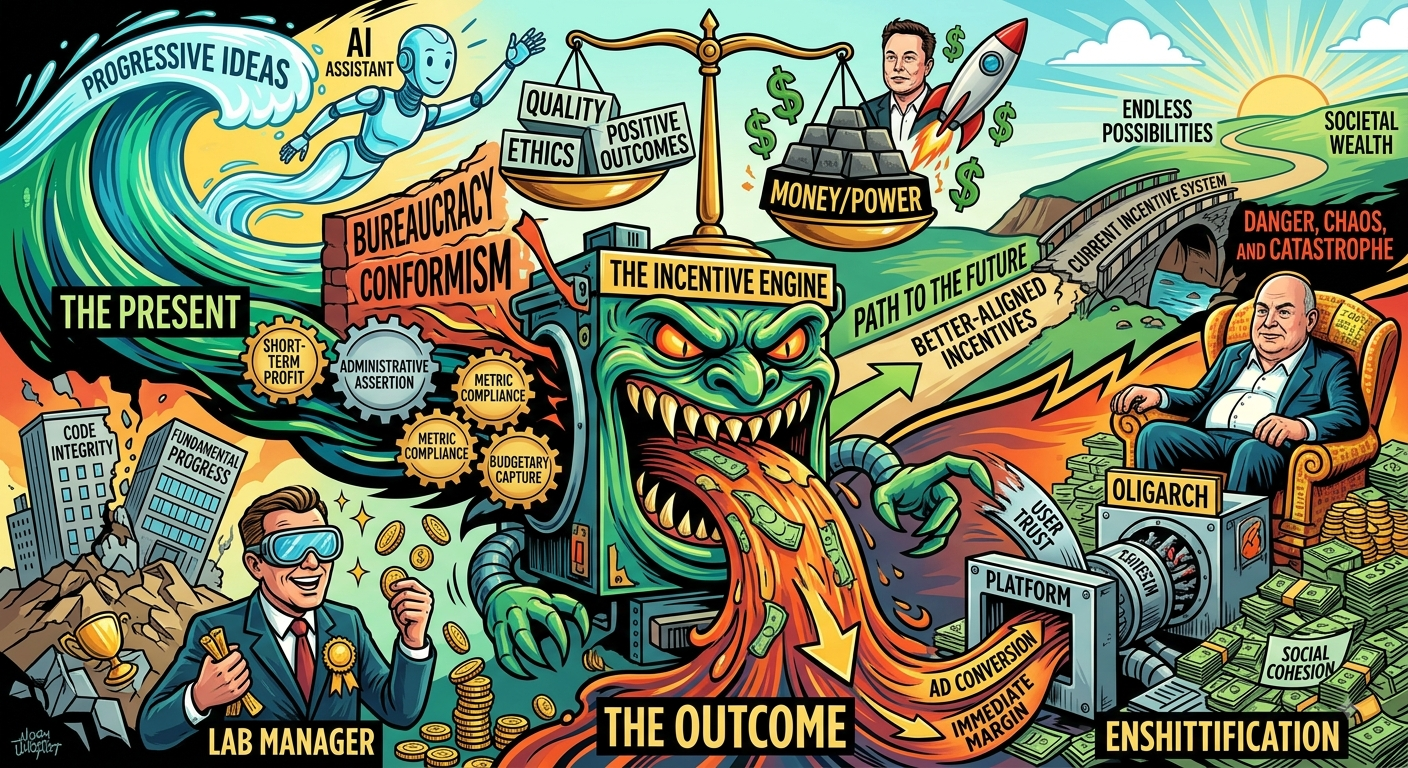
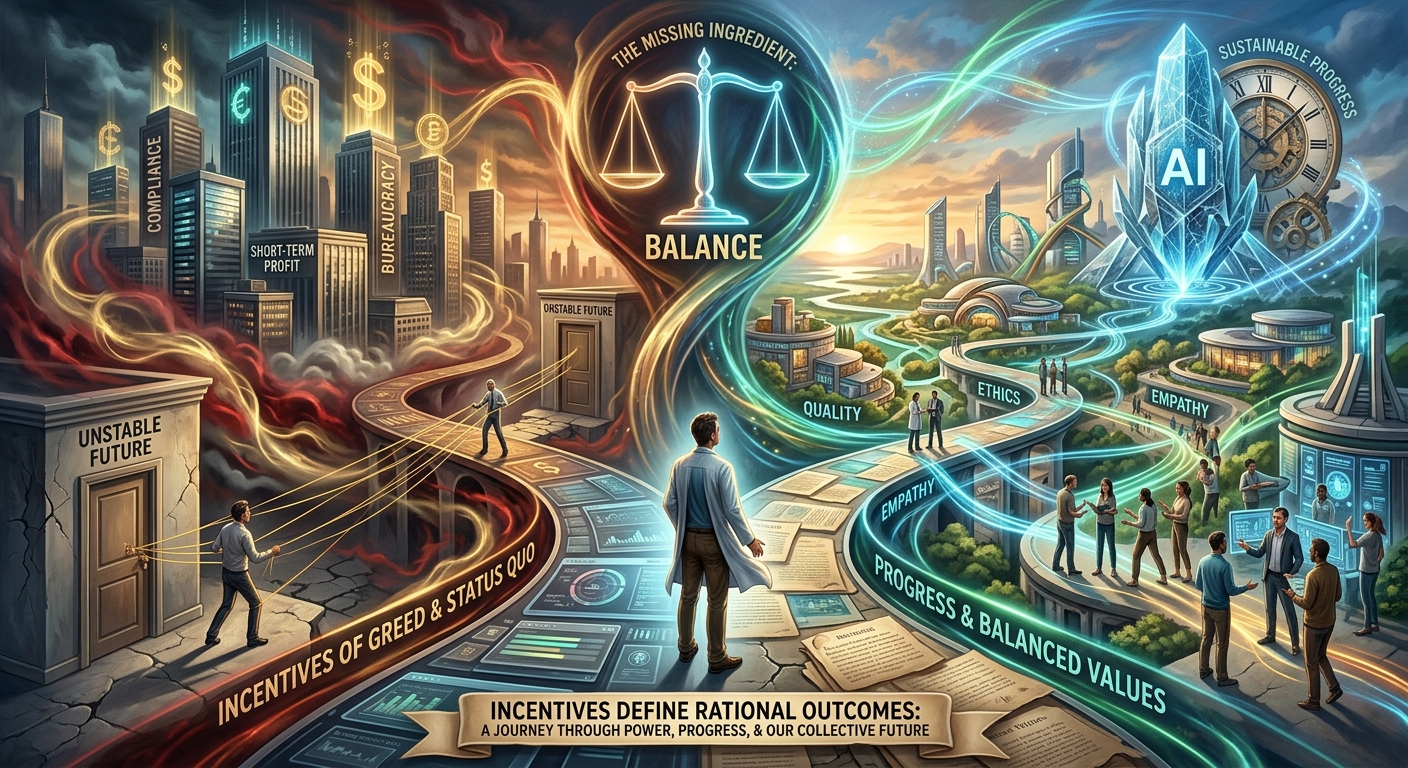
Show me the incentive and I will show you the outcome. — Charlie Munger

This is what an incentive structure tilted toward unethical behavior produces. It stops being a defect and becomes a feature. The absence of ethics turns into a vehicle for advancement, and competence becomes optional — worse than optional, because competence is expensive and difficult. Why pay for it? You can message success instead and skip the hard part entirely.

That is a recipe for institutional decline. No one is responsible for it.

Everyone is.

I never belonged there

04 Tuesday Aug 2026

Posted by Bill Rider in Uncategorized

≈ Leave a comment

If you do not work on an important problem, it’s unlikely you’ll do important work.–Richard Hamming

An answer to an Asshole’s Question

I talked to my mentor, and he passed along a comment Cilantro had made about me:

“Why did we hire him in the first place?”

This was the prelude to them fucking me. Cilantro was my director, so I was fucked. They were going to come after me. I had no defense except surrender. Discipline. Shitty performance review. Cut off from anything good. It worked, and I was gone.

The timing was perfect. After Covid, and some modestly distressing personal health issues, my activation energy was incredibly low. My father was in hospice. I had watched him decline and suffer for over a year. Wasting my life working for incompetent, unethical assholes was an easy choice. I had checked my finances. I have two pensions too. I could retire and be comfortable.

It turns out Cilantro was asking a good question. Why was I there? Why had I come there in the first place?

The answer is twofold. My hire seemed a no-brainer back in 2007. The code I was working with, ALEGRA, was having problems. I had deep knowledge of hydrocodes from my years at Los Alamos. I knew how to write them, and I knew the details and foundations of hydrocode methods and applications. I was also a V&V expert. I had a great research record. I had been a line manager and a program manager. They were thrilled to have me.

All of those reasons were wishful thinking. It was a terrible fit. As difficult as it is to admit, Cilantro had a point. Why did they hire me? What use was I to that place?

I hired into the Computer Research Center, one of the most externally focused places at Sandia. It smells a little like Los Alamos. The difference is that this center could give two fucks about the Lab mission, and I was going into the most mission-focused department in it. My values were to care deeply about the Lab’s mission. Contributing to it was paramount. Thus, in the Computer Research Center that department was on the outside looking in. The rest of the Center was on the outside looking out.

If you gave a fuck about the mission, you worked in the Engineering Sciences Center. In fifteen years I would end up there. The problem is that Engineering Sciences is long on engineering and short on science. It bridges to the weapons program, where the knuckles drag. Engineers get answers and don’t ask questions. You aren’t there to think, just to do. The real problem is that the weapons program at Sandia is even worse. They are stuck in the past, engineering everything with decades-old approaches, unable to modernize.

The first draft of this essay was angry. Yes, I am angry about this. Even more, I am sad. The state of this great institution is pitiful and worth mourning. It reflects the same thing we see across society. Decline. Lack of ethics. Lack of competence. Abusive leadership. We deserve better and we are getting worse.

In a fully developed bureaucracy there is nobody left with whom one could argue, to whom one could present grievances, on whom the pressures of power could be exerted.– Hannah Arendt

Institutional Rot

Again and again, Sandia gave me reasons to question its choices about leadership. It seemed to choose people without the ethical core needed for leadership. Perhaps the leadership is somehow trained to abuse power. Whatever the reasons, we have the wrong people in positions of responsibility. It matters since the responsibility is for the USA’s nuclear weapons. Instead of seeking excellence in technical execution, they seek power and the easy way. This is not serving the nation.

It ends up being another example of a rotting institution. The motives and incentives of Sandia’s management are the opposite of what they should be. As a result, I don’t fit. My abilities and skills are not useful since they are guided by values. Those values of technical excellence serving national security are useless. Why find and fix problems when you can just wish them away? Why get the right answer for the right reasons, when you can just define success? This is the way Cilantro manages. Abuse power and squash anyone who gets in the way. Like me.

If this continues much longer, Sandia will cease to be fit for National Security. The Nation deserves better. I am sad to see this. I am sad to have spent any of my precious time on Earth serving this travesty. I am sad to see these people in positions of responsibility. They have authority and exercise it. Their exercise is for bad. Perhaps Sandia teaches and nudges them toward this behavior. This is a rot I want no part of. We see it everywhere in society. If Sandia is any guide, the USA is in real deep trouble. If a great institution acts like this, what other horrors are afoot? We are in danger. Our leaders are letting us down.

The greatest evil is not now done in those sordid “dens of crime” that Dickens loved to paint. It is not done even in concentration camps and labour camps. But it is conceived and ordered (moved, seconded, carried, and minuted) in clean, carpeted, warmed, and well-lighted offices, by quiet men with white collars and cut fingernails and smooth-shaven cheeks who do not need to raise their voice.– C. S. Lewis

Why I Quit

It is not that we have a short time to live, but that we waste a lot of it.– Seneca

Mortality was sinking in. I had to make some clear decisions about who I was, what I would do with the time left, and what values I would stand for. I had grown tired of cutting corners and making changes to fit in. Letting go of my most cherished values and ethics was one thing too far, one psychic blow I couldn’t take. I needed to be myself. I needed to stand up for the right thing.

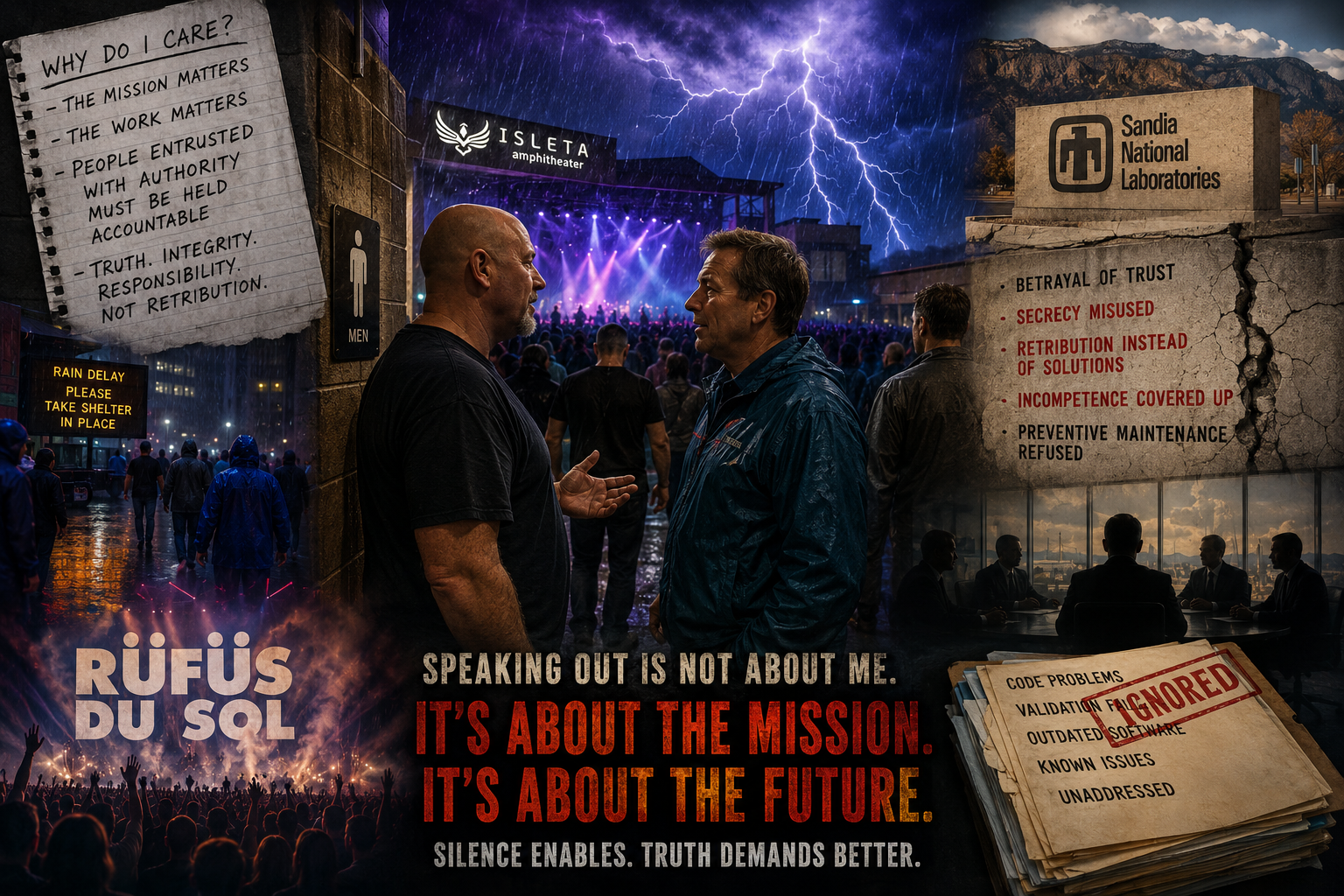
What became very clear was that I stood in opposition to the values of this institution. Not its stated values, but its practiced values. In a sense, those values are most fully articulated in who the institution puts in positions of power, and as I’ve noted before, they put some genuinely awful people in those positions. Cilantro is an exemplar, and he is just like some of the other awful people they put in charge of things. When they hand these people authority, and those people exercise it through abuse of power, it speaks volumes about what Sandia actually is, as opposed to what it purports to be. You see people through what they do, not what they say. I was not prepared to sacrifice one more iota of my self-respect or my time supporting actions completely antithetical to my most cherished professional values.

The Report

For a successful technology, reality must take precedence over public relations, for Nature cannot be fooled.– Richard Feynman

The clearest evidence about the ruling that the report I’ve spent some time explaining is export-controlled can be found on OSTI itself. I received a letter demanding I take the report down after I downloaded it from the OSTI website. I got the document from a public website where things only get posted after a process. This needs some explanation. Only unclassified unlimited release documents go there. These documents have gone through a process where managers and other officials review them. This is not some decision the author makes. It is must be approved before it is issues a unclassified release number.

I don’t know what happened, but I can surmise. I had used the above process hundreds of times. It takes time, and other eyes see it. The report was in the bullseye of my professional knowledge and experience. I had worked on these test problems for decades with codes almost identical to the ones report. The results are predictable. Clearly, other members of management decided that it needed to be export-controlled instead after the fact. The reasons were political, not technical. There is NO valid technical reason for making it export-controlled. NONE! This is corruption and nakedly so. Fundamentally, the categorization of this report as “export controlled” is a lie. It is a lie focused on hiding bad results and, worse yet, shows no interest in solving the identified problems.

The real evidence of this is what you can find on the OSTI site. There are a number of documents related to CTH. Moreover, many of these are closer to the export-controlled line than the one in question. Just look at all the reports about high explosives. What is truly the smoking gun are two documents that are more extensive, but ostensibly the same thing. Verification reports including the test problems in the problematic report. The only difference is the nature of the results. These other reports were written trying to show the code is just fine, correct. They want to show that everything is okay. They do not identify any problems. This is for a good reason; they were written to deflect valid criticism.

There are two reports, from 2020 and 2021, on the verification and validation of the same code, CTH. Those reports were done with the objective of showing that the code is just fine. Checking the V&V box and moving on. This is verification done to blunt criticism, not partner with the science and engineering. That runs counter to the report I’ve discussed, which showed problems with the code. I encourage you to go to OSTI and download them. You only have to search under verification and CTH to find them. All of this just proves the corrupt intent of the managers, and the misuse of the export-controlled statute.

…a kind of scientific integrity, a principle of scientific thought that corresponds to a kind of utter honesty — a kind of leaning over backwards. For example, if you’re doing an experiment, you should report everything that you think might make it invalid — not only what you think is right about it. – Richard Feynman

With regard to these earlier reports, the manager for CTH at that time knew damn well about my expertise in both shock physics and verification of shock physics codes. Knowing this, he never asked me to provide a peer review of those reports. I expect this is because he knew that I would find fault with them. They were not interested in doing excellent work. They were interested in deflecting criticisms.

What this also makes clear is that the decision is a pure abuse of power. They declared the report export-controlled because they can, not because any principle or technical fact required it. Acting without principle is simply a confirmation of the power they hold. Exercising that power is, first and foremost, how they manage. It is exemplified by the behavior of Dr. Cilantro, their boss. This is a key part of institutional rot across society. Sandia is just another example.

This provides absolute clarity about why the report is export-controlled. Management does not like the results. They are using export control to hide results they don’t like. It is unethical and corrupt, and it is emblematic of the way science is managed in the United States today. Corruption and the lack of ethics are everywhere.

It appears that there are enormous differences of opinion as to the probability of a failure with loss of vehicle and of human life. The estimates range from roughly 1 in 100 to 1 in 100,000. The higher figures come from the working engineers, and the very low figures from management.–Richard Feynman

…it would appear that, for whatever purpose, be it for internal or external consumption, the management of NASA exaggerates the reliability of its product, to the point of fantasy. – Richard Feynman

Verification as a Checkbox

The first principle is that you must not fool yourself — and you are the easiest person to fool.– Richard Feynman

There is one key difference with the verification reports that are available on OSTI. Those were done in order to provide a checkbox that verification had been performed. The main message is: we want everyone to shut the fuck up about verification, this code is just fine. The work was done by checking the box and declaring the code okay so that everyone could move on to more important things. Now we can move on to solving applications.

This is verification in its most egregious form, treated as a tedious and useless activity demanded by people who care about correctness and science. Those people are pests, and we do this work to shut them up. The last thing Sandia is really concerned about is high-quality technical work, which is why I was never asked to peer review these other reports. I found them by chance after they were published. Even if I had reviewed them, anything I said would have been ignored, because the purpose of the documents was to close the book on verification rather than harness it to make anything better.

This episode gets to the core of the question. You have reports that fall right into the bullseye of my professional and scientific expertise, and Sandia shows no interest in that expertise or in using it. They see verification as one of the checkboxes engineering requires, and they look to put it to bed as simply as possible so they can get on to the real work of engineering things and grinding out results. Getting things right is something that can be handled by calibration. Getting the fundamental hydrocode methods and solutions correct is something they have no real interest in. If it happens, it happens, but correctness is unnecessary, surplus to requirements. Engaging my expertise is a complication they can do without.

Nothing says “I am in the wrong place” more clearly than this

You could leave life right now. Let that determine what you do and say and think. – Marcus Aurelius

Coda

Sunlight is said to be the best of disinfectants; electric light the most efficient policeman. – Louis Brandeis

This was no place for somebody like me to work. I was wasting my time, my effort, and my life there, and I would encourage anyone with a desire to do creative, original work to stay away. It’s not for them. If you want a good paycheck and decent benefits, and you are prepared to follow orders without regard to the intelligence of those orders or the ethics involved, it’s the place for you. As long as you’re willing to follow the directives of managers who show some degree of incompetence and a general lack of ethics, you will do well there.

The truth is that I never belonged. It was broken before I arrived. Sandia is a place for small ideas, and it is about executing those small ideas with persistence and precision. It is not about accuracy or correctness. Its excellence is execution without regard for purpose or value. I am a scientist, not an engineer, and in the Sandia system the engineer executes whether the idea is a good one or not.

The real tragedy is the time that I wasted, when my skills and talents could have been used for something better. The other tragedy is the irresponsibility of those in positions of power at Sandia. They are overseeing aspects of the nation’s nuclear weapons and doing so without competence. That lack of competence is partially technical and partially ethical. In either case, the nation is being mis-served.

I really should stop writing about Sandia. I spent twenty years there, and I’ve come to realize it was a professional mistake. I never fit in, and while I was there I only grew to fit in less. Perhaps my frustrations boiled over and I self-immolated. I took a change of jobs into a place where I was even less suited. It was always a poor fit, and moving to Engineering Sciences amplified it. When Cilantro arrived as director, it was a reversion to form and my days were numbered. Fortunately, I had been getting my retirement shit together. I wasn’t going to put up with their bullshit, so I pulled the ripcord.

Drive out fear, so that everyone may work effectively for the company.– W. Edwards Deming

References

Kamm, James R., Jerry S. Brock, Scott T. Brandon, David L. Cotrell, Bryan Johnson, Patrick Knupp, W. Rider, T. Trucano, and V. Gregory Weirs. Enhanced verification test suite for physics simulation codes. No. LLNL-TR-411291. Lawrence Livermore National Laboratory (LLNL), Livermore, CA, 2008.

Duncan-Reynolds, Gabrielle Christiane, and Christopher T. Key. Improvements to the New CTH Code Verification & Validation Test Suite (FY2020). No. SAND–2020-13925. Sandia National Laboratories (SNL-NM), Albuquerque, NM (United States), 2020.

Duncan-Reynolds, Gabrielle C., and Christopher T. Key. FY2021 Improvements to the New CTH Code Verification & Validation Test Suite. No. SAND2022-7834. Sandia National Laboratories (SNL-NM), Albuquerque, NM (United States), 2022.

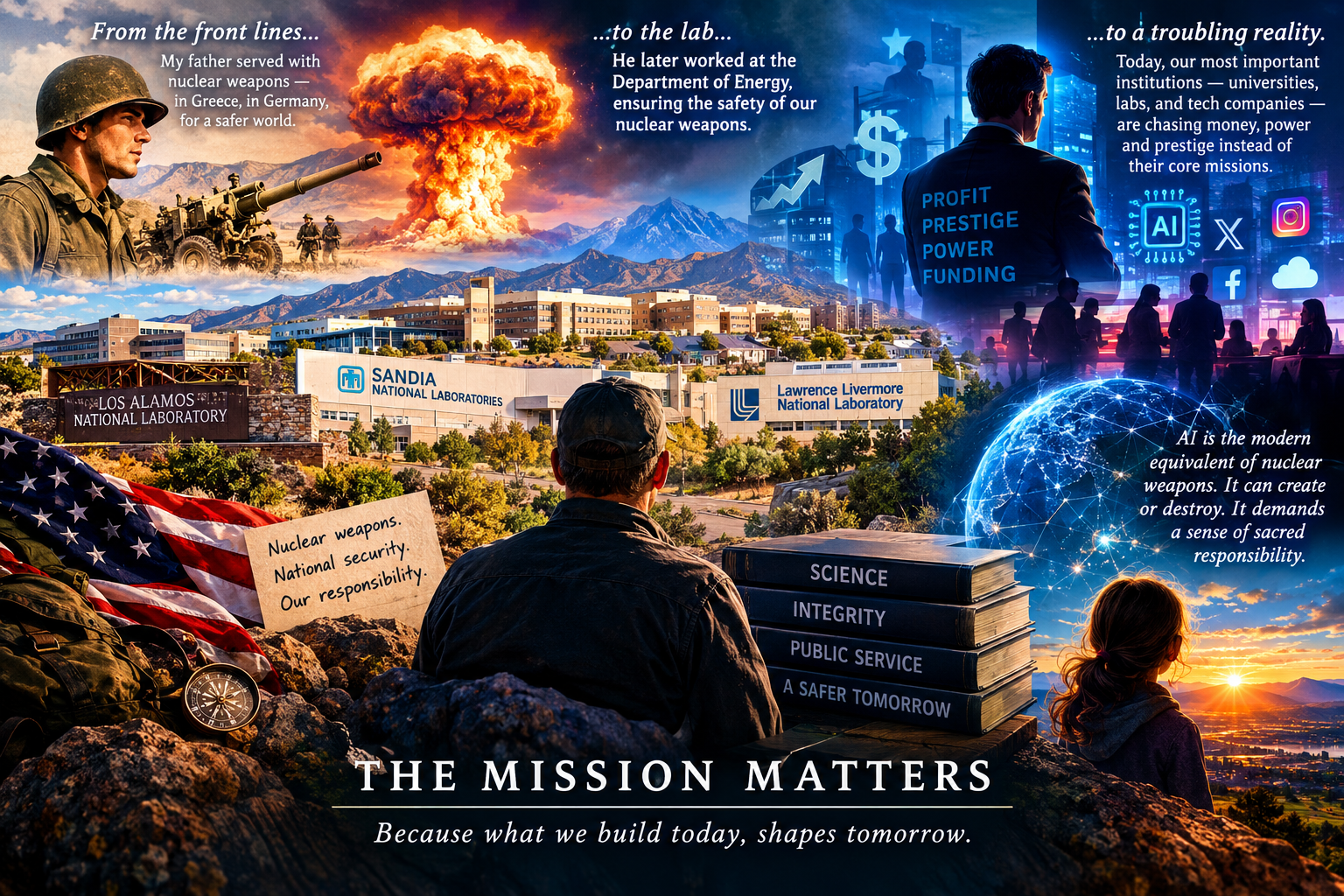
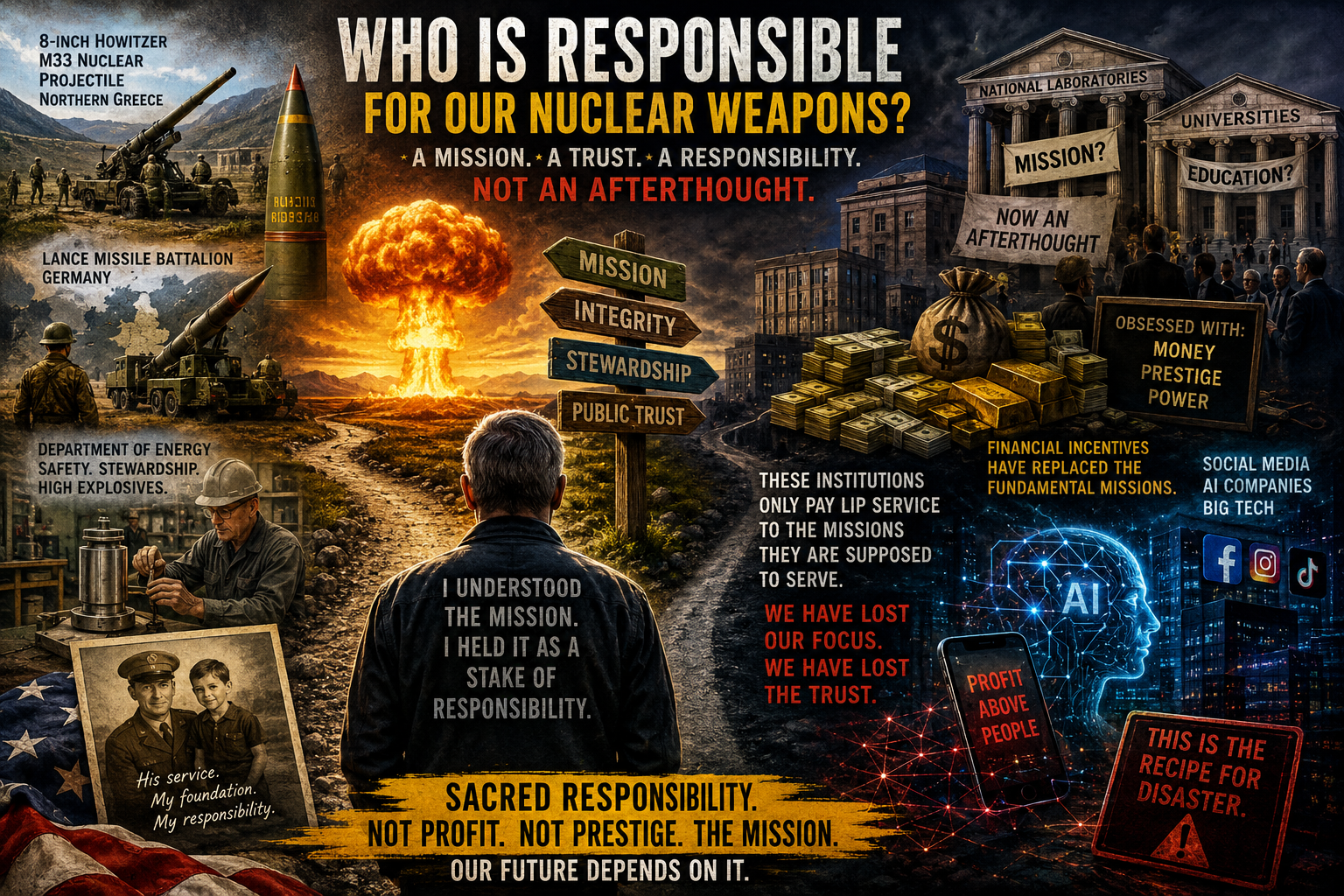
The early angry illustration.

Subscribe

  • Entries (RSS)
  • Comments (RSS)

Archives

  • August 2026
  • July 2026
  • June 2026
  • May 2026
  • April 2026
  • March 2026
  • February 2026
  • August 2025
  • July 2025
  • June 2025
  • May 2025
  • April 2025
  • March 2025
  • February 2025
  • January 2025
  • December 2024
  • November 2024
  • October 2024
  • September 2024
  • August 2024
  • July 2024
  • June 2024
  • May 2018
  • April 2018
  • March 2018
  • February 2018
  • January 2018
  • December 2017
  • November 2017
  • October 2017
  • September 2017
  • August 2017
  • July 2017
  • June 2017
  • May 2017
  • April 2017
  • March 2017
  • February 2017
  • January 2017
  • December 2016
  • November 2016
  • October 2016
  • September 2016
  • August 2016
  • July 2016
  • June 2016
  • May 2016
  • April 2016
  • March 2016
  • February 2016
  • January 2016
  • December 2015
  • November 2015
  • October 2015
  • September 2015
  • August 2015
  • July 2015
  • June 2015
  • May 2015
  • April 2015
  • March 2015
  • February 2015
  • January 2015
  • December 2014
  • November 2014
  • October 2014
  • September 2014
  • August 2014
  • July 2014
  • June 2014
  • May 2014
  • April 2014
  • March 2014
  • February 2014
  • January 2014
  • December 2013
  • November 2013
  • October 2013
  • September 2013

Categories

  • Uncategorized

Meta

  • Create account
  • Log in

Blog at WordPress.com.

  • Subscribe Subscribed
    • The Regularized Singularity
    • Join 64 other subscribers
    • Already have a WordPress.com account? Log in now.
    • The Regularized Singularity
    • Subscribe Subscribed
    • Sign up
    • Log in
    • Report this content
    • View site in Reader
    • Manage subscriptions
    • Collapse this bar
Loading Comments...