Or
A Social Revolution is taking us to the Edge of Civil War
We’re collectively living through 1500, when it’s easier to see what’s broken than what will replace it.
― Clay Shirky
 I was talking to some people a week ago about the times we live in. I wondered aloud if this is what the 1960’s felt like with societal upheaval seemingly everywhere. Are we in the midst of a similar level of upheaval that will leave a much different World in its wake? Looking at the World the signs of major change and the inevitable reaction to it are everywhere. The ubiquity of the Internet through mobile computing is changing society in a myriad of ways. Demographics are approaching tipping points while the inequality of wealth is at or over an economic tipping point. Open bigotry, racism and class struggle are erupting across the World. Fear mongering and demagoguery are the stock and trade of politicians seeking to benefit from the under-currents of discomfort. The populace is afraid and the political opportunists are poised to take advantage.
 Terrorism and ISIS are simply symptoms of the times rather than driving forces. The same for the rise of right wing extremism in the United States (and Europe); it is a symptom of the times. They seem to be driving the issues and debate, but instead should be viewed as the most glaring evidence of the conflict poised to erupt. Both of these major problems are simply rather natural reactions to the upset of numerous equilibriums we once relied upon. Numerous forces have destabilized our society and reactionary movements are to be expected as a result.
Change is not what we expect from religious people. They tend to love the past more than the present or the future.
― Richard Rohr
My conclusion is that today’s World is in the midst of changes and conflict that may be larger, more dangerous and more pervasive than anything we have seen for centuries. The 1960’s were tranquil by comparison to the storm we are living through.
The essence of Conservatism is fear: fear of what is not understood, fear of change, fear of the new, fear of what’s different, fear of the other.
― Gene Pozniak
While the two symptoms would seem to be at odd with each other, they are actually allies, forces of conservatism trying to overthrow the vast changes pushing forth out of demographics, economics and technology. Both ISIS and right wing extremism have strong religious elements combined with a distain for the new, liberalism arising everywhere. The new societal structures emerging are terrifying to the traditional elements in society. Nothing spurs a conservative response like feminism, sexuality and gender. Both have elements of violence in their approach being pervasive with ISIS and still on the fringe with right wing extremists, but becoming more normative. While both use technology to varying degrees in furthering their cause ultimately technology is one of the elements driving these forces toward reactionary extremist views.
Through the open warfare conducted by the fearful right wing in the West and terrorism from the Islamic World, we see effective combat against the forces of change in society across the World. Whether it is directly through violence as with ISIS or the rise of the National Security state in the West, the open, pluralistic and secular society is driven back into the shadows. In many respects the impact of terrorism is similar to the military-law enforcement’s response to it; the freedom of the populations exposed to it is reduced. 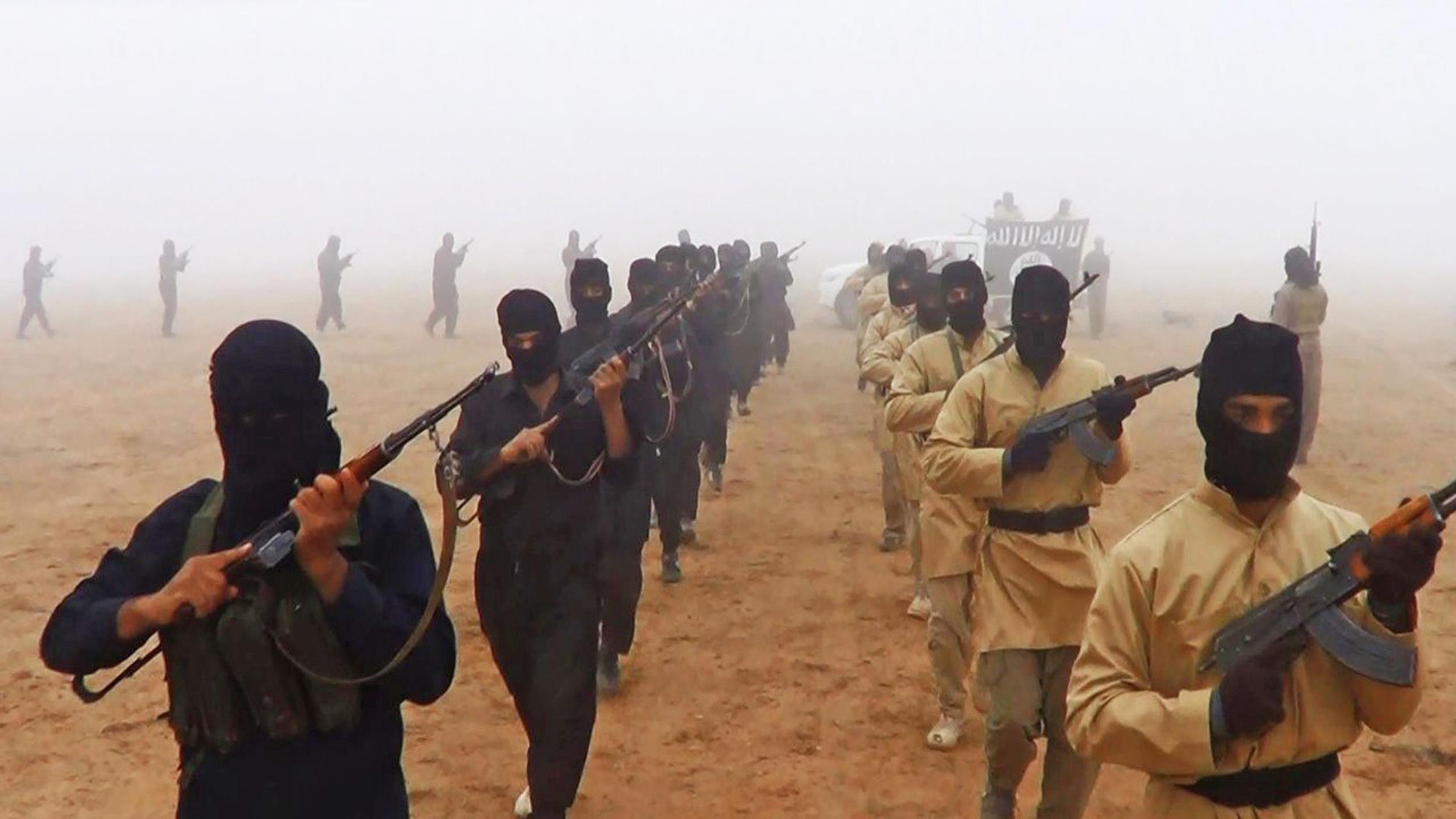 It acts to squash the liberalization of society by violence or the response to it. Fear of terrorism is the greatest impact of terrorism and its most powerful weapon. The right wing reactionary movements in the West act to empower terrorists by stoking the elements of fear in society. These right wing movements use fear to further their own goals for pushing back against secular elements.
When we change the way we communicate, we change society
― Clay Shirky
In this way ISIS and the right are allies. They both seek to drive social progress backwards and revert the rules of life back to the middle ages. They hate each other because of bigoted religious views held on both sides, but socially their aims are quite similar. Both seek to impose a religious rule at home and across the world largely in reaction to the discomfort arising from the vast changes in society that make them
uncomfortable. Religion in this case is simply a tool of the fearful to drive away the changes that drive their discomfort. Perhaps nothing stokes the fear of the reactionary elements like sex. Whether it is the empowerment of women in society toward equality, freedom of sexual expression, normalization of homosexuality, broader changes in the definition of marriage, or gender, these conservative elements respond with anger, violence and fear.
Our social tools are not an improvement to modern society, they are a challenge to it.
― Clay Shirky
Of course this societal Molotov’s cocktail is fueled by more than just sexuality; it has an economic element to push it over the top. We have an economic system that is near crisis. In the United States the inequality of wealth is near an all-time high. In the past this level of inequality preceded massive upheavals. Society stands on the brink of tumbling into despotic governance or rampant corruption if it isn’t already there. The rich know this and work actively to control the levers of power to hold onto and increase their ill-gotten wealth.
[N]ew technology enables new kinds of group-forming.
― Clay Shirky
In the Islamic World this sort of inequality is epidemic and provides a fertile breeding ground for the sort of political-religious extremism that ISIS is. Nothing would defuse this ticking time bomb better than economic equality and education. Ignorance and poverty are the fuel for the violent extremism we see. Moreover the United States in particular and the World in general is well on its way to creating the same elements with itself due to corrupt and incompetent governance. This volatile mixture is itself the recipe for revolution or societal free-fall, but even more problems contend to make these times uniquely dangerous.
How is the United States at once the most conservative and commercial AND the most revolutionary society on Earth?
― Christopher Hitchens
Technology allows new things to happen, new ways of communicating, and new ways of living, and new ways of working. Each of these threatens the status quo and stokes discomfort especially among those not ready for change. In many respects technology has the impact of enabling the inequality to grow, but also democratize the masses and allow liberalization of many social norms. The rich and powerful have the advantage of training and education, buying technology, but have the disadvantage of being conservative and not accepting changes. The key to the discussion is the ubiquity of the technology’s capacity to create the environment for change and the threat it poses to the foundation of our lives.
One of the biggest changes in our society is the shift from prevention to reaction…
― Clay Shirky

This has played out in the Arab spring. Social media played a role in powering a popular uprising only to see much of the progress undone by reactionary counter-movements. To a large respect the cancer that is ISIS arose from this environment. Just as ISIS uses social media to spread its message, the populist movements similarly utilize this means to boost their power base. While the use of social media by ISIS is disquieting, the power of social media is strongly slanted towards being a force for liberalizing social structures across the World. To win the fight against forces like ISIS we must simply have faith that the force of light and good are stronger than the dark. Social media is like everything in humanity; it can be used for good or evil to equal measures. Those who would destroy its power because of fear act in a manner that makes them evil. The fear used and powering the right wing reactionary movement is itself an evil that must be defeated.
Collaboration is not an absolute good.
― Clay Shirky
The final element is this recipe for crisis is environmental danger. There is a combination of issues that will produce tremendous opportunities for warfare, violence and chaos. Climate change is an active element in producing and exaggerating economic and political problems Worldwide. Shortages of food, water and 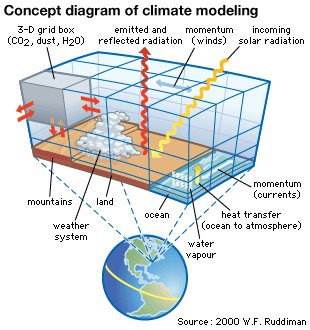 energy create wars and fuel elements of extremist movements. Every aspect of society that reacts poorly to social changes is driven further by environmental crises. Together these elements produce a deep well of danger for much of the World. At the same time we see the right wing reactionary apparatus is geared to denying the impact of environmental change. To a large degree this reaction is dominated by the business element’s desire to not kill the goose that is laying golden eggs.
What is changing in society? We are in the midst of massive changes in how our social structures work.
At the same time as this massive social change, we see economic conditions that are primed for conflict. The levels of inequality both nationally and internationally have evolved to a level that threatens the stability of society by themselves. We already dodged a bullet seven years ago when our financial system almost c ollapsed. We have done far to little to assure that the sort of bubble that created that problem cannot happen again. Instead we are primed for another crisis. In the United States the steady decline in the middle class is producing an increasingly stratified country. Levels of poverty are growing and the educational system that serves to buoy citizens against the downward forces is falling apart. The economic conditions produce a real source of fear and are useful for collecting people into fear-driven angry mobs.
The increasingly level of corpulent wealth among the rich is working to remove resources from society as a whole, and pitting the rich against the poor. The rich are growing in their ability to control the levers of political power primarily to attempt to stabilize the economic and legal systems in a manner that benefits the rich. The fear of change, terrorism and race is a perfect vehicle for the rich to exploit. All of these things create a recipe for an angry mob under the control of the rich and powerful. Right now the angry mob is supporting Donald Trump, and aren’t exactly acting as the rich (aside from Trump) would like. The rich may get the last laugh and put one of their own puppets in control of the mob. Overall it is simply another element in looking toward a chaotic outcome.
The social fabric of society is also changing in ways that stoke the fears of the populace. Technology is changing how we interact with one another in a myriad of ways. Facebook is the simplest and perhaps most innocuous of these forces. Other aspects of the Internet and mobile apps have a greater degree of impact on society. Changes in how relationships form, develop and proceed are undergoing fundamental changes. The nature of the family unit, marriage and our basic identity as adults is evolving. Your tribe no longer depends upon locality, but now can form remotely and far more specifically a person’s interests and desired social niche.
 The deepest penetration of this change has been seen in the societal adoption of gay marriage, but it is the tip of a societal iceberg. It is driven by a massive change in societal comfort with homosexuality. Almost everyone now knows an openly gay person, and sees them as someone who needs their rights to be respected. Beyond gay marriage movements are afoot to normalize polyamourous relationships, open marriage, and other forms of family and relationship dynamics. Online and mobile communication allows new communities to form without intersecting with traditional mediums of social structure.
 Sexual freedom that provided one of the key elements for the 1960’s is undergoing a new renaissance revolving around mobile computing. Mobile apps and new forms of dating like Tinder, OKCupid are the most innocuous forms for these changes in the relationship landscape. The forces of conservatism are horrified and fearful of these changes, and are mobilizing to push back against them. All of this is ripe for deep and wrenching conflict on new social battlefields. Just as the forces of liberalization utilize modern technology, the forces arrayed against changes organize themselves with modern technology too (ISIS is an example!).
All of this comes together to challenge the traditional views of what constitutes moral behavior. Discussions of morality become the fuel for the right wing reactionary movements. This produces a deep societal tension between those who are freed by personal prisons through liberalization of morality and those whose power is magnified by the older moral norms. LBGT issues are a common lightning rod for polarization of the two sides of the equation. While LBGT is the epitome of the tensions around morality, it is the tip of the iceberg. All the elements in the modern World conspire to create quantries to be solved and challenges to traditional morality.
In the United States and Europe right wing extremism is a reaction to all of the change. There is a pervasive social, religious and racial basis to these reactionary movements. They are responding to all of the changes seen across society at large. The combination of quickly growing minority populations in Europe and the impending minority majority in the United States has the traditional white majorities terrified. The combination of gender, sexual and social changes in the structure of families and relationships are furthering the depth of fear of change. All of this is driven by a combination of demographic shifts, technology and generational changes that are inevitable. This does not mean that the forces of status quo will not fight back. The resistance to change will be mighty and the potential for violence is rather extreme.
 ISIS is another reactionary force. It is a reaction to a broad based economic deprivation and widespread corruption in the Islamic World. Of course the West has had a hand in creating the elements in Islamic society that have produced ISIS. The form of extreme religious views is simply a detail, not the core of the problem. ISIS is not an Islamic movement; it is driven by large scale poverty, lack of opportunity and powerless masses. It derives its power and manpower base from the millions of poor, uneducated and desperate masses in the Islamic World. The elements of religious extremism play to lack of economic power and uneducated populace whether it is Islamic or Christian.
The irony of ISIS is how alike the American and European right wing movements they are. They should be allies and thankfully they cannot be. The truth is that the right wing movements in the West help ISIS with every bomb they drop and every right they suppress. The liberalization of the West is the single greatest weapon against ISIS. Feminism, secular society, mass media and sexuality all work to undermine the right wing whether it is Christian-based or Islamic. Our movies, television, Facebook and yes our porn all work to hurt ISIS. When the right wing religious zealots in the West attack any of these liberal forces, they help ISIS. The right wing in the West would like to unplug everything that would act to undermine ISIS.
 Change is here; change is upon us. There is no going back, but there is going to be deep conflict around all these beachheads. The forces of inequality and traditional society will not go away quietly. Traditional religion, gender, family and inequality will not relinquish their power without a fight. The changes in society are giving power to the disenfranchised, and they will not go back into the shadows without a fight either. This is a recipe for conflict, warfare and perhaps even revolution. We may be set for a period of change in society that will make the 1960’s look like a peaceful serene episode in history.
This creates the recipe for war.
Real generosity towards the future lies in giving all to the present.
― Albert Camus

 World. On the other hand, the downsides to the current milieu with regard to science are stark and obvious. Science is in complete disarray and we are to blame.
 climate has become a festering and poisonous environment, the conduct of science has taken on a similar air. Part of this issue comes from the public funding of science, which is an absolute necessity considering the utter wasting away of corporate science. The imposition of short-term thinking as the principle organizing principle for industry has obliterated basic research at the corporate level. Unfortunately the corporate mantra has been adopted by the government as a way of improving the quality of governance. This has simply multiplied the harm done by the sort-term thinking and its ability to ravage any long-term accomplishments.
 The truth is that short-term thinking is bad for business, bad for science, bad for careers, bad for everyone except those at the top. It only benefits activities like finance as a way of powering their moneymaking shell game. It benefits the very rich and their rent-seeking behavior. We get sold a complete line of bullshit in calling all the finance “investment” when it is simply moving money around to make more money. The middle class has been sold on this strategy through their retirement accounts, but this is the equivalent of a bribe as it only buys their acceptance of a system that harms the middle-class in the long-term. The only interest that truly benefits is the status quo that is locked in from this focus. For science, the short-term thinking is simply destructive and a recipe for mediocrity and lack of progress. Again, the problems are only seen in the long-term when the lack of scientific progress will harm our descendants.
 For me I see my life and career playing out in this shitty time. I could have been part of something bold and wonderful with science providing the backbone of an important societal endeavor. Instead we are destroying research institutions through utter neglect. We are wasting careers and lives in pushing down risks due to irrational fears. All of this is done in service to short-term thinking that benefits the rich and powerful. No one else benefits from the short-term thinking, no one, it is simply a vehicle for empowering the status quo and assuring that the identities of those on top do not change. It is the straightjacket through which lack of social mobility arises.
 All one has to do is look at the political environment today. Americans and perhaps the entire Western world have never been more fearful and afraid. At the same time the World has never been more peaceful. Our society and so-called leaders amp up every little fear and problem into a giant boogieman when the actual reality is completely opposite. We have never ever been safer than today. This is true even with the orgy of gun violence in the United States. The powers that be use the tiny danger of terrorism to drive the forces of the status quo while utterly ignoring larger dangers (like firearms). The truth is that we have never had less to fear. Yet fear is the driving force politically and used to sell fear-spewing candidates to a weak, shivering populace. Fear sells products to people whether is drugs, cars, media content, guns, or almost anything else. Our mass media is simply a tool of their corporate overlords with the ultimate design to enslave us to the status quo. Our society runs on fear and fear is used to enslave the populace. Science is simply an innocent bystander slain by the societal drive-by.
 This thinking infests the approach to high performance computing where a tried and true path of relying upon Moore’s law has powered modest improvements for decades. At the same time we have avoided progress in other areas of computing with greater benefits, but also greater risks and higher probabilities of failure. A prime example of this disservice can be found in numerical linear algebra where the solution of sparse systems has stagnated for decades. All the effort has been consumed by moving the existing methods to the new computing platforms, and little or nothing on improving the methods themselves. Orders of magnitude in performance improvements have been scarified to fear and risk avoidance. Let’s not forget that the principle beneficiaries of the current supercomputing program are computer vendors who will receive great sums of money to produce the monstrous computers being contemplated. These horrible machines will sap the resources left over to actually use them and simply compound the stasis already evident in the field.
 n a very clear way we are taking enormous risks with our future. We are accumulating massive long-term risk by consistently taking the low-risk short-term path. This is clearest when examining the state of the careers in science. Once we allowed people to aggressively pursue research with a high change of failure, but the possibility of massive payoffs. Today we timidly pursue incremental progress, yet view this as enormously risky. The greatest risk of the continued pursuit of a computing hardware driven path in high performance computing is the destruction of promising scientific careers, and the destruction of a balanced program for advancing modeling and simulation. Make no mistake, the current approach to modeling and simulation is completely unbalanced. It is timid. It lacks creativity. It lacks vitality. It is not science-based; it is fear-based. It is the result of an unhealthy fixation on short-term thinking about progress.
 uncertainty in our knowledge is far larger than we are willing to admit. The sort of uncertainty that is present cannot be meaningfully addressed through the focus on more computing hardware (its assessment could be helped, but not solved). This uncertainty can only be addressed through a systematic effort to improve models and engage in broad experimental and observation science and engineering. If we work hard to actively understand reality better the knobs can be reduced or even removed as knowledge grows. This sort of work is exactly the sort of risky thing our current research culture eschews as a matter of course.
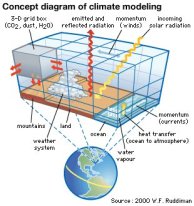
 account for multiple effects (turbulence, mixing, plasma physics, radiation and numerical resolution are common). In this cases the knobs may account for a multitude of poorly understood physical phenomena, mystery physics and lack of numerical resolution. This creates a massive opportunity for severe cognitive dissonance, which is reflected in an over-confidence in simulation quality. Scientists using simulations like to provide those funding their work with greater confidence than it should carry because the actual uncertainty would trouble those paying for it. Moreover the range of validity for such calculation is not well understood or explicitly stated. One of the key aspects of the calibration being necessary is that the calculation cannot reflect a real World situation without it. The model simply misses key aspects of reality without the knobs (climate modeling is an essential example).
 In essence there are two uncertainties that matter: the calibrated uncertainty where data is keeping the model reasonable, and the actual predictive uncertainty that is much larger and reflects the lack of knowledge that makes the calibration necessary in the first place. Another aspect of the modeling in the calibrated setting is the proper use of the model for computing quantities. If the quantity coming from the simulation can be tied to the data used for calibration, the calibrated uncertainty is a reasonable thing to use. If the quantity from the simulation is inferred and not directly calibrated, the larger uncertainty is appropriate. Thus we see that the calibrated model has intrinsic limitations, and cannot be used for predictions that go beyond the data’s physical implications. For example climate modeling is certainly reasonable for examining the mean temperature of the Earth. One the other hand the data associated with extreme weather events like flooding rains are not calibrated, and uncertainty regarding their prediction under climate change are more problematic.
 In modeling and simulation nothing comes for free. If the model needs to be calibrated to accurately simulate a system, the modeling is limited in an essential way. The limitations in the model are uncertainties about aspects of the system tied to the modeling inadequacies. Any predictions of the details associated with these aspects of the model are intrinsically uncertain. The key is the acknowledgement of the limitations associated with calibration. Calibration is needed to deal with uncertainty about modeling, and the lack of knowledge limits the applicability of simulation. One applies the modeling in a manner that is cautious, if they are being rational. Unfortunately people are not rational and tend to put far too much faith in these calibrated models. In these cases they engage in wishful thinking, and fail to account for the uncertainty in applying the simulations for prediction.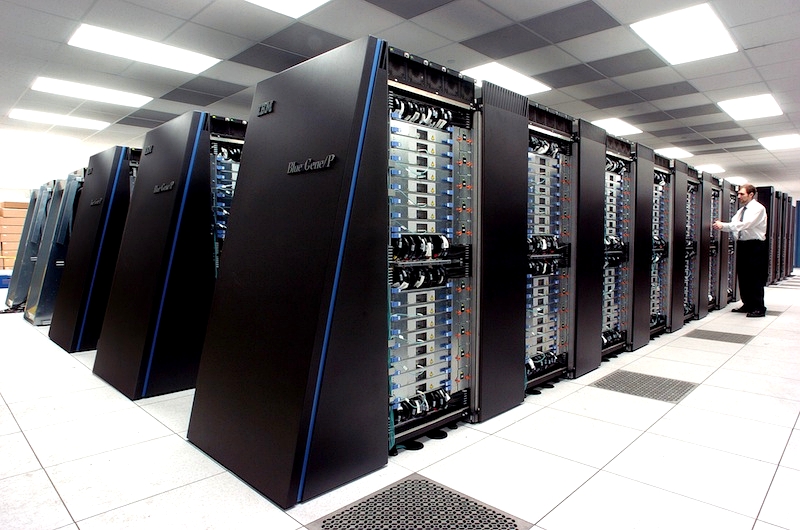

 national security issue to sell it without a scintila of comprehension for what makes these computers useful in the first place. The speed of the computer is one of the least important aspects of the real transformative power of supercomputing, and the most distant from its capasity to influence the real world.
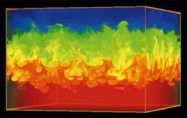 immense and truly transformative. We have deep scientific, engineering and societal questions that will be unanswered, or answered poorly due to our risk aversion. For example, how does climate change impact the prevalence of extreme weather events? Our existing models can only infer this rather than simulate it directly. Other questions related to material failure, extremes of response for engineered systems, and numerous scientific challenges will remain beyond our collective grasp. All of this

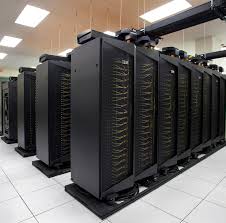
 Avoiding accountability is never a good thing. On the other hand too much overbearing accountability starts to look like pervasive trust issues. The concomitant effects of working in a low-trust environment are corrosive to everything held accountable. As most things the key is balance between accountability and freedom, too much of either lowers performance. Today we have too little freedom and far too much accountability in a destructive form. For the sake of progress and quality a better balance must be restored. Today’s research environment is being held accountable in ways that reflect a lack of trust, and a complete lack of faith in the people doing the work, and perhaps most importantly produce a dramatic lack of quality in the work (
 It shows in everything we do.
 Our accounting systems are out of control. They spawn an ever-growing set of rules and accounts to manage the work. All of this work is nothing more than a feel good exercise for managers who mostly want to show “due-diligence” and those they “manage risk”. No money is ever wasted doing anything (except increasingly all the money is wasted). Instead we are squeezing the life out of our science, which manifests itself as low quality work. In a very real way low quality science is easier to manage, far more predictable and easy to make accountable. One can easily argue that really great science with discovery and surprise completely undermines accountability, so we implicitly try to remove it from the realm of possibility. Without discovery, serendipity and surprise, the whole enterprise is much more fitting to tried and true business principles. In light of where the accountability has come from, it might be good to take a hard look at these business principles and the consequences they have reaped.
 Quality suffers because of loss of breadth of perspective and injection of ideas from divergent points of view. Creativity and innovation (i.e., discovery) are driven by broad and divergent perspectives. Most discoveries in science are simply repurposed ideas from another field. Discovery is the thing we need to progress in science and society. It is the very thing that our current accountability climate is destroying. Accountability helps to drive away any thoughts from outside the prescribed boundaries of the work. Another maxim of today is the customer is always right. For us the customers are working under similar accountability standards. Since they are “right” and just as starved for perspective, the customer works to narrow the focus. We get a negative flywheel effect where narrowing focus and perspective work to enhance their effect.
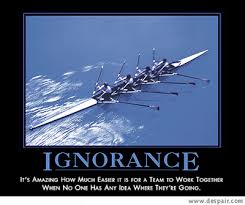 The end result of our current form accountability is small-minded success. In other words we succeed at many small unimportant things, but fail at large important things. The management can claim that everything is being done properly, but never produce anything that really succeeds in a big way. From the viewpoint of accountability we see nothing wrong all deliverables are met and on time. True success would arise by attempting to succeed at bigger things, and sometimes failing. The big successes are the root of progress and the principal benefit of dreaming big and attempting to achieve big. In order to succeed big, one must be willing to fail big too. Today big failure surely brings congressional hearings and the all to familiar witch-hunt. Without the risks of failure we are left with small-minded success being the best we can do.
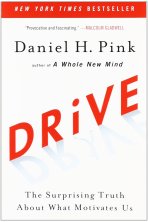 I was stunned by how empowering his description of work could be, and how far from this vision I work under today. I might simply suggest that my management read that book and implement everything in it. The scary thing is that they did read it, and nothing came of it. The current system seems to be completely impervious to good ideas (or perhaps following the book would have been too empowering to the employees!). Of course the book suggests a large number of practices that are completely impossible under current rules and opposed by the whole concept of accountability we are under today.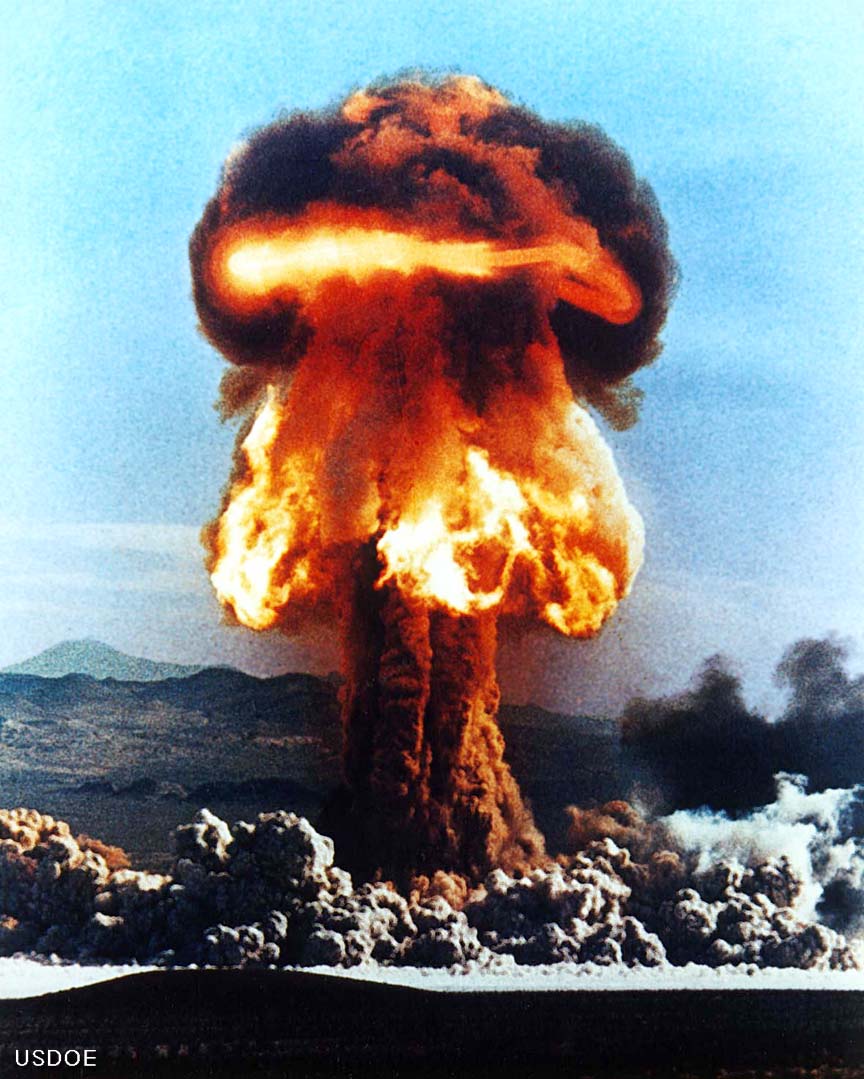
 ical reason not to test them; the idea of not testing is purely political. It is a good political stance from a moral and ethical point-of-view and I have no issue with taking that stand on those grounds. From a scientific and engineering point-of-view it is an awful approach, and clearly far from optimal and prone to difficulties. These difficulties can be a very good thing if harnessed appropriately, but today such utility is not present in the execution of our Lab’s mission. As one should always remember, nuclear weapons are political things, not scientific, and politics is always in charge.
 anniversary. Our political leaders are declaring it to be a massive success. They have been busy taking a victory lap and crowing about its achievements. The greatest part of this success is high performance computing. These proclamations are at odds with reality. The truth is that the past 20 years have marked the downfall of the quality and superiority of our Labs and the supremacy of these institutions scientifically. The program should have been a powerful hedge against decline, and perhaps it has been. Perhaps without stockpile stewardship the Labs would be in even worse shape than they are today. That is a truly terrifying thought. We see a broad-based decline in the quality of the scientific output of the United States, and our nuclear weapons’ Labs are no different. It appears that the best days are behind us. It need not be this way with proper leadership and direction.
 Nonetheless given the stance of not testing we should be in the business of doing the very best job possible within these self-imposed rules (i.e., no full up testing). We are not and we are not to a relatively massive degree. This is not on purpose, but rather by a stunning lack of clarity in objectives and priorities. We have allowed a host of other priorities to undermine success in this essential endeavor. By taking the fully integrated testing of the weapons off the table requires that we bring our very best to everything else we do.
 I’ve written a great deal about how bad our approach to modeling and simulation is, but it’s the tip of the proverbial iceberg of incompetence and steps that systematically undermine the work necessary to succeed. Where modeling and simulation gets a lot of misdirected resources the experimental and theoretical efforts at the Labs have been eviscerated. The impact of this evisceration on modeling and simulation is evident in issues with the actual credibility of simulation. This destruction has been done at the time when they are needed the most. Instead support for these essential scientific engines for progress have been “knee-capped”. Just as importantly a positive work environment has been absolutely annihilated by how the Lab’s are managed.
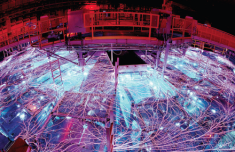 Science becomes so incremental that progress is glacial. You almost completely guarantee safety and in the process a complete lack of discovery. Experiments lose all their essence and utility in acting as a hedge against over-confidence by surprising us. Add the risk aversion we talk about below, and you have experimental science that does almost nothing. As a result we get very little for our experimental dollar, and allow ourselves to do almost nothing innovative or exciting. So yes, safety is really important, and we need to produce a safe working environment. This same environment must also be a productive place. The productivity gains that we have seen in the private world have been systematically undermined at the Labs, not just by safety, but two other drivers risk aversion and security.
 Finally we have a focus on accountability where we want to be guaranteed that no money be wasted at any time. Part of this is risk aversion where research that might not pan out and doesn’t get funded because not panning out is viewed as failure. Instead these failures are at the core of learning and growing. Failure is essential to learning and acquiring knowledge. Our accountability system is working to destroy the scientific method, the development of staff, and our ability to be the best. To some extent we account not because we need to, but because we can. Computers allow us to sub-divide our sources of money into ever-smaller bins along with everyone’s time, and effort. In the process we lose the crosscutting nature of the Lab’s science in the process. We get a destruction of multi-disciplinary science that is absolutely essential to doing the work of stewardship. Without multi-disciplinary science we will surely fail at this essential mission, and we are managing the Labs in a way that assures this outcome.
 All of this is systematically crushing our workforce and its morale. In addition, we are failing to build the next generation of scientists and engineers with a level of quality necessary for the job. We are allowing the quality of the staff to degrade through the mismanagement of the entire enterprise at a National level. Without a commitment to real unequivocal success in the stewardship mission, the entire activity is simply an exercise in futility.
 When we look at the overall picture we see a system that is not working. We spend more than enough money on stockpile stewardship, but we spend the money foolishly. The money is being wasted on a whole bunch of things that have nothing to do with stewardship. Most of the resources are going into guaranteeing complete safety, complete absence of risk, complete security and complete accountability. It is a recipe for abject failure at the integrated job of safeguarding the Nation. We are failing in a monumental way while giving our country the picture of success. Of course the average American is so easily fooled because if they weren’t would our politics be so dysfunctional and dominated by fear-based appeals?
 Another way of making progress is to renew our intent towards building truly World-class scientists at the Labs. We can do this by harnessing the Lab’s missions to do work that challenges the boundary of science. Today we are World class by definition and not through our actions. We can change this by simply addressing the challenges we have with a bold and aggressive research program. This will drive the professional development to heights that today’s current approach cannot match. Part of the key to developing people is to allow their work to be the engine of learning. For learning, failure and risk is key. Without failure we learn nothing, just recreate the success we already know about. World-class science is about learning new things and cannot happen without failure, and failure is not tolerated today. Without failure science does not work.
 The stupid, naïve and unremittingly lazy thinking that permeate high performance computing aren’t just found there. It dominates the approach to stockpile stewardship. We are stewarding our nuclear weapons with a bunch of wishful thinking instead of a
 well-conceived and executed plan. We are in the process of systematically destroying the research excellence that has been the foundation of our National security. It is not malice, but rather societal incompetence that is leading us down this path. Increasingly, the faith in our current approach is dependent on the lack of reality of the whole nuclear weapons’ enterprise. They haven’t been used for 70 years and hopefully that lack of use will continue. If they are used we will be in a much different World if they are used, and a World we are not ready for any more. I seriously worry that our lack of seriousness and pervasive naivety about the stewardship mission will haunt us. If we have screwed this up, history will not be kind to us.
 A much better analogy is cooking. Code is simply the ingredients used to cook a dish. Good ingredients are essential, but insufficient to assure you get a great meal. Moreover food spoils and needs to be thrown out, replaced or better ones choses. Likewise parts of the code are in constant need of replacement or repair or simply being thrown out. The computing hardware is much like the cooking hardware, the stove top, oven, food processors, etc. which are important to the process, but never determine the quality of the meal. They may determine the ease of preparation of the meal, but almost never the actually taste and flavor. In the kitchen nothing is more
 important than the chef. Nothing. A talented chef can turn ordinary ingredients into an extraordinary culinary experience. Give that same talented chef great ingredients, and the resulting dining experience could be absolutely transcendent.
 Our scientists are like the chefs and their talents determine the value of the code and its use. Without their talents the same code can be rendered utterly ordinary. The code is merely a tool that translates simple instructions into something the computer can understand. In skilled hands it can render the unsolvable, solvable and unveil an understanding of reality invisible to experiment. In unskilled hands, it can use a lot of electricity and fool the masses. With our current attitude toward computers we are turning Labs once stocked with outstanding ingredients and masterful chefs into fast food frycooks. The narrative of preserve the code base, isn’t just wrong, it is downright dangerous and destructive.
 Computing at the high end of modeling and simulation is undergoing great change in a largely futile endeavor to squeeze what little life Moore’s law has left in it. The truth is that Moore’s law for all intents and purposes died a while ago, at least for real codes solving real problems. Moore’s law only lives in its zombie-guise of a benchmark involving dense linear algebra that has no relevance to the codes we actually buy computers for. So I am right in the middle of a giant bait and switch scheme that depends on the even greater naivety and outright ignorance on the part of those cutting the checks for the computers than those defining the plan for the future of computing.
 intellect and knowledge base used to comprise it in conjunction with the intellect and knowledge used to solve the problem. At the deepest level the code is only as good as the people using it. By not investing in the quality of our scientists we are systematically undermining the value of the code. For the scientists to be good their talent must be developed through engaging in the solution of difficult problems.
 If we stay superficial and dispense with any and all sophistication then we get rid of the talented people, and we can get by with trained monkeys. If you don’t understand what is happening in the code, it just seems like magic. With increasing regularity the people running these codes treat the codes like magical recipes for simulating “reality”. As long as the reality being simulated isn’t actually being examined experimentally, the magic works. If you have magic recipes, you don’t change them because you don’t understand them. This is what we are creating at the labs today, trained monkeys using magical recipes to simulate reality.
 well-educated cadre of pheasants. Behind these two god-awful reasons to spend money is a devaluing of the people working at the Labs. Development of talent and the creation of intellectual capital by that talent are completely absent from the plan. It creates a working environment that is completely backward looking and devoid of intellectual ownership. It is draining the Labs of quality and undermining one of the great engines of innovation and ingenuity for the Nation and World.
 The computers aren’t even built to run the magical code, but rather run a benchmark that only produces results for press releases. Running the magical code is the biggest challenge for serfs because the computers are so ill suited to their “true” purpose. The serfs are never given the license of ability to learn enough to create their own magic; all their efforts go into simply maintaining the magic of the bygone era.
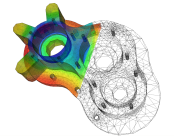 All of this is still avoiding the impact of solution algorithms on the matter of efficiency. As others and I have written, algorithms can do far more than computers to improve the efficiency of solution. Current algorithms are an important part of the magical recipes in current codes. We generally are not doing anything to improve the algorithmic performance in our codes. We simply push the existing algorithms along into the future.
 This is another form of the intellectual product (or lack thereof) that the current preserve the code base attitude favors. We completely avoid the possibility of doing anything better than we did in the past algorithmically. Historically improvements in algorithms provided vastly greater advances in capability than Moore’s law provided. I say historically because these advances largely occurred prior to the turn of the Century (i.e., 2000). In the 15 years since progress due to algorithmic improvements has ground to a virtual halt.
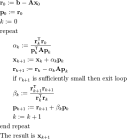 Much greater benefits could be realized through developing better models, extending physical theories, and fundamental improvements in algorithms. Each of these areas is risky and difficult research, but offers massive payoffs with each successful breakthrough. The rub is that breakthroughs are not guaranteed, but rather require an element of faith in ability of human intellect to succeed. Instead we are placing our resources behind an increasingly pathetic status quo approach. Part of the reason for continuation of the approach is merely the desire of current leadership to take a virtual victory lap by falsely claiming the success of the approach they are continuing.
 Once we developed talent by providing tremendously important problem to solve and turn excellent people loose to solve these problems in an environment that encouraged risky, innovative solutions. In this way the potentially talented people become truly talented and accomplished, ready to slay the next dragon using the experience of the previous slain beasts. Today we don’t even show let them see an actual dragon. Our staff never realize any of their potential because they are simply curating the accomplishments of the past. The code we are preserving is one of these artifacts we are guarding. This approach is steadily strangling the future.
 The whole risk-benefit equation is totally out of whack for society as a whole. The issue is massive across the whole of the Western world, but nowhere is it more in play than the United States. Acronyms like TSA and NSA immediately bring to mind. We have traded a massive amount of time, effort and freedom for a modest to fleeting amount of added security. It is unequivocal that Americans have never been safer and more secure than now. Americans are have also never been more fearful. Our fears have been amplified for political gain and focused on things that barely qualify as threats. Meanwhile we ignore real danger and threats because they are relatively obscure and largely hidden from plain view (think income inequality, climate change, sugar, sedentary lifestyle, guns, …). Among the costs of this focus on removing the risk of bad things happening is the chance to do anything unique and wonderful in our work.
 If I go to the store and buy a package of Nestle Toll House morsels, and follow the instructions on the back I will produce a perfectly edible, delicious, cookie. These cookies are quite serviceable, utterly mediocre and totally uninspired. Our National Labs are well on their way to be the Toll House cookies of science.
 I can make some really awesome chocolate chip cookies using a recipe that has taken 25 years to perfect. Along the way I have made some batches of truly horrific cookies while conducting “experiments” with new wrinkles on the recipe. If I had never made these horrible batches of cookies, the recipe I use today would be no better than the Toll House one I started with. The failures are completely essential for the success in the long run. Sometimes I make a change that is incredible and a keeper, and sometimes it destroys or undermines the taste. The point is that I have to accept the chance that any given batch of cookies will be awful if I expect to create a recipe that is in any way remarkable of unique.
 The process that I’ve used to make really wonderful cookies is the same one as science needs to make progress. It is a process that cannot be tolerated today. Today the failures are simply unacceptable. Saying that you cannot fail is equivalent to saying that you cannot discover anything and cannot learn. This is exactly what we are getting. We have destroyed discovery and we have destroyed the creation of deep knowledge and deep learning in the process.
 engineering much less positively effect society as a whole.
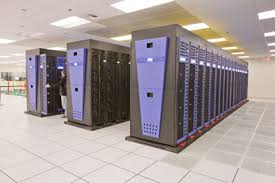
 money, or spend the same amount of money more intelligently. We need substantial work on the models we solve. The models we are working on today are largely identical to those we solved twenty years ago, but the questions being asked in engineering and science are far different. We need new models to answer these questions. We need to focus on algorithms for solving existing and new models. These algorithms are as or more effective than computing power in improving the efficiency of solution. Despite this, the amount of effort going into improving algorithms is trivial and fleeting. Instead we are focused on a bunch of activities that have almost no impact on the efficiency or quality of modeling and simulation.