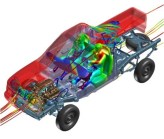
Innovation is the specific instrument of entrepreneurship…the act that endows resources with a new capacity to create wealth.
― Peter F. Drucker
Innovation as a focus is everywhere – because we can’t do it. It is essential to our economic and national future, yet we are terrible at it!
Plans are of little importance, but planning is essential.
― Winston Churchill
We have created a society that routinely crushes innovative thinking. We understand  the importance of innovation, but refuse to create the conditions that nurture it. Most of the time we do the opposite. One sterling example of innovation crushing behavior is the misapplication of project management to scientific research. We apply the same approach to building a bridge or repaving a road as supposedly “cutting-edge” research project. In the process the project is on time and under-budget, but stripped of innovative research. The whole notion of “scheduled breakthroughs” is an anathema to successful research, yet pervasive in current management practice. The only objective that is achieved in the process is control, but the soul of the work is destroyed.
To succeed, planning alone is insufficient. One must improvise as well.
― Isaac Asimov
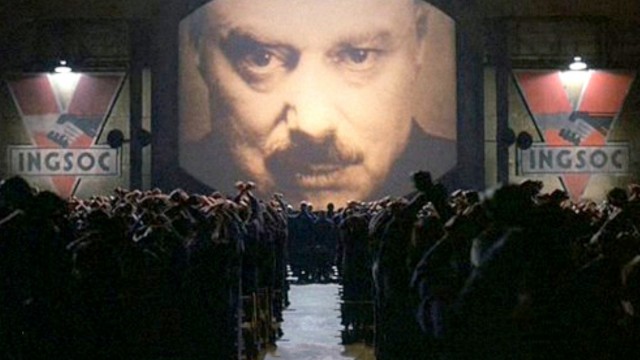 The problem isn’t the planning per se, but rather trying to stick to the plans. Planning is useful, even essential, but generally not fully actionable with adaptation necessary to actually succeed. Too often in today’s climate, the plans are adhered to despite evidence of their inadequacy. The conditions that allow innovation are a threat to so much in the ordinary day-in, day-out conduct of business and social constructs. By producing a culture of conformity and safety, the conditions that spur new thinking (i.e., innovation) are not allowed to grow and bloom.
Innovation is about practical creativity – it’s about making new ideas useful…
Before innovation – or practical creativity – there is insight. You must see the world differently.
― Max McKeown
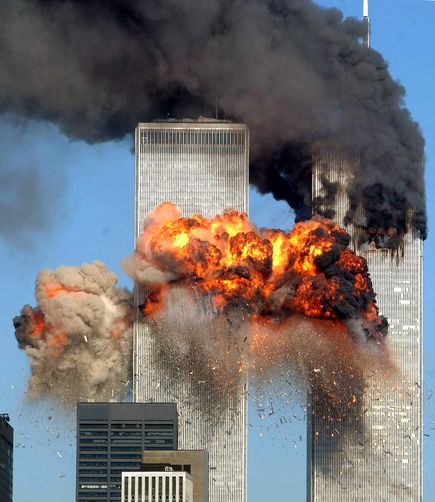 While innovation is one of the most effective engines of growth and progress, the conditions allowing it to happen threaten every other aspect of society. This is especially true with today’s hyper-safety, low-risk culture, which has been driven into over-drive by the threat of terrorism. In the long run the greatest damage to our long-term growth is the adoption of the risk-adverse policies and approaches so broadly. Terrorism is only a threat if we allow it to change us, and we have. These constructs provide safety and lower the risk of bad things, but also strangle progress and innovation.
The best way to predict your future is to create it
― Abraham Lincoln
 A huge part of this problem is the lack of tolerance for risk. Innovation often fails, and lots of failure yields the opportunity for innovative success. As our society has squashed risk, it has also squeezed out the potential for breakthroughs. The consequence is a safer, more predictable, but much poorer future. Risk and reward are tied closely together. Nothing ventured, nothing gained is the old maxim that applies today. Today no venture that entails even the slightest tinge of risk can be tolerated. The result is no ventures whose outcomes aren’t virtually pre-ordained. Success is broadly achieved only through the systematic diminishment of our objectives.
If you are deliberately trying to create a future that feels safe, you will willfully ignore the future that is likely.
― Seth Godin
These things we do to control outcomes, control people and manage our work all chip away at the conditions necessary for innovation. Innovation requires things to be  slightly out of control, slightly unpredictable to succeed. This success is the product of the mixing of ideas that aren’t “supposed” to be in contact. Hotbeds of innovation come from putting disparate people together and allowing interactions to occur in a natural way. Good examples are the old AT&T labs where a generally poor building design caused the interaction of people of greatly differing backgrounds to interact closely. Common areas, dining areas, bathrooms, stairwells, etc. all provide some of the necessary lubrication for innovation. By allowing people to collide in an almost random way, serendipity erupts and innovation blooms.
Dreamers are mocked as impractical. The truth is they are the most practical, as their innovations lead to progress and a better way of life for all of us.
― Robin S. Sharma
 Another key is a certain amount of freedom. The freedom to pursue the best outcome even if that outcome is not what was planned. Today the plan has become the arbiter of effort, and we penalize deviations from the plan. The results are disastrous for innovation, which is inevitably a departure from the original plan.
Throughout history, people with new ideas—who think differently and try to change things—have always been called troublemakers.
― Richelle Mead

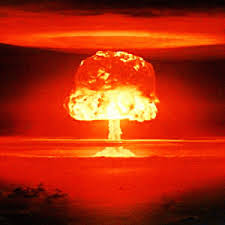
 Scientific computing is still dominated by the same two big uses that existed at the beginning. Recently data analysis has reasserted itself as the big “new” thing. This is mostly the consequence of the deluge of data coming from the Internet, and the impending Internet of things. For mainstream science, the initial value problem still holds sway for a broader set of activities although data is big in astronomy, geophysics and social sciences.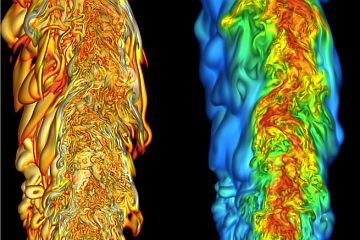


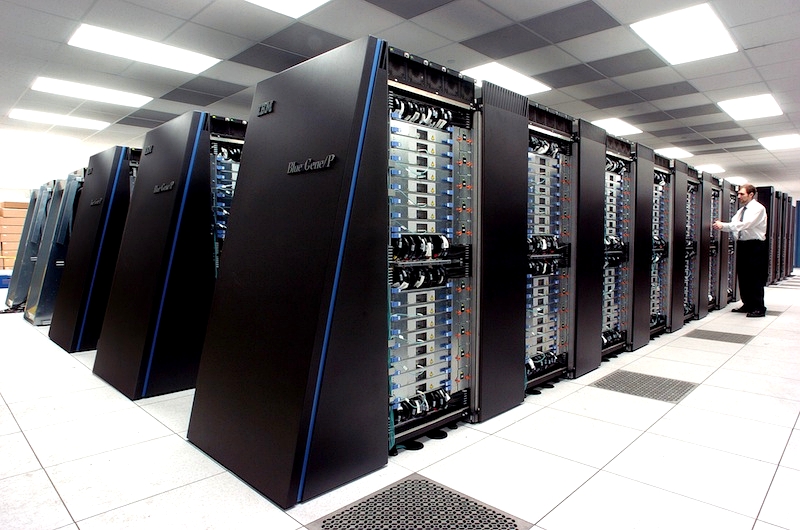




 I don’t think software gets the support or respect it deserves particularly in scientific computing. It is simply too important to treat it the way we do. It should be regarded as an essential professional contribution and supported as such. Software shouldn’t be a one-time investment either; it requires upkeep and constant rebuilding to be healthy. Too often we pay for the first version of the code then do everything else on the cheap. The code decays and ultimately is overcome by technical debt. The final danger with code is the loss of the knowledge basis for the code itself. Too much scientific software is “magic” code that no one understands. If no one understands the code, the code is probably dangerous to use.
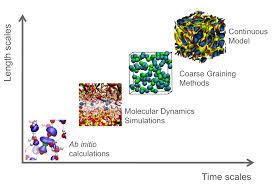
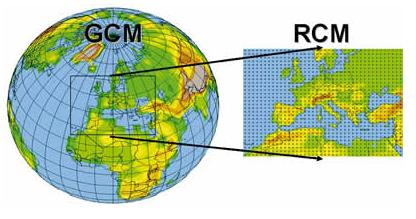
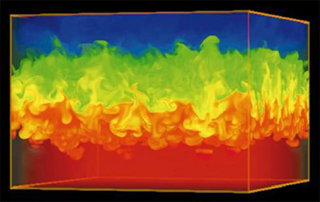
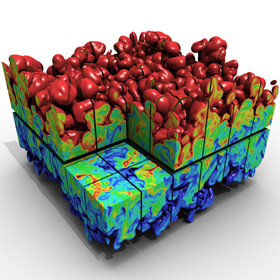
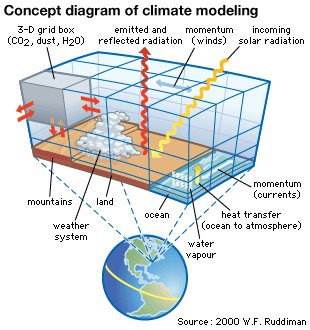
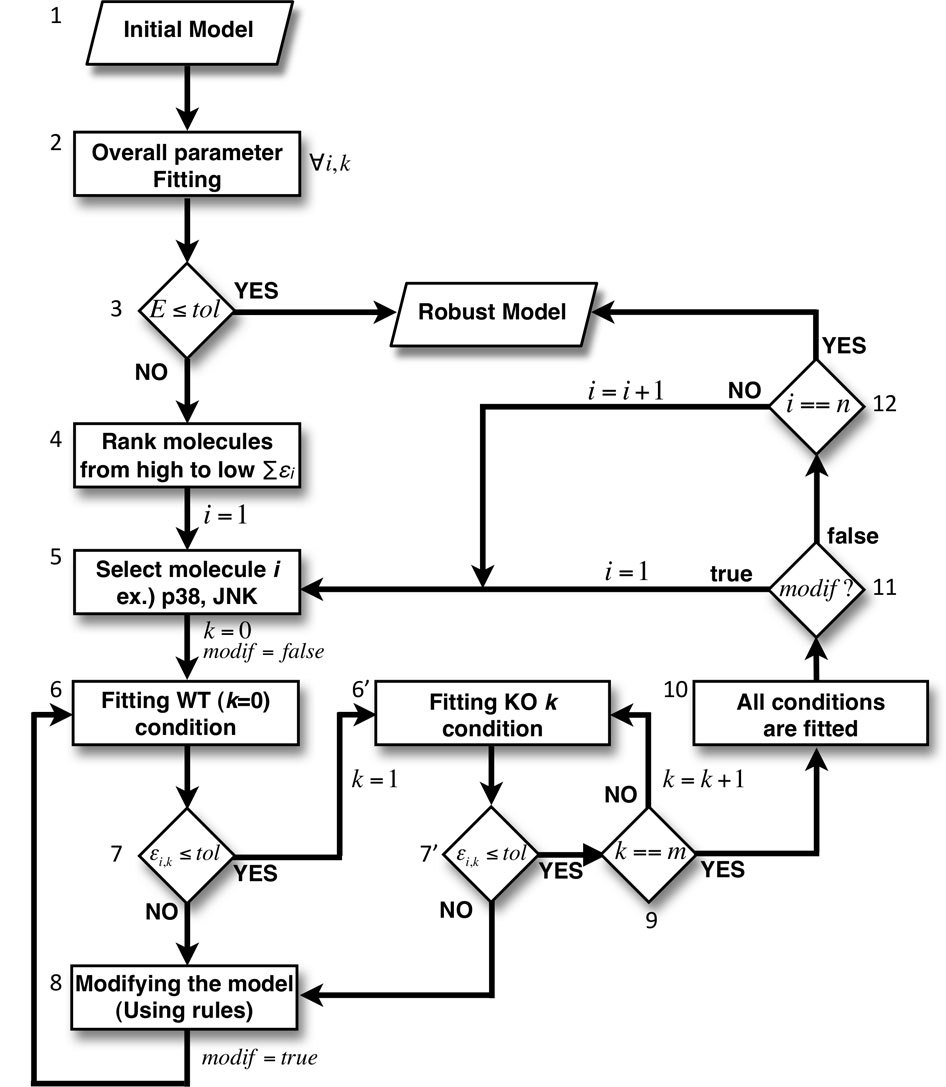
 computing. The connection to work of importance and value is essential to understand, and the lack of such understanding explains why our current trajectory is so problematic. Just to reiterate, the value of computing, or scientific computing is found in the real world. The real world is studied through the use of models in scientific computing that are most often differential equations. Using algorithms or methods we then solve these models. These models as interpreted by their solution methods or algorithms are expressed in computer code, which in turn runs on a computer.
 More importantly software often outlives the people responsible for the intellectual capital represented in it. A real danger is the loss of expertise in what the software is actually doing. There is a specific and real danger in using software that isn’t understood. Many times the software is used as a library and not explicitly understood by the user. The software is treated as a storehouse of ideas, but if those ideas are not fully understood there is danger. It is important that the ideas in software be alive and fully comprehended.
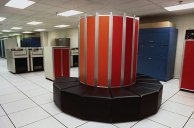

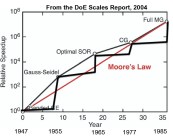

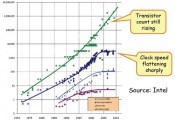

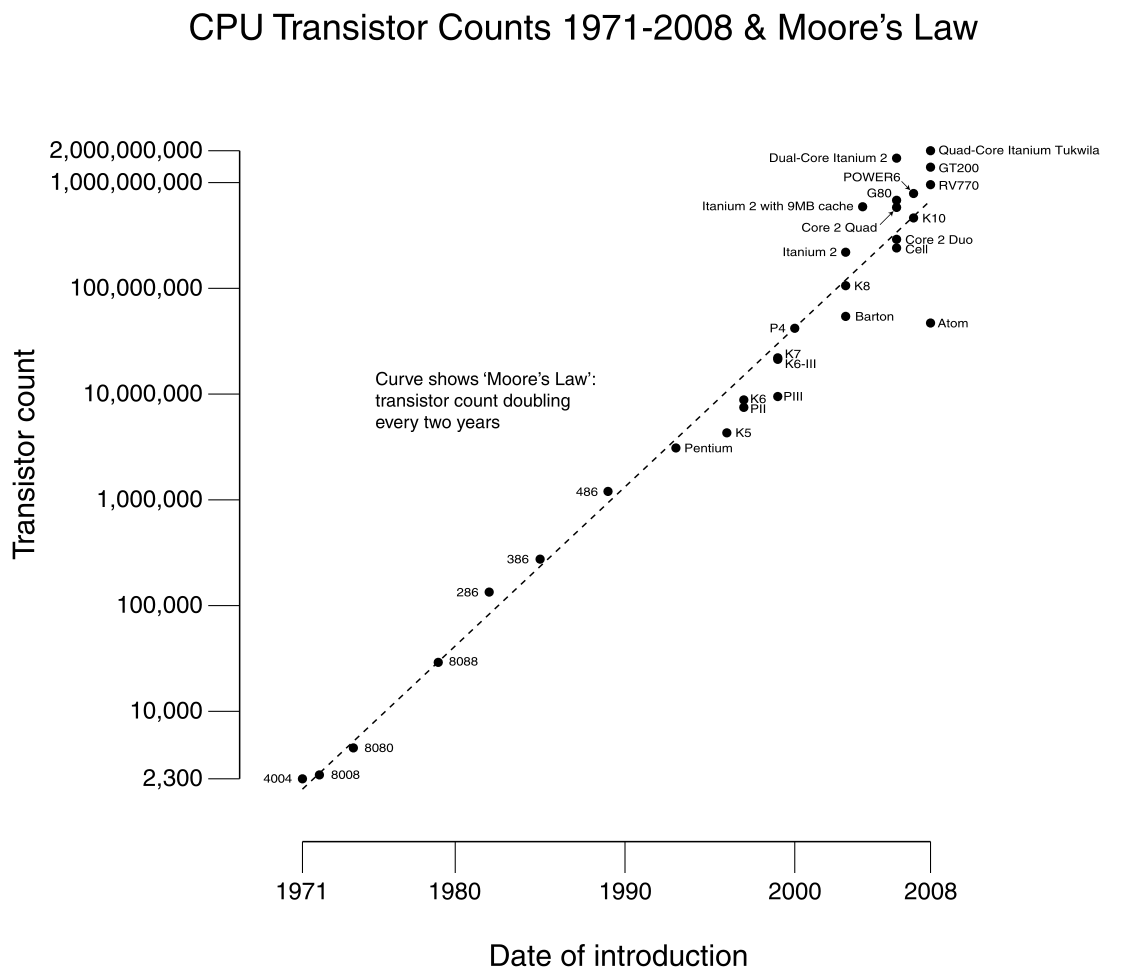
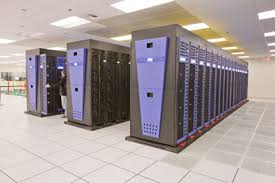
 In watching the ongoing discussions regarding the National Exascale initiative many observations can be made. I happen to think the program is woefully out of balance, and focused on the wrong side of the value proposition for computing. In a nutshell it is stuck in the past.
 to hardware. As the software gets closer to the application, the focus starts to drift. As the application gets closer and modeling is approached, the focus is non-existent. It is simply assumed that the modeling just needs a really huge computer and the waters will magically part and the path the promised land of predictive simulation will just appear. Science doesn’t work this way, or more correctly well functioning science doesn’t work like this. Science works with a push-pull relationship between theory, experiment and tools. Sometimes theory is pushing experiments to catch up. Sometimes tools are finding new things for theory to answer. Computing is such a tool, but it isn’t be allowed to push theory, or more properly theory should be changing to accommodate what the tools show us.
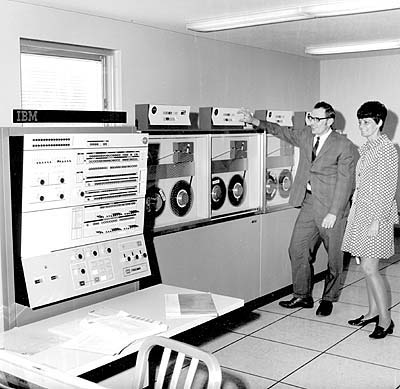
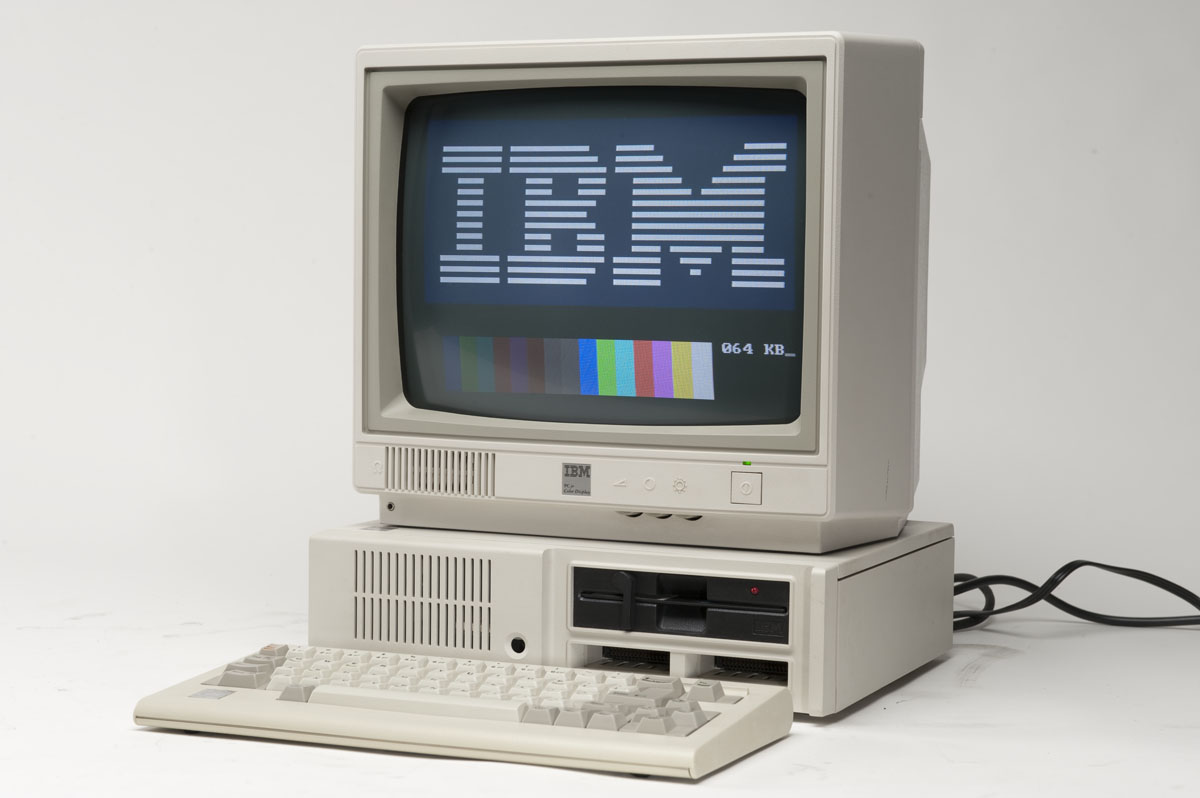
 The question is whether there is some way to learn from everyone else. How can this centralized supercomputing be broken down in a way to help the productivity of the scientist. One of the things that happened when mainframes went away was an explosion of productivity. The centralized computing is quite unproductive and constrained. Computing today is the opposite, unconstrained and completely productive. It is completely integrated into the very fabric of our lives. Work and play are integrated too. Everything happens all the time at the same time. Instead of maintaining the old-fashioned model we should be looking into harvesting the best of modern computing to overthrow the old model.
 drowning in data whether we are talking about the Internet in general, the coming “Internet of things” or the scientific use of computing. The future is going to be much worse and we are already overwhelmed. If we try to deal with every single detail, we are destined to fail.
 in all the noise and represent this importance compactly and optimally. This class of ideas will be important in managing the Tsunami of data that awaits us.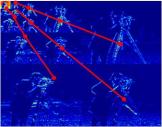
 be solved by exotic methods and algorithms. Ultimately, these methods and algorithms must be expressed as computer code before the computers can be turned loose on their approximate solution. These models are relics. The whole enterprise of describing the real world through these models arose from the efforts of intellectual giants starting with Newton and continuing with Leibnitz, Euler, and a host of brilliant 17th, 18th and 19th Century scientists. Eventually, if not almost immediately, models became virtually impossible to solve via available (analytical) methods except for a
 handful of special cases.
 When computing came into use in the middle of the 20th Century some of these limitations could be lifted. As computing matured fewer and fewer limitations remained, and the models of the past 300 years became accessible to solution albeit through approximate means. The success has been stunning as the combination of intellectual labor on methods and algorithms along with computer code, and massive gains in hardware capability have transformed our view of these models. Along the way new phenomena have been recognized including dynamical systems or chaos opening doors to understanding the World. Despite the progress I believe we have much more to achieve.
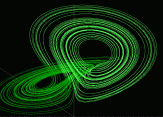 Today we are largely holding to the models of reality developed prior to the advent of computing as a means of solution. The availability of solution has not yielded the balanced examination of the models themselves. These models are
 effectively. This gets to the core of studying uncertainty in physical systems. We need to overhaul our approach of reality to really come to grips with this. Computers, code and algorithms are probably at or beyond the point where this can be tackled.
 Here is the problem. Despite the need for this sort of modeling, the efforts in computing are focused at the opposite end of the spectrum. Current funding and focus is aimed at the computing hardware, and code with little effort being applied to algorithms, methods and models. The entire enterprise needs a serious injection of intellectual energy in the proper side of the value proposition.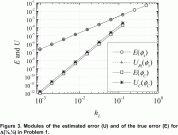
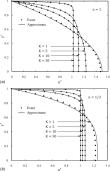 For solution verification the problem is much worse. Even when solution verification is done we are missing important details. The biggest problem is the lack of solution verification for the application of scientific computing to problems. Usually the problem is simply computed and graphs are overlaid, and success is declared. The comparison looks good enough. No sense of whether the solution is accurate is given at least quantitatively. An error estimate for the solution shown, or better yet a convergence study would provide much enhanced faith in the results. In addition to the numerical error, the rate of convergence would also provide information on the tangible expectations for the solution for practical problems. Today such expectations are largely left to be guessed by the reader.